It’s rare for me to diverge from my usual blither into the more esoteric territory of sacred music, not least because I’m bound to offend at least one person, but this delightful new setting charmed my socks off!
Absolutely glorious. Can we have more of this please? You don’t even need the accompanying choir or harmony, the top line in itself is beautiful and relatively simple.
For those who haven’t already come across this – it’s the Mass of the English Martyrs, by Jeff Ostrowski. Sublime. How do we make this mandatory in all Norvus Ordo Masses? The score is free, no copyright issue – choirmasters start downloading and get singing. It’s even been scored for higher and lower voices.
A perfect Mass setting for the ordinations of those to the Ordinariate or indeed former Anglican, convert clergy…
I think that I’m in agreement with Fr Ray’s conceit that our outgoing Pope has left us a legacy of concepts, as follows:
the idea that there is a correct and incorrect interpretation of Vatican II,
he has gone along way to reconciling the Church’s present to its past, Summorum Pontificum is an important part of this
he has gone along to dismantling the political notions of left and right, liberal and conservative (the media hasn’t caught on to this yet) and restoring the notion of Catholic orthodoxy.
he has re-presented the idea that Pope is the Bishop of Rome – certainly first amongst equals – (I’ll explore this at a later stage but I think this important).
that “Unity” in terms of ecumenism is about looking to those who share (substantially) the catholic faith – hence Ordinariates and looking towards the Orthodox
It’s certainly true that Joseph Ratzinger has done much to reinforce the concept that biblical Christianity does not fit neatly into the left/right praxis of Western democracy, which is why whilst few media commentators have been ignorant enough to label him as a right-wing or Republican type, neither have they picked up on many of his speeches which have a distinctly left-wing bent. This speech on selfish economic models and the value of the family farm was never widely disseminated for example, and neither was his concept of the ecology of mankind, reclaiming territory from the Greens, ever explored nor were his environmentally friendly credentials ever acknowledged or welcomed by the Green party, only being belatedly dredged up by the Guardian who were trying to find something positive to say to balance out their one-sided coverage of the papal resignation which would fit in with their agenda. It begs the question as to when the watermelons are going to cotton on to the environmental effects of their contraceptive comfort blanket.
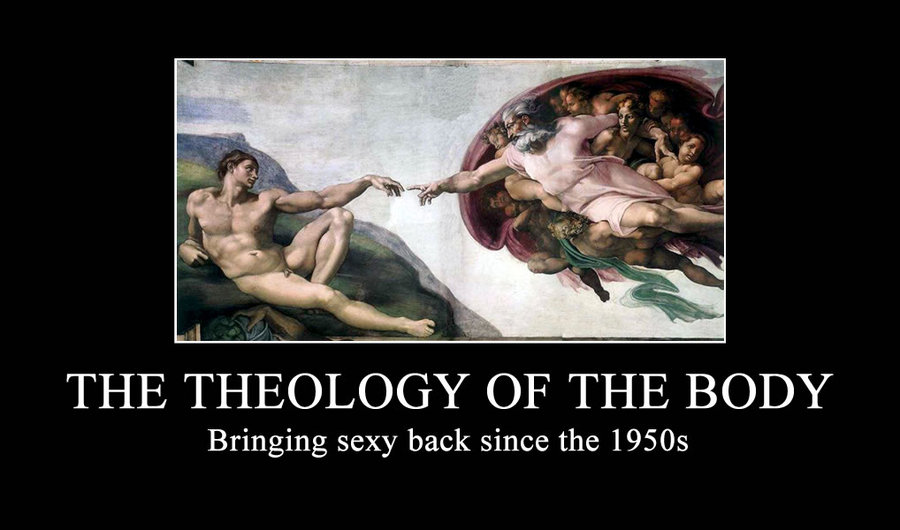
But Fr Ray, is correct in his identification that Benedict, like his predecessor, has left us a variety of concepts which now need practical application. In both John Paul II and Benedict XVI we have had two towering intellectual giants, two great teaching popes who were both members and architects of the Second Vatican Council, who both understood what the reforms were supposed to achieve, watched their misapplication with dismay and who both unpicked, communicated and attempted to sow the seeds of the genuine spirit and renewal of the church that Vatican II was supposed to engender. Both John Paul II and Benedict left behind great gifts to the church in terms of their theological and academic writings – notably John Paul II’s theology of the body, which will continue to be studied and relevant for many generations to come, and Joseph Ratzinger’s vast body of literary contributions, apostolic letters and speeches out of which it is difficult to chose any of being of most merit, so consistently high is the quality, but my money is on Deus Caritus Est and his biographies of Jesus, which was groundbreaking in that a Pope made complex theological concepts and the historicity of the gospels accessible to the general public for the first time in modern history.
So what next? Is the Pope one of the last intellectuals and is this really such a bad thing? It’s fair to say that whoever is chosen, they are hardly going to be a dullard in the cerebral stakes, given that canon law proscribes that all bishops must either have a doctorate or a licentiate (i.e. a lesser degree than a doctorate but a qualification that enables them to teach in seminaries). The unfortunately titled piece on Catholic Light, (Does the Pope have an S.T.D) gives a comprehensive summary of cardinals’ degrees.
But all Catholics need to be wary of the cult of the intellect, which can lead us astray in terms of admiring people or wishing to elevate them on the basis of intellect alone. Whilst it is vital that those in positions of leadership must have a thorough formation, I don’t think we can discount candidates on the basis that they don’t possess the extraordinary intellectual abilities and gifts of the previous two popes, which were unique and rare gifts. How many people can really count themselves in the same intellectual league as Karol Wojtyla or Joseph Ratzinger? St Peter wasn’t to be found earnestly studying the laws in minute detail in the synagogue though I think we can safely assume that he knew them well. Being an intellectual powerhouse is no guarantee of spiritual greatness or a burning and passionate desire to spread the good news and safely lead the flock. Being in possession of a great intellect must be tempered with a corresponding humility otherwise the gift takes on a destructive nature. Give me the humble priest who tends to the sick, who feeds the hungry and homeless, comforts the distressed, fights for the oppressed and walks with the outcast as opposed to the remote bookish intellect any day. Some of the most inspirational Catholics in my daily life are not those with the highfaluting terminology, but those who witness simply through their daily lives and everyday words of wisdom and encouragement.
We have been incredibly fortunate in that we’ve had two popes who have bequeathed us so much in terms of intellectual wisdom and insight, my feeling is that it’s now time to pause, take stock, we have to digest and now apply the messages and teachings of our two previous Popes. I think we need some intellectual breathing space, in which we can begin to absorb and apply what we have learnt.
The new pope, whoever it might be, needs to hopefully have something of the showmanship of Karol Wojtyla intermingled with the thoughtfulness and radicalism of Pope Benedict XVI. He must continue to reform the Vatican in terms of how it communicates with the outside world, the Pope’s twitter account has been an excellent start as has the engagement with Catholic bloggers and the redesign of the Vatican portal but these are cosmetic changes, there needs to be a concerted attempt to ensure that it uses the new tools at its disposal for the New Evangelisation. The new pontiff must also possess the courage and vision to be able to give the Curia a red-slippered kick up the backside, it would appear that it needs root and branch reform to bring its admin processes into the twenty-first century and it’s staff need to be brought into line – there should be no time for petty factionalisms and jealousy. Though whoever is appointed will undoubtedly possess intellect, it will not need to be the defining quality of this new papacy. We need, for want of a better word, an applicator and enforcer, someone who will widely disseminate, reinforce and apply the work of the past pontificates.
It’s a shame that due to the nature of global politics that we are unlikely to see Cardinal Dolan (although never say never, the frontrunners in a conclave almost never emerge as the successor), the world is not ready for an American pope and it is unlikely that we will see one for as long as the USA remains as a (albeit declining) global superpower – it would not be good to have a Vatican that Americans could claim as being theirs. Besides which America needs Cardinal Dolan, though no-one will be more delighted than me if I am proven wrong in a few weeks time and I am in sympathy with Fr Lucie-Smith, nationality should not disbar an otherwise ideal candidate. I’m nurturing outrageous secret fantasies, given that the Pope doesn’t technically need to be from among the college of Cardinals, about how wonderful it would be if the Holy Spirit were to whisper the Word on Fire amongst the cardinals in the conclave. Or what if our new Bishop of Portsmouth or Shrewsbury were to have the fastest promotion in ecclesial history?!
At this moment in time, regardless of whether or not he is our last pope (the evidence would indicate otherwise), the successor of Peter does undoubtedly need to feed his flock during a period of transition and flux, which is seeing an end to a society based upon Christian values and ideals. Now is a time to put the words and the intellect of others into action.
Like everyone else, I’m still reeling from this morning’s shock announcement.
Whereas many Catholics of my age would perhaps describe themselves as members of the JPII generation, my family are all definitely Benedict’s babes. His was the pontificate under which not only I returned to the faith, but his apostolic letter of 2009, Anglicanorum Coetibus, issued incidentally on the day I was expecting Robin and I’s first biological child, was one of the key pieces of the interlocking puzzle pieces that formed the arrow signposting Rome, which eventually led him home.
Others will write the erudite hagiographies, my feelings are those of sadness, admiration and anxiety.I think there is genuine reason to believe that the Pope’s health has taken a significant turn for the worse. I was struck by his frailty this morning, both his general demeanour and tone of voice seemed diminished, he seemed cowed under the weight of a burden. The timing of this announcement is highly unusual, coming just before the major event of the Liturgical Year and perhaps significantly, on the feast day of Our Lady of Lourdes and the world day of prayer for the sick. I don’t think we can discount the fact that the Year of Faith, an initiative instituted by His Holiness, is not even half-way over. Timing wise, October would seem more opportune, when there is not that much happening liturgically speaking. Though our Holy Father is not one for vanity, eschewing the showmanship of his predecessor, surely it would have made more sense for him to have exited on a high, with renewed enthusiasm amongst the faithful for the New Evangelisation? One cannot help but wonder whether or not Benedict is facing a potentially catastrophic health difficulty? There can be no doubt that this was a decision of the utmost gravity, Scott Hahn’s observations on Benedict’s repeated visits to the grave of Pope Celestine V, were not just symbolic clues (I’m personally wary of the Dan Brown nature of such claims) prefiguring today’s announcement, but Benedict reaching out to his predecessor and asking for his intercession and guidance if and when the time came.
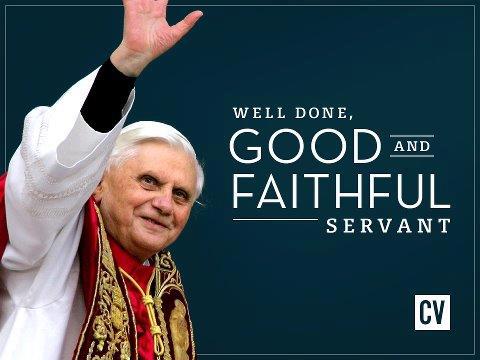
Though Pope Benedict is not deceased and thus obituaries or reviews of his papacy seem premature, it is likely that there will be no more public appearances of this great man, he will retreat into the solitutde that he craved following the death of John Paul II, when he thought his period of service might well be drawing to its close. Few will begrudge him his well earned retirement, but many will miss his presence and not least the direction in which he seemed to be leading the liturgy, it was becoming increasingly clear which way his preferences lay.
The Pope’s visit to the UK, culminating in a magnificent, beautiful and reverent Mass at Cofton Park, paved the way for the then forthcoming new translation of the Mass and the liturgical renewal, the fruits of which are now becoming apparent. Let us hope that the liturgical reform that he directed and the Renaissance of the Old Rite which he allowed to flourish, is not stopped in its tracks and that his successor can exercise similar generosity.
I hope history will be kind to Pope Benedict XVI, it is far too early to assess what impact his pontificate will have, but for me the hallmarks of his papacy have been generosity, (Anglicanorum Coetibus and Summorum Pontificorum), wisdom – three must-read encyclicals, Deus Caritus Est, Spe Salvi and Caritas in Veritate which offer a blueprint for Christian living and a response to the challenges of unchecked and rampant capitalism, and a deep compassion and humility – of which today’s announcement was the embodiment.
The great tragedy of his papacy is that it has been overshadowed by the child abuse crisis, one not of his making and which ironically he did the most to address. What has failed to capture the media’s imagination is the amount of times that the Pope has spoken about the injustice of poverty, the plight of the poor and the starving, denouncing the West’s failure to get to grips with these issues on several occasions. He has, for the most part, been silent about the traditional hot-button issues regarding sexuality, where he has spoken it has simply been to reiterate Church teaching, such pronouncements being seized upon, blown out of all proportion and quoted out of context by the usual suspects in the mainstream media.
For me, the high points, alongside the obvious UK visit and Anglicanorum Coetibus, were his visit to Benin and his visit back to his home country of Germany where he blew the German Parliament away with a lesson in Natural Law. His interview with Peter Seewald in Light of the World, the longest and most in-depth interview ever given by a Pope to a journalist, revealed the academic, deeply thoughtful and compassionate Pope, whose every word was carefully measured and yet who still retained, what Bishop Kelly today described as an “undergraduate humour”.
The current media climate feels similar to that surrounding the run up to the Papal visit, all the old prejudices and canards about the Catholic Church are being once again wheeled out, with dismaying ignorant puerile articles which seem to express surprise that the Pope was indeed a Catholic and hope that the next one will have more sense. We have the same ageing suspects making their appearances in the media with their tired old tropes and one hopes that the press will behave more responsibly than in 2010 which risked creating a dangerous climate of hostility and hatred against Catholics which could easily have turned into violence. Though Johann Hari is now silenced, no doubt other young ingenues will be lining up to implore Catholics to elect Lady Gaga as Pope as the only way to resuscitate our allegedly ailing, misogynistic and sex obsessed church, though those people who are obsessed with Catholic teaching on sexuality tend not to be the active members of the faith. That said the media does seem to have softened slightly in its attitude towards him – his personal holiness, authenticity, integrity and flawless reasoning and logic shining like a beacon in contrast to the slippery slime and murky filth that clings to most prominent contemporary politicians. It’s hard to imagine Pontifex engaged in petty Twitter squabbles or employing smear tactics, he leads by example with short messages proclaiming Christ’s message of love and hope.
I had already been planning to read Joseph Ratzinger’s three biographies of Jesus as part of my Lenten efforts, I will do so now with renewed vigour intermingled with sadness that such a towering intellect will no longer be the Vicar of Christ. His loss is palpable and we can only pray that the Holy Spirit gives us an equally worthy and magnificent successor.
Pope Benedict began his papacy with the epithet of God’s Rottweiler. He leaves us as a trusty German Shepherd. For most of my formative and adult years, John Paul II was sadly a shell of man, someone to whom it was difficult to relate – he went from being the movie star caricature of Spitting Image, to an ailing old man who seemed to have lost most of his faculties overnight and so for me, Pope Benedict feels like the only Pope I have ever really ‘known’ and certainly loved. It is a matter of deep sadness and disappointment that his papacy will not see the ordination of my husband, but it is his papacy that has brought us both back home, it is his papacy that has reinforced the timeless truth of the universal church and that has sown the seeds for a fuller and more deeper appreciation of our rich cultural heritage as Catholics, and for that I will always be profoundly and immeasurably grateful.
God Bless you Holy Father and thank you. Ora pro nobis.
Unfortunately I’ve received quite a few unpleasant comments over the last few days, none of which I have been prepared to publish, due to the fact that I have an annulled marriage. My stat-counter has also brought up some rather disturbing searches regarding my name, my children and attempts to discover details pertaining to personal circumstances. The implication is that it is highly hypocritical of me to defend marriage, given that due to having a previous marriage behind me I have a part to play in the undermining of the institution. Furthermore there have been allegations that annulments are only available to the rich and well-connected who are able to twist arms and pay for expensive canon lawyers to employ Jesuitical arguments. There are demands for me to disclose the circumstances of my previous attempted marriage – something that is frankly none of anyone’s business.
I’m not going to disclose my private life, not least for the fact that a child resulted from my previous relationship – there are real human beings and relationships at stake, which are far more important than my standing in the eyes of hostile internet commentators. With that in mind, I am aware that I am a (very minor) representative of Catholicism and therefore it might be necessary to put a few bare facts of the matter out there as a matter of record.
Firstly – mea culpa. I did attempt to contract a marriage, but what is also clear is that I didn’t have any understanding of what that involved. Perhaps providentially, I had made enquiries as to getting married in the Catholic church that was the place of my baptism, though the community involved were happy to facilitate, they insisted that some form of marriage preparation was undertaken first. My then fiance refused as he did not wish to be instructed in how to be married by a bunch of celibate Catholics – it was none of their business. So we were ‘married’ instead in an Anglican church with no dispensation from the Catholic church as is required by canon law.
Secondly – one of the basic tenets of a valid sacramental marriage is that it must be open to life or children. Before we got ‘married’ my ex had been explicit on multiple occasions that he did not ever want children and had in fact sought a sterilisation at the age of 22. I was ambivalent on the matter, I certainly had no intention of having any children, but hadn’t ruled it out either. On our wedding day, my former father-in-law was witnessed telling everybody that his son did not want to have any children. When I unexpectedly fell pregnant there was a divergence of opinion as to what the best course of action should be and the relationship was put under enormous pressure, which resulted in my then partner going off to Marie Stopes in Reading for a sterilisation when the baby was 6 weeks old. A process in which I had no involvement – personal bodily autonomy and wishes being of paramount import. As an aside Marie Stopes did not once ask for joint couple counselling and the offer of individual counselling was refused. I don’t know whether or not this may have changed minds, certainly he was adamant that this situation was not going to reoccur.
There are other canonical and legal issues, but that is more than enough information for the public domain. Needless to say, when I married a vicar who usually refused to perform re-marriages, the Church of England having no formal annulment process, it was necessary not only to be very public and open about my situation not only with our parish, but with the then Bishop of Chichester whose formal permission was sought as a matter of courtesy.
What I can testify is that no matter how cordial, friendly and open one keeps relations, divorce is absolutely horrible for children and not something that I could recommend as being the ideal.
My hope is that my children can learn from my example, that they take care to ensure that they marry someone else whose faith and values matches theirs, that they don’t succumb to outside pressures but can prayerfully discern in their choice of spouse and vocation. There is a whole world of difference between being sacramentally married and not. I appreciate every day the graces and blessings that we receive from the sacrament – something that gives us both enormous comfort and strength when times are tough.
Life hasn’t always been plain sailing for me, but I count myself extremely fortunate and blessed in not only having a wonderful spouse who shares my faith, but in being able to have a sacramental marriage. That the church has absolutely no issue with my circumstances was demonstrated by the fact that we were able to have a nuptial Mass and received an apostolic blessing as a gift from the parish.
Annulment isn’t a Catholic divorce or a fudge for those with recourse to huge funds. When applying to a marriage tribunal one has to throw the whole affair into the hands of God and trust in the judgement of Holy Mother church and accept the ruling, whichever way it falls. In my case, no tribunal was needed, it was a very straightforward process which cost me £18 in total!
Annulment presumes that every marriage is valid, until proven otherwise. It is very clear in my situation that no marriage existed, which goes quite a long way to explain many of the difficulties. Like many Catholics, I found the process incredibly healing. Here is a page that dispels some of the common myths, such as illegitimacy of children – an accusation that comes my way fairly often, or that the process is only for rich, famous or well-connected members of the faithful.
The Pope has recently reiterated the need for the annulment process to be rigorous and warned about the danger of contrasting charity with justice. If we as Catholics wish to reinforce the strength of the marriage bond, it causes great scandal if we collude with secular authorities and dissolve marriages for spurious or flimsy reasons. Furthermore it does a great disservice to those of us who indisputably had no previous sacramental bond. Fr Dwight Longnecker also has some very harsh words for those Catholics who collude in the undermining of marriage.
Though I admittedly haven’t always upheld marriage in my past actions – all of us are sinners, I did what I could to remedy what was a heartbreaking and impossible situation whereby convalidation or sanation were unavailable as options. I can also appreciate that though our divorce laws are in urgent need of reform, some civil recourse is often necessary not least for the protection of women and children.
‘Gay marriage’ is the inevitable result in a society that seeks to put individual needs and wants first and seeks to redefine marriage as simply being all about love and commitment. My ex, passionately believed that when he said those vows (despite the fact that children are mentioned in the Anglican marriage service) that children had nothing to do with it and are entirely separate to marriage. I didn’t have a strong opinion one way or the other at that time, despite having been nominally brought up as a Catholic and having attended Catholic school.
The New Evangelisation must include a reclamation of marriage – what it constitutes and what it most definitely isn’t. We have much to remedy.
A friend suggested that I download the excellent unspoken sermons of George McDonald the other night, when I was casting about for recommendations for free reading material of a political, historical and theological bent.
The first chapter is entitled Child in our midst, and is a reflection of Mark 9: 33-37, and the relationship of the child-like and the divine.
I was reminded of this yesterday, when briefly discussing the result of the Parliamentary vote with my daughter, who it seems had been engaged in conversation at school. Though my initial reaction was horror, I guess to some extent the playground is a microcosm of the adult world, the school admits pupils to the age of 13, we live in liberal Brighton and one can hardly be surprised if things have filtered down.
Our daughter doesn’t know about sex, but she does know the biology behind reproduction, i.e. that when men and women get married, they can then have a ‘special cuddle’ (yes it’s twee, you try explaining it to a then 6-7 year old) whereby the man gives the woman a sperm which fertilises her egg etc. The subject arose when she asked how the babies were getting into mummy’s tummy, I don’t hold with lying to children, nonsense euphemisms about gooseberry bushes and storks just confuse children, hence we told her the truth in an age appropriate way. She was more than satisfied by the response, no special books or silly furtiveness was required, but we did show her some pictures of what the baby looked like in the womb at certain stages during my pregnancies, which she enjoyed. (Pro-lifers take note).
I was told what homosexuality was at the same age in Year 4. Looking back it was a scream. The ernest and stern Mr Sutton, headmaster of our interesting and eclectic prep school (consisting mainly of the children of farmers in the backwaters of the Dengie hundred) decided that as an experiment he would personally supervise sex education lessons for the fourth form. We were given blue workbooks with diagrams of the male and female organs in cross section as well as a couple in flagrante, so to speak. It looked a ghastly, painful and disgusting business to my mind. There was no way I was ever going to do that – ever! To the great amusement and perhaps relief of my parents, I coloured the male member in green and red diagonal stripes resembling a barber’s shop pole, for reasons best beknown to myself.
I remember distinctly Mr Sutton explaining what ‘gay’ was, that it meant two women or two men had fallen in love with each other, we might read about it in the paper and that it absolutely wasn’t funny, these people couldn’t help it and we mustn’t laugh about it or make fun of those who were gay. Anyone who did would be in trouble, whereupon the bell rang for playtime and Damian Jones proceeded to call everyone a “gaylord”, as a change from the previously preferred insult of choice – “Joey”.
Which kind of brings me to the point. Bullying and name calling sadly will always occur at school, although it should always be given zero tolerance when uncovered. I remember being grieved when Jennifer Holland Brown, cheeky upstart in the third year accused me of being a lesbian because I’d accidentally kicked her leg in the swimming pool, whereupon all her friends joined in. It lasted 10 minutes if that, but these days there would be scores of counsellors telling me ‘its fine to be a lesbian, you should celebrate that’ and reporting her parents for installing homophobia, whereas actually kids can be rather horrible to each other at times. I was irritated by the sheer cheek of a younger girl as well as peeved by the untruth because I knew that I most definitely wasn’t a lesbian! Calling people out for being supposedly different, whether true or false has happened and will happen in schools since time immemorial. Nobody’s race, faith (and it was the fish wearing Christians at my sixth form who got the grief) sexuality, hair colour, weight, appearance or family life and standard of living should be used to single them out, but sadly it does happen and schools need to do what they can to ensure it isn’t ignored or tolerated which includes punishing offenders. Enacting the gay marriage bill in the name of stamping out homophobic attitudes is a panacea.
But back to George McDonald and becoming like a child, here was my 8 year old’s response.
“Two men and two women? That’s just silly. But that would mean two sperms and two eggs? How would they have babies”.
It was gently explained to her that men and women sometimes did develop feelings for each other.
“But if everyone did that we wouldn’t have any more babies and then what would happen?”
But I suppose to explain it is unusual, is homophobic?!
As George McDonald says:
“God is represented in Jesus, for that God is like Jesus: Jesus is represented in the child, for that Jesus is like the child. Therefore God is represented in the child, for that he is like the child. God is child-like. In the true vision of this fact lies the receiving of God in the child.”
We forget that God is child-like at our peril. The most absurd thing I think I saw yesterday was this clip from Channel 4, with a gay man explaining with child-like simplicity how a gay couple could now be married in the eyes of God. Because God was clearly waiting for the Parliamentary result to change his opinion.
One of the many unfortunate things about the rushed nature of the Equal Marriage Bill is that it has raised the political temperature on the issue to almost boiling point with both sides scrambling to have their voices heard whilst there is still a chance that political opinion may be influenced.
One thing that is very saddening is the way that the issue seems to have caused so much hate and division, with those in favour of the redefinition of marriage flinging unprecedented amounts of spite towards those of us who wish to defend the status quo – recognising that the already weakened link between marriage and family, should not be irreparably severed. This concern stems not from a sense of bigotry or contempt or wish to marginalise those with same-sex attraction but genuinely from a wish to protect future generations and our unborn. Every child has the right to be brought up in a stable loving, sexually exclusive relationship and to enjoy a close bond with both of their biological parents. Last night on Twitter, Conor Burns the openly gay Tory MP received a huge amount of unsolicited abuse , for not having yet made up his mind and the MP David Burrows has been in receipt of death threats. Clearly there is much reconciliation and healing that needs to occur.
I received a particularly poisonous comment about my own personal circumstances containing a choice piece of invective and attempting to goad me into disclosing information which would have been detrimental to one of my children. As someone who has a child who does not live with both of her biological parents, I can testify to the emotional difficulties involved for children who come from broken families and I can stress the importance of allowing a child to develop a close, loving and strong bond with both biological parents and their families. That someone felt so threatened as to attempt to find out personal details – I have had several searches on my blog over the past week with rather alarming search terms, really demonstrates the depths to which some will sink, in order to try to get their own way and shows that the defence of marriage lies in truth and reason, lies smears and insults are based in fear and demonstrate that someone has really run out of ideas.
Most of us, myself included, are heartily tired of having to endlessly debate this, but we have no choice other than to fight for something that is being taken away, not only from us, but from our children and the generations of children to come. In order for one group to be given something, it needs to be taken away from someone else and what is being taken is not only the link between marriage and children, but also our religious freedoms, in that life is going to be made untenable for those who do not believe that marriage can constitute anything other than a union between one man and one woman, especially those in the public sector.
The think-tank Respublica have today produced this excellent Green Paper which details why this bill is such a monumentally unsound piece of legislation – their arguments and logic are flawless. Catholics will disagree with the conclusion, we would dispute their notion of teleology for a Christian with same-sex attraction, but it is a sound piece of work, with some solid insights, not least in terms of the anthropological origins of marriage. The reason contained therein makes it impossible for detractors to apply the homophobia label with any integrity.
I touched before on how, under this bill, there will still be disparity between heterosexual and homosexual marriages, in that the concepts of adultery and consummation will not apply to the latter. Once again, the blogger Gentlemind has a detailed explanation as to the implicit legal fiction, not invoking any concept of a deity. As has been said from the beginning, neither religion, nor the state has the monopoly on marriage, whilst we as Christians believe that it was instituted from God as a gift to his people, from the creation of the world, we do not force or impose this view upon other people, whilst ironically it is the state who is imposing its new definition upon us.
The one question that nobody dare ask, the elephant in the room so to speak, is that marriage traditionally encompasses sexually fidelity for reasons of procreation, so that children may be legitimately recognised as well as brought up with stability, even though undoubtedly many couples have been unfaithful, but this has always been stigmatised with good reason. The current tendency to blame both partners when one strays, in an attempt to be non-judgemental and balanced, is whilst perhaps based in some truth, a misguided one. No matter how tiresome one’s spouse may prove at times, one has made a promise of love and fidelity especially if one is married in the Christian tradition. That’s why marriage is sometimes difficult. It’s not about being in love at the time of professing vows, but about promising to love until the end of one’s lives. Love often requires an act of will, it’s not purely an impulsive or romantic feeling, something that one has to remember when one’s spouse has left the loo seat up for the umpteenth time. We should not seek to excuse those who are unable to exercise sexual restraint. To cheat on one’s partner takes an act of will, one’s clothes simply do not fall off of their own accord and our body does not act independently of the mind.
So why is gay marriage devoid of this promise of fidelity in that a couple may not divorce due to adultery, which cannot exist? As a gay couple cannot technically consummate a marriage, does that mean that legally gay marriages are presumed to be devoid of sexual content, unlike heterosexual marriages? Straight couples are being called to higher sexual standards than homosexual couples, whose sex life is legally non-existent and unlike heterosexual couples cannot use a partner’s infidelity to split up the marriage. When a couple divorces on the ubiquitous grounds of unreasonable behaviour – at least five different examples must be given that would satisfy a judge. Does that mean that unlike a straight couple, a gay person will have to find five different provable instances of infidelity to petition for divorce? And what are we saying about the importance of sexual fidelity – does it only matter for heterosexual marriages? Is that fair? Is it equal? Or is there something unsavoury about removing the element of faithfulness in ‘gay marriages’? What message does that send and could it pave the way for further changes such as removing adultery as grounds for divorce in all marriages?
So, gay marriages may nominally satisfy the demands of equality, but they are still as different as civil partnerships. What a legacy for David Cameron – the man who promised to bring in tax breaks to support married couples and denied days before the election that he had any plans to introduce this legislation. Weakening in the name of strength.
I guess the one silver lining is that maybe this whole dog’s breakfast may actually start to do something to reinforce the already weakened bonds of marriage. Maybe people’s minds will be focused on what the true meaning of marriage is really about and churches may well be galvanised into proclaiming the goodness and fruits of marriage like never before. Maybe we will be able to reclaim Holy Matrimony for ourselves in all of its abundant richness.
Charles Moore has written an excellent column in today’s Telegraph, describing the country’s obsession with equality as ‘mad, bad and dangerous’.
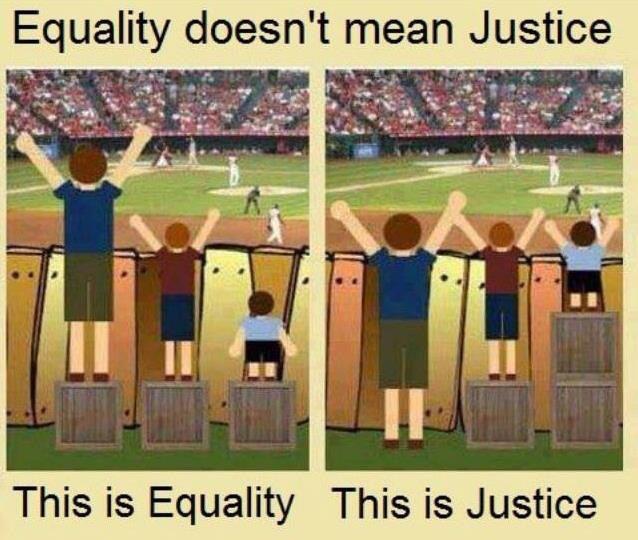
In a week where equality is going to be at the top of the political agenda – it’s worth remembering that the concept of equality is not the same as homogeneity. To treat people equally does not equate to treating them absolutely identically, regardless of circumstances. As a mother of four children between the ages of 8 and 5 months, I undisputedly love them and treat them equally. According to the principles of equality laid down by advocates of gay marriage, treating someone equally is treating them in exactly the same way as one would treat another.
That clearly doesn’t work – should I treat my 8 year old in the same way as the baby? Should I have bought exactly the same Christmas presents for every single child, not taking their age into account? Is it unfair to have bought the baby a symbolic cuddly teething blanket and the eight year old a more expensive present? Or should I ensure that all the children are bought the same presents for their respective birthdays, so they all get say, a wooden railway for their second birthday because that’s what the eldest child had for hers?
Treating people identically regardless of circumstances is the cause of great injustice. We don’t, for example, allocate benefits or state help to people identically, without first taking their situation and individual circumstances into account.
The Equal Marriage Bill is unjust and perpetuates the very inequality it is supposed to remedy. It treats ‘gay marriages’ in an entirely separate way to heterosexual ones, in that a straight couple has recourse to divorce on the grounds of non-consumation and adultery, the concepts of which do not apply to gay couples. A straight couple can divorce due to non-consummation, inherently proving that marriage was ordained for the procreation of children – why else does the law recognise the sexual element?
If ‘gay marriage’ solves inequality, why does it then propose a version of marriage that still does not meet the standards of behaviour required by a straight couple. The answer is that cannot, because ‘gay marriage’ is in itself a legal fiction and impossible under natural law.
The picture says it all. Justice is ensuring that children have a legal framework that recognises that they have a physical and biological relationship to their birth parents and that supports the rights of children to be brought up, supported, nurtured and loved by their biological parents. Justice does not deny the rights and needs of a vulnerable child in favour of the desires of a set of adults.
A propos of nothing, I was re-reading my way through arguably one of the Church’s finest pieces of social teaching, Pope Leo XIII’s great encyclical Rerum Novarum when the following passage, perhaps providentially jumped out. It answers much of the argument amongst Christians, not only as to whether or not ‘gay marriage’ is permissible, but also addresses the concerns of those who believe that by stressing family as being the purpose of marriage, apologists and defenders are perhaps being utilitarian and not Christian in approach.
In choosing a state of life, it is indisputable that all are at full liberty to follow the counsel of Jesus Christ as to observing virginity, or to bind themselves by the marriage tie. No human law can abolish the natural and original right of marriage, nor in any way limit the chief and principal purpose of marriage ordained by God’s authority from the beginning: “Increase and multiply.”(Genesis 1:28) Hence we have the family, the “society” of a man’s house – a society very small, one must admit, but none the less a true society, and one older than any State. Consequently, it has rights and duties peculiar to itself which are quite independent of the State.
Also whilst we’re on the subject, a blogger known as ‘gentlemind’ has posted a wonderful Q&A demonstrating how marriage exists to bind procreation to parenting. Crucially:
The cost of inventing the legal fiction of same-sex marriage is that we will have to legally pretend that parents and children are not physically related. That is what happens when we seek to legally redefine nature: nature legally disappears.
*Reader discretion advised – this post contains discussion of an adult nature*
Fr Tim Finigan has blogged along similar lines to my post of the other day, detailing the type of material that could be used in schools, if the ‘Equal Marriage Bill’ is enacted into law. Teachers and parents who object to having detailed descriptions of anal sex or homosexual practices on the curriculum may be compelled to accept it in the classroom or face legal consequences.
For those who haven’t the constitution to read about the ins and outs of ‘bum fun’, couched in gay street parlance (and to be fair this specific booklet is not aimed at schoolchildren, they would most likely get a watered down version minus some of the expletives), I’ve read it for you which required much clenching of cheeks alongside a dose of mind bleach. This is the trouble with viewing sexually explicit material. Visual images are extremely powerful, they burn and imprint themselves into the brain, you can’t actually ‘unsee’ them and this really isn’t something we want young impressionable children or teens to be seeing and automatically associating with sex. ‘Anal Play’ does not come without considerable risks, listed at the end of this post.
Though diseases and injuries resulting from anal sex occur far more frequently in homosexual men, this practice is not restricted to men – it is becoming increasingly mainstream and is prominently featured on the most popular adult heterosexual porn sites. This is a problem in that young men are now beginning to expect it as par for the course from their girlfriends; that teenagers are drawn to exciting, exotic and dangerous practices which make them feel more grown-up , is not a new phenomenon and teenage girls report that they are under increasing pressure to conform to sexual pressure not only in terms of engaging in activity, but also in terms of performance. Furthermore, some young men who are experiencing same sex attraction, whether fleeting or permanent, report feeling under pressure to experience anal sex in order to be ‘real’ or ‘authentic’ gays.
Speaking in an article for Jezebel(caution a soft porn image and graphic discussion) a popular online feminist journal, Hugo Schwyzer a Professor in gender studies, tries to explain the seeming rise in popularity of the practice, which seems to me to be a symptom of feminism, in terms of the record levels of anxiety that young women are experiencing and how cultural sexual expectations of females have increased considerably over a relatively short time. Women are routinely expected to undergo increasing amounts of physical pain (such as intimate waxing) and extreme dieting, in order to fulfil male ideas of beauty – that this extends to sexual practices is hardly surprising. But at least there is an admission that this a painful business along with the acknowledgement that it is this causation of pain that is most stimulating and satisfying to the male.
And more than any other sex act, anal simultaneously symbolizes both the capacity to push through suffering and the willingness to please. For a generation uniquely acclimated to pressure, anxiety, and pain, it’s little wonder that this once taboo act has become so celebrated, so popular, so expected.
Almost invariably, the camera focuses on the young woman’s grimaces. More so than with any other sex act in mainstream heterosexual porn, in depictions of anal sex there’s an explicit connection between women’s discomfort and male arousal.
Is this really the authentic and joyful vision of sex that we want to be instilling into our children? An idea that has more to do with twisted, subverted desires and concepts of pain, domination, control and submission than the idea of mutual self gift?
Discussion of sex and sex education is a total minefield for Catholics, not least because as I am painfully aware in writing this post, we don’t want to titillate, be gratuitous, cause scandal or lead others astray. We know what we don’t want to see – like all parents, whether they admit it or not, we are disturbed by the idea of our children being given chapter and verse on sexual practices and techniques, which is wholly unnecessary. As John Paul II wrote in Love and Responsibility:
This is where the ‘culture of marital relations’ comes in and what it means. Not the ‘technique’ but the ‘culture’. Sexologists often put the main emphasis on technique, whereas this should rather be thought of as something secondary, and often perhaps even inimical to the purpose which it is supposed to serve. The urge is so strong that it creates in the normal man and the normal woman a sort of instinctive knowledge ‘how to make love’ whereas artificial analysis (and the concept of ‘technique’ implies this) is more likely to spoil the whole thing, for what is wanted here is a certain spontaneity and naturalness (subordinated of course to morality).
But we are scared to discuss this for fear of appearing homophobic or even sexually repressed, whereas the reality is that it’s not as simple as worrying that this type of intimate sexual education may, to use the unfortunate term ‘gayify’ children, for which there really is no evidence, simply that we do not want to normalise or give tacit encouragement to a sexual practice that is as harmful to women as it is to men.Given there is a spectrum of sexuality, we do not want organisations such as the Terence Higgens Trust or any sex educators misleading children into thinking that a fairly common fleeting but intense same-sex crush is indicative of a fixed sexuality or that children should seek to define themselves in that way, or sexually explore those feelings.
Laurence England has written an extremely courageous post outlining an experience of sexual abuse as a youngster, which he believes contributes to his same-sex attraction – his abusers being little more than boys themselves. Teaching children about sexual experimentation is not only unnecessary, it also contributes to the hyper-sexualised culture and pressures that are placed upon teens, as well as encouraging them to experiment sexually amongst themselves. If children are taught that they should explore their emerging sexual desires, it logically follows that they may well enculturate other younger youngsters such as in Laurence’s case. It also makes life very difficult in terms of protecting children from exploitation by adults. The recent appalling cases of child sex rings in Rochdale and Oxford, whereby social workers ignored the fact that children were working as prostitutes, deeming them to have made their own sexual choices, stems from such a policy of mistakenly assuming that children and adolescents should have sexual agency. That Peter Tatchell deems it appropriate to lower the age of consent to 14 and has lobbied No 10 to this effect, is cause for concern. Why is a 13 year old able to consent to sex with a 16 year old but not a 19 or 20 year old? And of course that will be the next logical progression, if any such decriminalisation were to occur.
Rather than simply saying that we don’t want this type of material taught in schools, Catholics need to be able to explain why and that this is not born out of the dreaded homophobia or obsession with what other people are up to in the bedroom. Let’s take another fairly niche practice – BDSM, which can take many light or heavier forms. If there was a push to have this as part of the sex education curriculum, there would be an outcry. If educators took the view that people are inevitably going to try it, everyone has read 50 shades of Gray, and so children may as well learn how to do it safely and consensually, we would rightly be horrified. It’s not that anyone is phobic of, or has hatred for those who wish to engage in fringe sexual behaviour, what folk get up to in the bedroom is their concern and theirs only, but the state should not be giving tacit encouragement to or promoting this in schools. After all the Terence Higgins Trust leaflet is aimed at those on the scene, why not continue to target those already engaged in sexual activity and give advice as to safety as required, instead of steering young people in that direction.
And why do schools need to make such a big deal about teaching sex anyway – by the time they’ve clinicalised it and endlessly discussed it and talked children into using hormonal contraception and condoms etc, no wonder it’s lost half its allure and fun and children then feel the need to go and try something bit stronger, more grown-up and edgier, whether that be anal intercourse, unprotected sex, multiple partners or group sexual activity.
Enough to give anyone a headache.
Some discussion of sex in schools these days in unavoidable and probably rather sensible. The question needs to be, what vision should we be presenting to children? The idea that sex-education can be morally neutral is a fallacious one. Sex education is always taught from an ideological viewpoint – an allegedly neutral stance which allegedly imparts only facts, is an ideological viewpoint in itself, leaving the decision as to when or whether to start sexual activity up to the individual. It is the moral relativistic stance of ‘whatever is right for the individual’. Children and adolescents possess neither the emotional intelligence, the wisdom or experience to make wise choices in a moral vacuum. Even the so-called ‘relationship advice’ does not advise children other than to tell them that they should wait until they feel ready, which is meaningless. When are you ready to have sex? When you are ready to face the consequences that a baby might occur from such an encounter and both partners are ready to take on the responsibility of raising a child together.
But all in all carrot needs to accompany stick and carrot is generally a much better tactic in terms of motivating and encouraging people to reach their aims and goals, rather than a tactic that consists of scare-mongering, i.e. you’ll get pregnant, an STD and here are the harms caused both to your body and the environment by hormonal contraception…
Catholics and Christians are rather poor at presenting a positive vision of sexuality, instead appearing like a bunch of miserable party-pooping puritans out to spoil everyone’s fun. It all seems to be about ‘thou shalt not’, rather than the beautiful, authentic, joyful, wonderful vision of sex, love and sexuality by our faith. We should be shouting this from the rooftops. Catholic doctrine on sex is fabulous stuff, it’s not about power, domination, submission, control or cultural expectations of beauty and behaviour but about mutual self-gift, taking delight in the other and real love, a love that is not solely based on selfish personal sexual satisfaction, but a love based in body and soul. It’s heady and empowering stuff that really does set you free.
Here are some more extracts from Love and Responsibility:
From the point of view of another person, from the altruistic standpoint, it is necessary to insist that intercourse must not serve merely as a means of allowing sexual excitement to reach its climax in one of the partners, i.e. the man alone, but that climax must be reached in harmony, not at the expense of one partner, but with both partners fully involved.
There exists a rhythm dictated by nature itself which both spouses must discover so that climax may be reached both by the man and by the woman, and as far as possible occur in both simultaneously.
There is a need for harmonization, which is impossible without good will, especially on the part of the man, who must carefully observe the reactions of the woman. If a woman does not obtain natural gratification from the sexual act there is a danger that her experience of it will be quali- tatively inferior, will not involve her fully as a person.
A woman finds it very difficult to forgive a man if she derives no satisfaction from intercourse.
The natural kindness of a woman who (so the sexologists tell us) sometimes ‘shams orgasm’ to satisfy a man’s pride, may also be unhelpful in the long run.
There is here a real need for sexual education, and it must be a continuous process. The main objective of this education is to create the conviction that ‘the other person is more important than I’.
Not the kind of stuff that one would expect from a celibate old man in a dress! The reason that I, and I suspect most Catholics who have read anything of Theology of the Body, feel so strongly about sex education in schools is not only because it is the parents’ primary duty (and why aren’t schools empowering parents to be able to talk to their children openly, instead of assuming that they won’t and usurping our roles) but also because children deserve so much better. I really wish I had been taught this in school, it would have saved me a lot of pain and heartache. I recently read Dawn Eden’s The thrill of the Chastewhich should be required mandatory reading in every school – confirming and endorsing my experience (as someone who has previously co-habited and then was entirely chaste up until my marriage to Robin) that actually waiting until such time you are married, is awesome and improves your marriage, your intimacy and the quality of your relationship no end. The rewards of chastity are immense and more than outweigh any temporary frustration, temptation or impatience. Instant gratification is a false god, leaving you impatient, restless and hungry for the next thrill or hit.
By all means teach children about reproductive biology, teach them about contraception, how it works both physically, emotionally and spiritually, but also teach them the really good stuff – what it is they should be aiming for and why. And for non-Catholics or non religious schools who may grumble about indoctrination or religious belief, ask why it is that they should want to expose their children to early sexual activity, multiple partners and whether or not this is in anyone’s long term best interests, be that emotional or physical, because sooner or later, your past will catch up on you.
Which vision looks more attractive, a series of passing transitory encounters for which you need to take precautions in order to mitigate risk, in the hope that one day you might find the right person and do the same thing with them for the rest of your life as you have with umpteen other people, or one intimate life-long relationship which from the outset engenders mutual love, respect and responsibility?
For those in any doubt here’s the ewwww part from the Terence Higgins leaflet. Diseases and injuries Are we still sure we want this stuff taught to our kids?
Rectal gonorrhoea
anal herpes (no cure for this one and it makes HIV transmission more likely)
anal syphilis (making a comeback according to THT due to multiple partners, often symptomless until its spread)
anal warts (treatment for this is ouchie. Frozen off with liquid nitrogen or acid, treatment takes months and they may reoccur)
LGV (lymphogranuloma venereum) – rare type of chlamydia, first made its appearance in the UK in 2004
Hepatitis A
Hepatitis B&C
Moving onto gut infections now which are more common (you really don’t want to know why)
Giardiasis (invisible parasite, chronic infection can last months or years and be hard to treat, known as Beaver Fever in the US due to polluted rivers)
Amoebiasis (very nasty if it spreads to the liver)
Shigellosis and Salmonellosis
Threadworm
Then of course HIV. Not a death sentence these days, but certainly a very serious disease requiring an enormous cocktail of retrovirals to be taken for the rest of your life and constant tests and check-ups
Next we have prostatitis which comes in three different forms
Brandon Vogt beat me to it with this, as I was planning to comment later today, but he is quite right to urge people to read the message from the Holy Father about using online social networks, in his message for the 47th World Communications day, on Sunday 12 May, this year.
Intuitive as ever, Pope Benedict just ‘gets it’. It’s all about being the voice of calm reason, not overblown melodramatic rhetoric, no nasty personal insults, calumny or detraction and above all being a great witness to the faith. People glean a sense of who you are through your words and someone who is always carping and criticising, even if their points are valid, does little to demonstrate the beauty and richness of our faith, let alone impart the joy of a close relationship with our Creator, the one who will continue to love every single one of us throughout eternity.
None of us are perfect (I’m recalling my grumble earlier today about a certain Catholic columnist rather guiltily) but we have to remember at all times that we are ambassadors for Christ. And, as the Pope says, people are interested in us as people, not simply in ideas, although all of us have to admit that blogging is a form of narcissism and not get carried away by that, it is also fine and often helpful to share personal anecdotes, ones that testify to our own fallen humanity, rather than simply preach lofty and unrealistic ideals.
It’s why I write at length about unplanned pregnancies – I’ve walked the walk on that issue and can understand how it feels. It’s also why I talk about NFP sometimes being tricky and requiring sacrifice. Not because I wish to deter people, but because it’s important to understand why people may feel uncomfortable and I can empathise with the struggle. Chastity, that is appropriate sexual behaviour is not easy for everyone, regardless of sexuality or even marital status. It is the teaching that most people have an issue with simply because they cannot see the harm that results from a gesture ordered towards individualistic pleasure. It’s important for those involved in ministry or catechesis to understand those issues and sharing personal experience of struggle can not only help in understanding and walking with someone else in their hour of need, but will also bring others to reconciliation and an acceptance of truth.
Former abortion clinic workers and great apologists and converts such as Blessed John Henry Newman, demonstrate that gentle living witness and personal experience are infinitely more powerful tools of evangelisation than lengthy arid philosophical and theological jargon, which can in itself be an exercise in narcissism and intellectual show-boating.
What the Pope is saying is that it’s not ‘just the internet‘. He is understanding the importance that digital media is having on everyone’s lives and the power of social media as an effective tool for envangelisation. In terms of how he talks about the internet bringing people and communities together, again he is correct. I have met some of my closest real-life Catholic friends as a result of the internet – we now use the internet to swiftly communicate, but as a result have much closer real-life contact, as the three hour conversation I had the other night, encompassing amongst other things, Eucharistic miracles, will testify. The internet has enabled me to meet wonderful Catholics with shared common interests in real-life, whom I am proud to call friends. It has transformed my prayer life, not least in terms of some of the digital applications available – whether that be in terms of helping me make a really good confession or introducing me to an easy way of Praying the Divine Office. It has proven a far richer depth of spiritual resources, in terms of pointing me to relevant meetings and lectures, decent reading material, podcasts and online prayer requests, than simply word of mouth or any individual catechesis sessions. Whilst it cannot replace authentic real-life human contact, the internet acts as a supplement.
And because it isn’t just the internet, because what’s said on social media or blogs, can have a real and lasting impact on people’s lives, then it is beholden on all of us to ensure that we use these tools in an entirely appropriate and effective way. The internet can undoubtedly be a deadly weapon, intended to inflict real and lasting damage on others’ lives in the wrong hands. When we look at its power to evangelise and transform, to bring about conversions of heart and healing graces, it can be no surprise that the glamour of the internet is beset with pitfalls, so though the Pope urges us to be creative and imaginative with our language, we must be like Michelangelo, reflecting the glory of creation and the word made flesh, through our own words.
People are so keen to write the Pope off, in terms of his age, his commitment to orthodoxy and his liturgical preferences, but with this message he captures the heart of the internet and demonstrates an detailed understanding of a very modern tool, which people half his age either write off or have very little knowledge of. He’s certainly not anywhere near ready for retirement or mentally slowing down yet and I would wager that whilst he would approve of the way the internet is gradually bringing about and supporting much needed liturgical reform, he probably wouldn’t appreciate much of the ecclesiastical bashing that goes on either.
But all in all, like his perceptive insight in so many other areas, the Pope just gets it. And that’s why an overwhelming majority of Catholics are so delighted that the Holy Spirit moved to give us Joseph Ratzinger as our Vicar of Christ.



 The Catechesis of Caroline