There’s absolutely no contradiction between being a feminist and a Catholic

Taken from the Catholic Universe 3 November 2013

Syrian Christian women facing persecution

I was privileged to be asked to participate in the BBC’s 100 women conference this week, which was the culmination of a season of programming and online features designed to highlight and propose remedies for the inequality still faced by women around the world.

At times the conference felt surreal in that being part of what appeared to be a conference mainly perpetuated by prolific middle-class women, most of whom had achieved either professional or personal success, hence coming to the attention of the BBC, the idea that we were all still somehow unequal, being discriminated against or not being listened to by the world at large, seemed contradictory.

To give the BBC their due not every woman was a notable or big name and it was particularly humbling to meet women such as Joyce Ako Aruga, a Kenyan woman currently studying to be a teacher at university, who had to fight every step of the way for her education, only being able to attend school, once she had escaped from her marriage at the age of thirteen.

 The overwhelming narrative was that of women as victims, which when one listens to stories such as those of Joyce’s, or Feresheth, a blind Iranian musician whose parents have threatened to burn her if she sings in public, is hard to disagree with.

Which is where Western feminism needs a wake-up call. Upon introducing myself to fellow delegates as a ‘Catholic feminist’, the responses from fellow delegates and activists ranged from a politely raised eyebrow to open-mouthed horror, people being unable to process that the two were reconcilable, as indeed are many of my co-religionists, feminism being thought of as a total anathema.

But as I reminded the assembled women, Catholic social teaching demands that we listen to the demands of the marginalised and oppressed, which is complementary to feminism when it is women who are particularly targeted by poverty and who have their rights and dignity as human beings, continually violated, with practices such as female genital mutilation, child marriages, being sold into sexual slavery and gender selective abortion.

To echo the words of Cardinal Martino, the president of the Pontifical Council for Justice Peace, ‘it must not be forgotten that today extreme poverty has, above all, the face of women and children, especially in Africa.’ Amongst the UN Millennium goals is the aim to reduce global poverty which identifies gender inequality and women’s access to employment, education and health care as economic problems. The majority of those who live on less than one US dollar a day are women and therefore putting food on the table, especially when it comes to feeding children, is predominantly a women’s issue.

There are many ways in which Catholic feminists can act in solidarity with these women, while at the same time explicitly rejecting the other Millennium goals regarding population control which are used to coerce women into taking potentially harmful contraceptive measures and in some cases act as justification for enforced sterilisation and abortion. Development efforts such as micro-loans for women, co-operatives and education programmes are key strategies for development which can all ethically be supported- it is a proven and widely accepted fact that economies grow where women’s conditions improve.

Another important issue when it comes to women’s rights is that of law enforcement for crimes relating to sexual and domestic violence. All too often in countries where the dowry system operates, various agencies turn a blind eye to dowry-related violence or so-called honour killings, with the perpetrators of such terrible crimes not pursued or given extremely lenient sentences. When sexual offences are treated as being of little consequence by the authorities, this further reinforces a culture of disrespect towards women, which is epitomized in the practice of gender selective abortion and the implicit acceptance that a girl’s life is of lesser value.

Where women are treated as a lesser species and denied basic human rights, then there is plenty of scope for Catholics to consider themselves as feminists. So why is this concept treated with such unmitigated horror by the contemporary feminists of today?

Part of the answer lies in the infallible teaching of the Church with regards to the male priesthood. The general public fails to get its head around the difference between job and vocation as well as the theology that disbars women from ever being able to be ordained. Being a priest is falsely perceived to be the only way of exercising any power or leadership within the church and the fact that a large proportion of the faithful are women who are completely happy with this state of affairs and not acting from a sense of oppression, seems to have escaped many.

But perhaps more crucially is that the feminist movement has rooted itself in the ideology of reproductive rights, despite the fact that abortion has done more than any other single measure to harm the cause of the woman.

 When it came to the final debate of the day centering around the issue of whether or not faith and feminism are compatible, thankfully most women were keen not to be seen to be excluding those of us who had a faith, particularly due to the many participants who were wearing the Muslim hijab. It’s a rum kind of sisterhood that is only open to those with a lack of religious belief and more like a club for self-identifying intellectual elites

 Ultimately feminism goes beyond albeit important issues of pay and workplace parity, frankly smashing the glass ceiling is irrelevant to the majority of women, for whom we should be ensuring that the floor is steady beneath their feet. By concentrating on the issues of reproduction and equal pay, the feminist movement have forgotten the deeper philosophical issues which should underlie the movement. Who is woman? What are her roles and responsibilities and what is going to lead to her freedom, happiness and flourishing?

 Which is why it is imperative that Catholics do not simply reject feminism as mere victim identity politics, but fight for more a more holistic and authentic movement.

Catholic Annulments: Prevention better than cure

Taken from the Catholic Universe 27 October 2013


Hochzeit-Kirche-a228189742

There has been a lot of speculation that divorced and remarried Catholics may  be allowed to receive Communion following Pope Francis’ remarks on the flight back from World Youth Day in Rio in July, when he said that a synod would need to explore the ‘somewhat deeper pastoral care of marriage’, including the thorny issue of divorced Catholics.

Speaking from the perspective of someone who has had a former attempted marriage declared invalid by the Catholic church, I have to confess to having mixed feelings on the issue.

 The subjects of annulments is perhaps one of the most misunderstood and misrepresented facets of the Catholic faith and many’s the time I’ve rolled my eyes heavenwards on hearing the hoary old cliche that annulments are the equivalent of Catholic divorce or involve a secretive process which is only available to for the rich and well-connected.

 A Catholic annulment is not a dissolving of a marriage, rather the statement that while civil legalities may have occurred between a couple, something was missing that enabled the relationship to be considered a marriage in the spiritual sense of the word and that no sacrament ever existed.

 It’s a very difficult teaching for many to swallow and can seem rooted in sophistry, how can someone who observed all the legal formalities of marriage, who went through a wedding ceremony, later claim that they were not in reality, married? One can see why many might consider annulments a convenient piece of clever rule-bending, as they are subject to a strict code of canon law, couched in legal and theological language which is not easily understandable.

The reason why the annulment process remains shrouded in mystery is because not many of us make recourse to it, the subject only raises its head when a Catholic embarks upon a subsequent relationship and wishes to remarry. Personally I found the procedure incredibly healing, far from being an exercise in rubber-stamping or greasing the palms of officials, faced with the truth about the Catholic teaching on marriage, I was able to go through a process of self-examination which helped me to lay the past to rest, experience personal growth and finally move on.

It was not an easy time, I had to face up to my own faults and failings in terms of how I had approached the relationship, there was certainly an element of penitence, not least because as a Catholic I had married outside of the church without permission, ignoring and disregarding her teaching on marriage, but this only served to strengthen my resolve in terms of ensuring that were I to marry in the future, not only would it be sacramental, but that any potential spouse would share my understanding upon the nature of a Catholic marriage, that it is permanent, exclusive and open to life. In addition they would also need to support me in the practice of the Catholic faith.

It is therefore extremely annoying to hear that annulments are either far too complicated to obtain or being dished out indiscriminately to those who know how to bend the system, according to whom you listen to. I entered into the process in good faith, throwing myself on the mercy and judgement of the Church who acted pastorally, compassionately and above all, fairly.

The Church cannot change her teaching on the dissolubility of marriage, she cannot re-write Scripture and this is why Archbishop Muller, prefect of the Congregation for the Doctrine of Faith has this week sought to dampen down the expectation that the rules on remarried Catholics receiving communion will be altered. Furthermore the German diocese of Freiburg in Germany which issued new guidelines making it easier for divorced and remarried Catholics to receive communion has been instructed not to implement them.

This seems right and just on the one hand, but on the other it can seem lacking in justice and compassion for those who have been left in impossible situations. Is it really the right thing to expect a spouse to remain permanently bound to another, who has left them for another partner? Why should someone be forced to make a choice between finding another lifelong partner, someone who could in many instances act as a supplemental parental figure for their children giving them much needed stability and security, and their relationship with God?

The adage hard cases make bad law comes to mind, divorce may be becoming far more commonplace, however that does not mean that the Church should sanction or encourage it or relax her rules regarding annulments. The permanence of marriage needs to be upheld for the good of individuals and society as a whole.

But where does that leave those in heartbreaking and complex situations? Pope Francis’ announcement of a more pastoral approach is certainly welcome, those who are unable to receive communion need to know that they are still loved and welcomed by the Church and not excluded. Hopefully some pastoral solutions can be sought whether that be through extending the practice of annulments whilst keeping their rigorousness intact or some other unforeseen remedy. The Eastern Orthodox Church allows for remarriage in the spirit of penitence, in which the formerly married partner stays away from communion for a short period of time, but Archbishop Muller seems to have ruled this out for now.

Prevention is better than cure however, so rather than going with the spirit of the age in terms of attitudes to marriage, the Church needs more than ever to reinforce and explain the importance of the sacrament. There is no way of avoiding all marital break-ups but armed with a full understanding of the commitment and responsibilities of marriage as well as the circumstances that constitute validity, we stand a much better chance of not needing to be rescued from messes of our own making.

Britain holding tyrants to account? It doesn’t look much like it to me?

Taken from the Catholic Universe 20 October 2013

Chinese Human Rights campaigner Chen Guancheng

In February of this year I was privileged to be invited to attend Parliament where the blind Chinese human rights activist Chen Guangcheng was presented with the inaugural Westminster Award for his work in promoting human rights, human life and human dignity.

The whole of the packed Grand Committee Room rose and gave Chen a standing ovation as he was presented with the award by Lord Alton of Liverpool and Fiona Bruce MP, who described him as a ‘beacon of bravery’.

Chen came to the attention of the Communist regime when he used class-action lawsuits to defend the rights of rural farmers against corrupt and and tyrannical officials. In China one does not need to be lawyer in order to act as a legal representative in court and so he assisted others in filing and arguing cases in court. His campaigning spread from helping to campaign against a polluting paper mill, to exposing the discrimination of the sick and disabled and the violence of family planning officials who routinely arrest and drag women off for enforced abortions and sterilisations, under China’s one-child policy.

 As a result of his campaigning, Chen was sentenced to four years imprisonment, followed by permanent house arrest upon completion of his sentence. During this time both Chen and his wife were subject to regular beatings until they managed to escape to the USA. His family still in China still face persecution and are denied hospital treatment and medical care.

 Upon accepting his award, Chen’s voice trembled as he recounted the terrible abuses of human rights that he had been party to, whilst advocating for the rights of the vulnerable. In one particularly harrowing case, he described how the mother of a three-year old girl was arrested and detained for twenty-four days. The police ignored the mother’s desperate pleas to be allowed home to feed her child and arrange for her to be cared for by relatives. When she was finally released, the woman returned home to find the little toddler dead from starvation, having left a trail of bloody footprints around the house and the bone in her finger exposed from attempting to break through the doors and windows of the house.

 This brave activist explained the nature of the dictatorship of the ruling Chinese Communist Party ‘they can take your life as well as your property’. Since the one-child policy which began in 1979 was implemented, any respect for life has disappeared completely from China. Anyone who dares to speak out against the policy faces severe penalties, officials who state opposition will never receive job promotion and are subject to sackings. Those who violate the policy are subject to forced abortions and sterilisations, their families are persecuted, arrested, imprisoned or subject to swinging fines. In one city alone in 2005, there were over 120,000 forced abortions and sterilisations, including of women who were 8 or 9 months pregnant.

 Reports confirming horrific abuses of human rights in China have emerged in the mainstream British press, with horrific photographs of women lying in bed with their dead baby placed next to them or in a bloody bucket on the floor, to serve as warning to others as to the consequences of having more than one child. Recently government bulldozers were deployed in Shandong province to flatten local villages after population targets were not met. When local women attempted to protest by blocking the road, the bulldozers simply ran over them without making any attempt to stop. In another case a local farmer was beaten to death by local officials because he and his wife had three children.

 The Chancellor of the Exchequer, George Osborne has been in China this week, together with the Mayor of London, Boris Johnson, trying to promote and encourage closer trading and business links. He has announced plans to allow Chinese banks to apply to set up branches in the UK and negotiated an £8 billion pilot scheme in which London-based investors will be able to apply for a licence to use chinese currency to invest directly in Chinese shares and bonds. This will afford China a much larger stake and status in London’s financial markets which play a leading global role, as well as putting Chinese banks on the High Street.

Using tortuous analogies referring to Harry Potter and the amount of Chinese viewers who allegedly watch Downton Abbey, Boris Johnson has attempted to overhaul China’s image, breezily dismissing concerns about human rights by stating that it is not his primary concern as Mayor of London, telling BBC Radio’s flagship ‘Today’ programme that ‘I don’t walk into a meeting and say ‘’ I say you chaps, how’s freedom doing’. According to Boris, it doesn’t matter whether or not people are living in fear, as long as they are able to watch English period drama!

Trying to Anglicise the Chinese psyche in order to downplay the terrible abuses of human rights that are occurring under the dictatorship of the ruling Communist Party is grossly offensive and racist. The UK has aided and abetted the brutal and inhumane one-child policy via the UN’s Population Fund and the International Planned Parenthood Federation.

The UK has an illustrious history as defenders of human rights from Wilberforce to the fight against the Nazis. We should not be indifferent to the plight of the ordinary Chinese citizen enslaved by their government.

We must not put economic interests above individual human rights. We have a duty to confront the brutality of the Chinese regime instead succumbing to the Chinese economic hammer. William Hague has stated that the UK Government ‘holds tyrannical and repressive regimes to account and we make every possible effort to ensure that we live up to our own values and obligations’.

It doesn’t look much like it from where I’m standing. Chatting with Chen Guangcheng, I told him how grateful I was of his advocacy of women, from my perspective of the mother of four girls. His response was to throw back his head and roar with laughter. “Four girls, how wonderful” he chuckled, before adding sadly “not in my country. But perhaps one day soon”.

Trust in God & Scripture in Schools

Taken from the Catholic Universe 13 October 2013

pietro-perugino-tobias-with-the-angel-raphaelHaving shared my pregnancy news with Universe readers in order to advocate breaking the taboo and stigma of early pregnancy, I am now reaping the downside of being upfront following the discovery during a routine scan that our unborn child had died in utero, right at the end of the first trimester.

As we were unable to verify the sex of our baby, born on the feast of the Holy Guardian Angels, we therefore chose the name Raphael in honour of the Archangel, who in common with all angels is pure spirit and therefore neither male nor female in the earthly sense. Furthermore Raphael is also associated with the healing ministry of God.

When explaining the reason for our choice of name, I was taken aback by the amount of Christians who while aware of the name of the archangel, associated it more with the Renaissance artist and knew nothing of the Biblical connotations.

 Raphael makes an appearance in the Book of Tobit, one of the books of the Apocrypha, in which he is sent by God to heal, protect and guide Tobit and his son and daughter-in-law Tobias and Sarah. The story of Tobit’s family is one of the hidden gems of the Bible, the message of which is that God is just. Tobit, Tobias and Sarah suffer many trials and difficulties but yet remain steadfast in faith during their time of testing and enjoy God’s blessings and mercy, with St Raphael being sent to them as answer to their prayers for deliverance and making the longest recorded speech of an angel in the entire Bible!

Like Tobit we are called to trust in God and live in accordance to his plan. Suffering is not a punishment but a test, it is not our struggles that define us, but our response to them – do we rail Job-like against God, or put our faith in him, trusting that though he has not willed terrible things to happen, he will work to bring good out of our pain.

 The book of Tobit is a great guide to Catholic spirituality, presenting the sanctity of marriage, angelic intercession, a reward for good works as well as emphasising the importance of prayer, almsgiving and fasting in our daily lives.

Upon re-reading it this week and explaining its significance in the choice of our baby’s name, it once again struck me as what a tragedy it is that so many of us Catholics don’t seem to know our bible as well as we ought. Not only does this mean that we are often left floundering especially when in conversation with our evangelical brethren, but that our faith and knowledge can lack richness and depth. Christianity is a revealed religion, about what God has shown and told us, most of which can be found in scripture.

If our knowledge of the bible is sketchy, as well as hindering and impairing our faith, it also means that we are missing out on a wealth of cultural richness. As a former English literature student, I was frequently taken aback at how much my fellow students were missing out on, by having almost no knowledge of the basic Old and New Testament stories which were a staple of basic education only a few generations ago. Without a good grip on the bible, it is impossible to appreciate staples of the English canon such as Beowulf, Chaucer, Blake and DH Lawrence to name but a few.

 This week the schools watchdog Ofsted have reported that more than half of England’s schools are failing pupils on religious education. A great deal of this has to do with the manner in which RE is now taught, in an impartial and objective fashion, laying out the tenets of different faiths from which children are taught to take a pick and mix approach, drawing out strands of truths from various religions, without being equipped with the basic knowledge to be able to make such critical decisions.

I was lucky enough to have old-fashioned scripture lessons at primary school, which was akin to a period of story-telling, music, art and drama. I remember the class sitting with rapt concentration to tales of King David, singing songs about the walls of Jericho tumbling and drawing vivid pictures of Elijah being taken up to heaven in a chariot, the memories of those lessons remaining with me today, almost thirty years later. Despite attending a Catholic secondary school, my knowledge of the Apocrypha was until quite recently, limited to being purely theoretical, even though it is a key part of our Catholic cultural inheritance.

If Religious Education teaching is lacking, it is time to reintroduce unashamed scripture lessons, which as my experience shows does not need to be an exercise in aridity, in order that all children are not denied the richness of their country’s spiritual heritage, regardless of whether or not they are adherents to what is still, our national religion.

 We cannot be surprised or shocked by the current proposals that the Bible should be removed from courtrooms, how can we swear a serious oath of truth upon it, or how can grieving parents or those suffering with the burdens and trials of life, absorb the messages of  consolation and hope from the Bible, if we don’t know what is contained therein?

After Francis is it time for Pro-lifers to Pipe Down?

Taken from the Catholic Universe – 2 October 2013


The heart of pro-life work
Francis’ pro-life intentions in action

As someone whose writing has a predominantly pro-life focus, one of the questions that I have been continually asked since the papal interview is whether or not Catholic pro-lifers now need to focus their attention elsewhere instead of consistently discussing issues surrounding abortion, euthanasia and human sexuality.

Nothing better summarised the media’s confused attitude to Francis, than the reaction of the Associated Press, following his address to a group of gynecologists and obstetricians at the Vatican, in which he rejected the discarding of ‘defenceless‘ human persons through abortion. “Every unborn child, although unjustly condemned to be aborted, has the face of Jesus Christ, the Lord’s face,” said the pope, comparing the rejection of aborted children by the world, to the rejection of Christ and reminding doctors to ‘spread the Gospel of Life’.

The Associated Press subsequently reported the story as the Holy Father reneging on his word, a day after telling Catholics not to obsess about abortion, he allegedly did just that, by instructing doctors not to perform them. Francis’ speech was a deliberate reinforcement of his previous statement that he is a son of the church therefore doctrinal change is not on the agenda, but blindsided those who were hoping for a moratorium from the Catholic Church regarding abortion. Of course he was going to address the topic when talking to a gathering of medics whose specialism is pregnancy and childbirth, not to have done so would have been not only peculiar, but a gross dereliction of duty, it would have been the  enormous great metaphorical unspoken-of elephant in the room, what else would he have discussed – the potential for pelvic injuries sustained by the unsavoury activity of twerking?! The dangers of Miley Cyrus? It is absolutely nonsensical to think that abortion would not be top of the agenda in a gathering of Catholic medics.

 But there’s still a question as to whether or not those of us who would appear to be preoccupied with abortion, should now pipe down a little and shift our focus and efforts elsewhere, such as directly helping the poor or getting more involved with other aspects of Catholic Social Teaching? Should we put abortion or euthanasia on the back-burner, whilst we concentrate more upon direct evangelisation?

 The answer is wholly dependent upon discernment. St Paul informs us that there are a variety of gifts which can all be put to good use in service of Christ and so there is still a n important place within the Church for those who feel their vocation is defend the sanctity of life. In a country which is witness to 200,000 abortions a year and a rich and powerful celebrity-backed lobby group who are repeatedly attempting to get euthanasia on the statute books, it is imperative that the pro-life lobby continues to speak out to prevent and raise awareness as to these atrocities. We must not forget our duty of care to the most vulnerable in society and who could be more defenceless than the unborn and the elderly, terminally ill and dying?

The best method of evangelisation is not by proselytising alone, but by caritas in action and this is best demonstrated by unashamedly Catholic pro-life apostolates such as the Good Counsel Network in London and the Cardinal Winning project in Glasgow, who while not afraid to speak out about the injustice of abortion upon religious grounds, also provide vital necessities such as food, shelter, rent, help with finding work, baby equipment and emotional support for women facing crisis pregnancies. Furthermore it is Catholic organisations who provide non-judgemental support and healing ministries for women who have been hurt by abortion. Francis is not suggesting for one moment that organisations such as these need to close and if anything they are actually fulfilling the heart of his call for Gospel-based evangelisation.

What groups such as Good Counsel do, is wholly in tune with the Gospel as they address  and help each individual according to that individual’s physical and spiritual needs, whilst never once straying from the truth. Pro-life work is not just generically about dogma, but also about actually listening to people and attempting to address their needs and concerns, such as for example the post-abortive woman, instead of a mere insistence that ‘abortion is evil’ and a refusal to listen or acknowledge past wounds.

For pro-life writers and apologists such as myself, Francis’ words are challenging, although I am constantly aware that it is never enough to simply write about being open to life, one must also live this in our daily lives, which is often difficult. On one level it is simple enough to be pro-life, pro-family and to advocate this, although multiple pregnancies are no breeze, but actually pro-life writers must not forget that such a mindset includes being pro-poor and pro-immigrant. We must also ensure that we fight against less obvious political anti-life initiatives, such as the cutting of disability benefits and services, or the cuts  housing or other benefits that could adversely affect the vulnerable.

 What the pope has reminded Catholic pro-lifers is that we cannot be pro-life in isolation from our Catholicity. Just as Jesus commanded us that we must love God with all our heart and soul and from that a love for our neighbour will flow, we cannot lose sight of the fact that we are pro-life because it is part of the Gospel. Not because the pro-life cause is our sole Gospel.


Francis’ wise words showing that the Holy Spirit is working in the heart of the Church

Taken from the Catholic Universe 29 September 2013


pope-francis

Pope Francis has once again hit the headlines with a sensational 12,000 word exclusive interview given to Jesuit publications, in which he gives fascinating insight into his spirituality and character, as well as dropping several hints as to how he intends to govern the Church.

Of most interest to the mainstream press was the pronouncement that the Church “cannot insist only on issues related to abortion, gay marriage and use of contraceptive methods” which has been widely reported as the pope indicating that there will somehow be a softening of the Church’s stance on these matters and that the church has previously been unhealthily obsessed with sexual doctrine.

As Francis made clear in the sentence that immediately followed this statement church the teaching of the Church is clear and he is ‘son of the church’, there will be no change of doctrine, however ‘it is not necessary to talk about these issues all of the time’.

As someone who is frequently tasked with speaking to the media on a regular basis about precisely these issues, these words had me cheering with delight. The reason that Catholics find themselves talking so much about the Church’s teaching regarding sexual morality, whether that be on national television or simply around the water-cooler in the office, is precisely because this seems to be all that others are interested in.

What Francis has indicated is not that these issues are somehow no longer important, but that they are not what defines our faith, which is primarily about Jesus Christ, Son of God, Redeemer of the world, who suffered and died for our sins and rose from the dead. Catholicism is not a list of negative commandments but rather a message of salvation and hope, it is an offer and promise of eternal consolation and joy, not limited to an elite few, but to every single person here on earth, regardless of past sins, race, colour, gender or sexual orientation.

Francis is plugging Catholics back into the key message of our faith, one that makes the heart soar, not sink. He is urging us to engage in the New Evangelisation, to reinvigorate and excite both lapsed and non-Catholics with the message of the Gospels, which must always be relayed with love and compassion. Catholic Christianity is an invitation to a personal encounter with Jesus Christ, not a set of random strictures.

While Church teaching on sexuality must not be forgotten about or discarded, it must not be those issues which define our faith, which should always be Christ-centred. What should be remembered however, is that the Holy Father is speaking from his perspective as a Catholic from South America, where vast swathes of the population are well-catechised, unlike perhaps liberal Europe, where the teachings of the Church are not so well-known or understood. Whereas most onlookers in Buenos Aires would understand what was happening if they were to witness a Corpus Christi procession for example, even if they did not participate, the same could not be said about the population of a typical UK city.

We should ensure that Church teaching, especially on matters where it is easy for people to make mistakes is clear, but what Francis is reminding us, is that it is the Gospels that must come first, we must set people’s alight, make ‘the heart burn, as it did for the disciples at Emmaus’. Once we understand the message of joy, hope and forgiveness that emanates from the Gospel, then the rest will flow holistically. Being a Christian is not simply about blindly following a code of sexual ethics, which no matter how important, are ultimately meaningless if they do not reflect the message of Christ. It is in this context that Francis reflected that without God, without Christ, an emphasis that is only upon personal ethics ‘the moral edifice of the church is likely to fall like a house of cards, losing the freshness and fragrance of the Gosepl. The proposal of the Gospel must be more simple, profound, radiant. It is from this proposition that the moral consequences then flow’. It is imperative to put God’s love and mercy first and this must determine our interaction with others.

One of the most striking things about the interview was the tone which was overwhelmingly gentle, conversational, thoughtful and pastoral. It is this openness, compassion and willingness to engage which is proving to be one of the hallmarks of Francis’ papacy.

Perhaps one of the most important and overlooked motifs was the image of the church as a field hospital after battle. Not a remote pristine institution removed from the real lives of her members, but there in midst of troubles, actively attempting to help and heal everyone in their times of greatest need, regardless of their individual background. A field hospital is not there to serve the needs of an elite few, but to save and serve as many as possible and this must be the mission of the Church.

This is a vital image to those who are currently struggling or feel excluded by the church due to their personal circumstances, such as the person who has same-sex attraction or the remarried divorcee, who must be reminded that they too can be admitted to this field hospital. No-one should be excluded.

 Particularly poignant was the reminder that far from the perceived hatred of homosexuals, the Church is there for them and wants to walk with them through life and that contrary to the impression given by certain fundamentalist Christian sects, God never rejects or condemns anyone on the grounds of their sexuality. We must always attempt to look on others with the eyes of God and consider their innate dignity. As Francis said ‘Tell me: when God looks at a gay person, does he endorse the existence or this person with love, or reject and condemn this person. We must always consider the person. Here we enter the mystery of the human being’.

The reality is that the Church holds gay people in far higher regard than the secular media, we believe that that like the rest of us, deliberately made and deliberately love and destined for eternity and Heaven, and of course, like everyone else, are free to reject that. This is not a new concept, previous Popes have said similar things, but what is new is the manner in which this is being articulated, gone is the theological and philosophical language of the Catechism which can sometimes appear cold or lacking in emotion, replaced by a far more considerate and sensitive manner of speaking. The gay community is not a hypothetical academic concept but a group consisting of individual human beings.

Key to the theme of salvation, Pope Francis concentrated upon the sacrament of reconciliation which must not be akin to a ‘torture chamber’ and highlights the duel dangers for confessors of either taking too rigorous or legalistic approach or alternatively being too lax with penitents by trying to pretend that various errors do not really constitute sins. If the church is a field hospital, then it is via the confessional that wounds may be healed and transformed, but always with due care and attention.

Catholics are being encouraged to adopt a back-to-basics approach, to look at the bigger picture, if we put the message of Christ first in our dealings with others, instead of concentrating on the peripheral issues, in order to warm hearts and win souls. Francis is wanting to steer us away from the cultural wars which are so frequently damaging to relationships with others and have the potential to divert us from Christ himself.

 Despite the pope’s image of being impulsive or spontaneous, with his many breaks from previous protocol, those with an eye on Vatican affairs and church governance will have been reassured by Francis’ admission that he is wary of hastily made decisions, preferring to take his time and discern the correct course of action. One of the items top of the agenda at the time of the conclave that elected Francis was the reform of administrative functions and processes within the Vatican, but the pope has made clear that he will not be rushed and that those who were hoping for sweeping changes may be disappointed. Francis discussed attempting to see everything from the point of view of God, when it came to issues of governance but echoing the words of his predecessor John XXIII, ‘See everything; turn a blind eye to much; correct a little’ preferring in this area, to concentrate upon the small changes. The decision not to implement dramatic and potentially antagonistic sweeping changes, could well prove prudent and is a telltale mark of the shrewdness of Francis’ Jesuit order. That said, the movement towards more collegiality, and ‘thinking with the Church’, ensuring local Bishops are better empowered to deal with issues instead of referrals to Rome, will be welcomed by many.

Most endearing was the admission that like all of us “I am a sinner. This is the most accurate definition. It is not a figure of speech, a literary genre. I am a sinner”.  With a fresh new strategy accompanied by refreshing frankness, Pope Francis’ new style of papal communication and evangelisation is perfect for our age. The shepherd who lives amongst and innately understands the flock of which he is still a part.

 I would encourage all Catholics to read the interview in full for themselves, which is both inspiring and uplifting. A demonstration as to how the Holy Spirit is still at work right at the very epicentre of the Church.

Banning the Burqa: Why Catholics should be wary of imposing their views on Muslims

Taken from the Catholic Universe 22 September 2013


burqa

The contentious subject of whether or not Britain ought to impose a ban on the wearing of the burka has been reignited this week, following a judge’s ruling that a Muslim woman could not give evidence at her trial wearing a full face veil. The woman will nonetheless be permitted to wear her veil in court, but it must be removed during those parts of the trial in which she is required to give evidence.

The judge’s decision is a model of common sense in that while he insisted that it was crucial for the jury to see the woman’s face in order to assess her demeanour and expression (she is accused of witness intimidation), he also made a series of entirely sensible concessions to her religion, allowing her to give evidence via live video link or behind a screen shielding her from the wider courtroom, so that only the judge, jurors and counsel would be able to see her face. In addition he ordered that no artist should be allowed to produce a sketch of the defendant while her face is uncovered. The decision was a model of balancing religious freedom of conscience with the needs of the state to effectively deliver justice.

Various MPs have now called for a public debate on whether or not the state ought to impose a ban upon whether or not face veils ought to be banned, under the auspices of protecting women and girls from oppression.

It’s not an argument that holds much water for a variety of reasons. Firstly, although it can certainly be argued that the niqab or burka is often used as a vehicle of oppression, which I have first-hand knowledge of, having spent considerable amounts of time in Middle-Eastern countries, it is a patronising generalisation to assert that all women who choose to adopt full face-coverings are doing so because they are either ill-educated or coerced. Like many Catholic women, I’ve faced similar charges from those who cannot comprehend why I may choose to do something as counter-cultural as eschew contraception, from sheer free will. How many times have Catholic women heard the familiar accusation of being brain-washed by a patriarchal church that wishes to subjugate its women?

Undoubtedly some women will be wearing a face covering due to cultural pressure, but it should not be assumed that is the case for all women and it is certainly not a good enough reason to ban it. Should we ban swimwear, bikinis or certain styles of clothing or uncomfortable shoes, because Western women feel under cultural pressure to conform? One of my closest Catholic friends was joyfully telling me what a liberating experience it is to wear Islamic swimwear on the beach, despite the fact she would be able to carry off a skimpy costume with aplomb. While the interpretation of boundaries may differ, we are similarly called to modesty not least as an act of charity to others. Western cultural values put so much worth on physical appearance, women are encouraged to turn themselves into objects of male desire – it’s no wonder we feel self-conscious. The idea of not having to display a beach-perfect body, or be constantly worrying about an unfortunate wardrobe malfunction is extremely appealing!

It was interesting to note that when I mooted the subject on social media, all of the women, including a wide cross section of faiths, ages and politics on my timeline were resolutely against the idea of a ban, whereas all of the men were either staunchly in favour or sitting resolutely on the fence. The idea that a burka ban was required in the interests of women, being firmly rejected by every single self-identifying feminist. The irony of men deciding what women need is rescuing from their perceived oppression, being lost on them!

But Catholics need to tread extremely carefully when it comes to notions of the state deciding what constitutes acceptable religious dress, or intruding upon parents’ rights to bring up their children according to their own religious and cultural values.

Banning the means of oppression, does not in any event do anything to change the underlying attitudes. As Christians we need to be very wary of determining or imposing our interpretation of Islam on Muslims, the Golden Rule would seem to apply here.

It’s also worth noting that following the imposition of a face-veil ban in France, verbal and violent attacks upon Muslims increased by as much as 34%, state-sanctioned religious discrimination could have a similar effect in this country, especially in areas where tensions already run high. If the goal is liberation, it will not be achieved, as those women who are being coerced into wearing a veil will effectively be prisoners in their own homes, as they will be unable to leave the house with their face uncovered.

The best approach seems to be one which can balance the needs or the state or individual institutions with those of individual conscience. Businesses such as banks or airports must be permitted to compel clients to remove facial coverings for the purposes of identification. Ideally they would do so with sensitivity and discretion. Equally schools should retain the rights to determine school uniform policy, in accordance with the ethos of their institution.

We might recoil at the burqa because it is so culturally alien to us, but we should not deceive ourselves that this debate is about a benign paternalism or forwarding women’s equality. It is about the state determining what religious attire should be permitted in public.  Nuns who wear a traditional habit should watch out!

Private schools and educational privations

Like many parents up and down the country, we are currently in the process of reviewing the various local primary schools in our area in order to attempt to secure a place for our rising-4 for September entry next year.

Our decision is set against the backdrop of vehement arguments between the merits of private, grammar school and free school education propounded by those such as Peter Hitchens and Toby Young and that of a fully comprehensive system as advocated by those such as former adviser to Cherie Blair, Fiona Miller (Alistair Campbell’s wife) and Owen Jones.

To give Campbell and Miller their due, while I am no fan of their politics, they have certainly put their money where their mouth is – all of their children attended state comprehensives in the London borough of Camden. Of course a child’s home environment is at least as important as the school itself, Campbell and Miller’s children were bound to do well wherever they went, but nonetheless I have to confess a certain grudging admiration for them for eschewing the hypocrisy of other leading political figures in the Labour party, such as Diane Abbot who unashamedly sent her son to private school using inverse racism to qualify her decision.

 Were we fortunate enough to enjoy the salary and lifestyle of the Campbell family, faced between the choice of a private school and a Camden comp, the kids would be straight on the tube to the nearest school uniform outfitters to pick up their boaters, blazers and checked kilts.

If John Major is correct about the shocking influence of major private schools in public life, and I believe that he is, a healthy society is not one in which only the wealthy elite have access to positions of power and responsibility, the answer is not to introduce more quotas or to abolish private education, but ask ourselves what it is about private education that is perpetuating this situation.

Ripostes about old-school ties are glib, while social networking can undoubtedly help, it will only get one so far. You don’t get into Oxford, or even become Prime Minister or Chancellor of the Exchequr on social contacts alone. There needs to be some measure of talent and ability. A contact (whether it be from school or somewhere else) can only get you so far. It may secure a job interview but if you don’t actually possess the requisite skills to be successful in your chosen field, name-dropping or appealing to Rupert’s daddy isn’t going to help you.

I attended two public schools, neither of which have ever been any use in securing any sort of position and neither have I kept in close contact with many of my peers. I didn’t go to university. No-one was interested in where I had been to school when I worked for one of the top five accountancy firms, or in investment banking or private equity. Of far more interest was previous experience and skills and qualifications to do the job in question, as well as possessing the necessary cojones to work in the unique environment of the trading floor. None of my bosses were privately educated either and blethering on about various members of the aristocracy or society set whom I used to sit next to in school nor indeed would discussing the offspring of various sporting superstars or celebrities have cut any ice .

But there is undoubtedly something that certain schools impart, whether they be private, grammar or religiously selective, which we should be seeking to distill, emulate and apply across the board, so that all pupils have the same opportunity to achieve both personal and academic excellence.

Educationalists and social scientists will have differing ideas about not only what excellence looks like, but also how to achieve it. My perspective is an unusual one in that my eldest daughter currently attends an independent school, due to provision put in place by her biological father, which is obviously not available for my youngest three children.

At present my daughter is caught up in three days of rigorous exams, the intensity of which have surprised me, given that she is only in Year 5. We’ve had weeks of revision sessions, sheets to download with expected knowledge, in French she needs to be able to spell concepts such as giving directions, the weather and the various shops and points of interest in a town centre, as well as decline two verbs and write in sentences. In history she needs to write essays, in Mandarin recognise and write characters, in Latin decline nouns, and the science and maths seems inordinately detailed and complicated.

At first I was rather taken aback, this seemed an awful lot to be placing on a nine year old, we’ve been concentrating on not stressing-out over exams, stating that as long as she does her best it doesn’t matter, and instead of cramming, doing bite-sized revision sessions once or twice a day. They’ve also been focussing heavily on revision sessions in lessons.

 I guess the point is to get them used to exams and assessment and to be fair my daughter is coping really well and isn’t fussed at all. Another child, her best friend, has just left however, because she had a number of learning difficulties and was simply unable to cope, feeling too different to her peers and under too much pressure. It demonstrates nonetheless that all schools are results driven, concentrating on measuring and evaluating children according to a given scale, comparing them against their peers, instead of concentrating upon helping them to achieve their own individual and unique potential.

 Since the age of 5, my daughter has learnt multiple languages as part of the curriculum, French, Spanish and Mandarin, and this year Latin has been added. I thought she’d struggle with so many, but she has thrived and loves her Latin and Classics. We forget, children’s minds are like sponges. In addition, they have PE or games three times a week, and regardless of ability the school ensures that all children have the opportunity to compete in sports matches, even if they subsequently learn that they are not very good and won’t always get picked, or need to practice skills. She sings in a school choir, which she loves, there are regular church services (far more liberal/muscular Christian that would be my preference) such as for Remembrance Day on Monday, tonight she’s singing to switch on Hove Christmas lights, she recently went on a three day residential trip to France, every year she is involved in a theatrical production, she produces spectacular artwork, in short the extra curricular opportunities and activities are excellent.

 No school is perfect and to our minds the religious character of the school could be better, comparative RS drives us up the wall, when you are of a certain faith, it isn’t bigotry to tell them that we don’t believe the tenets of other religions and we wish that she could learn a lot more about her own faith. We don’t want Catholicism to be that weird thing that mummy and dad do at home, but it is mainly unsupported and at times undermined by  the school’s culture.

But you can’t have everything, and, as the recent departure of her best friend illustrates, there is no one-size fits all school. There are many many things that her school gets right, they are rigorous about uniform standards and codes of behaviour, pupils are rewarded or penalised with pluses and minuses, there is a strong and healthy culture of house competition and each pupil is encouraged and incentivised to achieve their personal best and play to their strengths.

When looking around at the local schools for our other children, the over-riding feeling is one of sadness. We are the lucky ones. There are some excellent Catholic primary schools in the area, all of which are oversubscribed, and our younger children will be supported and encouraged in their faith at school. Added to which they achieve high standards academically and have good Ofsted reports.

It would be a lie to pretend that academically they were of the same standard though, the younger ones aren’t going to get to learn Mandarin, Spanish and Latin, nor are they going to enjoy the numerous extra curricular activities that are offered on site. With four children, driving around Sussex for three separate lots of ballet, martial arts and instrumental lessons, isn’t going to be logistically feasible.

Our home environment will enable our youngest three, if not to enjoy the same type of education as our eldest, at least to succeed to their highest potential and we can always  and probably will, supplement as necessary.

 The idea of the perfect school is a myth, regardless of whether it is religious, independent or state and will vary from child to child. Obviously there are things about my eldest daughter’s school that could be improved, not least in terms of better supporting those with special needs, although my daughter’s friend is now much happier in a local state primary. For us the perfect mix would be the academic and extra-curricular facilities of her current school with a strongly Catholic ethos.

My kids will be okay however and I’ll get over the fact that they can’t have the same level of opportunity as my eldest. Life isn’t always fair. Private schools have to ensure that parents get value for money and therefore need to offer something over and above the normal. If opponents to public schools want them abolished then they need to do something to ensure that they are redundant and eliminate the need.

As a Christian, my primary duty is not to educate my children in purely academic terms, but bring them up to understand that they are children of God with all the accompanying responsibilities. They need to learn that this life is only a prelude.

If I am regretful or melancholy over the fact that my  younger kids aren’t going to receive the creme de la creme education that every child deserves, I can at least console myself with the fact they will receive a decent start at a Catholic school.

What makes me so incandescent about this, is that schooling matters. It can help raise kids out of poverty. What about the children in the rough council estates of the city, whose parents don’t have a religious faith, who don’t have the cash to pay for private schools or move into a more salubrious area and are crammed into the portacabin or ICT suite of one of the local primaries which are bursting at the seams due to Brighton’s primary schools being at over-capacity? Why shouldn’t Katie Hopkins’ dreaded Tyler or Kay-cie have the chance to learn languages, or benefit from copious playing fields? Subject to strict standards of behaviour and incentives in school from an early age, a chaotic background can be surmounted.

 In an society which places personal autonomy above other values, there is no autonomy when it comes to selecting the right school for your child. If you are rich and or religious, you have more choice than most, but even so, you have to take your chances, there’s no guarantee that my children will get a place at any of our preferred choices. As happens to many, the children will be allocated a school at random to ensure the LEA have met their responsibilities. Typically the schools with the leftover places are those which don’t perform all that well, due to a variety of cultural factors. If that happens I’ll home educate, but how many families are in a position to do so?

Average is not acceptable. We should be aiming for excellence across the board and for all levels of ability, instead of moulding children into a one-size fits all. Whether at primary or secondary level, access to academic, sporting, musical or creative excellence should not be the preserve of the super-rich. Every time I appreciate how good her education is, I am overcome with a pang of sadness intermingled with outrage that this is not on offer for all.

Once upon a time private education was within the reach of many middle-class families and were also accessible to children from working class backgrounds thanks to the now-abolished assisted places scheme. Thanks to rising costs of living and the bubble in the housing market, above inflation private school fee increases, mean that they are now accessible only to those with a hefty chunk of disposable income. Together with an increasingly ideological curriculum, it’s hardly a surprise that home-schooling is in the ascendance, or that Free Schools are being set up left, right and centre. People want more than what is currently on offer.

An unlikely Catholic feminist icon

Winbledon BardotThe blogger Mrs Meadowsweet caught my eye yesterday with a post about Pauline Boty, the female darling of the sixties avant garde generation.  Boty was a key founder of the British Pop Art movement and the only British female painter of that genre – she produced bold bright canvases which both celebrated and critiqued mass cultural movements, exploring themes of female sexuality, gender, race and politics.

Boty’s work is currently being exhibited at the Wolverhampton Gallery, including some pieces that have not been seen for over forty years, having gathered dust in the outhouse of her brother’s farm, before art historian David Mellor chanced upon Boty’s appearance upon Pop Goes the Easel, Ken Russell’s first full-length documentary for the BBC and began a quest to track down her work. As a result of the recent renaissance and reappraisal of her contribution to the sixties art scene, her canvases have more than quadrupled in price since the 1990s,

Born in Carshalton in 1938, the youngest of four children and the only girl, Pauline won a scholarship in 1954 to study stained glass  at the Wimbledon School of Art, amidst her parents’ disproval. She had originally wanted to study painting, but was discouraged from applying as admission rates for women in the school of painting were extremely low.

She completed her studies in 1961 and straight away featured in what many describe as the first ever Pop Art exhibition at the AIA Gallery in London. The following year she appeared in Russell’s documentary and began an acting career alongside her work as a painter. A phenomenal beauty, often referred to as the Wimbledon Bardot, Boty was picked from hundreds of applicants to be one of the weekly dancers on the ultra-hip Ready, Steady, Go. 

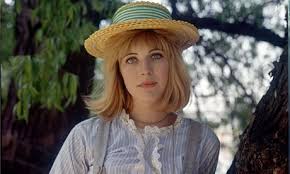
With her huge luminous eyes, back-combed mane of blond hair, flawless skin, voluptuous yet slim figure, one can imagine Pauline Boty taking a starring role as the sidekick of Austen Powers, in the films that so successfully sent up the spirit of the sixties. Despite the fact that there was so much more to her than being merely eye candy, her looks (she once appeared in a Vogue photo-spread taken by David Bailey) meant that she was not taken seriously as she should have been as a painter. According to Sue Tate who has written a book about Boty and is co-curator of the exhibition in Wolverhampton  “Unlike her contemporary Bridget Riley who was careful never to present herself as a woman artist, Boty allowed herself to be seen as beautiful and sexy, and because of that she was received as just beautiful and sexy, and not as serious and intellectual.”

Pauline Boty

Her premature death in 1966 at the age of 28 meant that her talent was never developed to its full potential, but her work displayed startling originality, her palette consisting of vibrant colours like cobalt violet and lemon deep yellow, by contrast to the muted palette used in classical training. Many Pop Art painters tended to portray woman as passive and objectified, whereas Boty was keen to celebrate unabashed female sexual desire, such as her painting With Love to Jean-Paul Belmondo, in which the Gallic new-wave actor is portrayed as an object of lust, the rose, Boty’s frequent emblem of female sensuality, imposing itself upon the heart-throb’s head. Unlike other artists such as Warhol, Boty never approached her subjects with a cool detachment, her passion is almost tangible and leaps off the canvas.

Colour-Her-Gone-by-Pauline-Boty-web
Colour her Gone
The Only Blonde in the World 1963 by Pauline Boty 1938-1966
The Only Blonde in the World

Moreoever Boty was not only an artist, actor, model and dancer but a political activist, not only touching upon subjects such as the Cuban Missile Crisis in her work, but also actively engaged in the student politics of the era. She was secretary of ‘Anti-Ugly Action’ a pressure group who marched on the new Kensington Library, demonstrated at Caltex House and scattered rose petals on the coffin of British Architecture outside the new Barclays Bank head office. Later on, when she was beginning to make appearances in chat shows of the day, she wasn’t afraid to speak her mind and displaying some of the morality with which she would have been brought up (Boty was a baptised Catholic) she challenged the esteemed historian A J  P Taylor who had been describing Hitler as a ‘great man’ in relation to the magnitude of some of his achievements. Pauline refused to countenance this view, passionately retorting, ‘The size of his deeds no more make him great than their nature makes him good’, an interjection which apparently briefly stopped Taylor in his tracks.

As perhaps might be expected, Boty lived the life of the avant-garde set, she lived a life of sexual liberation, was embroiled in a messy affair with the married producer and director Philip Saville, she dabbled in drugs, smoked pot and occasionally took Benzedrine, but apparently had a preference for Purple Hearts. Her house was a hive of activity, Ossie Clarke was a regular guest, she was close friends with Bob Dylan and friends remember parties, champagne and heated debates.   Several anecdotes abound about her unbridled sexuality, posing nude in front of her photo of Johnny Halliday, sunbathing topless in Ibiza, describing her genitalia in lurid and explicit detail in interviews,  behaviour that broke all social conventions and that would still be considered vulgar 40 years later.

So, with all this in mind, especially when one thinks of some of Pauline Boty’s more sexually explicit work, (one painting featured a naked female derriere, another had the words ‘oh for a fu’ enigmatically scrawled across the corner), why on earth should she be thought of as a Catholic feminist icon?

Firstly, as a sixties pioneer, someone who was interested in smashing the limitations placed upon women and not interested in conforming to society’s expectations, she unexpectedly got married to actor and literary agent Clive Goodwin, ten days after meeting him.  Speaking about the union, her friend Penny Massot says “He was straight and conventional and she was wacky, never quite knew whether she should be with Clive, you know . . . But I think they were dreamy together.” Their marriage was a happy one, in an interview in 1965, Boty spoke about marrying Goodwin because he made her feel secure. Not the sort of thing that modern feminists would be happy to promulgate and perhaps one of the reasons why her memory was until recently expunged from popular history. Why would a beautiful talented politically engaged woman who seemingly had the world at her feet choose to marry? It doesn’t fit in with images of an oppressive patriarchy, especially when we learn that as in all successful marriages, the benefits were mutual, Goodwin by all accounts was transformed as a result of his marriage.

Tragically upon a routine examination during the first trimester of pregnancy, it was discovered that Pauline Boty had leukaemia. She refused to think about abortion, which though still illegal would have been easy to obtain for a woman with her contacts and furthermore refused chemotherapy in case it harmed her unborn baby, a decision which would ultimately cost her life, her daughter was born in 1966 and Boty died a few months afterwards, although she was able to care for her baby for a short time after the birth. In circumstances in which pro-choice feminists would argue that an abortion is a necessity (modern medical research has proven that there is no risk to pregnant women undergoing chemotherapy after the first trimester) Boty stood up for the right to life of her own unborn child.

Interestingly for someone looking to smash gender barriers, amongst her political campaigning and affiliations she did not seem to have involved herself with the activities of ALRA, the Abortion Law Reform Association, established in 1936. While claiming her as a pioneer of the modern feminist movement, the feminists seem to have overlooked this key facet of her life.  A woman who had everything to live for, committed an act of ultimate generosity for the life of her child, not wishing to do anything that might cause her baby what she believed to be, untold harm.

While her life is hardly commensurate with that of the average hagiography, we should nonetheless note and pay tribute to one of the modern feminists who recognised that gender equality does not have to necessitate taking the life of an unborn daughter, even though this came at an enormous personal cost to herself.

Mental Blocks

I had an interesting conversation with Caroline Criado-Perez the other day when I met her at the BBC’s 100 women conference.  More on that another time (or see this week’s Catholic Universe).

The other Caroline, has had a similar experience with regards to myself in terms of online trolling and obsessions, only her experience seems to have been far more intense, in that following the success of her campaign to get women represented on bank notes, she has been subject to some terrifying  threats of immediate violence to her person.

Though I regularly receive comments about my appearance and sex appeal (or lack thereof), these ones are easy to brush off.

Iggy+Pop+PETA+30th+Anniversary+Gala+Humanitarian+l8CIQfCoJaUl
“Iggy Pop, that’s you that is!”

What’s not been so easy to brush off however, is the sustained two year hate campaign, which I have regularly written about here and which, at time of writing seems to be still ongoing.

Some insanely vicious stuff has been written. I can’t actually quite process how people could be so spiteful towards a woman who is still physically and mentally dealing with the effects of losing a baby.

Displaying a gross misunderstanding of the human psyche, it is thought that because I am utilising social media, it is therefore open season on me again. In addition it is denied that I was unwell or vulnerable in my previous pregnancy (my daughter was born early at a low birth weight as a result of pre-eclampsia, the stress of a concerted campaign of online hatred being thought to be a determining factor), because I was using social media and because I made some appearances on TV. I suggest those people do some research into high blood pressure in pregnancy before jumping to ill-informed conclusions.

These sentiments are all very telling. According to this logic social media is a rough and ready place, that if one uses it, then one should be prepared to face all sorts of abuse and that a pregnant woman who wishes to avoid stress and who has become visibly very upset and distressed at the relentless spite and appalling insults chucked her way, is being reckless if she engages on social media in any way.

Anyone with an empathetic bone in their body should be able to understand why pregnancy is a vulnerable time for women, not least by dint of the extra hormones sloshing about, adding to natural anxieties that every woman experiences in pregnancy. It’s a time of increased physical and mental stress, which is why women are advised to take measures to take care of themselves.

It says much about contemporary attitudes to social media, if attempting to use Twitter, which many of us need to do not least for work purposes, is thought to be akin to masochism or reckless endangerment.

An extreme sport?
Is Twitter an extreme sport like riding dolphins?

I saw this in the case of Caroline Criado-Perez, who by her own admission had a mini mental-breakdown as a result of the pressure of relentless abuse. Basically she broke the golden rule, she displayed emotion and furiously shouted back at her critics. Which they revelled in, being able to label her as mad and unstable, in an attempt to grab the moral high ground, with patronising displays of faux pity towards her obvious mental distress, which they used to disenfranchise and silence her. “Poor dear, she’s obviously lost the plot, she really shouldn’t have been so abusive to her critics. If you react like that, then you shouldn’t be on here in the first place”.

Which says what? That social media should only be for the emotionally robust and those who are able to be able to brush off huge amounts of taunting and verbal abuse.  As Caroline says, she’s only human and she broke and frankly it’s not surprising after so much pressure.  Twitter provides social interaction for many who are otherwise isolated, should we condone disenfranchising the weak? Why is displaying emotion so much more taboo than verbal abuse and open campaigns of bitching, sniping and bullying?

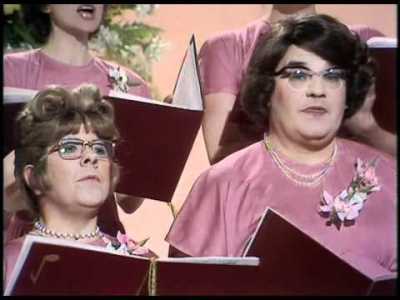
I have enormous sympathy for Caroline. While the threats may be of a different nature, every day it is made extremely clear that my feed is being stalked and trolled. Innocuous comments are seized upon to see if they can be distorted or used as ammunition towards me. One wholly innocent  comment I made about those two subversive genius ‘The Two Ronnies’ was screenshotted and copied and pasted to Ruth Gledhill of the Times of all people, by someone who was blocked, in an attempt to stir up some kind of controversy!

Catholic speaker Caroline Farrow admits she enjoys the Two Ronnies, shocker!

It sounds laughable but it’s wearing. Every single day one woman uses my Twitter feed as her source of daily stimulation. Whatever I say, she makes a comment on, deliberately stating the opposite and trying to make issue of. The other thing she will do is spot who has interacted with me and then interact with them herself, although she’s got wise as to the repercussions of constantly using my handle.  On one level it’s laughable and doesn’t bother me. I’m obviously an extremely fascinating and compelling figure in what must be a dull grey and lonely life. She’s blocked so I don’t have to experience her madness. Where it gets tiring however is when she uses my handle and therefore incites other people to join in. One then receives a stream of replies with her copied in, meaning that you have to trace back to her original tweet to find out what on earth is being discussed. I had a private message this morning from a friend wondering why this woman who is blocked appeared to have favourited her tweets that mentioned me.

It’s a common tactic, one that was used by a Tweeter who has now fortunately been banned for prolonged spamming of other users. He would take a tweet one had made, take words out of context to distort and misrepresent one’s original point, meaning that you then received a string of outraged and angry responses. It was a technique designed to sap one’s time and energy as well as dent your reputation. The only response was to either reply to those furiously demanding why you had allegedly said xyz, and restate the original point, ensuring that you missed out the blocked protagonist, or to ignore altogether. But it was nonetheless infuriating, a constant irritant to be misrepresented on a daily basis.

I set up a private locked account in order to be able to interact with my friends without the hassle and to avoid the gaze of such people, who proceeded to vociferously complain and then troll and stalk my mentions column which still showed up as public (when you protect your account, your tweets are private but those who interact with you are still visible) publicly attacking anyone who was seen to be saying anything supportive to me. In the end I had to delete the account, a move which was deemed as wise, one person saying that they were too scared to be seen to be my personal friend as they knew that they would be targeted and attacked.

So far I have been to the police on three occasions, to complain about incidents such as my personal details being outed (someone would have needed to have paid the records office or done some serious digging as they are not available anywhere on the net) meaning that I needed to change password details, implied threats of blackmail and recently claims that I was not pregnant and that a miscarriage was ‘convenient’ and an ‘excuse’.

Despite several people, including serving policeman friends confirming that though these are serious breaches of the law, because no specific threat of violence is being made, I have to put up with it because there are inadequate resources to prosecute. The police don’t believe that prosecuting those who are using the internet and social media to drive someone to the brink of a nervous breakdown in a concerted campaign of intimidation, is in the public interest.

I recently posted a video of my daughter singing the Salve Regina to a sock puppet online, in attempt to laugh at some of the madness which has seen me being publicly accused of being an ex-pat who runs a blog about his donkey sanctuary in Spain!  My children always sing the Salve at bedtime, they also love playing with sock-puppets, it was an impromptu moment when I caught my daughter practising her ‘ventriloquism’ and so I caught it on camera and shared in an attempt to make people smile and share how we try to incorporate the faith into our daily lives.

This video has been touted as proof of my being sinister, evil, pathological and dangerous and sent to various professional colleagues in an attempt to have work assignments removed! Plus I’ve been criticised for sharing footage of my children, such is society’s pre-Victorian attitude to children which seeks to lock them up and keep them out of public view for fear that some sexual predator might gain some excitment from them. (Although there’s a whole other issue).

Like anyone I should be able to use the internet and social media on my own terms. I should be able to log on to Twitter, shoot the breeze, engage in some online discussion or apologetics, post some interesting links, do my stuff then click off. I dip in and out of Twitter on my phone when I get a free five or ten minutes. While all of us should be aware that we are in the public square and ought to act appropriately, especially if our profile denotes the company for whom we work or an organisation with which we are involved, a certain courtesy does not mean that we should be needing to look over our shoulder every five minutes.

medscaleits_not_paranoia_if_they_really_are_after_you

If we want to make social media an universal safe space then one of the things that should happen is that Twitter should implement a block function that is similar to that of Facebook. If you block someone then Twitter should take steps to ensure that not only can you escape their rantings but also that they are blocked from being able to see your tweets or what people say to you.

For those who say that this is not in the original spirit of the thing which was originally an open platform for the free exchange of ideas, I think we have to accept that like all digital platforms, it needs to evolve and adapt. New users are automatically given an element of trust, but if a certain person invades our privacy, breaches our trust and makes us feel unsafe, rather than withdrawing from the platform itself (which in itself puts the responsibility and blame for the abuse on the abused) we should have the option to stop those from having access to us, for the sake of their mental health and ours.

With online abuse and cyber-bullying becoming an increasing problem, the police cannot be expected to prosecute for breakdown in relationships and all too often social media is wielded as a real weapon of attack able to do serious damage. There’s been a spate of teen suicides related to online abuse, this is going to be an increasing phenomenon, alongside us being taught how to keep ourselves safe and develop online strategies, the social media platforms need to play their part.

Blocking someone sends them a message, it says, look I don’t want contact with you, please leave me alone.  Using Twitter should not mean that you are held responsible for someone else’s fixation upon you. One of the thing that I have learnt through my experience of being online stalked is that very often the victim, the person being obsessed about, can become as obsessed as the perpetrator. It’s understandable because one is always looking over one’s shoulder, trying to pre-empt or anticipate what on earth the aggressor might do next and also a way of trying to gain control of the situation. It takes an immense amount of strength to emotionally detach and not care and when people are engaged in criminal acts of harassment, evidence needs to be garnered in able to put a stop to the situation. Especially when the medium of the internet allows for the rapid dissemination of information, for good or evil.

We know that internet and online addiction is becoming a issue in society. At present Twitter enables and feeds the obsessions which is not healthy for either party. I have become the target or obsession of a tiny cabal of people for some time now. It’s telling that whenever a fresh item of spite is served up, it’s always the same small group people serving up steaming dollops of nastiness and spewing new poison.  Being at the end of such vitriol is extremely trying and the extent of the campaign should not be underestimated. But at moments where I am driven to the depths of anger and despair, what pulls me up is imaging the hell and torment that these people must be experiencing to take such gleeful pleasure in attacking a woman, a mother of four young children and laughing at her visible torment when, to use the words of my husband, they urinate all over the grief of our dead baby.

If you tell someone that you wish for them not to contact you, even if it’s only for a brief period of time to give you some equilibrium, then they should respect that. If you tell someone that you wish them to leave you alone, then they should not claim that your existence gives them licence to continue pestering you.

Twitter needs to be able to help users to help themselves and each other, by respecting that a block button means that you want privacy. We shouldn’t need to lock our accounts which then hinders our interactions with the world at large, but we should be able to ban certain users from seeing what we are up to, if they abuse our trust. Most trolls are lazy, not bothering with creating multiple accounts. In addition most of the persistent abusers revel in their identity and obsession regardless of whether or not this is real or assumed.

Today my troll, with typical lack of self awareness, blustered “let’s hope for a drama free day on Twitter”. Amen sister. If you can’t stop yourself from spying on my feed, screen shotting it and generally making insulting, derogatory comments and lying about me, then Twitter should help you to help yourself. We all want an end to the drama. If you can’t stop feeding your unhealthy cycle of co-dependence then Twitter should do it for your own sake and all those of your ilk. That way a lot of heartache and drama can be avoided and we can all enjoy a healthier experience.

The internet is a new tool. No-one foresaw its addictive and self-destructive potential.