The controversy about 40daysforLife continues to rumble on, following their appearance on the Today programme on Wednesday morning, which with an audience of over 4 million people, was a massive publicity coup for an ‘organisation’ which is run on a shoe-string.
The amateur nature of 40days is both a blessing and a curse. It’s a blessing in as much as without access to any sort of slick PR machine, unlike the abortion clinics and their associated groups, 40daysforlife cannot be accused of back-door lobbying or underhand techniques. There is no flashy website or dedicated social media manager. They are very much what they say on the tin. An attempt to unite Christians and other faiths, in an invitation to attend vigils to peacefully pray for all those inside the abortion clinics. There can be no doubt with regards to the sincerity of the organisers or participants. Credit needs to be given to Robert Colquhoun who brought this campaign to the UK and who has mobilised the prayers of many people, both in front of the clinics and encouraged prayer, meditations and fasting for those at home.
That 40days have appeared on national media, following their appearance on Radio 4, they were then the subject of discussion on Matthew Wright’s show on Channel 5, is a testament to their success. They are certainly raising awareness. There can be no doubt that they have pro-abortion advocates rattled, with the emergence of counter-campaigns and lots of attempts to smear and discredit.
Which brings me on to the flip-side of their efforts. It needs to be remembered that this is a wholly amateur operation. Every single volunteer, from Robert Colquhoun downwards, is unpaid and gives up their free time. They all have day jobs. There simply is not the money to employ anyone. Which means that their social media account is not running in as professional a way as would be desirable. Getting the PR right is an essential part of activism, and social media plays a not inconsequential part. Understandably, 40days sees their main role as prayer and fasting, they are far more concerned with the spiritual than the temporal, which leaves them open to criticism.
More seriously, the amateur nature of the campaign also means that it leaves themselves open allegations of malpractice and harassment such as the filming and harassment of women. The filming of women both on the street and going in and out of the clinic is wholly unacceptable. 40daysforlife do not condone or encourage this is any way. The difficulty for them is, that despite the presence of at least one organiser at every vigil, it becomes very difficult to control the behaviour of other people. Participants do need to sign up to the statement of peace, which explicitly prohibits people from acting in a manner that may be harmful and asks participants to ensure that they reflect Christ’s compassion and love. The difficulty is that Christian compassion and love may be interpreted in a myriad of ways, however we can be reasonably confident that Christ would not condone the filming and invasion of privacy of vulnerable women. Once somebody does start to behave in a way that is unacceptable, they are immediately disassociated from the vigil, but as the participants are supposed to act in a peaceful way and are predominantly concerned with prayer, it becomes almost impossible to force someone to stop doing something unhelpful. Filming in public is not against the law and even Sunny Hundal was not averse to turning up to Bedford Square and filming, although he did not specifically film the faces of women. Unless any specific laws are broken or public order offences committed, though the organisers can politely request people to stop filming or behaving in a way that may be deleterious, they are powerless to act, other than call the police. The filming would appear to be a two way street, participants on the vigil have informed me of being very disconcerted that for the entire duration of their stay (usually an hour) there has been a member of the clinic with a video camera trained directly upon them.
On the Today programme Anne Furedi read a statement from a woman who said that she had been followed to the clinic and then made an allusion to women being pinned up against the wall. Obviously if this has happened it is despicable, however as BPAS are obviously filming the protest, surely if this had happened there would be evidence which should have been passed to the police. Personally speaking, if someone had done that to me whilst entering an establishment, I would have alerted the staff inside straight away, identified the assailant and called the police. There was another accusation of encirclement, followed by an admission that very often there will only be one protestor, which makes encirclement impossible. If one person follows another to the clinic door as alleged, unless they are some kind of super-hero with extraterrestrial powers, or able to bi-locate, encirclement seems highly unlikely.
Whilst loathe to accuse anyone of lying, it seems possible that some distortion has gone on here. The modus operandi of 40daysforlife is that most participants take part in prayer and witness and volunteers take turns to distribute leaflets. The following accusation, is not one of stalking, but of women being followed to the door of the clinic. If this does happen, the zeal is understandable, but it must stop. I have spoken to several participants of 40days vigils over the past few days and none of them recognise this type of behaviour. What usually happens is a leaflet is offered, if the person wants to accept or engage in conversation, discourse takes place, but following anyone down the street is not encouraged and would disassociate someone from the vigil.
40days recognise that women entering the abortion clinic are vulnerable. That’s why they have a big sign “we are here to help” and why they offer back-up support, which I will discuss in a later post. Abortion rights groups are so concerned by the impact of these vigils that they are using every tool in their arsenal to smear and discredit, that they are also targeting the Good Counsel Network, again another voluntary organisation, entirely reliant on charitable donations and who are more concerned with their daily work of actually getting on and providing real practical help, than mounting PR campaigns or properly defending themselves. Those on 40days must ensure that they do not leave themselves open, if a leaflet is offered and refused then that should be the end of it. An opportunity to engage and change hearts and minds has been put forward, pestering women who are in terrible situations is counter-productive. IF this happens, and I’m not convinced it does, but if it does, then organisers need to stamp on this. Though I am in no way vulnerable, I know just how annoying it is when someone attempting to advertise a product or hand out a leaflet won’t take no for an answer. It just puts one’s back up and causes defensiveness. On an everyday level, there is an incredibly pushy group of cosmetic salesmen in Brighton’s Churchill Centre, who seem to target me every time I have the children in the double-buggy. Despite the fact I am clearly preoccupied with manhandling a buggy, stopping child A from pulling child B’s hair or preventing child from clambering out of buggy or tantrums etc, a “no thanks” seems to have no effect, these boys continue to sidle up alongside you, repeatedly cajoling you to try their luscious products. Never mind the hand-cream, it’s Arnica they need if they don’t leave me alone. If unwanted hand cream samples give me the rage, it can only be imagined what a passionate pro-life supporter might do to a woman who is in a delicate emotional state. A leaflet offered is the most that should be attempted and a refusal met with good grace.
Ann Furedi and others have commented that the actions of 40daysforlife are un-Christian in their actions. Whilst I usually attempt to ensure that my pro-life arguments are predominantly secular, a pro-life viewpoint does not necessitate theism, I am not ashamed to admit that I am first and foremost a Christian, and for me, being pro-life follows holistically from my Christian faith. Prayer constitutes an enormous part of Christianity. I don’t talk about my prayer life as often as I should, but that is partly because for me, it is deeply intimate and personal. As personal to me as my intimate life with my husband. I worry that talking about it, somehow violates my relationship with the Lord, but prayer is a huge feature of my daily life. As Christians we should never under-estimate the power of prayer, which is part of the success of 40daysforlife. There have globally been thousands of babies saved.
Some, including Christians, have mooted that this prayer should be in the confines of our own homes. To me, that seems to be pandering to the modern secular agenda. It’s Okay to be a Christian, but we have to be nice mute ones, never causing any trouble. That isn’t what Christ was about, he was a radical, he hung about with the poor, the dispossessed, the outcast and the vulnerable. He drove money lenders out of the Temple and was non too concerned with what view the authorities may take of him. Would he have been outside an abortion clinic healing women before they went in? The answer is most definitely. However, though Christ always meets you where you are, He does not force Himself upon you. All of those who encountered Christ, saw Him and came to Him. He did not chase people, He invited them to follow Him. Which is of course the lesson for those outside clinics. An invitation must be issued, but not forced.
When it comes to the issue of Christians publicly manifesting their faith, we seem to have something of a crisis in the UK, which is feeding into a culture war. Politicians love to tell us that we are a tolerant and diverse society, but what that seems to entail in practice is smiling tolerantly and happily at women in their hijabs or saris or at Gary and Jamie holding hands whilst walking their Gucci-clad chiuaua down the street. Isn’t it wonderful, we tell ourselves, that people can now live their lives without harassment or fear. Whilst that is most definitely true, the same is not said of Christians who could be said to be serious in their faith. We are “fundy nutters” driven by religious fervour and hatred apparently. What is forgotten is that a key part of Christianity is not only prayer, but evangelisation. Spreading the Good News. Clearly this has to be done in an appropriate way, one that is not counter-productive, but in an allegedly tolerant and diverse society, it should be possible, to gently talk about your faith or your beliefs without living in fear of hate-speech or dismissal. If a work colleague wants to ask me my views on something, I should not be too frightened of the consequences to honestly engage.
Far from being un-Christian praying peacefully outside an abortion clinic is an act of witness and of faith, it is a living out of the Christian vocation and should not be eschewed out of fear or because it is thought impolitic. There seems something diabolic behind the notion that Christians should not be praying outside of Churches or their own homes, let alone in front of abortion clinics, where so much destruction of life is taking place. It comes to something when Catholics are suggesting that other Catholics should not be praying in public, for fear of other’s reactions or negative PR.
For those who suggest that their presence is un-Christian in that it potentially upsets women, I refer to my previous post; if abortion is upsetting and traumatic – why is that? This person appears to think that it is nothing of the sort – I love abortion she says. Women must be treated compassionately and sensitively, which must rule out harassment, invasion of privacy or anything that could amount to condemnation, however a presence which offers another choice or point of view, a way back from abortion, does not lack compassion. Abortion is the ending of the life of an unborn child, which hurts not only child, but the mother as well. A pastoral team in my diocese patrols Beachy Head, spotting potential jumpers and offering fellowship, comfort and support, a way back. No Christian would stand back and watch a person hurl themselves off a cliff, because it’s their body, their choice and they were scared of being intrusive. Offering a leaflet or saying a rosary in those circumstances would be a wholly inadequate approach. A pro-life presence signifies to people that they do not have to end the life of their unborn child.
What all Christians need to be aware is that pro-life should consist of the three Ps; politics, PR and prayer, which all have equal import. 40days need to ensure that their wonderful prayer efforts are not undermined by lack of PR or politics. “Professional” Catholic pro-life activists must not forget or deny the power of prayer and public witness.
Responding to Robert Colquhoun’s statement that those attending vigils were there out of a spirit of compassion and love, Anne Furedi requested that they should “take your love elsewhere”. It doesn’t take a genius to work out which of those statements is most in accord with Gospel values.
Postscript
During yesterday’s vigil at Bedford Square, a member of the public arrived and covered the vigil in horse dung. They calmly ignored it, continuing to pray, clearing up the site when they left. That’s intimidation for you!
As I wrote both on the blog and in the Catholic Herald last week, pro-lifers are gaining momentum, the pro-choice lobby are on the back foot following the recent scandal of sex-selective abortion with the issue of post-birth abortion hot on its heels and they don’t like it one little bit, hence they are resorting to the oldest trick in the book and as I know to my cost, the staple of those in an ideological corner – attack, which is supposedly the best form of defence.
Today has seen a flurry of articles in the paper of pro-choice propaganda, commonly known as The Guardian, fretting about the activities of 40daysforlife, whose peaceful prayer vigils, expose the self-deceit at the heart of those who support a woman’s supposed “choice”. They claim that the very presence of peaceful protestors is somehow intimidating, that it is imposing views on vulnerable women facing a difficult decision, whilst denying the humanity of the unborn child. If this is not an unborn child, but simply a cluster of cells, or an unviable fetus that would be unable to survive outside the mother’s womb, then why is the presence of those on the vigil so troublesome and disturbing? If a woman is simply exercising a choice available to her, i.e. not to have a baby, then what on earth has she got to worry about? She should hold her head high, march straight on into the abortion clinic and get them to remove the products of conception forthwith and pay no attention to the religious nut jobs praying to their invisible sky fairy. If it is simply a choice, a meaningless decision, then 40daysforlife are nothing more than an advertising campaign for the alternative choice and if a woman has made her mind up she is unlikely to be swayed.
Tragedy?
The problem for passionate advocates of abortion rights is that many of their own, such as Diane Abbott, accept that abortion is a tragedy, because it entails the destruction of life. Even if they prefer to term it the destruction of potential life, they are some way to recognising abortion for what it is. If abortion is a difficult and burdensome decision it is precisely because those faced with seemingly impossible situations who enter the abortion clinic with a heavy heart, recognise the gravity of their actions, yet feel that there is no other solution for them. For these women who are most definitely vulnerable, the presence of those praying for them, their unborn children and the staff in the abortion facility, is problematic, because it is a tangible reminder of the seriousness of their potential choice. It makes it more difficult for women to ignore the reality of the human life within them.
Pro-life protestors are problematic for the abortion clinics and supporters of abortion because they are either an advertisement for the opposing course of action or a physical reminder of the life of the unborn, not to mention the enormous elephant in the room, namely that human nature is to seek the approval or validation of others. This is precisely why every single abortion-rights group emphasise the “one in three women will need and abortion” slogan at every opportunity. This not only reinforces the idea that abortion is a basic necessity, every mother must be able to get rid of her unborn child, but also uses social validation, a known technique for helping those who are undecided, typically in the world of retail when contemplating what product to buy, we are influenced by the decisions of others. Protestors outside a clinic are a manifestation of people who are in disagreement and who, whilst enormously sympathetic to the plight of women facing horrendous circumstances, cannot and will not condone the killing of an unborn child. What is deemed unacceptable is that there is a group of people present who disagree with the choice that is being made. It is always difficult when people express disagreement with our own personal moral choices, but that is life. Those who care about us try to sensitively point out when we are making harmful decisions. That isn’t hatred or condemnation – it’s genuine care, concern and compassion.
What happens during these vigils?
Admittedly I am yet to attend one, however this will shortly change. The highly respected and well-renowned Catholic priest Fr Stephen Wang attended a 40 days vigil at the weekend, and it was his moving testimony that has motivated me to overcome my reticence. The only reason I have not previously attended is that last year I was heavily pregnant throughout the 40 days, indeed Felicity was born in the final days of the campaign, on Maundy Thursday last year, commuting to London heavily pregnant with a toddler in tow and negotiating the London Underground was too much of a chore. Similarly during the campaign of last Autumn, I would have needed to jostle toddler and newborn single-handedly around London and felt that though worthwhile, the exercise would have been too fraught with logistical difficulties.
As Fr Stephen states, these vigils are entirely peaceful. I imagine that the non-religious would find them interminably boring. It’s literally a small group of people praying underneath a non-graphic banner with a depiction of a Dove and a Bible verse. Hardly the most chilling or gruesome of images. Look away now.
Terrifying aren't they?
As Fr Stephen notes:
People at the vigil are not there to judge, but to pray and to offer hope. And you feel the reality of this prayer and hope when you are there, even if it highlights the starkness of the choices many people are facing.
Ben Quinn wrote an uncharacteristically balanced piece, the tone of which sympathised with the staff of BPAS, but nonetheless conceded that often the protestors consist of
a solitary participant…reciting the rosary across the road from the clinic.
Sarah Ditum, on the other hand, was a lot more strident, her piece contained no direct evidence, but simply quotes from Clare Murphy of BPAS who claims that protestors “encircle” women on the doorstep. 40daysforLife is in its third year. If this alleged harassment is occurring, then why have the police not been alerted and why have BPAS not used a camera of their own in order to prove what is allegedly occurring?
Here is the statement of peace that every single attendee of the 40daysforlife vigil has to sign as a registered participant.
1. I will only pursue peaceful solutions to the violence of abortion when volunteering with the 40 Days for Life campaign
2. I will show compassion and reflect Christ’s love to all abortion facility employees, volunteers, and customers
3. I understand that acting in a violent or harmful manner immediately and completely disassociates me from the 40 Days for Life campaign
4. I am in no way associated with the abortion facility or its affiliates by way of employment, informant, volunteer, client, or otherwise
While standing in the city right of way in front of the abortion facility:
5. I will not obstruct the driveways or sidewalk while standing in the public right of way
6. I will not litter on the public right of way
7. I will closely attend to any children I bring to the prayer vigil
8. I will not threaten, physically contact, or verbally abuse the abortion facility, employees, volunteers, or customers
9. I will not vandalize private property
10. I will cooperate with local city authorities
It hardly tallies with tales and tactics of intimidation. Where the problem has arisen, is that it seems like some over-enthusiastic participant has been spotted videoing the entrance to the facility. This is unacceptable and 40daysforlife have disassociated themselves from and condemned this action. The facts are not entirely clear, but when I spoke to Robert Colquhoun this afternoon, he confirmed that participants often do take cameras, but any photography or videoing that takes place, is not of women, but of the participants themselves, often to guarantee their own safety.
As the indomitable and heroic Clare, testifies, having been to several vigils, it is actually the protestors themselves who find themselves threatened and harangued by passers-by. When she attended a vigil outside the Marie Stopes clinic in London, a passer-by thought it appropriate to take photographs of her children, telling her that he was going to send them to Social Services as she was clearly an unfit mother. Last week at the 40days vigil in Bedford Square, a local man approached her children, telling them that their mother was doing “devil’s work” and that he was going to call the police. He made good with his threat, the police duly appeared having been informed that there were children outside the clinic who should be in school, whereupon it was explained that the children were home-educated and the policeman said no further action was necessary.
On one occasion Clare was interviewed for the Catholic TV channel EWTN, therefore a camera crew were filming quite legitimately. Robert informed me that three years of prolonged threats and insults on the vigils had toughened him up considerably, therefore though he continued to find reports such as those in the Guardian irksome in that they were full of inaccuracies, falsehoods and innuendoes, they no longer bothered him. 40daysforlife is clearly proving effective, given that the Guardian have devoted two articles in the space of 24 hours to them and has now written over 4 articles, so concerned are they by a handful of religious protestors praying the rosary. If these articles generate more national coverage of the campaign, it could well have a positive effect of encouraging more Christians to participate, or to set up groups in their locality.
On the issue of filming, this is not an activity that is carried out by 40daysforlife, nor is photography. The campaign is run on an absolute shoestring, there is no money for this type of equipment and no desire to film women entering or leaving premises. The official marshals, themselves unpaid volunteers giving up a few hours of their free time like the participants, need to remind people not to film either deliberately or inadvertently any members of the public entering or leaving the facility and will disassociate themselves from anyone who does this and ask them to leave the vigil.
When interviewed by Sarah Ditum for the Guardian, Robert was issued with a set of demands and instructions as to what 40daysforlife “should” do. Understandably he feels it inappropriate to be dictated to in an aggressive fashion by a pro-choice columnist, the peace statement is comprehensive and any participants with video equipment or using their mobile phones will be reminded not to video either the entrance or those entering/leaving.
No-one is encircled, bullied, harangued or manipulated and there is no evidence to the contrary, otherwise the police would act. Passers-by are asked if they want a leaflet. Refusals are accepted gracefully. Participants are there primarily to pray. If pregnant women are spoken to, it is because they themselves approach or speak to the participants. Women who wish to engage with the protestors, often do so because they are experiencing doubts and/or they feel that they need to justify their situation. It is this engagement that produces turn-arounds.
Being able to engage with women facing crisis pregnancies takes a lot of skill and emotional intelligence. It requires an open-hearted, non-judgemental attitude, not haranguing a woman, or telling her that she is evil, but a willingness first and foremost to listen and let her speak. There is no manipulation, women are told that there are other options and people willing to help them. There is a big sign up saying “we are here to help you”, which often provides the impetus for women to approach those on the vigil. Whether she admits it or not, a woman who approaches pro-life supporters outside an abortion clinic that she is about to enter, is subconsciously crying out for help. Any turnarounds that occur, are not due to women being “repulsed” by the protestors, if a campaign repulses one, such as say the images used by anti-vivisectionists, the normal response is simply to put ones head down and walk past very swiftly. A banner with a dove and a handful of “bead-rattlers” is hardly likely to deter a woman who is determined to abort her baby.
The spectre of the American bogeyman
40daysforlife is what it says on the tin. It’s not a 24/7 campaign. Participants give up an hour of their free time. No-one is outside Bedford Square at 3am, similarly the clue is in the name. The campaign lasts 40 days and coincides with Lent. A further campaign is takes place in the Autumn. To put it in perspective, that’s 80 days out of 365, one fifth of the year. Not a prolonged onslaught.
Both Ben Quinn and Sarah Ditum are extremely keen to compare what is going on in the UK, to what happens in America, despite the fact that the demographics and politics of the two countries are entirely different as are the abortion laws and indeed the gun laws. There can be absolutely no justification for the killings of abortionists but these need to be put in perspective. Since abortion was legalised via Roe V Wade in 1972, there has been a grand total of 8 abortion doctors killed. That is 8 too many, but these occurrences are rare. Compare that to the 50 million terminations that have been carried out since then. The pro-life movement condemns and abhors these acts of violence which are in the minority, but that does not stop people from wishing to brand pro-lifers as violent lunatics. Every year in the US, 1.2 million unborn babies are killed, compared to two tenths of an abortionist. (LifeSite News)
It’s the old slippery slope argument, that is so often derided by the so-called liberals.
Note the emotive and suggestive language, “escalation of protests”. Note the attempt to link in the unrelated hacker who incidentally aligns himself with a group who this week hacked the Vatican and threatened to release confidential details of all the Vatican journalists. There will always be those who are unable to see the unacceptable nature of their actions. Many people felt equally strongly about vivisectionists. No calls were made to curtail the anti-vivisection protests on the basis of the illegal and shocking actions, terror and intimidation techniques of the crazed minority. These were dealt with by due process of the law. Legitimate, lawful protests are not banned on the basis that a loner may hijack the cause. Abortion protestors are no more imposing their views on anyone, than any social or political causes that you see out on the High Street or in town centres on a Saturday morning. In any event there is no history in the UK of pro-life violence, terror or intimidation techniques. The Catholic Church, whose involvement has been highlighted, condemns all acts of violence, but let’s count them in anyway to add to the perceived “lunatic fundamentalist” effect. I also noted the reference to the law requiring ultrasound in 2 US states, which has thankfully been amended in order to remove the possibility of enforced vaginal ultrasound. But let’s put that in there anyway, to scare people further, even though it’s not a reality and not even on the table in the UK.
There is a reason why BPAS are not going to go down the route of escorts for women entering abortion clinics. Firstly there is no threat and secondly, it would add to their overheads. There is a reason why BPAS are trying to fling mud at pro-life protestors – they are proving effective. Whilst the public may support access to abortion, 74% think it is too easy to obtain. There is widespread revulsion regarding late-stage abortions, gender selective abortions, abortions used in place of contraception and the 200,000 abortions that take place every year. There is a reason why people are suspicious of abortion clinics, they can see the financial motivations of these “not-for-profit” (a tax status only) organisations – the heads of both Marie Stopes and BPAS are paid in excess of £125,000 a year. There is a reason if the language of the Right-to-know campaign is being used, namely that it is true and the metaphor of the conveyer belt of the abortion facility is striking a chord with many women who have suffered abortion.
They don’t like it up ’em
There is a reason why a one-off event is being magnified out of all proportion. Opposition to abortion is growing. The 40daysforlife campaign is becoming increasingly successful, it’s managed to unite disparate sections of the pro-life lobby in a simple but effective campaign of gentle protest and prayer. The pro-choice lobby are backed in a corner like a cornered animal, hence their increasingly desperate attack.
Given the wealth of polemic flying about the internet with regards to same-sex marriage, I’m loathe to add my voice to the tumultuous din, particularly given that I already blogged a few months back, but some important points are being lost amidst the white-hot passionate rhetoric on both sides, which is becoming increasingly partisan and, from what I have observed today, disturbingly anti-Catholic in tone.
As there are so many intertwined issues, I am going to break my habit of lengthy screeds, by breaking up into sub-headings to address the various issues
Why the Anti-Catholicism?
Firstly Cardinal O’Brien’s article in the Daily Telegraph and subsequent disastrous interview on the Today programme shifted the terms of the debate from what constitutes marriage and its place in our society to Catholic doctrine regarding homosexuality. Whilst many Catholics and indeed Christians of all denominations may have intellectually accepted his argument and applauded him, his intemperate language raised the emotional ante. I was asked by Tom Chivers of the Daily Telegraph whether or not I condoned his “disgusting comments”. My response: I think they were unhelpful.
Whilst many Catholics are very poorly catechised with regards to the doctrine on human sexuality, this is a matter that needs to be addressed internally, the pages of a national newspaper and a radio programme with an audience of millions is not the most appropriate medium to expound the complexities and nuances of Catholic doctrine. As I have discovered to my cost, the nuances and complexities of doctrine are completely lost on the majority, who are unable to contextualise or see beyond philosophical and theological language and understandably take huge offence.
The extremely powerful letter issued by Archbishops Nichols and Smith has done much to redress the balance, many were glad to hear Archbishop Nichols state on the radio yesterday morning that it is not the intention of the Catholic Church to condemn anyone, Monday’s Gospel reading reminds us of the words of Jesus “Do not condemn and you will not be condemned”, (Luke 6:37) but due to its very persuasiveness and the potential audience of over 4 million Catholics, as well as being widely reported in the mainstream media, this has brought an element of anti-Catholicism to the fore, with the old familiar tropes, which do nothing to engage with the actual point at hand.
Does the anti-Catholicism matter? To a certain extent it doesn’t, Catholics in the UK are accustomed to centuries of recusancy, Christ himself said that it would not be easy to follow him, however whilst on the one hand we need to keep a sense of perspective in terms of persecution, we are not persecuted in the same way as Christians in Egypt, Iran or Pakistan for example, it is important that we fight against this perjorative smearing and distortion of our faith. To meekly accept it as our lot, accepts our own marginalisation, we need to defend our faith through the use of reason and apologetics, otherwise we rule ourselves out of all public discourse and cease to have any influence or voice in society. Though we are Catholics (and the same applies to all faiths) we should not isolate ourselves from society, we are members of it and thus have a right to participate and be heard if we want to impact the Common Good. It is extremely damaging and potentially dangerous to accept the often violent anti-Catholic/Christian sentiment of the type I have seen expressed today. Whilst there are shameful episodes in the Church’s history, not least the abuse scandal, we must not allow this to taint people’s perceptions of the Church and keep them from discovering the joy of faith. We must appeal to reason, not adopt a passive mentality. There is a difference between turning the other cheek and lining up one’s brethren for a good slapping.
Why are Churchgoers more important than bingo attendees?
This was the question asked by Hugo Rifkind today. Well in one sense they are not. All members of a democratic society should have equal say. It is not churchgoers who are more important, but churches/religions are more influential in society than bingo halls. If we are going to run with this analogy, bingo halls are simply there to generate profit for the owners. Religions are the embodiment of Cameron’s elusive Big Society. The Catholic Church is one of the largest charitable organisations in the world. It is the second biggest provider of humanitarian relief in Africa. The Catholic Church, along with the Anglican Communion and other religions actively work in society, in communities for the good of other people. Religious believers give more to charity and do more unpaid voluntary work, than non-believers. More people do unpaid work for church organisations than other organisations. Work, such as visiting the sick, setting up playgroups, lunches for the elderly and so on.
Though we cannot surmise that the average church-goer is a better person than the atheist bingo-player, it can be stated that religion can be a force for great good and members do a lot for society and thus deserve to be heard. The truth is that religions are better placed to be able to motivate an organised, strategic, campaign – churches, mosques, synagogues, temples are all cohesive communities with shared aims who are easier to mobilise. Religions are concerned with working towards the common good, bingo halls with individual profit. Religions also make up a greater proportion of the population.
Why is the Church so bothered – it won’t be forced to accept anything?
That’s not strictly true. We are entering unchartered waters here. It is true to say that were this proposal to go ahead then the Catholic Church would, in all likelihood, not be compelled to conduct same-sex weddings. The same cannot be said of the Church of England. Various Anglican canonists are concerned, given that Anglican vicars act as agents of the state, to use their official title, they are “clerks in holy orders”, that they may well be compelled to conduct same sex weddings or face legal proceedings. A local “Conservative” MP in Hove, Mike Weatherly, has called for churches who do not conduct same-sex weddings to be closed down. The former fresh-faced housewives’ favourite, Will Young, stated on Question Time this week, that Cardinal O’Brien should be up in court for hate-speech. When questioned whether this should necessitate religious leaders being called into police stations for their religious beliefs, Young replied “yes, rightfully so”. His views were shared by shadow energy and climate change secretary Caroline Flint and Will Self.
Whilst it is not yet clear whether or not churches may be compelled to conduct weddings, what is apparent is that religions will have a new definition of marriage imposed upon them. Ironic given the perennial accusations that the Church faces with regards to imposing its beliefs upon others.
Weddings and Marriages
Where people, including some Catholic commentators and it would seem, the government, are getting confused is in the difference between weddings and marriages. When bemoaning civil partnerships, various Catholic blogs have posted photo after photo of civil partnership ceremonies in a bid to prove that these are de-facto marriages, perceived as marriages and therefore must be condemned. Likewise gay and lesbian campaigners have bemoaned their lack of opportunity for a wedding. The government have been genuinely taken aback by religious opposition, because they believed that the exemption would be enough to mollify any opposition, so long as churches were not forced to conduct wedding ceremonies, they would be fairly sanguine about the change.
A wedding is a ceremony – be that religious or civil. For us it was a Byrd four-part Mass and lashings of incense. For others it might be humanist vows on the top of a London bus. A wedding is the ceremony that legally and in some cases sacramentally, joins two parties together. Some of those in civil partnerships feel aggrieved that their official ceremony simply consists of signing a register and want the full “wedding”. Technically there is nothing to stop people from doing exactly what they want. Most tolerant people don’t really care. If a religious venue wants to be able to hold civil partnership ceremonies, then that should be their choice. I can’t quite see how this could be done in the Church of England or Catholic Church and I do also think that it does unhelpfully blur the margins between the two institutions, but if Sharon and Michelle both want to don enormous fluffy white meringues and get an obliging minister to formulate vows and/or prayers in the setting of their choice, providing the denomination permits it, then that should be their choice in a free and liberal society.
Whilst I’m on the subject, I’d also relax the daft restrictions upon choices of music and readings in civil ceremonies that forbid specific references to religious symbolism or worst still God. I mean, fancy making reference to God in a civil wedding – saint preserve us, what next the collapse of secularisation? If folk, whether heterosexual, lesbian or gay want to belt out jingoistic songs about the repression of mill workers in order to celebrate their partnership, if they want theologically unsound ballads by former boy band members then that is entirely their affair. You want “Angels” by Robbie or the local rugby club wants “I vow to thee my country”, go ahead – fill your boots!
A marriage is an institution, a legally and sometimes sacramentally recognised partnership in society. It is the permanent and binding union of a man and woman, that acts as building block of society, in order to create family units and raise children. Though the conditions surrounding marriage eligibility may have altered over the centuries, the basic premise has remained the same – one man, one woman for love, companionship but primarily for the procreation of children.
Well the Church can believe what it wants? What’s the problem.
It is impossible, not only for the Catholic Church but for several other denominations and religious to believe that marriage can be anything but one man, one woman. The problem is, that once this becomes legal, the Church will have no choice other than to accept the legal definition. One way of demonstrating this would be in the case of a person in a same sex marriage, which the Church did not recognise. If a person in a same sex marriage split up from their partner, found a partner of the opposite sex whom they then wished to marry, then in the Church’s eyes, they would be free to do so. Legally, however this would not be the case, unless that person had received a civil divorce. The Church’s feelings on the matter would cease to come into play here, if an Anglian vicar or a Catholic priest were to marry someone who was already in a same sex marriage, they would face charges of being complicit bigamy. Furthermore there is also a moral issue coming into play. What if the person had adopted or artificially created children whilst married to their same-sex partner and then committed “adultery”. Whilst the Church would recognise the same-sex marriage as being fornication (any sex outside traditional marriage comes under the adultery commandment), should it be complicit in sacramentally blessing an infidelity that split up a family unit and created turmoil for a child? Whilst this does not tend to happen in the Catholic Church, the Church of England, when considering whether or not to marry divorcees, tend to go by the rule that infidelities are not consecrated, even the Prince of Wales and the Duchess of Cornwall had a blessing and not a marriage.
Of more pressing concern, there is a danger, that Church doctrine on marriage, could actually become “hate speech” and an offence under Section 5 of the Public Order offence, which states that
(1)A person is guilty of an offence if he—
(a)uses threatening, abusive or insulting words or behaviour, or disorderly behaviour, or
(b)displays any writing, sign or other visible representation which is threatening, abusive or insulting,
within the hearing or sight of a person likely to be caused harassment, alarm or distress thereby.
All of us who have defended the status quo, have at some point been accused of insulting others, of homophobia, of prejudice, of hatred. What caused me enormous distress in the incident a few weeks ago, was that one man, who has yet to apologise made the following call for me to be “hunted down” and my intimate parts to be “filled with cement like God intended”. The reason that the man is quite so unrepentant about this, is because he feels that my attitude deserves this kind of threatening response. He feels victimised and threatened and therefore wants me to be at the receiving end of similar treatment in order to change my ways. Regular readers know that I tend to be fairly measured in my use of language. In fact, the whole furore resulted from a statement in which I admitted that the use of the word “disorder” was unacceptable and could cause offence and that we should not be comparing ourselves to primates.
A few months ago, a commentator stated that whilst it was acceptable for me to hold certain views, I should not be allowed to promalgate them in public. As mentioned above, various public figures have called for the prosecution of clerics who preach what they deem to be “homophobia” or “hate speech”. No matter how much Catholics or Christians may emphasise the pastoral care that should be directed towards the LGBT community and condemn any unjust discrimination, no matter how much we may state that no-one is defined purely by their sexual orientation, it is reductive, no matter how much we point out that homosexuality is no worse than heterosexual cohabitation, this is not what is heard. What is heard is hatred and discrimination, a desire to harm and punish, despite the fact that this is so counter to any Christian doctrine that I know. Part of this stems from decades of unjust treatment and from the fact that true homophobia does still exist, homophobic attacks do take place, although they are not as prevalent as other forms of crime. Same-sex marriage is not going to alter flawed human nature, it is not going to stop damaged individuals who wish to attack and destroy those who are different.
One of the accusations levelled at me was that I am a hardline religious fundamentalist, made dangerous by the fact that I cloak my “hatred in the garb of reasonableness and pretend to be a nice Catholic mother” when underneath this is all about wanting to punish, persecute and diminish people with same sex attraction. This has now become the popular meme of the gay marriage lobby. Anyone who opposes gay marriage is a bigot fuelled by hatred and to prove it lets personally discredit them and/or their religion, if applicable.
This is what is going to happen to Catholic catechists and other religious instructors. It will be taboo and potentially against the law to teach religious doctrine, either in parishes and certainly in schools. If the law states that marriage is a romantic relationship between two people of any gender, then religious teaching will contravene the law. On the one level this is dangerous, because it forces religions to either conform or marginalise themselves. Of more pressing concern, as outlined above, it could be seen to contravene the public order act or the Equalities Act. Ministers of religion may be exempt, but ordinary members of the laity will not be. Catholic teaching could be held as being discriminatory.
Many of us have encountered opponents of faith schools claiming that faith has no place in education, which must be purely about “facts”. It is not hard to envisage a situation whereby the law compels children to be taught the secular definition of marriage, even though this would contravene religious and individual conscience rights. Children will be taught a new orthodoxy, namely that marriage is between two people of any gender who love each other.
The situation is untenable for the government as this definition of law contravenes Article 12 of the European Convention on Human Rights, which specifically provides a right for men and woman of marriageable age to marry and provide a family. Despite a number of petitions the Court has refused to apply the conventions to same sex marriage. The law in England and Wales will therefore contravene the ECHR, which may well create problems which will no doubt be resolved by a series of messy court cases, involving Public Order offences, the Equalities Act, the ECHR and UN Declaration on Human Rights, which expressly allows manifestation of religious freedom of expression.
Today John Sentamu has highlighted the problem of the 1662 Prayer Book and Article 30 of the Church of England which both require the approval of the General Synod before they can be changed. Though Parliament could overrule this, it would require disestablishment of Church and State, which whilst the National Secular Society, with their membership equalling the National Sausage Appreciation society would applaud, it is really a worthwhile and necessary use of valuable Parliamentary and legislative time, when the country is facing an unprecedented global economic crisis? When the country is facing a welter of social and economic problems, unseen for decades, is it really helpful to be spending huge amounts of time and resources, tinkering around with something that has the potentially to radically alter society, a unique social experiment that goes against thousands of years of biology and sociology, to satisfy the demands of less than 1% of the community. The grassroots gay lobby have not campaigned for this, 70% of the population are against the redefinition of marriage according to the Com Res poll commissioned by Catholic Voices and 74% of people believing that it is wrong to fast-track these laws according to an ICM poll for the Daily Telegraph. Make no mistake, disestablishment could prove extraordinarily complicated, impacting upon how Parliament, the monarchy and even the armed forces interrelate. We would be unpicking the strands that constitute English society.
Thirsty Gargoyle has promised to blog the specifics of the legal implications, his razor-sharp analyses is second to none, but in short, this whole thing is something of a beggar’s muddle.
If you don’t want a gay marriage – don’t have one!
This sends me reaching for my self-disembowelling kit. That’s like saying, if you don’t like drink-driving, don’t drink and drive. The problem is that same-sex marriage will be imposed on me, whether I like it or not. It may not have a direct impact on my marriage, although it will certainly change the definition of my marriage, it will almost certain impact on my children and future generations who will be encouraged by society to think of marriage purely in terms of romantic commitment and thus bail out when it goes wrong.
Myself, my children and future generations will now be forced to be guarded in their thoughts and opinions if they are against gay marriage and risk prosecution or employment discrimination. The love of God – the love that dare not speak it’s name.
What about the children? Hiding behind an excuse?
Though there are exceptions, evidence overwhelmingly suggests that children do best when raised in stable relationships by both biological parents. That is not to denigrate the job that single parents, adoptive parents, gay parents, step-parents, uncles, aunts, grandparents and others do in often very demanding circumstances, but all the evidence suggests that the ideal of two biological parents is the one to which we should aspire.
Whilst non-biological parents do a marvellous and commendable job, the task is undoubtedly easier in a stable low conflict relationship. This is what marriage recognises, namely that every child deserves its two biological parents. There is no question of banning alternative arrangements, but equally it is not prejudiced or discriminatory to recognise that the purpose of marriage is to raise children. Society needs to aspire to ideals.
Discrimination of this nature surrounds us all the time and is deemed to be perfectly acceptable – couples over 45 are not accepted for IVF for example and family members are not allowed to enter into marriage. Though many find the comparison with incest, understandably offensive, the incest rule underlines the very purpose of marriage. By stripping out the procreative element of marriage, the government makes it purely about romantic relationships. If marriage is purely about romantic relationships, why should it be accorded any special legal or tax status or recognition. Why are romantic relationships more important than any other relationships, such as family relationships, friendships or relationships between carers, for example?
Do children really need two biological parents? The really polemic bit
The evidence suggests that yes they do, this is the ideal. There is something primordial about the bond between parent and child that is very difficult to define or artificially recreate. My family is broken, my daughter lives with myself and her step-father, but it is precisely because I recognise the importance of the relationship between her and her biological father and his family, not only for her, but also her father, that over the years we have all worked extremely hard to keep relations extremely cordial, pleasant, friendly and above-all open and honest. Fortunately there is no conflict, but despite having the almost “ideal” situation, it is still not ideal for her. It is better than it could otherwise have been, it is better than the alternative, but the ideal for her would have been for her biological parents to stay together in a low conflict stable relationship.
Whilst her stepfather adores her and has done so since the moment they met, having gone on to have two biological children of his own, he admits that there is something undefinable about biology. Whilst he loves them all identically, there is an instinctive biological closeness from the very beginning with his natural offspring, that whilst not affecting the quality of his relationship with his older daughter, is perhaps missing. The same could be said of my daughter. She loves her dad enormously, but he is not “daddy”. The outcome for my daughter, will hopefully be good, because we have other factors in our favour to compensate.
What same-sex marriage does is to put same sex relationships on the same footing as heterosexual ones. Sound the prejudice klaxon. Stonewall can probably scent blood. Most reasonable and tolerant people have no problem with this in terms of equal civil rights. But a child is not a civil right. Gay relationships are naturally unable to produce children. There is no escaping this fact. For a gay couple to produce a child, they either need to adopt or artificially reproduce and increasingly couples seem to be plumping for the latter – sexuality is no bar to the often overwhelming natural urge to have one’s own biological children.
Gay couples argue that this is the only way that they are able to have children and that it is discriminatory to “deny them their rights to children on the basis of sexuality. It is homophobic”. Discrimination in its modern sense is unfair. What is more fair? That a child has an opportunity to be born from the natural procreative act of its parents and to be brought up by both of its biological parents, or that a child is deliberately denied its rights to a biological parent in favour of the rights of its other biological parent? All of us have an innate sense of identity, we want to know who we are, how we fit into the world and where we are from. Our biological and cultural roots are tremendously important. Adoptive couples are given intensive and specialist support in terms of dealing with adoptees’ identity issues as they grow up. It is recognised that adoptive parents potentially have a rockier road in terms of parenting than biological parenting.
Yet all of this, the rights and needs of the child are swept away in favour of the needs of the parent. At the moment due to the costs of artificially creating children, this option is only open to monied or middle-class gay couples, therefore it can be argued that the children’s outcomes will be similar. Whilst this is yet to be proven, what does come into play is the rather disturbing notion that at least the child is wanted, loved and can be materially well-provided for. These are all good things, but it implies that children are only worthwhile if they are desperately, wanted, loved and have material things. Better the middle-class gay couple going for IVF, than say, the single-mother on the rough housing estate. It perpetuates inequality and puts a value upon human life. It takes no account of the needs of the child for its biological mother and father and sends out the message, a child doesn’t need a mother and a father, gender is unimportant.
Gender agenda
This is the heart of the objection to same-sex marriage. It says gender and biology are irrelevant when it comes to children. What they need is loving parenting. A child does not need a mother and a father. It just needs an adult (s) to love it. This runs counter to thousands of years of biology. Two dads cannot be a mum. They cannot breastfeed, neither of them have carried the baby in the womb for 9 months, the person whose every intonation of voice the baby has heard for nine months, their smell, their heartbeat, the person to whom they have been a part of, is cruelly and intentionally taken away from them. Bonding and attachment happen instinctively between mothers and babies. When all of my children were newborn and crying, just the act of picking them up or lying them on my chest was enough to calm and settle them. My babies knew it was me and were happy. Mothers are a baby’s entire world. It is an undisputed fact that babies need their mothers and should only be removed in the direst of emergencies and circumstances. Mothers are pre-progammed biologically respond to their crying babies and infants. It is instinctive, intuitive, not learned behaviour.
Whilst Lesbian couples may be at more of an advantage biologically, there is still overwhelming evidence that children ideally need to be parented by both genders as though equal, male and female are undeniably different. Male and female are complementary, both with strengths and weaknesses. Children need to be exposed at close quarters to the behaviour of both genders. Research indicates that fathers help to reduce delinquency in teenage sons and daughters who have a positive relationship with their father are more likely to establish good relationships with males as adults. All recent studies to the contrary which attempt to portray gender as irrelevant such as Gartrell/Bos and Biblarz/ Stacey have been shown to be significantly flawed in terms of methodology and therefore their conclusions are highly suspect.
What about older or infertile couples – aren’t they married then?
The age and/or fertility status of a couple is irrelevant, it does not change the purpose of marriage which is complementary and ordered towards having children. A couple will marry and age, meaning that they will no longer be able to produce children. Age does not dissolve the legality of the marriage therefore it follows that older couples are not disbarred from entering into marriage. Although they may not be able to have children of their own, they may still be able to adopt, or they may end up rearing grandchildren. It is the complementarity that is at stake, which is why the same applies to infertile couples. The marriage is not legally altered by any intention not to procreate, but it brings us back to the issue of why marriage is elevated by society.
More equal than others?
Two same genedered people in a relationship is not the same as two different gendered people in a relationship. One set will not be able to biologically produce children. Provided there are no underlying fertility problems, the other set will. This is an inescapable reality and why society has been ordered along the lines of biology for thousands of years. Marriage exists to ensure that children have mothers and fathers.
Recognising biological differences in couples is neither discriminatory, prejudiced or bigoted. Bigotry is imposing your will upon other people and refusing to tolerate legitimate divergence of opinion. Such as criminalising those who can not accept that same sex relationships can be a marriage, or that marriage is able to be redefined. Or deciding on the basis of no evidence that a child does not need a mother and a father and deliberating contriving a situation that removes the biological parent to satisfy personal desires. Bigotry is inciting violence and hatred against people on the basis of their opinions and/or faith. Prejudice is pre-supposing motives and intentions.
Inequality in its modern sense, means to treat people in an unfair way. LGBT couples are not being treated unfairly. They are not being denied any civil or human rights. Any perceived “inequality” results from a biological reality. Only different gendered couples can produce children. Children need their biological mothers and fathers. No amount of legislation or semantics can change those realities. Sometimes life just isn’t “fair.”
The worst form of inequality is to try to make unequal things equal – Aristotle.
Fr Tim Finnegan has posted a link containing footage from the infamous Soho Square Gay Masses.
Whilst I am always very wary about jumping on bandwagons, the footage shown does seem rather worrying. Without ever having attended one, I can only give the perspective of a third party, which is that from what I have seen, these Masses would appear to be very unhelpful pastorally. Whilst the magisterium is very clear that homosexuality is not a sin, it is also abundantly clear that we are made in the image of God and as such there are so many more facets to our humanity than our sexual preferences. The main problem with the LGBT movement and also with feminism to some extent, is that they identify themselves purely on the basis of sexuality, or in the case of feminism, gender. To live a lifestyle solely centred around one aspect of your humanity is deeply problematic as it limits spiritual growth and encourages self-centredness.
Rainbow flags and transgender wigs should have no place therefore in a Mass which is primarily concerned with sacrifice and following the example of Christ and giving everything up to the Lord. These very secular and earthly symbols are signs of our clinging on to ourselves, of celebrating our sins as virtues and of how we block out God.
With that in mind, I see no problem with holding specific Masses to meet a pastoral need. I can well see how a regular Mass offering intentions for those struggling to remain chaste could be enormously helpful and how Catholics with same sex attraction could find the support invaluable. I presume that this was the intention behind these Masses. Apparently some very reputable speakers such as Fr Timothy Radcliffe have been involved, so I am loathe to condemn them as a hotbed of heterodoxy and encouragement to sin.
I am also in accordance with the notion that those who are making judgements on who should receive communion must “hold their tongues”. Canon law is very clear that the decision on whether to receive or not lies with the individual worshipper and the priest. If a priest judges a person fit to receive then we must trust the judgement that accompanies his power as Christ’s representative here on earth in the sacraments and the charism of ordination. It is not for any of us to be Pharasaical based on assumption or outward appearances.
But what is apparent is that regardless of the intention behind the Soho Masses, regardless of the realities and the personal circumstances of those attending, they appear to be contradicting the teaching of the Church and reinforcing spiritually damaging behaviour. They are certainly causing confusion in the national press, with various commentators citing them as examples of a ‘more modern enlightened’ Church.
They therefore need to stop, not only for the scandal that they are causing, but also for the hurt that they are causing so many faithful Catholics including those who are eschewing a gay lifestyle and identity and attempting to live chastely. If not stopped, then they need to be radically overhauled, a specific targeted Mass is one thing, a celebration of a potentially erroneous lifestyle (I use potentially because I cannot judge the situations of those I don’t know), quite another. It is also not congruent with a Church who is fighting to stop the redefinition of marriage.
Perhaps a different location and a different liturgical feel is needed for these Masses? We are all sinners, homosexuality in itself is no sin, but living an actively homosexual life will damage your relationship with God and must not be endorsed. Even if the reality is very different, this seems to be the message that is being sent out so some changes urgently need to be made, whilst ensuring adequate pastoral support is in place.
Whilst a rainbow flag is a sign of welcome and indeed all sinners are welcome, regardless, in the Church, the flag is seen as embracing a LGBT lifestyle. Those brandishing the flag must be aware that it is a highly charged political symbol with no more place in a Church than a political party logo. I live in Brighton, I am surrounded by Rainbow flags, I know what they symbolise and that is not “we are living in accordance with the Magisterium of the Catholic Church“.
The story of Denum Ellarby, the seven-year-old boy with Downs Syndrome who has not been allowed to participate in preparation classes for First Holy Communion is causing controversy this morning, with even some Catholics stating that the Church is shooting herself in the foot.
I have to confess some sympathy, no-one wants to deny anyone the comfort of the sacraments on the basis of a disability, furthermore we know that Jesus does not deny Himself to anyone, so it is not difficult to empathise with his mother and wonder if some remedy could be found.
My eldest is currently undertaking First Holy Communion preparation classes, which consist of bi-weekly classes lasting an hour and half. A lot of emphasis is placed on understanding, in addition to the classes which include a quick revision quiz at the beginning and end, there is also quite a thick accompanying workbook for the children to go through at home and my daughter has been set various tasks, including learning prayers and responses, as well as completing the exercises in the workbook. It goes without saying that we are being scrupulous in terms of ensuring that there are no gaps in her knowledge.
The problem, as I see it, is that preparation for First Holy Communion, ideally requires quite a bit of knowledge. Whilst I am prepared to accept that not all 7 and 8 year olds reach the same level of understanding, all children are required to receive the Sacrament of Reconciliation, i.e. make their first confession, prior to receiving the Eucharist for the first time. This requires an understanding of sin, those things we do which separate us from God and an ability to examine our conscience and see those areas where we may have fallen short. Children are not normally deemed capable of reaching the age of reason until about 7 or 8, by this stage, most should be able to understand that telling lies, hitting siblings and other behaviours are bad. Most will understand the concept of right from wrong, even if they are not always capable of curbing their instincts.
If a child is unable to read, write and his speech is unable to be understood by strangers, surely it is quite wrong to place this level of expectation upon him? Surely it would be more wrong, to be able to expect him to do things beyond his abilities and actually quite cruel and unkind to state that someone with a limited understanding must be at the same level as everyone else? Is it fair to assume that he will be able to understand and make a first confession? What if he cannot remember the words of the Act of Contrition and cannot read the words on the card either? Isn’t this placing unfair pressure upon him?
It places the priest in an impossible position, as the priest must somehow believe that the child has made a genuine act of confession and contrition, but without actually being able to glean what the child has attempted to say, or whether he has been able to make an examination of conscience. Or the priest is supposed to waive the requirement for First Reconciliation, which debases the Eucharist itself?
Canon Law states the following:
people must be able to grasp something of what the mystery of Christ means. They must be able to receive the Body of the Lord with faith and devotion. Can. 913.1.
the parish priest must see to it that those who are not prepared and not sufficiently capable, should not come to Holy Communion. Can. 914
Mrs Ellarby states that she does not attend Mass as her son is unable to cope with the service for an hour and she also finds it difficult with her younger child. She has my total sympathy and understanding there. We currently find Mass extremely difficult with a two year old and a baby, the majority of the service is spent running after the 2 year old, or attempting to occupy her with books and crayons. But we still attend nonetheless and our parishioners are very supportive and understanding, having been in similar positions themselves at some stage. Very often a kind parishioner will help, particularly if Robin is reading or whatever. My feeling is that children need to get used to Church, to being in Church and the kind of behaviour that is expected from them from an early age. Mine are far from perfect, the drawback of having two little ones so close together, is that it makes it difficult to concentrate and often distracts the 7 year old. Ideally I’d like to be helping her through the service, instead of either breastfeeding or legging it after a toddler who’s snatched a prayer card from the shrine of St Theresa. But these things pass.
If Mrs Ellarby does not take her son to Church, then how on earth is he expected to have any understanding of what is going on? According to the report on the BBC, he has difficulty in accessing the RE curriculum at school and does not really enjoy mass. So it seems entirely reasonable, that he may not be able to understand the difference between consecrated and unconsecrated bread or receive the Lord with faith and devotion.
It needs to be emphasised that having a learning disability does not preclude one from participating in the life of the Church, nor receiving the sacraments. One of our adult altar servers has quite a severe learning disability and is unable to live an independent life. There are many others I know who are not ruled out.
The Catholic Church is not permanently denying Denum the sacraments, but merely stating that he is not ready yet. That seems entirely reasonable. How is he going to be able to cope with the First Holy Communion Mass, if an hour is too long for him? Does he understand the Easter story? Does he understand that the Eucharist becomes the body and blood of Christ? None of us are in a position to answer these questions, other than the parish priest himself, but of course one way of ensuring that a child has at least had some understanding is that they attend preparation classes, taken by a qualified catechist. This is obviously going to prove tricky, when a child cannot read, write and has difficulty in communication.
It seems that Mrs Ellerby’s reasons for wishing her son to participate in First Holy Communion are predominantly cultural, as she says, it has been a tradition in her family for generations and, quite understandably, she does not want her son to be excluded or left out. But given her son has limited understanding and does not enjoy Mass, one has to ask, for whose benefit is this? For hers or her sons? The sacraments do provide comfort, but only if one has some understanding of what they mean.
As Father Z pointed out, in a similar case a few months ago, “we don’t admit children who are incapable of receiving the Eucharist with faith and devotion simply for the sake of avoiding making parents feel bad.“
Despite its negative connotations, discrimination is not in itself unfair, it simply means the ability to make choices and distinguish between people and situations. At present Denum is judged unable to take part in First Holy Communion, to do so would not be fair upon him, nor the right thing to do. Indeed the Church could be accused of imposing itself on a vulnerable person, who is unable to understand the consequences of their actions. That is grave matter.
Let us all pray that this is a temporary delay, not a permanent state of affairs and that Denum and his family get the support they need to help them become fully participating members of their Church community in order that they may grow in love and faith. In the meantime, Jesus will hold their son, no less close to His Sacred Heart.
I was re-reading the piece I wrote for the Catholic Herald last Christmas and reflecting that it seems as relevant now as it did then!
For those who didn’t see it – here’s the subbed text. We did have a memorable and special Christmas, watching this year’s Rev Christmas special was a timely reminder that this short break from ministry has its advantages!
A peaceful & blessed Christmas to all – clergy families in particular. Only a few more days til it’s all over!
Every year I am reminded that all families, perhaps unwittingly, enter into the spirit of the Advent Season, regardless of whether or not they profess a Christian faith. For most households December is a time of preparation, often of uncertainty and stress in these difficult economic times, as well as a looking forward with hope, either to the festivities of the day itself, or perhaps to a more optimistic New Year. Regardless of whether or not most families are anticipating the Second Coming itself, the aspects of frantic preparation and anticipation certainly seem to be a feature of the twenty-first century Christmas; every year, the pressure for the ‘perfect Christmas experience’ ratchets up a notch in terms of the early appearance of festive goods in the shops and the non-stop bombardment of advertising and Christmas-themed programmes.
For my family, this Advent and Christmas will be unique in that it is the first time, that we will be truly united both in our spiritual and physical preparations and in celebrating the joy of the coming of Our Lord. Having been the Catholic wife of a Church of England priest, Christmas has previously had something of a bittersweet flavour. The compromise available to most couples of differing Christian denominations usually involves both parties attending two different Christmas services together, perhaps midnight Mass and then a service on Christmas morning itself. This option was never logistically available to us, for the last few years I have cut something of a conspicuous lonely figure, sat on my own, or with my young daughter during Mass on Christmas Morning. Clearly it was important to be able to support my husband, so usually we attended all his services on Christmas Eve, then I would go to the Mass at the Catholic Church just a few yards away from his church on Christmas morning, before joining him at the end of his service. It was at this time, that despite being linked by the sacrament of marriage, our disunity in faith was most acutely experienced. The incompleteness of our spiritual union was thrown into physical relief, the only time we had previously been able to receive communion together, was the occasion of our nuptial Mass, Bishop Kieran having graciously granted a special dispensation. We experienced the sense of deep pain and sadness at being divided at the most sacred moment of the Eucharist on a weekly basis, but at Christmas, a time traditionally associated with the family, this was felt more sharply than ever, when the family was both physically and spiritually fragmented. However, as the Bishops’ Conference of England and Wales reminded us in their 1988 teaching document, One Bread, One Body, this pain did much to highlight our brokenness, our division and acted as a spur to unity and healing, playing a not insubstantial role in my husband’s subsequent conversion to full unity with both the Church of the Apostles and his wife.
Like many others who are caught up in the whirlwind of pre-Christmas preparation, my focus was often predominantly on the practical, the making of the nativity costumes, the food shopping, the gift-buying, the Christmas card-writing, the decorating and so on and so forth. As many a clergy spouse will testify, Christmas is often unbearably hectic, one doesn’t see one’s husband for the vast majority of December and at times the rounds of lunches, Christmas fairs and carol services seem endless. In addition to being the Rector, my husband was also a School Governor and trustee of a local bereavement charity, all of which had additional Christmas services and meetings to factor in on top of the usual day-to-day business, as well as ensuring that the pastoral ministry to the sick, elderly, housebound and bereaved was not neglected. It is something of a family custom, that come Christmas Night, Robin will succumb to his annual bout of illness, following six weeks of relentless activity, including several sessions burning the midnight oil whilst sermon writing. The past two years have been particularly manic; last Christmas I was dealing with a newborn baby born in mid-November, the year preceding that, we were preparing for our forthcoming wedding on the 29th December and though both times I had attended various Advent groups conducted by my husband, it was incredibly difficult to remain spiritually focused. In previous years I had been on light girlfriend duties only! At the time of choosing our wedding date, Christmas had seemed a marvellous idea coinciding with his period of annual leave, with hindsight it was sheer folly. I came down with a chest infection on Boxing Day, Robin passed out with perhaps the worst case of genuine flu I have ever seen mid-honeymoon. “For better for worse, in sickness and in health” was enacted sooner than we had anticipated!
This year has also been equally manic and for most of the year we have been focussed upon Robin’s conversion and the upheaval that this would entail. At the moment, we as a family are thoroughly enjoying this season of Advent, finally having the luxury to take time and slow down, to pause and reflect, to fully spiritually prepare ourselves, instead of preparing others. We feel acute parallels between ourselves and the Holy Family who have always held particular resonance for us. St Joseph the foster-father of Christ is a constant source of inspiration to Robin in his role as step-father to our eldest daughter. St Joseph unfortunately sometimes seems to be sidelined in the Nativity story, although what is clear is that like Mary, St Joseph was uniquely singled out for his role. Robin felt very much that not only was he called to the vocation of marriage with me, but just as importantly he was also called to become a father to my little girl, with whom he had fallen deeply in love. He often reflects that it was perhaps her, as much as me, that helped him to affirm his calling. The fact that St Joseph is a foster father and that he probably died before Jesus began his ministry, affirms that the often difficult and complicated family circumstances in which people find themselves, do not doom us to failure. To fail to appreciate St Joseph’s role can undermine the importance of the Christian family and thus he continues to play an important role in our Advent reflections.
Another more obvious parallel for us with the Holy Family during this season, is that of Mary’s joyful acceptance of news that could have had fatal implications for her. Since discovering on the Feast of the Assumption, that we would be expecting another child, due on Good Friday, I have looked to Our Virgin Mother several times. Like her, this news has come unexpectedly, not at a time of our choosing and has thrown our lives into disarray. I noted with alarm the words “high risk” written in my pregnancy notes and certainly this pregnancy has had severe consequences in terms of its impact on my health. At a time when we were moving house and I was commencing a three year degree, along with the usual demands of a young baby and child and supporting my husband in his quest for work, the pregnancy meant that I had to put many of my cherished plans on hold. If I am candid the acceptance was more grudging than joyful, with much to learn from the example of Mary, ‘let it be done to me according to thy will’. However, in common with both Mary and the theme of Advent, I am now indeed looking forward with hope.
Of course, I am not the only one who has had to joyfully accept a calling that has entailed great personal upheaval and suffering. Like the Holy Family in exile, we are experiencing a period of great uncertainty. We have been uprooted from our home and though we continue to enjoy the prayers, support and friendship of former parishioners, we are in a period of transition, from one place to the next, unsure of what the future may hold. My husband still discerns a calling to priestly ministry, but this is entirely in the hands of the Lord.
No matter what happens we have answered the call of the Lord in as best a way we can and so we are looking forward with hope, in common with all Christians. Robin’s conversion means, that for the first time, we really can enjoy the perfect family Christmas, united in hope, love and joy in the Eucharist and in our celebrations of the coming of our Saviour.
The remarks of Archbishop Vincent Nichols regarding civil partnerships have stirred up a lot of controversy on the Catholic blogosphere this week, led by the respected columnist for the Catholic Herald, William Oddie. I won’t re-hash the debate, but Oddie’s pieces may be read here and here. Archbishop Nichol’s response to the criticism may be found here.
I don’t want to add too much to the debate, other than to wonder whether this is something of a storm in a teacup, I’m not going to deny that the Archbishop’s statement was ambiguous, but I think there is a tendency to be guilty of a lack of charity here. I am quite uncomfortable with the concept of automatically assuming that the leader of Catholics in England and Wales has some agenda which runs contrary to that of the Holy See which he is intent on pursuing. I know all sorts of commenters will now rush to tell me about a whole host of scandals in an attempt to demonstrate that there is a consistent trend and underlying proof that secretly the Bishops are seeking to do xyz, but I am also aware that there is always two sides to every story, and so far, I’m only aware of one side, namely that of the very orthodox Catholic blogosphere. I know that things don’t look great on paper, I am not disputing the veracity of various claims or calling into question the integrity of anyone who comments on these things, but in the case of, for example, the Cardinal Vaughan school, it’s quite difficult to comment from the sidelines, only having been party to one side.
Another thing I will note is that I can’t summon up the enthusiasm for ecclesiastical politics. I don’t know anyone from the Bishop’s Conference and if I’m honest, I don’t really want to know either. Networking, schmoozing, knowing who’s who, isn’t my thing, which is probably something of a failing for a former vicar’s wife. I like to write my blog, talk about Catholic social issues, discuss a bit of politics, what’s going on in the twittersphere and in the media, occasionally venture into a bit of theology, hoping that I don’t launch into heresy, but I’ll only call people to account when I feel able and qualified to do so. I genuinely don’t feel comfortable about publicly questioning Archbishop Nichols, for a multitude of reasons, none of them to do with sycophancy or self-advancement, but simply that I am yet to be convinced of certain things, such as whether the Liverpool Care Plan, is back-door euthanasia for example or whether or not it gives ammunition to the euthanasia lobby, so I’m not going to go down that route. Call me naive but I trust in the Holy Spirit whom I believe has a hand in episcopal matters.
In terms of civil partnerships, I think we have to remember, that were Archbishop Nichols grossly in the wrong here, we’d have heard about it already from the likes of Archbishop Cranmer, who wouldn’t have passed up an opportunity to criticise the Catholic Church if he thought that they were in any way supporting the issue of same-sex marriage. I admire the dead heretic enormously, but he isn’t exactly Rome’s greatest advocate.
The other thing that I think it is worth remembering, is that civil partnerships do solve some issues of natural justice, without necessarily undermining marriage. It is only right and just that people who are not in a marital relationship should be able to have similar access to various legal privileges, formerly only available to married couples, such as inheritance rights, or the right to nominate someone as your next of kin, or name them as a beneficiary on a pension. Though there are arguments to be made for keeping certain things as being exclusive privileges of a married couple, actually it is no bad thing for people to be able to legally formalise close relationships.
Where civil partnerships have failed and are utterly discriminatory is that they are only open to same-sex couples and necessitate an official public ceremony similar to a wedding ceremony. I have two elderly aunts, Auntie A and Auntie B. Unless my parents have finally got around to changing their will, they are still named as our official guardians in the event of my parents’ death. My Aunties were a part of our family when I was a child, they attended every family party or celebration, were part of Christmas, came to look after myself and my sister for a week when my grandmother died and were the first people my parents called to help when we were involved in a horrific car accident when I was ten, which incapacitated my mother for a year, at one stage all of the family were in different parts of the hospital being treated for our injuries with the aunties switching from theatre to theatre to check on our progress.
Auntie A and Auntie B were both teachers at my mother’s school which is how she came to know them. She immediately clicked with Auntie A and a lifelong friendship was born, I don’t ever remember them not being in my life. Auntie A moved in with Auntie B when she was a newly qualified teacher in the fifties and needed temporary lodgings. She never moved out. I honestly have no idea whether or not they were involved in a sexual relationship, but my instinct tells me that they were not. Schoolchildren being what they are, found out that Misses A and B lived together and constructed their own narrative, but I can honestly say, I never witnessed anything that would lead me to believe that. To a certain extent it doesn’t really matter, I’m not interested, it doesn’t affect my feelings towards them. Auntie A is probably one of the wisest and most perceptive women I’ve ever met. Over the past 60 years the aunties have done everything together, they have a lot of mutual interests, probably one of the reasons behind such a close enduring relationship, and are much loved in the local community, still attending Scottish Country dancing together in their 70s and 80s. They have travelled the world over and had an enormously full life. Auntie A once confided to me however were she to have her time again, she would have liked to have got married, that she would have liked to have had a husband and children, something that surprised me.
Now Auntie A is approaching her late 70s and Auntie B is ten years older, in her late 80s. Auntie B has increasingly been suffering health problems. Auntie A has become her full-time carer without complaint. Auntie B recently suffered a rectal prolapse which has necessitated very intimate and compassionate care. They are not in a civil partnership because neither of them want to put themselves through a ceremony that does not reflect the nature of their relationship. This means that when Auntie B dies, Auntie A will have no legal claim (not that she wants one) on Auntie B’s estate, despite having jointly contributed to the upkeep and maintenance of the house as well as the household shopping and so on for almost the past 60 years. She also has no social security rights, no tenancy rights and no right to be consulted in terms of treatment, as next-of-kin. I should imagine that being the canny ladies they are, that the correct arrangments have been made, but it seems nonsensical that Auntie A could well face a claim from Auntie B’s various nieces and nephews and could lose her house. It also seems unfair that Auntie A has no legal status. This could all be rectified with a civil partnership, but this option is not available to them as they don’t wish to formally recognise their relationship as being a same-sex one. Auntie A said that she wouldn’t put Auntie B through it and the pair of them would find it deeply humiliating and embarrassing. They don’t want it on permanent record that they were in a romantic relationship and besides Auntie A feels, it would be a lie or a sham.
This is where civil partnerships fail, because they do not give people like my aunties, or several other people, such as cousins, brothers and sisters, or platonic friends similar rights. Civil partnerships frame these relationships as only being romantic or sexual and are therefore discriminatory. But the principle of offering equal legal and employment rights to those in chaste loving relationships is a noble one, just as it is noble that whilst Catholics should not be seen to support same-sex sexual relationships, we cannot assume that all those who are in a civil partnership are necessarily indulging in sexual relationships. Though the Church of England allows its clergy to be in civil partnerships they are, technically speaking, supposed to be chaste and refrain from sex.
Civil partnerships are, excuse the pun, a b*gger’s muddle. The Church of England is in exactly the same position as the Catholic Church. Civil partnerships were seen as a compromise that served the legal needs of the gay community, but were not seen as undermining marriage as they were separate to them. The rules of democracy mean that views that are seen to be in the minority, and opposition to same-sex partnerships is a minority view, don’t hold sway. Most people were concerned that gay couples were not being treated on a par with married couples and held this to be grossly unfair. A much better solution would have been to create a legal process which meant that all couples could go to a registry office and register another person as their official next of kin. If gay couples had wanted all the extra bells and whistles there was still absolutely nothing to stop them from doing this, with a humanist minister or whatever they wanted, but civil partnerships discriminate nonetheless against those who are in a chaste relationship.
There are many arguments for keeping marriage special and according it unique status, civil partnerships should not, for example, include parental responsibility, which should remain as being the exclusive right of married couples, or put more precisely the right of children to be brought up by a biological mother and father, but done properly civil partnerships might not have undermined marriage.
The problem for both the Church of England and the Catholic Church is that neither wished to be seen to deny legal equalities and rights purely on the grounds of sexuality. The homophobe label still carries immense power, it’s Stonewall’s entire raison d’etre. Also at the time of the consultation on civil partnerships, the gay rights groups stated that they were not pushing for marriage, simply that they wanted equality.
This is one of the reasons why the CDF specifically spoke out against civil partnerships in 2003, they could see that civil partnerships were marriage by the back door – the slippery slope and that civil partnerships could very much be seen as an inferior option. Had all parties pushed harder for a wider definition of civil partnerships, then perhaps we would not be in the mess that we are in today.
In any case, it should be remembered that Archbishop Cormac Murphy O’Connor was in charge in 2003 when this was discussed. I am unable to offer comment as to what the church should or should not have done as I was not in communion with the Catholic Church at that time. I was dealing with an unplanned pregnancy and traumatic birth. Had the Church mounted a more concerted campaign, it is unsure whether or not this would have been successful, given how split the Anglican communion was over the whole issue, but the Bishops Conference was very clear in 2003, when it stated that “civil unions would not support the common good and we therefore strongly oppose them”.
Whatever else he might have said, Archbishop Nichols has stated that equality and commitment do not amount to marriage. Surely that is the main thing. Surely what matters now is sticking together to defend marriage, rather than this internecine squabbling, which does no-one any good. We are all part of one body in Christ. Wounds and divisions hurt us all.
*PS I know I will probably regret this and the internet will explode as a result. That’s the problem with trying to please everyone, you please no-one, but my loyalty lies in Christ and the Church that he founded. I am not convinced that hitching my wagon to the “church isn’t catholic enough” train is the way that I might best serve her. Don’t be too horrid in the comments.
The US anti-porn campaigner Gail Dines has been popping up all over the place, expounding her views authentic feminine sexuality. Porn is bad, she opines because:
“The more porn images filter into mainstream culture, the more girls and women are stripped of full human status and reduced to sex objects. This has a terrible effect on girls’ sexual identity because it robs them of their own sexual desire.”
I confess to having some sympathy. From a Catholic perspective, the first part of that statement is entirely correct. One of the problems with porn, is, as the Blessed John Paul 2 observed, is not that it shows too much, but that it shows too little, pornography is by its very nature reductive.
What fascinates me is how certain feminists are becoming the new arbiters of sex and sexuality, the very same women who eschew Catholic sexual teaching as the product of an oppressive patriarchy are inadvertently embracing and proclaiming an identical doctrine, without so much of a hint of self-awareness or irony. Let’s compare Dines’ statement on female sexual identity with the Catechism of the Catholic Church.
Everyone, man and woman, should acknowledge and accept his sexual identity. Physical, moral, and spiritual difference and complementarity are oriented toward the goods of marriage and the flourishing of family life. The harmony of the couple and of society depends in part on the way in which the complementarity, needs, and mutual support between the sexes are lived out. CC 2333
Both are certainly agreed on the subject of individual sexual identity, although gender theorists may well have something to say on the subject of complementarity, but there can be no doubt that both are arguing that men and women have diverse sexual identities.
Speaking in an interview last year, Joan Bakewell, the veteran broadcaster and former feminist icon conceded that the much maligned Mary Whitehouse was right to fear the sexual liberation of the ’60s would damage society.
“The liberal mood back in the ’60s was that sex was pleasurable and wholesome and shouldn’t be seen as dirty and wicked”
A view of sex that is not confined to liberals or advocates of free love. Consider the catechism once again:
“The acts in marriage by which the intimate and chaste union of the spouses takes place are noble and honorable; the truly human performance of these acts fosters the self-giving they signify and enriches the spouses in joy and gratitude.”Sexuality is a source of joy and pleasure:The Creator himself . . . established that in the [generative] function, spouses should experience pleasure and enjoyment of body and spirit.Therefore, the spouses do nothing evil in seeking this pleasure and enjoyment. “
It seems that both feminists and the Catholic Church are in agreement in terms of separate male/female sexual identities and the inherent beauty of sex. In fact both Catholicism and feminism seem to want to hearken back to prelapsarian innocence, of Adam and Eve, cavorting freely in Eden, happily engaging in sexual intercourse as a sign of mutual love and affection, unbound by the chains of lust, oppression or exploitation. It’s not an image borne out of the free love movement of the sixties, indeed Milton pictures Adam and Eve enjoying conjugal bliss in their bower prior to the fall and the language that he uses to physically describe Eve is ripe with eroticism reminiscent of the Bible’s most sensual and sexy books, Song of Songs.
No doubt feminists will baulk at being identified with a religion which they perceive as being the product of patriarchy, but one has to admit that the parallels are compelling. Feminists display the qualities of prudery associated with Mary Whitehouse, as recently observed by Brendan O’Neill and therein lies the root of the irony and proof of women’s continued sexual oppression. Women feel uncomfortable with the marketisation of sexuality, which has been commodified, turned into a selling point and used as a yardstick against which women feel they must measure themselves. Any women who experiences discomfort or worse still expresses this, is according to O’Neill, an outdated conservative relic and something of a spoilsport. A particularly sexist advert in which women were objectified was aimed at a teenage market, which is why women are having a sense of humour lapse, no matter that women might be concerned about the effect of such advertisements on the developing psyche of the impressionable teenage boy who is immersed in a sexually saturated culture and who potentially has access to a volume and nature of pornography beyond the wildest dreams of the preceding generations. The usual Mos Eisley crew of Daily Telegraph commentators, point out in their usually charming fashion, that women are only complaining because they are ugly old harridans who can’t measure up and who are all probably rather useless in bed.
Women’s sexual liberation has paradoxically given birth to their sexual repression, couched in the language of sexual freedoms. Joan Bakewell noted that
“The Pill allowed women to make choices for themselves. Of course, that meant the risk of making the wrong choice. But we all hoped girls would grow to handle the new freedoms wisely.”
“Then everything came to be about money – so now sex is about money, too. Why else sexualise the clothes of little girls, run TV channels of naked wives, have sex magazines edging out the serious stuff on newsagents’ shelves?
What the pill did, was to strip the act of sex of its procreational qualities and create the illusion of consequence free sex. When procreation is removed from sex, it becomes nothing more than a leisure activity and thus ripe for commercialisation and exploitation. Marriages were no longer necessary or required, if it could be guaranteed that no children would result from sex. Everyone could have sex with whom they wanted when they wanted. As a result of this freeing up of sexual behaviour and attitudes sex then came to the forefront. It was a fun pastime that you could indulge in with everyone at will, no longer restricted to marriage and a natural topic for general discourse and commercialisation. With marriage now off the menu, women are the ones who bear the brunt of any unintended consequences of sexual encounters. It is women who have to cope with the aftermath of an unplanned pregnancy and women who are forced to override their natural fertility.
The sex industry is now huge business, the adult entertainment industry is worth billions of dollars a year, but are we really any happier or more fulfilled as a result, or are we all suffering from anxiety, body image and performance issues, men and women alike, as a result? The rise of metrosexualism demonstrates that body image and performance anxieties are not limited to women. Furthermore without going into explicit detail, not all pornography caters to a straightforward hetrosexual or vanilla market, therefore the narrative that pornography mainly humiliates and degrades women is too reductive, although I would contend that pornography humiliates and degrades all who are involved in it, be it as participant or voyeur.
I suspect it’s too late to turn the clock back nor do I advocate any sort of ban, given my innate liberal leanings – a ban on pornography skirts dangerously close to totalitarianism as well as being largely unenforceable. Like alcohol, tobacco, trans-fats and gambling, I suspect that its effect differs from person to person. Whilst I would be the last person to advocate pornography, having witnessed the pernicious effects of a fledgling pornography addiction in a previous relationship as well as believing pornography to be enormously spiritually as well as physically and psychologically damaging, it is not the role of the state to act as a custodian of personal morality and health. All anti-porn campaigners can do is commission and widely publicise/disseminate any scientific data and research as and when it becomes available. All the state should do is put effective controls on what may be accessed by children in public places. As I’ve said before, if parents are so concerned about their children becoming overly sexualised, then there is a simple solution, namely keeping tight controls over what comes into the family home and access to the computer.
Consenting adults should be able to make their own informed decisions and not be dictated to by either feminists or Catholics but the similarity between the two is more than a little striking. Catholics are often accused of seeking to impose their own version of morality upon others simply by speaking out about damaging sexual behaviours, yet unlike feminists we do not seek to impose legislation to regulate the sexual behaviour of others but advise of the moral dangers, for which we are deemed intolerant and as many commentators here have noted – warped.
Feminists have a much more overt agenda of wishing to regulate others’ sexual behaviour, by force if necessary, wishing to ban strip clubs and limit pornography, and yet at the same time, wish to revile Catholics for what they perceive to be regressive attitudes. It’s all rather strange considering we outwardly would seem to have much in common.
Thirty years into the AIDS pandemic, UNAIDS estimates that 33.3 million people globally are living with HIV. This number includes an estimated 2.5 million children under the age of 15 years.The number of people receiving antiretroviral therapy in low- and middle-income countries has increased thirteenfold since 2004, to more than 5 million. However, only 35 percent of people in need of treatment are currently receiving it. Roughly 10 million people cannot get the medication they need.
The Catholic Church is playing its part, operating 117,000 centres to care for AIDS victims throughout the world. 27% global institutions caring for AIDS patients are run by Catholics. The South African Catholic Bishops Conference AIDS office supports projects and programs in Namibia, Botswana, Swaziland, Lesotho and South Africa, making it one of the largest anti-HIV/AIDS programmes in Southern Africa and active in many of the countries with the world’s highest rate of HIV infection. The Church cares for orphans of the AIDS epidemic, it works to place them in foster homes and helps to support foster families, it runs education and prevention programs for primary and secondary school students, home care and counselling programs for those who are HIV-positive, it provides patient units for the terminally ill who have no-one to care for them and a program to provide drugs to reduce the incidence of mother-to-child transmission.
The spread of HIV is not confined to the developing world. In 2010, 69, 424 people were treated for HIV in the UK, a 6% increase on the number in 2009 (65,292) and a 166% increasesince 2001 (26,088). According to the most recent figures of the UK Health Protection Agency, there were an estimated 80,800 people living with HIV/AIDS at the end of 2009, of whom 67% were male and 33% female.
A recent review of 14 studies showed that in discordant couples a consistent use of condoms leads to an 80% reduction in HIV incidence.
HIV transmission is reduced by approximately 80% when condoms are used correctly 100% of the time.
80% reduction is good, but it is not enough. Doesn’t everyone deserve adequate protection? There is a method of achieving 100% risk avoidance. Why settle for anything less? It is World AIDS Day, not World Condom day. There is no such thing as safe sex.
In the meantime we must continue to fight for equal healthcare for all of those affected by the ravages of this dreadful disease.
Stay safe and keep your loved ones safe.
*Sources: The US National Institute of Health & the US National Institute of Allergy and Infectious Diseases
I was quite flattered in a seminar the other day to be asked to explain the Catholic position regarding the Virgin Mary. Whilst I have been explicit that I am a practicing Catholic to my fellow students and tutors and corrected a few misconceptions regarding the faith, whenever they have cropped up, I have tried to be as unobtrusive as possible.
Though one could argue that Christians should grasp every opportunity to evangelise, effective evangelisation needs to be appropriate and given that I am attempting to build up friendships with fellow students, this isn’t going to work if they feel wary that every conversation is going to lead to a lecture involving Jesus and the Bible. None of them know, as far as I am aware, that I blog. Also seminars are a time to be discussing that week’s reading and the exchange of ideas and information thus it would be inappropriate and inconsiderate if every single session were hijacked by a tiresome Christian on a mission to convert. I don’t want to garner a reputation for being the class Dot Cotton. I remember the two Evangelical pilots everyone used to dread being rostered with in my flying days. One used to come down to the bar in the evening clutching a copies of various books with rainbows and doves embossed on the front cover and use every pause in the conversation to introduce a Christian theme. Dodging the inevitable “have you asked Jesus into your life” lecture was not the most relaxing way to spend the evening or wind down following nine hours of self-loading freight. The other overtly Christian pilot was summoned to tea and biscuits with the management, after his praying on his knees in the front galley during turnarounds put the wind up the junior crew as did his enigmatic statements such as “sometimes, I just want to point the aircraft in the direction of the Sun, take my hands off the controls and let the Lord take over”…
I tend to find that simply living a life of witness, being myself and trying to be faithful, is more effective than real-life hectoring or lecturing. If people find you an interesting and engaging person (not that I am) then they are much more likely to be open to what you might have to say, rather than if they feel that you constantly have an agenda to push. There’s nothing I can say or do, to force or impose conversion upon anyone in any event. That’s entirely down to the Holy Spirit, but what I hope to do, albeit unsuccessfully judging by some of the blog comments, is help people to remain open, to want to search a bit further or simply to see that Catholics aren’t ignorant or brain-washed, that actually what we have to say, even if one vehemently disagrees with it, is thoughtful, intelligent, cogent and coherent.
In the case of explaining Our Lady to a class of mainly 18-19 year olds, I was trying to communicate that she is not, as had been suggested, revered purely because of her virginity. A student had made a connection between a literary character and suggested that she could be seen as “a religious extremist like a Catholic” because “like Catholics she thinks sex is dirty and was attempting to be pure like Mary who is important to Catholics as she is a virgin”. Quite a bit to unpick there, hence my tutor handed it over to me.
After explaining the reasons aside from virginity as to why Mary is important to all Christians, not just Catholics, I made the point that Catholics don’t actually view sex as dirty, quite the contrary, it is something that we are encouraged to enjoy, but it should be in the appropriate context. I deliberately caused both amusement and controversy by highlighting the fact that the previous Pope, Blessed John Paul II had specifically stated (in his book Love and Responsibility) that husbands should ensure that their wives reach orgasm and not be selfish in bed. Hardly the words of a misogynist! “I will have no prudery” he wrote, “I’m dealing with God’s creation”. Cue many aghast expressions and laughter, in amongst which someone stated that it was a load of nonsense, Catholics didn’t want anyone to like sex, due to their opposition of both contraception and abortion. The tutor pointed out the non sequitur, and then asked me to briefly explain further, whereupon I elaborated the reasons behind Catholic social teaching on sex and philosophical reasons for choosing NFP or fertility awareness over contraception.
“That was a very thorough, detached and academic explanation” she said, “well done”, no doubt noticing that my face had gone beet-red. I went for a coffee with some of the class afterwards, when the subject of sex was brought up again. It’s quite a tough one, because whilst I don’t want to be encouraging a group of young people to be sleeping around, suffice to say I remember all too well what it is like to be 18, and a lecture, be it on abstinence or use of condoms is going to prove off-putting and counter-productive, especially to non-Christians, who are expecting me to be quoting the Bible at them every two minutes. So whilst keeping my counsel, one of them said to me “do you mind me asking, you’re really religious and stuff, but you never ever mention the Bible, it’s really weird”. To which my response was, how would she react if I were to mention the Bible. “I’d find it really boring to be honest” she said. “I don’t believe in all that stuff, so I’d think what’s that got to with me? Why should I do what a primitive book written thousands of years ago tells me? I think the Bible is a load of cr*p personally”.
That’s why I don’t mention the Bible, I said. I’m sure I probably should and I’m sure there’s loads of Christian who would insist that it’s a dereliction of duty, but I don’t think it really helps if I’m trying to convince you of something. I do recommend that you should read the New Testament at the very least, because so much of what we are doing is based upon the Bible and you’ll be missing out so much if you don’t read it, but it’s certainly great as background reading and general knowledge if nothing else.
We then moved onto a historical conversation about the content of the Bible and did I think that everything in the Bible was literally true and what parts did I believe and why. Before moving onto an entirely different topic, someone said “but all that other stuff you said, it did make sense. To be honest, I know you’ll probably think I’m really ignorant, but it’s much more interesting cos you don’t bang on about the Bible when you’re explaining things. I found the stuff you were saying about sex and contraception and fertility really interesting. And you obviously like sex a lot and are really experienced and stuff”…
Intuitively it feels like a betrayal not to be mentioning the Bible and no doubt it will be one of the things that I shall be called to account for on the terrible day of judgement. Equally it seems to me that unless one is talking to someone who has at least some scriptural knowledge and/or faith, using the Bible as a basis for arguments or debate, is a total minefield for Catholics. One is either met with “well that’s got nothing to with me, it’s a load of old bunkum” or else people chose to quote mine, my pet hate. Generally when people quote-mine from the Bible, it’s either an attempt to prove what a load of old nonsense the Bible is, full of contradictions, nonsense and a God who likes to smite people at random, or an attempt to prove personal hypocrisy or inconsistency. Deuteronomy and passages pertaining to Mosaic dietary laws being the perennial favourites. Catholics then need to explain that they are not fundamentalists and get into discourse about the magisterium versus sola scriptura, followed by detailed and contextual exegesis as well as explanations on typology and covenantal interpretations, by which time your audience is fast asleep and wishing they had never brought up the passage on shellfish.
If Catholics and Christians want to be taken seriously in the public square in what seems at times to be an aggressively secular culture, then we need to appeal as much to philosophy and ethics as we do the Bible. Of course the Bible must not be ignored and the Biblical case must be made, but only to those who are open and want to hear it. Making biblical arguments for issues which are of crucial importance to society, such as social justice, euthanasia, abortion and marriage to name but a few, means that many will sadly write them off as irrelevant, illogical and ignorant, why should they be dictated to by a religion that they don’t share? The Bible must be defended as must the fact that one’s faith is grounded in it, but it seems to me that making a case which stands up on its own philosophical and ethical merits is every bit as important and more likely to ensure that one’s voice is heard and listened to. People may disagree, but they cannot doubt the inherent logic in a certain position; when they resort to a “well you believe xyz because of the Bible which is proof you are illogical/stupid/ignorant/brain-washed”, it shows that the case is being put coherently.
The sad thing is that Dot Cotton has a heart of gold and has won the affection of the TV viewing public, her piety cannot be in any doubt. But in terms of evangelisation, they are far more likely to empathise with and emulate the Vicar of Dibley, a Sean Bean loving chocoholic, not averse to a bit of pre-marital bed-hopping. That doesn’t mean we should emulate her behaviour or attitude. As my father always taught me, we should level up not down. But if we need to meet people where they are, we need to accept that sadly for many, that the Bible is an alien text. The way to introduce it is by the witness of our actions and words, which may then in turn lead people to those of the Holy Spirit.

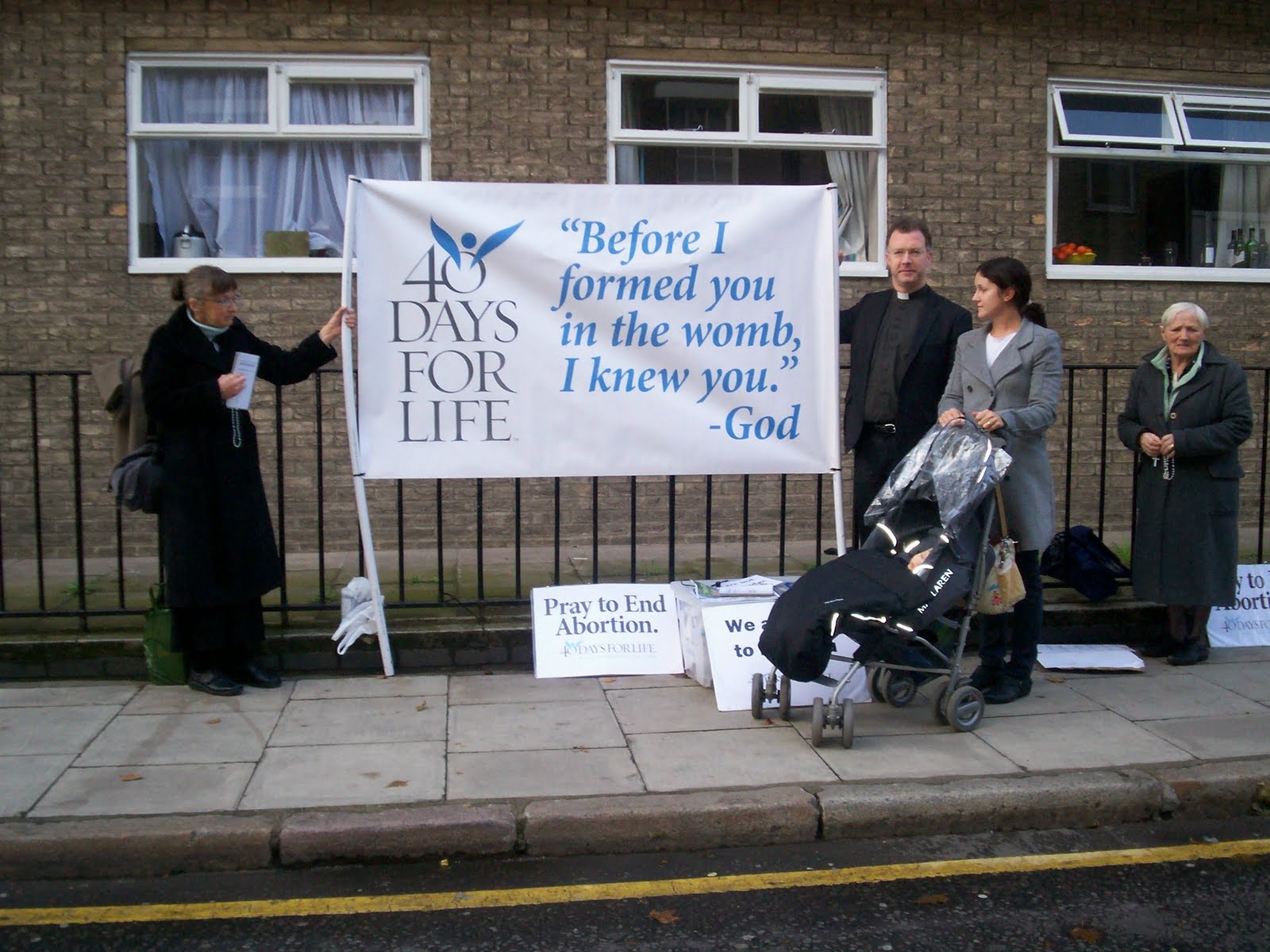
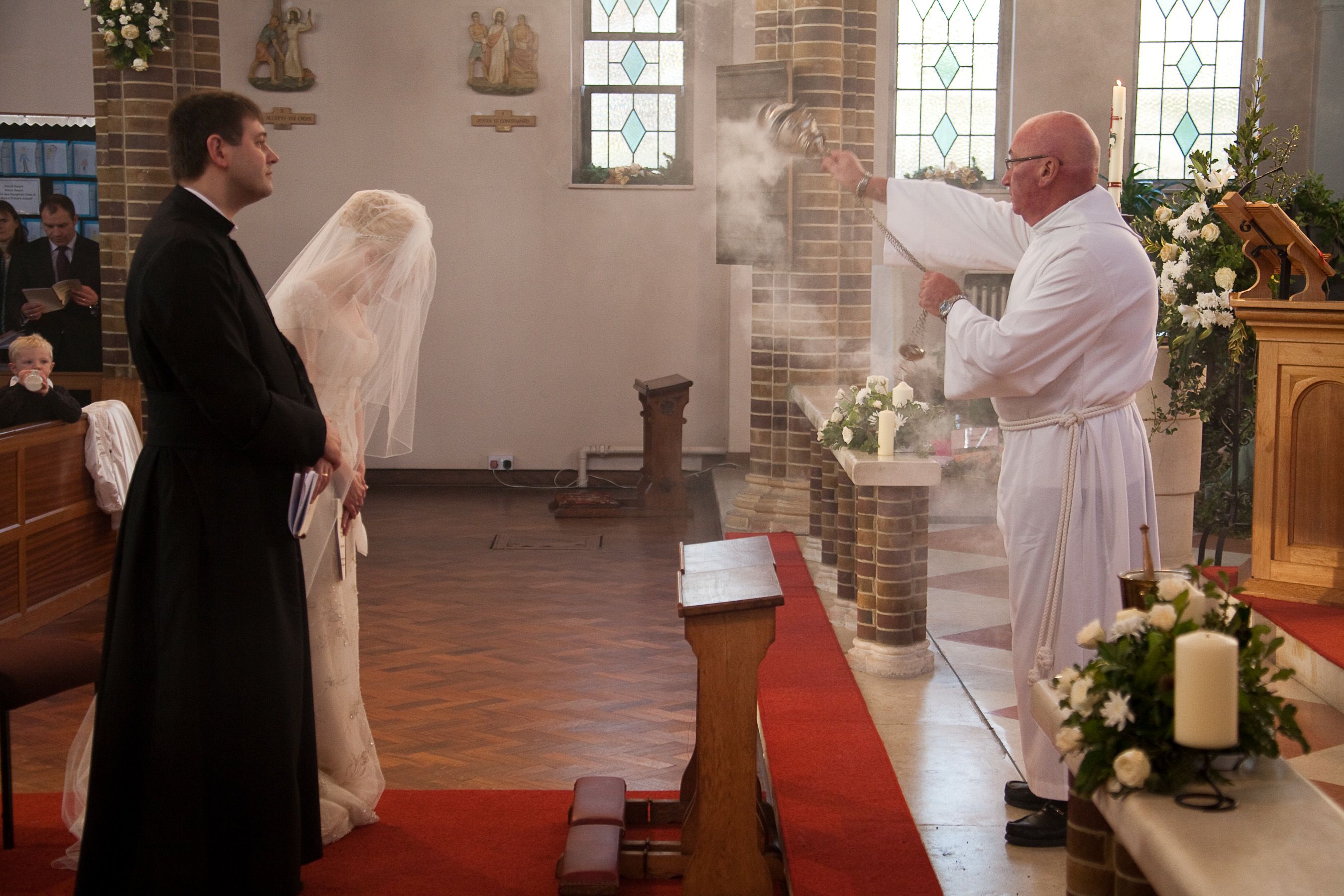


 The Catechesis of Caroline