Disability dilemmas – what should the Catholic Church/pro-life movement ‘do’?

Abortion of unborn children diagnosed with abnormalities is back on the agenda with the publication of the abortion statistics for 2012, which showed a sharp rise in the number of children aborted due to disabilities, up 17% on 2011 figures. As I explain in this week’s Universe, this demonstrates a gulf between the national attitudes on display during the Paralympics and those on an individual basis. We are all delighted to cheer on our athletes in the spirit of patriotism, but fewer of us are prepared to actually get our hands dirty when it comes to the more difficult task of caring for a disabled child. A parliamentary commission has pointed out that the way the abortion laws are being applied amounts to little more than eugenics, and is ‘unfit for a civilised society’. If the rules surrounding abortion for babies diagnosed with disabilities are to be reformed or tightened up, the Catholic Church and pro-life movement can expect scrutiny in terms of what they actually do to help the disabled in society.

One of the regular tropes trotted out by pro-choicers is that Catholics only really care about the unborn baby; once the baby is born or saved from abortion we then wash our hands and absolve ourselves of all responsibility. Nothing could be further from the truth. In the case of the Good Counsel Network for example, they offer support for as long the mother requires it. Over the past few weeks, a few Catholics have been agitating on social media that the Catholic Church and/or pro-life organisations should do more for the disabled, such as paying for respite care for the mothers or carers of disabled children and adults, if they are going to campaign for an end to abortion on the grounds of foetal abnormality.

This concept needs a little unpacking before uncritical acceptance.

In the case of the Catholic Church, it does do an awful lot for disabled children and adults, but on a local level according to the Catholic tenet of subsidiarity. Whether one is referring to either the Catholic Church or the pro-life movement, we should steer away from the socialist notion that everything should be centrally controlled, whether that be by the state, the ‘Church’ or a pro-life organisation. The Catholic Church has several voluntary societies such as the St Vincent de Paul Society, to name just one, which does exactly the work of supporting and providing practical help to the vulnerable in society, such as struggling families, the elderly and disabled of all ages. Catholic parishes have rostas for visiting the sick and pull together in an informal way to help those in their community who are vulnerable or in need of support in times of crisis. I can give numerous examples of acts of generosity and I don’t mean in purely financial terms, actually far more difficult is to give of one’s time and yet I’ve seen members of a parish help a struggling mother with ad hoc free childcare or picking up children from school, cooking meals for an elderly infirm neighbour, volunteering to look after a disabled child for a few hours on a regular basis or help out an elderly couple where one has Altzheimers and so on. The fact that this is not centrally organised or formally recognised, does not mean that it doesn’t happen. Of course there does need to be some formal organisation, but usually it’s done at a local level.

Outside of parish level, Catholic schools, both in the independent and state sector strongly encourage their pupils to participate in voluntary work and there are schemes which see pupils run and participate in activities such as Riding for the Disabled, Swimming and sports clubs, residential weeks for disabled and underprivileged children, in order to foster mutually enriching relationships and a sense of responsibility and community. Catholic Children’s societies do much work in terms of providing respite care and helping families as well as advocating for the rights of the disabled in society. Individual dioceses have pastoral teams exactly for this purpose, including helping people to receive the most out of the sacraments and general specialised support groups.

So it’s rather unfair to claim that the Catholic Church doesn’t actually do anything for those with disabilities, anyone who has ever been on any sort of organised diocesan pilgrimage to a place such as Lourdes, will see exactly the sort of attitude that the Catholic Church adopts towards the disabled, the Catholic Church not simply consisting of ‘The Vatican’ but the members of all the faithful around the globe. Incidentally it’s inside a Catholic church that one is most likely to frequently encounter a large gathering of those with various physical or learning disabilities. Here’s the little boy who took his First Holy Communion with my daughter.
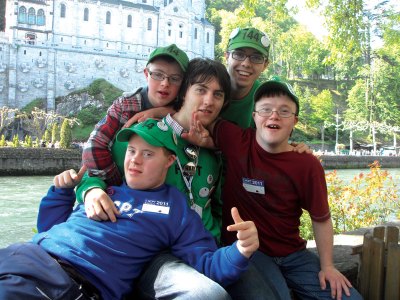
HCPT
The HCPT Lourdes Pilgrimage

As a rule I’m generally reluctant to validate by engaging with the notion that the Catholic Church doesn’t care about the disabled once they are born, because this accusation is usually thrown about by those who have little knowledge or experience of what does go on and even if they did, would still find something to criticise. It is the kind of thinking that dictates that the Church should spend all its time engaged in voluntary and practical work (for certain approved politically correct causes) mopping up social problems such as poverty but should have absolutely no voice in terms of formulating the policies whose side-effects they are expected to resolve.

In any event should the Church pay for respite care for disabled children and adults, outside of what it does already, if it is serious about ending abortion on the grounds of disability?

The first question we have to ask is whether or not the Church or any pro-life organisation would actually have sufficient funds to provide for this? I suspect the answer would be no. The annual income of all the UK major pro-life organisations combined would not begin to cover respite care for every single disabled child or adult. We also know that contrary to Dawkins’ assertions that the Church is not actually awash with cash and does not have that much liquidity, especially at parish level. But perhaps both pro-life organisations and churches ought to campaign for more donations on this basis?

Perhaps, but the fundamental question here, is whether or not the Church or pro-life organisations ought to be doing this work for the government? It’s true that in medieval times the Church was fundamental in terms of setting up schools, hospitals, communities to care for the sick, the needy, the poor and so on, but this was in the days before taxes. We live in an entirely different, allegedly more civilised society under which we are obliged to give a significant proportion of our income to the government to order our society and therefore surely it is entirely encumbant upon the government to make such provision for respite care and look after the most vulnerable unless it wants to lift all taxation.

Would it really help if various Catholic institutions were to replicate what happens already? Besides which levels of respite care and assistance are entirely dependent on the nature of the disability which is why best practice enables families to be given a certain budget and determine their care plan themselves according to their own specific circumstances and needs.

Would the promise of paid respite care actually tempt women into keeping their unborn babies? Most women who decide to abort a baby with a foetal abnormality do not so lightly or because their baby is less than perfect, but out of fear. What the recent parliamentary commission on abortions on the grounds of disability heard, was countless tales of how women felt that medical professionals bounced them into a decision; that they really felt that they had little other choice, and no other options were put to them. So part of the solution has to be a more empathetic and open to real choice medical profession, especially in the areas of foetal medicine and gynaecology. When diagnosing foetal abnormalities, the baby is measured against a standard of perfection, when in reality none of us are physically perfect. We often hear terrible cases of young men and women dropping down dead because of an undiagnosed heart defect that they have had since birth. Tragic whilst those cases are (and more preventative measures should be taken), the parents of those individuals never lament the birth of their child or wish they had never been born, instead they celebrate lifetimes of joy and achievement. Would they have taken a different decision had they been informed that their baby could drop down dead at any minute during the 20 week scan?

The problem with many of these diagnoses is that they are invariably worst case scenarios, when the reality is that no-one really knows with much certainty until the baby is born. Many readers will be able to give anecdotes of diagnoses of severe physical abnormality and dire prognoses only to go on to deliver a perfectly healthy baby. Only yesterday I heard yet another such tale myself. Here’s a little girl who was diagnosed with a condition incompatible with life . Even when the diagnoses are correct, they only tell a one-sided story that involves only heartbreak and suffering with never any mention of love, joy, fulfilment, laughter or contentment. This is behind the screening for Downs Syndrome – the condition is deemed to be so unutterably dreadful and makes life so miserable and difficult, that parents need to be give the choice to abort. The pro-choicers have gone beserk over the case of Father Vander Woude, who was inundated with responses to an appeal for prospective adoptive parents of an unborn baby with Downs Syndrome, claiming that abortion is the better or only option for those babies with Down Syndrome. A sentiment which Francis Philips, whose daughter has Downs, would vociferously refute.

In many many cases, it’s not necessarily money, but fear, especially of the unknown. Perhaps if there is something the church or pro-life organisations could do is organise support groups for those diagnosed with these conditions (some already exist) or help in assisting local groups for mothers and fathers of babies and young toddlers with various conditions. Parents faced with this situation are currently forced to rely for remote internet help and support, as due to abortion, babies diagnosed with difficulties are few and far between.

Even if organisations were able to offer a limitless supply of cash for respite, it would still make no difference to some mothers. The barrier is not purely financial, it’s about having the confidence in one’s ability to parent a child with disabilities, especially if you already have children. Parenting a child is hard and time consuming as well as immeasurably rewarding, it requires graft and self-sacrifice. Unfortunately words and concepts such as those tend to be alien and almost taboo in today’s society, self sacrifice, duty and responsibility have a negative rather than heroic and aspirational quality. Which is one of the reasons why mothers abort healthy children too. They fear they don’t have the capacity or ability to mother and the ideal of self-sacrifice is seen as the enemy of the dominant narrative or zeitgeist of self autonomy. It might be judgemental but sadly true in some cases. Some women neither believe in, nor want to be self-sacrificial, a child should fulfil them and on their terms, not understanding the fulfilment that can be found in sacrifice. Some women simply don’t want the work, effort or responsibility that comes with having a child, no matter what any pro-life organisation does, they cannot and should not seek to entirely remove the responsibility from the woman’s shoulders, but rather help her to bear it.

Which feeds into the final point about handing out cash willy-nilly to mothers or provision of free childcare or respite care to pregnant women. Help that is offered should never ever be in the form of a bribe, but instead to help a woman overcome the barriers to saving her child’s life. These barriers will differ from person to person, money is not always the overriding issue. A Catholic solution is holistic, it’s joined up, it’s helping the mother to reach her potential as a mother, rather than treating the child as a barrier to personal fulfilment or individual success. Part of this should involve a spiritual element. By saying to a woman, ‘okay we’ll pay for all your respite care and/or all your childcare’ it treats the child as an object or problem. No single mothers of young children (or indeed any mothers of young children) should be forced, coerced or encouraged to work. Children should not be placed full-time in nurseries, which often lead to poorer outcomes for children, if they are to flourish.

Throwing money at people to put their children in childcare or to provide respite care, buys into the narrative that children, whether able-bodied or not, are a burden to be overcome. Encouraging women of young children to go out to work consolidates the feminist Marxist agenda that is profoundly anti-women and seeks to force women and mothers in the workplace against their wishes and is an attack on the family. (Studies show that an overwhelming majority of mothers wish to stay at home with their children). Pro-life is about so much more than cash or consolidating a culture of dependency or entitlement. No amount of cash will mitigate the personal responsibility or additional work involved in child-raising unless one pays for a full time carer, 24/7.

A blanket offer of respite care consolidates the idea that disabled children are just so unbearably difficult and demanding that parents will need to be able to escape at every possible opportunity. Propagating this physically unattainable ideal also implicitly validates abortion of disabled children, stating that because insufficient respite care is available, the decision to abort is justifiable because the woman has no other option. The decision may be understandable, but never morally valid, no matter how hard that may be for many to read. We also need to be extremely careful not to feed the abortionist’s mantra that pro-life is about quality of life as opposed to sanctity, whilst at the same time assisting parents and children to maximise the former.

The Catholic Church or pro-life organisations should not let the government off the hook in terms of its responsibilities to the disabled. We should not seek to replicate existing provision but to complement. If there are gaps in provision we should look to identify and see what we can do to rectify and be inspired by the documents of the Second Vatican Council which implored the laity to take on more responsibility in terms of lay apostolates of this nature. I mentioned the Good Counsel Network earlier, they are an excellent example of this, in that having identified a need, they have set up a wholly Catholic apostolate. Surely this is what we are called to do as Catholics, to tailor a solution that is holistic, not simply financial or practical but one that addresses spiritual needs and has a strongly Catholic flavour. Otherwise we become little more than social workers.

Ultimately we shouldn’t sit in our armchairs, with a ‘somebody should do something’ attitude, pontificating what the Catholic Church or pro-life organisations should do, but actually be pro-active in setting up whichever initiatives we feel are necessary.

Much is done already by many in terms of caring for the vulnerable in society, no doubt more can be done. But the first job has to be doing whatever we can, which includes political action and highlighting the unjust and appalling attitudes towards those with disabilities simply because they are in utero. There’s no point campaigning for better respite care, better facilities, fairer legislation or railing against unfair benefit cuts for the disabled, if we turn a blind eye to the despicable prejudice that seeks to deny people the opportunity to life, the most basic human right of all.

God willing, abortion on the basis of disability may soon be a thing of the past. When all are accorded the equal right to life, it will then be the opportune moment to review what can be done better in terms of supporting those with disabilities, which will naturally include relationships with other agencies and charities. If we allow everyone to be born, the government will be forced to up its game and provision. But at the rate we are going we will soon have a raft of legislative measures, buildings with wheelchair ramps and so forth and yet no-one to use them.
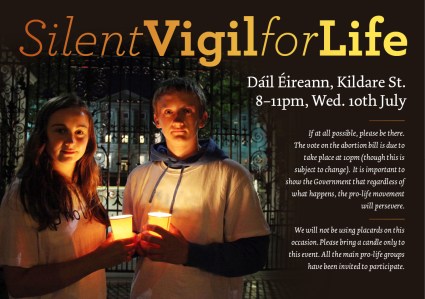
Candelit Vigil for Life outside the Irish embassy – 10 July 2013

Over the weekend my Irish pro-life colleagues thanked those of us in the UK who have been supporting their efforts to keep Ireland one of the safest places in the world for the unborn. All the tweets, blogposts and prayers have really helped to sustain them throughout their campaign; it has apparently been a source of comfort to see people from all over the globe uniting behind Ireland’s pro-life lobby in the face of Enda Kenny’s determination to steamroller abortion on demand into a country that boasts the lowest rates of maternal mortality in the globe.

Tomorrow is an extremely significant day for Ireland with the Dail due to vote on the bill that will introduce abortion up until term for mothers deemed to be suicidal, despite the fact that every single medical expert who testified to the Oireachtas committee stated that abortion is never an appropriate treatment for suicidality. The Irish government is acting purely on the basis of ideology and against all medical evidence and international experience for treating suicide ideation.

Minister of State, Lucinda Creighton has put her political career on the line, by not only proposing a series of amendments designed to adequately assess and treat a pregnant woman presenting as suicidal, but has also pointed out how Enda Kenny has misled Fine Gael voters, as their election manifesto in 2010 did not commit the party or their TDs to the introduction of abortion. If Miss Creighton votes against the bill, alongside 4 other TDs who have already signified their intent, then they will lose the party whip. It is thought that had Enda Kenny allowed a free vote then between 20 and 30 TDs would have voted against the bill, however Kenny is not prepared to risk his party’s political stability, deeming victory more important than the conscience of its TDs who are being forced to break any previous pro-life promises to voters. Any votes in favour will be made out of fear, not conviction.

Those of us who have regarded Ireland’s example as an inspirational model of maternal healthcare have been looking on in despair as a deeply ideological bill which will lead to abortion on demand is imposed upon the country, despite overwhelming public opposition to a liberal abortion regime.

For years the line of argument has been that Irish women seeking abortion are forced to come to England, in a bitter and grim irony the proposed bill will mean that heavily pregnant English women will now be able to travel to Ireland for a late-term abortion if they claim that they are suicidal.

Here’s the words of Dr Bernard Nathanson, one of the foremost pro-abortion activists in the USA, who helped found the National Association for the Repeal of the Abortion Laws, (and later converted to the pro-life cause) on the best mechanism for liberalising abortion law. For anyone following developments in Ireland, from the tragic case of Savita Halappanavar to the hatred shown towards Ireland’s Youth Defence group who have been subject to gross smears and allegations, had their headquarters smeared with human excrement and this morning had their website hacked with details of the names, addresses and phone numbers of their supporters published on line, much to the glee of certain pro-choicers, all of this will seem very familiar:

  • 1. Find a hard case, even if not fully relevant
  • 2. Create fear, doubt and confusion and even grossly exaggerate or lie about the facts
  • 3. Find a convenient, pro-life easy to hate group to demonise or scapegoat
  • 4. Legalise abortion on mental health or suicide grounds

Tomorrow – Wednesday July 10, a silent vigil will be held together with the Good Counsel Network outside the Irish embassy in London, at 17 Grosvenor Place, SW1x 7HR between 4;30 and 7:30pm  (nearest tube Hyde Park corner) in solidarity with Ireland’s pro-life campaign and in prayer for their unborn. This will be a wholly peaceful and prayerful event, attendees are asked only to bring a candle, no placards please. You don’t have to be Irish – anyone can pray for the sanctity of life.

This is to coincide with and add prayers to the vigil that will be being held outside the Dail tomorrow night as the bill is voted upon. Apologies for the late notice, please do your best to either attend or spread the word far and wide and above all pray for Ireland.

Advertisement for Vigil

And vigils don’t work?

Clare at the Good Counsel Network has the joyous news that BPAS have announced that their flagship facility at Bedford Square in Central London, is to close.

While BPAS have announced this as an operational decision – they are merging with their clinic in Stratford, this means that client numbers will fall and thus there is one less site in central London carrying out the destruction of human life on a daily basis.

Who says that the power of prayer doesn’t work? Whichever way the pro-choicers try to spin it, this is a seminal moment for the UK prolife movement. If the demand was there, BPAS would remain open for business.

Though the national press will be uninterested, the significance of the 1st UK abortion clinic closure should not be underestimated. Fewer women are choosing abortion, mothers and babies will be safer. Thank God for that.

Update:

BPAS would appear to have been caught on the back foot claiming that their clinic is not in actual fact closing, but it is very clear from their statement that they will no longer carry out abortion procedures at Bedford Square.

This is evidently not something that they would have chosen to advertise, BPAS are a business, clearly there is no significant demand for abortion facilities in central London, and their clinic is not proving cost effective, otherwise they would be continuing provision.

The decision to transfer provision to East London demonstrates the cynicism inherent in BPAS’ operational decisions. While Stratford enjoys good transport links, it entails a longer, more expensive journey for many London residents. If BPAS claim that they are locating clinics closer to where people are living (and we have yet to see evidence of more planned clinics) it is very telling that their area of most perceived need is a place with a diverse population, consisting of a high proportion of ethnic minority groups, young people and high levels of social deprivation. Funny how there are no mooted plans to open up in other residential areas such as Pimlico, Knightsbridge, or further out to the west of the city, such as Chiswick or even Weybridge. I wonder how a BPAS clinic would be received by residents of wealthy stockbroker belts such as Shenley or Sevenoaks? Still that isn’t going to happen…

Cafod and the Seamless Garment

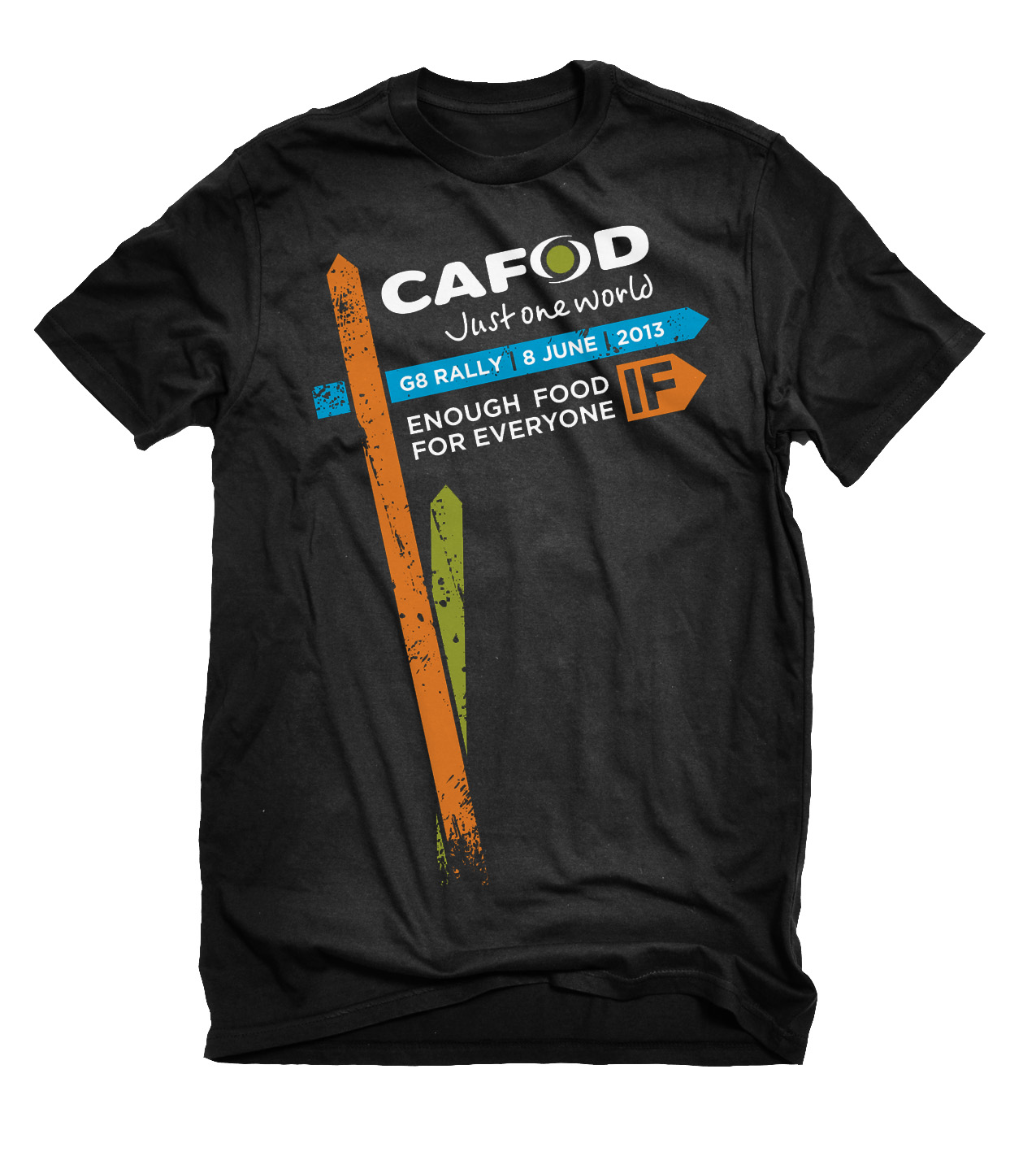
if-cafod-t-shirtsIf I were wiser and more prudent I would probably desist from writing about this, but I was horrified by a recent post by James Preece in which he highlighted the (perhaps inadvertent) promotion of organisations that support abortion, by CAFOD and urged people to sign a petition directed to Bishop John Arnold, Chairman of CAFOD, a call that has been echoed by Mark Lambert and the Ora Pro Nobis blog. This is a matter for concern and not something that should be ignored.

For those not already in the know, CAFOD have signed up as a partner organisation in the very worthy IF campaign that aims to tackle the causes of global hunger. The problem is that this campaign is being heavily promoted by CAFOD in Catholic schools up and down the land, as well as by various youth ministry projects and children are being encouraged to go to the website, where a click on ‘who we are‘ will lead to a page with logos and links of organisations that support or promote abortion.

At the risk of incurring the wrath of all (just for a change), I don’t have too much of a problem with CAFOD’s support for the campaign, which should be lent as much weight as possible. Global hunger is an urgent and pressing problem and it is an issue upon which we should be lobbying governments. Admittedly there were other ways that CAFOD could have tackled the issue without getting involved in the IF, but I don’t think that they should be attacked for doing so. An alliance of organisations seems a good way of concentrating efforts.

Having clicked on the logos and links page, as someone in the know, I could immediately identify which organisations support and promote abortion, but I wonder how obvious this would be to a member of the general public, or a schoolchild? Furthermore, those organisations which do support and promote abortion, are not overt about it, which some might venture makes them more ‘dangerous’. Where abortion is supported or promoted, it isn’t necessarily with an aggressive agenda of ‘reproductive rights and justice’ but as a misguided compassionate solution. The organisations involved seem to be predominantly interested in the provision of aid, which for some will include medical aid which encompasses abortion. Put it this way, it took me a a good hour to find the support for abortion in some of the listed organisations and that was after a targeted search. Would a schoolchild look for this with the same dogged determination? But if they did come across it, there is a real danger that they could believe that abortion was sanctioned and encouraged by CAFOD, the official aid agency of the Catholic Church.

Co-operation with evil (which is what this potentially amounts to) should be avoided. That said, my (albeit limited) understanding of Catholic Social Teaching means that Catholic organisations can partner with other non-Catholic organisations in pursuit of the common good, in this way. Whilst CAFOD could not partner with organisations such as Marie Stopes International, Planned Parenthood or BPAS, they can partner with other organisations whose main aim is not concerned with advocating abortion, to further a vital cause.

However, where CAFOD have been extremely remiss is that they have failed to spot that this association could be potentially problematic and therefore missed an opportunity for education and catechesis. What we should have seen is an explanatory statement from CAFOD, together with a re-statement of the Catholic position upon abortion, a pledge from them that they will not work with individual agencies who promote abortion and refer women for abortion, along with naming those agencies, as well as setting out their position in terms of the medical aid, assistance and education that should be provided to women in developing countries.

One of the most infuriating aspects of this campaign in schools is that an opportunity for further education surrounding the issues facing those in developing countries has been missed. If they had any nouse, decision-makers in CAFOD would have instantly identified the potential difficulties in such a partnership, and instead of sticking their fingers in their ears and going la, la, la and hoping that no-one, especially the pesky tenacious interfering bloggers would find out, they should have given qualified support to this campaign, together with additional materials for schoolchildren, including perhaps a ‘danger list’ of organisations as well as material to instigate classroom discussions of why Western norms of contraception and abortion should not be pressed upon vulnerable women.

As a result, they’ve left themselves with something of a mess to sort out. A seamless garment approach is not one that compartmentalises or prioritises one issue, such as as concern for global hunger, over another, such as abortion. These are all violations of issues of human rights and dignity and should all be given equal weight, one bleeding effortlessly into another.

This blog has a pro-life bent towards the unborn, not because I believe them to be more important than anyone else, but because it is an area in which I have a very particular interest and insight. Furthermore whilst I might get the odd article published elsewhere, I am largely an unpaid amateur, a blogger who happens to be Catholic, as opposed to a ‘Catholic blogger’, I don’t represent the Catholic Church in any official capacity and neither do I solicit any sort of contribution from the faithful.

The same cannot be said of CAFOD however and whilst it would be a positive development if CAFOD could at least qualify their involvement in this project, even better would be if they could take this opportunity to clarify their position on contraception and abortion, and better still if some kind of internal audit or overhaul could take place to ensure that this type of snafu does not reoccur.

Tragedy in El Salvador

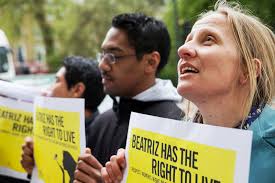
Beatriz

(The above photograph is taken from the website of Amnesty International who claim they have no official position upon when life begins. A Human Rights organisation that is unable to decide upon who is a human being. Interesting)

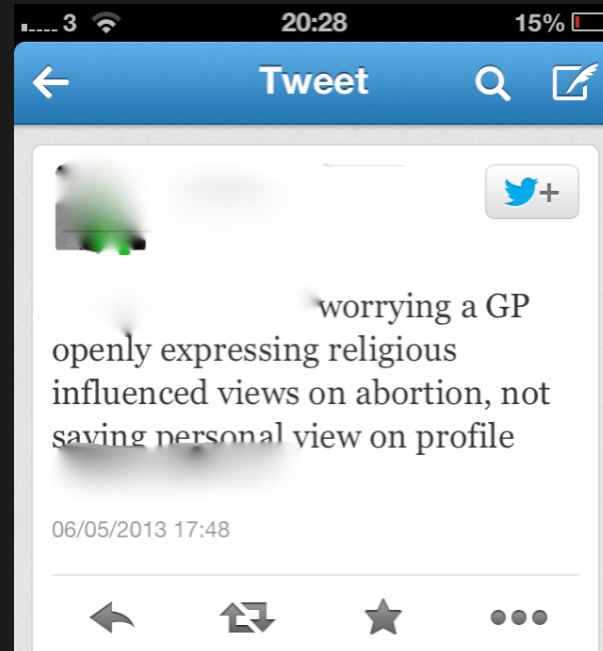
Sometimes a truly hard case will hit the headlines which will test the conviction of every seasoned pro-lifer such as the one in El Salvador, which will be seized upon with a ruthless and determined glee by abortion advocates, especially I suspect, the Irish hardcore contingent who seem to populate Twitter, pouncing, hounding, persecuting and generally attempting to bully and intimidate any pro-lifers with campaigns of harassment, such as the recent one which saw a Catholic pro-life GP delete his Twitter account under threats of having been reported to the GMC for having the temerity to express his views. These are the same people who will tell non-Irish to keep their noses out Ireland’s business, but are happy to report a UK GP to relevant authorities, including his employers because they are unable to accept that he should be able to express his views, alongside his identity. A country which has pro-life laws is the concern of every right-thinking global citizen, whereas one which is proposing liberal abortion laws is only the concern of its inhabitants, according to this logic.

The facts as reported by the BBC, is that a young woman (Beatriz) who is suffering from the chronic immune system disorder lupus and kidney failure has been denied permission to abort her baby which has been diagnosed as suffering from anencephaly, which means that either part or all of its brain is missing and he or she is likely to die shortly after birth. The Supreme Court has rejected her appeal to be allowed to abort, stating this:

“This court determines that the rights of the mother cannot take precedence over those of the unborn child or vice versa, and that there is an absolute bar to authorising an abortion as contrary to the constitutional protection accorded to human persons ‘from the moment of conception’.”

This is a tragic and shocking case, one cannot fail to feel sympathy for the poor woman, who must, with some justification, feel as though her country is totally lacking in care and compassion for her physical and mental wellbeing. It highlights the problem of using legal and technical language which is very precise and conveys a total lack of empathy, feelings matter, this young woman is important, her plight is desperate and some acknowledgement of that, along with reassurance is necessary. The judge may well of course have added some words to that effect in their statement, which have not been reported, but this to me highlights the importance of women, especially those hurt by abortion, those who have been in crisis pregnancies and mothers, speaking out in defence of the unborn. Whilst the legal terms and the moral theology is important, when delivered by a man, they can leave the impression of coldness, sterility and a total lack of empathy. Women and mothers intuitively understand what’s at stake in these situations.

Make no mistake, Beatriz must be going through hell and needs support. Pregnancy does put an additional strain on the body, especially in terms of the immune system and kidney function and there can be no doubt that her physical health is being severely compromised. She will probably be experiencing a great deal of physical pain and trauma, compounded by emotional distress, feeling as though she is being forced to put her life on the line or even die for a baby who is going to die anyway.

But what we see here, as in so many awful cases, is the conflation of two conditions, which go to demonstrate that hard cases make bad law. The baby’s long-term prospects should not affect the decision of whether or not one should be able to kill him or her. We do not euthanise people on the basis of a poor long-term prognosis. Anencephaly is an undeniably terrible condition, one that every pregnant mother lives in fear of, prior to scans. I know that if I had a baby diagnosed with it, I too would struggle and need a lot of support. But being one of those ‘extremists’, I treat all my children equally regardless of whether they have yet to make the journey out of the womb. I would chose for my child to have a chance of life outside of the womb, no matter how brief, and die surrounded by the warmth and love of my arms instead of being dissected by the cold hard steel of the abortionist’s instruments or poisoned in utero, because that would be no less than they deserve. It would also aid in the grieving process, so many parents who feel compelled to abort their children on the grounds of disability struggle as a result, especially as they are encouraged to hold a funeral service for the child whose life they put an end to. I’m not knocking the practice, treating remains with respect and praying for the dead is the right thing to do, but it causes severe cognitive dissonance and distress. Healing in these cases is much harder. The parents of Colin Perry are beacons of hope to parents of anencephalic children.

In many ways El Salvador is a model of equality, not allowing for the elimination of those with disabilities. The really pressing issue here is maternal health and this is what matters for Ireland and other pro-life countries. In Ireland, if the mother’s health were at severe risk, the medical code already in existence would allow for an abortion to take place in these circumstances.

It seems that Beatriz’s case is being used by various activists in an attempt to push open the door to abortion, exploiting the plight of a sick woman in an unsavoury fashion.

Beatriz is now 26 weeks pregnant, doctors are concerned that as her pregnancy progresses further, too much strain will be put upon her body and they will be unable to treat her. That is a wholly justifiable concern. Beatriz does however, already have a toddler, it’s not clear when she was diagnosed with Lupus, but her body has already been able to tolerate giving birth at, or near to, term.

What I don’t understand about this case is why Beatriz has needed to be dragged through the courts in this fashion which can only add to her distress. Surely the most sensible, compassionate and morally licit option would have been to induce the baby at 24 weeks, the point of viability and do all that they can to provide palliative care for the child? The intention not being to abort the baby but to relieve the pressure being put upon Beatriz’s kidneys and immune system, particularly if they are showing signs of strain. Isn’t this what any conscientious doctor would do, regardless of where they stood on abortion?

Beatriz seems to have been used as a political football here, an early induction post viability is not the same as the deliberate and wilful destruction of life. This has to be the most medically and ethically astute option. Why can she not be monitored and an early induction take place at the first sign of strain upon her body? This option would not be incompatible with the ruling of the judges, and is good clinical practice. Why is this option not on the table and why is an abortion being pushed in this scenario, which would not be the most compassionate outcome, for mother and baby alike. Love them both. Let the baby be born and die in dignity, he or she and Beatriz deserve no less.

Update

According to a report in LifeSite News on 9 May, Beatriz’s condition has not required hospitalisation, she is being treated at home. This casts a wholly different complexion on claims that her life is in imminent danger.

Abolition and Abortion Part 2: Incrementalism

Having established that the tactics of fetishisation employed by the abolition movement needs updating for the twenty-first century pro-life cause, it’s worth once again revisiting the thorny issue of incrementalism and seeing how this tactic was successfully employed by the eighteen and nineteenth century reformers.

Talk of incrementalism and abortion tends to provoke the ‘no true Scotsman’ fallacy amongst various contingents of Catholics and pro-lifers. The difficulty with adopting an incrementalist strategy that aims to take a series of gradual steps to tighten the laws surrounding abortion, is that it could be argued to be inadvertently sanctioning and supporting the deaths of some of the unborn. By supporting a reduction in time-limits for example, one could be said to be ignoring the plight of all the unborn who have yet to reach the cut-off limit. A period of time does not add value to a life, a 24-week-old foetus does not possess any more dignity or worth than a 12-week-old foetus. The only difference being that one is more likely to survive than another outside of the uterus. The viability may add an extra dimension to the tragedy, not least as its likely that the infant would experience pain at this stage in an abortion procedure and is capable of being nursed to health, but it does not render the baby any more deserving of the basic right to life.

My attitude to incrementalism has always been pragmatic. Consider a sinking ship which does not possess enough lifeboats for all the passengers and crew. If a rescue vessel turned up with only enough capacity to rescue half of the remaining passengers without endangering its own stability, should it refuse to save them on the grounds that it is unable to to help everyone?

Pragmatism is no substitute for moral theology, however Evangelium Vitae (73) lays out very clearly the circumstances in which incrementalism can be acceptable:

when it is not possible to overturn or completely abrogate a pro-abortion law, an elected official, whose absolute personal opposition to procured abortion was well known, could licitly support proposals aimed at limiting the harm done by such a law and at lessening its negative consequences at the level of general opinion and public morality. This does not in fact represent an illicit cooperation with an unjust law, but rather a legitimate and proper attempt to limit its evil aspects.

Without re-hashing the previously rehearsed arguments about incrementalism, it’s worth noting that the current political climate does not seem amenable to discussing a total ban, Nadine Dorries’ proposed counselling amendment, which would in no way have altered the legality of or access to abortion, was bitterly fought against tooth and nail with the former MP Louise Mensch attempting to cobble together some sort of weak-kneed compromise and resulting in yet another hand-wringing committee being set up to consider the issue, so it’s fair to observe that tighter legislation is at the current time, unlikely. Britain is in a unique position of having experienced forty years of increasingly liberal abortion, despite the law being framed in such a way that makes it clear that abortion is still technically illegal, it seems an impossible task attempting to slam the door firmly shut, without first taking a series of gradual measures.

What makes many wary is that British political history does not have a very good record in terms of incrementalism and abortion. In 1990 when the HFE Act, amended the 1967 Abortion Act, the previous limit which had been based upon the baby’s ability to survive outside of the uterus, and set a limit of 24 weeks, but this was accompanied by a disastrous amendment which removed the right to life for every baby capable of being born alive, and allowed for abortions of disabled children, right up until the moment of birth. It might be possible to support a reduction in time-limits, it is right to campaign for and support equal rights for disabled unborn children, but not if it comes with a price tag of liberalisation elsewhere, such as with early stage abortion. Bargaining over human life is unacceptable and unjustifiable.

But if politics is about the art of the possible, it’s worth looking at the history and the success of the abolition movement and how they used incrementalism to achieve their aims.

In 1537, Pope Paul III issued a papal bull Sublimus Dei, which stated that indigenous people of newly discovered lands were fully human, rational beings with souls who had rights to personal freedom, liberty and property and called for their evangelisation. The bull generated a lot of controversy, it was later rescinded by Paul III, his record on slavery seems to be rather flaky, but nonetheless its principles contributed to a debate at Valladolid and was the position adopted by Charles V, the Holy Roman Emperor and King of Spain.

What intrigues me, is had the Catholic commentariat been around in the UK in these days, is whether or not they would have resisted every single gain made by the abolitionist movement by shouting “nothing short of full abolition is unjust, un-Catholic and must be avoided”?!

Slavery like abortion is an unjust violation of human rights, but instead of a wholesale sweeping away of the practice, the abolition movement went for achievable small steps. The UK movement was launched by the Somersett’s case in 1772, which held that no slave could be forcibly removed from Britain. It was however interpreted to have ruled that the condition of slavery did not exist under English law and as a result ten to fourteen thousand slaves in England and Wales were emancipated. It made no judgement upon the morality of slavery.

In 1787 the Society for the Abolition of the Slave Trade was founded in the UK and in 1788, William Dolben’s Act which regulated the the conditions on board British slave ships was enacted. Slavery was not yet abolished, indeed the amelioration of conditions could have been used as a justification for slavery. It wasn’t until 25th March (note the significance of that date, Our Lady is always involved) 1807, that the Abolition of the Slave Trade Act abolished slave trading in the British Empire. Note – abolished slave-trading, not slavery per se. Captains found to be slave-trading were fined £120 per slave – a huge sum.

This is a tactic that the US pro-life movement is employing to great success. They are not seeking a direct abolition, but instead imposing swingeing fines on abortion clinics for disobeying stringent health and safety regulations. Licences to operate are being removed left, right and centre and clinics are going out of business because they cannot afford either to upgrade their facility to meet with sanitation laws, nor can they afford the fines. Tim Stanley wrote about the success of this tactic back in 2011, and it’s still having a tremendous effect all over the USA. Operation Rescue have been at the forefront of exposing malpractice of abortion clinics and as a result Delaware is currently a surgically abortion free state, Planned Parenthood has been forced to suspend their services. For those who might vociferously complain, surely anyone who cares about the health of women would support such measures?

North Dakota has not gone for an outright ban on abortion, instead the Governor has signed a bill that bans the procedure once a heartbeat can be detected, in many cases as early as six weeks. Furthermore the only state abortion clinic is in danger of shutting due to laws that require doctors working there to have hospital admission privileges. Whilst for the purists nothing short of a ban that will include the contraceptive pill, the coil and the morning-after pill is acceptable, a society that is putting huge restrictions on abortion, is significantly further along the road than the UK in terms of recognising and accepting the sanctity of life and the gravity of the procedure and certainly having a lot more success in curtailing and containing the scourge of abortion that hurts so many women and children.

An examination of the incrementalist tactics used by the abolition movement, demonstrates how sticking to morality but taking tiny steps to tackle an embedded cultural issue bears fruit. It wasn’t until 1811 that slave trading was made an actual felony in the British Empire punishable by transportation. It took until 1814 and 1818, for various treaties to be enacted with other countries to halt the trade. A treaty between Britain and Sweden wasn’t signed until 1827 and finally in 1834 the Slavery Abolition Act came into force which abolished slavery throughout most of the British Empire. Further treaties followed with France and Denmark in 1835 and in 1838 enslaved men, women and children in the Empire finally became free following a period of forced apprenticeship after the 1833 act. Britain continued to make treaties with other countries banning the slave-trade right up until the end of the nineteenth century.

For slavery to end over Europe, the new worlds of the Americas and Africa, a system of compensated emancipation had to be brought in, which was something of a compromise deal. Instead of taking the morally licit position of insisting that the slave-owner had no right to their slaves and ought to immediately free them, they were instead financially compensated or by the slave completing a period of apprenticeship for a set period of time. The latter proved unpopular because it amounted to forced labour on minimum wage and put a new financial burden on the slave-owner. But slavery was phased out gradually, not on an all-or-nothing basis, with laws passed that granted freedom to children of slaves born after a certain date.

Perhaps a mirrored tactic would be for the NHS to set a cap on funding for private abortion clinics and gradually reduce this? Abortion is not healthcare and contravenes basic medical ethics to ‘do no harm’. If people wish to abort their children, it should not be funded by the public purse. If people had to be responsible for the financial cost of their choices, it would put a whole new complexion on attitudes to risky sexual behaviour.

In the aftermath of the horrific Kermit Gosnell case, a clarion call has gone out for a modern-day Wilberforce, a Parliamentarian with the courage and bravery to fight for the plight of the unborn. There are already such individuals in the Commons and the House of Lords. We have Lord David Alton, Jim Dobbin, Joe Benton and Fiona Bruce, but more are needed. Great as Wilberforce was, he was not a lone ranger but instead the voice of the grassroots, which consisted of an alliance of Quakers and Anglicans. The Society for Effecting the Abolition of the Slave Trade had many influential polemicists and speakers who travelled up and down the length of the country and who formed several local branches or chapters, and its a structure that SPUC appear to be emulating.

Wilberforce was aided by Thomas Clarkson, one of the founders of the Society for Effecting the Abolition of the Slave Trade, who spent twenty years collecting a large body of evidence against the slave trade. The other lessons we can therefore draw from the abolitionist movement, aside from fetishisation and incrementalism is that of the importance of unity, forming local communities to reinforce and encourage each other as well as convince others and using all the tools at our disposal.

Without back-up or overwhelming public support, Wilberforce would not have been successful. There is no doubt that he was concerned, as was Clarkson, to put an end to slavery all over the globe, but took a shrewd approach, being prepared to listen to evidence and change tactics as necessary instead of dogmatic adherence to principle. The principle itself never changed but the strategy for achieving it did, without once using bad means to an end. It was the maritime lawyer James Stephen who suggested the theme of the 1807 Bill, which banned British subjects from aiding or participating in the slave trade to French colonies, ostensibly because the Empire was at war with France, meaning that as a result most British ships involved in the slave trade were flying under American flags. This new bill put responsibility on the individual, effectively banning the trade and the abolitionists in Parliament decided not to speak on this in order to avoid drawing attention to its effects.

In the global information age, wildly inaccurate speculation is inevitable. But there is much we can learn from replicating and modifying the tactics of our forebears. Abortion is wrong, slavery is wrong, but as the abolitionists showed, injustice can be tackled morally and in small stages. Incrementalism is being used very effectively to change mindsets in all kinds of ways, one only needs to look at the success of LGBT lobbyists with same-sex marriage. It’s why any tiny amendment to abortion laws is angrily shouted down by abortion activists who cannot allow any sort of mindset that may accept the tragedy of abortion.

A dogmatic absolutist approach brings to mind the chicken and the egg scenario. Which do we need first? Legislation against abortion or a more welcoming pro-life society? An incrementalist approach forces the latter to organically evolve.

But before we can think about Wilberforce we need to get our own house in order, which includes unity and an ability to dialogue, be open-minded, listen and change approach where necessary. Essential to this is good local leadership. Which is where our clergy, priests and bishops need to take a much more pro-active role, as do those within other Christian and other sympathetic communities. Hand-wringing and tiny cliques aren’t going to cut it. We need clear leadership and direction to build that platform upon which the modern-day Wilberforce can stand, which includes voting more pro-life MPs into the Commons.

There are some encouraging green shoots. The future clearly lies in the young (and I’m thinking of a specific group of young women), we should all be working to support them if we want progress in our lifetime.

Abolition and abortion: Part 1 – fetishisation and blazons

Unsurprisingly a natural sympathy exists between the Abolition Movement and pro-life politics, both being concerned with gross violations of the most basic of human rights and the barbaric treatment meted out to our fellow humans. Much of the rhetoric employed by the pro-life lobby overtly draws parallels between the two movements. In this interview Andy Stephenson of Abort 67, describes how many women don’t like the analogy of the slave-trade with abortion, as they don’t like to be compared with slave-owners, but as Andy explains, it is not the individual woman who is being compared with the slave-masters, but the abortion industry as a whole, which seeks to overpower and exploit vulnerable human beings as commodities to be extinguished at will. Even Ann Furedi, Chief Executive of BPAS admits that a young embryo is a human life.

Not only is the analogy correct, but there are also similarities in terms of the tactics of the two lobbies. The abolition movement fetishised the black body in order to emphasise the common humanity between people of all nationalities in way that appears racist and bordering on the obscene to postmodern eyes.

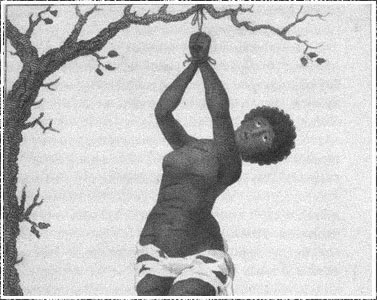
White perceptions associated sexuality with the uncivilised woman, as William Blake’s engraving for John Stedman’s 1795 polemic demonstrates.

Blake's anti-slavery engraving
William Blake’s anti-slavery engraving

Whilst the engraving was meant to highlight the barbarity and look of pain as the woman was severely punished, it also did much to whet appetites and reinforce negative racial stereotypes back in Blighty.

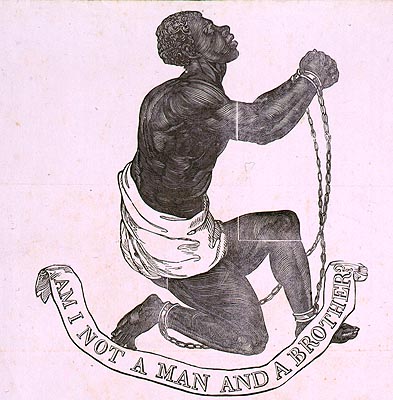
Josiah Wedgewood’s evocative anti-slavery icon made a blazon out of the enchained black male form, which soon became de-rigeur on pendants or brooches of the upper and middle-classes, no self-respecting salon or gathering was complete without a symbol of awareness of what was the burning issue of the day.

slavery1

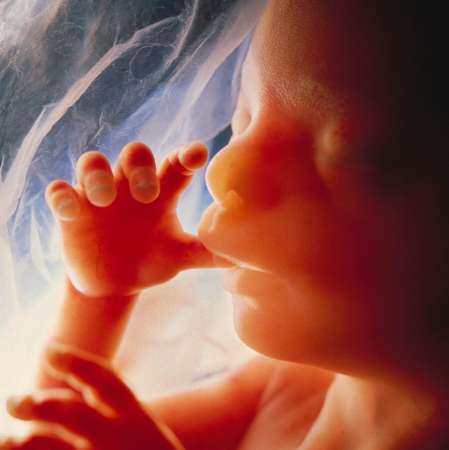
The same fetishisation is apparent in the pro-life movement. We too are not averse to making a blazon of the human form.

The iconic baby in the womb

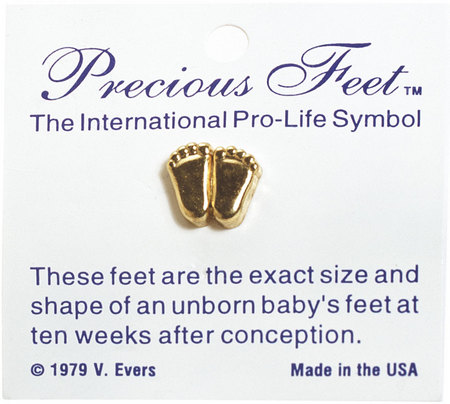
A quick click on Abort67’s website will display painful and distressing images similar to Blake’s portrayals of man’s inhumanity to man. SPUC’s tiny feet badges, an essential addition to the lapels of all Catholic clergy and laity, are today’s equivalent of Wedgewood’s medallions.

code_pfs_-_tiny_feet_pin_badge_32_1

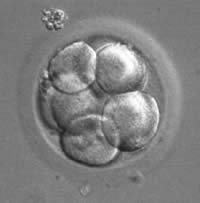
This fetishisation is not necessarily a bad thing, but perhaps the lesson we can learn from the abolitionists is that of thoughtfulness. Whilst Wedgewood and Blake could not predict how future generations would interpret their portrayals, a note of caution needs to be struck. Visual reminders of the humanity of the unborn child are useful, but fetishisation is a form of objectification, we need to remember that though the portrayals of the unborn child in utero are always breathtakingly beautiful, the reason why is because this is human life in all its inspirational and awesome majesty. Christians will be reminded of the Incarnation, of how Christ humbled himself to become like us, this is the state that He once took, but we need to be wary of falling into the saccharine, ‘cute ickle baby’ trap, no matter how undeniably gorgeous the image. We don’t love each other or our children on looks alone, but because of who we are, because of that bond of common humanity, which we should nurture, respect and cherish regardless of whether one is a babbling newborn. And it is precisely this humanity, this solidarity that we have with all other human beings, that transcends barriers of age, social class, gender, race and creed that makes fetishisation so dangerous. The blastocyst is no less worthy of respect and yet it doesn’t easily lend itself to the pro-life cause, public imagination is not caught by the image of a cluster of mistreated and sometimes experimental cells, even though every single human being alive on this planet once had the identical physical form. We are not mere objects to be used in a utilitarian way, but people with our own unique destiny.

This is just what I looked like when I was 3 days old. Such a looker!

And of course, this is one of the difficulties of using images of aborted babies, although they can prove extremely useful. (This thoughtful non graphic article on the priests4life website that deals with graphic images is one of the best I’ve seen and closely reflects my own position). It takes wilful ignorance, sophistry and blindness to declare that the horrific photographs of the 24 week aborted baby was merely a lump of tissue. It’s also been extremely illuminating watching a friend attempt to pin down various hardcore Irish abortion activists who admit that even they are not happy with the concept of late-stage abortion, as to what stage they feel abortion would be acceptable. An answer has not yet been forthcoming.

Abort 67 are following in the footsteps of the abolitionists by trying to visually demonstrate the truth that is abortion. It’s a tactic that many have misgivings over, but the parallels are demonstrable.

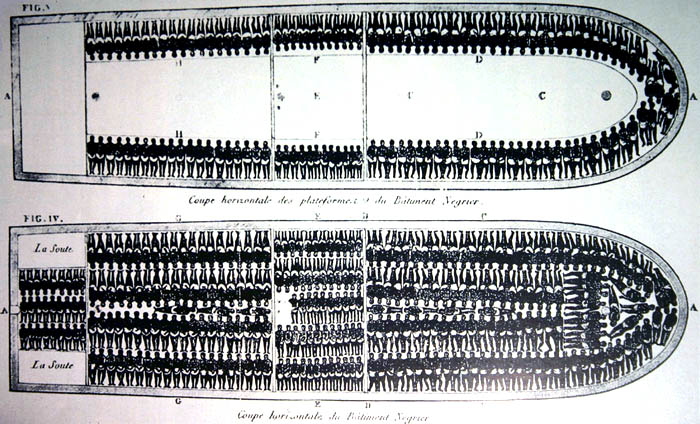
This image was in no way scientifically accurate or precise in its depiction, but its shock value was seminal in terms of changing the hearts and minds of the public and highlighting the cramped conditions on board a slave transportation ship.

SlaveShipBrookes

So why are today’s sharply precise medical images not having the same impact? One answer is de-sensitisation. We are bombarded with increasingly graphic images on a daily basis, perhaps we are becoming inured? If that were really the case, then the graphic images would not cause so much fury, although I do believe that due to advances in ultrasound technology, there is an increasing widespread awareness and acceptance of the humanity of the unborn. For all the talk about science, abortion remains an issue of ethics or rights for its defenders. Abortion is centred solely around a woman’s rights to choose, any thing else is obsfucation. Images of early-stage humanity cut no ice with those who are determined that the unborn must not get in the way of a woman’s chosen path. Which is why we see so much pent-up anger, rage and aggression, because so many of them know that their position is ethically, not to mention scientifically, dubious.

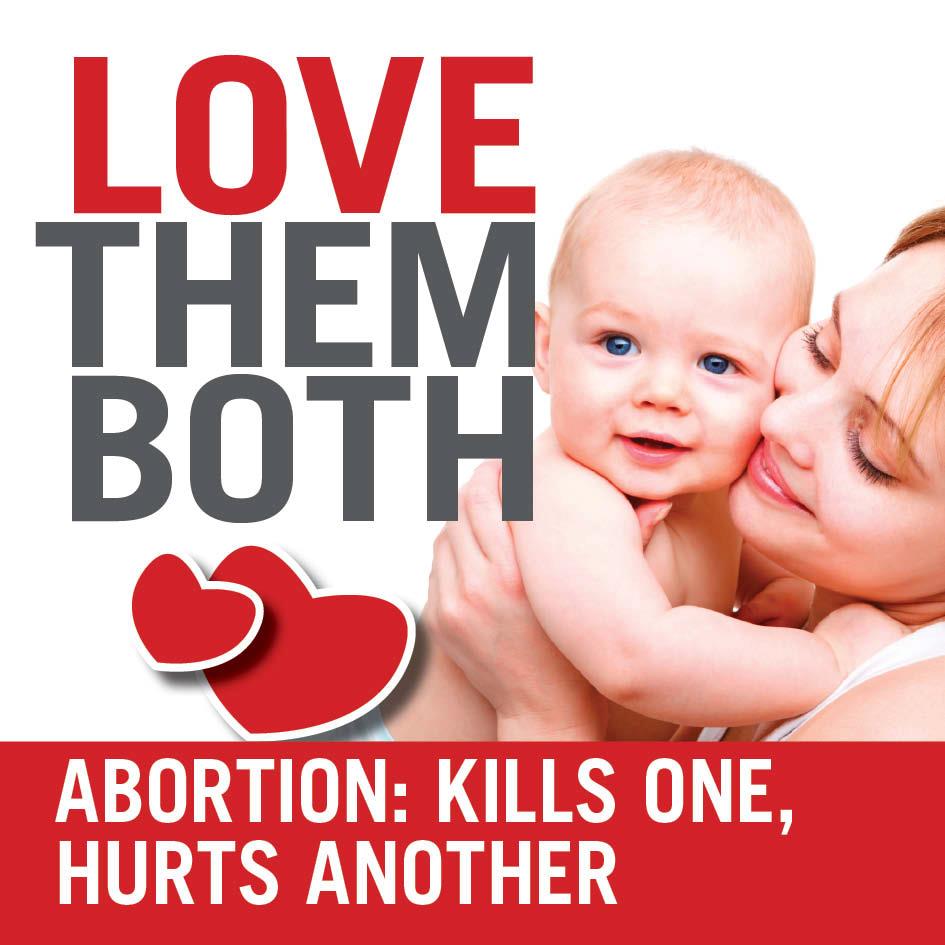
But I can’t help but wonder, given how entrenched abortion is, whether it’s time for a new tactic or slogan especially for those involved in ministry outside the abortion clinics? The medical and sometimes gruesome images should not always be avoided, (especially when lobbying politicians) but instead used with discretion. What are we in pro-life all about trying to achieve? A pro-life society that welcomes, accepts and embraces motherhood as being positive and a gift, for mother and child and society as a whole. I wonder whether or not it’s time for more carrot and less stick? Something that sends the right message, but is also overwhelmingly upbeat, bright and cheerful, showing precisely what is a stake, as well as presenting a positive and aspirational vision.

It certainly seems to have worked well in Ireland. Accusations of fetishisation can be levelled at any photo. But in this case we are envisaging the future, the potential, the joy instead of worshiping and making a blazon of a very specific bodily stage in all of our human journey.

Love them Both

Part 2 to follow

Solely a female issue?

I logged into Twitter yesterday to change some of my settings (never a good idea) and instantaneously the following came up on my timeline:

Screen Shot 2013-05-26 at 21.57.04

I instinctively re-tweeted it and Jill kept us updated:

Screen Shot 2013-05-26 at 21.58.20

Screen Shot 2013-05-26 at 21.58.46

Screen Shot 2013-05-26 at 21.59.10

Screen Shot 2013-05-26 at 21.59.02

Screen Shot 2013-05-26 at 21.58.55

Screen Shot 2013-05-26 at 21.58.36Screen Shot 2013-05-26 at 21.58.28

Screen Shot 2013-05-26 at 21.59.26

Somewhat predictably Jill was then attacked by some angry pro-choicers, but as her avatar indicates, she doesn’t take any prisoners.

A few thoughts. Firstly, thank God for people like this who give care and support to those who may be grieving. No doubt she will be accused of lying or interfering but they saw a man sat in his car crying over the imminent loss of his child and went to comfort him. Note there’s no ‘judgemental’ attitude towards the mother but support for a grieving man in his hour of need.

What would the feminists say to this man? ‘It’s not really a baby? Her body, her choice. It’s between her and her doctor’? Or would they eschew their ideal of a man in touch with his emotions and tell him to ‘man up and be strong’.

There can be no better illustration of the fallacy that abortion is solely a woman’s issue, centred around the bodily autonomy of an individual. The unborn child is not a part of the woman’s body, the baby and the placenta have a unique DNA wholly separate to that of the mother. Does this man not have a right to grieve? Is it really fair not only to deny him the chance of fatherhood but also the baby the chance of life? How can one person take a decision that will decimate the lives of at least two others?

The notion that abortion is solely a woman’s choice is even undermined by the abortion lobby themselves. Consider the following from the Education for Choice ‘Abortion education toolkit’. 

If a young man has or goes on to have experience of unplanned pregnancy with a partner, it is important that he knows who he can talk to and where he can go for help and support, as well as being able to signpost his partner to appropriate agencies. This is especially important when a couple are not agreed about what the outcome of a pregnancy should be, which can be a very difficult situation for a young man to face. Signposting to young men’s services is an important part of abortion education. 

So it isn’t solely a woman’s issue after all then? If Education for Choice are concerned about how to support young men whose partners decide to keep a baby against their will, presumably they wouldn’t have any objection to them being referred to pro-life organisations? One can only imagine the outcry.

If men are allowed to moot abortion as a solution to women and should be encouraged to support, encourage and facilitate otherwise reluctant women in their decision to abort, then there should be no problem with them doing all their power to persuade and facilitate women who may be considering abortion, to change their minds?

But this is where the angry and often facile slogans about a woman’s right to choose what happens to her body come in to play, the baby’s inability to give consent to having their bodily autonomy violated is now  irrelevant and unimportant. As is the man’s right to decide what happens to 50% of his DNA. Rhetoric evoking violence, about a woman being ‘forced’ to be pregnant and give birth, is employed.

But how many women really are ‘forced’ to give birth against their will, compared to the amount of women who are forced to abort? It’s a bizarre concept, that the absence of an invasive surgical procedure amounts to physical force. The reality is that most women feel forced to abort through a combination of personal and economic circumstances. Most women testify that they did not feel able to mother a child due to a lack of support. That’s a very different prospect to ‘choosing not to be a mother’. Upon seeing the two blue lines on the pregnancy test, the first reaction of  a woman facing an unplanned pregnancy  is not a ‘shall I/shan’t I keep it’. She doesn’t toss a coin or choose an abortion as a ‘lifestyle choice’ because motherhood is currently in or out of vogue. Women who end up outside the abortion clinics are there because they see it as their only option, and frequently because its very existence enables others to put pressure on them to take a ‘responsible’ option. 64% of women having abortions said they had felt pressure to abort.

It is a known fact that domestic abuse either commences or escalates during pregnancy. Are these really the actions of men who are forcing their partners to give birth, or more likely, immature and resentful men lashing out because they will no longer be the focus of attention? Whilst its clear that domestic abuse in pregnancy is due to a bully picking on someone at a time that they are vulnerable, a woman who is having a baby against the will of her partner is at far more risk of domestic violence, than one whose partner wants to nurture and support the pair of them.

If abortion was not just another ‘choice’ open to pregnant women, I wonder how many women really would feel that they were being ‘forced’ into pregnancy and childbirth against their will? If abortion was not an option then surely men would begin to see the duty of care that they owe to their sexual partners as potential mothers of their children?  If abortion was not an option then how much more pro-life, child-friendly and family-centric would we be as a society? If women were genuinely terrified about the consequences of pregnancy then we would see far fewer unplanned or crisis pregnancies. If men knew that sex could land them with a lifetime of moral responsibility towards the women they casually chose to sleep with, not to mention eighteen years of financial responsibility, then they would be a lot more circumspect in their attitudes.

By deeming abortion a woman’s issue the entire responsibility for the consequences of mutual sexual activity is dumped on her doorstep, regardless of her decision. The only time she should have to pull the bodily autonomy card is when it comes to resisting the pressure from others to abort.

I’d love to know what the response of radical feminists would be to the tears of the poor man above who faces a journey of healing. His comfort must lie in the metaphysical and entrusting his baby to the Lord’s gentle and severe mercy.

www. fatherhoodforever.org run a healing ministry for fathers who have lost their children to abortion.

‘Openly Catholic’

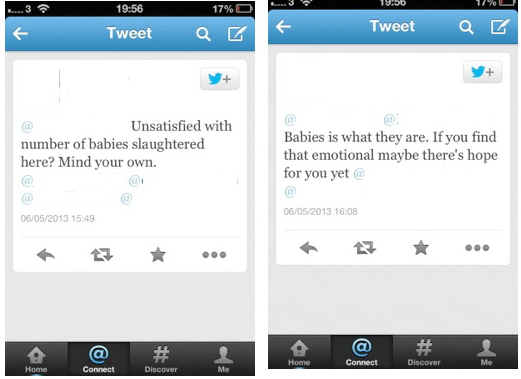
Yesterday on Twitter saw a Catholic GP being forced to close down his Twitter account following an episode of online bullying which resulted in his being reported to the NHS as well as the GMC, for the heinous crime of referring to the number of abortions in the UK as ‘the slaughter of babies’.

I witnessed the whole incident, having previously blocked those responsible – there is a posse of Irish pro-abortion advocates on Twitter, who swoop on every single Tweeter who dares to express an opinion upon the current state of affairs in Ireland. Over the past few weeks every single time I have said anything about abortion and Ireland in the same 140 characters, a persistent gang has appeared from out of the blue to attack with insult and invective. Yesterday’s ‘debate’ saw them swooping in with the same discredited narrative regarding the death of Savita Halappanavar, and then going on to attack me, a non Irish national for daring to defend the rights of the unborn in another country.

There’s nothing more of a disincentive in terms of engaging on Twitter to scroll down one’s mentions column and see numerous rants on the same subject, by the same few determined people, chock full of angry and impassioned hypberbole, together with personal insult. Besides which those who seek to discredit an international symposium of gynaecologists as being ‘liars’ on the basis that one disagrees with their conclusions and who decry Ireland’s outstanding maternal death rates as being ‘lies’, don’t really incline one to do anything other than block. One should note, nonetheless, that these are the same people who repeatedly attacked those who they deemed to be not medically qualified and therefore unable to comment, but who repeatedly seized on the subjective opinion of openly pro-choice expert Dr Boylan as being definitive medical fact in the Savita inquest, despite the fact that 11 other experts publicly disassociated themselves from his stance. Clearly they were obviously lying too.

I tweeted a few responses, realised this was a futile exchange, hit the block button repeatedly, switched off the phone and trundled off to the park with the children to make the most of the Bank Holiday sunshine. Yet another day, yet another Twitter spat?

Not quite. Later on that evening I discovered that one of my followers, a Catholic GP had joined in the fray, referring to UK interest in the Ireland abortion debate, as having seen almost 200,000 babies slaughtered here on an annual basis and not wanting Ireland to go down the same route. Here’s what he said.

Screen Shot 2013-05-07 at 12.47.13

The pro-aborts took issue with the fact he had referred to unborn children as babies and went for the jugular, causing him some considerable concern. (Apologies for the blurry images, I’ve deliberately obscured identities).

Screen Shot 2013-05-07 at 12.53.38

The pro-aborts reported him both to his employers at the NHS and the GMC, because they determined that referring to the unborn as ‘babies’ and by the almost 200,000 abortions that occur in the UK on an annual basis, he was in fact taunting women who had abortions as being ‘baby slaughterers’, and there was thus legitimate cause for concern that he could be taunting women patients.

What these so-called advocates of science and reason could not cope with was the presence of a medic, undermining their rhetoric about the unborn, hence they threw their toys out of the pram and decided to put his job in jeopardy or at least attempt to. On seeing that he had deleted his account, one therefore relented slightly and said that she had withdrawn all her tweets to the NHS. How very generous.

Screen Shot 2013-05-07 at 13.00.32

Job done. Serves him right. Hopefully he’ll think twice about expressing the fact that as a doctor he opposes abortion in public ever again. That’s another one closed down. These people need to be an example of.

Screen Shot 2013-05-07 at 13.03.44

Of course let’s remember that at least two of these tweeters were those who had expressed apoplexy that a UK tweeter might engage with the political situation in Ireland, yet had no compunction reporting an UK doctor to his professional body on the basis of a firmly expressed view, which was by the way, perfectly in accordance with the GMC guidelines on how medics should use social media. These guidelines specifically encourage doctors to take part in public health and policy decisions as well saying that doctors should identify themselves.

All of which went above the heads of the pro-aborts who said that he was fair game. He had no right expressing his own opinion, which was clearly religiously based.

Screen Shot 2013-05-07 at 13.09.28

Screen Shot 2013-05-07 at 13.11.58

But all of this was his own fault.

Another Tweeter joined in the fray to defend said GP. So enraged were these advocates that someone else dared to disagree with them, that they then felt compelled to hunt down this interlocutor, believing it to be the GP’s wife. I mean. How dare she go on Twitter to defend her husband who is having his professional competence and employment threatened on the basis of expressing a point of view and for stating that he was a Catholic GP in his bio. Oh the audacity, let’s find out all about her too, shall we. Let’s track down her Facebook profile.

Screen Shot 2013-05-07 at 13.21.27

Screen Shot 2013-05-07 at 13.20.50

At which point I begin to call out their behaviour.

Screen Shot 2013-05-07 at 13.26.04

Because this sort of probing into one’s family life and personal details is the behaviour of a reasonable and rational person.

Screen Shot 2013-05-07 at 13.27.44

Ben has written about this and it would seem he is right. Catholics need to be increasingly prepared to defend themselves from these sort of threats and attacks if they expound their views on a public forum and particularly if they are perceived to be in a position of influence.

These people are unrepentant this morning, claiming that this GP deserved to be reported for taunting women as being ‘baby slaughterers’ and telling others, such as @battlementclare that they would not hesitate to report her too, if she were still a practicing midwife, or indeed anyone who was involved in medicine and vocalised pro-life views.

I don’t generally like to go down the whole ‘persecuted Christians’ schtick. But not once in this entire debate, did either myself or the GP allude to God, yet it was the pro-aborts who kept bringing Him into the discussion as being a reason why we must not be taken seriously or listened to. Our arguments were wholly secular, though both of us are openly Catholic and proud to profess ourselves as such.

Losing one’s job may not seem to be in the same league as being thrown to the lions or physically tortured, beaten and killed as a result of one’s beliefs and faith. But being disbarred from a particular profession unless one agrees never ever to voice one’s own views, being sacked and unable to support one’s family, being ostracised and having one’s family targeted as a result, brings us a step closer.

Let us hope that the GP and his family take comfort from the recent words of Pope Francis. They need our prayers.

“[The apostles’] faith was based on so powerful and personal an experience of Christ crucified and risen, that they were not afraid of anything or anyone, and even saw their persecution as a badge of honor, that made them capable of following in the footsteps of Jesus and to be like Him, bearing witness with their lives,”

“… and in these times, there are many Christians who suffer persecution, a great many, in many countries: let us pray for them from our heart, with love, that they might feel the living and comforting presence of the Risen Lord.”

This is how it starts.

11 Consultants disagree with expert Boylan on Savita Halappanavar case

Last week I received an awful lot of flack on Twitter and in other places, for my writing on the case of Savita Halapannavar. The main criticisms seemed to be that being neither Irish nor a qualified medic, I had no right or authority upon which to pass comment.

Every single medical fact I commented upon was not made without reference to highly experienced qualified doctors and midwives, all of whom were in disagreement with Dr Boylan, whose testimony that a termination would almost certainly have saved Savita’s life, was widely quoted by the pro-abort activists as being proof that the law needed to change, as it was, in his opinion, responsible for her death.

The reason that this case has needed to be scrutinised in intricate detail, is because it was so quickly seized upon by those championing abortion in Ireland, as being definitive proof that lack of abortion was leading to unnecessary deaths. What I am more than qualified to state, is that abortion devastates lives and causes infinite pain and hurt to many women, (and men) as well as ending the lives of their babies. By all accounts Savita was a lively caring, compassionate woman. The last thing she would have wanted was for more pregnant women to be vulnerable as a result of her death.

I have just received a copy of the following press release from John McGuirk which I have replicated in full.

Ends

Dear Sir:

The recent inquest on Ms Savita Halappanavar has raised important issues about hospital infection in obstetrics. Much of the public attention appears to have been directed at the expert opinion of Dr Peter Boylan who suggested that Irish law prevented necessary treatment to save Ms Halappanavar’s life. We would suggest that that this is a personal view, not an expert one.

Furthermore, it is impossible for Dr. Boylan, or for any doctor, to predict with certainty the clinical course and outcome in the case of Savita Halappanavar where sepsis arose from the virulent and multi drug-resistant organism, E.coli ESBL.

What we can say with certainty is that where ruptured membranes are accompanied by any clinical or bio-chemical marker of infection, Irish obstetricians understand that they can intervene with early delivery of the baby if necessary. Unfortunately, the inquest shows that in Galway University Hospital the diagnosis of chorioamnionitis was delayed and relevant information was not noted and acted upon.

The facts as produced at the inquest show this tragic case to be primarily about the management of sepsis, and Dr Boylan’s opinion on the effect of Irish law did not appear to be shared by the Coroner, or the jury, of the Inquest.

Obstetric sepsis is unfortunately on the increase and is now the leading cause of maternal death reported in the UK Confidential Enquiry into Maternal Deaths. Additionally there are many well-documented fatalities from sepsis in women following termination of pregnancy. To concentrate on the legal position regarding abortion in the light of such a case as that in Galway does not assist our services to pregnant women.

It is clear that maternal mortality in developed countries is rising, in the USA, Canada, Britain, Denmark, Netherlands and other European countries. The last Confidential Enquiry in Britain (which now includes Ireland) recommended a “return to basics” and stated that many maternal deaths are related to failure to observe simple clinical signs such as fever, headache and changes in pulse rate and blood pressure. Many of the failings highlighted in Galway have been described before in these and other reports.

The additional problem of multi-resistant organisms causing infection, largely as a result of antibiotic use and abuse, is a serious cause of concern and may lead to higher death rates in all areas of medicine.

Ireland’s maternal health record is one of the best in the world in terms of our low rate of maternal death (including Galway hospital). The case in Galway was one of the worst cases of sepsis ever experienced in that hospital, and the diagnosis of ESBL septicaemia was almost unprecedented amongst Irish maternity units.

It is important that all obstetrical units in Ireland reflect on the findings of the events in Galway and learn how to improve care for pregnant women. To reduce it to a polemical argument about abortion may lead to more – not fewer – deaths in the future.

Yours sincerely,

Dr. John Monaghan, DCH FRCPI FRCOG Consultant Obstetrician/Gynecologist

Dr. Cyril Thornton, MB BCh MRCOG Consultant Obstetrician/Gynecologist

Dr. Eamon Mc Guinness, MB BCh MRCOG Consultant Obstetrician/Gynecologist

Dr. Trevor Hayes, MB BCh FRCS MRCOG Consultant Obstetrician/Gynecologist

Dr. Chris King, MB DCH MRCOG Consultant Obstetrician/Gynecologist

Dr. Eileen Reilly, MB ChB MRCOG Consultant Obstetrician/Gynecologist

Prof John Bonnar, MD FRCPI FRCOG Professor Emeritus Obstetrics & Gynaecology

Prof Eamon O’Dwyer, MB MAO LLB FRCPI FRCOG Professor Emeritus Obstetrics & Gynaecology

Prof Stephen Cusack, MB BCh FRCSI Consultant in Emergency Medicine

Dr. Rory Page, MB BCh FFA RCSI Consultant Anaesthetist

Dr. James Clair, MB BCh PhD FRCPath Consultant Microbiologist