Swimming in custard

I warn you now, this isn’t going to be a particularly upbeat post, so those of a nervous disposition – look away now. As I always say – my blog, my gaffe, my rules and if I want to have a jolly good moan, then frankly I’m going to.

So where are we? Last Friday, Radio Kerry asked me to contribute in their lunchtime talking heads programme about the case of Denum Ellarby, the little boy with Downs Syndrome who has been asked to delay his First Holy Communion. I was quite nervous but on balance think it went quite well and had some positive feedback and constructive criticism from other Catholics.

That night I received a horrendous poison pen email. I have no idea who it was from – some clever Johnny has worked out how to access my email from a WhoIs lookup and thinks it a jolly good wheeze to send me streams of poison, telling me what other people are saying about me. By other people I mean the ladies from a mumsnet-type forum I left over a year ago. Whilst I don’t think it’s constructive to engage in any further criticism of this forum which always results in streams of vitriol and people defending the “lovely supportive group of people” and my being accused of Munchausen’s (yawn), I obviously found this more than a little hurtful. As it comes from a DNS – do not reply server, I can neither block nor reply to it.

A complicated pregnancy

A bit of background. For those who don’t know and I’m not inclined to make all my confidential medical details public, I had a scare a few weeks ago, following some excruciating pain which saw me in A&E. A hopelessly over-excited SHO decided that it was an ectopic pregnancy and decided to prescribe methothroxate without actually having scanned me. I obviously objected – on an ethical level, methothroxate is an unacceptable treatment as it constitutes a direct attack upon the fetus. That doesn’t mean that Catholics are supposed to die from ectopic pregnancies or life threatening complications, but ethically, we are not supposed to do anything that is designed to directly kill the unborn child. A tubal removal would have been the answer, because it is removing the damaged tube to save the life of the mother – the side effect of which would have resulted in the death of the baby. It’s known as the concept of double effect. A mother suffering from life-threatening cancer and requiring treatment would not be expected to forgo the treatment for example, hopefully ways would be found to enable both lives to be saved, but in the worst possible scenario, any consequences for the baby would need to be as a side-effect and not a direct intention.

After a lot of deliberation and various shenanigans I was informed that I had something called a heterotopic pregnancy, a really rare condition whereby there is a surviving life pregnancy in utero and an ectopic one in the fallopian tube. Most amusingly, I was repeatedly asked by the doctors “now are you sure that you haven’t had any fertility treatment?” Like that’s something I’d just “forget”. Apparently it’s a condition that mainly affects those who have received IVF, the chances of it happening in a natural conception are 1:30,000.

Despite being told not to google, I did just that and thus we spent an agonising weekend, trying to work out what the best course of action might be. My thanks to Antony McCarthy from SPUC who proved enormously helpful – bio-ethics being his particular specialism. I was booked in for a laparoscopy on Monday, however after many more scans and blood tests, it was decided that it was not a heterotopic pregnancy after all, but merely an ovarian cyst, the pathology of which is similar to an ectopic pregnancy. As I had been exhibiting symptoms, including excoriating pain down one side all of which were presenting as identical to an ectopic, that is what they had been looking for, and upon scanning with a slightly older scanner up in the gynae department instead of the state of the art one in ultrasound (which was shut on a Friday night) they had spotted the live pregnancy and the mass on the fallopian tube. The pain is caused by torsion or twisting, hence I have been given painkillers. Although I felt something of a wimp, apparently cysts often do prove painful.

So what will they do to treat the cyst?

  1. Leave it, monitor it and hope it goes away, pregnancy hormones often stimulate the growth of cysts, but it may well go away and shrink of its own accord
  2. If it grows to more than 7cm and continues to cause pain then a procedure will be required to remove it, but ideally between 14 and 20 weeks
  3. Very worst case scenario – deliver the baby early, if the cyst grows too big in late pregnancy
At the moment I am still experiencing intermittent sharp pain.
As I said, I’m not going to launch into a huge attack on the mummy forum, I know that most of them are fundamentally decent people, but I don’t think anyone would relish receiving bitchy emails containing accusations of mental illness discussing my medical details and history and the thoughts of a group of women, whose company you are deliberately eschewing and avoiding, who seem to have nothing better to do than obsessively pour over my tweet feed and blog. Fundamentally however it is more their problem than mine. Years ago the kind of person who engages in this type of activity would obsessively keep scrapbooks and clippings, or spy behind the net curtains, logging neighbours’ movements. These days we have the internet.
Then there’s the midwife
So this week, I visited the midwife for my hour long booking in appointment. I had hoped to go alone, but the whole family has picked up another D&V virus from nursery this week (more on that later) so I had to take the two babies who were banned from nursery for 48 hours. It was one of those mornings. Scream scream scream SCREAM went the baby all morning. I couldn’t get dressed, I couldn’t get the toddler dressed, I couldn’t brush my teeth, hair, make breakfast, do anything without high pitched SCREAMING. “Stop it Licity, stop it, stop it stop it” shouted toddler, proceeding to pick up the biggest toy she could find and clatter the baby about the head. Toddler on naughty step – joint chorus of screaming.
I arrive at the midwife 10 minutes late, the surgery never has enough parking spaces so I had to park 1000 yards down the road on a busy street and manhandle the pair into a double buggy. I arrive into the surgery very flustered and toddler starts having a major tantrum because she wants out of the buggy and I won’t let her because of her habit of not staying with the toys in the toy corner, but running out of the front door and climbing all over the other patients. Just as I relent and she proves me right, I retrieve her from running out of the door, she throws herself on the floor in meltdown, baby starts to scream, out comes the midwife….
So into the midwife’s room I trot with two children in full-on meltdown, eliciting lots of sighs and huffing and puffing. Can’t you get someone to look after them for you, she asked. I explain that they have been ill and so aren’t allowed in nursery. Don’t you have anyone else to help you she asks. No, I reply, I don’t. What about family? No – one set in Wales, the other in Oxfordshire and a sister with 4 children of her own in Northampton. I’m not from Brighton, I don’t have any close friends here, only having moved here a few years ago and then having to move house just having got to know a certain area.
Well you’re clearly struggling she said, life isn’t going to get any easier for you with another baby and three small children, are you sure that this is the wisest option? I don’t agree with abortion, I replied, so this isn’t a discussion that I want to have. Well, alright, fair enough, but I’m just very concerned for you. Thanks, I appreciate it, what I need is some help, do you think you might be able to arrange that for me? No, sorry, you’ll have to speak to the health visitor once the baby is born.
So we go through my notes, etc etc and a lot is made of my advanced age (37) and the fact it’s my 4th pregnancy and all apparently rather risky. I need to go to thrombosis clinic as given that I’m so old and it’s my fourth baby, I’m at much greater risk of a blood clot?! I also get referred straight to consultant for discussions about whether or not I’ll be allowed to attempt a natural birth. Much tutting and talking about the risks of blood loss. Tut, tut, tsk, tsk, tsk. All the while the children are in meltdown. There are no toddler toys in the consulting room because they constitute a risk of contamination. I am asked why I didn’t bring anything to entertain them. I explain that I was in a rush, it was a difficult morning and I was trying to rush out of the house as quickly as possible. Tsk, tsk tsk. Tut, tut, tut. Then – what are you going to do about contraception once the baby has been born. I explain that we are either going to abstain for as long as it takes or we are contacting the couple-to-couple league for a belt and braces method. Not just examining one type of fertility marker, but all three and backed up by the persona device. If in doubt we’ll leave it out!
Tsk, tsk, tsk, tut, tut, tut. That is not good enough. Natural contraception just does not work. You cannot be in this situation again (as if I don’t know) what about sterilisation? I explain, briefly that contraception is out of the question for us as a couple. I don’t go into any detail, just explain that due to cultural beliefs we cannot use it. Well that’s ridiculous she says, you have to do something. I can’t, I tell her, it’s out of the question. Well in that case, I think I need to refer you to counselling. No, I don’t need counselling I tell her. Yes, you do she tells me, I have here in your notes that you suffer from ante-natal depression and there’s a huge risk of post-natal depression, unless you use contraception you are going to be very very ill and you need to understand that, as does your husband. Oh, he understands that alright, he understands that I am more than just a bit “sad” at the moment, but even IF I accepted what you are saying about contraception, which I don’t, if I get sterilised or use contraception behind my husband’s back, my marriage will be effectively over. We will never be intimate again and our marriage will be under huge strain. How will that help anyone, particularly the children? Well he needs counselling to make him understand. No, he doesn’t and nor do I, as a couple, contraception is OUR choice and OUR business, not for one person to hector another and given the situation, I hardly think we are going to take any future risks.
So it’s all a barrel of laughs so far. Then.
Sickness bleurgh.
11 weeks pregnant, and if anything the sickness is getting worse. The painkillers for the cyst are also adding to the upset stomach. On Monday night I started to projectile vomit and continued throughout the night. The baby decided to join in for good measure, then on Tuesday morning Robin starts to copiously vomit on his way to work. I go to wake up toddler and the cot is covered in piles of sick. It’s up the walls all over her toys, matted in her hair all over her pyjamas. I’ve never seen so much sick in my life and go through paroxysms of guilt. Why didn’t I hear her in the night? What if she’d choked on it?
Fortunately being the sturdy child she is, she seems to have recovered pretty swiftly, but it’s meant that nursery has been out of the question all week as have lectures and seminars. It was the first week back at University following reading week so great, I’m already behind again. At time of writing, Robin is still suffering for an upset stomach and so I am. It’s difficult to tell with me whether its a virus or just general sickness.
I’m still exhausted. Bunk beds not delivered yet, so baby is still in bed with me. She smells the milk and fusses and screams for feeding every hour. Robin has been taking her downstairs in the middle of the night and cuddling her to sleep away from the smell of the milk, but as soon as she comes back upstairs, one sniff of mummy and whaaaa. As Robin has to work really long days, it’s not fair to expect him to be up in the middle of the night with the baby, although he does so gladly. We don’t have a spare room, so that option is out of the question. I guess the only answer is for him to sleep on the sofa with the baby, which I can hardly ask him to do when he has to work. We’re just praying the bunk beds arrive soon so we can begin the whole crying down process – but fair to say we are currently both sick and exhausted.
Internet shenanigans
A few weeks ago, a rather unpleasant commenter, whose comments I refused to publish, set up an entire blog to tell the world what a wicked awful woman I was and not only that I am very ugly too, with a face like a horse. He is a known anti-Christian agitator, having trawled various Christian blogs, spouting absolute bile and poison. I refused to publish his comments not only because they were very personal and unpleasant, he’d gone to the trouble of finding out our former address and attempted to allude to potential going acquaintances, but more seriously, they were racist. Black African Christians are a complete anathema to him. I refused to give his nastiness and racism a voice and so he went off on a mad one, setting up his own personal anti-Caroline, face-like-a-horse blog. Other Christian bloggers also testify to his special brand of spite, he’s able to target in on areas of weakness, capable of an enormous amount of projection and goes in for pseudo psycho-analysis, my particular bete-noir.
One of the things he predicted with some accuracy is that the orthodox Catholic bloggers would turn against me. Which brings me on to:
The Pope of Corby
I have spent the last year receiving all kinds of abuse and bile from those who simply could not cope with my promulgation of Catholic doctrine. It’s a recurrent theme of this blog. Most of the time the earmuffs are firmly affixed, but it does get wearisome.
Recently I joined Catholic Voices because I thought I’d be good at it and I thought I had much to give. I had spent so much time engaged in written apologetics, I know Catholic social doctrine inside out and many people encouraged me, thinking I’d be a great spokesperson for the Church. I knew that the organisers had a bad press on the Catholic blogosphere, but I tend to seek as I find, make my own mind up about people and form my own opinions, as opposed to pre-judge. My crime was to give up three weekends, spend time and money travelling from Brighton to Leeds to learn media skills.
What that means is that I am now perceived as some kind of traitor. My blog, is no longer my own blog. No, it is an officially sanctioned Catholic Voices one, which I should not be allowed to hold, according to those on the Catholic blogosphere. When I write about my children, or my pregnancy, my dog, or anything else, that is an official Catholic Voices view apparently…
Joining Catholic Voices means that I have lost all capacity to think for myself. I am now an “establishment mouthpiece”, I have been indoctrinated into saying whatever the Bishops want me to say and as a result I am going against Church doctrine. I am following a “liberal socialist” agenda and need to think before I open my mouth.
Why? Because I happen not to automatically distrust everything that comes out of the Bishops’ mouths and seize on every announcement as proof of heterodoxy or pro-life dissent. As I’ve tried to critically engage with some of those areas which ARE prudential judgement, because I’ve listened to palliative care specialists and bio-ethicists with impeccable Catholic credentials on issues such as the Liverpool Care Pathway, I am now “pro-life lite”. I haven’t commented much on the Connexions issue, other than to note, that I don’t really know very much about it and from what I understand, the management of Connexions is supposed to be on a local school level. Connexions are apparently supposed to comply with the Catholic ethos of a school. I don’t know enough to support or defend it, but I am loathe to go shouting that compliance with the law is proof of heterodoxy.
Laughably I am told that I have a “liberal socialist” agenda and I am not a proper Catholic. The Pope of Corby and his team of navel gazing zombies seem far more interested in turning inwards and tearing each other apart, bullying me, and yes it IS bullying; a prolonged twitter bombardment starting on Christmas Eve, use of the imperative tense, which he still insists on using, liberally doling out warnings, not only to me, but also insults, branding colleagues of mine “Judas” and generally ranting non stop in an unhealthy and unhelpful fashion, trolling my tweet feed and telling whoever wants to listen that I have no right to comment on any Catholic issue whatsoever, all this amounts to bullying. He spent the whole of yesterday insulting and falsely accusing a colleague whose name he couldn’t be bothered to get correct. When I pointed out quite how hurtful he is being in the light of what we have sacrificed and given up, I was told that I use any means at my disposal to get at those who disagree with me. Disagree all you like, just don’t call me names or cast doubt on my motives. Criticism should be CONSTRUCTIVE.
Here’s what galls me, the person who is not a “proper Catholic” and is some kind of “sell-out”.
Not a proper Catholic? Selling Out?
Two years ago, I lived in a nice big 4 bedroom vicarage. I had lots of friends and was part of a supportive community. Two years on, I have had one unplanned baby and am now expecting another. I’ve had to put my plans to study at University on hold for a year, I might well need to do so again. University is important to me as it is probably the only way I’m ever going to get a job, or any job security. A job/job security is important to me, because we don’t know what the future holds.
There is no guarantee that Robin will be ordained as a Catholic Priest. He is currently being invited to consider his vocation. At present he is working full time long hours for not very much money. He enjoys the job, but it is not enough to support us. We are currently being helped by a charity specifically set up to help convert clergy, but the Ordinariate is an extra drain on their funds and they cannot help us in the long-term. If there is no priestly vocation, then Robin will have effectively “wasted” three years in terms of his career and will need to re-train. I am expecting a baby in August. We are living in Brighton so as not to have to disrupt my 7 year olds schooling and not move her several times. In September, following a cesarian section, Robin will start part-time for 2 years at Wonersh seminary, meaning that he will have to stay over at least one night a week, working a few days in his current job and spending the rest of the time at seminary.
Now he could delay it another year, but that means, just another year of transition of waiting, of uncertainty. We cannot plan for our daughter’s secondary school, we don’t know where we will be living, we can’t plan for the toddler and baby’s school, because we don’t know where we will be living. We will need to be in an area, a year before they start school in order to meet the eligibility criteria. My seven year has no idea when she will be leaving her school, or where she will be going. She is quite anxious about this. I have no idea where we will be living, I have no idea if we will have enough money to live on, I have no idea what we will do if a vocation is not discerned. I hope and pray that it will be, but it’s out of our hands and in the hands of God – we have to accept the outcome, whatever it is. But it is a time of huge uncertainty for us.
We, as a family have given up EVERYTHING, in order that my husband could follow his call across the Tiber. It wasn’t a decision taken lightly, off the back of any particular event in the Church of England, but one that happened gradually over a few years. My husband has 4 theology degrees, including one in Catholic theology from Heythrop, he’s introduced me to a lot of reading, we probably know the magisterium and Catholic teaching better than many ordinary pew-sitters and yet people think it’s acceptable to patronisingly ask “have you ever heard of Humanae Vitae”?
My blog has resulted in rape threats and death threats and poison pen letters. Commentators have called me fundamentalist, extremist, school friends have fallen out with me due to perceived “homophobia”, my mother is desperately embarrassed by me, she rang me up to tell me that if this baby is discovered to be disabled, then I really must have an abortion, in short publicly blogging has brought me nothing other than grief.
I’ve carried on doing it, for the positive comments, for those who have said “I don’t agree but I appreciate your reasoning and I can see that you are not a bigot or driven by hatred”. I’ve done it for those who have privately emailed me and asked for spiritual advice or guidance, for reading matter or for practical help on NFP or abortion issues. I’ve done it because there are people who I know I’ve helped.
But when I am called a traitor, a liberal socialist, not a proper Catholic, a heretic, when I subject to hatred and spite from brethren in Christ, when a self-appointed Pope of Corby, rants and raves, threatens and insults, when his team of hangers-on egg him on and tell me quite what a useless, stupid, thick, self-serving, attention-seeking waste of space and not a proper Catholic I am, when the fact that we are not cradle Catholics is waved about, suddenly, I snap, particularly when this comes from people who are supposed to be on side. When polls are held as to whether or not bloggers should be a part of Catholic Voices, a project for which I gave up my free time and money and energy and for which I have had received diatribes, I begin to lose patience. After all, who decided that the blogosphere should only consist of those in opposition to the CBCEW? What is so wrong about me taking the default view that the Catholic Bishops in this country ARE in accordance with the Catechism?
I was sorting out newborn baby clothes earlier this week. Instead of feeling the usual pang of excitement, I felt nothing but despair. “Oh no, not again” was all I could think. Another long drawn out difficult pregnancy which drains all my physical and emotional resources, just as I was beginning to feel more myself again. More screaming babies, more nappies, more sleepless nights. Three non stop years of pregnancy, breast-feeding and giving birth.
And all the while orthodox Catholics are screaming, ranting, raving, leering, getting their voices of spite in my head, calling me names, spitting poison, venom and fury.
An orthodox blogger said to me privately that I am pouring myself out to help a Church which will eventually hurt me.
What more do I need to say?

Update

Just to add to it all, today I received 2 pieces of bad news. Firstly my nana who is 99 and had to go into a nursing home last year has been diagnosed as being in the final stages of her life.

Secondly and more trivially, never ever buy anything from Dreams. Children’s bunk beds won’t arrive until April, despite being ordered in December and assured of January delivery. As 28 days have elapsed we are not entitled to a refund. So another few months of no sleep.

Just to prove my point, a “Christian” commentator who I’ve never heard of has publically denounced me as a “vile individual”. She goes on to say “I genuinely shudder that people like you speak for me”. You have to wonder why other Christian bloggers are prepared to tolerate this unedifying behaviour on their site. My policy is to stop the comments descending into spiteful bullying.

Apparently my attack on John Smeaton was ‘shameful’. No, it was a public right of reply. It is one thing being slandered by a tuppenny ha’penny blogger, quite another when the leader of a large lobby group outwardly concerned with protecting the unborn, launches into a personal attack on a group of young Catholics for not being “true Catholics”. That is an abuse of his position at the very least. There are still questions needing answers.

The biggest and most bitter irony, is that this is proof enough of the failure of pro-life in the UK. Instead of marshalling forces, Catholics are lining up to pour hate, venom and scorn upon each other. Like any failed movement, it’s tearing itself to pieces. I want no part of this. I am no longer going to read the below-the-line pond-life. It’s spiritually toxic and unhealthy.

A very poor advert for Catholicism and Christianity and a deep wound in the body of Christ. Fortunately I know that these people are thankfully in the minority. The Church in the UK is a thriving group consisting of many young and old, of all nations and races with different liturgical preferences and passions but all united in the love and joy and the peace of Christ. All with a genuine love care and compassion for their neighbour, prepared to roll up sleeves and help, not sit in a darkened and be-cobwebbed room using the Internet to amplify their personal vendettas and disappointments. The Church is not simply lace cottas and thuribles the size of China. It is the body of Christ here on earth and when we damage and wound each other, when we inflict pain and hurt and suffering on others, we do it to Christ himself. Judging the theological purity of others, deciding whether or not someone is a real Catholic and calling someone enduring a great deal of personal suffering and sacrifice through attempting to live a life of witness “vile” and a “pseudo Catholic” is not an act of witness.

I think there is more than one of us in need of prayer and healing tonight.

The age of reason

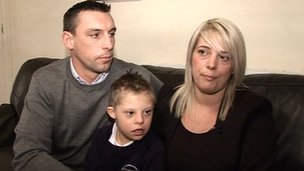
The story of Denum Ellarby, the seven-year-old boy with Downs Syndrome who has not been allowed to participate in preparation classes for First Holy Communion is causing controversy this morning, with even some Catholics stating that the Church is shooting herself in the foot.

I have to confess some sympathy, no-one wants to deny anyone the comfort of the sacraments on the basis of a disability, furthermore we know that Jesus does not deny Himself to anyone, so it is not difficult to empathise with his mother and wonder if some remedy could be found.

My eldest is currently undertaking First Holy Communion preparation classes, which consist of bi-weekly classes lasting an hour and half. A lot of emphasis is placed on understanding, in addition to the classes which include a quick revision quiz at the beginning and end, there is also quite a thick accompanying workbook for the children to go through at home and my daughter has been set various tasks, including learning prayers and responses, as well as completing the exercises in the workbook. It goes without saying that we are being scrupulous in terms of ensuring that there are no gaps in her knowledge.

The problem, as I see it, is that preparation for First Holy Communion, ideally requires quite a bit of knowledge. Whilst I am prepared to accept that not all 7 and 8 year olds reach the same level of understanding, all children are required to receive the Sacrament of Reconciliation, i.e. make their first confession, prior to receiving the Eucharist for the first time. This requires an understanding of sin, those things we do which separate us from God and an ability to examine our conscience and see those areas where we may have fallen short. Children are not normally deemed capable of reaching the age of reason until about 7 or 8, by this stage, most should be able to understand that telling lies, hitting siblings and other behaviours are bad. Most will understand the concept of right from wrong, even if they are not always capable of curbing their instincts.

If a child is unable to read, write and his speech is unable to be understood by strangers, surely it is quite wrong to place this level of expectation upon him? Surely it would be more wrong, to be able to expect him to do things beyond his abilities and actually quite cruel and unkind to state that someone with a limited understanding must be at the same level as everyone else? Is it fair to assume that he will be able to understand and make a first confession? What if he cannot remember the words of the Act of Contrition and cannot read the words on the card either? Isn’t this placing unfair pressure upon him?

It places the priest in an impossible position, as the priest must somehow believe that the child has made a genuine act of confession and contrition, but without actually being able to glean what the child has attempted to say, or whether he has been able to make an examination of conscience. Or the priest is supposed to waive the requirement for First Reconciliation, which debases the Eucharist itself?

Canon Law states the following:

people must be able to grasp something of what the mystery of Christ means. They must be able to receive the Body of the Lord with faith and devotion. Can. 913.1.

the parish priest must see to it that those who are not prepared and not sufficiently capable, should not come to Holy Communion. Can. 914

Mrs Ellarby states that she does not attend Mass as her son is unable to cope with the service for an hour and she also finds it difficult with her younger child. She has my total sympathy and understanding there. We currently find Mass extremely difficult with a two year old and a baby, the majority of the service is spent running after the 2 year old, or attempting to occupy her with books and crayons. But we still attend nonetheless and our parishioners are very supportive and understanding, having been in similar positions themselves at some stage. Very often a kind parishioner will help, particularly if Robin is reading or whatever. My feeling is that children need to get used to Church, to being in Church and the kind of behaviour that is expected from them from an early age. Mine are far from perfect, the drawback of having two little ones so close together, is that it makes it difficult to concentrate and often distracts the 7 year old. Ideally I’d like to be helping her through the service, instead of either breastfeeding or legging it after a toddler who’s snatched a prayer card from the shrine of St Theresa. But these things pass.

If Mrs Ellarby does not take her son to Church, then how on earth is he expected to have any understanding of what is going on? According to the report on the BBC, he has difficulty in accessing the RE curriculum at school and does not really enjoy mass. So it seems entirely reasonable, that he may not be able to understand the difference between consecrated and unconsecrated bread or receive the Lord with faith and devotion.

It needs to be emphasised that having a learning disability does not preclude one from participating in the life of the Church, nor receiving the sacraments. One of our adult altar servers has quite a severe learning disability and is unable to live an independent life. There are many others I know who are not ruled out.

The Catholic Church is not permanently denying Denum the sacraments, but merely stating that he is not ready yet. That seems entirely reasonable. How is he going to be able to cope with the First Holy Communion Mass, if an hour is too long for him? Does he understand the Easter story? Does he understand that the Eucharist becomes the body and blood of Christ? None of us are in a position to answer these questions, other than the parish priest himself, but of course one way of ensuring that a child has at least had some understanding is that they attend preparation classes, taken by a qualified catechist. This is obviously going to prove tricky, when a child cannot read, write and has difficulty in communication.

It seems that Mrs Ellerby’s reasons for wishing her son to participate in First Holy Communion are predominantly cultural, as she says, it has been a tradition in her family for generations and, quite understandably, she does not want her son to be excluded or left out. But given her son has limited understanding and does not enjoy Mass, one has to ask, for whose benefit is this? For hers or her sons? The sacraments do provide comfort, but only if one has some understanding of what they mean.

As Father Z pointed out, in a similar case a few months ago, “we don’t admit children who are incapable of receiving the Eucharist with faith and devotion simply for the sake of avoiding making parents feel bad.

Despite its negative connotations, discrimination is not in itself unfair, it simply means the ability to make choices and distinguish between people and situations. At present Denum is judged unable to take part in First Holy Communion, to do so would not be fair upon him, nor the right thing to do. Indeed the Church could be accused of imposing itself on a vulnerable person, who is unable to understand the consequences of their actions. That is grave matter.

Let us all pray that this is a temporary delay, not a permanent state of affairs and that Denum and his family get the support they need to help them become fully participating members of their Church community in order that they may grow in love and faith. In the meantime, Jesus will hold their son, no less close to His Sacred Heart.

Gabriel and Gethsemane

One of the reasons I felt so guilty about struggling with this pregnancy is because I look at the example of Our Lady, who upon hearing the news that she was to conceive, something that could have had grave and life-threatening repercussions for her, adultery carrying the penalty of stoning, was instantly accepting of God’s will, and indeed joyful, giving glory to God in her singing of the Magnificat.

My soul doth magnify the Lord.And my spirit hath rejoiced in God my Saviour.Because he hath regarded the humility of his handmaid;for behold from henceforth all generations shall call me blessed.Because he that is mighty,hath done great things to me;and holy is his name. And his mercy is from generation unto generations,to them that fear him.He hath shewed might in his arm:he hath scattered the proud in the conceit of their heart.He hath put down the mighty from their seat,and hath exalted the humble.He hath filled the hungry with good things;and the rich he hath sent empty away.He hath received Israel his servant,being mindful of his mercy:As he spoke to our fathers, Abraham and to his seed for ever.

No evidence of “aargh, what a nightmare, I feel sick, this isn’t really what I wanted, I’m going to be a pregnant bride, not what a planned, oh no, this is such a disaster, everyone is going to hate me, I hate myself, what if I resent the baby, I’m going to have no sleep, I’m exhausted, we’ve got that journey to make to Bethlehem, I’ll be about to drop, they might kill me and it’s not even as if I’ve had sex, it’s so unfair.”

I’ve clearly got some way to go. But with that in mind, I was recalling Jesus in the Garden of Gethsemane. His acceptance of God’s will was not “right, OK, gee thanks Pops” skipping his way off to Calvary. The Gospels tell us that he prayed in agony in the Garden of Gethsemane, for this burden to be removed from him, he prayed that he might do God’s will, but that God’s will might be something other than the dreadful price that he had to pay. Christ emerges from Gethsemane, covered in sweat, following a night of tortuous agony.

Father, if you are willing, remove this cup from me.Nevertheless, not my will, but yours, be done.” And there appeared to him an angel from heaven, strengthening him. And being in an agony he prayed more earnestly; and his sweat became like great drops of blood falling down to the ground. Luke 22: 42-45

Which gives rise to the question, why the different responses, and the potentially heretical thought, was Mary more open to the will of God than Jesus?

I think the answer has to be that Mary did not have the same agency of choice as Jesus. She was presented with a fait accompli and told what would happen. Gabriel was simply the messenger, he could not alter what had already been determined. Mary’s response could have been a lot different, her joyful outpouring of praise is proof of her sinless nature and openness to God, but she did not have the option to refuse, due to her lack of sin, just as Gabriel did not have the option to take away her pregnancy. Abortion would not have been an option in 1st century Judea, while there were probably various herbal remedies and preparations available to women, it was not the society of 21st Century Britain, where every pregnancy is deemed to be a matter of personal choice, there wasn’t a handy Marie Stopes offering abortion in every market for 20 denarii. As an orthodox Jew the idea was simply unthinkable, even if one isn’t talking about disobeying God or killing his only unborn son. Mary did not pray for mercy or respite, she did not complain, she rejoiced, in spite of her lack of control. Gabriel tells her “you will”, she could have refused to co-operate, but she is instantly accepting and believing. I think the importance is in the quality of her yes. God prepared her from all eternity to be the mother of the Redeemer, which whilst not taking away her free will.

Jesus, by contrast, had a more overt agency of choice. He prayed, not that his will was done, but that the Father’s will might be obeyed. Theologians have speculated that being the Son of God, Jesus could at any time, have summoned a legion of angels to remove him from the cross. We know that Christ was capable of performing miracles, there is the account in John of when the crowd at Nazareth rejected Jesus, drove him out of the town and to the brow of a hill in order to throw him off a cliff, and yet Christ serenely walked through the surging crowd intent on killing him and on his way. Christ had a choice and he chose the way of the Cross to Calvary; he choose to accept suffering and death for the sake of mankind and it was this choice that caused him so much torment. He was in agony in Gethsemane because he wanted his Father’s will to be something other than a tortuous death, in order to atone for the sins of mankind. Jesus chose to bend his actions to the way of the Father, no matter the personal cost to himself.

Where does that leave me? Somewhere in the middle. As various comments have noted, it’s not as though I had nothing to do with becoming pregnant, unlike our Blessed Virgin. Whilst I can aspire to the response of Mary and look to her as an example, whilst praying for intercession, I can also look at her son, the Redeemer who took on our human frailties and suffers along with us. He too, found it difficult, His was not an easy choice, it was a path beset by pain and suffering, but a price worth paying, one from which he emerged victorious, having done the will of God.

So whilst not on Calvary, I am still somewhere in the garden of Gethsemane, sweating drops like blood, knowing that the choice I’ve made which seems almost unbearable at times and is certainly full of great physical pain as well as fear, anxiety and uncertainty, will ultimately bear beautiful fruit. The spirit is willing, but the flesh is very weak.

Good Counsel

I received the following comment from Clare McCollough at Good Counsel Network, showing that they are indeed aptly named. I thought it was worth publishing in a separate post.

Here’s a link to LIME 5 for those wondering.

Hi Caroline
I understand where you’re coming from (I can’t say I understand totally, because what every woman goes through is different of course).
I could take offence that you seem to suggest that no pro-lifer understands what you have described here. Or that you suggest that the only thing the pro-life movement can offer you is baby clothes. That’s not fair! We spend our lives working out ways for women to implement real solutions to exactly the type of problems you list here. However, I understand that you’re not in the easiest state of mind at present.

So just to be clear, I think there are ways you can be helped through this difficult time and would be glad to help. Good Counsel is on 02077231740 or email us at info@goodcounselnetwork.freeserve.co.uk

I agree with some of what you said about Counselling. It addresses part of the reasons why I didn’t support Nadine Dorries.
It’s possible too that a better method of NFP or one more suited to you is available – saying that doesn’t blame you for anything. Maybe there isn’t, but in any case, as a Catholic it seems a bizarre idea that anyone would walk around “blaming” a Catholic woman for getting pregnant. It’s what happens in Marriage. NFP is great in it’s place, but God didn’t say “Thou shalt use NFP and if it fails it shall be thine own fault thou art pregnant”…Many, many Catholic women who are open to life have faced the tremendous upheaval of a pregnancy at a time which seemed impossible. Catholic women are in this together, the really bizarre world view is the one that says “get married, enter into a life giving union with this man and use any gadget, gizmo, pill, gel, injection, patch or whatever to prevent the consequence…

It is not necessarily true to say Marie Stopes and BPAS wouldn’t make a judgement on you. One of the most frequent complaints I hear from women is “I think the lady I saw at that (Marie Stopes or BPAS) “clinic” is pro-life” When questioned further they think this because she was rude or agressive, shocked at their reason to abort, annoyed that they had aborted before, impatient when they were tearful or unsure. (A sad reflection of the media image of the average pro-lifer – but not a true image of the vast majority in my experience). We must steer clear of demonising anyone who works for MS or BPAS as not all understand the reality of what they are doing, but it is a mistake to believe that all who call themselves “pro-choice” are non judgemental and woman friendly. Many of them hate their jobs and blame the women who come to them for needing their services. This is well documented (see LIME 5 and many post abortion groups writings for evidence) and something

I have personally met with in “clinic staff” many times.

You face a difficult time at present, and you know life isn’t going to be easy even after the birth. My son didn’t sleep day or night for 2 decades after he was born (hang on he’s only 4 so that can’t be right, but it feels like it!) so I realise the way small children impact your life. But we would be glad to assist with the things you think would help and maybe even to put out a few other ideas that might help for you to consider.
Prayers are with you anyway.
God bless
Clare McCullough, Good Counsel

Pregnancy Crisis

When I last wrote about what it was like to face an unplanned pregnancy, a commenter angrily wrote that they could not believe my cheek in asserting that I could now look a pregnant woman facing a crisis pregnancy in the face, that I was comparing myself to someone who had been raped when clearly there was no equivalence, I could never know how it could feel to be pregnant as a result of a rape.

Assuming that statement is correct, it must be remembered that trauma caused by an unplanned pregnancy is no less serious and distressing for a woman, regardless of how she came to be in that particular situation. Being avowedly pro-life does not somehow lessen the emotional or physical impact of an unwanted pregnancy. As a Catholic I feel under additional pressure to serenely grin and bear it, to plaster on a saintly smile and offer up every bout of retching for the Holy Souls in Purgatory, whilst declaring to the world how wonderful it is to be bringing another beautiful baby and human soul in the world.

Now whilst there is some truth in the latter part of that sentence, I know that once the baby is here, I will adore him/her, I will proudly post photographs of him/her on social media and proclaim “look, my baby is so beautiful, here is proof of the evils of abortion”, the reality of being pregnant and pro-life is somewhat different. The reason that I look at my babies and feel filled with horror at the idea of abortion is because I know quite how tempting that prospect is. I experience it on a daily basis. Looking at my babies once born, is an affirmation, not that one is needed, that I have undoubtedly done the right thing and if we’re going to psychoanalyse, is probably as much about assuaging my guilt for entertaining such abhorrent feelings whilst pregnant. One of my more unpleasant detractors said “if I see one more photo which says my baby is cute and abortion is wrong, I’ll throw up”, further consolidating that she had absolutely no idea what it is like to experience a pregnancy, let alone an unwanted or unplanned one.

Here’s the reality, warts and all. I will attempt to remain as dispassionate as possible and not whinge, but I think pro-lifers need to get a feel for what it is like when a woman is desperate, something that the pro-choice lobby, understand only too well.

I feel constantly nauseous. Not mildly nauseous, but full-on, I’m on the verge of throwing up big time here. Everywhere I go, a bucket or some sort of receptacle has to come too. I emerged from around the back of a shrubbery on campus yesterday, wiping tears from my eyes, mucous from my nose and surreptitiously dumping a plastic bag full of vomit in the nearest bin. Being British I cannot bring myself to face the mortification of using the campus toilets and bumping into someone I might know, or indeed that anyone might hear. If I’m not throwing up, I’m feeling that I’m on the verge of it at any second. Everything and everyone smells of cheese, even me. I disgust myself with my smell. Even my beloved children absolutely stink to high heaven. My beautiful baby is repellant, I can’t bear to have her anywhere near me, because she literally makes me sick, one whiff of her head and bleurgh I’m off. This is something of a problem, given that she refuses to drink anything other than breast milk and the odd bit of water. Every time she latches on to the breast, the surge of hormones as the milk is released causes another heave. Another issue is that she is, at not yet 9 months, going through separation anxiety. Put her down for more than 5 nano seconds and the million decibel screaming as if she is being tortured starts, thus setting off the toddler.

I’m exhausted. Not just a little bit tired, but as though my arms and legs are weighted down with lead. I feel constantly wiped out and struggling to keep my eyes open. When I’m at home with the children, I’m fighting sleep, but with a lively and boisterous 2 year old and the baby, it’s obviously not an option. What is exacerbating this is that due to a shortage of space in the house, there is nowhere to put a cot. Thus bunk-beds have been ordered, toddler will be evicted from her cot bed and the baby will then have a cot to sleep in. Until that time she is still in the bed with us and cannot get to sleep unless she is breast-feeding. She has now grown three teeth, so there is lots of biting, nights consist of being used as a giant human comfort blanket, my nipples made ultra sensitive via pregnancy hormones, spend the night being bitten or twisted, handfuls of flesh are grabbed, kneaded, scratched, pulled and pushed in order that the baby can slumber peacefully. As soon as the bunk-beds arrive, I anticipate a double dose of sleep trauma, toddler will be none too happy being evicted from her cosy cot, 7 year old will be getting frightfully stressed and coming to tell us every 5 minutes that toddler is talking, crying, whimpering etc (this happened on holiday when they shared a room) and baby will be apoplectic at having to sleep in a cot in a different room. There is a reason why sleep deprivation is used in torture techniques. It makes you desperate. What I have been doing, because I am a shocking, neglectful, lazy mother, is taking advantage of when my children are in University nursery to nip back home and catch a couple of hours of sleep.

The house is an absolute state and I am behind with my university work. I went to the much advertised Student Life building to get some advice about support, given I have a few late essays. I was told how to submit mitigating evidence but also told that there was no guarantee that my claim will be accepted. The highest I can achieve in my essays, if my claim is not accepted is 40%. This will do, it will get me a pass, but is more than a little frustrating.

So, to recap, I’m snowed under with university work, the house is its usual pigsty, I have three young children, I am utterly exhausted, my family live hundreds of miles away and I’ve no close friends nearby either. The parish we worship at is 10 miles away from our house, we started worshipping there before we moved, when Robin was still a vicar, have built a close relationship with the priest and have some friendships, but are still slight outsiders.

The thought of having another baby fills me with absolute dread. As soon as the nine month old reaches a vaguely manageable stage, yet another screaming newborn will be here. I have been pregnant and breastfeeding since February 2009. I have had 2 cesarians in two years, one in November 2009, one in April 2011. Neither of them have gone well. I have a phobia, a genuine dread and terror of childbirth. I feel sick, ill and rotten. I cannot believe that this is happening to me yet again, no sooner does my life begin to come together, then bang, I’m pregnant again. I also feel extraordinarily foolish for being pregnant, like I’ve done something wrong and incredibly stupid in my use of NFP; some would say its my fault for trusting in it, others would point out my deficiencies in not being able to use it properly. Either way it is my fault. In short I am not floating about in a state of pious tranquility that the Lord’s work is being fulfilled. I am miserable. I am letting just about everybody down, my husband, my family and my friends because I am finding it so difficult to function.

My husband is working really long hours, if I defer my degree again, then I’ll be liable for the higher £9,000 a year fees, if I give up, then I’ll never be able to get a job. This getting a job business is actually quite important. If for some reason my husband is not ordained, then instead of spending these few years training for a career, he’s been working in, what can be, a pretty back breaking job paying £5.90 a hour. He’ll need to do something else, as will I. Even if he is ordained, then it is not fair to expect the Catholic Church to pay for my upkeep. So the degree is important.

As an aside, perhaps people can understand why I may be just a tad short-tempered at the moment. Perhaps they can also understand why, given we gave up everything in order that my husband could cross the Tiber, and given that I have received unprecedented amounts of abuse for defending Catholic social teaching, it is more than a little galling to be called “liberal, pro-life lite, misleading the faithful and reinventing Church teaching” and had the fact that we are not cradle catholics thrown back at us by some of the traditionalist Catholics. It’s why I’m having a twitter break for a short while. Anyone looking through some of the early comments on this blog can see some of the abuse that I’ve had to put up with, being called a fundamentalist, extremist and other such names. It is just laughable to have my faith called into doubt this way. There has been absolutely no understanding that I might be feeling extremely vulnerable at present – name calling of the most un-Christian kind and aggression has been de rigour. It has been worse than anything previously faced, not simply because of the spiteful derision, but because this has come from brethren in Christ. Although I am to blame for perhaps overreacting, I think bloggers who devoted two consecutive blog posts to me and tweeters who embarked on consecutive twitter rants, need to ask themselves how they feel they might be coming across?Twitter does not allow for nuance, nor does it allow pause for thought. When faced with tweet after tweet after tweet, the blood starts pumping, the breathing quickens, hackles rise at the invective writ large in front of you and the emotional temperature is raised. This is not good for anyone and certainly not righteous. I would urge all Catholic tweeters, just to stop, pause and think. Things might not be meant aggressively, but that is certainly how they come across.

It’s fair to say that I am not Mrs Duggar, floating about in euphoric bliss about the Lord’s will being done, having conceived baby number 21. If only I were. This pregnancy is proving to be a huge spiritual test. I feel like asking “Lord, why me, again”, but am focusing upon Romans 8.

Why am I spilling like this – firstly, its to let people know in no uncertain terms that I am having a hard time. It’s to let pro-lifers know that pregnancy is often a terrible physical and emotional ordeal. I am effectively being forced to give birth, as the pro-choicers would put it, because for me there is no other choice. What I have to do, in the words of Mama Odie, from Disney’s Princess and the Frog (currently showing 24/7 in these parts) is to dig a little deeper. What we want and what we need are not always the same things, doing what is right, is not the same as doing what is easy. There are times when I feel that I would literally do anything to not be pregnant right now, I would make some kind of Faustian pact that didn’t actually involve taking the life of my chid or indeed selling my soul. If someone would offer me a solution to take away the pregnancy and the sickness, I would be mightily tempted.

This is what pregnant women face and this is what is on offer at Marie Stopes and BPAS. I know that were I to visit, they would not sit in judgement, but would validate my feelings of despair and negativity whilst offering a way out. This is the reality that anyone dealing with a pregnant woman has to face. I wrote a lot this summer about non directional counselling, my feeling was that women must not be bullied and hectored. I still stand by that, but my opinion has changed slightly. The only thing that is stopping me from not aborting this baby, is the fact that I know that it would be the killing of a child. I am 9 weeks pregnant. That’s definitely a baby, not a potential life, but a real live one. Abortion providers make moral judgements for women, they tell women that aborting children is acceptable and understandable. It might be the latter, but whichever way you look at it, when an abortion counsellor recommends a woman for an abortion procedure, they are making a moral judgement.

Pro-choice people understand only too well how difficult it is for a woman, which is why they hate us pro-lifers piling on what they believe is unnecessary guilt and pressure. But where I have changed my mind, is that actually, a woman needs to know that if she aborts her baby, she is killing her unborn child. There can be no getting around that fact. Women need to see ultrasounds and understand the choice that they are making. Someone needs to put the reality to them that abortion is the ending of a life. It’s an uncomfortable truth and it is what has people so up in arms, because they feel that women don’t need to know that, it’s easier to put the whole idea out of their minds, in a separate box to be dealt with later. This does not necessitate religious reference or hectoring, but simple facts. Here is your baby – here is what it looks like – the decision is still yours, but it is precisely because of the nature of abortion, that you may well feel some emotional trauma afterwards, particularly if you are already vulnerable.

I know that Marie Stopes and BPAS would offer me the solution that I wanted, but it would be a decision entirely centred around me, my feelings and my life as it stands now. The unborn baby would not feature at all, and thus spurious arguments would be used as qualification such as “its not really alive, it’s not viable”. That’s why this so emotive, desperate women take decisions to make their lives better, decisions that seem understandable, but decisions that are ultimately morally right or wrong. Either abortion is right, or it is wrong. What pro-lifers have to do is understand this desperation and fight to offer decent alternatives for women in these situations, as well as helping women to see the reality of their actions. What would help me? Someone to advocate at University, not only for the late penalty to be taken off my essays, but also to allow me to bring a newborn baby to lectures and seminars next year. Someone to help fight so that if I do defer, I don’t have to pay the higher fees. Ultimately we need people to fight for better conditions for pregnant women in terms of careers, so that they are not forced to put them on hold, or their prospects aren’t damaged by career breaks. That would get down abortions no end and would be a far more productive use of time than philosophically debating same sex marriage. Pro-life groups have to make it easier for women. I don’t need baby clothes, I need practical and career help.

No doubt aborting this baby would improve my short term health no end. It wouldn’t do much for the baby’s. No doubt I shall be filled with grace and blessings. But understand this – it is far from easy. I feel forced to set a shining example, when really all I want to do is to collapse into a hormonal mess. Faced with no alternative I just have to cope and dig a little deeper, I think it’s what most do when they are up against it. But I need people to be gentle. I needed a break from pregnancy. Desperately.

And now here’s the Disney. Enjoy

What’s the plan, Stan?

So, I said I’d do one final post, before a break of a few weeks, and here it is. As will become obvious I do want comments to continue to pour in as I think that this could actually prove very constructive.

Let’s be honest. There is no coherent pro-life movement in the UK. I have spent hours pouring over pro-choice literature, academic studies, political analysis, I follow them like a hawk on social media and I have to concede they are expert operators with cogent strategies, smooth PR machines who are able to drive headlines and influence public opinion. I know one or two people who have attended their meetings incognito. I’ve thought about doing the same, with the addition of a black wig and my glasses. What I have been told is that the pro-choice lobby are friendly, very well-organised and above all democratic, transparent and accountable.

What do we have to counter that? A disparate bunch of well-meaning squabblers, and I admit in some respects I may not have helped, but it pains me beyond belief to see the mess our side are in; whilst we squabble, bicker and fight, countless die.

I know all the arguments about Catholic teaching, about Christian teaching and so on and so forth, there is a time and a place to evangelise and I don’t simply mean in Church, but trying to base legislation upon Biblical, Scriptural or Magisterial Authority has not worked since before the Enlightenment. I think we have to draw an important distinction between Christian evangelisation and attempting to achieve our goals. Of course the two are inexorably linked and should complement and support each other, but campaigning for the dignity of the unborn and sick and elderly does not necessitate or require theology or biblical exegesis. We can draw on that to other Christians or in the course of general apologetics, but appealing to God, whilst trying to convince an atheist as to the horror of abortion, or why it is not right to put to death terminally ill or elderly people, is simply not going to wash.

It seems to me we have two options:

Option one

We all agree that I am a cheeky bumptious upstart who has no business sticking her opinionated nose into pro-life politics. If I want to do something I can rattle some collecting tins in Church, attend coffee mornings, bake cakes for pro-life charity sales, maybe do a bit of typing for the Pro-Life times or some such, but generally get back to my life of witness by continuing to have as many babies as I can until my uterus falls out.

In the meantime, the internecine squabbling continues, positions are more firmly entrenched than ever before, pro-life groups carry on doing what they’ve always done, groups are as polarised as ever before, John Smeaton retires in ten years time and passes on the family firm to his son, whilst LIFE carry on doing what they do. Both groups do some things well, but no real progress is made, things just tick on as before, it’s all about the damage limitation.

In the meantime, Dorries pushes for the 20 week reduction and fails miserably, much to the cheers of her detractors. Bouyed up by Nadine’s failure, the pro-choice lobby, decide to push on with their agenda, the requirement for the second doctor’s signature is removed, pro-life groups are no longer allowed to present in schools and are barred from carrying out any pregnancy counselling. Marie Stopes and BPAS build more and more clinics, abortion numbers go up, more sex education is thought to be the solution, more condoms and morning after pills are given out and so the cycle continues. Who knows, they may challenge for an overturning of the abortion pill to be administered in a clinic and will probably start hawking mobile abortion services, or even dial-an-abortion whereby a woman can have her consultation over the phone and the pill delivered by courier.

In short, doom and death.

Option 2

How about a meeting? (I won’t come, I promise, I’ll be too busy skulking or giving birth or something, besides I don’t want to be lynched by anyone). I know this seems incredible, I know we aren’t going to get x, y and z to actually sit down together in a room and begin to talk, dear me no, that could never happen could it, because of things that happened 20 years ago.

How about a team of professional mediators and ALL the major pro-life players and when I say ALL, I mean ALL? Not just representatives from SPUC, LIFE, Right-to-Life, but everyone, from people like Peter Saunders, to John Smeaton, Jack Scarisbrick, to Phyllis Bowman, Josephine Quintavelle, Ed Rennie, heck even Lord Alton, EVERYONE, lets get them all together to sit down, agree common goals and talk, to see where we can all go from here.

What I would love to see is a consolidation of all groups, – one huge group with different arms and focuses, say a euthanasia arm, an education arm, an outreach arm, a political arm, a research arm and so on and so forth. Consolidation has to be the name of the game in this day and age. It’s a clunky analogy but look at the airline industry. All the little airlines could not survive single handedly, routes were being duplicated, losses were being made and so we’ve seen some mergers in order to ensure survival. I know that the pro-life movement is not a business, but surely if we had one movement, one that was democratic, transparent and accountable, then certainly Catholics would know to whom to donate in good faith, as would Christians, Muslims, Jews, Hindus, people of all faiths and none. We seem to have so much duplication and wastage and yet no coherent strategy.

I know there are so many thorny issues to be thought through, I know there are many competing egos, but surely with professional mediators and then with the help of management consultants (sorry, but they would need to be a prerequisite) we could take stock of the resources and expertise available, consolidate and move forward? I know there are issues such as LIFE only do non-directive counselling and really Catholics must tell people the truth that abortion is the killing of a baby and morally wrong, but surely there has to be areas of consensus and commonality?

I really don’t think we can carry on as we are, it’s 2012, it’s time to finally sort this mess out, and getting everyone together in a room seems a good place to start. If the Irish peace process can manage to get Gerry Adams and David Trimble around the table, then there’s hope for all of us.

Which brings me to something that I’ve always wanted to do. One of those poll jobbies. Over to you. What do you think? Maybe the first thing we can organise is that long overdue rally?

Moratorium

I was speaking with my spiritual adviser earlier as a result of which I will be having a short blogging moratorium.

There are a few reasons for this, firstly I have three essays due in on the 10th January, secondly I am beginning to hit the exhaustion phase of early pregnancy whereby every muscle aches and yearns for rest and I’m downing the lucozade tablets for much needed energy and to keep going. Looking after 3 young children on my own in the week means I don’t have time to sleep, combine that with University work and I’m shattered.

One very unpleasant commentator suggested I am a dreadful mother who neglects her children, given the blog, but I tend to do my blogging when they are in bed, plus, I am an extraordinarily fast typist. Rest assured my children do not lack their mother’s attention.

I am also involved in another short-term personal project, that I cannot divulge, but which is proving spiritually draining, however it already seems to be bearing much fruit and a worthwhile use of my time.

I don’t therefore have the emotional energy to continue taking the constant attacks from others, both my husband and my advisor noted that I can’t be fighting on all fronts and I need to concentrate on my current short-term goals and suggested that the work I am currently doing needs to be prioritised.

I received a number of emails of support following my last two posts, from Catholic supporters with influence beyond the blogosphere, from past and present pro-life parliamentarians, newspaper columnists and heads of various organisations. All of them praised my “courage”, but to me there seemed nothing intrinsically brave about tapping out my opinion. My husband warned that I might have a hard time, but I was taken aback by some of the vociferous comments, a few of which were unnerving in nature. Having been exhorted to “take down your post and walk away, your friends aren’t helping”, then told “there will be repercussions”, I had rather an unsettled night. I subsequently woke up to a comment implying that I was peddling “a sack full of lies, half-truths, outright deceit and spin concerning Catholic teaching”.

All of this rather proves my point about a culture of fear. It seems to be acceptable for John Smeaton to blog his outrageous opinions and pronouncements upon others but not for others to respond. A few of my supporters asked me not to publically name them, a wish that I will respect, because as they said, they need to be above reproach and not enmesh their organisations in a personal feud. To get involved they said, would be in exactly the same error as John; it would conflate their views with that of their organisation, whereas I have more freedom, blogging purely as a private individual.

This is the joy of the blogosphere’s lack of regulation, it is a great equaliser and means people can be called to account. Let me be clear, if any Catholic blogger had decided to deride myself or my colleagues, I would have been equally hurt, I may have challenged in the comments box, but would probably have left it. The reason why I have taken issue is because John Smeaton’s blog is in his official capacity as SPUC Director, there is no comment facility and it is taken authoritatively. As some of my commenters have noted, he has sometimes not represented the full picture or has jumped to false conclusions on issues, alienating many in the process and sowing dissent amongst natural allies.

This is why i believe the hierarchy aren’t as keen on blogs as we bloggers. We are not all in full possession of the facts, I was not party to the discussions or expert advice presented to the Bishops in terms of the Liverpool Care Pathway and Connexions so I have to trust their judgement. Though there is room to ask whether or not certain things are wise, what is unfair is to allege that the Bishops’ Conference is intent on pro-life dissent. If any individual Bishop was in pro-life dissent, then they’d be out on their ear. As some of my commentators note, we cannot comment on the sensationalist stories we see reported, not being party to all the facts and nor can we present this as evidence of anything and then turn our fury upon others, without looking very foolish.

What is in danger of happening at the moment is the blogosphere is in danger of turning in on itself and becoming an ugly spectacle which I do not want to be a part of. It is doing nothing for the Kingdom or Catholicism as a whole. It is why so many are so wary about the Internet as a medium. There is a danger of treating blogs or things we read on the net as truth and being unnecessarily scandalised. As a private individual I can only ever speak for myself and not, unlike others, in an official capacity which would lend misleading authority.

My advisor reminded me to remember humility, you may know you are right, but you don’t have to jump up and down to prove it, think of the patient monk who waits 7-10 years silently carrying on, before he is shown to have been right all along.

My husband says “the problem is Caroline is that you write very reasonable, rational posts and expect everyone else to behave the same way. We know human nature is flawed and sinful and not everyone will respond as you would wish and be convinced, so you have to accept there’s a lot of unpleasantness out there.” As he says, the irony about all of this, is that I am an orthodox faithful practicing Catholic, one who is happy to sign up to the Catechism in its entirety, therefore the animosity is unfounded. One only needs to look at some of the abuse I’ve taken for blogging on the key issues, to realise that.

The bloggers hold onto the fact that they are able to hold others to account and swiftly disseminate information. This is all I have done. Democracy demands that we are able to freely and openly discuss concerns without fear of “repercussions”. Apparently SPUC is a Limited Company. I can understand that it may not be able to be a charity because it might not be able to adequately meet the Charities Commission test of “public benefit”. To see the accounts a Companies House search of SPUC Pro-life Limited needs to be made. Of course being a Limited Company, raises questions like who are the shareholders, are the profits reinvested and is a dividend paid? I haven’t the energy to investigate further, but I would like to know more before I donate money or encourage others to.

Whatever SPUC’s alleged successes in the EU or UN, there is still no significant UK progress. Their projects may well be worth Catholic support, but why do they claim to be more worthy of support than others, especially when their leader is preoccupied with attacking Catholic leaders and upsetting prolific and influential supporters(it goes without saying I do not include myself in that)? Why should a Catholic support an organisation whose leader seems to sow dissent and who inspires a response that has made me fearful? If SPUC feel that the Catholic hierarchy are ignoring their concerns and are not as pro-life as they should be, then they need to look at the bigger picture. Why is there a lack of a coherent pro-life movement in this country, unable to hold anyone in check? Why are SPUC marginalised? Who do they have to blame?

As I said, I am going to post one more entry and then have a short moratorium whilst I concentrate on essay work and other things, but I don’t regret opening this up for debate.

Amongst all the to and fro, Tyler, came up with the following comment as a wonderful New Year’s Day gift. This is what makes blogging worthwhile, in a beautiful twist of fate, in delicious irony, it is an interlocutor or “troll” who has motivated me to continue. The Lord does move in mysterious ways.

I’m not going to lie. I came here to troll all over your site, as I had held you in a fair bit of contempt, after being directed here through an angry friend’s link. However, I was unprepared for the unusual and surprising quality of your reasoning and logic, which was far from the usual, “the face in the sky commands us to do A, B, and C, while prohibiting E, F, and G” sort of religious blog. Therefore, I apologize, and after thinking carefully about it, I also apologize for the trolling I would have done, had your blog been less impressive, as what I was going to do was rather ridiculous anyway since,to put it mildly, and to insult you would have been rather immature, regardless of what I found here.

In addition to this, I feel I must point out that I obviously do not agree with all that is written here. As I am not a Strong Catholic, this is unsurprising, but I am not so naive as to fail to realize that not all Catholics are drones, mirroring and reflecting the same precise beliefs, and I realize that your reasoning is constructed in a way that is open to debate (if one has suitable facts and satisfactory mental facilities to engage in a reasonable disagreement in the comments section), which is a significant factor in the quality of your posts, as you have clear substance in what you write. Thus, while our principles are not necessarily on par with each other, I believe the respect in your blogging rises above that, and presents itself as valid and important opinion, despite what my own beliefs are.

So, I hope you keep writing. Perhaps I do not hope that people will take what you say as the absolute truth but, perhaps, I hope that people will consider and weigh in on what you write. Because, honestly, the best argument is constructed with knowledge on something you don’t like, and your blog, at the absolute least, is an exemplary argument for anyone, religious or not.

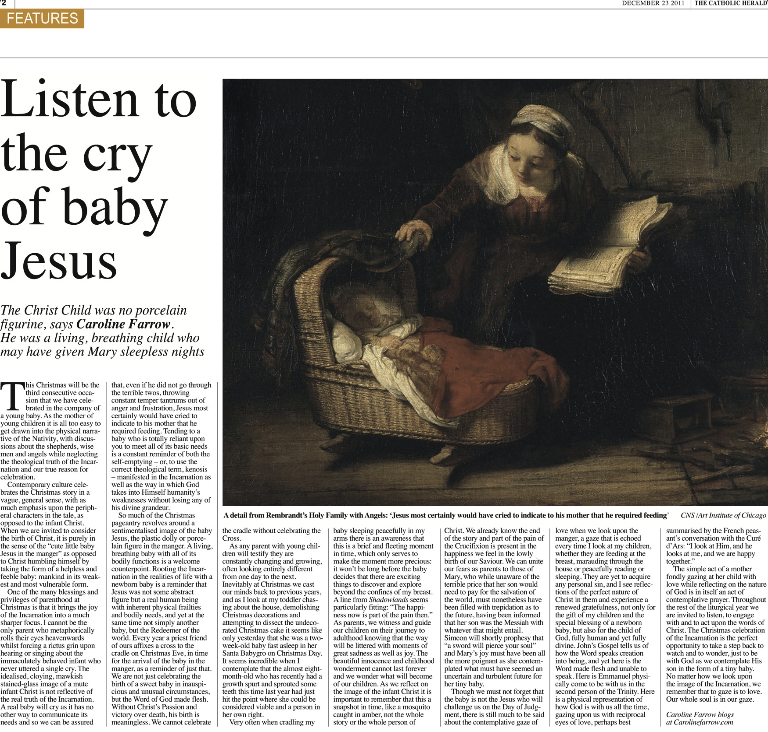
Listen to the cry of the baby Jesus

Here is this year’s piece from The Catholic Herald Christmas supplement.

Merry Christmas.


This Christmas will be the third consecutive occasion that we have celebrated in the company of a young baby. As the mother of young children it is all too easy to get drawn into the physical narrative of the Nativity, with discussions about the shepherds, wise men and angels while neglecting the theological truth of the Incarnation and our true reason for celebration.

Contemporary culture celebrates the Christmas story in a vague, general sense, with as much emphasis upon the peripheral characters in the tale, as opposed to the infant Christ. When we are invited to consider the birth of Christ, it is purely in the sense of the “cute little baby Jesus in the manger” as opposed to Christ humbling himself by taking the form of a helpless and feeble baby: mankind in its weakest and most vulnerable form. One of the many blessings and privileges of parenthood at Christmas is that it brings the joy of the Incarnation into a much sharper focus. I cannot be the only parent who metaphorically rolls their eyes heavenwards whilst forcing a rictus grin upon hearing or singing about the immaculately behaved infant who never uttered a single cry. The idealised, cloying, mawkish stained glass image of a mute infant Christ is not reflective of the real truth of the Incarnation. A real baby will cry as it has no other way to communicate its needs and so we can be assured that, even if he did not go through the terrible twos, throwing constant temper tantrums out of anger and frustration, Jesus most certainly would have cried to indicate to his mother that he required feeding. Tending to a baby who is totally reliant upon you to meet all of its basic needs is a constant reminder of both the self-emptying – or, to use the correct theological term, kenosis – manifested in the Incarnation as well as the way in which God takes into Himself humanity’s weaknesses without losing any of his divine grandeur.

So much of the Christmas pageantry revolves around a sentimentalised image of the baby Jesus, the plastic dolly or porcelain figure in the manger. A living, breathing baby with all of its bodily functions is a welcome counterpoint. Rooting the Incarnation in the realties of life with a newborn baby is a reminder that Jesus was not some abstract figure but a real human being with inherent physical frailties and bodily needs, and yet at the same time not simply another baby, but the Redeemer of the world. Every year a priest friend of ours, affixes a cross to the cradle on Christmas Eve, in time for the arrival of the baby in the manger, as a reminder of just that.

We are not just celebrating the birth of a sweet baby in inauspicious and unusual circumstances, but the Word of God made flesh. Without Christ’s Passion and victory over death, his birth is meaningless. We cannot celebrate the cradle without celebrating the cross.

As any parent with young children will testify they are constantly changing and growing, often looking entirely different from one day to the next. Inevitably at Christmas we cast our minds back to previous years, and as I look at my toddler chasing about the house, demolishing Christmas decorations and attempting to dissect the undecorated Christmas cake it seems like only yesterday that she was a two-week-old baby fast asleep in her Santa babygro on Christmas Day. It seems incredible when I contemplate that the almost eight-month-old who has recently had a growth spurt and sprouted some teeth, this time last year had just hit the point where she could be considered viable and a person in her own right.

Very often when cradling my baby sleeping peacefully in my arms there is an awareness that this is a brief and fleeting moment in time, which only serves to make the moment more precious: it won’t be long before the baby decides that there are exciting things to discover and explore beyond the confines of my breast. A line from Shadowlands seems particularly fitting: “The happiness now is part of the pain then.” As parents, we witness and guide our children on their journey to adulthood knowing that the way will be littered with moments of great sadness as well as joy. The beautiful innocence and childhood wonderment cannot last forever and we wonder what will become of our children. As we reflect on the image of the infant Christ it is important to remember that this a snapshot in time, like a mosquito caught in amber, not the whole story or the whole person of Christ. We already know the end of the story and part of the pain of the Crucifixion is present in the happiness we feel in the lowly birth of our Saviour. We can unite our fears as parents to those of Mary, who while unaware of the terrible price that her son would need to pay for the salvation of the world, must nonetheless have been filled with trepidation as to the future,having been informed that her son was the Messiah with whatever that might entail. Simeon will shortly prophesy that “a sword will pierce your soul” and Mary’s joy must have been all the more poignant as she contemplated what must have seemed an uncertain and turbulent future for her tiny baby.

Though we must not forget that the baby is not the Jesus who will challenge us on the Day of Judgement, there is still much to be said about the contemplative gaze of love when we look upon the manger, a gaze that is echoed every time I look at my children, whether they are feeding at the breast, marauding through the house or peacefully reading or sleeping. They are yet to acquire any personal sin, and I see reflections of the perfect nature of Christ in them and experience a renewed gratefulness, not only for the gift of my children and the special blessing of a newborn baby, but also for the child of God, fully human and yet fully divine. John’s Gospel tells us of how the Word speaks creation into being, and yet here is the Word made flesh and unable to speak. Here is Emmanuel physically come to be with us in the second person of the Trinity. Here is a physical representation of how God is with us all the time, gazing upon us with reciprocal eyes of love, perhaps best summarised by the French peasant’s conversation with the Curé d’Ars: “I look at Him, and he looks at me, and we are happy together.”

The simple act of a mother fondly gazing at her child with love while reflecting on the nature of God is in itself an act of contemplative prayer. Throughout the rest of the liturgical year we are invited to listen, to engage with and to act upon the words of Christ. The Christmas celebration of the Incarnation is the perfect opportunity to take a step back to watch and to wonder, just to be with God as we contemplate His son in the form of a tiny baby. No matter how we look upon the image of the Incarnation, we remember that to gaze is to love. Our whole soul is in our gaze.

Déjà vu

I was re-reading the piece I wrote for the Catholic Herald last Christmas and reflecting that it seems as relevant now as it did then!

For those who didn’t see it – here’s the subbed text. We did have a memorable and special Christmas, watching this year’s Rev Christmas special was a timely reminder that this short break from ministry has its advantages!

A peaceful & blessed Christmas to all – clergy families in particular. Only a few more days til it’s all over!

******************************************************

Every year I am reminded that all families, perhaps unwittingly, enter into the spirit of the Advent Season, regardless of whether or not they profess a Christian faith. For most households December is a time of preparation, often of uncertainty and stress in these difficult economic times, as well as a looking forward with hope, either to the festivities of the day itself, or perhaps to a more optimistic New Year.  Regardless of whether or not most families are anticipating the Second Coming itself, the aspects of frantic preparation and anticipation certainly seem to be a feature of the twenty-first century Christmas; every year, the pressure for the ‘perfect Christmas experience’ ratchets up a notch in terms of the early appearance of festive goods in the shops and the non-stop bombardment of advertising and Christmas-themed programmes.

For my family, this Advent and Christmas will be unique in that it is the first time, that we will be truly united both in our spiritual and physical preparations and in celebrating the joy of the coming of Our Lord. Having been the Catholic wife of a Church of England priest, Christmas has previously had something of a bittersweet flavour. The compromise available to most couples of differing Christian denominations usually involves both parties attending two different Christmas services together, perhaps midnight Mass and then a service on Christmas morning itself. This option was never logistically available to us, for the last few years I have cut something of a conspicuous lonely figure, sat on my own, or with my young daughter during Mass on Christmas Morning. Clearly it was important to be able to support my husband, so usually we attended all his services on Christmas Eve, then I would go to the Mass at the Catholic Church just a few yards away from his church on Christmas morning, before joining him at the end of his service.  It was at this time, that despite being linked by the sacrament of marriage, our disunity in faith was most acutely experienced. The incompleteness of our spiritual union was thrown into physical relief, the only time we had previously been able to receive communion together, was the occasion of our nuptial Mass, Bishop Kieran having graciously granted a special dispensation. We experienced the sense of deep pain and sadness at being divided at the most sacred moment of the Eucharist on a weekly basis, but at Christmas, a time traditionally associated with the family, this was felt more sharply than ever, when the family was both physically and spiritually fragmented. However, as the Bishops’ Conference of England and Wales reminded us in their 1988 teaching document, One Bread, One Body, this pain did much to highlight our brokenness, our division and acted as a spur to unity and healing, playing a not insubstantial role in my husband’s subsequent conversion to full unity with both the Church of the Apostles and his wife.

Like many others who are caught up in the whirlwind of pre-Christmas preparation, my focus was often predominantly on the practical, the making of the nativity costumes, the food shopping, the gift-buying, the Christmas card-writing, the decorating and so on and so forth. As many a clergy spouse will testify, Christmas is often unbearably hectic, one doesn’t see one’s husband for the vast majority of December and at times the rounds of lunches, Christmas fairs and carol services seem endless. In addition to being the Rector, my husband was also a School Governor and trustee of a local bereavement charity, all of which had additional Christmas services and meetings to factor in on top of the usual day-to-day business, as well as ensuring that the pastoral ministry to the sick, elderly, housebound and bereaved was not neglected. It is something of a family custom, that come Christmas Night, Robin will succumb to his annual bout of illness, following six weeks of relentless activity, including several sessions burning the midnight oil whilst sermon writing. The past two years have been particularly manic; last Christmas I was dealing with a newborn baby born in mid-November, the year preceding that, we were preparing for our forthcoming wedding on the 29th December and though both times I had attended various Advent groups conducted by my husband, it was incredibly difficult to remain spiritually focused. In previous years I had been on light girlfriend duties only! At the time of choosing our wedding date, Christmas had seemed a marvellous idea coinciding with his period of annual leave, with hindsight it was sheer folly.  I came down with a chest infection on Boxing Day, Robin passed out with perhaps the worst case of genuine flu I have ever seen mid-honeymoon. “For better for worse, in sickness and in health” was enacted sooner than we had anticipated!

This year has also been equally manic and for most of the year we have been focussed upon Robin’s conversion and the upheaval that this would entail. At the moment, we as a family are thoroughly enjoying this season of Advent, finally having the luxury to take time and slow down, to pause and reflect, to fully spiritually prepare ourselves, instead of preparing others. We feel acute parallels between ourselves and the Holy Family who have always held particular resonance for us. St Joseph the foster-father of Christ is a constant source of inspiration to Robin in his role as step-father to our eldest daughter. St Joseph unfortunately sometimes seems to be sidelined in the Nativity story, although what is clear is that like Mary, St Joseph was uniquely singled out for his role. Robin felt very much that not only was he called to the vocation of marriage with me, but just as importantly he was also called to become a father to my little girl, with whom he had fallen deeply in love. He often reflects that it was perhaps her, as much as me, that helped him to affirm his calling. The fact that St Joseph is a foster father and that he probably died before Jesus began his ministry, affirms that the often difficult and complicated family circumstances in which people find themselves, do not doom us to failure. To fail to appreciate St Joseph’s role can undermine the importance of the Christian family and thus he continues to play an important role in our Advent reflections.

Another more obvious parallel for us with the Holy Family during this season, is that of Mary’s joyful acceptance of news that could have had fatal implications for her. Since discovering on the Feast of the Assumption, that we would be expecting another child, due on Good Friday, I have looked to Our Virgin Mother several times. Like her, this news has come unexpectedly, not at a time of our choosing and has thrown our lives into disarray. I noted with alarm the words “high risk” written in my pregnancy notes and certainly this pregnancy has had severe consequences in terms of its impact on my health. At a time when we were moving house and I was commencing a three year degree, along with the usual demands of a young baby and child and supporting my husband in his quest for work, the pregnancy meant that I had to put many of my cherished plans on hold. If I am candid the acceptance was more grudging than joyful, with much to learn from the example of Mary, ‘let it be done to me according to thy will’. However, in common with both Mary and the theme of Advent, I am now indeed looking forward with hope.

Of course, I am not the only one who has had to joyfully accept a calling that has entailed great personal upheaval and suffering. Like the Holy Family in exile, we are experiencing a period of great uncertainty. We have been uprooted from our home and though we continue to enjoy the prayers, support and friendship of former parishioners, we are in a period of transition, from one place to the next, unsure of what the future may hold. My husband still discerns a calling to priestly ministry, but this is entirely in the hands of the Lord.

No matter what happens we have answered the call of the Lord in as best a way we can and so we are looking forward with hope, in common with all Christians. Robin’s conversion means, that for the first time, we really can enjoy the perfect family Christmas, united in hope, love and joy in the Eucharist and in our celebrations of the coming of our Saviour.

Civil Partnerships – what does the Catholic Church REALLY think?

Jenni Murray stated on Woman’s Hour the other day, that the Catholic Church had completed a U-turn (much like this present government on so many matters) and now supports civil partnerships, therefore it seems worthwhile to outline the current position, as I perceive it.

As stated by the Bishops’ Conference in 2003, the Church welcomes and endorses the removal of unjust or discriminatory treatment against ALL people, as a civilised society must recognise that everyone retains their human and civil rights simply by virtue of their inherent dignity as human beings.

The reasons given by the government for introducing civil partnerships were to address an existing inequality between opposite and same sex couples, but as the Bishops noted at the time, many of the provisions made in the Civil Partnership Act were unnecessary – immigration rules and tenancy rights had already been altered in order to grant same-sex couples equality under the law. The Sexual Offences Bill in 2003 also removed discrimination by gender and orientation and employment law was also advanced in order to tackle discrimination and removed any remaining prejudice in the workplace.

As the Bishops said:

 It is very much to be welcomed that in recent years, there have been many significant changes to the law to remove unjust discrimination against people on grounds of their sexuality.

Given the changes to the law and the fact that individuals could make their own private arrangements with regards to inheritance matters, the Bishops questioned whether or not there really was a pressing need for civil partnerships.

As I noted in my previous post, the Civil Partnership Act is discriminatory, in that it is only open to same-sex couples, meaning that elderly relatives or close friends are excluded. Technically speaking there is nothing to stop my aunties from entering into a civil partnership because the act of forming a civil partnership does not require any vows or official wording, the partnership is formed once the contract is signed, whereas a civil marriage must include basic vows in addition to the signing of the register.

Unlike a marriage,a  civil partnership cannot be dissolved on the grounds of either adultery or non-consummation and therefore it is clear that it is a very different structure to marriage evidenced by the fact that it is controlled by a separate piece of legislation.

In 2003, the Bishops stated that they recognised the great value of close relationships which is not to be confined to marriage or family. Whilst Church teaching is clear that sexual relationships belong exclusively within marriage, the Bishops were explicit in noting that

“the Church does not thereby reject the love or friendship between homosexual people, the bond of friendship makes someone closer to us than we are to any family member. A deep friendship is something in which we can all rejoice. A failure to acknowledge this could lead to the wrongful exclusion of someone who should be informed and involved in cases of medical emergency or funeral arrangements”.

Without wishing to reignite all the furore, I believe it is these aspects of civil partnerships for which Archbishop Nichols was expressing support, which is entirely consistent with the Bishops’ statement in 2003.

So, with that in mind, can someone like Fr Ray Blake rush out and contract a civil partnership, as he mooted the other day? The answer is, of course not. Aside from the public scandal caused by the sight of a Catholic priest pledging his troth in Brighton registry office, a civil partnership would be the source of scandal for any Catholic, because though legally a civil partnership does not require any reference to sexuality, there is an implied conjugal bond given the exclusion of close family members. In 2008, the Conservative MP Edward Leigh, attempted to put through an amendment which would remove the existing inequality and disadvantage suffered by close family members, but was defeated as the sole purpose of the civil partnership act was to grant a state-recognised union to homosexuals alone.

As Archbishop Cranmer noted at the time, the state was therefore privileging erotic love over family or platonic love.

The other difficulty for the Church with civil partnerships is that they include rights pertaining to children and are therefore framed as being an equivalent to marriage, which is certainly how they are understood, even if that is not legally the case. A civil partnership includes the ability to gain parental responsibility for a partner’s children as well as a responsibility to pay maintenance for one’s partner and their children in the event that the partnership should dissolve.

In practical terms, the Civil Partnership Act did not change much. The Adoption and Children Act passed in 2003, already allowed single people to adopt, a gay person could already adopt and assume joint responsibility together with their partner. One partner would adopt and the other would apply for a residency order. Same sex couples have had the right to adopt since 2002, three years before the Civil Partnership Act came into force.

What the Civil Partnership Act has done, is elevate civil partnerships to a legal status equivalent to marriage, hence the public confusion. The scope of the Act is too broad and the group of the people to whom it is applied is too narrow.

All Catholics naturally applaud the removal of unjust treatment and inequality, which is why we recognise that some aspects of civil partnerships are to be welcomed, solving issues of natural justice, but we reject those elements which seeks to put civil partnerships on an identical footing to marriage, in terms of rights pertaining to children. It is not right to embark on a policy of which the long-term outlook can only mean that more children are deliberately brought into this world to be deprived of a mother and father.

I saw nothing in the Archbishop’s remarks that contradicted that.

Nick Clegg has opined that marriage is a private matter. He is wrong, marriage is a public institution, outside of the Church, its success or failure has impacts on society as a whole. It is right that proposals that could harm it are given rigorous scrutiny, the same as any other public policy. It is not simply between two people, but exists for the good of children and for society.

It is Civil Partnerships which should remain an entirely private matter of arrangements between two consenting  individuals.