Getting Downton and dirty

More of this
More of this

And lo it came to pass that (not for the first time), I indirectly made the dizzy heights of the Daily Mail, having tweeted in typically less than eloquent fashion about the distressing scenes of sexual violence present in the plot of last night’s Downton Abbey. At this point I should probably insert a spoiler alert, particularly as I am aware that I have a regular American readership who have not had the current series screened over there yet, but it seems unnecessary because Downton Abbey has already been spoiled, by the addition of a sensationalist and unwholesome plot line involving a brutal rape.

Admittedly since the last series, Downton Abbey has been in serious danger of becoming a pastiche of itself, which is half of the pleasure of watching. We know that it’s hopelessly unrealistic, the plot is hackneyed, the script is riotously dire, redeemed only by the Dowager Countess’s screamingly acerbic one-liners and yet despite the achingly self-conscious critique from certain quarters of the self-appointed cognoscenti, the British and American public are lapping it up, precisely because of its over-the-top self-indulgence. Sunday night TV has not been so much fun, nor so eagerly anticipated since the the heyday of the sadly demised Spitting Image.

The problem for the scriptwriters is that four series into the show, with almost ten years having elapsed in the lives of the Crawley family, the plot has reset back to zero and there are only so many dramas one particular character can endure without the whole thing becoming ridiculously far-fetched, which is why Downton Abbey has now moved beyond its original description of serious period drama, to 1920s soap-opera. By last week it was clear that Downtown was the equivalent of Neighbours only with finer sets and a more imaginative and opulent wardrobe, the narrative was light-hearted, predictable and yet still wholly engaging.

The appeal is obvious, Downton is the Upstairs Downstairs of our era, a vehicle of pure escapism, depicting a whole other world, where people still bothered to get dressed for dinner, where manners, respect and social etiquette still existed and the class system was not brushed under the carpet, nor was being working class deemed anything to be ashamed of. Whether or not it bore a strict resemblance to the era was irrelevant to most of us. We enjoyed it for what it was. A soap opera mainly revolving around posh people and their wholesome domestic staff. That was the entire point.

Until last night. Perhaps what was so shocking was not the sexual violence itself, which was not graphically shown, demonstrating once again that the portrayal of sex on TV does not need to be explicit, the imagination is always far more powerful than the reality, but the physical and emotional darkness. In a disturbing and clever piece of cinematography, the rape scenes consisting of a savage punch to the face, Anna being dragged down a dark silent corridor and her screams going unheard, were juxtaposed with those of Nellie Melba played by Dame Kiri Te Kanawa singing exquisitely to a rapt audience, the brutality of the sexual assault thrown into sharp relief by the refinery of the drawing room.

We didn’t need to see precisely what had taken place, we knew and how many of us were sat white-knuckled literally gripping the arms of our sofas, willing or (and in the case of my husband) physically shouting at Bates, or just anyone to get up, go to the kitchen and disturb the assault taking place before it could get any worse. It was reminiscent of the terrible scene in Schindler’s list where the Nazi commander Amon Goeth, played so chillingly by Ralph Fiennes, begins to sexually force himself upon his Jewish housemaid and on that occasion drew back. If only the same thing could have happened, if only Anna and we the audience, could have been spared.

The devil was in the detail, the bruised face, the dishevelled hair, ripped uniform, tears, snot and convincing performance by Joanne Frogatt were incredibly disturbing and there’s no doubt that the scene will have proved traumatic to victims of rape. This was more akin to the gritty and iconic rape of Kathy Beale by the equally dastardly and charming Rupert Wilmott-Brown in Eastenders, than a fluffy Sunday night period drama.
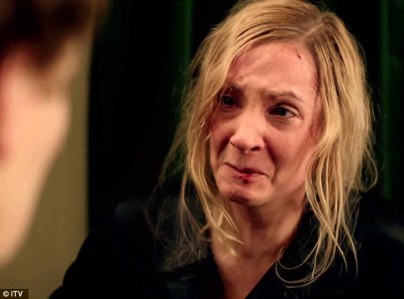
Less of this
Less of this

Sadly we missed the generic warning of violence which apparently came before the show, tuning in time for the credits, but after a gruelling week, both physically and emotionally, I was looking forward to my Sunday night visual equivalent of a comfort blanket, not a show that would depict rape violence. Maybe the uncharacteristic warning at the beginning of the show could have alerted us that something was up, after all Downton’s normal fisticuffs doesn’t usuallymerit such treatment, perhaps with hindsight it was obvious where the story was leading and perhaps that serves as a useful device to help us identify with Anna, a usual reaction by victims of rape is to think “how could I not see that coming” but the fault always lies with the rapist.

But one has to ask, what was the entire point of the plot? To get viewers to realise how awful rape is? It’s difficult to see where the storyline can go from here, there are hints that Anna is pregnant, she was seen taking a headache remedy prior to the attack, is she going to attempt to procure a backstreet abortion, will there be rows about paternity, or will Bates and the rest of the staff find out and the inevitable victim-blaming occur? In a situation such as this in 1920, victim-blaming would certainly have been the norm and more likely than not her attacker wouldn’t have been a visiting valet but a member of the aristocracy who would have felt that a quick grope or more was well within his rights.

I just can’t see it ending well at all, what resolution can there be, particularly as we know that Lord Gillingham is going to make subsequent appearances presumably with his valet in the series due to his burgeoning affair with Lady Mary. The rape did nothing more than to further the plot, to sour one of the most heart lifting and genuinely loving relationships in the show. One wonders whether Fellowes has a particular dislike of young married couples, no sooner do we have a young stable pair, then something comes along to chuck a spanner in the works.

Rape is a subject which requires delicate and sensitive handling and should not be used as a plot device in order to cynically maintain ratings. There is very little that we have to learn from Anna’s response to her attack and subsequent decision not to report the crime, aside from despondently noting that perhaps attitudes have not changed much, or on the other hand, noting how much they have – would work colleagues in 2013 really be complicit in the cover-up of a seriously violent assault and rape of a female? I guess one could argue it either way, depending on one’s view of today’s supposed underlying patriarchy, but whatever the answer, grappling with the dynamics of violent sexual assault is not everyone’s idea of entertainment, and not I suspect, what given the demographic of the average viewer of Downton Abbey, would wish to see.

Molesley may have protested that wearing the pristine mandatory white starched gloves of a footman was beneath his dignity, but they provided a welcome contrast from the bare and grubby hands of the rapist.

Downton just turned dirty, dank, dismal and depressing and disloyal to its core audience. Series 4 is a little late to go all Forsyte Saga on us. I do hope it gets better, trouble is rape is not the kind of storyline one can just brush-off or ignore. The sepia tones are beginning to look just that little bit sickly.
And vigils don’t work?

Clare at the Good Counsel Network has the joyous news that BPAS have announced that their flagship facility at Bedford Square in Central London, is to close.

While BPAS have announced this as an operational decision – they are merging with their clinic in Stratford, this means that client numbers will fall and thus there is one less site in central London carrying out the destruction of human life on a daily basis.

Who says that the power of prayer doesn’t work? Whichever way the pro-choicers try to spin it, this is a seminal moment for the UK prolife movement. If the demand was there, BPAS would remain open for business.

Though the national press will be uninterested, the significance of the 1st UK abortion clinic closure should not be underestimated. Fewer women are choosing abortion, mothers and babies will be safer. Thank God for that.

Update:

BPAS would appear to have been caught on the back foot claiming that their clinic is not in actual fact closing, but it is very clear from their statement that they will no longer carry out abortion procedures at Bedford Square.

This is evidently not something that they would have chosen to advertise, BPAS are a business, clearly there is no significant demand for abortion facilities in central London, and their clinic is not proving cost effective, otherwise they would be continuing provision.

The decision to transfer provision to East London demonstrates the cynicism inherent in BPAS’ operational decisions. While Stratford enjoys good transport links, it entails a longer, more expensive journey for many London residents. If BPAS claim that they are locating clinics closer to where people are living (and we have yet to see evidence of more planned clinics) it is very telling that their area of most perceived need is a place with a diverse population, consisting of a high proportion of ethnic minority groups, young people and high levels of social deprivation. Funny how there are no mooted plans to open up in other residential areas such as Pimlico, Knightsbridge, or further out to the west of the city, such as Chiswick or even Weybridge. I wonder how a BPAS clinic would be received by residents of wealthy stockbroker belts such as Shenley or Sevenoaks? Still that isn’t going to happen…

Irrelevance of evidence

Nothing highlights more starkly the irrelevance of solely evidenced-based policy than the campaign to criminalise possession of pornography that depicts acts of rape.

A debate is currently raging as to whether or not there is evidence that such material causes people to commit this heinous crime. Two recent convicted child-killers, Mark Bridger and Stuart Hazell were found to have accessed this type of pornography as well as having viewed and downloaded sickening images of child abuse.

Louise Mensch highlights the inconsistency of the UK legal approach in a sensible fashion here, claiming that the UK law does not reflect the gravity of these crimes.

Some intellectual honesty is required. The link between the viewing of pornography (whether violent or not) and sexual crime remains unproven. It’s certainly fair to state that viewing pornography normalises deviant and niche sexual behaviour and can prove damaging to those predisposed to addictive behaviour as well as those who are having difficulty forming normal healthy relationships. There is a plethora of emerging data that suggests that pornography is having a deleterious effect on the psyche of society at large.

But until this can be definitively quantitatively proven debates will rage centred around civil liberties, censorship and the consenting individuals involved. In all likelihood there are those who can view rape porn and not go on to commit crime. Pornography does not turn people into automatons, we still retain free will even in the midst of the most terrible addictions. An addiction to porn may require much strength to break free from, it may increase the desire to commit sexual crime to those inclined that way, but it won’t in and of itself cause someone to take the conscious physical step of forcing oneself upon another. Pornography should not be used as a mitigating factor when considering how these crimes should be dealt with and viewed by society.

Instead of pouring over evidence and data, policy-makers should have the courage to admit the question of porn should be purely one of morals and values, not one of gradation of different levels of harm. All porn is degrading, seedy and harmful or damaging. It desensitises and cheapens both participant and viewer. It will always exist, but the question is whether or not it should have an overt place in society. Should porn be a matter of moral neutrality, should we sanction it, turn a blind eye or should we be brave and bold enough to state that it has no place in a civilised society, even if people then chuck glib insults or labels our way?

The evidence of the dangers of porn will take considerable time to consolidate, as with tobacco. By that time it will be too late. Whether or not we want a porn free society is entirely a value judgement. Evidence has little to do with it.

Abolition and Abortion Part 2: Incrementalism

Having established that the tactics of fetishisation employed by the abolition movement needs updating for the twenty-first century pro-life cause, it’s worth once again revisiting the thorny issue of incrementalism and seeing how this tactic was successfully employed by the eighteen and nineteenth century reformers.

Talk of incrementalism and abortion tends to provoke the ‘no true Scotsman’ fallacy amongst various contingents of Catholics and pro-lifers. The difficulty with adopting an incrementalist strategy that aims to take a series of gradual steps to tighten the laws surrounding abortion, is that it could be argued to be inadvertently sanctioning and supporting the deaths of some of the unborn. By supporting a reduction in time-limits for example, one could be said to be ignoring the plight of all the unborn who have yet to reach the cut-off limit. A period of time does not add value to a life, a 24-week-old foetus does not possess any more dignity or worth than a 12-week-old foetus. The only difference being that one is more likely to survive than another outside of the uterus. The viability may add an extra dimension to the tragedy, not least as its likely that the infant would experience pain at this stage in an abortion procedure and is capable of being nursed to health, but it does not render the baby any more deserving of the basic right to life.

My attitude to incrementalism has always been pragmatic. Consider a sinking ship which does not possess enough lifeboats for all the passengers and crew. If a rescue vessel turned up with only enough capacity to rescue half of the remaining passengers without endangering its own stability, should it refuse to save them on the grounds that it is unable to to help everyone?

Pragmatism is no substitute for moral theology, however Evangelium Vitae (73) lays out very clearly the circumstances in which incrementalism can be acceptable:

when it is not possible to overturn or completely abrogate a pro-abortion law, an elected official, whose absolute personal opposition to procured abortion was well known, could licitly support proposals aimed at limiting the harm done by such a law and at lessening its negative consequences at the level of general opinion and public morality. This does not in fact represent an illicit cooperation with an unjust law, but rather a legitimate and proper attempt to limit its evil aspects.

Without re-hashing the previously rehearsed arguments about incrementalism, it’s worth noting that the current political climate does not seem amenable to discussing a total ban, Nadine Dorries’ proposed counselling amendment, which would in no way have altered the legality of or access to abortion, was bitterly fought against tooth and nail with the former MP Louise Mensch attempting to cobble together some sort of weak-kneed compromise and resulting in yet another hand-wringing committee being set up to consider the issue, so it’s fair to observe that tighter legislation is at the current time, unlikely. Britain is in a unique position of having experienced forty years of increasingly liberal abortion, despite the law being framed in such a way that makes it clear that abortion is still technically illegal, it seems an impossible task attempting to slam the door firmly shut, without first taking a series of gradual measures.

What makes many wary is that British political history does not have a very good record in terms of incrementalism and abortion. In 1990 when the HFE Act, amended the 1967 Abortion Act, the previous limit which had been based upon the baby’s ability to survive outside of the uterus, and set a limit of 24 weeks, but this was accompanied by a disastrous amendment which removed the right to life for every baby capable of being born alive, and allowed for abortions of disabled children, right up until the moment of birth. It might be possible to support a reduction in time-limits, it is right to campaign for and support equal rights for disabled unborn children, but not if it comes with a price tag of liberalisation elsewhere, such as with early stage abortion. Bargaining over human life is unacceptable and unjustifiable.

But if politics is about the art of the possible, it’s worth looking at the history and the success of the abolition movement and how they used incrementalism to achieve their aims.

In 1537, Pope Paul III issued a papal bull Sublimus Dei, which stated that indigenous people of newly discovered lands were fully human, rational beings with souls who had rights to personal freedom, liberty and property and called for their evangelisation. The bull generated a lot of controversy, it was later rescinded by Paul III, his record on slavery seems to be rather flaky, but nonetheless its principles contributed to a debate at Valladolid and was the position adopted by Charles V, the Holy Roman Emperor and King of Spain.

What intrigues me, is had the Catholic commentariat been around in the UK in these days, is whether or not they would have resisted every single gain made by the abolitionist movement by shouting “nothing short of full abolition is unjust, un-Catholic and must be avoided”?!

Slavery like abortion is an unjust violation of human rights, but instead of a wholesale sweeping away of the practice, the abolition movement went for achievable small steps. The UK movement was launched by the Somersett’s case in 1772, which held that no slave could be forcibly removed from Britain. It was however interpreted to have ruled that the condition of slavery did not exist under English law and as a result ten to fourteen thousand slaves in England and Wales were emancipated. It made no judgement upon the morality of slavery.

In 1787 the Society for the Abolition of the Slave Trade was founded in the UK and in 1788, William Dolben’s Act which regulated the the conditions on board British slave ships was enacted. Slavery was not yet abolished, indeed the amelioration of conditions could have been used as a justification for slavery. It wasn’t until 25th March (note the significance of that date, Our Lady is always involved) 1807, that the Abolition of the Slave Trade Act abolished slave trading in the British Empire. Note – abolished slave-trading, not slavery per se. Captains found to be slave-trading were fined £120 per slave – a huge sum.

This is a tactic that the US pro-life movement is employing to great success. They are not seeking a direct abolition, but instead imposing swingeing fines on abortion clinics for disobeying stringent health and safety regulations. Licences to operate are being removed left, right and centre and clinics are going out of business because they cannot afford either to upgrade their facility to meet with sanitation laws, nor can they afford the fines. Tim Stanley wrote about the success of this tactic back in 2011, and it’s still having a tremendous effect all over the USA. Operation Rescue have been at the forefront of exposing malpractice of abortion clinics and as a result Delaware is currently a surgically abortion free state, Planned Parenthood has been forced to suspend their services. For those who might vociferously complain, surely anyone who cares about the health of women would support such measures?

North Dakota has not gone for an outright ban on abortion, instead the Governor has signed a bill that bans the procedure once a heartbeat can be detected, in many cases as early as six weeks. Furthermore the only state abortion clinic is in danger of shutting due to laws that require doctors working there to have hospital admission privileges. Whilst for the purists nothing short of a ban that will include the contraceptive pill, the coil and the morning-after pill is acceptable, a society that is putting huge restrictions on abortion, is significantly further along the road than the UK in terms of recognising and accepting the sanctity of life and the gravity of the procedure and certainly having a lot more success in curtailing and containing the scourge of abortion that hurts so many women and children.

An examination of the incrementalist tactics used by the abolition movement, demonstrates how sticking to morality but taking tiny steps to tackle an embedded cultural issue bears fruit. It wasn’t until 1811 that slave trading was made an actual felony in the British Empire punishable by transportation. It took until 1814 and 1818, for various treaties to be enacted with other countries to halt the trade. A treaty between Britain and Sweden wasn’t signed until 1827 and finally in 1834 the Slavery Abolition Act came into force which abolished slavery throughout most of the British Empire. Further treaties followed with France and Denmark in 1835 and in 1838 enslaved men, women and children in the Empire finally became free following a period of forced apprenticeship after the 1833 act. Britain continued to make treaties with other countries banning the slave-trade right up until the end of the nineteenth century.

For slavery to end over Europe, the new worlds of the Americas and Africa, a system of compensated emancipation had to be brought in, which was something of a compromise deal. Instead of taking the morally licit position of insisting that the slave-owner had no right to their slaves and ought to immediately free them, they were instead financially compensated or by the slave completing a period of apprenticeship for a set period of time. The latter proved unpopular because it amounted to forced labour on minimum wage and put a new financial burden on the slave-owner. But slavery was phased out gradually, not on an all-or-nothing basis, with laws passed that granted freedom to children of slaves born after a certain date.

Perhaps a mirrored tactic would be for the NHS to set a cap on funding for private abortion clinics and gradually reduce this? Abortion is not healthcare and contravenes basic medical ethics to ‘do no harm’. If people wish to abort their children, it should not be funded by the public purse. If people had to be responsible for the financial cost of their choices, it would put a whole new complexion on attitudes to risky sexual behaviour.

In the aftermath of the horrific Kermit Gosnell case, a clarion call has gone out for a modern-day Wilberforce, a Parliamentarian with the courage and bravery to fight for the plight of the unborn. There are already such individuals in the Commons and the House of Lords. We have Lord David Alton, Jim Dobbin, Joe Benton and Fiona Bruce, but more are needed. Great as Wilberforce was, he was not a lone ranger but instead the voice of the grassroots, which consisted of an alliance of Quakers and Anglicans. The Society for Effecting the Abolition of the Slave Trade had many influential polemicists and speakers who travelled up and down the length of the country and who formed several local branches or chapters, and its a structure that SPUC appear to be emulating.

Wilberforce was aided by Thomas Clarkson, one of the founders of the Society for Effecting the Abolition of the Slave Trade, who spent twenty years collecting a large body of evidence against the slave trade. The other lessons we can therefore draw from the abolitionist movement, aside from fetishisation and incrementalism is that of the importance of unity, forming local communities to reinforce and encourage each other as well as convince others and using all the tools at our disposal.

Without back-up or overwhelming public support, Wilberforce would not have been successful. There is no doubt that he was concerned, as was Clarkson, to put an end to slavery all over the globe, but took a shrewd approach, being prepared to listen to evidence and change tactics as necessary instead of dogmatic adherence to principle. The principle itself never changed but the strategy for achieving it did, without once using bad means to an end. It was the maritime lawyer James Stephen who suggested the theme of the 1807 Bill, which banned British subjects from aiding or participating in the slave trade to French colonies, ostensibly because the Empire was at war with France, meaning that as a result most British ships involved in the slave trade were flying under American flags. This new bill put responsibility on the individual, effectively banning the trade and the abolitionists in Parliament decided not to speak on this in order to avoid drawing attention to its effects.

In the global information age, wildly inaccurate speculation is inevitable. But there is much we can learn from replicating and modifying the tactics of our forebears. Abortion is wrong, slavery is wrong, but as the abolitionists showed, injustice can be tackled morally and in small stages. Incrementalism is being used very effectively to change mindsets in all kinds of ways, one only needs to look at the success of LGBT lobbyists with same-sex marriage. It’s why any tiny amendment to abortion laws is angrily shouted down by abortion activists who cannot allow any sort of mindset that may accept the tragedy of abortion.

A dogmatic absolutist approach brings to mind the chicken and the egg scenario. Which do we need first? Legislation against abortion or a more welcoming pro-life society? An incrementalist approach forces the latter to organically evolve.

But before we can think about Wilberforce we need to get our own house in order, which includes unity and an ability to dialogue, be open-minded, listen and change approach where necessary. Essential to this is good local leadership. Which is where our clergy, priests and bishops need to take a much more pro-active role, as do those within other Christian and other sympathetic communities. Hand-wringing and tiny cliques aren’t going to cut it. We need clear leadership and direction to build that platform upon which the modern-day Wilberforce can stand, which includes voting more pro-life MPs into the Commons.

There are some encouraging green shoots. The future clearly lies in the young (and I’m thinking of a specific group of young women), we should all be working to support them if we want progress in our lifetime.

Technical problems

Apologies to blog subscribers who may have just received a post. I was working on a draft on my phone and accidentally published it. 

I have since deleted, as I am not sure whether or not to publish the post and it was in working format only. I often work on drafts on my phone, and sometimes disregard so please accept my apologies for having received a rambling piece of text. 

Choice, consent and right to life. Love them Both

Writing on Archbishop Crammer’s site, Sister Tiberia has commented on the appalling case where a court has overruled a consultant psychiatrist and allowed a suicidal woman to abort her 23 week old baby.

Though I don’t suffer from bi-polar, I have experienced the hell of ante-natal depression, particularly in my last pregnancy.

I know all too well what it is to be pregnant, physically ill, to once again feel the debilitating effects of morning sickness, anemia and other symptoms a mere 9 months after delivering a previous child, who had also been conceived 8 months post-partem.

I know how it feels to be terrified, not only about whether or not one will be able to cope with yet another newborn, but actually not to want to have to endure another grueling pregnancy or birth.

One thing that only became clear the day before I gave birth, was that I had been suffering from birth-related PTSD, which had been causing a not inconsiderable amount of anxiety. Even my husband hadn’t realised how severe it was, until I had a meltdown in pre-op and refused to sign the consent form for the cesarian section I needed.

After I had rationalised my fears to the anesthetist it transpired that they were more than valid. Due to a known sensitivity to the spinal block given as anesthesia during my previous section, requiring frequent adrenalin top-ups, not enough had been administered, upon looking at the notes. Therefore whilst the sensation had not been painful, I had felt every single cut and stitch towards the end of my previous birth and it had been indescribably unpleasant, like a form of torture. Like someone sewing and tugging and stapling your innards whilst you lie paralysed, not knowing whether this was normal, trying not to vomit or kick up a fuss.

Fortunately I received excellent care to ensure this did not happen again, but I’d been carrying the fear, dread and anxiety for 9 months, together with the worry that I wouldn’t be able to look after any of my children properly. Which is why some of the revolting trolling and spite that came my way from strangers telling me that I was a dreadful person and terrible mother touched such a raw nerve. Perhaps they were right, all this crowd of people telling me and anyone who would listen that I was so despicable? Perhaps I should have the baby adopted or fostered and maybe I should get the children taken into care after all?

I came through it, as my husband and friends knew I would, I received the right medical and spiritual support and am, on the whole, in a healthier place, but the point is, I understand pregnancy -related depression and anxiety only too well.

During this time, it was tweeted that I secretly wished that my baby was dead, because I had stated that I didn’t want to be pregnant or to have another baby.

Whilst not wanting to be in the situation I found myself in, I knew that the baby had the same right to life that I did. I knew that I had a duty to look after her and protect her, even though I hadn’t actively chosen to conceive her. By considering options about adoption or fostering (which in hindsight were more a cry for help) it was for me about doing what was best for her.

Every unborn child has a right-to-life. Pro-life has to acknowledge (and for the most part it does) that care of the pregnant mother is synonymous with care of the unborn child. The mother is as important as her unborn baby.

But here’s the elephant in the room. Sometimes there will inevitably be a clash between the wishes of the mother and the right-to-life of a baby. Which is where the sophistry of the feminist movement comes in and the dubious attempts to use science instead of ethics. Whether or not the baby may stand a chance outside of the womb, or whether he or she will experience a painful death are all side-issues as to whether or not it should be acceptable to kill them. In the case of babies such as the 23 week old, the fact that they may well be viable outside the womb adds an extra tragic dimension, but it still amounts to the mother’s wishes (even if well-intentioned) superceding a baby’s right-to-life.

I effectively had no choice when it came to whether or not to abort my baby and it never crossed my mind as an option, though it was mooted as a solution several times by medical professionals. Perhaps if it wasn’t available I would have had better care. I stopped going to the community midwife and got behind with medical care because I was fed up with being constantly hectored and, I felt, being looked down upon by the smart middle-class, double-barreled lady for being an irresponsible breeder. She tutted through every appointment that I attended with two small children and kept trying to refer me/my husband for counseling to discuss sterilization. I was too scared to discuss depression with her.

Sometimes I wonder whether invading my own personal space when blogging is wise, as not only does it open one up for hurt and abuse, but more importantly will it affect my children if they one day learn that most of my pregnancies have been traumatic? That like many mothers I have struggled to bond with them in pregnancy?

The response has to be that actions speak louder than words. There can be no doubt how loved they are or how much mummy loves the baby that she struggled so much with when she was pregnant.

This is where Christ’s commandment to love comes in. Loving is not an automatic sloppy sentimental feeling but takes an act of will. In the case of a crisis pregnancy, the act of choosing to protect the child’s life, is in itself an act of love, regardless of a woman’s personal feelings.

I share what happened to me because it is a testament of hope. In my case, as always happens, once the baby was delivered and I had her to hold in my arms, I never wanted to let her go. Many mothers in crisis pregnancies relate similar post-birth experiences.

In those cases where bonding is delayed, this is more often than not, attributed to post-natal depression which can be overcome with the right help. Advocates of abortion for mental health reasons claim that a woman’s right to choose applies even if a woman’s ability to consent is impaired by her condition and furiously reject the notion that a pregnant woman may be affected by the onslaught of mood-altering hormones sloshing around her pituitary system.

That’s not to dismiss those who feel that they ‘need’ an abortion as being incapable of rational thought, but I as a staunch pro-lifer, have experienced the draining and mood altering effects of pregnancy hormones, combined with feeling physically awful.

If we know that post-natal depression exists, if we accept that conditions such as pre-menstrual syndrome exist, then why are feminists so keen to dismiss the notion that a pregnant woman in crisis may not have the clearest perspective? I certainly didn’t.

Let’s phrase it another way? Would the court have allowed a woman who is exhibiting signs of mental illness to consent to an amputation to cure body dysmorphia? It’s highly unlikely. A limb is more important than the life of another. Someone who is suffering from severe depression is unlikely to be able to make a valid will or consent to any major financial decisions, but they are ruled capable of being able to take the life of their unborn child.

Ante-natal depression is a serious condition affecting as many as 15% of mothers. Women often become suicidal, believe they are unfit to mother even much-wanted children and are terrified that social services will take their children away. The stigma surrounding mental health as a whole, means that people don’t get the help they need.

Loving the mother does not mean co-opting into her mental condition. Loving the mother does not entail validating her belief that her baby would be better off dead. Loving the mother does not mean allowing her mental illness or hormonal imbalance to dictate the fate of her baby.

Loving a mother means giving her the proper care and support that she needs to get through pregnancy and beyond to ensure that she becomes the mother that the baby needs and deserves. Loving a mother means trusting that she does have the ability to overcome adversity and actively helping to empower her.

I don’t dismiss the fears of those with an unplanned or crisis pregnancy. My AND was severe enough to make us decide that there is very good reason to consider delaying another child in the near future.

But abortion solves nothing in terms of mental health. It won’t cure the underlying factors behind depression or suicidal tendencies, it only validates them. It leaves a woman bereft and empty and with a dead child. What if she subsequently comes to recognise that she was incapable of taking that decision?

Keeping a child, against one’s intuition or rationale is an act of hope and of love, the first flicker of light shining in a tunnel of darkness. Abortion is a betrayal and negation of the care owed to the vulnerable pregnant woman and her unborn child.

We need to keep this woman and others like her in our prayers.

A kick in the teeth

So whilst ordinary lay Catholics are fighting tooth and nail in order to keep abortion out of Ireland, whilst GPs are finding their jobs and families are on the line for speaking their minds, what is happening to that nominal Catholic Enda Kenny? You know the man who closed Ireland’s embassy in the Holy See, who misled the Irish public with regards to the Cloyne Report, pointing the finger solely at the Vatican in a speech loaded with venom and vitriol?

What’s happening to the man who is trying to force priests to legally be compelled to break the seal of confession? Ah yes, that’s right a Catholic University is awarding him an honorary doctorate.

“Prime Minister Kenny is an internationally respected leader with a well-known reputation for promoting human rights and causes of social justice, two issues that resonate with the Boston College community,” said University Spokesman Jack Dunn.

Only if you are born it would seem.

This is the man who pitched up at Knock international airport to unveil a statue of a Catholic Monsignor (Knock being a noted site of holy pilgrimage) on a weekend that saw an influx of Catholic pilgrims praying for the unborn, and responded to threats of excommunication saying ‘I have my own way of speaking to God’.

What in the name of all that’s holy, is this all about? What a kick in the teeth. Disgusted, scandalized, demoralized, doesn’t begin to cover it. Demonic comes somewhere close perhaps.

Middle class mothers and MMR

MMR

Those who have ventured onto any mothers’ forums will know that the two topics most likely to end in tears, tend to be those surrounding maternal choices, such as breast versus bottle, methods of childbirth and whether or not to vaccinate.

It’s hardly surprising as these are all choices that every parent has to face at some point or another, we are emotionally invested in our side of the debate, we’ve given the matter considerable thought and are convinced that our choices are the right ones, that have been taken in the best interests of our child. Part of the nature of the human condition is that we all too often seek validation in the opinions and actions of other people and are therefore unable to cope when disagreement rears its head. A decision that runs contrary to our own, implicitly undermines our own judgement – what could be more emotive than the question of whether or not we have done the right thing by our children?

Before I go any further, I’ll set my stall out, in order  to invite condemnation/approbation on myself as necessary. All of my children have been vaccinated according to the NHS schedule of immunisations.

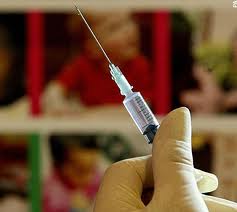
The issue of whether or not to vaccinate one’s children, is related to that of the pro-life cause. Rubella in pregnant women can cause miscarriage, stillbirth as well as the following birth defects – hearing loss, brain damage, cataracts and heart problems. Measles can prove equally dangerous. Mumps can cause a higher risk of miscarriage. Furthermore the MMR II Vaccine used in the UK was derived and developed from foetal tissue. Whilst the vaccine itself does not contain foetal tissue, we are not unwittingly injecting children with cells from aborted babies, the cell lines used to create the vaccines were derived from two aborted babies. This is, therefore morally problematic. This does not mean that Catholics should not have their children vaccinated, the Pontifical Academy for Life issued a statement to the effect that innocent children must not be put at risk, particularly in the case of a disease such as rubella, and thus vaccines can be used if there is no available alternative, however parents have a moral responsibility to use these where possible and also to continue to put pressure on the pharmaceutical industry. Here is a link to a website containing a list of which vaccines are derived from aborted foetal tissue and alternatives, most of which are not available in the UK. Sadly I was only made aware of the ethical difficulties involved in the manufacture of the vaccine, a few months ago, the day after my third child had received her MMR shot.

Cristina Odone wrote a particularly irksome piece yesterday, which discussed the current measles outbreak in Swansea, Wales and laid the blame squarely at the door of the middle-classes who, Odone argues, believe that their offspring are more precious and special than everyone else’s and so don’t vaccinate. The article displayed, to my mind, some unacceptable class prejudice, lampooning middle-class consumer choices as springing from a sense that they are somehow special and stating that the middle-classes secretly loved the MMR/autism scare as it validated their sense that their offspring are better than everyone else’s.

The article particularly stung for a number of reasons, not only did I recognise some of my preferred consumer choices listed, but also I was one of the parents who agonised over the decision over whether or not to vaccinate. Actually I think Cristina was entirely misguided, the reason that if I could afford to, I would shop at John Lewis, or buy the childrens’ clothes from Boden or Joules, is not because I think their products are particularly special or luxurious, they don’t pander to narcissism, but put simply, those brands tend to be understated, not especially flashy (although in the case of children’s clothes, distinctive) but mainly because they are of good quality and so last. One knows that John Lewis’ customer service is of a consistently high standard, they stand by their guarantees and treat customers well; likewise with the children’s clothes retailers, products tend to have a much longer shelf-life than their cheaper alternatives. So in the case of the children, a piece of clothing bought 9 years ago, is still in pristine condition on its 4th baby. Nothing to do with whether or not I feel my children to be special, it’s more a question of economy.

There were other unfair generalisations (both to middle and working classes) such as stating that the middle class tend to prevent their children from taking risks, and they were more likely to read or talk to their children and nurture them intellectually or feed them the requisite 5 a day portions of fruit and veg. Whilst its true that income can sometimes be a barrier to eating healthily, it doesn’t automatically follow that those on low incomes do not give their children a good diet or neglect to read or talk to them. Having money is no indicator of ability to be a good parent, this is an attitude that should be challenged.

Most parents, regardless of social class, believe their children to be special and wish to protect them from harm. All of us were alarmed by the MMR scare, which received widespread national publicity. Whilst every activity in life carries innate risks, in the case of immunisations, one is having to actively undertake a risk balancing exercise – taking one’s child to be injected requires one to be pro-active, in the sense of having to make the appointment and undertake the journey to the doctors. I suggest that this is one of the reasons behind the decline in the vaccine uptake, particularly in Swansea which isn’t noted for being an affluent middle-class area. Parents need to be wholly convinced that this is the right decision for their child, the newborn baby jabs are scheduled between the ages of 8 and 16 weeks, when one is in the post-natal baby haze, checking the baby every 2 minutes and it’s easy enough for the health visitor or midwife to jolly one off to the clinic, especially when the diseases vaccinated against are as serious as meningitis. It’s every parent’s instinct to want to protect their child from harm and thus most people don’t need much persuasion when it comes to vaccinating their fragile little newborn.

By the time the child has reached 13 months, the age at which MMR is administered, equilibrium has been recovered. People need active encouragement that there is an imperative to vaccinate. For people of my generation, who remember having mumps and German Measles as children, these diseases seem of little consequence, despite the fact we are told, that they have now mutated into something much nastier. The success of the MMR vaccine hinges solely on the fear of measles, which can have devastating effects, especially if one’s immune system is already compromised in some way. My sister had measles as a child and almost died by all accounts. For most parents it’s the risk of measles, versus the risk of the MMR and so passivity or procrastination often seems the best option.

With the withdrawal of the patents for the single vaccines, parents now have very little option, it’s either all or nothing. Whilst the arguments against the single vaccines are valid, i.e. it requires mutliple appointments which most parents don’t attend and there is the risk that a child could catch one of the diseases between vaccinations, to my mind, the government’s decision to remove this choice seems authoritarian and spiteful. No-one is demanding that the NHS gives single jabs, but there was no need to remove the option for private patients. For those who might argue about the difficulties of multiple appointments, I would argue that anyone who is concerned enough to seek out the option of single jabs, will not be taking a slapdash attitude towards their child’s health. Single jabs might well have reduced the severity of the outbreak – we’ll never know.

Andrew Wakefield has been thoroughly humiliated and discredited, but that does not mean that parents who decide against MMR should be vilified as selfish or ignorant. There are still legitimate concerns about MMR, in that many parents have horrifying testimony of the immediate effects of the vaccination upon their child, such as temporary paralysis. From my perspective, all of my children have been absolutely fine in the long-term, but they have all been extremely fractious and ill-tempered in the aftermath. But then again, when the MMR is administered, it’s not on its own. They get the MMR in one thigh and the Hib,  Pneumococcal (PCV), and Meningitis C in the other. So that’s 6 doses of vaccine all in one dose. No-one is suggesting that it’s not safe, however all vaccination is counter-intuitive and it seems a heck of a lot to inject into a little 12 or 13 month old child, who may not even be walking. When my eldest had her MMR booster, aged 5, she described how it stung and burned as it went into her. Apparently that’s a common sensation. So it’s pretty tough on parents who have to watch their child receiving a painful injection, hoping that its going to protect them from a much worse evil, and yet knowing that many people believe this to be harmful. Most of us pray that it’s going to be alright and not cause them any ill-effects in the short term, though it’s hard when your child is spiking a temperature as a direct result of their immunisations.

As Catholics, we are not statists, we don’t believe that the government or state can dictate the precise healthcare or education of our chidden. The story of my eldest’s vaccinations is a cautionary tale. Shortly before they were due to be administered I read about the thiomersal scare, in one of the newspapers. Thiomersal being the mercury based preservative, which was being linked to nerve damage and autism. (This has since been discounted in a study). I therefore specifically requested that my child received Thiomersal free injections. The Health Visitor agreed and made note, informing that since I had requested this, then my daughter would receive the vaccines. What would have happened had I not requested, I asked. “She would have received the version with the thiomersal in”, said the Health Visitor. “This is being phased out, we are switching to the new Thiomersal free vaccine, but we need to use up our stocks, so we are only giving out the new version to those who specifically ask”.  Furthermore, when my eldest was vaccinated as a baby, she was given a 3-in-1 injection. This has now been ramped up to a 5-in-1, together with a separate dose of PCV. As I said, it seems like a lot of pathogens to be loading onto a delicate 8 week old immune system, especially when babies can vary so much in terms of size and weight.

Understandably, the authorities charged with public health take a utilitarian attitude towards the population. Most children will be alright as a result of their vaccinations and they stress that we have a civic duty to protect the weakest. That’s all very well and good, but what when it’s your child who is the one affected, as people claim they have been?

We shouldn’t rush to pillory those who don’t vaccinate their children, or try to label them (I’m guilty of this, I live in Green Brighton which has a very low uptake) because though passivity is often the easiest course of action when faced with a dilemma (it’s easier to do nothing), I know of many highly intelligent, well educated and medically literate folk who have not vaccinated. It is impossible to make a fully informed choice because as @battlementclare, a qualified midwife notes, “there have been no rigorous long term studies into the effects of hyper stimulating the immature neonatal immune system with multiple foreign antigens & adjuvants known to be neurotoxic. I have to wonder whether, in protecting children against some diseases, we are increasing their likelihood of developing auto immune disorders later.” This is all true, the decision to vaccinate centres around a balancing of risks, with the additional factor that there are ethical problems inherent for Catholics in using vaccines derived from aborted foetal cell lines.

One can’t actually do right for doing wrong on this issue, my feeling has been to vaccinate, not least due to living in areas which have experienced measles outbreaks, but every time it has been with a heavy heart. After all no-one, regardless of their social class, (I suspect many of Cristina’s middle class stereotypes would probably fall into the new ‘precariat ‘ in any event) wants to inject their child with something that they have heard on the news or read in the newspapers, or anecdotally from a friend, could do their child harm. This is what Andrew Wakefield tapped into quite so successfully.

But on another note, Cristina’s article, irritating as it was, carries lessons for those of us fighting to get our point of view acknowledged and acted upon, in areas such as pro-life or the defence of marriage. It initially made me very angry as I perceived myself to be the object of undisguised scorn and contempt, identifying a little with some of her use of consumer brands, and having once being described as “all white teeth and Boden”. I guess I experienced some of what same sex couples feel when they read various pieces of unkind polemic, such as that written by notorious journalists or unkind bloggers, attacking people and their motivations, by virtue of their lifestyle. It’s a reminder to us all to play the ball, not the man, if we’re talking about why marriage shouldn’t need to change, there is no need to launch into a personal attack upon people of goodwill.

The same applies with abortion. Whilst we should always condemn the act, we need to understand and engage with the reasons behind abortion, as well as exercise understanding and compassion to those women who have aborted, instead of casting scorn, doubt and shame upon their motivations or lifestyle, particularly if we wish them to engage and have a conversion of heart. Just like Cristina’s piece on MMR, instead of considering the very good reasons that exist when it comes to vaccination, I was left feeling defensive for having worried about it, angry and not inclined to think well of Odone. It was highly counter-productive.

Ultimately every single parent is well aware of their child’s flaws or shortcomings, but we still love them fiercely and protectively no matter what and want to keep them safe from harm, whether we are members of the royal family, or on the very margins of society. Every parent is entitled to think their child is special, it’s called love and is what keeps the world turning. I’m sure there’s a metaphor about God in there somewhere.

All white teeth, Boden and middle class, but not a piece of rocket in sight... "The Vicar's Wife give her kids fruit shoots"!
All white teeth, Boden and ‘middle class’, but not a piece of rocket in sight…
“The Vicar’s Wife gives her kids fruit shoots”!

Bank holiday fun – Liebster Award

I was delighted to see that Lazarus had nominated me for a Liebster Award, not only because I really enjoy his blog and find him a voice of common sense and sanity on the blogosphere, but because it gives me an opportunity to unashamedly prattle on about myself. Which probably tells you all you need to know. I also saw I’d been nominated by Rhoslyn Thomas and was tempted to naughtily pick and choose on questions, but Lazarus got there first. I’ll give Rhos a plug anyway because she deserves one. Young, pro-life, Welsh traddie. What’s not to like?

Liebster-Award

The point of the award is to encourage blogs to link to each other and so boost their profiles and traffic.

Here’s what you do:

1) Post the Liebster award graphic on your site. (Google to find it if needed)
2) Thank the blogger who nominated the blog for a Liebster Award and link back to their blog.
3) The blogger then writes 11 facts about themselves so people who discover their blog through the Liebster post will learn more about them.
4) In addition to posting 11 fun facts about themselves, nominated bloggers should also answer the 11 questions from the post of the person who nominated them.
5) The nominated blogger will in turn, nominate 9 other blogs with 200 or less followers (We’re guessing for our nominees) for a Liebster award by posting a comment on their blog and linking back to the Liebster post.
6) The nominated blogger will create 11 questions for their nominated blogs to answer in their Liebster post.

So, done the first two tasks. Here’s the eleven facts about me. (I go on a bit, I didn’t include that brevity or conciseness is not my forte).

  1. One of the most surreal things I’ve ever done is approach Paul O’Grady of Lily Savage fame, in the Telephone Bar in Bangkok and throw water at him. He didn’t mind, it was Thai New Year which is celebrated by sprinkling water over other people as a sign of good luck. In recent times it has degenerated into a giant 3 day city-wide water fight, where gangs of adolescents prowl the city on the backs of jeeps and motorbikes, with industrial water tanks strapped to their backs connected to elaborate water pistols, in order to drench passers-by. Probably something of a mating ritual, but if you ever go to Bangkok around the time of Thai New Year, be sure to wear either a swimming cossie or plastic overalls.
  2. My skills of prophecy are summarised by the occasion I looked at a battered old orange 737 sitting on the tarmac at Gatwick airport in 1997 and opined “No Frills airlines. That’ll never work”
  3. Fr John Glynn of I watch the Sunrise, fame, was the priest in charge of my school. He used to stalk the Alyosius Corridor, singing and smiling and leant his guitar against the altar. I used to confuse him with Ralph McTell.
  4.  My favourite book of the Aeneid is Book VI. It evokes memories of GCSE Latin and moments of Billy Bunter-esque stupidity in class. Virgil describes an eclectic mix of characters including “The hundred armed Gyles Brandreth” and, much to the amusement of privileged Essex boarding school pupils, with terribly middle-class names, a ferryman called “Sharon”.
  5. I’ve always wanted to give Cathy and Heathcliffe a hearty slap.
  6. I can’t touch vodka following an unfortunate incident involving Highlander II, popcorn on an empty stomach, a litre of Blue label Smirnoff, a chincilla and a poodle who resembled Roly in Eastenders.
  7. If I had to chose a final meal it would be infinite oysters, with a dipping sauce made out of shallots and red-wine vinegar, a dash of lemon and tabasco, washed down with Veuve Cliquot served the temperature of liquid nitrogen.
  8.  I have to work a lot harder on the asceticism and Evangelical Poverty thing.
  9.  I will forever harbour an unashamed crush on the young Stiff Pilchard Cliff Richard in his heyday. Cor. 

  10.  I’d like to have the sublime Faure’s Requiem at my funeral and wangle a way of getting in the Cantique de Jean Racine also.
  11.  Compline is my favourite part of the Divine Office. It hands everything over to God at the end of the day.

So here are the questions I had to answer:

What inspired the title of your blog?

My name. Original huh?! Actually, it was originally called asnailinmypocket, which was a favourite phrase of mine back in the day, being an equivalent to Monty Python’s hovercraft full of eels. Very often in my days as a flight attendent, we’d operate domestic European flights for a non-English airline, between cities such as Cologne and Dresden. I once told an unsuspecting German with no command of English, that I had ‘a snail in my pocket and I think I’m about to use my vest’, instead of telling him to stow his hand luggage under the seat in front of him, much to the hilarity of my colleague. He seemed to get the gist. Perhaps it was the hand gestures? Anyway the phrase stuck and it was the first thing that came to mind when setting up the blog and summed me up. Random, surreal and probably quite juvenile.

What is your personal favourite post on your blog?

No idea, although I’d like to think that I’ve done some very solid investigative pro-life writing. BPAS are regular readers. *waves* 🙂

What has been the most popular (most viewed) post on your blog?

Oh lawks, not sure we should go there. It was the Babyworld post of DOOM. To cut a long story short, I used to be a member of a Mumsnet type website called Babyworld, which had a ‘Discus, Debate and Deliberate’ forum. In the run up to the Papal Visit, things got extremely heated and being the only practicing Catholic in a forum predominated by liberal mummies was something of a recipe for disaster. They simply didn’t get it and I should have realised that it was always going to be a waste of time.

There were threads upon threads of the usual old cliches and every single time, I tried to bust the myths or engage in any sort of apologetics – KAPOW, they’d all go nutty. I remember one member who indignantly C&Ped huge chucks of the Catechism, in order to heap her scorn and vitriol upon this disgusting religion and its doctrine.

Others just couldn’t work me out. On the one hand I seemed this perfectly nice, reasonable, quite fun woman, who didn’t walk about dressed like a member of the Amish, but there I was espousing hateful bigotry and homophobia. At one point it was suggested that I was brainwashed or had cognitive dissonance “I don’t think Caroline hates gay people, she obviously doesn’t, she seems a nice person, but her attitude is homophobic and that causes her problems, which is why she tries to explain it away”.

Finally, my patience blew during yet another homophobic Catholic church debate (I think people decided to deliberately start inflammatory threads) during which posters posted the most inane and theologically illiterate statements I’d ever seen, which were as hilarious as they were offensive. “Face it, you can’t tell me whether or not Jesus was a breast or a bum man with any certainty”, said one, and in my frustration and amusement, I C&Ped some of the choicest comments onto here for the delectation of my gentle readers, along with the Bad Vicar sketch from Mitchell and Webb. Well, it was funny, a bunch of women screeching about how terrible Catholicism was, how they had spent some time in Rome and decided that I had read too many books and therefore wasn’t ‘spiritual’, reminded me of the classic line about “hastily assembled internet philosophies”.

Anyway, they didn’t like it much, linked the blog to Babyworld and the stats went stratospheric. Much silliness ensued about petitioning WordPress to get the site taken down for breaching copyright (despite the fact I’d done nothing illegal and hadn’t mentioned identities) and a huge amount of cross comments, for taking their comments about Christ’s alleged sexual preferences out of context!

I left shortly afterwards, it all got a bit much and I lost patience with the “oh no, my child’s Christian school is teaching them that God exists and about the crucifixion and Resurrection, how very dare they”, but they still link to here from time to time, bless them.Christian mummies, stay away from mainstream mummy forums, no good can come of it, unless you are married to Giles Fraser.

Which post on your blog has attracted most comments?

This one. About finding out I was pregnant, the week that Robin left the Anglican Church.

What other hobbies or interests (beyond blogging) are you prepared to admit to?

Not that much time, with the children, so it’s mainly reading and playing the piano. Beethoven Sonatas with their crashing chords can be most Cathartic, but tend to wake the children. I also love Bach prelude and fuges as well as Mozart sonatas. I adore ragtime, probably not very PC, but I’d like to be able to play Debussy’s Golliwog’s Cakewalk without making any mistakes before I shuffle off this mortal coil. It’s fiendishly difficult.

What’s your favourite song?

Cemetry Gates by The Smiths. Timeless and with puns worthy of Philip Sidney.  Perhaps the wittiest and cleverest pop song there is. It is a deliberate paradox, being the embodiment of the traits that it knocks- pretentious and pseudo-intellectual and reminding us that all writers and fans of literature and the arts are self-conscious, angst-ridden inadvertent plagiarists at heart.

What’s your favourite novel?

I’m going to cheat, because I can’t possibly chose. Three of Maupassant’s short-stories, Boule de Suif, La Parure and En Famille. All tragi-comic, demonstrating his immense ability as an original story-teller, who describes his subjects and their physical and mental flaws with affectionate, painstaking and earthy detail. Maupassant holds up an uncomfortable and discomforting mirror to human nature. Though none of these stories have an aspect of redemption, they demonstrate the nature of sin. When I recently re-read them, the compelling subtext for me, was how they highlighted the necessity of Christ’s sacrifice on the cross.

Actually upon re-reading that, I should say, Brideshead Revisited because it sparked my return back to the Catholic Church. When my eldest was born, I spent hours sat nursing her with a book in hand. One of them was Brideshead which I had never previously got around to. As I turned the back cover, tears were streaming down my face and I thought to myself, “well it’s too late for me, but I am going to make darned sure that my daughter is saved” and resolved to have her baptised. I then attended the local baptism course and things progressed from there.

Complete this sentence: ‘I think religion is….’

I’ll go with St Augustine’s definition. I think religion is the thing that binds us to God in voluntary subjugation.

How good a dancer are you?

Dreadful. I don’t do dancing, unless it’s of the Gay Gordons, or the basic ballroom variety that we had to learn at school. I am hopelessly uncoordinated, more embarrassing that your grandad and don’t enjoy it at all. I never know what to ‘do’.

Which do you prefer: tea or coffee?

Tea. Coffee is the devil’s own brew.

Have you ever been a smoker? (Of tobacco…!)

Yes. I used to smoke an unhealthy amount of Marlboro Reds. I still crave a cigarette whenever I have a gin and tonic in my hand, but on those occasions where I’ve grabbed a crafty puff of someone else’s, have wanted to throw up. I gave up in 1998, following the smoking ban on long-haul flights. My smoking habit was never curbed by the cost of cigarettes, seeing as I used to be able to buy them very cheaply in various destinations. At one stage I had a stash of about 2,000 in my room, for personal use, and never had to husband or ration cigarettes due to spiralling costs, unlike British smokers. It was easy-come, easy-go. I figured that if I could manage on a flight to Sidney without a puff, then, it was just a matter of gradually extending the period of time.

So now I have to nominate 9 other blogs with under 200 readers. That’s the hard part. I don’t tend to do compare and contrast on stats, so really I’ve no idea whether that’s readers or subscribers or what? I’d love to ask some of the priests such as Fr Ray Blake, whether or not he used to practice playing and pretending he was celebrating Mass as a little boy, or whether Joseph Shaw is secretly scared of spiders, but I guess that would be disrespectful and they have well over two hundred readers, so my list is a little random. I’m struggling, because most of those whom I would nominate, have already participated

  1. MyBattlementofRubies – my absolute heroine of all time. Clare, Catholic Homeschooling mother of six who has the most fabulous turn of phrase along with buckets of wit and common sense.
  2. Abudance of Rainbows – Lovely, lovely Lucy
  3. Laurence England – who doesn’t need the plug, but has written some outstanding stuff of late, and hasn’t yet participated
  4. James Preece – Oi James, put down your Latin books, forget the gerundives and answer some inane questions. Your public demands it
  5. Five feet above sea level – this is swiftly becoming a must-read, the wonderful and inspirational Katherine Rickards.
  6. A Miscellany of Musings – ‘The Idle Rambler’

And erm, I give up. Feel free to join in by all accounts, if questions inspire.

  1. Do you have a favourite Evangelist?
  2. What are the best and worst aspects of blogging?
  3. If you were able to choose your final meal, or God forbid you were on Death Row, what would it be?
  4. Favourite Saint?
  5. What book do you have on your bedside cabinet?
  6. What has been the most popular post on your blog?
  7. Which blogpost has attracted the most comments?
  8. What did you want to be when you were a small child?
  9. If you had a Harry Potter invisibility cloak for one day, what would you do?
  10. What inspired the title of your blog
  11. Favourite prayer or novena?

And that’s me done.


Protectors of life, the family, friendships and each other

Image

No-one could fail to be inspired by Pope Francis’ homily at this morning’s inaugural Mass. He calls for tenderness, and describes how authentic power comes with service, reminding us of our duty to protect one another.

We must never be afraid of goodness, of tenderness which is a great sign of strength. A tender heart is indicative of a capacity for concern, compassion, and a genuine openness to others for love.

Just as these are the qualities shown by St Joseph in his role of loving protector towards Mary, Jesus and over the whole church, these are also the qualities inherent in motherhood, whether that be of a spiritual or physical nature. Like St Joseph all of us must watch over and protect Christ’s mystical body, but his homily was a potent reminder of why we must be protectors of life, at whatever stage, from its conception to it’s final moments.

It reinforced the message of Christ to me as a woman, wife and mother, reminding me of my duty to nurture and protect my husband and children, as well as reaching out to fellow women in their moments of danger and crisis.

Last night, following a germ of idea in which I thought it would be a great to have an online space where faithful Catholic women can witness to their faith, I set up a new website, catholicwomenrising.wordpress.com in which women can stand up and be counted for their faith and offer their love, gratitude and prayers for Pope Francis as well as register their unqualified support for Church teaching.

Please could those who commented in the comms box here, go and register their support over there, spread the word and pray. My hope is that this could be a real gift and blessing, not only to Pope Francis, but to the Catholic Church as a whole, countering the repeated negative media cliche that the Catholic Church is not representative of well over 50% of its members.

I’d like women to stand up and be counted for their faith, to show the world that they embrace the freedom and love that comes with adhering to God’s plan for the world. Far from being oppressive, the New Feminism is all about empowerment and recognising the inherent dignity of all women as created beings of God, free of cultural and society’s expectations to become sexual objects and to limit and crush our innate fertility and restrict our ability to love. The culture of death pressurises us to murder our unborn children, put limits on our resources to love and to reject our elderly, in favour of our own selfish needs.

The culture of life and love recognises our abilities and strengths as women, it does not expect us to be subjugated to male desire, it allows for us to fulfil our potential, whether we are married, single, mothers, childless, whether we are working or seeking work, whether we are homemakers, businesswomen, volunteers or a combination of all of the above. It does not seek to put a lid on the female achievement in whatever a woman’s chosen area.

Catholic teaching allows for us to love Christ, to love ourselves and thus reach out to and love and protect for one another. It is freedom, dignity and empowerment.

Please could you pass on the website and urge every Catholic woman you know who agrees to sign. It would be a simple act of faith, in this Year of Faith, but send an incredibly powerful message to the world, that here is a group of happy, fulfilled, empowered and spiritual nurtured women; a message of encouragement, not only to each other and to the rest of the Church, but also to those women who have become estranged from the faith.

The plan is to set up some separate posts and sensible forum debate, whereby women who do not agree with Church teaching (yet) can debate and discuss the issues in an atmosphere of openness and non-confrontation. Where those who might be struggling with some of the challenging issues such as IVF or contraception, can talk this through in a  non-judgemental way and receive gentle explanation, encouragement, support and resources in terms of alternatives.

But first and foremost, it would be amazing if we could muster as many women as possible to say “Yes, I love the Catholic Church, I follow her teachings, not because I am brainwashed or fearful, but with a heart and mind that is open to God”.