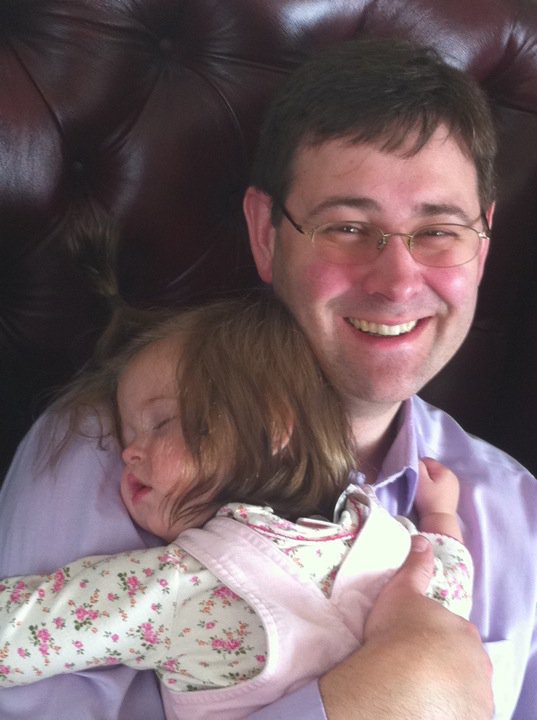
My St Joseph

Warning – not for those with weak constitutions, the following post will be laced with huge amounts of saccharin.

There have been moments in my marriage where I have wanted to set about my husband’s head with a frying pan. The most recent being “book-gate”, namely the saga of what to do with his vast theological library acquired over the past 20 years. Never mind the rest of our meagre worldly possessions, we would have to ensure that whatever else happened,the books were lovingly stored, categorised and sub categorised, even if this meant that we had to substitute luxury items of bedroom furniture, such as wardrobes, for bookcases. At present we are sat here surrounded by unpacked boxes, because apparently I need to decide which are my allocated shelves. Only once I’ve done that,is the great unpacking able to commence – books can be alphabetized and cosmic order will be restored. But until the books are unpacked safe and sound, then no other boxes, like the ones containing kitchen implements for example may be opened…

Given this is meant to be a post of praise, I’ll stop there, although it does need to be noted that Robin is the human equivalent of a womble. He exhibits worrying hoarding behaviour, which when moving to a house substantially smaller than the Rectory does need curtailing. It’s allegedly the fault of his parents’ war-time generation mentality,  “oooh the lid of this broken kettle might come in handy for something, you never know, best not throw it away”. “I can’t throw those postcards away, I had them on my wall at university”. *whispers: evangelical poverty darling* Camels, eyes of needles, barns, you know what I’m talking about…

Anyway, part of our journey means that Robin has to get a normal layperson’s job. On yer bike and all that. Sounds easier than it is in this current climate. Plus its additionally difficult when excepting a year out as a pastoral assistant, your entire career history consists of 14 years of ministry. On the face of it, a Rector should have tons of transferable skills right? Pastoral skills, team-building skills, budgeting skills, crisis-management, conflict resolution, administration (ahem), marketing and so on and so forth. The reality is, that most employers see ex-vicar on the CV, have visions of beards, goats cheese, corduroy jackets with leather arm-patches, open-toed sandals, worry about their workforce being evangelised and run a country mile. The most obvious openings seem to be school or prison chaplaincy jobs, which at the moment are very few and far between. One interview was attended a good 50 miles away, only to be told “frankly, we think you’re a bit too intelligent and cerebral in terms of what we’re looking for, think you’d be wasted”, which illustrates the other problem. With 3 theology degrees, including 2 MAS, poor Robin finds himself somewhat over-qualified for most positions.

Providentially however, he spied an advert for a funeral director recently. Hoorah we shouted, absolutely perfect. Stacks of experience, knows the industry well, enjoyed the pastoral aspects of the job, no squeamishness about dead bodies or funerals as a whole and felt that perhaps in some way he could continue a ministry of healing and helping the bereaved, as well as ensuring that the dead were accorded the appropriate dignity and respect. So off the application went, detailing the 14 years of funeral experience, including taking funerals, visiting the dying and bereaved, arranging the services, acute attention to detail, liaising with funeral directors, digging graves for ashes, updating burial registers and so on. Letter comes back: sorry other candidates have more experience. Nevermind I said, it’s the automated online system, jobs come up all the time at this nationwide company, next time, add a covering letter with your CV, put some bullet points (bullet points are always good in these situations) and make your skills absolutely explicit. I used to hire people, I know these things. Yet again – computer says no.

So on-spec letters go off to all the funeral directors in the locality. Turns out one, knows Robin and arranges informal chat, which then leads to interview. The upshot is that they realise that probably he’s way too over-qualified to be a funeral services operative (the person that picks up the bodies, washes the hearse etc) and they can see potential for greater things. However, given the current climate (groan, I really need to use a different phrase) there aren’t that many opportunities, but there is a potential business manager position which they would like him to apply for. In order to be in a position to apply for it, he is therefore going to have to start with them on a casual basis, picking up the bodies, hearse driving for £6/hour for the next 4-6 weeks, at which point he can apply for this position which he may or may not get. If he doesn’t however, then it is likely that he will be able to apply for a funeral director’s position, and at least if that doesn’t materialise, he’ll still have the £6/hour job which will give him the correct experience, if a position comes up with another firm. Got that?

So, why am I proud? Because I realise that this is not the most pleasant of jobs and not what my husband feels that he is ultimately called to do. However, the brave decision, which I fully support to leave ministry and become a member of the Catholic Church, has entailed the double-whammy of loss of house and income. Even if we did qualify for Housing Benefit and JSA and whatever else, which we don’t as Robin is deemed to have voluntarily made himself homeless and jobless,  then part of me would feel guilty, because although the state does have an obligation to look after vulnerable people, actually tax-payers shouldn’t have to fork out for decisions of conscience. Besides, this was not a decision based on any events going on in the Church of England, this was simply him following a calling. He had no other choice than to lay down his ministry, to continue to have served, when his heart was elsewhere would have been a lie. Regardless, this was a personal choice and neither of us expect the tax-payer to foot the bill. His income will invariably mean that we will be entitled to benefits in the form of income support, however, he will be working and paying tax on a wage.

The St Barnabas Society have been incredibly generous in terms of their support – without them we would be literally homeless, thanks to their generosity we have a roof over our heads and I am immeasurably grateful, both to them and to anyone who has ever donated to them. Not only have they provided practical and financial help in terms of finding us a house, but they have been a source of great moral support and guidance. No doubt they would have ensured that we had food on the table as well, but though one needs to accept help graciously, we will be able to support ourselves by living frugally.

That’s why I am so very proud of my husband, because instead of relying on anyone else to help him, instead of expecting anyone else to foot the bill, he is not sitting around despairing or bemoaning the lack of suitable employment but instead being proactive and accepting not the most pleasant of jobs in order to ensure that his family don’t have to suffer. I’m not always very effusive in person, but I know that from time to time he dips into my blog to see what the missus is ranting about now, so when you do see this darling, thank you. I am more proud of you than you could ever know.

See, told you it was saccharin, even I am having a blub as I type. As a family we have always prayed to St Joseph, protector of the Holy Family, who has a particular and special resonance for us. Never has this seemed more apt.


That man in a frock in Rome

I have a dreadful habit, one which I am endeavouring to keep in check. Arguing with complete strangers on the internet. Recently I’ve decided to leave a particular forum simply because the majority find my catholic views almost incomprehensible.

One of the most staggering comments I have encountered recently, both on a private website and indeed on a very public baby-orientated website goes along the lines of “I cannot take you seriously as you live your life by a set of rules determined by a celibate man in a frock in Rome”.

I could spend an age picking apart that particular sentiment, but it does strike me as a symptomatic of a mainstream view, one that is deeply prejudiced and intolerant. What worries me is that it was uttered by an otherwise highly intelligent person.

Firstly, it displays ingrained ignorance, in terms of the Catholic Faith itself, namely that Catholics follow a set of rules laid out by the Holy Father. This is categorically untrue. The Holy Father does not have that  type of authority and is not some sort of cult leader demanding unquestioning acceptance. There are certain things he can declare as being part of the deposit of faith but he is unable to do this on his own authority. Precisely one of the things that seems to irritate many is that the Holy Father says that he DOESN’T have the authority to change teachings on issues such as women in the priesthood, in order to bring it into line with contemporary thinking. The Holy Father very rarely issues new teaching and if he does it is always in consultation with the bishops and in continuity with what’s gone on previously.  Humanae Vitae for example was not an innovative teaching, it emphasised what had been previously taught. No Pope can just wake up one morning and think “I know, I think I’ll teach everyone that naked Morris dancing is an essential element of the Catholic liturgy”.

Secondly what that phrase implies is that somehow every Catholic is brainwashed, incapable of free and rational thought. We have somehow been bewitched into a cult of unquestioning obedience, unable and discouraged from exercising any critical judgement of our own. Nothing could be further from the truth. I speak as one who is not a cultural Catholic, who has a lapsed catholic mother, a formerly staunch Protestant now agnostic father, an agnostic sister and who despite attending Catholic secondary school received very little in the way of any catechism. I never participated in the sacrament of First Holy Communion, I was baptised a Catholic, attended a C of E church where my father was an organist and sang in the choir, then aged 11, I was asked by the Rector to make a choice, whereby my mother took fright and decided that we suddenly needed to attend Mass. I can’t even remember when I first took Holy Communion, but it was around the age of 10 and my instructions were to copy everybody else! It was only as an adult in my twenties that I began to explore  cautiously and embrace my the faith of baptism, having previously totally rejected it. At no stage did I ever take the approach “the Catholic Church takes the position of xyz therefore that must be correct”. Quite the opposite. I had a belief in Jesus Christ and my viewpoint was “why does the Catholic Church state xyz, what’s their rationale” as opposed to “do not question, just obey”. In fact never once in all my journey did anyone admonish me for asking anything. As a person who attempts to always exercise critical judgement, I find the insinuation that my free will is somehow diminished or my intellectual capacity dimmed because of my faith, more than a little insulting, not just to me, but to millions of Catholics worldwide.

I was told this week that my blog is “dangerous”, an allegation that made me laugh. The reason being is that it is apparently well-written and thoughtful, it shows up on google, and it might mislead people as to the facts about NFP, because I can apparently “twist my thoughts in order to fit anything that the Catholic Church might say”. Surely if anything this shows that the teachings of the Catholic Church are, if nothing else, based in logic? It is not a case of my twisting or distorting the truth, but of explaining the rationality behind truth? Nothing I say is contradictory. I have my struggles, as we all do, but the fault lies in my own selfish will, it means that I am flawed, not the principles themselves. It is not a case of “this is difficult, therefore this must be wrong”.

The third problem I have with this statement is the pejorative use of the word celibate. The Holy Father is celibate as are the majority of Roman Catholic clergy. Why does the word celibate have such a negative connotation? Celibate actually means the practice of staying unmarried. Why is that such a bad thing? I suspect the word celibate is being confused with the word chastity, a common misnomer. To remain chaste is to behave appropriately and responsibly in sexual relationships with others. It’s a particular moral position, but it is not an inherently evil or negative one. Surely, regardless of religion this is a trait that should be encouraged? Besides the fact that one might chose to refrain from sexual relationships does not render one’s judgement inherently flawed. Indeed it might mean that one can speak more coherently on certain topics, free of the constraints of sexual desire. After all the more one has sex, the more one wants it. Besides, whether celibate or not, all of us need to avoid being driven by the desires of the material and physical.

My other issue is the distinctly offensive nature of the word “frock”. So by rejecting conventional western dress, the Holy Father is somehow attempting to masquerade as a woman, he is deliberately wearing female attire? I don’t need to highlight the ridiculous nature of this assertion, other than to point out that the garments that a priest wears harken back to the days of Rome in the early days of the Church. One of the advantages of clerical dress is that it draws attention to the office as opposed to the person. In any event the statement that the Pope is to be derided because he doesn’t, in public anyway, wear the traditional mode of western attire is a huge insult and slur against all of those who don’t, which I would estimate is over half the population. If I were to talk about Arab men wearing “frocks” and therefore this somehow diminishing their sense of reason or rationality, I would no doubt be arrested under the  equalities or race-hatred laws.

It amazes and worries me in equal measure that so-called intelligent individuals proudly display such ignorance. This is why  I am ceasing membership of an otherwise generally supportive and friendly forum. Because it is only by suppressing my Catholicism, it is only by not mentioning my faith and putting it away neatly in a little box and not alluding to any NFP difficulties or spiritual struggles am I to be assured of any sort of welcome. Any sort of defence of Catholicism or denial of Vatican conspiracy in the child abuse scandals renders my judgement flawed, illogical and brainwashed, because it does not conform with the mainstream mentality, namely that my faith is “batshit” and I am told what to do by a bloke in a frock in Rome.

The most amusing irony, was that a link to a Catholic Forum, designed to show quite how crazy these Catholics are, provided me with the spiritual answer which I was seeking. And where dissent/questioning from the mainstream view was accepted and welcomed, not dismissed as lunacy, the product of impaired free will  or countered with ignorant spite.

It just saddens me that comments like this are deemed acceptable and funny in a country that traditionally prides itself on tolerance.

I’ve lost my mojo

To use the vernacular, life is all rather – meh, at the moment. Although I’m only 15 weeks pregnant, it feels like it has been an eternity already, due to the non-stop sickness. Following a bout of horrific gastroenteritis a few weeks back, this week we seem to have been struck down by another stomach bug, which is proving debilitating to say the least.

I’m finding the thought that I am not yet half-way there somewhat depressing. Although I am not ill, simply pregnant, the symptoms of pregnancy result in illness. I was informed last week that my iron levels have dropped to 7.5, requiring a blood transfusion and also explaining why I have felt more than a little tired.

Like Austin Powers, it feels like someone has taken an enormous hyperdermic syringe and sucked out my very life essence. Everything aches, from the joints in my ankles to the temples pulsing away in my head. Simply walking down the stairs leaves me in need of a recuperative sit down and I’m constantly breathless and faint.

I will elaborate in a further post, but all this has left me grappling somewhat with my conscience in that open to life is the last thing I feel. The thought of ever going through this physical experience again, together with the demands of three children, is enough to bring me out in a cold sweat and clouds of gloom.

Having reflected on this however, a few thoughts occurred. Right now, in the midst of a difficult pregnancy, is not the time to think about whether or not I am open to life. The fact is, at this present time I am, I am doing my best to nurture the baby I have inside me, I can’t physically get pregnant and thus I am being open to life in my actions, though I am more than a little daunted and afraid of the prospect of 2 babies, 16 months apart, I will undoubtedly love this baby when he or she arrives. The fact that I have not aborted the child and have been prepared to endure the physical suffering it entails (even if a little grudgingly) is testament enough. I had a similarly difficult pregnancy with my youngest daughter therefore I had some inkling that I might find the experience a grueling one. The proximity of these two pregnancies is not helping. This time last year I was heavily pregnant, anticipating the first signs of labour, Imogen being due on 3 November. In the end she didn’t arrive until the 17th, via a hastily planned section, following several false alarms.

At the moment, due to the debilitating nature of constant nausea and fatigue, my mental state is more than a little fragile. I probably am skirting the borders of ante-natal depression and thus I can’t decide on the future whilst in the midst of enduring a very physically demanding pregnancy. I am also pondering on the whole issue of “openness to life” and NFP given my current state of mind. That said I do have a just reason to be attempting not to conceive for at least a year post the birth of this next child, given the general state of my health. I was advised not to attempt to conceive for a least a year, preferably 18 months post Imogen. This child was conceived around 7 and a half months post birth. Therefore I do need to give my body a chance to recover, for the sake of my physical and emotional health and those of my family and children.

Having just cause to avoid isn’t quite the same as having a contraceptive mentality. The difficult for me comes in being prepared to accept that if we choose not to abstain, then we have to accept and entertain the possibility that more children could result. This would be the same however, if we chose to contracept, no method being 100% efficacious. This is where I fall short, where I am having my current struggle, in that at the present moment, I find the prospect of another pregnancy in a short space of time, almost impossible to deal with. Which means that as a married couple we have difficult choices and sacrifices to make in the future.

Still all I can do is concentrate on the present – looming University deadlines and an imminent house move on Friday. Hopefully normal service will be resumed shortly.

It’s not fair!

As the mother of a six-year-old, the phrase “it’s not fair” is bandied about with an alarming amount of alacrity in our household. It is usually translated to mean “I’m not getting my own way and I’m going to have a little tantrum about it”. A recent example included when we decided to have a rare take-away when someone was asleep, little ears overheard and declared “that’s not fair, you’re having a treat and I’m not”!

The OED defines fair as: treating people equally without favouritism or discrimination, or, just and appropriate in the circumstances.

So on the one hand, Isabella had a point, in that she didn’t feel that she was being included in said treat, (I think I need to point out here that she cannot be cajoled into even trying Chinese food) but using the second definition it was entirely fair given the circumstances – she’d had the last lamb chop, lack of food in the cupboards, tired parents who wanted a Saturday night to themselves with a take-away and film. Hardly the last word in decadence, albeit a pleasant evening. We also had to point out that she is hardly deprived when it comes to regular treats!

I heard echoes of this in one of David Cameron’s retorts during PMQ yesterday. In response to a question about Housing Benefit, he stated that one of the reasons that he wouldn’t back down was because it’s not fair that people who work pay for people on benefits who live in a house that they could never afford. Now, I’m not going to debate the Housing Benefit issue, but this left me feeling rather uncomfortable. I think probably, because the perception of the typical benefit “cheat or scrounger” portrayed in various sections of the media is very far removed from those people who I have encountered on benefits.

Whilst I don’t deny that such people do exist, I think the tendency to treat all benefit recipients as potential cheats or scroungers is most unfair, thereby discriminating against those without a job as being automatically work-shy. I also appreciate that any government has to achieve a difficult balance of ensuring that in general principles it is more advantageous that people do work.

It’s simply this subscribing to the basest aspects of human nature, namely jealousy and envy that makes me baulk. What people seem to be objecting to is the perception that others have more than them and an easier lifestyle. Numerous amounts of research has shown that we as humans are happiest or most content when it seems that we are doing better than our neighbours. It doesn’t matter what we have, just so long as it is more than the man next door. Perhaps this is why we are commanded not to covet thy neighbour’s ass, or to love thy neighbour as thyself? It is only by releasing ourselves from the constrictions of the acquisition of material goods that we can become spiritually free and able to love. True love, as Corinthians reminds us, is not jealous, envious or spiteful. Therefore a policy that is based upon these principles of envy is far from the Christian ideals, which many Conservatives may claim they espouse.

Besides, I am not convinced that the perception of those in receipt of benefits living a cushy and prosperous life is an accurate one. From what I have witnessed, recipients are hardly living in the lap of luxury, very often they are on minimum wage or temporary work, and every penny counts. If people are living in bigger houses than others, it is because of need, perhaps because of the amounts of children they have. Which is then another bone of contention. People see children as a “lifestyle choice”, another accessory, in the same way as a family car or the decision to have a certain number of holidays abroad. Couples who decide to have a certain amount of children in order that they maintain a certain standard of living, resent those who appear to have numerous children, for whom they perceive the state is paying.

The more children one has, the more difficult life is, financially, practically, emotionally and physically. Raising children is a supreme act of self-sacrifice. Given the rising number of elderly in our society and the declining birth-rate, instead of resenting those families who have multiple children, why not reward them, instead of treating them as social pariahs and outcasts? Why assume that those with several children are automatically scrounging undesirables?

This is for me, the main problem – treating those without work, for whatever reason, as morally deficient. There might be a multitude of reasons why people are without work, it doesn’t automatically follow that they are necessarily scroungers or attempting to fiddle the system, expecting the state to pick up the costs. I am sure examples can be found, but I am sure for every example, there are double the amount of genuine claimants. Discriminating against people because of their circumstances and based on a false perception derived from jealousy is unfair and also un-Christian. Discriminating against children because of the way you perceive their parents is doubly unfair and unjust. Making families live in unsuitable accommodation because it makes those who are in work feel better, is unfair. What about one of the public sector workers soon to lose their jobs? What does the government have to say to them: “Not only are we going to deprive you of your job, but we are also going to make sure that you don’t live anywhere nicer, or have anything nicer than someone who has a job, because you haven’t done the right thing and worked. We will make sure that you’re not living in a cardboard box, but god forbid you upset all those nice decent people who are still in work.”

Here’s a suggestion which is fair and doesn’t treat people without discrimination. Why not levy an extra £2,000 – £3,000 on the tax bills of those who have received a free university education? Add a bit more if they went to Oxbridge. Furthermore go after Philip Green who last year paid his wife a staggering £1.2 billion dividend in order to avoid a £285 million tax bill.

Allocating resources according to need. Now that is “just, fair and appropriate in the circumstances”. Not using the same mental reasoning as a six-year-old.


Coming over all left wing

A couple of events have happened which have made me wonder if perhaps I am coming over all left-wing. Perhaps it’s the pregnancy hormones? I am not a tribal Labour voter.

Firstly,this proposed hike in tuition fees. According to reports leaked this weekend, Lord Browne’s report into the funding of Universities, is likely to recommend that the upper limit on tuition fees is scrapped, meaning that most universities are likely to double their fees to £7,000 per annum with the top universities charging even more, thereby creating a market in University education.

I cannot begin to express quite how apoplectic this makes me. This is not simply because it is likely that I will be directly affected, as the University I attend is in the 94 Group of Universities. Nor is it simple jealousy that those who directly benefited from  subsidised state Higher Education are raising the barriers to entry, imposing huge amounts of debts on graduates, they themselves never had to face. That admittedly grates a little, but clearly university funding is an issue, the money needs to be found from somewhere and it is in my opinion, only fair that students should contribute to the cost of their education, given that they will be set to benefit financially from it.

As a current student I feel deeply fortunate not only to be studying a subject that I have a passion for, but also to be studying at an excellent university with a high standard of teaching and resources. I feel very privileged and do not object to having to contribute in some way. There is no point harking back to the days when Higher Education was free at the point of delivery, the system has radically altered beyond all recognition, the numbers of those going to university has doubled and thus this needs to be paid for. I do believe that there is a side issue here in that many of the degrees on offer at some of the institutions, combinations as bizarre as “Popular Music and Eygptology” to name just one, are of questionable value in today’s competitive workforce. Indeed one of our lecturers said to us only last week, “you students have it tougher than any other previous generation. Not only are you coming out loaded with debt, but whereas when we studied it was expected to be a three year break between the world of school and the world of work, almost a “holiday”, you are expected to be gaining skills that are going to effectively prepare you for the world of work, make you competitive, whereas we only needed to worry about our academic work, as opposed to gaining a rounded CV with relevant experience.”

I have gone back into Higher Education because I want to teach and despite my excellent A Levels and extensive experience, I am not deemed intelligent or knowledgeable enough to embark straight on a teacher-training course. I need a specialised degree first. A BEd was not on offer at my local university, and I figured that if I was going to have to commit the next three years of my life to study, then I might as well do it in a subject which I enjoyed and one which might prove flexible. The amount of debt I will leave with is more than a little daunting; I will probably earn less as a teacher than I did in my previous professional life, however teaching is not traditionally a career that one enters into for purely financial gain. This is something I feel very strongly about. How on earth is teaching going to attract high calibre graduates who have been to the top universities, if the cap on tuition fees is removed and a trainee teacher is embarking upon a career with at least £21 K in debt?

Furthermore, this hike in tuition fees is going to create a two tier university system whereby the poorest students will be deterred both from going to university and also from going to the top institutions. This is already a problem. Although many people vehemently disagree with some of the measures implemented by the top universities, actually, giving those students from economically disadvantaged backgrounds redresses the imbalances inherent in our flawed education system. Of course a privately educated pupil is going to do infinitely better than a pupil of the same academic ability, who does not have the same advantages. Of course someone who goes to, for example, Brighton College, is going to achieve fantastic results, given the amount of resources and opportunities that going to that school affords them, not to mention the fact that presumably they have middle class, high achieving parents who actively take an interest in their child’s education. Whereas someone who goes to a failing comprehensive is simply not going to have the same resources or opportunities and will have to work harder, overcome far more obstacles than his privately educated peer. This is why universities have been attempting to put some more fairness back into the system and grant places to those who perhaps have achieved lower grades than the standard 6As these days, recognising that the candidate’s grades are not reflective of ability or potential. Such social engineering has attracted much controversy, particularly from those who feel that their privately educated children are being penalised, however these pupils are still likely to have successful outcomes in life, even if they have not attained the heights of Oxbridge.

We have no social mobility in this country, none. This is something I feel passionately about. It is getting harder and harder for those from disadvantaged backgrounds to escape the poverty trap. We have an education system predominantly based on cash, either in terms of private school fees or whether or not parents may afford to move into a better catchment area, and if a parent is lucky, there may be a decent faith school. That is not to run down all state schools, far from it, but they face many more challenges than the private sector, particularly schools located in run-down inner city areas. Therefore for many, university may be their only chance to achieve some sort of social mobility, to be able to qualify for teaching or nursing or a job in the financial sector or whatever, and yet most will be deterred by significant tuition fees and the prospect of huge debts hanging over their heads for years to come.

The top universities who charge unlimited fees will only attract those who are able to afford it by means of their parents. As for mature students, those who for whatever reason went straight into vocational work and now wish to advance their career; their options will also be limited as will those wishing to study for further degrees such as Masters or Doctorates, which in the long-term will not do much to advance the cause of research and academia in this country. I was one of the lucky ones in terms of opportunity. I didn’t go to university for various reasons when I was eighteen, something I have bitterly regretted ever since. Oxford University’s Continuing Education Department runs Foundation Courses in various subjects, specifically aimed at mature students wishing to enter Higher Education. You do the first year of an Oxford undergraduate degree split part-time over two years, then advance straight into the second year, providing you pass with good enough results, of a full-time degree. Entry to the course is purely on ability, one has to submit an essay and attend an interview, where, in my case, literary interests were discussed as well as a piece of unseen prose. I worked extremely hard, fitting this in around 2 part-time jobs, juggling a newborn baby and commuting to Oxford once a week. I attended the bare minimum of lectures simply to get me through and was offered a full-time place starting in the second year. It was unfeasible to accept, my family commitments are on the South Coast, but the financial aspects didn’t come into play, my local university costing exactly the same in terms of fees. Faced with fees of up to £15K a year, then this would have been totally out of the question, not only for me, but for all the other mature students who were on the same course, many of whom were weighing up the prospect of whether or not they would be able to afford, not only to stop working, but also whether or not it would be fair on their families to take on such a huge amount of debt.

I digress, but the lifting of the cap on fees is sheer madness and creates yet more inequality of opportunity, which is something that I passionately believe in. I don’t believe that every child should be forced to follow exactly the same prescriptive curriculum, I believe that there should be diversity, with the caveat that basic skills such as Maths and English are learnt, but it seems to me grossly unfair that one child should have the opportunity of learning Latin or Greek, or modern languages, or get a good grounding in Bible stories (vital for English Lit) and yet another should be denied an identical opportunity.

And this comes from one who is fortunate enough to have a daughter attend a private school. My other children won’t have the same opportunity, but that does not mean that I should deny it to her. Plus all my children are lucky in that they have interested, educated, intelligent and informed parents. Our house is overflowing with books, we don’t have enough bookcases. I play the piano and violin, Robin sings and they are surrounded by music and laughter. Regardless of where they go to University they’ll be fine, although I doubt we’ll be able to subsidise them through a top one.

It just seems to me, that a graduate tax or a means tested system would be the fairer by far. To charge unlimited fees keeps the highest academic achievement as being solely the preserve of the rich and privileged and denies the opportunity to thousands of others. It is those who have reached the top, kicking the ladder away for the others, or maybe that’s the point?

My other issue, children as being a “lifestyle choice”. Benefits being capped according to the number of children one has. People who object to benefits being given according to need. But that’s for another day. In the meantime, keep the red flag flying comrades.

Remembering 9/11

There’s been a very snidey atmosphere pervading on the internet today on the anniversary of 9/11. A lot of the self-styled “intelligentsia” have been commenting that the deaths of  a confirmed 2,993 victims, the youngest of whom was 2, the oldest 85, have been blown out of all proportion because the majority of them were “white and rich” and were it not for the cultural influence of America, then these deaths, this atrocity would be starting to fade from the world’s collective consciousness and that perhaps the incident should fade and we should all move on.

Whilst I most certainly agree with the sentiment that global governments have used 9/11 to create a worldwide climate of fear, which does not prove conducive to world peace, I don’t think that 9/11 should or will fade from public consciousness. Whilst we should not dwell on the acts of a few terrorists and use these attacks as a constant source of division, given the nature of the atrocity, it seems fair that it should be remembered respectfully. The lives of the victims were of no more or less value than the lives of Muslim shoppers in the markets of Baghdad for example. All human life is of equal dignity and worth. Innocents may have been killed as a result of how the global governments reacted to the events of 9/11, but that does not make the events in themselves any the less horrific.

9/11 is one of those events that is going to remain a cultural reference point for the next few generations. Everyone is going to have some memory of where they were, what they were doing at the time that the events unfolded. My story is that I was working on the trading floor, for a European Investment Bank, attempting to write a piece of research when the tagline flashed up on my Reuters screen that a light aircraft had crashed into the World Trade Centre. CNN was permanently running on one of the many TV screens. So I peered at it and saw a light plume of smoke trailing from one tower. I rang up my ex, who is an airline pilot, thinking that he might be interested, whilst also thinking quite how bizarre it was that a light aircraft could make such a blunder. My ex switched on the news and confirmed ‘that’s no accident, look at the weather conditions’. I relayed this opinion to my colleagues and as we were gathered around peering at the TV screen, bang, the second plane hit. We then continued to watch the events unfold in stultified silence. Many of our colleagues and clients were based in the second tower. By a fortuitous coincidence my boss from the New York office was over on a business trip,  and I will never forget his reaction nor indeed all of ours, as we realised that we were watching people we knew die on live TV. Traders were ringing the offices but getting no response, only a shrill shrieking beep or perhaps more eerily, voicemail. I don’t think anyone who saw the events will ever forget the shocking sight of the man leaping from the top of the tower. No work was done, it was pointless, no-one could predict how the markets would react, this was a one-off, once-in-lifetime disaster and any attempt at guessing what was going on was pure speculation, although I do remember there being a brief rally on the Swiss Franc and the price of gold predictably rose.

The newswires were aflame and as the Pennsylvania tragedy unfolded and the US airspace was gradually shut down, reports were coming in minute by minute of the flights that were still unaccounted for. We then saw that Canary Wharf was evacuated and were told to make preparations to evacuate ourselves. It was like something out of a Hollywood Blockbuster, it felt like Armageddon was on its way. I remember ringing my sister and saying very jovially “oh it’s all very scary here” and her reaction was “just get out of there now”! London, instantly felt vulnerable and threatened. This had nothing to do with the rhetoric of George Bush and everything to do with the fact that city workers, particularly those in the financial sector had just watched entire offices be wiped out, identified with their American colleagues and felt under attack. After all, the victims of 9/11 had done nothing more provocative than go to work. The terrorists had deliberately wanted to cause terror and mayhem, had wanted to wipe out huge amounts of innocent citizens and they didn’t care about the lives that would be taken, or those who would be left to pick up the pieces. Their aims were to prove a political point at whatever cost. It resonated globally because those in the West identified with the victims, empathised with them, the nature of our 24/7 media meant that graphic photos and heart-rending stories of tragedy would infiltrate our media for weeks and months on end. George W Bush didn’t actually need to warmonger, the sense of outrage was palpable, this was an attack of the Western way of life, of freedoms and liberties, however, it did not justify the lamentable response which still continues today.

The 9/11 attack will always resonate because of the knock-on effects it had, and not just in terms of making the world a unsafer place. For months I was terrified when travelling on the tube, years before the attack of 7/7 took place. It seemed like an obvious target and indeed those fears were eventually realised. The airline industry changed beyond all recognition. As former crew, I could imagine all too graphically the on board scenario, the terrorists using box cutters to slit the throats of the crew, in order to gain access to the flight deck. What went through the minds of the passengers does not bear thinking about. It was not just the sheer body count that was important, but the nature of the attack itself. Using civilians as a weapon, a missile to murder other civilians. They were not simply collateral damage. Firefighters doing their jobs also died, all in all, the scenario was one of pointless bloodshed and carnage.

People may feel that the significance of the deaths of the 2993 may have been greatly elevated due to their racial and social status. Perhaps that is true, but that doesn’t make their lives of any less worth than any other innocent needless deaths and thus it is right and proper that they and the events of that terrible day may be marked and will live on in Western consciousness. What did not help matters was the footage broadcast later that night of militants around the world triumphantly celebrating their victory, dancing in the streets and rejoicing. Just as I wouldn’t want the deaths of my relatives to be manipulated to fuel a political agenda or warfare on innocent civilians, I wouldn’t want them to be celebrated either. The events of 9/11 should continue to be marked, both in terms of respect for the innocent victims and also in terms of what it meant for the world going forward. The West may despise the actions of its governments, the despicable wars waged in the name of our safety, but that does not mean that we should hide our sense of grief, loss and outrage at these senseless acts of  despicable violence, nor should we be ashamed. The victims and the 3,521 children who lost a parent in one single incident, deserve better.

Just a mum with a blog – no great whoop!

Goodness me, this blog has received over 3000 hits in the last 48 hours. We have been overwhelmed by online messages as well as real-life messages and letters of support and so I would like to thank everyone for their thoughts and prayers which are really sustaining us. The response has been totally unexpected and incredible. Many people, both past parishioners and catholics in the parish, have knocked on our door either to offer congratulations and/or express gratitude for Robin’s ministry, sadness at his departure and also to offer us various spare rooms. On behalf of both us I’d like to offer my heartfelt thanks, for all the various gifts; it reinforces our sadness to be leaving such a wonderful loving Christian community and reinforces our faith in Christian fellowship. We all share one common faith in Christ and are joined by the Spirit in Baptism.

This blog regularly picked up a couple of hundred readers who were mainly friends, I had no inkling that it would be linked to by so many, or really that anyone would be interested, so my huge thanks to all of you who took the time, both to link to this blog, read it and comment. Each and every comment and email has meant more than you could imagine, particularly at a time, when in other online communities, I was being called an extremist, likened to an alcoholic who needed religion to survive and used catholicism as a crutch. I have been called blind, deluded, mentally ill and accused of likening myself to rape victims. Whilst I was undeniably hurt by some of these comments from people I had assumed to be friends, I realised that they weren’t in fact malicious, but were born out of concern and incredulity that someone, in other ways so normal, could also manifest, what appeared to them, to be incomprehensible views. All I can say is that being a Christian has never been an easy path for anyone. Had I known the gravitas of some of the readers, I would probably have toned down some of my previous entries, I have a suspicion that my fondness for general sauciness, bawdiness and double-entendres may well be my downfall one day.

I will leave the serious theological discussion and profound insights to other bloggers. I think the aim of this blog was simply to share my simple thoughts with others and also to engage in some Catholic apologetics but not at any detailed level. One commenter posted about free will and I was about to launch into a discourse about Thomas Acquinas and felt that probably wouldn’t have been the appropriate response, due to my lack of any formal theological training. What I intend to do now is share our journey, thoughts, a little of our lives and of course I welcome all comments, questions, thoughts, prayers, which I will do my best to answer.

At the end of the day, what I’m intending to show is that yes I’m a Catholic, I cannot divorce that from who I am, I’m not about to put it away in a neat little box because it makes atheist/agnostic friends deeply uncomfortable, but being a Catholic does not mean that I’m a brainwashed, indoctrinated, emotionless robot, incapable of rational or logical thought and devoid of all emotion. Quite the opposite is true. Perhaps I’m attempting to destroy a few misconceptions about us Catholic folk. All I am really, is a wife and mother, friend, someone who has a colourful career and personal history, who is a Catholic, has a blog and perhaps wears her heart on her sleeve more than is wise. Certainly not some great holy person – if only!

Enough of the introspection. A brief update. The scan on Tuesday was positive. We have one healthy baby, praise God, with a due date of 23 April, St George’s Day and also slap bang in the middle in the Triduum! I may be too sensitive on this issue, but I was again dismayed when we saw the Dr at the EPU, who, after enquiring whether or not it was a planned pregnancy, asked if we “accepted” the pregnancy. Robin felt it was a good choice of language, after all, in the spirit of the Baptismal promises, we could say, “yes I accept my baby”, but I also felt sadness at the other implications of the word. Although I am having difficulties in coming to terms with the realities of the pregnancy, I don’t reject the baby, although I might feel some trepidation.

Apart from a brief moment resembling something out of the Exorcist when I threw up in the sacristy whilst helping Robin clear the Church of his personal effects (don’t worry parishioners, there is no trace now), the sickness seemed to be easing until today when it has sadly come back with a vengeance, not helped by the fact that the entire family is running a raging fever, our eldest having picked up a bug on return to school. The baby wants to nurse constantly for comfort, whilst I have to sit there with a paper bag. As I said previously, that is the most difficult part, finding my baby’s smell objectionable, not being able to hold her close for long periods and constantly needing to abandon her to lie down. She is suffering from separation anxiety and so my useless mother neurosis are being reinforced, very poignantly she apparently said “mummy” for the first time this evening, when I was otherwise indisposed.

So, for those who want to continue reading, welcome aboard, for those that don’t, thank you for dropping by and your support. I am currently formulating the next couple of posts, which are going to be along the lines of what it really means to be open to life and also, life from the perspective of “Mrs Vicar”. Generally I blog about whatever takes my fancy, from Catholicism, to politics, to literature, current affairs and general inanities. I can’t promise that I won’t be a touch naughty at times, but I will endeavour to avoid offence and tastelessness.

In the meantime, for those who have not read it, here is the text of Robin’s resignation homily.

Choose Life

I am unexpectedly pregnant after something went slightly awry with the NFP this month. To be honest the timing could not be more inauspicious. Yesterday my husband, who was up until midnight last night, a Rector in the C of E, resigned his benefice in order that he might become a Roman Catholic, a move he has been contemplating for quite some time. Whilst this was undoubtedly the only thing he could do, having spiritually and mentally come home some time ago, what this decision means for us as a family is that we will shortly lose our home and source of income, although he is applying for lay jobs elsewhere. The difficulty is that with career experience consisting of purely ministry and three theological degrees, options seem to be somewhat limited, him being either over-qualified or lacking in experience and due to the current economic climate, there being a glut of applications for every suitable position. Still, as Mr Micawber might say, I have every faith that something might turn up!

What additionally complicates the issue is that I am due to start a full-time undergraduate degree in English Literature, with a view to teaching at the end of the month. Pregnancy did not figure at all in our plans, however, as Catholics, we always need to be open to the possibility of life and not taking on board the contraceptive mentality. Whilst we had not discounted more children in the future, we had taken the decision that it would not be sensible to be adding to our family at this time.

Pregnancy entails for me, morning sickness of the direst nature. Why it’s called morning sickness is beyond me, it’s more like all day constant nausea, vomiting and migranes, although I will spare the grisly detail. This post has taken over a week to compose, in a piecemeal fashion,  because looking at screens and reading books only exacerbates the condition. I have absolutely no idea as to how I am going to be able to complete any preparatory reading and am more than a little concerned.  In addition my work as an at-home researcher for a text answering service has been hindered, meaning another source of income is reduced.There have been times where I have been lying on my bed absolutely desperate to make the sickness stop, prepared to do almost anything, just to gain some respite. Offering it all up has never been my forte, even though I undoubtedly know its the only course of action. I am thankful for this pregnancy in many ways, children are always a blessing and when I read of the agony of infertility suffered by so many couples, I know that I am extremely fortunate to be blessed with hyper-fecundity.

But, all in all, its difficult and I am more than a little daunted at the prospect of 2 young babies, 16 months apart and an uncertain future for our family.

So this week, I went to the doctor to confirm the pregnancy. I was absolutely exhausted following a day of sickness and extreme fatigue, my baby is currently teething and not sleeping through the night, our nights consisting of her crying and my taking the path of least resistence, i.e bringing her into bed with us whereby she spends the rest of the night fitfully breastfeeding. The doctor took one look at my ashen face and instantly offered me access to abortion services. Clearly, we do have a “good case” if such a thing exists for terminating this pregnancy. In addition to which he harangued me about the use of NFP, telling me “it doesn’t work”, “I’m a Catholic and we have to live in the real world” ending up concluding in a hash of new age philosophy “well, any contraception can fail, I guess really its meant to be”!

I was horrified. Although the scenario as I’ve painted it, is not ideal, where is the hope? Things are never hopeless and in fact all that would have sufficed was a spot of sympathy. I wasn’t actually looking for sympathy, it was simply that after an incredibly stressful few months, I had reached my emotional limit. For me it was a stark illustration that in the UK we really do offer abortion on demand, which is what the detractors of the Abortion Act originally feared. The spirit of the abortion act was intended to help women in truly desperate circumstances. Though at times, in the throes of hormones and sickness I have felt utterly wretched, my situation is not a desperate one. To give birth to this baby is not going to cause me considerable mental or physical damage, even though at my most melodramatic moments, it may seem that way. I am married, I have a husband to emotionally support me, who, to give him his enormous dues here, is more than sharing the load at the moment in terms of childcare, he is the one currently doing the majority of changing and feeding the baby, in order to give me some respite. The worst aspect of the sickness is that my own precious baby’s smell is repugnant to me, which is heart-breaking. I find myself holding a baby in one arm whilst heaving into the sink.

My parents live 3 hours away; upon informing my mother, her response was “oh NO, that IS bad news, I just don’t see how you’re going to be able to cope”, which has been repeated quite a few times. I know however she means this with the best of intentions, she is obviously just very concerned.

The thing is, that amongst all this, there IS hope. Although life isn’t going to be easy, by anyone’s standards, the result is going to be a beautiful baby who is going to bring an enormous amount of joy and happiness to all. A new life with all of its possibilities. I am not going to crack up under the mental pressure, I am not going to be physically damaged by the birth, although admittedly conceiving 8 months post c-section goes against medical advice, but again its not that uncommon. I am an educated, intelligent women, my children are certainly not going to be physically or emotionally neglected, there is no reason to suppose that everything is not going to be alright.

This is what gets me, the consumerism and instant gratification of our easily disposable culture. Many people might argue that there would be a sound case for an abortion, it is my body, my rights and I should have an abortion and not feel a shred of guilt. I am shocked that a doctor can glibly offer an abortion as a solution. How was he to know that my physical and/or mental health would be adversely affected? He just offered it as being a way out, an answer, without giving it much thought. My experience is that abortion causes many more problems than it solves.

Many people would undoubtedly feel that I am being reckless, but surely this reckless attitude to life, as being disposable, dispensable with, is what is at the heart of many of society’s problems. My baby has the same right to life as everyone else, despite the physical difficulties it might be causing me. Besides, these are only temporary. Sickness and exhaustion are debilitating and add to the woes of women in a crisis pregnancy, making it difficult for her to be able to think rationally, particularly in the throes of all the extra hormones. I know, I have felt utterly wretched and desperate at times.

What has kept me going, is the fervent congratulations from people, reminding me that this is actually an occasion of happiness, a new life with all its possibilities, not some great disaster or tragedy. Clearly my faith has also been the contributing factor, but I think the point I am trying to make here, is that being pro-life requires no religious, but rather a moral conviction as to what is right. I am strong, I will cope, I have no excuse for killing my unborn child, other than it’s somewhat inconvenient timing. It is horrifying that society passively accepts and would validate my decision, should I have taken up the doctor’s offer, thereby destroying 2 lives.

At least now, I can look women facing crisis pregnancies in the face, I can say, look I’ve been there, I know it’s incredibly difficult, but there is hope, there is a light at the end of the tunnel.

Right now the words of Mother Teresa seem very apt:

“But I feel that the greatest destroyer of peace today is abortion, because it is a war against the child – a direct killing of the innocent child – murder by the mother herself. And if we accept that a mother can kill even her own child, how can we tell other people not to kill one another? How do we persuade a woman not to have an abortion? As always, we must persuade her with love, and we remind ourselves that love means to be willing to give until it hurts. Jesus gave even his life to love us. So the mother who is thinking of abortion, should be helped to love – that is, to give until it hurts her plans, or her free time, to respect the life of her child. The father of that child, whoever he is, must also give until it hurts. By abortion, the mother does not learn to love, but kills even her own child to solve her problems. And by abortion, the father is told that he does not have to take any responsibility at all for the child he has brought into the world. That father is likely to put other women into the same trouble. So abortion just leads to more abortion. Any country that accepts abortion is not teaching the people to love, but to use any violence to get what they want. That is why the greatest destroyer of love and peace is abortion. ”

I have a scan tomorrow to discover whether or not its a multiple pregnancy as there is a more than  a distinct possibility that this could be the case.

Things are going to be just fine.


Grade 8 Gay

I made the fatal error of venturing out to work on Friday having completely forgotten that it was Pride weekend in Brighton. Now any event that forces me to sit in standstill traffic for over an hour on the Preston Road, is going to arouse a certain amount of ire, without factoring in the added element of infant experiencing what can only appear to be famine levels of hunger, judging by the screams, but my journey descended further into the realms of dire sitcom territory with the ensuing conversation from my 6 year old.

Mummy what’s Gay?

Another word for happy darling. Why?

It says over there Gay Pride Parade 7 August. Can we go please?

No I don’t think so darling, there’s no way to get into town tomorrow and no buses.

Oh, but there’s going to be a fair – Look!

Why are people proud of the parade. Is it because they are happy?

Yes, that’s right darling *breathes sigh of relief*

Have they achieved something really special, like I did when I got to Level 8 of SuperMario? I didn’t think I could do it and I kept trying and now I’ve rescued Princess Peach, except I haven’t, because it was Luigi superguide, but I kept trying and now I’ve unlocked all the levels, or Luigi has, but I helped him.

You have to keep trying mummy, that’s what I always say. I kept trying at the piano and violin and now I’m really good. Is the parade to celebrate being gay at Grade 8? I’m very gay a lot of the time, so when can I take my Grade 1?

Tell you what darling, special treat as we’re stuck in traffic, why don’t you put on Nanny Mcphee on DVD?

Yay!

A few minutes later.

Mummy, look over there, that man is wearing bin liner knickers.

AAAAH HAHAHAHAHAHAHAHAHAHAHAHAHAHAA (manic cackling).

Has Imogen woken up?

AAAAAH HAHAHAHAHAHAHAHAHAHAHAHAHAHAHAHA (even more disturbing manic cackling)

Mummy look, that man has got no bottom on his trousers. His BUM is hanging out. HAHAHAHAHAHAHA

Mummy, mummy, mummy! Look. That lady thinks she’s a dog! She’s wearing a SPIKY DOG COLLAR. AAAAARGH! Look, why is that other woman holding her lead, like Charlie. Are they playing a game of Lady and the Tramp?

Yes darling I think they probably are.

Mummy, who are the ladyboys of Bangkok?

Right, well they are boys who like to dress up as ladies to make people laugh.

Why?

Well because they do. What would you do if you saw a boy in a dress?

I’d laugh. AAAAARGH HAHAHAHAHAHAHAHAHAHAHA!

But mummy they are wearing feather boas and sparkly swimming costumes. They look really pretty. Can I be a ladyboy when I grow up?

Well, no, because you are a girl, so you won’t need to dress up like one.

Well I’m still going to wear a sparkly costume and feathers and pretend I’m one.

That’s nice dear.

Can we go and see them please?

*mind tracks back to when I saw Danny LaRue in Paignton aged six and checks for any lasting damage, then realises that Fr. Robin will throw a blue fit if it gets out that his wife has taken his daughter to see the LadyBoys of Bangkok. Not to mention scenarios at school when they ask what the children did over the summer and drawings of ladyboys are produced*

It doesn’t matter, look there’s one over there. I’m going to give her my biggest smile and wave.Hello Mrs Ladyboy, my name is Isabella and one day I’m going to grow up and be the prettiest ladyboy in the world and get my grade 8 at being gay”.

Oh my sainted trousers!

Unashamedly purile

I have been playing a very naughty game on Twitter, entitled “change love to knob songs”. So far I have come up with such gems as All you need is Knob (The Beatles),  A Million Knobsongs (Take That), You can’t hurry knob (The Supremes), All the knob in the world (Dionne Warwick), and so on and so forth.*

Midway through said jape, I was further amused to discover that there is a group on FaceBook entitled Substitute the word ‘wand’ in Harry Potter for ‘willy’.

Totally inappropriate, unashamedly purile and utterly hilarious. Those who have known me for many years won’t be too surprised. I know I should know much better.

This propensity for bawdy humour probably doesn’t bode too well does it? I often wonder about my propensity to be something of a liability. The quote of the evening goes to DH who commented “I don’t think that the bishop is going to be too impressed if he finds out that my wife likes to say ‘knob’ on the internet”. Sometimes it feels like I’m living in a particularly surreal 21st century version of Terry & June.

Still some of the greatest writers in the English language exhibited a taste for bawdiness and vulgarity. Chaucer and Shakespeare spring to mind. Ben Elton and Richard Curtis aren’t averse to a knob-gag or two, and yet their artistic and moral integrity remain intact.

What I can’t fathom out is whether or not it falls into the category of flippancy, which CS Lewis warns about in his Screwtape Letters? I don’t think so, in that bawdy humour isn’t laughter for the sheer sake of mockery, with no actual humour at work. It doesn’t contain personal derision, although  it isn’t perhaps the most intelligent form of humour. I’d like to think that A Million Knobsongs is what Lewis might term a ‘joke proper’ as it is the play on words, the surreal idea of someone singing about the amount of songs devoted to the male genatalia in an attempt to woo, that delights, amuses and entertains. Besides which, the word ‘knob’ is funny as is the idea that there might be literally a million songs about a knob. The double-entendre which allows silly, smuttily ambigous sentences to be constructed, is a rich seam of comic potential, and for someone who enjoys word-play as much as I do, a natural source of mirth. I do concede however, that substituting one word with a rude one, is the type of thing that a 6 year old child might delight in as opposed to an allegedly intelligent and sophisticated person.

Perhaps this is a purely British phenomenon. For me, Up Pompeii, remains unsurpassed in the annals of British comedy. Still, I console myself with the Wikki thought that the acceptance of saucy and smutty humour is a”historical reaction to the intolerance of Puritanism”. I must admit, I hadn’t ever considered the possibility of a theological connection to our humour, although Monty Python married the two beautifully in ‘The Life of Brian’.

And thus I end the post on a classic note. Titter ye not.

* Since original post, it has been pointed out to me that I omitted How Deep is your Knob – The Beegees. Sincerest apologies.