Limits of thinking?

The debate surrounding the potential reduction in the 24 week abortion limit is very timely given the recent debate as to the merits of incrementalism on the Catholic blogosphere and Twitter.

Jeremy Hunt’s remarks, whilst perhaps not a distraction as previously thought, it seems that he was answering a straight question perfectly honestly, (even if primed by No 10) do seem indicative of a sea change in government thinking, in line with the views of the electorate. He has been applauded for his honesty even if many disagree with his thinking, although the outrage as to a politician expressing a genuinely held viewpoint is comical. People seem to have forgotten that Mr Hunt is the Secretary of State for health, he is an elected partisan politician and not a civil servant, therefore he is more than entitled to speak out about health matters according to his own personal and or political viewpoint.

What new scientific facts are there to prove that abortion after a certain period of time should be outlawed? Actually the science is to a certain degree irrelevant, life issues are never scientific but always ethical. We may use science to reinforce our ideological position but how we interpret the science will always be coloured by our philosophy. So for example you have pro-choicers at one end of the scale talking about the low survivability rates of babies of premature gestation and at the other, pro-lifers using the science to point out foetal development and sentience.

The issue of late-stage abortion shouldn’t pivot around the viability or survival rates of premature babies; whenever a baby is born alive every effort should be made to preserve its life. Ethically speaking the deliberate destruction of human life is equally grave whether we are talking about a 3 week old unborn baby or a terminally ill elderly patient with only a few weeks to live, but there is nonetheless something viscerally repellant about a late-stage abortion. David Alton goes into the detailed medical specifics but I defy anyone to read his description (no graphic photos) and not feel sick to their stomachs. It is undeniable that late stage abortion is repugnant and ought to be banned in any decent society.

No reputable vet would do this to a dog and yet it’s somehow acceptable to do it to unborn children, simply because as humans we are able to make a reasoned decision?! Not only do the babies die in agony, (note that the central nervous system is formed by six weeks) but being the recipient of such a violent procedure is also no good for women, either psychologically or physically. Typical injuries include scarring on the cervix, increasing the risks of infertility or problems in future pregnancies, infections and that’s before the psychological effects of having to give birth to a fully formed baby, or having been given medication whilst awake to cause the waters to break. No wonder women are reporting struggling with future wanted pregnancies, phobias about labour and giving birth and difficulty bonding with their newborns. In addition no specialist support is given to women experiencing pregnancy after a late-term abortion, unlike women who have had stillbirths. The abortion is deemed to have been their choice and many women report feeling too ashamed to be able to discuss things fully with their midwives.

The practice is utterly indefensible and needs to be stamped out. The death of the child, the moral evil, is exacerbated by the cruel and barbaric method by which it is executed.

This talk of limits is not simply just talk. Jeremy Hunt and Maria Miller have added their voices to a chorus of leading members of the Tory government who wish to cut the limit to 20 weeks, including Theresa May and David Cameron himself. Nadine Dorries indicated yesterday on Twitter that the issue could well come up, as back-benchers are again proposing a private members’ bill, although in her column in today’s Conservative Home, she has also stated that she believes the glut of Tory support to be a sop for some of the Tory grassroots Christians who have been alienated and outraged by the government’s determination to enact gay marriage in law, despite overwhelming opposition. Interestingly, Alex Neil, the Scottish minister for health has also now added his voice to the fray, pledging his support for a reduction in the 24 week limit.

Guido Fawkes points out that the Government is publishing its sexual health strategy in the autumn which will include contraception and abortion. A proposed limit cut could be on the cards. It is not simply media hype or a Twitter storm. David Cameron can state with total honesty that he has no plans to introduce legislation to reduce the abortion limit, however there is nothing to stop a private member’s bill from being introduced. Abortion has historically always been a conscience vote for individual MPs, and not a governmental or party policy, therefore we could see a bill being introduced before the end of this Parliament in 2015.

So what does that mean for pro-lifers? Can or should we support this? Can a Catholic pro-lifer support a politician who is lobbying for a reduction in the abortion time-limits? It requires some careful thinking.

SPUC have said this week’s events are just media hype, but it’s time to take a fresh look at the abortion issue. They are right up to a point, in that the way that the government funds the abortion and abortion-related industry certainly needs to be examined, especially the relationships between the DFID and Marie Stopes, who forcibly implement China’s one child policy and are expanding their global franchise.

The problem with taking a fresh look at the abortion issue is that this paves the way for pro-choicers to demand even more liberal abortion laws, such as removing the doctor’s second signature and making early stage abortion unrestricted. I won’t link to the more outrageous polemical pro-choice rants, but one “angry woman” went off on a hysterical flight of fancy where women were simply dropping like flies through coat hangers and so on and called for abortion to be available throughout the duration of pregnancy. “As long as it’s inside it can be aborted” she cried. Whilst the public would never sanction such a thing, public opinion is firmly on the side of the 20 week limit, the trouble with emphasising the human form of the 20 week old foetus, is that it can have the opposite effect of de-humanising the early stages of pregnancy, after all it’s quite difficult to go all gooey over a blastocyst and even the little bean with paddles doesn’t have quite the aw factor. By concentrating on the foetal pain and awareness issues, as well as the revolting procedure, one risks inadvertently endorsing early stage abortions, which could be seen as more humane.

As yet the public appetite is not yet in favour of a total ban, so what we could realistically see is yet another compromise, along the lines of the debacle in 1990, when following the filibustering of Alton’s 1988 bill, a bill was passed lowering the abortion limit to 24 weeks, but allowing it up until birth for disabled babies, including conditions such as Downs Syndrome and cleft palate. Pyrrhic victory is too trite a phrase to describe the devastating effects and implications for the disabled, following this concession.

Another issue is whether or not a cut to abortion limits could render an overall abolition unlikely? Is there a chance that having cut the limits, even to an unlikely 12 weeks in line with most other European countries, that the majority of the country will be satisfied and there is little opportunity to work so that no woman ever feels the need or compulsion to abort her unborn baby?

It’s very difficult not to fall into utilitarian thinking, whichever way one approaches the issues. I think the response from right-to-life campaigners has to be qualified support. If the intentions are to primarily save lives, such as the almost 2,000 healthy babies who would undoubtedly be saved by a simple 4 week cut in limit and to prevent suffering, then morally there can be no question that this is the right course of action. The politicians have explicitly stated that such a cut would exclude disabled children – a disgusting, disgraceful and disappointing decision. If there is the opportunity to save 2,000 lives with no additional cost, then of course this should be grasped, in the same way that we grasp the opportunity to save just a single life.

Where due caution has to be exercised is in ensuring that any such cut to the limits is not accompanied by liberalising of early stage abortion, which is a real danger. I wrote last year about the realities of early stage medical abortion in response to the proposed change to allow people to administer the pill at home. Fortunately common sense prevailed in the court room, but as the case of Jessie-Maye Barlow demonstrates, destruction of the unborn child aside, early stage abortion is not risk free, particularly when the abortion clinic is negligent in terms of follow-up care.

But provided right-to-lifers are clear, not only about the sanctity of all life, provided that they take care not to endorse, encourage or condone abortion at any stage, then, they can, in good conscience support any measure that seeks to reduce the number of those killed and wounded by abortion, whilst continuing to work for total abolition, not only via parliamentary means, (including the creation of social conditions as to make abortion unnecessary) but also via prayer, practical help, education and support.

Most Catholics and those who support a right-to-life are neither qualified moral theologians, political strategists or social scientists, but simply those seeking an acknowledgement of the humanity of the unborn. It is impossible to know with any certainty what effect a rate cut might have – more legal protection for the unborn is no bad thing, although the inequality of the disabled must not simply be ignored.

What we have to ask ourselves is on that terrible day of judgement when we are called to account, was when we had the opportunity to save lives, did we grasp this with both hands, did we engage in activity such as galvanising support and writing to our MP etc? Or were we paralysed by fear that this was the wrong strategy or so concerned by the unforeseen consequences that we passed up the opportunity to outlaw a barbaric practice, enshrine advances in thinking in favour of the humanity of the unborn and thus allowed lives to continue to be lost and suffering to continue unabated, whilst waiting for the perfect solution?


20 week limit – some facts

A 4D ultrasound of a baby at 20 weeks gestation

Maria Miller, the new minister for women, has courted controversy by stating that she supports a lowering of the legal abortion limit down to 20 weeks from the current deadline of 24 weeks.

No doubt anticipating the howls of outrage from the feminist lobby, she has valiantly attempted to reframe this as being a feminist issue, that it is in women’s best interests that the abortion limits are lowered. One has to admit that she has a point.

Medically and psychologically speaking it is certainly better for women who have an abortion to do so sooner, rather than later. The advice of the RCOG and the NHS is that around 10 weeks is the optimal time to terminate a pregnancy, in terms of minimising the risks to women. The procedure for a late-term abortion is especially gruesome and traumatic; either one is given massive doses of hormones to induce labour (which can last 6-12 hours) and then delivers a dead baby; alternatively the baby’s heart is stopped via an injection either vaginally or through the stomach, medication is given to soften the cervix and then 12-24 hours later woman is given a general anaesthetic and the dead baby is dismembered and removed surgically.

Those are the indisputable scientific facts. Medically, there is no question that if we are talking solely about female physical wellbeing, then an early stage abortion, though no picnic, has to be the less risky and traumatic option. No woman gives birth to a stillborn baby without experiencing a very deep level of trauma. Here’s some testimonies from women who have had late-stage abortions in the UK, from a non partisan women’s website.  The replies are well worth reading.

hi i had an abortion when i was 20 weeks pregnant
they didnt explain to me that i would have to give birth as i didnt really no anything about abortions at the time
its bin a year and half and i still struggle to get through the days, i regret what i have done but if i could turn back the clocks then i think i would, it was 4 the best but i cant live with my self for what i have done.

I had an abortion at 21weeks and 4days and it was the most horrible experience of my life…The clinic where i had the procedure done was horrible, it was clean… but it was just like a baby killing factory. A conveyor belt of women. I was upset and no-one cared. I was left alone for ages. I had to get a d and e procedure. I had something placed in me to dilate my cervix… i was lying in a small shut off room alone, when I felt gushing coming from me… I waited untill i was getting my temperature taken and told the nurse, that was my water breaking… I cried and cried when I was alone, then a short while later at 12.15pm I was taken and given my anesthetic an that was it over. Woke up in recovery. Was put back in my bed where my tempertaure and blood pressure was taken and that was it. No-one spoke to me untill i was being discharged, and given my anti-biotics. At the whole time i was there i wasnt asked why i wanted an abortion, if i was sure this is what i wanted… Just got on with it. I am not anti abortion, but I wish the option hadnt been there for me to get it so late.

As many of the late term abortion apologists cite the relatively low number of late term abortions in order to qualify them on medical grounds, it’s worth having a look at these figures. In 2011 2,729 late term abortions took place between 20-24 weeks. None were under ground F – to save the life of the pregnant woman, or Ground G – to prevent grave permanent injury to the physical or mental health of the mother. 778 were under Ground E – there was a ‘substantial risk of abnormalities, as to be seriously handicapped.’ So thats a total of 1951 healthy babies aborted between 20 and 24 weeks.

Let’s also remind ourselves of the findings of a recent symposium  comprised of 140 experts on maternal health in Dublin who ruled that direct abortion is never medically necessary to save the life of a mother.

The danger in defending the lowering of a 20 week limit is that it risks encouraging and endorsing early stage abortions as well as ignoring the disgusting discrimination against babies with disabilities, although if any such change to legislation is mooted, it would be an excellent opportunity to reexamine the law surrounding Ground E abortions.

Even those who feel that a woman should have a right to choose, baulk at the notion of a 20 week baby being killed, simply because a mother has left her decision too late. If people are uncomfortable with the idea of a fully formed baby being killed, then we need to ask why it is acceptable to dispose of disabled babies. What does that tell us about our society – are we saying that the lives and bodies of disabled people are of lesser value and worth? Anyone who feels intuitively uncomfortable about late stage abortions for social reasons, needs to re-examine their conscience as to why they feel they are acceptable for babies with disabilities.

As for the science of foetal pain, this is contentious. What we do know is that babies of 16 weeks gestation will recoil from a noxious substance in the womb and that babies born prematurely under 24 weeks will withdraw and cry if stabbed in the heel with a needle. Though the RCOG’s official position is that babies under 24 weeks do not feel pain, other experts feel that this is based on an outdated understanding of physiology.

There are also disturbing cases of babies born alive following attempted abortion. As Peter Saunders notes, “in a 2007 West Midlands study of 3,189 cases of termination for fetal anomaly, 102 (3.2%) babies were born alive. This included 65.7% of those between 20 and 24 weeks. Accounts such as these understandably upset people.”

Here’s Millie McDonagh thriving after being born at 22 weeks and 6 days. Amilia Taylor, the world’s most premature baby was born at 21+ 6 days. Baby Jayden was not so lucky. He was born at the same time and allowed. to die. A 20 week limit could ensure that treatment is attempted for all premature babies. Or do the feminist principles of equality for the weakest only apply to those who have the strongest chances of growing into adulthood without disability?

Three quarters of the public have expressed a desire to see the limit brought down to 20 weeks. If such a change is passed not only does it increase protection for the unborn but is a significant step towards recognising the humanity of all unborn children. Perhaps that’s why it is being opposed quite so vehemently?

Report from Msgr Reilly to all pro-lifers

Here is the official statement from Monsignor Philip Reilly, Director of Helpers of God’s Precious Infants. Let’s pray for similar in the UK.

OB/GYN Pavilion at the Ambulatory Surgery Center of Brooklyn has been a Center for abortions since June of 1971. It was the oldest and largest abortion clinic in New York City and for many years, in the United States, where I believe more than a quarter of a million unborn children lost their lives.
I use the verb was rather than is, since the abortion clinic was closed on Sept. 1st 2012. Obviously the pro-lifers are happy and the unborn babies are happy but so also are the owners of the abortion Center. Why are the owners happy?

The Helpers are present in prayer outside of abortion clinics not simply to save babies but to save souls. Indeed the Helpers are present not simply to witness the truth but to convert people to the truth and to change hearts. After so many years of good lay people, religious, priests and Bishops praying and fasting outside of Ambulatory Abortion clinic; after so many years of dedicated laypeople offering help by sidewalk counseling to the pregnant women entering the clinic, the Lord has granted a complete victory.

On Monday September 17th the same building will reopen under the same ownership but as the New York Center for Specialty Surgery where only true healing will take place. In this building there will be absolutely no more abortions, abortifacient contraceptives, morning after pills, RU486 etc. performed or distributed. The old owners change of heart is real and complete and all the new doctors are real doctors who will not do an abortion procedure. Praise God.

PSALM 115

Non nobis, Domine, non nobis
Sed nomini tuo da gloriam

Not to us, O Lord, not to us
but to thy Name give glory

Feminist dissonance

A new and positive discourse seems to be emerging in Catholic circles, not just in the UK, but also amongst young Catholics in all continents, including the developing world, as to how Catholicism can counter the poisonous and popular narratives of misogyny propagated by the media and white chattering classes, and demonstrate that Catholicism offers an authentic and compelling vision of womanhood, one that offers total freedom, empowerment and is the only way that a woman may fulfil her true potential as a human being, created equal with men in the image of God.

Of concern is the way that a very narrow-minded definition of feminism, one synonymous with the misnomer of bodily autonomy, is now being globally evangelised with all the zeal of a nineteenth century missionary with the same patronising and even misogynistic attitudes, that accompanied the colonisers. If only these women in the developing world knew what was good for them, they would stop having so many children! Leaving the population agenda aside, these attitudes have been disturbingly crystallised by the Melinda Gates foundation, despite the fact that contraception is neither wanted nor needed by women in the developing world, as this open letter by a Nigerian women pleadingly testifies. Those wanting to help the plight of women in developing countries would do much better to actually listen to the voices of women in impoverished countries, rather than condescendingly deciding what is in their best interests – reinforcing and entrenching the disempowerment brought about by poverty.

The illogical, harmful and dissonant values of western feminism and sexual liberation were perfectly encapsulated in this characteristically vulgar pro-choice defence written by the 40 days for choice apologists. I’m going to disseminate it, not only to highlight the incoherence but also to ask, are these really the values that we want to be promoting to our children and exporting across the globe?

I’ve had sex with many different guys – in relationships, as one-night stands, in threesomes and foursomes and twosomes, in beds, on beaches, on trains. I’ve never had an unwanted pregnancy. – sounds like you’ve been very fortunate by all accounts, because the sexual behaviour and lifestyle would fall into the at high risk of pregnancy and/or STDs category. That’s not, to use society’s favourite verboten concept ‘judgemental’ or attacking your morals, it’s a statement of fact.
Thanks to the sterling work of teachers and parents, I’ve been taught about sexual health – great news! So you are well informed that you are participating in risky behaviour, you’ll know the risks of non-exclusive, non romantic and early sexual activity. You’ll know for example that you are at increased risk of cervical cancer, STD-related infertility, antibiotic resistant gonorrhoea and so on, before you’ve even thought about an unplanned child.

Thanks to the men I’ve slept with, I’ve never had to fight to get them to use condoms. – do most men in the Western world refuse to use condoms? Is it a struggle to get men to don prophylactics? Anecdote is not the plural of data, do we have any stats on that? Are we implying that most men are ignorant selfish misogynistic apes who don’t care whether or not they transmit disease or impregnate a woman? If we reverse the genders in that statement and say thanks to the women I’ve slept with I’ve never had to fight to get them to allow me to use condoms, does that not imply that a woman has to take sole responsibility for the consequences of sexual encounters? As does the original statement. It accepts that whatever may or may not result from sexual intercourse, it is always a woman’s responsibility. Doesn’t sound very empowered on in a woman’s favour to me. The men get off scott free!

Or, if it is a struggle to get men to use condoms, whether in the Western world (which I doubt) or more plausibly in the developing world, where there are cultural barriers to condom use, that implies that they are rather ineffective as a method of contraception. There seems little point in flooding developing countries with condoms. If one has to fight to get men to use them, sexual education is clearly not working, especially for men. So Nadine Dorries may actually have a point with her extra SRE targeted at girls then?

Thanks to sheer good luck, I’ve never been raped. – Let’s be charitable and attribute this to clumsy phrasing, but it is nonetheless offensive. Rape victims are undoubtedly victims of circumstance, be that the woman who is raped on the street, the woman who had something slipped in her drink, the wife whose husband has had one too many and refuses to take no for an answer and so on, but this just perpetuating the rape culture myth. Gender violence does undoubtedly exist and is a problem, but it is not the binary concept implied by this term. To state that it is lucky that one has never been raped, following on from a description of high risk sexual behaviour, like it or not implicitly victim blames. Is it due to her behaviour that she’s lucky never to have been raped? Or is it that all men are somehow pre-disposed to rape and she’s just fortunate never to have been a victim? In this context it is at best glib, ill-considered, and typical of the feminist genre.

It’s important to recognise the myriad things that could result in an unplanned pregnancy – the different bases that we have to cover, the balls we have to juggle, (ha unfortunate pun or turn of phrase considering the subject matter)to make sure that sex remains just sex. But most important is the base we just can’t cover – luck.

Best bit of unwitting Catholic sexual apologetics I’ve seen in ages. A tacit admission that sex is not designed to be a mere leisure activity. It is designed to be unitive, to reinforce pair bonding and procreative. Having sex could well result in pregnancy whatever you do. Stripping the emotional intimacy and potential for pregnancy from sex requires mental gymnastics and sophistry, it requires one to attempt to re-programme one’s innate inbuilt emotional responses, to condition oneself not to care about the other or get emotionally involve and it requires at least two methods of contraception or sterilisation to ensure that one doesn’t get pregnant or a disease, and even then it’s not guaranteed.

Wouldn’t a much better solution be a society in which monogamy, chastity and fidelity were valued and desirable concepts to reduce the risks of disease and in which women could be aware of their natural peak times of fertility and together make an informed choice with their partners as to whether or not to take the risk of pregnancy? If its all such a juggling act to keep sex as just sex, shouldn’t that tell us something? Sexual empowerment seems to be much harder work for women than it does men. All those threesomes, foursomes and one night stands are worth pumping one’s body full of huge doses of synthetic hormones, risking one’s long-term health and the killing of an unborn child?

Pregnancies are not solely caused by your own decisions. – yes they are. A woman who doesn’t have sex is not going to get pregnant.

As women who are desperately trying to get pregnant can tell you, one of the key deciding factors is luck. – yes, there is undoubtedly an element of circumstance when one is trying to achieve pregnancy, there are a myriad of measures one can take to attempt to maximise one’s chances of pregnancy, but there is nothing that one can do to guarantee that one becomes pregnant. There is however, something that one can do to mitigate the chances of not becoming pregnant. If you have sex and you are fertile then engaging in sex is something of a gamble, admittedly with measured risks. As the writer goes on to say: Can we beat the odds?

And so, what can we do when something as essential as sex is risky enough to make or break people’s lives? – so sex is essential now is it? We live in a culture whereby sex is essential? What happens if people don’t have sex? Do they turn into this?

No-one has ever died from not having sex. Sex is essential on a macro level for the promulgation of humankind, but not a micro level. Sex is pleasurable, feels good and is certainly important in terms of increasing intimacy in a committed relationship, but it’s not essential in terms of life or death or even overall well being, unless the writer is claiming that the significant proportion of the population who are not having sex are somehow deficient either emotionally or physically.

As for make or break, if sex really does have the ability to ruin one’s life, then abstinence sounds like the most advisable option. The idea that sex can totally transform one’s life for the better is delusional. The best sex is not merely physical but requires a level of mutual intimacy, love and trust. A relationship where sex does not constitute a stressful plate spinning act but a mutual and consensual outpouring of love.

For as long as we walk the planet we’ll be having sex. And as long as we’re having sex there will be unwanted pregnancies. As long as humankind exists, it will continue to have sex and there will always be unplanned or even unwanted pregnancies, no-one is disputing that, least of all me.

The lucky ones will avoid them, the unlucky ones won’t, but right now we’re lucky enough to have a safety net. Let’s keep it that way. – a new euphemism. Abortion is a ‘safety net’ – destroying an unborn child is a safety net when all other attempts to avoid pregnancy have failed. If the safety net is required, one needs to ask oneself why. Ultimately we need to have a safety net so that we can indulge our own selfish pleasures. A safety net implies that it is a method of last resort, there is no other option available. That means that women who are in poverty, who have been raped, who are in all kinds of reduced, straightened or desperate circumstances need a safety net as they have no other choice other than to abort their children. That’s not a status quo worth keeping and we should fight for change, otherwise we accept and promote injustice. And in all of this, where is the humanity of the unborn child? Its cloaked in euphemisms of safety nets and choices. Being killed before you have a chance to live does not sound like much of a safety net or choice to me.

According to this typical feminist perspective, being a woman is all about being a fatalist, a victim, the weaker sex. That isn’t something that chimes with my experience nor is a central principle of the pioneers of feminism, who recognised that women were equally strong, resourceful and powerful as men, but in different ways.

The early feminists fought for equality of opportunity – for women to have access to the same level of education, the same rights in the workplace, the rights to access the same choices as men. It was only through education could women begin to be on an equal playing field and enjoy equal status in society to men. That is why every woman is at heart a feminist, we don’t see ourselves as lesser beings or worthy of less opportunities.

But not every woman wants to identify as a feminist, in that some of us, I would argue most of us, do not see man as the enemy, the potential rapist of the typical feminist tropes. Our fathers, brothers, husbands and sons deserve better than being pathologised as potential rapists and aggressors. They also deserve better, as do we as women, than the sexual objectification of both genders that takes place in today’s society as a result of the libertine attitudes that prevail and dominate the sexual discourse. Sex can never be free of responsibility, this is an unobtainable Utopian ideal.

If sex cannot come without consequences, then the responsibility should always be mutual. To frame the issue as women’s bodily autonomy, (aside from the fact that bodily autonomy does not exist, a doctor won’t just cut one’s arm off because one asks him to) absolves the men from any responsibility for sex and leaves women co-opting with their own oppression. Lack of fidelity and monogamy exposes primarily women and children to poverty and exploitation and turns both genders into sex objects – simply means to require objective ends.

Francis Philips recently wondered whether or not the term feminism carried too much baggage amidst efforts to reclaim it. I think she’s right. I am leaning towards womanism, coined by the author Alice Walker, which has none of the negative connotations of white middle class feminism. Ultimately we have to recognise that women will always have different bodily functions and responsibilities to men. Men cannot bear children, nor can they breastfeed newborn babies. If we want a woman and child-friendly society, one that does not treat women as inferior, one that does not abandon them or their children to a live of poverty and deprivation, a society that acknowledges the dignity and contribution of all women to society, not just in our role of mothers, then we need the active support, co-operation and collaboration of men.

As a Catholic woman I want the same for my four daughters as for myself; access to equal education and the confidence that they can achieve whatever goals they set their minds to. I want them to take responsibility for their own fertility and bodies and I expect them to enjoy equal civil rights under the law. I want them to face every single challenge and setback that life may throw at them with confidence and grace; that they keep going in faith, hope and trust, no matter how difficult the odds.

What I don’t want is to raise weak women, who blame men for everything and who place themselves at the mercy of some fatalistic victim culture, or to expect special treatment or favours as a result of their gender thereby perpetuating a different form of inequality.

Whilst feminism continues in this vein of self-pitying victimhood and encouraging hatred of men, our companions in humanity, then strong women, who want to fight for a better future for all those struggling from oppression, should have nothing to do with it.

God’s Gift

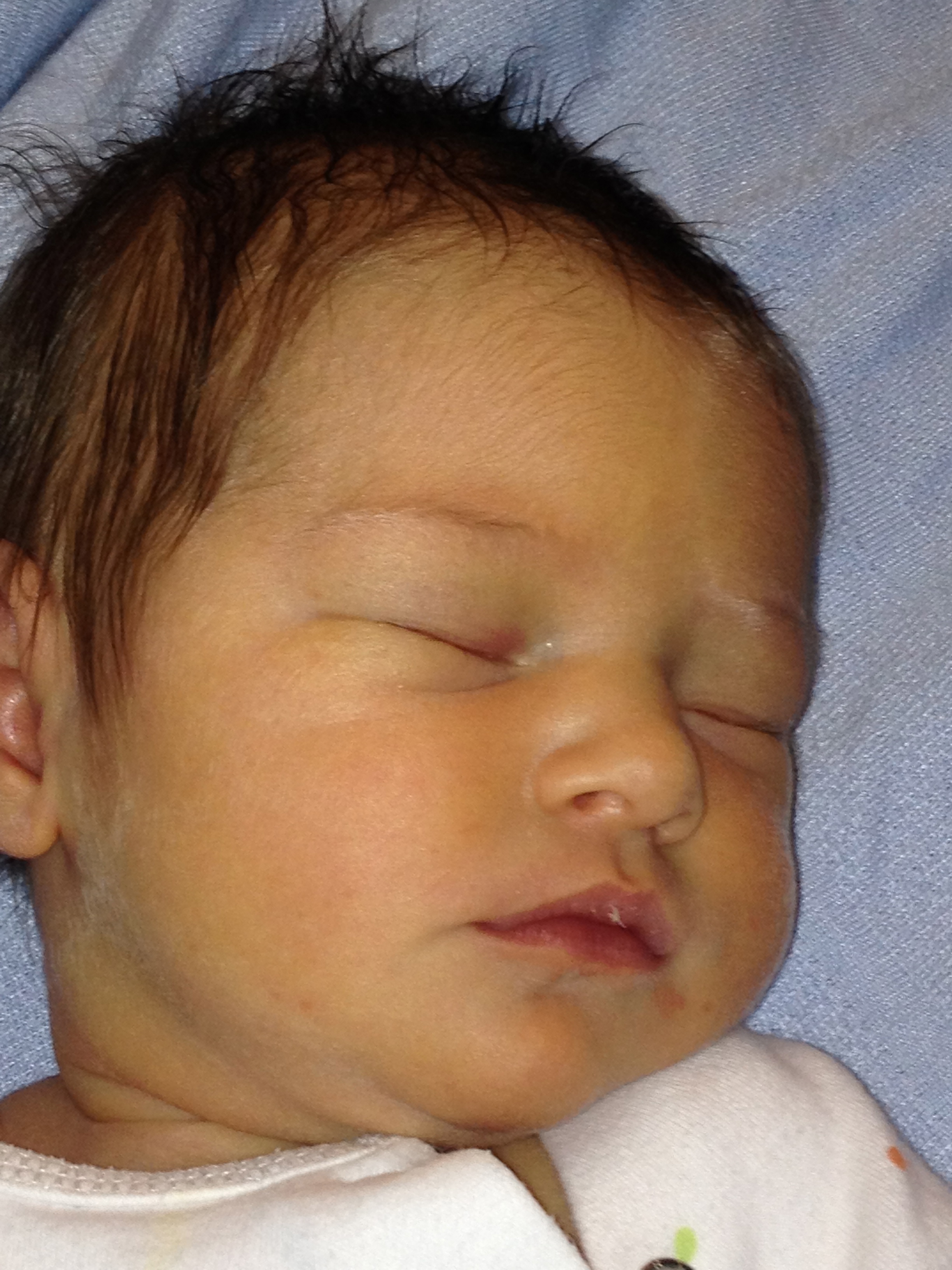
Apologies for the tardiness in posting an update, I’m just beginning to emerge from the post-natal fug. Theodora Mary Elizabeth was born on Tuesday 21st August 2012, at 3:57 pm, weighing 5lbs, 11oz, or 2580g in new-money.

Due to the high blood pressure problems that I suffered from in the latter part of pregnancy, Theodora is on the small side, especially when compared to all my other babies who weighed in at over 8lbs and sported gorgeously plump cheeks, arms and legs, so it is something of a shock having a baby who seems so absolutely tiny with not an ounce of spare flesh, with spindly lean limbs, but she is in good health, if a little jaundiced still and the pair of us are just hopefully coming out of the woods.

As for her name – it was one of those “lightbulb” moments. Right up until the moment of birth, we still had no definite idea of what to call her, other than a few ideas vaguely floating about. Theodora certainly did not feature on “the list”. It was during recovery, whilst Robin was having a cuddle, that he looked down tenderly at her, marvelling at her tiny, yet perfectly proportioned size and remarked that she really was a “teddy”. “Teddy – Theodora?!” I said, whereupon we just looked at each other and something just clicked. It just felt right, it was her. 

When I suspected that I might be pregnant, the timing could not have been worse. I had just passed my first term’s assignments at university with flying colours, having had to defer my much-wanted place once already due to an unplanned pregnancy. I knew that another pregnancy would make continuing unfeasible; I struggle with pregnancy sickness and hormonally related depression and there was no way that I would be able to mange 3 children under 3 and the demands of a full-time course, let alone the costs of the university creche for 3 children. Added to which, the term dates had changed meaning that the baby was due a week before term recommenced, the creche won’t take children under 5 months and the lecturers and faculty staff were unprepared to let me attend with a feeding baby in tow. All of which doesn’t add up to a very pro-life environment for students with unplanned pregnancies – but there’s a rant for another time.

So anyway, with waves of nausea, shaking clammy hands and tears of despair, I did the test and the two faint lines appeared. Robin, who had been in a state of total denial, followed by incomprehension, took the toddler off to Adoration and Mass, looking rather pale. I’ll never forget the look on his face upon his return, which can only be described as serene and glowing. He had an air of acceptance and even excitement, whilst I broke down in tears. “It’s going to be okay” he said, “I sat there with the Lord, I looked at Imogen, I saw how beautiful she is, I thought of our other two children and realised that this is just a gift. I know it wasn’t what we expected, I know it’s the last thing we wanted right now, I know it’s going to be tough as hell for you, I know you suffer, but I can’t help but think this is what God wanted for us”. He was terrified, knew full well how difficult the prospect of yet another pregnancy and birth so close to the other two would prove, both physically and mentally for me, and the knock on effects of that to us and our family, and yet he was overwhelmed with a sense that it was just meant to be. We had in good conscience attempted to avoid pregnancy, we had been extremely scrupulous and yet despite our best efforts, here we were about to have another child. It really did feel like God’s will and if it hadn’t been for the support of my husband, I don’t think that I would have made it intact over the past few months.

Make no mistake, this pregnancy has come at enormous cost, physically, emotionally and financially. It has taken every ounce of strength that I have had. There have been times when I didn’t actually think I could continue any longer, but with the help of my husband and the grace of God and much prayer, I have somehow found the strength to get through not only the physically debilitating effects of pregnancy, but also to pull back from the depths of despair. Though I couldn’t see it at the time, the ordeal of the past 9 months actually did more than any other traumatic events in my life to draw me closer to God; I really did experience my own personal Calvary.

So nothing could be more apt than Theodora – God’s gift, given out of love and totally perfect in every way.

And some nice news

I am going to write about what it really means to be pro-life at a later date, but this pregnancy is forcing me to put my money where my mouth is, in more ways that one.

When the word “crisis” pregnancy is bandied about, single women, often in straitened circumstances comes to mind. Actually a “crisis” pregnancy is one that is unplanned and is very difficult for the mother to accept, for a multitude of reasons.

One of the things that has been causing me a lot of anxiety is the thought of yet another cesarian section, my third in three years. My last two children were born by cesarian section and I have to admit that my personal experience is not a positive one. I shall spare the gory details, but in the interests of fairness and for any expectant women reading, it’s fair to note, that many many women testify to their cesarian as being a “blissful” experience, which, if it is planned, is certainly possible. Mine just haven’t worked out that way.

I thought that after 2 cesarian births I would not be allowed to attempt a natural birth, however this has been agreed in principle today. Though I can’t quite have the experience that I wanted, I can at least attempt to do what nature intends, on the proviso that I am strictly monitored at all times. This is a huge weight off my mind, the thought of yet another cesarian looming into view had been the source of repeated panic attacks.

Some prayers have been answered at least. This is what being pro-life means, having compassion for the stressed-out mother, understanding that for many childbirth presents a psychological barrier and that the heady cocktail of pregnancy hormones combined with pre-existing worries make her especially vulnerable and not dismissing her fears as histrionics or irrational.

This is why more midwives are needed in the UK – to help and support women to make the choices about childbirth that are right for them.

Practical Action

A few weeks ago when I wrote about the Ps, of Pro-life, Prayer, PR and Politics, Ben Trovato reminded me of an omission – that of positive action.

I was reminded of that earlier today, upon receipt of some news from the Good Counsel Network, regarding a mum and baby whom they are attempting to help and support. It would not at this point, be appropriate for me to go into the specifics of this case, but it’s a timely reminder that though the narrative of abortion seems to be about fully autonomous choice – the reality is far from that for many women, who are coerced into abortion against their will, often being frogmarched to abortion clinics by controlling relatives or boyfriends.

There are a handful of sceptics in the pro-life movement who believe that pro-life work should not consist of helping women in need, but should be all about the politics and campaigning for changes in society, in order to make abortion not only unthinkable but also unnecessary. Pro-life work should not consist purely of mopping up, of providing the layette and the basic baby equipment for impoverished or abandoned mothers, but needs to think beyond the needs of the newborn baby and address the needs of single mothers with toddlers and young children. It is not enough to think that once the baby is saved from the abortionist’s tools, that the job is done. We need a society that is prepared to protect the vulnerable, which includes amongst others, young children and their mothers.

In a recent conversation with Deborah Orr, I highlighted that abortion is a sign of female inequality, in that women are under various pressures not to have children if they want to be able to compete on equal terms with men in the workplace. There is something very wrong in a society that seeks to present abortion as solution to inequality, if anything abortion perpetuates the inequality as it forces the woman to suppress her feminine fertility and natural bodily functions, if she is to succeed, or in some cases survive. The social, financial and economic inequalities that lead to abortion being touted as a solution need to be addressed, which is why pro-life needs to look beyond pregnancy and the newborn baby.

But that does not mean that there is no place for practical action. In a society that uses abortion as a sticking plaster, we therefore need practical action to help these women who feel that they have little other choice. Whilst some may feel that the politicking and campaigning is their calling, there is also a need to step in and help those who are facing desperate and terrible circumstances.

Which is where organisations like the Good Counsel network come in. Contrary to the myths peddled by the Guardian, the Good Counsel Network are there helping the poorest and those marginalised in society. Their typical clients are not the middle-class professionals arriving for a lunchtime abortion, but those on the very fringes of society. Women from ethnic minorities who are facing terrible cultural pressures for example. Immigrants who do not qualify for any benefits and who financially feel that they have little other choice. Homeless women and victims of domestic violence. Why should these women be denied the choice or opportunity of motherhood, due to poverty or social isolation?

The Good Counsel network has been criticised for its overt Christian iconography and Christian mission, but let’s think about this for a minute. Christ was a man of compassion. He shared human burdens and alleviated suffering. Jesus could not look at those suffering without being moved to intervene in some way. He was moved when people experienced pain, sickness, sorrow, were hungry, lonely or confused. Christ was concerned with helping people, and if we are to bring about the Kingdom it is not simply by empathy, by feeling someone’s pain but by following in his footsteps and doing something to alleviate it. The Good Counsel network is all about compassion in action, by demonstrating Christ’s love, not simply by words and certainly not by evangelising or attempting to convert, but by the outreach, love and support they give to women in specific need.

I know what it is like to be pregnant and vulnerable, only too well. I am fortunate, my husband tells me everyday what a hero I am for doing the work of nurturing an unborn child and bringing her to life, whilst also looking after our other little ones. He is also good at doing what he can to alleviate the burdens when he can, be that cuddling the baby to sleep so that I can have a bath, doing as many household chores as he can, taking the children out for a few hours at the weekend so I can have a much needed nap, or simply going out to fetch a packet of Haribo or MacDonalds as the mood takes me. I think he’s the hero frankly for putting up with grumpy pregnant miserable hefalump wife for 9 months! I would not have coped without him.  Many women do not have that. The Good Counsel network provides the much needed emotional, practical and often financial support that is so often missing.

To be pregnant, whilst not an illness, is to be vulnerable. Anyone who calls themselves pro-life, needs to accept this. Pregnant women get free prescriptions, free dental care because pregnancy puts an additional physical burden on the body, it lowers immunity and makes women more susceptible to illnesses and infections. Employment law also now recognises this, which is why employers have a duty of care to ensure that pregnant women are not working in an unsafe or physically compromising environment and are not over-burdened or compromised. In every single one of my pregnancies, I have at some point just wanted someone to understand all the various physical and emotional anxieties, and someone to reassure me that everything is going to be OK. This is where the support offered by pro-life organisations is invaluable. They are there to help, not just with platitudes but with actual help, be that being there at the end of the phone, or helping to provide the basics that a woman needs. The mother is not dismissed the moment that she has her baby either, the Good Counsel Network, continues to offer help, advice and support for as a long as a woman feels it necessary, hence they are still assisting mothers with toddlers and older children. It is up to the mother to decide when she no longer needs their help.

Here is why they should not be dismissed or scoffed at.

We spend £40,000 per year on feeding Mothers. And we give this help when a Mother has no wage, no right to benefits and no other means of support.
Some of our Mothers were sleeping on buses or on the street as late as 7 months into their pregnancies.
Many others considered abortion because of their devastating poverty when their baby’s father chose not to support them in having their baby.Those readers who have been pregnant and who know the awful hunger pangs you can endure in pregnancy even when you have plenty to eat will understand how terrible real hunger in pregnancy can be!
We always deliver the help that we promise an expectant Mother. We don’t provide luxuries, but we do provide the basics
I noticed pro-choicers scoffing at their website a few weeks ago. It comes to something when a charitable organisation is laughed at for its choice of font, and it also shows exactly where the priorities of the Good Counsel Network lie. This is not a glossy, pious sanctimonious spirituality, but a roll-your-sleeves up apostolic mission. People like Stuart and Clare are there on the frontline getting their hands dirty and incurring the wrath and enmity of those who would much rather the poor and marginalised were forced to abort their babies and the abuse that comes with that territory. Whilst society sanctions and condones abortion, then organisations such as Good Counsel network will be needed and never more so in these times of austerity.
Here are some of their costs:
It costs us £35 to feed an new Mother for 1 week.
It costs us £25 to feed an expectant Mother for 1 week.
It costs £15 to pay for baby milk each week when a Mother cannot breastfeed.
It costs us £7 a week to buy nappies for a baby.
It costs about £3.60 a day to feed an expectant Mother.
Here’s how to donate. £5 a month is the equivalent of 2 lattes in a typical chain, or perhaps a bottle of wine from the supermarket. In the meantime the Good Counsel Network  would appreciate any prayers, fasting or acts of suffering for “M”.
Truly I tell you, just as you did it to one of the least of these who are members of my family, you did it to me.

Lost families

A very bizarre thought popped into my head when praying for my Nana earlier, not the most seemly of thoughts and indicative that I need to focus more, but interesting nonetheless. She was born in January 1913, which makes me wonder whether or not she may have been conceived in the aftermath of the Titanic disaster. Though I haven’t been able to find any evidence to corroborate whether or not there may have been a surge in the birth rate following the tragic sinking, there is a known phenomenon of minor surges and fluctuations in birth rates following national disasters – sex is an affirmation of life, when faced with our own mortality, a theme aptly explored by Albert Camus.

Why would I be thinking about the circumstances in which my Nana was conceived? Though I had always associated her birth with occurring shortly after the Titanic, I had never previously made the connection, however the circumstances of her birth are somewhat mysterious and tragic. During the 30 years that she lived with us, she rarely talked about her childhood or her family, which were all veiled in secrecy. Whenever I had to complete any family tree projects at school, she always clammed up when asked to assist, angrily shouting that it was none of anybody’s business.

My mother confided that there was some kind of mystery, Nana had not in fact been brought up by her birth mother, but by an “Auntie and Uncle” in rural Devon, two very lovely, kind and caring people, but it was not clear what blood relationship, if any, they had to Nana. This couple had children of their own and brought my Nana up as if she was part of their family, but she was always aware of being different, of there being some kind of stigma. Apparently her mother was a “grand lady” who would occasionally come to visit, my mother noted that clearly there was money there: Nana often talks about the fact she had rickets as a child and was sent to specialists in London to correct the bows in her legs. ‘When you see photos of children in leg braces, they always look terribly uncomfortable’ says Nana, ‘but mine weren’t at all. They were made of the softest leather and sheepskin. I can still remember how soft they felt even now’. Maybe I’m playing amateur detective here, but one thing that has always struck all of us in the family, is that specialists in London and high quality orthopaedic braces would not come cheap, they would not be the preserve of a farming family in pre-war Devon.

A few years ago Nana was on a nostalgia trip, unwrapping and showing me all the trinkets and knick-knacks from her wedding, incredibly enough she still has the decorations from the top of her cake. One of the things she painstakingly unwrapped was some exquisite solid silver photo frames and candle sticks from Mappin and Webb, which had never been on display. She explained that her mother had not attended her wedding, but had instead sent her some silver as a wedding gift.

All of which has led all of us in the family to ponder who my great-grandmother and my mother’s grandmother was. We have a surname, but that is all. We assume that there was money in the family and some reputation. We have no mention of a father and the subject has always remained strictly taboo. It has always been a source of great sadness to my mother, she lost her own father at the age of 22, and though she has maintained close relationships within her paternal family, there has always felt as though there was something missing. Though I try not to dwell on it too much, my curiosity is piqued, all of us like to know our identity of our forefathers, from whom we hail, it helps us in terms of establishing our own sense of identity and context in relation to the world around us. The BBC programme, Who do you think you Are, has proved enormously popular for that very reason.

With the advent of the internet and the rise in genealogy websites, it has occurred to us on more than one occasion that some amateur sleuthing might be in order, although not in the period of Nana’s lifetime, as she is incredibly touchy about this subject and it would seem, rather ashamed. It was only a few years ago, at the age of 95, that she finally admitted that she had no idea who her father was, she no longer had a copy of her birth certificate, but that the father was marked as unknown. It seems to have been a source of great shame, stigma and sadness.

I would love to know about my maternal family, but have to concede that this will be lost in the mists of time. Perhaps one day I’ll investigate more as to the identity of my great-grandmother, just to satisfy my innate curiosity. But it would certainly seem to fit that some clandestine relationship may have taken place in the Spring of 1912, almost certainly in the aftermath of the Titanic disaster – not that I am claiming any link whatsoever or hinting at any James Cameron style story, merely noting a historical fact. Perhaps the two events were entirely unrelated and it’s just a fanciful whim?

So what does my Nana’s history have to do with the price of eggs? Not much really, other than personally I am glad that the stigma of illegitimacy has largely been wiped out. Children should never be blamed for the circumstances in which they were born, nor the indiscretions of their parents. Having seen how my Nana has suffered in many ways as a result of never having known the love of her biological family (she was cared for, but knew she was different), I am glad that mothers are no longer routinely forced into having to give their babies into the care of someone else in the name of respectability. I can understand the physical need for contact and close loving relationships with both biological parents and the damage that can be done if a parent is deliberately withheld. This happened also to my father, whose parents divorced in 1945 upon my grandfather’s return from the war. My father was brought up without any contact with his own father until he reached the age of 21, this being deemed in his best interests, in an era in which divorce was still a dreadful scandal. Both my nana and my father, whose knowledge of his paternal family is scant, feel somehow incomplete.

I am relatively sanguine about it all, but there is some innate desire in me to find out more about from whom I hail. I know that my maternal grandfather was Italian and my father’s family were King’s Lynn fisherman and Norfolk agricultural labourers (I think) but that’s about it.

When I think about my Nana’s circumstances in particular, I give thanks that abortion was not an option in 1912. Though my Nana has missed out in many ways, she had a happy marriage, a child of her own, 2 grandchildren and 8 great-grandchildren. Though I am sure that my great-grandmother, whoever she was, must have endured a lot of suffering, she also brought forth much joy and happiness. One ‘mistake’, one clandestine relationship has borne much fruit for which we are all grateful. It made me wonder how many other potential families are now wiped out before birth as a matter of routine?

Limits

I am admittedly suffering from ante-natal depression at the moment. It’s a condition that has affected every single pregnancy, but this bout is particularly bleak. I am struggling to find a light at the end of the tunnel.

Anyone who follows me on Twitter will know why this has been exacerbated. I’m not going into the tedious specifics, but since the beginning of February I have been the subject of a prolonged smear and hate campaign which has hit me, whack full-on at a time when I am feeling especially vulnerable, for a multitude of reasons. I simply can no longer cope with the abuse and latent threats.

I am primarily disengaging from Twitter for a while for my own mental health, I may still tweet the odd link, but it’s best, in the short term to concentrate on my own well-being and upon the odd blog post, which I find therapeutic, carthatic and healing. If it’s inspirational or informative , that’s simply a bonus.

Due to the issue of abortion being firmly back on the political agenda – and yes abortion is a political issue, it always has been, those campaigning in favour of the 1967 Act were more than happy to politicise the matter, once again the notion of acceptable time limits is under discussion. There has been a massive sea-change of opinion since the incredible advances in very detailed 4D diagnostic imaging pioneered by the likes of Professor Stuart Campbell. Babies of only 12 weeks gestation can be seen playing, smiling, sucking their thumbs, exercising, in minute detail. It is increasingly difficult to deny the humanity of the unborn child and the vast majority of the public favour a reduction in the abortion limit to 20 weeks. Over half of UK women believe that the current abortion laws are too lax, according to a recent YouGov poll conducted in January 2012. A more recent Angus Reid poll from March 2012, shows that over half of the respondents and 3 in 5 women believe that the current limit of 24 weeks should be reduced.

Discussing abortion limits is a minefield for pro-lifers and Catholics who believe that all abortion is the taking of innocent life, a viewpoint with which I am very much in accordance. To campaign for a lower limit seems to concede that it’s perfectly acceptable to kill an unborn baby at an earlier stage. Most abortions performed in the UK are now under the 12 week mark – to imply otherwise is misleading and disingenuous. Honesty and integrity matter when discussing such ethical topics. The problem with implementing a reduced limit, is not only does it imply that earlier stage abortions are acceptable, but it may also rush a woman into making a premature decision, aware that the clock is ticking. Another factor that comes into play is that the earlier the abortion is performed, the more straightforward and thus less risky the procedure. A surgical abortion at 12 weeks will be less physically traumatic for a woman than a procedure at 22 weeks. So if we’re looking at women’s welfare, its something of a double-edged sword. An earlier procedure may well be better for her (not the baby) but the existence of a time limit may not give a woman enough time to properly consider her different options.

Pro-choicers on the whole aren’t keen on any delay, they believe that a woman should be able to have swift access to abortion as soon as she “requires” it. Whilst this logic is understandable, most women faced with a crisis or unplanned pregnancy do need to be able to take some time to fully consider their options and not be rushed into an abortion by clinics, relatives or abortion limits. At the end of the day an abortion results in the end of a life, regardless of whether or not one wants to play around with the semantics of whether it is a real life or simply a potential for life. I know where I stand on that scale, but that’s an argument for a different time. An abortion cannot be undone ,therefore women must not be rushed. As the law stands, if a woman has made up her mind that she wants an abortion, she can go and book one for the next day, without counselling if that be her wont. If, however, abortion is this difficult decision that is only arrived at via a lot of soul-searching, then it seems right not to exert any undue pressure with time limits. Clinics already do enough of that in terms of rushing women into taking the abortion pill, because for them, this is a less costly and riskier procedure, regardless of whether or not the abortion pill is the right option for a woman. Let’s say, for example, I discovered at 6 or 7 weeks in pregnancy that the developing fetus had died. Would I opt to take a pill to induce a traumatic miscarriage or would I go for the surgical option under sedation or anaesthetic? The answer would most definitely be the latter – but surgery isn’t the option that is promoted for women in the early stages of pregnancy for obvious reasons.

An aborted baby/fetus, whatever terminology one wishes to use is just that, it can’t be magically revived, whatever stage of development it is at. Obviously, when we come to pregnancies post 2o weeks, there is the hotly disputed issue of fetal pain, awareness and viability. The general public are as a whole a lot more squeamish about later stage abortions because of the huge advances in neonatal care. Babies born at 24 weeks can and often do survive. This baby girl survived being born at 21 weeks and 5 days. At 22 weeks a baby has a 0-10% chance of surviving, increasing to 10-35% at 23 weeks and 40-70% at 24 weeks.

Ideologically speaking, limits should be something of a red herring, either abortion should be on demand right up until birth or it should be against the law, unless abortion is a necessary side effect of a procedure undertaken to save a woman’s life.

If only life were that simple. I admit to a personal heavy investment in the notion of reducing the limit, which I firmly believe would reduce the number of abortions. Not that there should be an acceptable number or quota, but one life saved is better than none. Someone close to me aborted healthy twins at the 23 week stage. She had already taken the decision to keep the babies following a 19 week scan, kept things quiet until she was 21 weeks, but was coerced due to an enormous amount of family pressure, led by an overbearing and dominant mother who was concerned about the shame that would be brought upon the family. The ironic thing being was that the pregnancy was already known about by most people and there was more shame, stigma and distress in the late stage abortion of twins than there would have been in actually giving birth to the babies. The situation was heartbreaking and no blame should be attached to the vulnerable 19 year old who was put in an insufferable position and convinced that an abortion was the only solution. Were the limit lower, then this would not have happened.

Time limits act as a cut-off point, beyond which it is deemed unacceptable to abort a baby, which is why for many they are an irrelevance. The very existence of a limit gives a protection to the unborn child beyond a certain age. It stops people from “unnecessarily” aborting their babies. I was won around to the idea about half an hour ago.

I’m having a very hard time, I am struggling mentally. That is not pure hyperbole, it is fair to say that I am on the edge. I find pregnancy difficult enough as it is. I am daunted at the prospect of coping with the demands of a breastfeeding baby, a hen 16 month old and 33 month old in a bungalow the size of an average flat. I am terrified by the prospect of another cesarian, my 3rd in 3 years. The last two were no walk in the park. I don’t know whether or not I will cope. My degree will need to be deferred – again. At any other time, I might be more mentally equipped to cope with the sheer undiluted spite that has been flung my way over the past few weeks, and that is no exaggeration, but coupled with everything else, it’s all proving far too much to cope with. I am having moments of panic, despair, darkness and anxiety. I am exhibiting signs of severe depression, losing appetite, finding menial tasks overburdensome and dreams filled with anxiety. I wake up drenched in sweat after being chased by an irate female client from my old job or troubled because I’ve had to sit an exam which I didn’t previously know about and for which I’ve done no revision.

Perhaps this is too much personal information, I’m not putting it out there to play victim as often accused, but to say look, I’m a normal bright intelligent woman with no previous history of mental illness (contrary to the 16 unsolicited emails sent to a lawyer advising me) but the strain of pregnancy coupled with a few months bombardment of internet harassment has proved too much. There should be no stigma or shame, I know I’m bent out of shape at the moment and I am fortunate to have a loving husband who is encouraging me to go and seek the help that I need. That is not an admission of any wrongdoing of which I’m accused either, I don’t want any amateur psychologists putting two and two together and making the invariable five. I am a very stressed and vulnerable pregnant woman. I am well aware of that, which is why I know that I have to take a break from Twitter which is proving enormously self-destructive. It’s like a sore tooth that I keep worrying away at, I keep hoping that it will get better, that I will get the much longed for apology or retraction, and am freshly hurt every time the invective recommences.

So, with all of that in mind, I’ve just come off the phone to someone well meaning. The conversation consisted mainly of me crying, which is what I have spent most of the past week doing. Either crying or getting into a blind rage, which is what those who are winding me up, want to happen. The next few months will be tough. There is a light at the end of the tunnel in that I’ve never suffered from post-natal depression, normally once the baby is delivered and the breast-feeding hormones kick in, I’m in my element.

The person to whom I was speaking recognised that I’m in a dark place and that life is difficult. They are really worried. I am 22 weeks and 3 days pregnant. I regularly feel my baby girl squirming around inside me. We’ve chosen her name. Doubtless several clinics would be prepared to carry out a termination on the grounds that this baby will probably be my last and is my fourth girl. At some stage it might have been nice to have a boy. It’s lucky I’m not married to a Tudor monarch or living in a culture that puts little worth on the life of girls. But anyway after repeatedly expressing the sentiment that it was a great pity that I did know when the baby was conceived because otherwise I could have taken the morning after pill, well meaning person came up with a solution. They were so worried about me that they had found a clinic, made preliminary enquiries and discovered that there was availability/feasibility for me to have an abortion next week, around the 23 week mark. I can see why it seemed an answer. I can also see why, to a person who is worried, anxious and suffering from depression it might seem the only way out.

Up until 24 hours ago, I thought I was managing fine. Today I’ve realised that isn’t the case. I am experiencing a crisis. Were I of a a less tenacious and stubborn persuasion or less affirmed in my beliefs about the sanctity of human life, then I can see how at 22 +3, a late stage abortion might seem appropriate. If I were to have an abortion next week (rest assured I won’t) it would be because the law says I could. My baby is healthy and moving, she is literally alive and kicking.

There is a myth that says late-stage abortions are necessary and only occur in the case of babies with life threatening abnormalities and it is for these reasons that the limit stays at 24 weeks. Given the law also shockingly states that it is fine to abort a disabled baby up until birth, something that should be an anathema to most people with any sense of a moral compass, there is a pressing case for a reduction in limits, provided no other grounds are ceded.

If I were to abort now it would be a short term solution that would generate longer term mental health difficulties. To abort would be a gruesome sticking plaster and panacea. If the mental health of pregnant women is of such pressing concern, surely more resources need to be put into making sure that they can cope, that they have the medical, emotional and practical support that they need? Surely that has to be a better solution than traumatically ending the life of a baby with a chance of survival outside the womb? Would an abortion be the answer for a woman in my situation? There is only one way to find out, and that’s a decision that cannot be undone. With a 20 week limit, a woman in a similar situation would not be faced with a choice. There would therefore be no other option for her other than to seek the support that she needs. With a lower limit fewer women are pressurised at a later stage, if circumstances suddenly and traumatically change, i.e. a partner walks out or the family faces redundancy. No woman should have to abort her baby because she feels she has no other choice. Would more women be pressurised prematurely, I think that’s unlikely. The later the limit, the longer the opt-out clause which some people will always leave til the last minute.

I effectively have no choice, I’ve not had a choice since the moment I’ve discovered I’m pregnant. That is not necessarily a bad thing and has been the case of millions of women since the dawn of time. Choice should not be mistaken for the Holy Grail or defining value of our age. A lack of choice forces me to find the help and support that I need. I’m no superhero. If I was a better, stronger and more heroic woman I wouldn’t be struggling quite so much, but stoically, quietly, patiently enduring and offering up my suffering and glorying in the miracle that is reproduction and the privilege of carrying my own baby. The fact that I am not coping is a testament to my own shortcomings and so if I can get through this, then anyone can.

But prayers much appreciated in the meantime.

A hospital in 1970

I’ve received the following from a lady who wished to respond to the video featured in the Guardian and who was affected by Friday night’s vigil. Powerful poignant and moving.

1970 A London Hospital

The woman in the bed next to mine had a lot of visitors. Family, friends, even her little boy, they seemed to be celebrating. I was alone and frightened. When all her visitors had left I asked her how she was, and was surprised at her upbeat response. It was the worst day of my life and I couldn’t understand why she was happy. She explained that today was a great victory for her. For months she’d been fighting for the right to have an abortion and finally the doctors had given in. I wondered if she had a baby with a disability as well. She laughed and explained that what she was doing was called ‘proving the act’ – that the parameters of the abortion act were being challenged by woman like her who were establishing a precedence so that all women could have access to abortion on demand.

I had been through the procedure as well. I’d been seen by two doctors who quickly agreed to give consent for me to abort my baby. One of them, on seeing that I was upset, reassured me by explaining that my situation came within the act. The pressure on these doctors was immense as there were many women at the clinic who were arguing, refusing to accept the doctor’s decision. I had been so wrapped up in my misery that I hadn’t really understood what was going on. The woman in the bed next to mine explained so that I could understand. Her commitment to what would be called today ‘a woman’s right to choose’ was so great that she’d got pregnant for the express purpose of having an abortion. I commented on the fact that she was quite far on in her pregnancy and she told me that it was the fault of the doctors because they had taken so long to allow the abortion.

Soon they will come and give the pre-operation injection in my arm and I won’t care anymore. Soon it will all be over and I can go back to my life and forget this. But my life was never the same again. I can never forget.

The woman in the next bed. Someone’s mother who fought so hard for the women’s rights. Was she a heroine? Or a woman to be greatly pitied, using something so precious for political ends.

Me? I failed to protect the one who depended on me for everything. I denied my little one’s right to life. For a while it was a secret. Then I decided that I couldn’t deny that it had ever existed, so I tell my story.