Disability dilemmas – what should the Catholic Church/pro-life movement ‘do’?

Abortion of unborn children diagnosed with abnormalities is back on the agenda with the publication of the abortion statistics for 2012, which showed a sharp rise in the number of children aborted due to disabilities, up 17% on 2011 figures. As I explain in this week’s Universe, this demonstrates a gulf between the national attitudes on display during the Paralympics and those on an individual basis. We are all delighted to cheer on our athletes in the spirit of patriotism, but fewer of us are prepared to actually get our hands dirty when it comes to the more difficult task of caring for a disabled child. A parliamentary commission has pointed out that the way the abortion laws are being applied amounts to little more than eugenics, and is ‘unfit for a civilised society’. If the rules surrounding abortion for babies diagnosed with disabilities are to be reformed or tightened up, the Catholic Church and pro-life movement can expect scrutiny in terms of what they actually do to help the disabled in society.

One of the regular tropes trotted out by pro-choicers is that Catholics only really care about the unborn baby; once the baby is born or saved from abortion we then wash our hands and absolve ourselves of all responsibility. Nothing could be further from the truth. In the case of the Good Counsel Network for example, they offer support for as long the mother requires it. Over the past few weeks, a few Catholics have been agitating on social media that the Catholic Church and/or pro-life organisations should do more for the disabled, such as paying for respite care for the mothers or carers of disabled children and adults, if they are going to campaign for an end to abortion on the grounds of foetal abnormality.

This concept needs a little unpacking before uncritical acceptance.

In the case of the Catholic Church, it does do an awful lot for disabled children and adults, but on a local level according to the Catholic tenet of subsidiarity. Whether one is referring to either the Catholic Church or the pro-life movement, we should steer away from the socialist notion that everything should be centrally controlled, whether that be by the state, the ‘Church’ or a pro-life organisation. The Catholic Church has several voluntary societies such as the St Vincent de Paul Society, to name just one, which does exactly the work of supporting and providing practical help to the vulnerable in society, such as struggling families, the elderly and disabled of all ages. Catholic parishes have rostas for visiting the sick and pull together in an informal way to help those in their community who are vulnerable or in need of support in times of crisis. I can give numerous examples of acts of generosity and I don’t mean in purely financial terms, actually far more difficult is to give of one’s time and yet I’ve seen members of a parish help a struggling mother with ad hoc free childcare or picking up children from school, cooking meals for an elderly infirm neighbour, volunteering to look after a disabled child for a few hours on a regular basis or help out an elderly couple where one has Altzheimers and so on. The fact that this is not centrally organised or formally recognised, does not mean that it doesn’t happen. Of course there does need to be some formal organisation, but usually it’s done at a local level.

Outside of parish level, Catholic schools, both in the independent and state sector strongly encourage their pupils to participate in voluntary work and there are schemes which see pupils run and participate in activities such as Riding for the Disabled, Swimming and sports clubs, residential weeks for disabled and underprivileged children, in order to foster mutually enriching relationships and a sense of responsibility and community. Catholic Children’s societies do much work in terms of providing respite care and helping families as well as advocating for the rights of the disabled in society. Individual dioceses have pastoral teams exactly for this purpose, including helping people to receive the most out of the sacraments and general specialised support groups.

So it’s rather unfair to claim that the Catholic Church doesn’t actually do anything for those with disabilities, anyone who has ever been on any sort of organised diocesan pilgrimage to a place such as Lourdes, will see exactly the sort of attitude that the Catholic Church adopts towards the disabled, the Catholic Church not simply consisting of ‘The Vatican’ but the members of all the faithful around the globe. Incidentally it’s inside a Catholic church that one is most likely to frequently encounter a large gathering of those with various physical or learning disabilities. Here’s the little boy who took his First Holy Communion with my daughter.
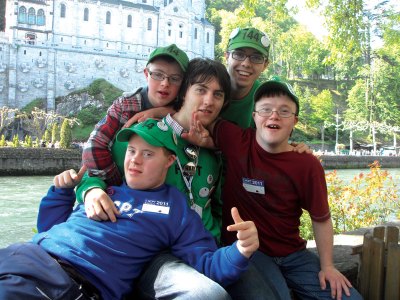
HCPT
The HCPT Lourdes Pilgrimage

As a rule I’m generally reluctant to validate by engaging with the notion that the Catholic Church doesn’t care about the disabled once they are born, because this accusation is usually thrown about by those who have little knowledge or experience of what does go on and even if they did, would still find something to criticise. It is the kind of thinking that dictates that the Church should spend all its time engaged in voluntary and practical work (for certain approved politically correct causes) mopping up social problems such as poverty but should have absolutely no voice in terms of formulating the policies whose side-effects they are expected to resolve.

In any event should the Church pay for respite care for disabled children and adults, outside of what it does already, if it is serious about ending abortion on the grounds of disability?

The first question we have to ask is whether or not the Church or any pro-life organisation would actually have sufficient funds to provide for this? I suspect the answer would be no. The annual income of all the UK major pro-life organisations combined would not begin to cover respite care for every single disabled child or adult. We also know that contrary to Dawkins’ assertions that the Church is not actually awash with cash and does not have that much liquidity, especially at parish level. But perhaps both pro-life organisations and churches ought to campaign for more donations on this basis?

Perhaps, but the fundamental question here, is whether or not the Church or pro-life organisations ought to be doing this work for the government? It’s true that in medieval times the Church was fundamental in terms of setting up schools, hospitals, communities to care for the sick, the needy, the poor and so on, but this was in the days before taxes. We live in an entirely different, allegedly more civilised society under which we are obliged to give a significant proportion of our income to the government to order our society and therefore surely it is entirely encumbant upon the government to make such provision for respite care and look after the most vulnerable unless it wants to lift all taxation.

Would it really help if various Catholic institutions were to replicate what happens already? Besides which levels of respite care and assistance are entirely dependent on the nature of the disability which is why best practice enables families to be given a certain budget and determine their care plan themselves according to their own specific circumstances and needs.

Would the promise of paid respite care actually tempt women into keeping their unborn babies? Most women who decide to abort a baby with a foetal abnormality do not so lightly or because their baby is less than perfect, but out of fear. What the recent parliamentary commission on abortions on the grounds of disability heard, was countless tales of how women felt that medical professionals bounced them into a decision; that they really felt that they had little other choice, and no other options were put to them. So part of the solution has to be a more empathetic and open to real choice medical profession, especially in the areas of foetal medicine and gynaecology. When diagnosing foetal abnormalities, the baby is measured against a standard of perfection, when in reality none of us are physically perfect. We often hear terrible cases of young men and women dropping down dead because of an undiagnosed heart defect that they have had since birth. Tragic whilst those cases are (and more preventative measures should be taken), the parents of those individuals never lament the birth of their child or wish they had never been born, instead they celebrate lifetimes of joy and achievement. Would they have taken a different decision had they been informed that their baby could drop down dead at any minute during the 20 week scan?

The problem with many of these diagnoses is that they are invariably worst case scenarios, when the reality is that no-one really knows with much certainty until the baby is born. Many readers will be able to give anecdotes of diagnoses of severe physical abnormality and dire prognoses only to go on to deliver a perfectly healthy baby. Only yesterday I heard yet another such tale myself. Here’s a little girl who was diagnosed with a condition incompatible with life . Even when the diagnoses are correct, they only tell a one-sided story that involves only heartbreak and suffering with never any mention of love, joy, fulfilment, laughter or contentment. This is behind the screening for Downs Syndrome – the condition is deemed to be so unutterably dreadful and makes life so miserable and difficult, that parents need to be give the choice to abort. The pro-choicers have gone beserk over the case of Father Vander Woude, who was inundated with responses to an appeal for prospective adoptive parents of an unborn baby with Downs Syndrome, claiming that abortion is the better or only option for those babies with Down Syndrome. A sentiment which Francis Philips, whose daughter has Downs, would vociferously refute.

In many many cases, it’s not necessarily money, but fear, especially of the unknown. Perhaps if there is something the church or pro-life organisations could do is organise support groups for those diagnosed with these conditions (some already exist) or help in assisting local groups for mothers and fathers of babies and young toddlers with various conditions. Parents faced with this situation are currently forced to rely for remote internet help and support, as due to abortion, babies diagnosed with difficulties are few and far between.

Even if organisations were able to offer a limitless supply of cash for respite, it would still make no difference to some mothers. The barrier is not purely financial, it’s about having the confidence in one’s ability to parent a child with disabilities, especially if you already have children. Parenting a child is hard and time consuming as well as immeasurably rewarding, it requires graft and self-sacrifice. Unfortunately words and concepts such as those tend to be alien and almost taboo in today’s society, self sacrifice, duty and responsibility have a negative rather than heroic and aspirational quality. Which is one of the reasons why mothers abort healthy children too. They fear they don’t have the capacity or ability to mother and the ideal of self-sacrifice is seen as the enemy of the dominant narrative or zeitgeist of self autonomy. It might be judgemental but sadly true in some cases. Some women neither believe in, nor want to be self-sacrificial, a child should fulfil them and on their terms, not understanding the fulfilment that can be found in sacrifice. Some women simply don’t want the work, effort or responsibility that comes with having a child, no matter what any pro-life organisation does, they cannot and should not seek to entirely remove the responsibility from the woman’s shoulders, but rather help her to bear it.

Which feeds into the final point about handing out cash willy-nilly to mothers or provision of free childcare or respite care to pregnant women. Help that is offered should never ever be in the form of a bribe, but instead to help a woman overcome the barriers to saving her child’s life. These barriers will differ from person to person, money is not always the overriding issue. A Catholic solution is holistic, it’s joined up, it’s helping the mother to reach her potential as a mother, rather than treating the child as a barrier to personal fulfilment or individual success. Part of this should involve a spiritual element. By saying to a woman, ‘okay we’ll pay for all your respite care and/or all your childcare’ it treats the child as an object or problem. No single mothers of young children (or indeed any mothers of young children) should be forced, coerced or encouraged to work. Children should not be placed full-time in nurseries, which often lead to poorer outcomes for children, if they are to flourish.

Throwing money at people to put their children in childcare or to provide respite care, buys into the narrative that children, whether able-bodied or not, are a burden to be overcome. Encouraging women of young children to go out to work consolidates the feminist Marxist agenda that is profoundly anti-women and seeks to force women and mothers in the workplace against their wishes and is an attack on the family. (Studies show that an overwhelming majority of mothers wish to stay at home with their children). Pro-life is about so much more than cash or consolidating a culture of dependency or entitlement. No amount of cash will mitigate the personal responsibility or additional work involved in child-raising unless one pays for a full time carer, 24/7.

A blanket offer of respite care consolidates the idea that disabled children are just so unbearably difficult and demanding that parents will need to be able to escape at every possible opportunity. Propagating this physically unattainable ideal also implicitly validates abortion of disabled children, stating that because insufficient respite care is available, the decision to abort is justifiable because the woman has no other option. The decision may be understandable, but never morally valid, no matter how hard that may be for many to read. We also need to be extremely careful not to feed the abortionist’s mantra that pro-life is about quality of life as opposed to sanctity, whilst at the same time assisting parents and children to maximise the former.

The Catholic Church or pro-life organisations should not let the government off the hook in terms of its responsibilities to the disabled. We should not seek to replicate existing provision but to complement. If there are gaps in provision we should look to identify and see what we can do to rectify and be inspired by the documents of the Second Vatican Council which implored the laity to take on more responsibility in terms of lay apostolates of this nature. I mentioned the Good Counsel Network earlier, they are an excellent example of this, in that having identified a need, they have set up a wholly Catholic apostolate. Surely this is what we are called to do as Catholics, to tailor a solution that is holistic, not simply financial or practical but one that addresses spiritual needs and has a strongly Catholic flavour. Otherwise we become little more than social workers.

Ultimately we shouldn’t sit in our armchairs, with a ‘somebody should do something’ attitude, pontificating what the Catholic Church or pro-life organisations should do, but actually be pro-active in setting up whichever initiatives we feel are necessary.

Much is done already by many in terms of caring for the vulnerable in society, no doubt more can be done. But the first job has to be doing whatever we can, which includes political action and highlighting the unjust and appalling attitudes towards those with disabilities simply because they are in utero. There’s no point campaigning for better respite care, better facilities, fairer legislation or railing against unfair benefit cuts for the disabled, if we turn a blind eye to the despicable prejudice that seeks to deny people the opportunity to life, the most basic human right of all.

God willing, abortion on the basis of disability may soon be a thing of the past. When all are accorded the equal right to life, it will then be the opportune moment to review what can be done better in terms of supporting those with disabilities, which will naturally include relationships with other agencies and charities. If we allow everyone to be born, the government will be forced to up its game and provision. But at the rate we are going we will soon have a raft of legislative measures, buildings with wheelchair ramps and so forth and yet no-one to use them.
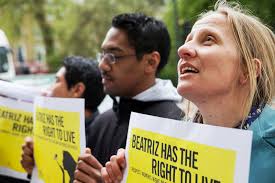
Tragedy in El Salvador

Beatriz

(The above photograph is taken from the website of Amnesty International who claim they have no official position upon when life begins. A Human Rights organisation that is unable to decide upon who is a human being. Interesting)

Sometimes a truly hard case will hit the headlines which will test the conviction of every seasoned pro-lifer such as the one in El Salvador, which will be seized upon with a ruthless and determined glee by abortion advocates, especially I suspect, the Irish hardcore contingent who seem to populate Twitter, pouncing, hounding, persecuting and generally attempting to bully and intimidate any pro-lifers with campaigns of harassment, such as the recent one which saw a Catholic pro-life GP delete his Twitter account under threats of having been reported to the GMC for having the temerity to express his views. These are the same people who will tell non-Irish to keep their noses out Ireland’s business, but are happy to report a UK GP to relevant authorities, including his employers because they are unable to accept that he should be able to express his views, alongside his identity. A country which has pro-life laws is the concern of every right-thinking global citizen, whereas one which is proposing liberal abortion laws is only the concern of its inhabitants, according to this logic.

The facts as reported by the BBC, is that a young woman (Beatriz) who is suffering from the chronic immune system disorder lupus and kidney failure has been denied permission to abort her baby which has been diagnosed as suffering from anencephaly, which means that either part or all of its brain is missing and he or she is likely to die shortly after birth. The Supreme Court has rejected her appeal to be allowed to abort, stating this:

“This court determines that the rights of the mother cannot take precedence over those of the unborn child or vice versa, and that there is an absolute bar to authorising an abortion as contrary to the constitutional protection accorded to human persons ‘from the moment of conception’.”

This is a tragic and shocking case, one cannot fail to feel sympathy for the poor woman, who must, with some justification, feel as though her country is totally lacking in care and compassion for her physical and mental wellbeing. It highlights the problem of using legal and technical language which is very precise and conveys a total lack of empathy, feelings matter, this young woman is important, her plight is desperate and some acknowledgement of that, along with reassurance is necessary. The judge may well of course have added some words to that effect in their statement, which have not been reported, but this to me highlights the importance of women, especially those hurt by abortion, those who have been in crisis pregnancies and mothers, speaking out in defence of the unborn. Whilst the legal terms and the moral theology is important, when delivered by a man, they can leave the impression of coldness, sterility and a total lack of empathy. Women and mothers intuitively understand what’s at stake in these situations.

Make no mistake, Beatriz must be going through hell and needs support. Pregnancy does put an additional strain on the body, especially in terms of the immune system and kidney function and there can be no doubt that her physical health is being severely compromised. She will probably be experiencing a great deal of physical pain and trauma, compounded by emotional distress, feeling as though she is being forced to put her life on the line or even die for a baby who is going to die anyway.

But what we see here, as in so many awful cases, is the conflation of two conditions, which go to demonstrate that hard cases make bad law. The baby’s long-term prospects should not affect the decision of whether or not one should be able to kill him or her. We do not euthanise people on the basis of a poor long-term prognosis. Anencephaly is an undeniably terrible condition, one that every pregnant mother lives in fear of, prior to scans. I know that if I had a baby diagnosed with it, I too would struggle and need a lot of support. But being one of those ‘extremists’, I treat all my children equally regardless of whether they have yet to make the journey out of the womb. I would chose for my child to have a chance of life outside of the womb, no matter how brief, and die surrounded by the warmth and love of my arms instead of being dissected by the cold hard steel of the abortionist’s instruments or poisoned in utero, because that would be no less than they deserve. It would also aid in the grieving process, so many parents who feel compelled to abort their children on the grounds of disability struggle as a result, especially as they are encouraged to hold a funeral service for the child whose life they put an end to. I’m not knocking the practice, treating remains with respect and praying for the dead is the right thing to do, but it causes severe cognitive dissonance and distress. Healing in these cases is much harder. The parents of Colin Perry are beacons of hope to parents of anencephalic children.

In many ways El Salvador is a model of equality, not allowing for the elimination of those with disabilities. The really pressing issue here is maternal health and this is what matters for Ireland and other pro-life countries. In Ireland, if the mother’s health were at severe risk, the medical code already in existence would allow for an abortion to take place in these circumstances.

It seems that Beatriz’s case is being used by various activists in an attempt to push open the door to abortion, exploiting the plight of a sick woman in an unsavoury fashion.

Beatriz is now 26 weeks pregnant, doctors are concerned that as her pregnancy progresses further, too much strain will be put upon her body and they will be unable to treat her. That is a wholly justifiable concern. Beatriz does however, already have a toddler, it’s not clear when she was diagnosed with Lupus, but her body has already been able to tolerate giving birth at, or near to, term.

What I don’t understand about this case is why Beatriz has needed to be dragged through the courts in this fashion which can only add to her distress. Surely the most sensible, compassionate and morally licit option would have been to induce the baby at 24 weeks, the point of viability and do all that they can to provide palliative care for the child? The intention not being to abort the baby but to relieve the pressure being put upon Beatriz’s kidneys and immune system, particularly if they are showing signs of strain. Isn’t this what any conscientious doctor would do, regardless of where they stood on abortion?

Beatriz seems to have been used as a political football here, an early induction post viability is not the same as the deliberate and wilful destruction of life. This has to be the most medically and ethically astute option. Why can she not be monitored and an early induction take place at the first sign of strain upon her body? This option would not be incompatible with the ruling of the judges, and is good clinical practice. Why is this option not on the table and why is an abortion being pushed in this scenario, which would not be the most compassionate outcome, for mother and baby alike. Love them both. Let the baby be born and die in dignity, he or she and Beatriz deserve no less.

Update

According to a report in LifeSite News on 9 May, Beatriz’s condition has not required hospitalisation, she is being treated at home. This casts a wholly different complexion on claims that her life is in imminent danger.

Abolition and Abortion Part 2: Incrementalism

Having established that the tactics of fetishisation employed by the abolition movement needs updating for the twenty-first century pro-life cause, it’s worth once again revisiting the thorny issue of incrementalism and seeing how this tactic was successfully employed by the eighteen and nineteenth century reformers.

Talk of incrementalism and abortion tends to provoke the ‘no true Scotsman’ fallacy amongst various contingents of Catholics and pro-lifers. The difficulty with adopting an incrementalist strategy that aims to take a series of gradual steps to tighten the laws surrounding abortion, is that it could be argued to be inadvertently sanctioning and supporting the deaths of some of the unborn. By supporting a reduction in time-limits for example, one could be said to be ignoring the plight of all the unborn who have yet to reach the cut-off limit. A period of time does not add value to a life, a 24-week-old foetus does not possess any more dignity or worth than a 12-week-old foetus. The only difference being that one is more likely to survive than another outside of the uterus. The viability may add an extra dimension to the tragedy, not least as its likely that the infant would experience pain at this stage in an abortion procedure and is capable of being nursed to health, but it does not render the baby any more deserving of the basic right to life.

My attitude to incrementalism has always been pragmatic. Consider a sinking ship which does not possess enough lifeboats for all the passengers and crew. If a rescue vessel turned up with only enough capacity to rescue half of the remaining passengers without endangering its own stability, should it refuse to save them on the grounds that it is unable to to help everyone?

Pragmatism is no substitute for moral theology, however Evangelium Vitae (73) lays out very clearly the circumstances in which incrementalism can be acceptable:

when it is not possible to overturn or completely abrogate a pro-abortion law, an elected official, whose absolute personal opposition to procured abortion was well known, could licitly support proposals aimed at limiting the harm done by such a law and at lessening its negative consequences at the level of general opinion and public morality. This does not in fact represent an illicit cooperation with an unjust law, but rather a legitimate and proper attempt to limit its evil aspects.

Without re-hashing the previously rehearsed arguments about incrementalism, it’s worth noting that the current political climate does not seem amenable to discussing a total ban, Nadine Dorries’ proposed counselling amendment, which would in no way have altered the legality of or access to abortion, was bitterly fought against tooth and nail with the former MP Louise Mensch attempting to cobble together some sort of weak-kneed compromise and resulting in yet another hand-wringing committee being set up to consider the issue, so it’s fair to observe that tighter legislation is at the current time, unlikely. Britain is in a unique position of having experienced forty years of increasingly liberal abortion, despite the law being framed in such a way that makes it clear that abortion is still technically illegal, it seems an impossible task attempting to slam the door firmly shut, without first taking a series of gradual measures.

What makes many wary is that British political history does not have a very good record in terms of incrementalism and abortion. In 1990 when the HFE Act, amended the 1967 Abortion Act, the previous limit which had been based upon the baby’s ability to survive outside of the uterus, and set a limit of 24 weeks, but this was accompanied by a disastrous amendment which removed the right to life for every baby capable of being born alive, and allowed for abortions of disabled children, right up until the moment of birth. It might be possible to support a reduction in time-limits, it is right to campaign for and support equal rights for disabled unborn children, but not if it comes with a price tag of liberalisation elsewhere, such as with early stage abortion. Bargaining over human life is unacceptable and unjustifiable.

But if politics is about the art of the possible, it’s worth looking at the history and the success of the abolition movement and how they used incrementalism to achieve their aims.

In 1537, Pope Paul III issued a papal bull Sublimus Dei, which stated that indigenous people of newly discovered lands were fully human, rational beings with souls who had rights to personal freedom, liberty and property and called for their evangelisation. The bull generated a lot of controversy, it was later rescinded by Paul III, his record on slavery seems to be rather flaky, but nonetheless its principles contributed to a debate at Valladolid and was the position adopted by Charles V, the Holy Roman Emperor and King of Spain.

What intrigues me, is had the Catholic commentariat been around in the UK in these days, is whether or not they would have resisted every single gain made by the abolitionist movement by shouting “nothing short of full abolition is unjust, un-Catholic and must be avoided”?!

Slavery like abortion is an unjust violation of human rights, but instead of a wholesale sweeping away of the practice, the abolition movement went for achievable small steps. The UK movement was launched by the Somersett’s case in 1772, which held that no slave could be forcibly removed from Britain. It was however interpreted to have ruled that the condition of slavery did not exist under English law and as a result ten to fourteen thousand slaves in England and Wales were emancipated. It made no judgement upon the morality of slavery.

In 1787 the Society for the Abolition of the Slave Trade was founded in the UK and in 1788, William Dolben’s Act which regulated the the conditions on board British slave ships was enacted. Slavery was not yet abolished, indeed the amelioration of conditions could have been used as a justification for slavery. It wasn’t until 25th March (note the significance of that date, Our Lady is always involved) 1807, that the Abolition of the Slave Trade Act abolished slave trading in the British Empire. Note – abolished slave-trading, not slavery per se. Captains found to be slave-trading were fined £120 per slave – a huge sum.

This is a tactic that the US pro-life movement is employing to great success. They are not seeking a direct abolition, but instead imposing swingeing fines on abortion clinics for disobeying stringent health and safety regulations. Licences to operate are being removed left, right and centre and clinics are going out of business because they cannot afford either to upgrade their facility to meet with sanitation laws, nor can they afford the fines. Tim Stanley wrote about the success of this tactic back in 2011, and it’s still having a tremendous effect all over the USA. Operation Rescue have been at the forefront of exposing malpractice of abortion clinics and as a result Delaware is currently a surgically abortion free state, Planned Parenthood has been forced to suspend their services. For those who might vociferously complain, surely anyone who cares about the health of women would support such measures?

North Dakota has not gone for an outright ban on abortion, instead the Governor has signed a bill that bans the procedure once a heartbeat can be detected, in many cases as early as six weeks. Furthermore the only state abortion clinic is in danger of shutting due to laws that require doctors working there to have hospital admission privileges. Whilst for the purists nothing short of a ban that will include the contraceptive pill, the coil and the morning-after pill is acceptable, a society that is putting huge restrictions on abortion, is significantly further along the road than the UK in terms of recognising and accepting the sanctity of life and the gravity of the procedure and certainly having a lot more success in curtailing and containing the scourge of abortion that hurts so many women and children.

An examination of the incrementalist tactics used by the abolition movement, demonstrates how sticking to morality but taking tiny steps to tackle an embedded cultural issue bears fruit. It wasn’t until 1811 that slave trading was made an actual felony in the British Empire punishable by transportation. It took until 1814 and 1818, for various treaties to be enacted with other countries to halt the trade. A treaty between Britain and Sweden wasn’t signed until 1827 and finally in 1834 the Slavery Abolition Act came into force which abolished slavery throughout most of the British Empire. Further treaties followed with France and Denmark in 1835 and in 1838 enslaved men, women and children in the Empire finally became free following a period of forced apprenticeship after the 1833 act. Britain continued to make treaties with other countries banning the slave-trade right up until the end of the nineteenth century.

For slavery to end over Europe, the new worlds of the Americas and Africa, a system of compensated emancipation had to be brought in, which was something of a compromise deal. Instead of taking the morally licit position of insisting that the slave-owner had no right to their slaves and ought to immediately free them, they were instead financially compensated or by the slave completing a period of apprenticeship for a set period of time. The latter proved unpopular because it amounted to forced labour on minimum wage and put a new financial burden on the slave-owner. But slavery was phased out gradually, not on an all-or-nothing basis, with laws passed that granted freedom to children of slaves born after a certain date.

Perhaps a mirrored tactic would be for the NHS to set a cap on funding for private abortion clinics and gradually reduce this? Abortion is not healthcare and contravenes basic medical ethics to ‘do no harm’. If people wish to abort their children, it should not be funded by the public purse. If people had to be responsible for the financial cost of their choices, it would put a whole new complexion on attitudes to risky sexual behaviour.

In the aftermath of the horrific Kermit Gosnell case, a clarion call has gone out for a modern-day Wilberforce, a Parliamentarian with the courage and bravery to fight for the plight of the unborn. There are already such individuals in the Commons and the House of Lords. We have Lord David Alton, Jim Dobbin, Joe Benton and Fiona Bruce, but more are needed. Great as Wilberforce was, he was not a lone ranger but instead the voice of the grassroots, which consisted of an alliance of Quakers and Anglicans. The Society for Effecting the Abolition of the Slave Trade had many influential polemicists and speakers who travelled up and down the length of the country and who formed several local branches or chapters, and its a structure that SPUC appear to be emulating.

Wilberforce was aided by Thomas Clarkson, one of the founders of the Society for Effecting the Abolition of the Slave Trade, who spent twenty years collecting a large body of evidence against the slave trade. The other lessons we can therefore draw from the abolitionist movement, aside from fetishisation and incrementalism is that of the importance of unity, forming local communities to reinforce and encourage each other as well as convince others and using all the tools at our disposal.

Without back-up or overwhelming public support, Wilberforce would not have been successful. There is no doubt that he was concerned, as was Clarkson, to put an end to slavery all over the globe, but took a shrewd approach, being prepared to listen to evidence and change tactics as necessary instead of dogmatic adherence to principle. The principle itself never changed but the strategy for achieving it did, without once using bad means to an end. It was the maritime lawyer James Stephen who suggested the theme of the 1807 Bill, which banned British subjects from aiding or participating in the slave trade to French colonies, ostensibly because the Empire was at war with France, meaning that as a result most British ships involved in the slave trade were flying under American flags. This new bill put responsibility on the individual, effectively banning the trade and the abolitionists in Parliament decided not to speak on this in order to avoid drawing attention to its effects.

In the global information age, wildly inaccurate speculation is inevitable. But there is much we can learn from replicating and modifying the tactics of our forebears. Abortion is wrong, slavery is wrong, but as the abolitionists showed, injustice can be tackled morally and in small stages. Incrementalism is being used very effectively to change mindsets in all kinds of ways, one only needs to look at the success of LGBT lobbyists with same-sex marriage. It’s why any tiny amendment to abortion laws is angrily shouted down by abortion activists who cannot allow any sort of mindset that may accept the tragedy of abortion.

A dogmatic absolutist approach brings to mind the chicken and the egg scenario. Which do we need first? Legislation against abortion or a more welcoming pro-life society? An incrementalist approach forces the latter to organically evolve.

But before we can think about Wilberforce we need to get our own house in order, which includes unity and an ability to dialogue, be open-minded, listen and change approach where necessary. Essential to this is good local leadership. Which is where our clergy, priests and bishops need to take a much more pro-active role, as do those within other Christian and other sympathetic communities. Hand-wringing and tiny cliques aren’t going to cut it. We need clear leadership and direction to build that platform upon which the modern-day Wilberforce can stand, which includes voting more pro-life MPs into the Commons.

There are some encouraging green shoots. The future clearly lies in the young (and I’m thinking of a specific group of young women), we should all be working to support them if we want progress in our lifetime.

Abolition and abortion: Part 1 – fetishisation and blazons

Unsurprisingly a natural sympathy exists between the Abolition Movement and pro-life politics, both being concerned with gross violations of the most basic of human rights and the barbaric treatment meted out to our fellow humans. Much of the rhetoric employed by the pro-life lobby overtly draws parallels between the two movements. In this interview Andy Stephenson of Abort 67, describes how many women don’t like the analogy of the slave-trade with abortion, as they don’t like to be compared with slave-owners, but as Andy explains, it is not the individual woman who is being compared with the slave-masters, but the abortion industry as a whole, which seeks to overpower and exploit vulnerable human beings as commodities to be extinguished at will. Even Ann Furedi, Chief Executive of BPAS admits that a young embryo is a human life.

Not only is the analogy correct, but there are also similarities in terms of the tactics of the two lobbies. The abolition movement fetishised the black body in order to emphasise the common humanity between people of all nationalities in way that appears racist and bordering on the obscene to postmodern eyes.

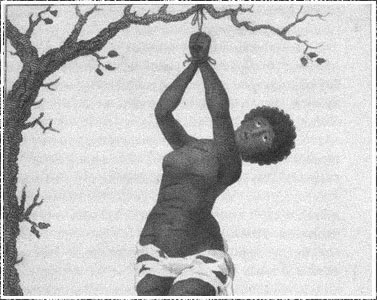
White perceptions associated sexuality with the uncivilised woman, as William Blake’s engraving for John Stedman’s 1795 polemic demonstrates.

Blake's anti-slavery engraving
William Blake’s anti-slavery engraving

Whilst the engraving was meant to highlight the barbarity and look of pain as the woman was severely punished, it also did much to whet appetites and reinforce negative racial stereotypes back in Blighty.

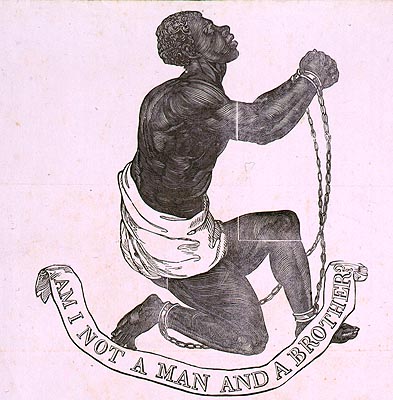
Josiah Wedgewood’s evocative anti-slavery icon made a blazon out of the enchained black male form, which soon became de-rigeur on pendants or brooches of the upper and middle-classes, no self-respecting salon or gathering was complete without a symbol of awareness of what was the burning issue of the day.

slavery1

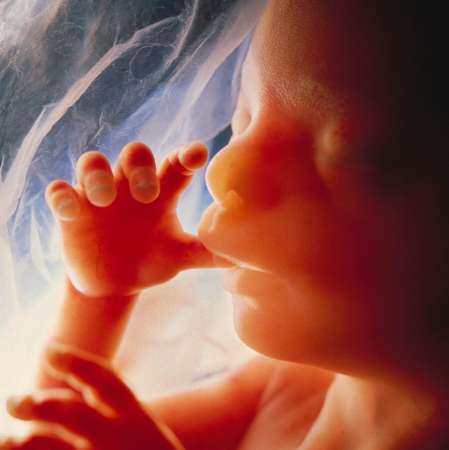
The same fetishisation is apparent in the pro-life movement. We too are not averse to making a blazon of the human form.

The iconic baby in the womb

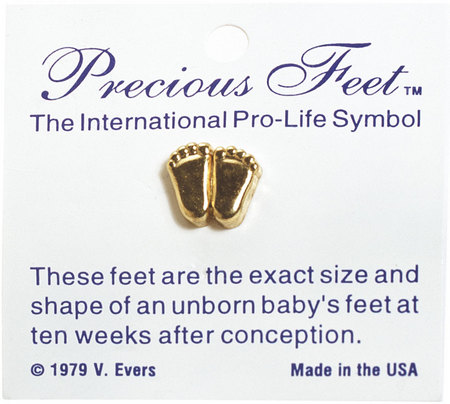
A quick click on Abort67’s website will display painful and distressing images similar to Blake’s portrayals of man’s inhumanity to man. SPUC’s tiny feet badges, an essential addition to the lapels of all Catholic clergy and laity, are today’s equivalent of Wedgewood’s medallions.

code_pfs_-_tiny_feet_pin_badge_32_1

This fetishisation is not necessarily a bad thing, but perhaps the lesson we can learn from the abolitionists is that of thoughtfulness. Whilst Wedgewood and Blake could not predict how future generations would interpret their portrayals, a note of caution needs to be struck. Visual reminders of the humanity of the unborn child are useful, but fetishisation is a form of objectification, we need to remember that though the portrayals of the unborn child in utero are always breathtakingly beautiful, the reason why is because this is human life in all its inspirational and awesome majesty. Christians will be reminded of the Incarnation, of how Christ humbled himself to become like us, this is the state that He once took, but we need to be wary of falling into the saccharine, ‘cute ickle baby’ trap, no matter how undeniably gorgeous the image. We don’t love each other or our children on looks alone, but because of who we are, because of that bond of common humanity, which we should nurture, respect and cherish regardless of whether one is a babbling newborn. And it is precisely this humanity, this solidarity that we have with all other human beings, that transcends barriers of age, social class, gender, race and creed that makes fetishisation so dangerous. The blastocyst is no less worthy of respect and yet it doesn’t easily lend itself to the pro-life cause, public imagination is not caught by the image of a cluster of mistreated and sometimes experimental cells, even though every single human being alive on this planet once had the identical physical form. We are not mere objects to be used in a utilitarian way, but people with our own unique destiny.

This is just what I looked like when I was 3 days old. Such a looker!

And of course, this is one of the difficulties of using images of aborted babies, although they can prove extremely useful. (This thoughtful non graphic article on the priests4life website that deals with graphic images is one of the best I’ve seen and closely reflects my own position). It takes wilful ignorance, sophistry and blindness to declare that the horrific photographs of the 24 week aborted baby was merely a lump of tissue. It’s also been extremely illuminating watching a friend attempt to pin down various hardcore Irish abortion activists who admit that even they are not happy with the concept of late-stage abortion, as to what stage they feel abortion would be acceptable. An answer has not yet been forthcoming.

Abort 67 are following in the footsteps of the abolitionists by trying to visually demonstrate the truth that is abortion. It’s a tactic that many have misgivings over, but the parallels are demonstrable.

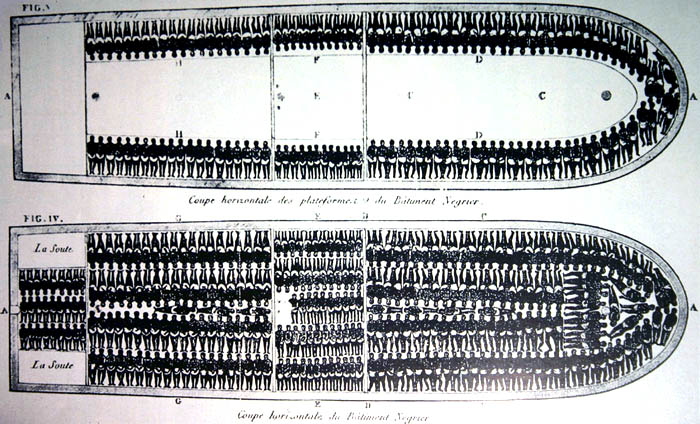
This image was in no way scientifically accurate or precise in its depiction, but its shock value was seminal in terms of changing the hearts and minds of the public and highlighting the cramped conditions on board a slave transportation ship.

SlaveShipBrookes

So why are today’s sharply precise medical images not having the same impact? One answer is de-sensitisation. We are bombarded with increasingly graphic images on a daily basis, perhaps we are becoming inured? If that were really the case, then the graphic images would not cause so much fury, although I do believe that due to advances in ultrasound technology, there is an increasing widespread awareness and acceptance of the humanity of the unborn. For all the talk about science, abortion remains an issue of ethics or rights for its defenders. Abortion is centred solely around a woman’s rights to choose, any thing else is obsfucation. Images of early-stage humanity cut no ice with those who are determined that the unborn must not get in the way of a woman’s chosen path. Which is why we see so much pent-up anger, rage and aggression, because so many of them know that their position is ethically, not to mention scientifically, dubious.

But I can’t help but wonder, given how entrenched abortion is, whether it’s time for a new tactic or slogan especially for those involved in ministry outside the abortion clinics? The medical and sometimes gruesome images should not always be avoided, (especially when lobbying politicians) but instead used with discretion. What are we in pro-life all about trying to achieve? A pro-life society that welcomes, accepts and embraces motherhood as being positive and a gift, for mother and child and society as a whole. I wonder whether or not it’s time for more carrot and less stick? Something that sends the right message, but is also overwhelmingly upbeat, bright and cheerful, showing precisely what is a stake, as well as presenting a positive and aspirational vision.

It certainly seems to have worked well in Ireland. Accusations of fetishisation can be levelled at any photo. But in this case we are envisaging the future, the potential, the joy instead of worshiping and making a blazon of a very specific bodily stage in all of our human journey.

Love them Both

Part 2 to follow

Solely a female issue?

I logged into Twitter yesterday to change some of my settings (never a good idea) and instantaneously the following came up on my timeline:

Screen Shot 2013-05-26 at 21.57.04

I instinctively re-tweeted it and Jill kept us updated:

Screen Shot 2013-05-26 at 21.58.20

Screen Shot 2013-05-26 at 21.58.46

Screen Shot 2013-05-26 at 21.59.10

Screen Shot 2013-05-26 at 21.59.02

Screen Shot 2013-05-26 at 21.58.55

Screen Shot 2013-05-26 at 21.58.36Screen Shot 2013-05-26 at 21.58.28

Screen Shot 2013-05-26 at 21.59.26

Somewhat predictably Jill was then attacked by some angry pro-choicers, but as her avatar indicates, she doesn’t take any prisoners.

A few thoughts. Firstly, thank God for people like this who give care and support to those who may be grieving. No doubt she will be accused of lying or interfering but they saw a man sat in his car crying over the imminent loss of his child and went to comfort him. Note there’s no ‘judgemental’ attitude towards the mother but support for a grieving man in his hour of need.

What would the feminists say to this man? ‘It’s not really a baby? Her body, her choice. It’s between her and her doctor’? Or would they eschew their ideal of a man in touch with his emotions and tell him to ‘man up and be strong’.

There can be no better illustration of the fallacy that abortion is solely a woman’s issue, centred around the bodily autonomy of an individual. The unborn child is not a part of the woman’s body, the baby and the placenta have a unique DNA wholly separate to that of the mother. Does this man not have a right to grieve? Is it really fair not only to deny him the chance of fatherhood but also the baby the chance of life? How can one person take a decision that will decimate the lives of at least two others?

The notion that abortion is solely a woman’s choice is even undermined by the abortion lobby themselves. Consider the following from the Education for Choice ‘Abortion education toolkit’. 

If a young man has or goes on to have experience of unplanned pregnancy with a partner, it is important that he knows who he can talk to and where he can go for help and support, as well as being able to signpost his partner to appropriate agencies. This is especially important when a couple are not agreed about what the outcome of a pregnancy should be, which can be a very difficult situation for a young man to face. Signposting to young men’s services is an important part of abortion education. 

So it isn’t solely a woman’s issue after all then? If Education for Choice are concerned about how to support young men whose partners decide to keep a baby against their will, presumably they wouldn’t have any objection to them being referred to pro-life organisations? One can only imagine the outcry.

If men are allowed to moot abortion as a solution to women and should be encouraged to support, encourage and facilitate otherwise reluctant women in their decision to abort, then there should be no problem with them doing all their power to persuade and facilitate women who may be considering abortion, to change their minds?

But this is where the angry and often facile slogans about a woman’s right to choose what happens to her body come in to play, the baby’s inability to give consent to having their bodily autonomy violated is now  irrelevant and unimportant. As is the man’s right to decide what happens to 50% of his DNA. Rhetoric evoking violence, about a woman being ‘forced’ to be pregnant and give birth, is employed.

But how many women really are ‘forced’ to give birth against their will, compared to the amount of women who are forced to abort? It’s a bizarre concept, that the absence of an invasive surgical procedure amounts to physical force. The reality is that most women feel forced to abort through a combination of personal and economic circumstances. Most women testify that they did not feel able to mother a child due to a lack of support. That’s a very different prospect to ‘choosing not to be a mother’. Upon seeing the two blue lines on the pregnancy test, the first reaction of  a woman facing an unplanned pregnancy  is not a ‘shall I/shan’t I keep it’. She doesn’t toss a coin or choose an abortion as a ‘lifestyle choice’ because motherhood is currently in or out of vogue. Women who end up outside the abortion clinics are there because they see it as their only option, and frequently because its very existence enables others to put pressure on them to take a ‘responsible’ option. 64% of women having abortions said they had felt pressure to abort.

It is a known fact that domestic abuse either commences or escalates during pregnancy. Are these really the actions of men who are forcing their partners to give birth, or more likely, immature and resentful men lashing out because they will no longer be the focus of attention? Whilst its clear that domestic abuse in pregnancy is due to a bully picking on someone at a time that they are vulnerable, a woman who is having a baby against the will of her partner is at far more risk of domestic violence, than one whose partner wants to nurture and support the pair of them.

If abortion was not just another ‘choice’ open to pregnant women, I wonder how many women really would feel that they were being ‘forced’ into pregnancy and childbirth against their will? If abortion was not an option then surely men would begin to see the duty of care that they owe to their sexual partners as potential mothers of their children?  If abortion was not an option then how much more pro-life, child-friendly and family-centric would we be as a society? If women were genuinely terrified about the consequences of pregnancy then we would see far fewer unplanned or crisis pregnancies. If men knew that sex could land them with a lifetime of moral responsibility towards the women they casually chose to sleep with, not to mention eighteen years of financial responsibility, then they would be a lot more circumspect in their attitudes.

By deeming abortion a woman’s issue the entire responsibility for the consequences of mutual sexual activity is dumped on her doorstep, regardless of her decision. The only time she should have to pull the bodily autonomy card is when it comes to resisting the pressure from others to abort.

I’d love to know what the response of radical feminists would be to the tears of the poor man above who faces a journey of healing. His comfort must lie in the metaphysical and entrusting his baby to the Lord’s gentle and severe mercy.

www. fatherhoodforever.org run a healing ministry for fathers who have lost their children to abortion.

Middle class mothers and MMR

MMR

Those who have ventured onto any mothers’ forums will know that the two topics most likely to end in tears, tend to be those surrounding maternal choices, such as breast versus bottle, methods of childbirth and whether or not to vaccinate.

It’s hardly surprising as these are all choices that every parent has to face at some point or another, we are emotionally invested in our side of the debate, we’ve given the matter considerable thought and are convinced that our choices are the right ones, that have been taken in the best interests of our child. Part of the nature of the human condition is that we all too often seek validation in the opinions and actions of other people and are therefore unable to cope when disagreement rears its head. A decision that runs contrary to our own, implicitly undermines our own judgement – what could be more emotive than the question of whether or not we have done the right thing by our children?

Before I go any further, I’ll set my stall out, in order  to invite condemnation/approbation on myself as necessary. All of my children have been vaccinated according to the NHS schedule of immunisations.

The issue of whether or not to vaccinate one’s children, is related to that of the pro-life cause. Rubella in pregnant women can cause miscarriage, stillbirth as well as the following birth defects – hearing loss, brain damage, cataracts and heart problems. Measles can prove equally dangerous. Mumps can cause a higher risk of miscarriage. Furthermore the MMR II Vaccine used in the UK was derived and developed from foetal tissue. Whilst the vaccine itself does not contain foetal tissue, we are not unwittingly injecting children with cells from aborted babies, the cell lines used to create the vaccines were derived from two aborted babies. This is, therefore morally problematic. This does not mean that Catholics should not have their children vaccinated, the Pontifical Academy for Life issued a statement to the effect that innocent children must not be put at risk, particularly in the case of a disease such as rubella, and thus vaccines can be used if there is no available alternative, however parents have a moral responsibility to use these where possible and also to continue to put pressure on the pharmaceutical industry. Here is a link to a website containing a list of which vaccines are derived from aborted foetal tissue and alternatives, most of which are not available in the UK. Sadly I was only made aware of the ethical difficulties involved in the manufacture of the vaccine, a few months ago, the day after my third child had received her MMR shot.

Cristina Odone wrote a particularly irksome piece yesterday, which discussed the current measles outbreak in Swansea, Wales and laid the blame squarely at the door of the middle-classes who, Odone argues, believe that their offspring are more precious and special than everyone else’s and so don’t vaccinate. The article displayed, to my mind, some unacceptable class prejudice, lampooning middle-class consumer choices as springing from a sense that they are somehow special and stating that the middle-classes secretly loved the MMR/autism scare as it validated their sense that their offspring are better than everyone else’s.

The article particularly stung for a number of reasons, not only did I recognise some of my preferred consumer choices listed, but also I was one of the parents who agonised over the decision over whether or not to vaccinate. Actually I think Cristina was entirely misguided, the reason that if I could afford to, I would shop at John Lewis, or buy the childrens’ clothes from Boden or Joules, is not because I think their products are particularly special or luxurious, they don’t pander to narcissism, but put simply, those brands tend to be understated, not especially flashy (although in the case of children’s clothes, distinctive) but mainly because they are of good quality and so last. One knows that John Lewis’ customer service is of a consistently high standard, they stand by their guarantees and treat customers well; likewise with the children’s clothes retailers, products tend to have a much longer shelf-life than their cheaper alternatives. So in the case of the children, a piece of clothing bought 9 years ago, is still in pristine condition on its 4th baby. Nothing to do with whether or not I feel my children to be special, it’s more a question of economy.

There were other unfair generalisations (both to middle and working classes) such as stating that the middle class tend to prevent their children from taking risks, and they were more likely to read or talk to their children and nurture them intellectually or feed them the requisite 5 a day portions of fruit and veg. Whilst its true that income can sometimes be a barrier to eating healthily, it doesn’t automatically follow that those on low incomes do not give their children a good diet or neglect to read or talk to them. Having money is no indicator of ability to be a good parent, this is an attitude that should be challenged.

Most parents, regardless of social class, believe their children to be special and wish to protect them from harm. All of us were alarmed by the MMR scare, which received widespread national publicity. Whilst every activity in life carries innate risks, in the case of immunisations, one is having to actively undertake a risk balancing exercise – taking one’s child to be injected requires one to be pro-active, in the sense of having to make the appointment and undertake the journey to the doctors. I suggest that this is one of the reasons behind the decline in the vaccine uptake, particularly in Swansea which isn’t noted for being an affluent middle-class area. Parents need to be wholly convinced that this is the right decision for their child, the newborn baby jabs are scheduled between the ages of 8 and 16 weeks, when one is in the post-natal baby haze, checking the baby every 2 minutes and it’s easy enough for the health visitor or midwife to jolly one off to the clinic, especially when the diseases vaccinated against are as serious as meningitis. It’s every parent’s instinct to want to protect their child from harm and thus most people don’t need much persuasion when it comes to vaccinating their fragile little newborn.

By the time the child has reached 13 months, the age at which MMR is administered, equilibrium has been recovered. People need active encouragement that there is an imperative to vaccinate. For people of my generation, who remember having mumps and German Measles as children, these diseases seem of little consequence, despite the fact we are told, that they have now mutated into something much nastier. The success of the MMR vaccine hinges solely on the fear of measles, which can have devastating effects, especially if one’s immune system is already compromised in some way. My sister had measles as a child and almost died by all accounts. For most parents it’s the risk of measles, versus the risk of the MMR and so passivity or procrastination often seems the best option.

With the withdrawal of the patents for the single vaccines, parents now have very little option, it’s either all or nothing. Whilst the arguments against the single vaccines are valid, i.e. it requires mutliple appointments which most parents don’t attend and there is the risk that a child could catch one of the diseases between vaccinations, to my mind, the government’s decision to remove this choice seems authoritarian and spiteful. No-one is demanding that the NHS gives single jabs, but there was no need to remove the option for private patients. For those who might argue about the difficulties of multiple appointments, I would argue that anyone who is concerned enough to seek out the option of single jabs, will not be taking a slapdash attitude towards their child’s health. Single jabs might well have reduced the severity of the outbreak – we’ll never know.

Andrew Wakefield has been thoroughly humiliated and discredited, but that does not mean that parents who decide against MMR should be vilified as selfish or ignorant. There are still legitimate concerns about MMR, in that many parents have horrifying testimony of the immediate effects of the vaccination upon their child, such as temporary paralysis. From my perspective, all of my children have been absolutely fine in the long-term, but they have all been extremely fractious and ill-tempered in the aftermath. But then again, when the MMR is administered, it’s not on its own. They get the MMR in one thigh and the Hib,  Pneumococcal (PCV), and Meningitis C in the other. So that’s 6 doses of vaccine all in one dose. No-one is suggesting that it’s not safe, however all vaccination is counter-intuitive and it seems a heck of a lot to inject into a little 12 or 13 month old child, who may not even be walking. When my eldest had her MMR booster, aged 5, she described how it stung and burned as it went into her. Apparently that’s a common sensation. So it’s pretty tough on parents who have to watch their child receiving a painful injection, hoping that its going to protect them from a much worse evil, and yet knowing that many people believe this to be harmful. Most of us pray that it’s going to be alright and not cause them any ill-effects in the short term, though it’s hard when your child is spiking a temperature as a direct result of their immunisations.

As Catholics, we are not statists, we don’t believe that the government or state can dictate the precise healthcare or education of our chidden. The story of my eldest’s vaccinations is a cautionary tale. Shortly before they were due to be administered I read about the thiomersal scare, in one of the newspapers. Thiomersal being the mercury based preservative, which was being linked to nerve damage and autism. (This has since been discounted in a study). I therefore specifically requested that my child received Thiomersal free injections. The Health Visitor agreed and made note, informing that since I had requested this, then my daughter would receive the vaccines. What would have happened had I not requested, I asked. “She would have received the version with the thiomersal in”, said the Health Visitor. “This is being phased out, we are switching to the new Thiomersal free vaccine, but we need to use up our stocks, so we are only giving out the new version to those who specifically ask”.  Furthermore, when my eldest was vaccinated as a baby, she was given a 3-in-1 injection. This has now been ramped up to a 5-in-1, together with a separate dose of PCV. As I said, it seems like a lot of pathogens to be loading onto a delicate 8 week old immune system, especially when babies can vary so much in terms of size and weight.

Understandably, the authorities charged with public health take a utilitarian attitude towards the population. Most children will be alright as a result of their vaccinations and they stress that we have a civic duty to protect the weakest. That’s all very well and good, but what when it’s your child who is the one affected, as people claim they have been?

We shouldn’t rush to pillory those who don’t vaccinate their children, or try to label them (I’m guilty of this, I live in Green Brighton which has a very low uptake) because though passivity is often the easiest course of action when faced with a dilemma (it’s easier to do nothing), I know of many highly intelligent, well educated and medically literate folk who have not vaccinated. It is impossible to make a fully informed choice because as @battlementclare, a qualified midwife notes, “there have been no rigorous long term studies into the effects of hyper stimulating the immature neonatal immune system with multiple foreign antigens & adjuvants known to be neurotoxic. I have to wonder whether, in protecting children against some diseases, we are increasing their likelihood of developing auto immune disorders later.” This is all true, the decision to vaccinate centres around a balancing of risks, with the additional factor that there are ethical problems inherent for Catholics in using vaccines derived from aborted foetal cell lines.

One can’t actually do right for doing wrong on this issue, my feeling has been to vaccinate, not least due to living in areas which have experienced measles outbreaks, but every time it has been with a heavy heart. After all no-one, regardless of their social class, (I suspect many of Cristina’s middle class stereotypes would probably fall into the new ‘precariat ‘ in any event) wants to inject their child with something that they have heard on the news or read in the newspapers, or anecdotally from a friend, could do their child harm. This is what Andrew Wakefield tapped into quite so successfully.

But on another note, Cristina’s article, irritating as it was, carries lessons for those of us fighting to get our point of view acknowledged and acted upon, in areas such as pro-life or the defence of marriage. It initially made me very angry as I perceived myself to be the object of undisguised scorn and contempt, identifying a little with some of her use of consumer brands, and having once being described as “all white teeth and Boden”. I guess I experienced some of what same sex couples feel when they read various pieces of unkind polemic, such as that written by notorious journalists or unkind bloggers, attacking people and their motivations, by virtue of their lifestyle. It’s a reminder to us all to play the ball, not the man, if we’re talking about why marriage shouldn’t need to change, there is no need to launch into a personal attack upon people of goodwill.

The same applies with abortion. Whilst we should always condemn the act, we need to understand and engage with the reasons behind abortion, as well as exercise understanding and compassion to those women who have aborted, instead of casting scorn, doubt and shame upon their motivations or lifestyle, particularly if we wish them to engage and have a conversion of heart. Just like Cristina’s piece on MMR, instead of considering the very good reasons that exist when it comes to vaccination, I was left feeling defensive for having worried about it, angry and not inclined to think well of Odone. It was highly counter-productive.

Ultimately every single parent is well aware of their child’s flaws or shortcomings, but we still love them fiercely and protectively no matter what and want to keep them safe from harm, whether we are members of the royal family, or on the very margins of society. Every parent is entitled to think their child is special, it’s called love and is what keeps the world turning. I’m sure there’s a metaphor about God in there somewhere.

All white teeth, Boden and middle class, but not a piece of rocket in sight... "The Vicar's Wife give her kids fruit shoots"!
All white teeth, Boden and ‘middle class’, but not a piece of rocket in sight…
“The Vicar’s Wife gives her kids fruit shoots”!

Too close for comfort

depressed_woman_c-200x200

I have a confession to make. In tweeting up a storm about the media blackout surrounding the trial of Kermit Gosnell, the Philadelphia abortionist who reportedly snipped the spines and cut the throats of babies born alive following late term abortions, I was actually being very hypocritical. I knew about this story some time ago, having seen it mentioned by US pro-lifers as well as reading about it last month in the Daily Mail and yet refrained from writing about it and raising awareness.

I’ll forgo the false modesty, I know that this blog is, on the whole, highly regarded in pro-life terms, I also know it is referred to by pro-choice advocates and activists and read by BPAS, Marie Stopes and, according to my stats, IP addresses that emanate from inside the Houses of Parliament. Over the last year, it’s become increasingly apparent that I do have a platform, which I need to remember to use wisely.

So why did I neglect to do my bit here?

1) I was scared. Last year when all the bullying nonsense was occurring, a certain tweeter was repeatedly (and falsely) claiming that I was a member of Abort 67, “an extremist, a bad egg, a fake pro-lifer who doesn’t care, who must be flushed out of the pro life movement”.

I’m not a member of Abort 67, but I’m not ashamed to state that I have enormous respect and admiration for their courage and what they are trying to achieve. Andy Stephenson doesn’t just sit about writing polemic on the Internet or chew the philosophical fat in smokey pubs, but he dedicates his entire life to trying to show people the horrors of abortion, at times risking his own personal safety and even his liberty, when he was subject to an illiberal and misguided prosecution.

Whilst I might have some reservations about the tactics of showing images outside an abortion clinic, actually I have no problem with the way Abort 67 try to reach University students on campus or lobby politically, such as outside the Houses of Parliament or at Speaker’s Corner. But I was worried that by talking about the grisly horrors of Gosnell, and the pickled human feet found in storage jars or dead babies in the freezer, I might be perceived as a sensationalist or extremist. The only coverage I’d seen was in the Daily Mail, a publication that garners much deserved disdain at times, I hadn’t read the Grand Jury report and was concerned that I would be accused of scare-mongering or spreading inaccuracies. A major tactic of pro-choicers (as I will demonstrate in a subsequent post) is to attempt to bamboozle with science and stats, nit-picking to the umpteenth degree and attempting to use semantics, in order that they can scream “liar”. I didn’t want to put my reputation on the line, or be seen to be posting graphic photos or perceived to be revelling in gore.

2) The other reason and perhaps most importantly, was that I didn’t want to think about what had gone on in Gosnell’s abattoir or engage with it. I’d read the reports and recoiled with horror. It was literally unbearable and had the capacity to drive me mad. No doubt the pop psychologists and misogynists will liberally apply the ‘hysterical’ label, but stories regarding the twisted and bloodied corpses of murdered babies, are too close to home for a woman who has had three babies in the space of as many years.

I saw the photograph of one of Gosnell’s victims which appeared without a prior warning, in yesterday’s Atlantic and had a meltdown. The photo depicted a beautiful baby girl, with a full head of black hair, all her features perfectly formed, bizarrely, her umbilical cord had been cut and clamped, and she bore a startling and uncanny resemblance to my youngest baby daughter, and in fact all of my children who were born with lustrous heads of hair and tiny delicate little features. Except she was lying there, lifeless, motionless, dead and cold, having been mercilessly killed by Grosnell, shortly after her cord was cut and clamped and she was breathing. She would never again twitch, her hands wouldn’t uncurl, her limbs wouldn’t fling out in the startle reflex, her mouth would never root around for the comfort of a nipple or teat, she would never have known the comfort of her mother’s, or any human arms, her life consisted of being prematurely forced out of her mother’s womb, then disorientated and distressed from birth, longing for warmth and food, she was brutally murdered and left like a piece of rubbish on the cold hard slab of the abortionist’s table.

It was like looking a photograph of my own babies, particularly my youngest who was born early, weighing 5lbs, less than one of the little boys who was killed, and whom Gosnell jokingly referred to as being big enough to walk to the bus stop. Like this baby, my own baby was tiny, with fragile spindly limbs and swamped by the smallest size nappy. Even the colour of the clip on the umbilicus was the same.

I broke down. There were no words. I usually grab snatches of Twitter or the net on my phone or tablet, often whilst cooking, and the initial response was like being hit in the stomach. I curled up in the foetal position on the floor by the fridge in floods of tears, completely unable to process either the image or my response to what had happened. There was a mixture of overwhelming grief, sadness, anger and despair. I wanted to kick the living daylights out of this man and anyone who may have aided or abetted him in any way. That feeling still hasn’t dissipated, nor have the questions – namely, how on earth could the people working in the clinic have brought themselves to do this, what made them so damaged as individuals that they were able to justify and disassociate themselves from their actions? How could they have become so desensitised to what was going on? What kind of society are we living in when we can allow this to happen and where most people are happy that the media do not report it?

Yesterday was a concrete manifestation of why I had deliberately avoided engaging with this and so writing about it. Because I didn’t have the courage, it was too close to home and I didn’t think I had the emotional resources to cope. I had a very disturbed night’s sleep last night and I still am struggling to rid my mind of those dreadful images as well as deal with the emotions they invoke, which make me want to do terrible things, tear my hair and clutch my head in horror. Whenever I read about dreadful cases of child abuse or murder which crop up depressingly frequently in our national press, it churns me up inside. I cannot envisage what might motivate a person to do such odious things to a little child, and it terrifies me that people can often lose control in such a way that they inflict and violate little children with acts of sickening violence and depravity. Any parent who denies having the odd flash of anger, is either a genuine saint, or lying to themselves, all of us occasionally, at the end of our tether, might speak a little more harshly to our children than we should, but what is that forces a person to cross that line and inflict acts of utter sadism? And the worst most harrowing thing, is imagining the terror and pain experienced by these little ones. Imagining their trusting little faces and lack of comprehension and fear as they are repeatedly battered or worse.

I can’t stop myself imagining the brief painful lives of these little babies, treated as human waste, what they must have gone through, and also the agonies endured by the women, many of whom suffered life changing injuries, permanent infertility, infections and two of whom died. No matter how opposed one is to abortion, we shouldn’t forget the ordeals suffered by the women, most of whom were vulnerable, either by virtue of age, or socio-economic circumstance. No woman would chose to give birth to a live baby to have him or her murdered in front of her eyes. Most women have no idea of what is entailed in a late-stage abortion until it is too late, and I would wager most women going for an abortion have no idea of what to expect, everything is couched in such vague clinical terminology involving ‘products of conception’.

I eschewed writing about Gosnell, because I didn’t want to have to process this emotionally, or deal with the horror, the images or the reaction that they would invoke. Much easier to stick one’s fingers in one’s ears and pretend that it doesn’t happen, or that this is simply an one-off aberration and not think about tiny bodies beheaded and contorted in pain, or women giving birth amongst animal faeces, with filthy tubing used for both inter uterine suction and breathing purposes and freezers and storage jars full of neonates or neonatal body parts.

I suspect that’s one of the reasons for the media blackout. Some things are just too repugnant to bear. We often read about sadistic crimes, such as those of cannibal killers, for example, or serial murders, with a sense of detachment, we can look at these monsters clinically and though be disturbed by their crimes, have a sense that these sorts of crimes are relatively rare and won’t happen to us. With Kermit Gosnell it’s different, in that he and his staff genuinely didn’t seem to have any awareness that what they were doing was in any way immoral and neither did anyone seem to wish to report it. These atrocities occurred at a state licensed abortion facility, which went un-inspected for 17 years due to the pro-choice policy of the Republican Governor of Philedelphia, Tom Ridge. This wasn’t something that just happened to people who had an unfortunate encounter or mixed with the wrong sort. This was something that happened to women who exercised their free and legal choice in one of the most developed and civilised countries in the world. This is what abortion entails. The wilful destruction of innocent human life, depriving babies of their basic right to life in an act of brutal violence, whether inside or outside of the womb. Every single member of humanity, every single person reading this post, has something in common with Gosnell’s victims, we all began the same way, we were all blastocysts, developing embryos and unborn babies too. We all went through those same stages of life, only we escaped the abortionist’s instruments because we were the lucky ones.

And like the media, and like those who knew but didn’t think to report, I sat on this story too, for my own selfish reasons, born out of fear. It once again proves Burke’s adage – all that requires for evil to triumph is that good men do nothing.

Does the Church need to renew its relationship with women?

Hot on the heels of the initiative which allows Catholic women to pledge their support for Catholic doctrine (the aim of which is to present Pope Francis with a significant number of signatures as well as present a forum for Catholic women and apologetics), Catherine Lafferty has written a piece for the New Statesman’s version of Comment is Free, which suggests ten ways in which Pope Francis can renew the Catholic Church’s relationship with women.

It is no secret that I have personal issues with Lafferty. Many people witnessed her behaviour towards me last year when I was pregnant, with alarm and dismay. The episode caused considerable distress and much prayer is needed because I still struggle with forgiveness and coming to terms with it all.

This should be borne in mind when reading my critique of Lafferty’s piece – this isn’t about ad hom or personal attack, I wish to lay my animosity to one side and engage with and critique what was written, but it should be noted that perhaps understandably, I find it extremely hard to be objective towards someone, who I believe caused actual harm to my health and that of my unborn baby with a campaign of unfounded and malicious allegations and whose repeated presence in my timeline has been an occasion of sin at the start of the Triduum.

The article’s premise is that the Church needs to renew its approach to its female followers with regards to sex and reproduction. This would seem to be a little misleading, not least because it implies that the Catholic Church somehow needs to change its doctrine, something which is impossible. Secondly, it buys into the myth that most Catholic women are unhappy with the Church, especially in relation to the doctrine on sex and reproduction. This is a myth that I’m looking to disprove.

If women are unhappy with Church doctrine on these issues, the blame can largely be laid at the door of poor or inadequate catechesis. This would certainly be an area that one could argue is in need of renewal, but the Emeritus Pope Benedict did much in terms of sowing the seeds in this regard. The growing Juventum movement is packed with young women as well as men. A newer, younger generation of orthodox faithful Catholic women is emerging. Before claiming that the Church needs to take action to renew its relationship with women, some evidence as to this fractured relationship needs to be provided. A more accurate assessment would be to say that the Church needs to engage with lapsed Catholic women and evangelise better. It needs to send positive and joyful messages of female sexuality as well as remind everyone of the beautiful teachings of John Paul II, in Theology of the Body and Mulieris Dignitatem.

Here’s my take on the some of the suggestions:

  • Use the reform of the Curia to promote female excellence in the corridors of power. Hard to argue with this one, it’s a point that I have argued and would do much for the Vatican in terms of its perception. With that it mind, it should be remembered that the pursuit of power is not a goal that should be encouraged, for any Catholic in good conscience. Secondly, whilst female excellence should be encouraged, the Vatican needs to be extremely careful to ensure that it does not engage with secular identity politics that are contrary to Catholic teaching which teaches that our identity lies in our dignity as created beings in the image of God. If women are promoted it needs to be because they possess requisite competence and fulfil the criteria of any given position, not solely because of their sex. Woman quotas should be avoided because they are a form of unfair discrimination and buy into the idea that the Catholic Church is somehow oppressive or patriarchal as demonstrated by the priesthood. Whilst it would be good to see more women in the Curia, this should not be for the sake of political correctness. The Catholic Church is not a political party or democratically elected institution.
  • This bureaucratic reform should be extended downwards to Bishop’s Conferences and diocesan offices, which should also become more efficient and productive with professional staff and dragged out of ‘sleepy backwaters’ with a similar drive for female excellence. This seems primarily a comment on the Catholic Church in the UK. I’m not sure that the same could be said of other countries, such as America for example, and who knows what the situation is in the far-flung corners of the globe. We need to be wary of accusing hardworking diocesan staff of ‘complacency’ or not doing their jobs properly. Many dioceses, such as Portsmouth have in fact, recently undergone restructuring, the Catholic Church works on a model of subsidiarity to which diocesan bishops are key. Where failures are identified, it should be up to the individual bishop to take appropriate action, rather than for centralised guidelines – every diocese will have different requirements. Furthermore some of the staff working in and supervising diocesan offices are stipendiary priests who are unpaid. Many parish secretaries, admin and finance staff are also unpaid volunteers. Instead of replacing them with a professional bureaucracy, which will prove costly, additional training would seem to be the answer in areas where there are gaps in knowledge or experience. There are admittedly diocesan roles that require paid professionals, standards matter and dioceses do conform to employment laws and norms, so I think we need to be careful before making sweeping statements or wholesale accusations of inefficiency. The same sentiment as above would apply when it comes to promoting female excellence. Replacing priests and unpaid volunteers with a professional bureaucracy would cost a considerable amount of money at a time when we know that many dioceses are running a deficit. In any event most diocesan offices are filled with the laity.
  • Turn all Catholic workplaces into centres of excellence for family-friendly employment. How do we know that this is not already the case? I can think of several positions in my diocese which are staffed by women and are part-time or job-share. As employers, Bishops are subject to UK laws with regards to unjust discrimination when it comes to employment and would legally need to demonstrate that they have the relevant policies in place, which means amongst other things, that women returning from maternity leave will already have the right to request family-friendly hours and parental leave. When it comes to building creches, that is entirely dependent on the size of the plant that a diocesan office may occupy as well as number of staff. There doesn’t tend to be a high staff turnover in diocesan offices, so a creche could quickly become obsolete.
  • Take a lead in providing affordable childcare. The Catholic Church teaches that couples should be open to the gift of life, a principle which is made harder to live up to by women’s economic needs. Lovely idea in theory. Pie in the sky in real life. The Catholic Church does teach that couples should be open to the gift of life, but she also teaches that parents should be the primary educators of their children. A mother’s economic needs revolve around providing food and housing for her children. Ideally speaking a woman should have the choice as to whether or not she wishes to work, countless surveys demonstrate that most mothers yearn to be at home with their children. Jonas Himmelstrand, a Swedish sociologist, is reporting that psychological disorders in children have trebled in Sweden, widely held up as being a childcare utopia, where over 90% of children under 3 attend full time nurseries. Having children in full-time childcare should not be encouraged. It is not in the common good to encourage or promote a system whereby mothers have little choice other than to become wage slaves. That mothers have always worked is undeniable, but traditionally women needing extra income did this inside the home, whether it be by a bit of extra farming, being a nursemaid, taking in ironing, sewing, craftwork etc. Whilst that is admittedly out of step for today’s era, the rise of the mumpreneur, or woman who works from home, whether that’s freelance writing, running a business on ebay, or whatever, shows that this is still seen as an ideal. Women should be their own bosses, as they always have been, working on their own terms, providing for themselves and their families in a way that fits around family commitments, and not wage slaves to outside employers, trying to split themselves between two masters. Ultimately, it tends to be the children who suffer, when mum has to put them in wraparound care 5 days a week, in order to keep working for an implacable inflexible boss who pays the wages.
  • Aside from the fact that the Catholic Church lacks the resources to provide free or cheap Catholic nurseries and ignoring the fact that such a practice would inevitably fall foul of laws regarding discrimination, there would bound to be some vexatious litigation surrounding the nature of such provision, encouraging mothers to put their children in nurseries would not renew the relationship with women, but could cause alienation and resentment. The Church would be sending a very definite message as to the desirability of work, and no nursery, no matter how wonderful or gleaming the equipment or activities on offer, can replace a mother’s unique love and care. Children aren’t objects, they should not be viewed as barriers or commodities to financial or economic success and to put one’s own self-fulfilment on the same level as their welfare, is directly contrary to church teaching. Whilst the Church recognises and argues that women should have equal access to public functions and roles, speaking in Familiaris Consortio, John Paul said this

While it must be recognized that women have the same right as men to perform various public functions, society must be structured in such a way that wives and mothers are not in practice compelled to work outside the home, and that their families can live and prosper in a dignified way even when they themselves devote their full time to their own family.

Furthermore, the mentality which honours women more for their work outside the home than for their work within the family must be overcome. This requires that men should truly esteem and love women with total respect for their personal dignity, and that society should create and develop conditions favoriung work in the home.

  • The Catholic Church can plough funding for research into fertility management which complements rather than compromises its core principles. No need for this. The technology, already exists, NFP methods such as Creighton are 99% effective. Pope John Paul II singled out the Pope Paul VI Institute, who are world leaders in terms of reproductive technology for special praise and worthy of support. Catholics have to accept however, that no method of contraception is 99% effective, and whilst couples may have serious reasons not to add to their families, they must also tread a fine line in terms of not falling into a contraceptive mentality. Where the Church needs to do better is at communicating its message on human sexuality to young men and women, which really needs to start at grassroots level. The technology exists, it’s just not promoted heavily enough and neither do many priests do a great job in terms of preaching about contraception or promoting the alternatives. Likewise NaPro technology, has success rates far and above those of IVF, treating the underlying cause of which infertility is just a symptom. A fertile married couple has to regularly think and pray when it comes to the issue of whether or not to add to their family, and not simply use NFP as an alternative form of contraception. It involves a wholly different mindset.
  • Put women and their needs at the heart of its Pro Life activism. This is what happens now. Organisations such as the Good Counsel Network and LIFE Charity do just that in terms of their activism, campaigning and actual pro-life work. A creaking Pro Life lobby is ill-equipped to consider why women opt to have abortions and what they need to continue their pregnancies willingly. The pro-life lobby in the UK may be creaking, but there are certainly signs of healthy rejuvenation, such as in the recent foundation of the Alliance of Pro-life students and the success of the 40 days for Life movement. Speaking at the launch of APS, Eve Farron their founder, explained how they made common cause with feminists on campus and forced campaigning and provision for pregnant students at certain universities to be drastically overhauled, so that students with a crisis pregnancy were presented with actual realistic options enabling them to keep their baby and continue studying. Again the Good Counsel Network help women on a day to day basis, they are well versed in the multitude of reasons why a woman may find herself at the door of an abortion clinic and provide help accordingly. A pro-life movement that lacks cohesiveness will find it hard to gain political traction, but that doesn’t mean that it is unable to discern why women may abort. Pro-life work does need to consist of a political element, not simply in terms of legislation surrounding abortion laws, but legislation to enact a society that is open to life and the needs of pregnant women, but this is not its only role. For Catholics, pro-life work consists of prayer, politics, practical action and PR. The pro-life movement is at its strongest when we recognise and hammer home the message that a life is a stake here and the injustice of abortion, to mother and child. Politicians will respond to the will of the people and even SPUC, an organisation of which I am highly critical, is extremely effective at marshalling and consolidating grass-roots support. This is vital.
  • as tough on the causes of abortion as abortion itself. Good soundbite, albeit a modified version of William Hague. But we need to very careful here. Whilst society must clamp down on those factors that contribute to a woman’s feeling that she has little other ‘choice’, the causes of abortion are very often complex, there is not one single factor. Women who abort their babies are not two dimensional creatures simply exercising a choice because they can, or because they see it as a form of contraception and not the taking of a life. Whilst some women undoubtedly do view abortion as a trivial matter, many don’t and abortion is arrived at via a contribution of factors, not least a society that advocates and promotes abortion as being ‘no biggie’ and certainly not something that one should feel guilty about. Whilst we have to work to bring about an elimination of those factors that conspire to make a woman have an abortion, human history shows us that there will always be women who feel they have reasons to abort. We cannot concede that a reason to abort is a justification and neither should we be giving any fuel to the notion that until reasons to abort are demolished, then abortion itself can be tackled. When we consider the causes of abortion, we have to be extremely careful not to play into the hands of pro-choicers, who will argue that abortion has always existed, there will always be a good reason to abort and so abortion must be safe and legal. People will always want to engage in destructive behaviour, sadly there will always be those who are compelled to hurt their fellow human beings and themselves, but that does not mean that society should legislate, normalise and accept harm, on the premise that it is a lesser evil. Whilst we must be tough on the cause of abortion, we must not lose sight of the fact that abortion is, to use the hated words, a moral evil. That does not mean that women who have abortions are morally evil, or of dubious character, but in our compassion, we must not forget what abortion is. We must continue to be tough on it and not fall into the hands of well-meaning pro-choicers who attempt to justify abortion. Being tough on various causes of abortion includes getting tough on lifestyles of sexual impropriety as well as on repeated abortions, and accepting that a woman’s judgement is not always sound or prudent, by virtue of her gender or reproductive organs. This is a always a flashpoint or bone of contention, no-one likes to be seen as finger-pointing or interfering in others’ sex lives, it plays into the Christian fundie fiddling with ovaries stereotype, but ultimately as Christians we are compelled to make moral judgements with regards to certain courses of action, including abortion.

The other points with regards to population control, education and women’s rights are fairly sound. But as I said at the beginning, the Catholic Church needs to be very wary about succumbing to identity politics. Women are signing up thick and fast at CatholicwomenRising to pledge their support for Church doctrine. To state that the Church needs to renew its relationship with women, implies that there is a schism, one that is only evident in the minds of the media. What the Church does need to do is continue to win souls of all ages, be they the elderly, middle-aged, or young. Part of this must involve evangelisation. But Church renewal is a question that each subsequent generation has to face – we have to enthuse our children and young people to lives of Christian witness and holiness. This is why identity politics is so irrelevant, because Catholic doctrine reflects that men and women were created equal but with different vital roles to play. Our strengths and weaknesses are disparate, we are not all one homogenous mass. The way we go about renewal is in two ways – firstly by how we live our lives and the examples we set to others, Pope Francis is leading the way here, and secondly by implementing decent catechesis and instruction at a local level.

That the Catholic Church in the Western world needs to find ways of countering the rising tide of secularism, atheism and the prevailing zeitgeist of individualism and renew itself is indisputable. But it has to start at catechesis and finding effective ways of educating its laity, be they male or female. Women friendly policies may make for fluffy soundbites in left-wing publications and make a convenient flag for Catholics to wave to show off their progressive credentials. But the New Evangelisation requires action that goes infinitely deeper.

Hijacking the Royal Society of Medicine

Royal Society of Medicine

BPAS are advertising a conference in June which they appear to be sponsoring, called ‘abortion, motherhood and the medical profession’. It seems a strange title for an organisation who is predominantly concerned with removing motherhood, but this conference needs to be called out for what it is. An attempt at co-opting the Royal Society of Medicine (RSM), in order to endorse abortion as being a matter of medical treatment when as a recent symposium on Excellent Maternal Healthcare noted in their press release, abortion is never medically necessary to save the life of a mother. 

Abortion is a medical procedure, hence the involvement of the RSM, but this conference will obviously be incorporated by BPAS into their promotional material, with the RSM being used as leverage, in order to endorse any findings or conclusions as being those of a  professional body or allegedly evidence-based. The RSM describe this event as a joint meeting with BPAS, which raises questions about impartiality, as well as funding. Have BPAS subsidised this meeting in any way? It probably falls under costs of marketing and PR, in their Profit and Loss account.

In case of any doubt, I’ll run through the programme of events and outline the credentials of the speakers:

Introduction and Opening remarks:

  • Mrs Joanne Fletcher, Consultant Nurse, Gynaecology, Sheffield Teaching Hospitals NHS Trust 

An impartial consultant nurse? Actually Joanne Fletcher was the publication co-ordinator of this document about abortion care for the Royal College of Nurses in 2008. Interestingly the document was sponsored by Exelgyn, manufacturers of the abortion pill, RU486, Bayer Healthcare, who manufacture contraceptives and abortifacients. So, absolutely no vested interests there whatsoever then? Back to Mrs Fletcher, not only did she co-ordinate publication of this document but she is also a member of the RCN group – ‘Nurses working within termination of pregnancy Network’.  So it’s obvious where she stands on abortion.

  • Ms Jennie Bristow, Publications and Conference Manager, British Pregnancy Advisory Service

Fairly straightforward who this lady is, she’s in charge of commissioning and publishing research and organising conferences that promote abortion such as this one.

Foetal imaging and imagining the foetus:

This session, is chaired by Clare Murphy, Director of External Affairs at BPAS. She used to tweet as @clare_bpas before deleting her account in favour of a more professional generic BPAS account. I remember her tweeting about the appearance of some of those on 40 days for life – if one can be bothered to search through the blog, I’m sure there’s a tweet somewhere about her deriding the colour of tights of a volunteer, but again, I think we all know where Ms Murphy stands when it comes to abortion.

What intrigues me is why she is chairing a session on foetal imaging and “imagining the foetus”? Is she some sort of leading expert in the field of foetal imaging and diagnostics? Is she a qualified sonographer? My understanding is that she’s been promoted up from her original role within PR at BPAS.

What is imagining the foetus? One has a scan and sees a foetus on the screen (well actually you don’t at BPAS, they won’t show you and will dissuade you if you ask, can’t begin to imagine why). What has imagination got to do with it? Either you see a foetus or you don’t, if one is present on screen, it’s certainly not a figment of imagination.

Which is really the entire point of this session. It’s nothing to do with medical science and more to do with helping the client conceptualise her unborn child as being as un-human as possible. It’s about understanding the psychology of a pregnant woman and manipulation, by using medical terminology such as ‘gestation sac’ and ‘the pregnancy’ instead of what’s actually there, a foetus. (Fetus: Latin “offspring”, “hatching of young” “bringing forth”)

So, who have we got discussing foetal imaging and imagining, conceptualising (or lack of) of the foetus?

  • Dr Stuart Derbyshire, Reader in Psychology, University of Birmingham

A psychologist, able to discuss ‘helpful’ ways of thinking about and describing the foetus to the mother. Not only is he a reader in psychology, but he is one of the medical experts who argues against the notion that foetuses may be able to feel any pain. So no doubt, his talk will have something to do with the fact that even though the baby might look human and fully developed, it probably won’t feel any pain (how can any of us know with any certainty and besides medical opinion is divided) and so it’s perfectly okay to kill it.

  • Professor Carol Sanger, Columbia Law School

Professor Sanger is also a fellow of St Anne’s college Oxford. She writes articles on family law and women’s ‘reproductive rights’. She’s an abortion advocate who last year delivered BPAS 2012 public lecture on abortion in the US. Sanger has fought against laws in the US requiring mandatory ultrasounds for pregnant mothers.

And our final ‘expert on this session regarding foetal imaging and imagining is:

  • Zoe Williams, columnist for the Guardian

Zoe Williams frequently churns out pro-choice feminist propaganda for the Guardian. She describes her views as left-wing and feminist and has written some amusing guides to pregnancy and motherhood. Not quite sure what she’s doing on a session which is ostensibly about foetal imaging. I’ve got 4 children to her 2, have had numerous scans and know quite a fair bit about embryology and foetal development, I’d wager that I’m every bit as qualified when it comes to discussing foetal imaging…

So anyway, then we come on to the next session

Information, counselling and the law

Chaired by:

  • Dr Ellie Lee, Reader in Social Policy, University of Kent

I’m actually rather an admirer of Dr Lee, despite being co-ordinator of the Pro-choice forum and a strong advocate of abortion. She’s often on Women’s Hour and other media, advocating for abortion. Always eloquent, she has written this paper which is essential reading for any pro-lifer, discussing how the issue of abortion must be ‘de-moralised’, i.e. stripped of any notion of morality. She argues that pro-choicers have not yet won the battle on abortion and discusses ways that the issue should be approached in Parliament. Notably for pro-lifers, Dr Lee has observed that failing to sustain arguments about the sanctity of life has derailed pro life groups in the past, but nonetheless, the idea that abortion should be outside of politics is one of concern. That abortion is  political, favours pro-choicers as they well know, despite their protestations about ‘politicising the issue’. It seems pro-life hasn’t done very well, when it has deviated too far from the idea that a baby has a right to life. Her research is invaluable for pro-lifers who wish to inform themselves and develop effective strategies.

  • Dr Patricia Lohr, Medical Director, British Pregnancy Advisory Service

Needs no further comment

  • Ms Jane Fisher, Director, Antenatal Results and Choices

Despite their title, Antenatal Results and Choices, whilst not overtly partisan, certainly favour abortion, Jane Fisher has spoken about the improvements in first trimester ante-natal testing which means that women can access ‘abortions they need’ earlier – a good thing in her view.

  • Professor Sally Sheldon, Kent Law School

Another abortion advocate, who argued in favour of a woman’s right to have a sex-selective abortion and states that it should be women, not doctors who decide whether or not they need one. (Unlike every other medical treatment).

After lunch (if they can stomach it) we have the following session

Testing positive, negative and in between: How the semi-quantitative pregnancy test could transform the management of abortion, miscarriage, fertility treatment and ectopic pregnancy

A semi-quantitative pregnancy test is a self-administered urine test that one takes at home, following a medical abortion, that is once you’ve taken the abortion pill. At present, women require a clinic follow up if they have taken the abortion pill, in order for either a blood test or ultrasound to check whether or not uterine evacuation is complete. This obviously increases the clinics’ overheads and the cost of abortions. You’ve given the woman the pill, had her money, sent her home, it’s obviously a bit of a faff for all concerned that she needs to come back for any sort of check in person to see whether or not the pill has done its job or whether there might still be some bits floating about inside. Of course a pill could transform management of abortion and see a significant cost reduction (wonder if this will be passed on) enabling women to do the test at home before trekking back to the clinic where a person can actually check they are alright.

With the vast majority of abortions being performed under 12 weeks and clinics pushing the abortion pill which can be taken under 9 weeks, it’s no wonder they are excited about this option. More free time to see more new clients!

So which experts have we got on this panel then?

Chair:

  • Ann Furedi Chief Executive BPAS

Say no more, Ann (kill all the unborn up until birth) Furedi

  • Professor Paul Blumenthal, Stanford University

The man who argued against the banning of partial-birth abortion in America. That’s when they deliver the baby and crush its head as its coming out. A particularly nasty and gruesome procedure which is fortunately now illegal both over there and over here.

  • Mrs Joanne Fletcher, Consultant Nurse, Gynaecology, Sheffield Teaching Hospitals NHS Trust

As discussed above. A pro-choice activist consultant nurse

  • Dr Roy Farquharson, Consultant Gynaecologist, Liverpool Women’s Hospital

Author of a book on abortion in the first trimester

The day finishes off with the following session

Discussion: A new generation of abortion doctors – challenges and opportunities

Or, how do we entice more doctors into performing abortions, given there is an acute shortage of suitably qualified doctors, with more and more opting out of abortion procedures and training on conscience grounds, something that is naturally very concerning for abortion providers, hence they are resorting to all sorts of measures, including campaigning for the removal of conscience grounds and offering paid interships in order to train medical students.

So who do we have in this session?

  • Katharine Elliot 

A medical student from the University of Newcastle. I’m guessing she’s pro-choice. Perhaps she’s been on one of their placements and can testify to the joys of learning how to be an efficient abortionist?

  • Dr Richard Lyus, British Pregnancy Advisory Service

Again self-explanatory

  • Mr John Parsons, Consultant Gynaecologist

A doctor who believes that there are not enough abortions. 

In conclusion then, BPAS are hosting a wholly partisan conference, with a variety of pro-choice campaigners, activists and doctors and seeking to leverage the Royal Society of Medicine’s credentials in order to give the conference and any conclusions or press releases that may emanate from it, authority.

Whether you’ve read this in any depth, or simply scrolled through it to get the general gist, there can be no room for apathy. This is BPAS, this is what they do, it is extremely clever and slick manipulation, designed to fool the general public with medical terminology and assurances that their conclusions are following the deliberations and discussions of experts in the field, all highly scientific, evidence-based and neutral.

Nothing could be further from the case and no-one should be fooled. This is where some of the vast income from providing abortions for the NHS is diverted. Into promoting abortion as an option and finding ways of marketing and making it palatable to the general public, under the guise of science and using women’s rights campaigners as unofficial PR.

If SPUC or LIFE or Right-to-Life hold a conference on maternal care, this is immediately dismissed as being the work of loony nutjob fundies and therefore not worthwhile because their views on abortion are apparent in the name of the organisation. What BPAS are doing with conferences such as these, is a clever piece of PR, marketing and strategy, one that is not overtly political, but masquerades as some sort of scientific inquiry.

Pro-lifers need not only to disseminate this information, but also dispel the inevitable narratives that will pop up arising from this conference, as well as raise our game. We need to remember that there are equally well-informed experts who, on looking on the evidence available , take an opposing view, one that is peer-reviewed and evidence-based.

It is not surprising what is going on here, but anyone who feels apathy as opposed to anger, needs a wake-up call. This is life and death stuff, BPAS  are attempting the hijacking of the medical opinion to justify and disguise what is going on – the wholesale killing of the unborn, paid for by taxpayers’ money and wrapped up in important sounding conferences, which are nothing more than an echo chamber for abortionists and their supporters.

Given enough rope

Back to pro-life matters and it’s been heartening to watch LIFE charity who have really raised their game on social media over the past year, in terms of putting out some really useful information, along with biting commentary out into the public domain. Their Twitter handle is @LifeCharity

LIFE were live-tweeting testimony from the Parliamentary Inquiry (led by the all-party Pro-life group)  into abortion and disability which examined the unjust discrimination that allows for disabled babies to be aborted right up until the moment of birth, whereas ‘healthy’ children are subject to a 24 week limit. A discrepancy with which the general public are becoming increasingly uncomfortable following the resounding success of London’s 2012 Paralympics, which did much to raise awareness that having a disability does not preclude one from living an active and fulfilling life, nor from achieving success in a chosen field.

All of our medal winning athletes would have been allowed to have been aborted up until the moment of birth according to current UK law.

Ann Furedi, Chief Executive of BPAS made no attempt to hide her extremism, with the following statement, which is an absolute gift to the pro-life cause. Whatever else, one cannot fault Mrs Furedi’s honesty, these are the thoughts of one the UK’s most prolific and influential advocates for abortion:

Screen Shot 2013-03-21 at 10.46.30

That’s right. If it’s unfair to kill disabled children up until birth, let’s kill ALL the children, instead of attempting to save the lives of those who can be killed right up until the moment that they are born. And they scoff at the moniker culture of death? Highly appropriate I’d say. Instead of choosing life for all, let’s choose equal rights to be unjustly killed, if at any stage your life becomes an inconvenience.

Here’s another good one.

Screen Shot 2013-03-21 at 10.52.05

So when the expectant mother feels her baby kicking and hiccuping from around 5 months, it isn’t really alive, and neither is a baby alive when you can see him or her kicking, somersaulting, stretching, yawning, swallowing on your 12 week pregnancy scans. That’s not life, no it’s just human sentimentality telling us otherwise. When a woman suffers a tragic miscarriage, she has no need to mourn, or hold a funeral because her baby was never really alive? I wonder what this organisation, which exists to support and counsel parents who have lost a baby at any stage in life would make of that?

On the contentious issue of time limits:

Screen Shot 2013-03-21 at 10.57.35

I can think of some pro-lifers who may sympathise with that. It’s logically coherent, either abortion is acceptable or it isn’t. If you can kill a baby, does it really matter at what stage?

I think the answer is yes, for two reasons. Firstly, we know that late-stage abortions are physically much more dangerous to the mother, which is why there is always such a rush to get women to abort at the earliest possible opportunity. Late-stage abortions are also a lot more emotionally harrowing for a woman, which any organisation that claims to care about their welfare should acknowledge.  Read some of the testimony on this womens’ forum, I linked to in a previous post. Also note, that since linking to it back in November, a pro-choicer has demanded that the moderators remove said thread, due to its age and it allegedly being ‘unhelpful’ towards women thinking of late-stage abortions. Unhelpful being a euphemism for deterrent.

It’s an astounding coming from someone whose organisation purports to care about women, that time-limits which are related to the health and well-being of the mother as well as the baby, are deemed unimportant. Autonomy or choice must come before personal safety and wellbeing.

The other reason why late stage abortions are important from a pro-life point of view is that the 24 week limit means that no attempt is made to help babies who made be born prematurely before this time, such as the case of baby Jayden, who was left to die for hours, as it was against the rules to help him. Ideology must not cause us to stick our heads in the sand over this issue.

But so what if time limits are a political preoccupation? Abortion has become political ever since pro-choicers decided to politicise it back in the sixties. In a democracy politics exist to reflect the will of the people, the majority of whom are extremely uncomfortable with the notion of late-stage abortion. Does Ann Furedi deem public opinion irrelevant in the face of her own personal ideology. It doesn’t matter whether or not stomachs are churned by the idea of fully developed healthy babies being killed subject to the whims of others? People are obviously very ignorant, what matters is that babies must be able to be killed right up until the moment of their birth, if that is what an individual wants, regardless of whether or not it is in step with the views of the general public, who don’t really matter anyway. The kind of atrocities such as those committed by Kermit Gosnell, are irrelevant?

If anyone was in any doubt about the ethic of autonomy being paramount regardless of consequences, here’s a chilling example:

Screen Shot 2013-03-21 at 11.23.59

So it doesn’t matter if parents abort a much-wanted unborn baby because they have been poorly informed about their potential quality of life, or future prospects? It doesn’t matter if parents later find out something that had they known prior to the abortion, would have changed their mind and then have to live with the fact that they aborted an unborn baby on a false premise. The anger and sadness of grieving parents doesn’t matter, their right to be properly informed is of secondary import, what really matters is that they made a choice, even if it then turned out to be the wrong one and one that they would not repeat given similar circumstances. All that matters is that a decision is made?

Blowing all claims of impartiality and informing women of all their options out of the water, the Chief Executive of the British Pregnancy Advisory Services, says this

Screen Shot 2013-03-21 at 11.31.10

People were screaming blue murder at Nadine Dorries’ proposed amendment which suggested that abortion clinics did not offer wholly impartial advice and offered to give pregnant women the choice of independent counselling in which all options and alternatives could be discussed. Whilst wary of adoption being offered as a panacea or first solution to a woman with a crisis pregnancy, it should at least be discussed and given equal weight as an option as abortion. It makes a complete mockery of BPAS’ name of the British Pregnancy Advisory Service – the type of advice on offer is one way.

People say pro-lifers are the extremists? Try telling that to those from 40 Days for Life in Brighton yesterday, who had a car drive past them sizing them up, and which then returned to pelt them with eggs. Or to those working at the Youth Defence office in Dublin who found the memory of Savita Halappanavar defiled when her photo was stuck to their office doors with human faeces.

Sometimes there is no need for pro-lifers to make an opposing argument. Give some people enough rope…

Save all the children