Formed and fully human

I based a previous post about Sarah Ewart based on a misconception of the severity of her baby’s condition which had been misreported in the press, with even Melanie McDonagh stating that the baby ‘had no head’. While I did not quite believe this to be true, my visualisation of the condition was something infinitely more graphic and gruesome than the reality.

Peter Saunders has sensitively and scientifically outlined the reality here, in a must-read piece for anyone wanting to know the reality of the condition. Had the case been as I believed, I still don’t believe that would have been a good enough reason to abort the baby, but I would not have been rushing to demand prosecution of someone who assisted her and would have wanted some compromise found, which did not implicitly endorse abortion, but also would offer some relief for the mother if necessary, such as early delivery at point of viability.

I still believe that pro-lifers need to exercise due care and compassion nonetheless in these situations, rushing to quote the Catechism, which is couched in philosophical and theological language at a frightened mother, who may or may not be a Catholic, is not the most pastoral, compassionate or necessarily convincing approach.

If we are to change society’s consciousness on this, then we need to reach out beyond our own religious circle. One isn’t going to convince a pagan or committed atheist as to the compelling philosophy, logic and science that supports a pro-life mindset by referencing the Bible, the Didache or Magisterium, although my experience is that very often the pro-life cause is what attracts people to re-examine, revert or convert to Catholicism as they begin to explore why it is that we are so uncompromising on this.

LIFE charity are currently running an extremely effective ‘not blinkered’ campaign, which de-bunks the whole ‘religious nut jobs on the right’ stereotype very nicely. While we cannot divert from Catholic principles, a recourse to theism is not a necessary when it comes to explaining why the most vulnerable, from the unborn, to the disabled, terminally ill and elderly should be protected from abortion, assisted dying and euthanasia.

When I discovered that our unborn baby had died, I chose to undergo a procedure similar to a medical abortion in order to deliver our baby after waiting to see whether or not matters would resolve naturally. It was one of the most difficult decisions we’ve had to face and even though we knew that the baby had died, there was still some guilt in taking action that would literally force the baby out of the womb. Despite having had the diagnosis confirmed by 3 separate doctors I still needed confirmation that no heartbeat was present, before I allowed intervention to proceed.

Ending a pregnancy is a traumatic and violent affair, regardless of the method one chooses even armed with the knowledge that there is little other choice,  as there was in our situation. For a while I was too physically battered by what had taken place to begin the process of grieving and it was only yesterday, following the burial of Rafael’s remains that the loss really ‘hit’ the pair of us.

I cannot imagine the trauma  experienced by grieving parents who have felt compelled by a baby’s disability to take steps to end their life. Several priests have recounted heartbreaking tales of parents bringing their aborted children for funeral services, their grief compounded and complicated by the dissonant knowledge that they terminated their babies lives, often due to medical coercion, themselves.

It has not been definitively confirmed, but upon talking to the doctors and sonographers involved, the cause of death was likely to have been Downs Syndrome as many markers were present. People come out with the most ridiculous platitudes, implying that your baby’s death was ‘for the best’, ‘a blessing in disguise’ and it was probably ‘just as well’.

Downs Syndrome has an increased risk of miscarriage, stillbirth or neo-natal death, though not as great as anencephaly, but as we laid our baby to rest yesterday (fully formed with limbs, fingers and toes) had we experienced stillbirth or a neo-natal death, both of us would have given anything to be able to have held our baby, even just for a short while. Which is what convinces me that Peter Saunders is right.

But at least we have the knowledge that despite being denied the privilege of holding our child, we did whatever we could to look after them, both in life and death. We accorded our baby the dignity and respect that every unborn child deserves. It was not only the right thing to do, but is already a source of enormous comfort.  Being pro-life sometimes means needing to bear witness in death. Treating a baby as a human being from the moment of conception until moment of death is the compassionate, decent and humane response, for mother and baby alike.


A tale of two tragedies

Two terrible pieces of news have emerged on the BBC News website today.

At London Zoo, a Sumatran tiger cub has been discovered dead at the edge of the pool in the tiger enclosure. It is thought that the cub accidentally ventured into the pool and drowned.

In a separate tragedy Edinburgh Zoo has announced that Tian Tian, their giant panda is no longer pregnant, she appears to have miscarried her cub in late pregnancy.

Animal-lovers such as myself will be saddened to hear of these events, especially as the animals concerned are both endangered species.

Perhaps that’s why this is considered headline news and of far more importance than the approximately 500 women in the UK who will today end the lives of their unborn children via abortion, because they feel that they have little other ‘choice’.

500 unborn babies or the plight of 500 women doesn’t quite have the same ‘aw factor’ or sense of urgency and importance as a dead baby tiger and panda cub.

And we wonder why the human race seems in trouble?

Screen Shot 2013-10-15 at 13.43.07
The most popular stories on the BBC News website on 15 October

Hard cases and political footballs

This excellent piece by Melanie McDonagh in the Spectator about the perceived BBC bias with regards to Northern Ireland’s abortion law, alerted me to the tragic case of Sarah Ewart, who discovered at her 20-week scan that her unborn baby had the severest form of spina bifida and was anencephalic as a result, namely the baby did not have any skull bones. This meant that her baby would die following a traumatic birth in which labour would need to be induced, the lack of skull would mean that there would be no pressure to cause natural labour.

Sincere sympathies to Ms Ewart. Any pro-lifer who rushes in to condemn her as a result of her decision to travel to England for an abortion should hang their head in shame and reconsider whether or not they ought to be a part of the pro-life movement.

This is one of those cases that stretches all of us to our limits where the pro-life lobby needs to be exceptionally cautious before throwing around cold, hard, legalistic definitions of moral theology, which can seem lacking in empathy, in order to justify the best course of action in such a terrible situation.

While Melanie McDonagh is right to identify the underlying agenda of Jim Naughtie, her point that “most people would accept that a baby without a head is, to all intents and purposes, not a baby” requires further analysis.

Firstly the definition of personhood is not dependent on the presence of any one part of the body. A person who is missing a limb is no less of a person than an able-bodied person. In this distressing case, it is not that there is no head whatsoever, but that no bones have formed in the head. Without wishing to dwell upon the gruesome detail, there will be a brain and presumably a face, but no bone to support the mass. So it isn’t accurate to say that the baby was not a person, or not alive or even lacked a head, but that he or she would not have been able to live outside of the womb.

Personhood is not defined by location, or the eight inches of the birth canal. A person does not suddenly become more human or more alive, by virtue of their passage down the birth canal, or through the walls of the abdomen, in the case of a cesarian.  Location does not determine a human’s worth or value. The process of birth does not render a baby any more human or alive. Neither does mental capacity. A six week old baby is not less of a person because they lack mental reasoning skills,  in the same way that someone suffering from Alzheimer’s is no less of a person, nor someone in a temporary coma for example.

The law in Northern Ireland  rightly does not allow foetal abnormality as grounds for abortion, which should not be controversial. A civilised society should not approve the principle that people should be terminated on the grounds that they are not able-bodied and therefore their lives of lesser value.

Awful situations such as these are precisely where we must carefully apply principles of moral theology . We cannot commit an intrinsically  evil action in order to bring about a good.

The problem is that the abstract often seems cold, hard, unfeeling and dogmatic when applied to real people and real situations. We cannot forget that there is a real person involved at the centre of such suffering. It’s a difficult balance between not allowing sentiment or empathy to determine what is the correct course of action and yet abandoning all empathy in the process of applying a general principle. Hard cases do make bad law, the heartbreaking situation faced by Sarah Ewart does not justify killing humans in utero en masse as a result of their disability.  Cases such as those of Sarah Ewart are thankfully exceptionally rare, which is another reason, why the law should not be changed, especially not when one considers that a similar law in the UK allows for babies with completely correctable and reversible conditions such as cleft palate, to be aborted up until birth.

I would like to think that were in Sarah Ewart’s position, I would carry the baby to term, the key part of that sentence being “I would like to think that”. It’s a huge ask, even as someone who counts themselves an absolutist in pro-life terms, one of those hardcore extremist nutters, I would be lying if I tried to claim that continuing a pregnancy in such circumstances would be easy. No doubt there would be times that I would scream, rage and rail about the injustice and cruelty of it all and hand on heart I cannot state in any certainty that if I were in Sarah Ewart’s position and carrying the baby til term, I would not have a physical and nervous collapse. And that’s speaking from the position of a pro-lifer who knows that to take the life of an unborn baby is innately wrong and unjustifiable.

I would have the comfort of my faith and unlike many people, the support of a religious community to sustain me, alongside the innate knowledge that morally, I was doing the right thing. But it would not be, by any means easy. When my  unborn baby passed away in utero, I only had to live with that knowledge for ten days, which felt like an interminable and unbearable period of time. I cannot begin to image what it must be like for someone in Sarah Ewart’s position, I have previously posted the joyful and courageous  witness of the parents of an anencephalic baby, but even Colin did not suffer from the condition with such severity. We cannot forget the nature of the condition of the baby, would mean that the birth would be infinitely more traumatic than in other circumstances of stillbirth or neo-natal death due to disability.

Even for a pro-lifer there is a dichotomy between not taking direct action to kill one’s own unborn child and taking action to save one’s own health and sanity, which would in my case have an impact on my existing children.

Knowing that I would struggle, is it therefore fair to impose my moral values upon Sarah Ewart and dictate what her course of action should be?

No-one could or should blame Sarah Ewart for her decision to travel to England for an abortion and neither should the law be so lacking in compassion that any doctors who assisted her in abortion in this terribly rare and upsetting case be prosecuted, for wanting to spare her a horrific ordeal. We should not be ordering or compelling her to be brave, insisting that there is no way that the termination of her pregnancy should be tolerated.  This is a far cry from the situation we have in the UK whereby doctors pre-sign batches of forms authorising the abortion of babies on the grounds that they are female.

This is one of those genuinely hard cases and limited circumstances in which doctors should be able to use their discretion in terms of treating a mother without fear of consequences. Was there  really no way that the process of double effect, whereby action could be taken to treat the mother which would indirectly result in the death of the child, could be applied?  I suspect an easier solution may have been to have performed a cesarian at the point of viability, say 24 weeks, so that the baby could pass away naturally and swiftly and to spare her the ordeal of late-stage abortion and a traumatic birth experience, a decision which could well in time, have rendered the process of grieving easier.

That’s only my personal opinion however in the absence of more detailed medical evidence about this  particular case. It seems to me that what was at fault here was not the abortion law in Northern Ireland, but rather its application. One has to wonder why the medics involved in this case, could not bring themselves to be a little more creative and more compassionate in their interpretation of the law? Why could no-one be brave enough to put their neck on the line for a woman in terrible and desperate circumstances, caring more for a rigid interpretation of the law, that could then be exploited for political purposes,  than the overall welfare of Mrs Ewart. Or was it that abortion was not the only option in this case?

In any event, surely she deserved better than to be used as a political football and unfortunate poster-girl for a law that could potentially cause the deaths of those with wholly treatable conditions? Or are pro-choicers guilty of projection when they accuse the pro-life lobby of putting dogmatic belief before the best interests of the individual?

Whatever the answer, our thoughts, prayers and sympathies should be with Sarah Ewart and her child.

UPDATE

Dr Peter Saunders, of the Christian Medical Fellowship has written a compelling, sensitive and scientific piece on the realities of an anencephalic baby. It puts an entirely new spin on events, detailing what an anencephalic baby would look like. Though I thought I had understood the condition, the way Mrs Ewart’s case was reported was incredibly misleading.

Had I been in possession of this information, then the post would have been written along similar lines to that of Dr Saunders. I guess there’s a lesson for us all in there somewhere.

Women’s safety a priority?

The 40 Days of Choice group, set up to counter 40 days for Life, have gone into propaganda overdrive, tweeting a link to a report that women diagnosed with foetal abnormality are ‘denied surgical abortions’. Yet again, the Guardian proves its reputation as being the the soft advertiser on behalf of the abortion industry, the conference referred to was one organised and funded by BPAS and the pro-choice group ARC (ante-natal results and choices).

A woman who has never actually had to give birth to her deceased child vocalised her horror at the prospect and described how she had needed to borrow £1,000 in order to have a surgical abortion performed swiftly, instead of having to wait two weeks to see a consultant and being told that she would need to give birth naturally.

With lots of accompanying rhetoric about the politicisation of abortion and how foetal abnormality ‘forces’ women to abort, the usual frame of choice shifts from the concept of abortion, to the actual method itself. Nobody seems to be asking the question as to why these women are somehow forced, why does foetal abnormality or disability take away a woman’s agency?

The stat that less than 1% of all pregnancies are ended due to foetal abnormality is also presented, in order to convey sympathy, this is such a rare occasion, (which should tell us something about the obscene amount of abortions that are performed in the UK) surely women in this unusual situation ought to be allowed to choose, as well as take their time?

Jane Fisher of Antenatal Results and Choices points to the research that this is such a distressing time for women that they need to be able to take their time and space to chose on the abortion method that is right for them. Not that they need time and space to choose whether or not to abort, rather to choose the method.

Sadly I understand this all too well. We had an appointment at the hospital today in order to discuss the options in terms of delivering our own deceased child. The nurse could not have been more sympathetic, she checked that I understood why we were there and took her time explaining the different options to us. She also stressed that there was absolutely no hurry to make any sort of decision, we could go home, we could choose whatever option we wanted, we could change our mind at the last minute, no-one was going to pressure us at all.

I can more than understand why some women in my situation would choose surgery, it’s over very quickly, you are unconscious, you do not have to see any foetal remains and neither do you have the interminable wait to see if nature might take it course, something that could take weeks. I would not admonish any woman who chose the surgical option, however, I don’t think it’s for me, for a number of reasons, one being that there are often no remains left to bury.

But the difference for women in my situation is that tragically, our babies are already dead. I more than empathise with women having to give birth to a dead child, it’s what I am going to face over the next few weeks, but there is some comfort in knowing that there is nothing I could have done. All I can do now is see to it that he or she is given a decent burial.

For those women who are faced with the terrible situation of feeling forced into aborting a profoundly disabled child, there is for many, some form of closure in being able to hold a funeral, or bury the remains and say goodbye to their child, even if there is also a sense of dissonance.

But the most important thing is that by giving women time to make their decision, something that I would always advocate, the surgical option becomes less and less safe. So today, when we were discussing my options, it was very clear that while not being forced, I was being strongly steered towards a medical management, i.e. when pills are administered to force contractions. Surgery would not have been denied, but it was clear the consultant preferred to recommend a medical management because it was safer for me with a relatively late, missed miscarriage, which is larger than usual.

I was explicitly informed, both verbally and in writing, that surgery carries an increased risk of infection, scarring and perforation of the uterus. If I opted for a medical management, I would be given a private room with ensuite bathroom, a cannula inserted in case fluids or a blood transfusion is needed and given as much pain relief as possible. They would also issue me with the paperwork to bury or cremate the remains. A far cry from the medical abortion procedure that takes place in abortion clinics, who have been campaigning for women to be able to miscarry at home. The NHS pulled no punches, this will be emotionally and physically difficult, but they would support me through it, rather than leave me to suffer at home alone. Unlike at the clinics, Robin will be allowed accompany me the whole way through the procedure. It isn’t the narrative of period pains or slight cramping that the abortion clinics try to soft-soap women with. Former clinic worker Abby Johnson who had a medical abortion tells it like it is.

I get it, I truly understand what an ordeal it is to have to deliver a dead child, at any stage of gestation, but if surgery is the riskier option for me with a child at 10 + 5 gestation, 12 weeks into pregnancy, the risk will increase for women at a later stage – typically, abnormalities are not picked up until around 12 weeks and in many cases, not until 20, when one doesn’t have a choice in terms of abortion, you have to deliver.

It’s terrible when your 12 week scan delivers devastating news, we have been totally blindsided by what’s happened, though we’ll get through it, life seems that bit more grey, bleak, colourless. Our future does not seem quite so rosy, our precious little baby has been taken away. My body has not yet caught onto the situation as is common in this situation, and so I’m still experiencing full-blown pregnancy symptoms in a cruel twist of nature. The mind and body are at odds with each other, while I know the baby has passed away, my body is trying to fool me into thinking otherwise. I’m sick, have the erratic familiar food aversions, am growing bigger as the hormones increase the size of the sac and yet know there will be no baby at the end of the process.

I have no doubt that a diagnosis of foetal anomaly has a similar effect and my heart goes out to anyone faced with this. But where there is life there is always hope, why aren’t we asking why women in this situation are feeling forced, but instead blindly accepting the inevitability of abortion for disabled children?

As for the choice of method of termination, surely that should be wholly down to clinical factors, and what is in the best interests of a woman’s overall health, not politicised in order to do homage to the false notion that we have bodily agency?

If one were inclined to shout empty slogans, the following seems applicable:

Pro-“choice”? That’s a lie, you don’t care if women die.

As the Good Counsel Network have just pointed out the reason why 40 Days for Choice find women having to give birth to their dead child ‘disgusting’ is because that word sums up the tragic reality of abortion.

Oppression disguised as freedom of choice

Allison Pearson has written a thought-provoking piece about the burka debate in her Daily Telegraph column. I disagree with her, on grounds of both libertarianism and religious freedom, however she raises an interesting issue, quoting Sarah Wollaston’s tweet that the burka won’t be banned because too many politicians will hide behind the guise of freedom.

I’ve already written about this issue for this week’s Universe column, so I don’t intend to re-hash the arguments, but this point about creeping oppression dressed up as freedom of choice seems far more salient when it comes to the subject of abortion.

Arguably abortion is infinitely more oppressive than whether or not a woman is being coerced into wearing a piece of clothing or even prevented from certain activities (by the way Muslim women are not forbidden from swimming, specialised swimwear is available) because the way it is promoted and encouraged by society, automatically presents women with a choice, which is not a good in itself. Choice is not a value that we should put above all others. There is nothing to be ashamed about being labelled ‘anti-choice’ when one considers what the nature of that actual choice is, namely the decision to end the life of another human being.

But like it or not, despite the fact that the UK’s legal framework is designed for the protection of unborn life, every single pregnant woman is now forced into the position where she has to consider and indeed medically affirm whether or not she wishes to carry her unborn child to term and give birth to them. This then presents a whole new set of dilemmas and pressures, such as does a woman have the ‘perfect’ or ‘ideal’ set up to have her baby and if not, is she being responsible or even fair to unborn child to allow it to live?

When we consider that abortion on the grounds of sex seems to be allowed to go unpunished, in the name of reproductive choice, is this really freedom or oppression dressed up in the name of choice? Given that girls and disabled children are the main victims of freedom of choice, how can we claim this as liberating? What is free about a society in which children are not given the basic right to life, on the grounds that their sex or physical disability is seen as an inconvenience?

Equality is not achieved by banning a piece of clothing, but changing prevailing attitudes which leads to thinking that certain sections of society are second or third-class citizens. If we want to tackle perceived unfairness we should start with the fundamental principle that every unborn child deserves protection, regardless of the circumstances of their birth, their sex or their physical ability. Anything else is oppression, for mother and child alike, even if it is marketed and sold in the name of choice.

Feminist Supremacists and gender selective abortion

Gender selective abortion

I’m still suffering from severe morning sickness, which is making life particularly difficult in terms of writing and blogging, because for some reason I am yet to fathom, more than about 10 minutes in front of a screen, be it computer, tablet or phone, sends me hurtling towards the bathroom, which makes life a little tricky when you are trying to cobble together some additional income from freelance writing.

All of which means I’m a little late to the party when it comes to the topic of sex-selective abortion, which this week as been at the top of the UK pro-life agenda, with the Crown Prosecution Service deciding that it is not in the public interest to prosecute doctors who were discovered by the Daily Telegraph breaking the law, in that they were happy to approve second trimester abortions on the grounds of the sex of the unborn baby.

There isn’t therefore much to add to the excellent post by Catholic Voices which points out that this decision not to prosecute shortens the path to a eugenic society, but it’s certainly worth visiting this Facebook page which gives some guidance as to how to write to the Secretary of State for Health, Jeremy Hunt, who has also expressed his concern.

One question that is troubling me as the mother of four beautiful girls, who is in all likelihood experiencing her last pregnancy on health grounds, is whether or not there are those who would justify a decision to abort this baby if we were to discover that it was another girl? In my particular situation, which is probably more typical of the Western mindset, an abortion would be justified not because a girl is deemed to be of lesser value as in other cultures, but simply because we have this skewed notion of a perfect or balanced family. Someone has, in all innocence, asked me the question ‘are you just going to keep going until you get a boy’, a notion that is incredibly hurtful as it implies that there is something wrong with my beautiful girls, or that I am in some way dissatisfied and will remain unfulfilled until I have a child of the opposite gender.

Were I to have four boys, the issue would be exactly the same, it would be assumed that I am somehow desperate for a girl, the issue is not about feminism or misandry, although I have to say that my observation is that most women would like a daughter at some stage, most men a son, the desire for a specific gender seems to be more entangled with individual gender identity issues than with a cultural norm. There are various myths about raising genders, many of which are nothing more than projection or whimsy, i.e. that girls are easy as children and nightmarish as teenagers, and many parents seem to want to have a same-sex offspring in order to cultivate a rather unhealthy friendship type of relationship. Some women crave daughters to go shopping or get their nails done with, some men want sons in order to take to the pub and play football with, wanting their children to be an extension or better version of themselves.

So before we are too disparaging about cultures that are unapologetic about a strong gender preference in children, we also ought to examine our own cultural attitudes towards gender selection and perhaps think more carefully before embarking on thoughtless banter, such as “another girl oh no, how disappointing, you really need to give him his boy” which is what a former parishioner said to me as I limped into Mass, 4 days post c-section proudly holding my baby girl, delighted to have made the Easter vigil.

There will be feminists out there who would experience dissonance were I to announce that I would abort this baby on the grounds that it was a girl, torn between disgust at the patriarchal attitude implicit in the decision, but also supporting my right to choose and have control over my own body. On the other hand there will be feminists who would condone such a decision on the spurious grounds of mental health, claiming that if  a girl would cause me such mental distress and given that this could well be my last opportunity for a baby, then I should be free to choose, having already done my bit for the sisterhood. Others would take an unashamed attitude, reasoning that the reasons behind abortion are irrelevant, it is my decision that should take precedence. Wanting to abort a baby is a good enough reason in and of itself.

Admittedly it is enormously distasteful and more than a little traumatic to be hypothetically discussing whether or not I would be justified in killing my unborn child. But it goes to show that far from being concerned with equality, the nature of modern feminism is to do with supremacy. Recently I was interviewed by the broadcaster and theologian Vicky Beeching, on whether or not it was possible to be a pro-life feminist, to which one feminist replied ‘no, because the rights of a woman come before those of a foetus’. Whereas any pro-lifer worth their salt, will tell you that the two lives are of equal value. One should not be sacrificed for the other and even in those extremely difficult and rare cases, where a mother’s life could be put at risk, every effort should be made to preserve both lives. No pro-lifer would advocate for a law which would entail a pregnant mother being denied life-saving medical treatment, even if it were to mean that her unborn child may die as a result.

This type of militant feminism doesn’t strike me as being concerned with the rights of equality or the most vulnerable, what a woman wants, she must have, regardless of the impact upon other people and regardless of whether or not the killing of a baby girl contributes to and reaffirms a culture of misogyny. I’ve also yet to hear this argument framed in terms of whether or not it’s acceptable to abort unborn baby boys on the basis of gender. Whether or not it is a widespread practice is irrelevant, if it’s not okay to kill a girl on the basis of gender, it’s not okay to kill a boy and as Fr Lucie-Smith highlights, it’s a small step from denouncing sex-selective abortion to being pro-life.  Perhaps that’s why the silence from the feminists has been overwhelming.

The question should not be is it possible to be a feminist and pro-life but rather is it possible to be a feminist and support the killing of your unborn sisters, simply because they happen to have been created female? What kind of ideology is it that will throw one more baby girl down the sluice in the name of female emancipation?

First Trimester Taboo – why keeping mum is a bad idea

Taken from the Catholic Universe – 25 August 2013

(Since this piece was written, I’ve lost well over half a stone in weight and my nutritional intake consists solely of sips of flat coke, water and bites of white bread, further reinforcing the original view.  At times I’ve been almost bedridden and barely able to leave the house, thank goodness for a supportive husband who is carrying the majority of the load during his holiday, whilst I languish like some gothic Victorian heroine. How women are supposed to function normally let alone make rational decisions in this condition is beyond me. Once again I am reminded why abortion must seem like an attractive option to those who may already be overburdened and find the crippling nausea and fatigue almost too much to deal with). 

First-Trimester-Symptoms
My Catherine Earnshaw moments are rather less glamourous!

Much to our delight, we discovered a few weeks ago that we are expecting our fifth child who is expected to put in an appearance some time in March.

The response, even from Catholic quarters has been interesting and is one from which lessons can be drawn. Many people have questioned whether or not I am correct to announce things at this relatively early stage in the first trimester. “Do people tend to go public before 12 weeks, I thought it had to be top secret” asked one colleague in good faith , which made me realise that a taboo pervades when it comes to the subject of early pregnancy.

I’ve therefore decided, perhaps rather foolishly, to lead by example and announce the happy news to the world at large. This pressure to keep mum about being mum, seems to me to be doing women a major disservice under a misguided notion of compassion.

There are really only three main reasons why a woman may wish to keep her pregnancy news to herself. Firstly, she is concerned about the risk of miscarriage, secondly she wants to be sure that the baby is healthy following her twelve week scan and thirdly, she might be undecided and not want to have to face the public stigma of abortion. Which goes to debunk the notion of choice, because surely if the unborn child is not really a person but a bundle of cells, if the decision is hers alone, to do whatever she likes with her body, then why the urge to keep silent? If pro-choicers are wishing to remove the stigma of abortion, to discuss it in terms of need, then why are they wishing to buy into the silence that surrounds early pregnancy?

Regardless of choice, there can be absolutely no doubt, that for most women, the first trimester is a physically and mentally exhausting time. Added to the worry about potential miscarriage, the majority of which take place in the first trimester, women, if they are anything like me, have to face the trauma of perpetual nausea and sickness, loss of appetite, food and scent aversions, (my children currently smell appalling much to my horror), crippling fatigue, periods of feeling faint, accompanying breathlessness along with headaches, with the skin and temperament of a moody adolescent as huge amounts of progesterone go crashing through your body.

In short, one is a wreck. It’s not surprising, as the first trimester is when all of the baby’s major development takes place. By 4 weeks, all of the baby’s major organs and body systems are in place and beginning to form. By 12 weeks all bodily organs and systems are fully-formed and ready to grow. It’s no wonder you’re shattered! There’s an incredible amount of building work taking place inside you, it’s only after 12 weeks that the placenta takes over in terms of supplying the baby with vital nutrients. Before then, it’s one’s body doing all the work in constructing this tiny human, which will naturally deplete your existing resources.

 It therefore seems crazy to keep this quiet when the first trimester is the time that a woman requires most support from her partner, family, friends and employer. You need people to exercise due care and understanding and even if one’s  symptoms are not all that severe, it is likely that at some point, a woman will need some leeway and understanding. To keep things quiet forces a woman to conform to the expectations and demands of others, whilst suppressing her own needs, which is not an ideal model of womanhood.

While it is understandable that a woman may not wish to publicly announce the loss of a child if she were to miscarry, it is far more likely that she will get the time off work and compassion she needs from others, if she has previously made them aware of her pregnancy. By suppressing the news, a woman inherently buys into the prevailing zeitgeist which holds that a child is only a child if it is wanted and once it has reached a certain stage in development, whereas biology tells us that a life is formed from the moment of conception.

Why should women be forced to suffer the grief, pain and loss of a child in early pregnancy alone and unsupported? Friends of mine who have experienced the tragedy of multiple  early miscarriages have testified to experiencing enormous stigma for wishing to mourn the loss of their little ones, because an abortive mentality tells us that this is not really a child or person.

To keep news of a pregnancy silent until one finds out whether or not the baby may have any abnormalities, heaps further pressure on the disabled who live in our society and upon the parents who may be faced with some very difficult news. The silence serving as a shroud with many parents not feeling able to discuss their news with anyone who might be able to give them a more positive vision than a gloomy clinical prognosis, which talks only in terms of pathologies.

A woman who is undecided needs even more compassion in a society which endorses abortion as an acceptable and even responsible option. If she is struggling with a terrible dilemma whilst in the throes of feeling absolutely dire, how does a conspiracy of silence help her to be able to talk through her options with someone other than the worker at the abortion clinic, who will in all probability consolidate her doubts and offer a swift concrete solution.

 In 2012, 91% of abortions were carried out in first trimester, compared to 57% in 2002. It’s no wonder the abortion industry want to keep early pregnancy hidden and behind closed doors. Pregnant women should not feel silenced.

A beautiful royal baby – now we need equality for every unborn child

Taken from the Catholic Universe – 28 July 2013

Prince George

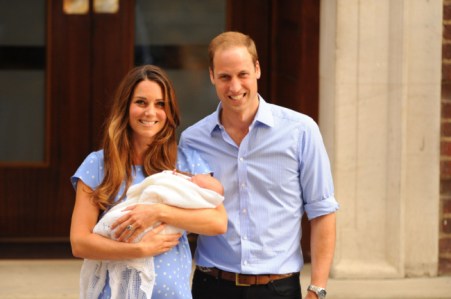
The nation is this week celebrating the birth of a healthy baby son to the Duke and Duchess of Cambridge – congratulations to this lovely young couple who are undoubtedly going to make wonderful parents.

My heart went out to Kate Middleton, having suffered identical ailments in pregnancy, from severe morning to sickness, to enduring sweltering summer temperatures in the final weeks before delivery. Kate may have many advantages, but chances are she isn’t going to enjoy the opportunity that most of us get to slob around the house in our dressing gowns in the post-natal blissful haze known as the babymoon! Watching the media furore over the past few days was a compelling reason for her to consider having any future births at home.

What was however both telling and heartening was that not once, even in the very early stages of the Duchess’s pregnancy was her son referred to as anything other than what he is, namely a baby. The absence of the word ‘foetus’ which we hear so often in relation to pregnant women, especially in the time before the baby becomes viable, was noticeable. Not once did any reporter or journalist refer to the Royal Baby as ‘the products of conception’, ‘a bunch of cells’, a ‘future potential person’ but for the entire duration of the pregnancy, his humanity and future destiny was explicit. The pregnancy even prompted a rushed change to the succession laws to ensure that the baby would automatically succeed to the throne regardless of their gender.

How many other unborn children have the privilege of being deemed so important that they necessitate a change to the country’s legislation? That’s not in any way to begrudge the status of the newborn, but instead of fighting for an unattainable equality of birth, (far better to concentrate our minds on the equality of death) surely we should all be fighting for the equality for every unborn child to be deemed a baby and thus accorded the opportunity of life?

Whilst we were all quite rightly desperately excited for the royal couple, I wish that some of the excitement and magic of pregnancy could be transferred elsewhere, to the frightened pregnant teen, to the single mother living in a run-down tower block, to the homeless drug addict whose baby will most probably be born with an addiction. Whilst the world was watching and waiting in breathless anticipation, I wondered how many other mothers would be labouring, perhaps alone, without the huge amount of support and well-wishers or loving family unit that the Duchess is fortunate to possess and was reminded of the gross inequality regarding how their pregnancies are viewed by society. Whereas the world would have reacted with horror had the Duchess suddenly decided to abort, proving that the whole notion of choice is a misnomer, had the teen mum or drug addict had an abortion, it would have been seen as the morally correct course of action, that these children would have been better off not born, due to their status and potential health problems.

Every child is born of equal dignity and worth in the eyes of the creator and so in one sense every birth is that of a Royal baby! Kate and William’s baby was never just a cluster of cells, but always a human being in the eyes of everyone, even the most avowed pro-choice commentators, by virtue of the fact that he was wanted. Compare the worldwide interest and concern for this baby’s welfare with that shown for the tragic victims of Kermit Gosnell, the American late-term abortionist who killed newborn babies at full term by snipping their necks. The media was on the whole disinterested and only began to report the distressing details following a widespread campaign on social media.

It’s certainly worth not only noting the dual standards applied by the mainstream media towards the Cambridge baby but also applying it to all children, refusing to allow the frame of clinical euphemism that only serves to dehumanise the unborn. Abortion providers rely upon the power of language to couch the unpalatable truth in terms of medical terminology. We never congratulate pregnant women on their embryos, foetuses, pluripotent cells or products of conception and this is why pro-life counselling groups cause such consternation in that they too are always keen to refer to the baby in purely factual terms. Political language is deliberately used, as in the words of George Orwell it is ‘designed to make lies sound more truthful, murder respectable and give the appearance of solidity to pure wind’.

All babies are deserving of a welcome fit for a prince and every single pregnancy an occasion of great joy as well as an opportunity of service, whether that be from the expectant mother carefully sustaining and providing for her child’s needs, or from those around her who should seek to provide her with every means of support in gratitude for her physical sacrifice. We should be daring to work for a society in which the bunting is hung out for every single baby.

 In the meantime we should keep the Duke and Duchess and their new prince in our prayers and hope that they continue to model a strong vision of marriage and family life for the nation. It would be wonderful if they could be generous enough to break the mold and produce a large family of Catholic-sized proportions.

Even better that the baby was born on the feast day of St Mary Magdalene, the icon of a repentant sinner turning back to Christ. Perhaps there’s a portent for the UK in there somewhere? Let’s hope so.

Abortion statistics 2013 – the underlying narratives

My column from the Catholic Universe – 21 July 2013

The abortion statistics for women living in England and Wales were released this week, with the picture looking decidedly mixed. A total of 185, 122 lives were lost to abortion in 2012, a drop of 2.5% from 2011, with a marked drop in the number of abortions performed upon the under-18 age group, in line with the reduced teenage pregnancy figures in this age cohort.

There is little to celebrate however, though more lives were spared than in previous years, the number of overall annual abortions equates to 185,000 women who felt that they lacked the ability, resources or desire to have a child and instead chose to terminate their baby’s life. That so many women felt that they had no option other than abortion indicates that something is seriously wrong in our society where so little value is placed both on the life of the unborn and motherhood itself. Moreover the raw data shows little improvement, around 16.4 per thousand women had an abortion in 2012, the same number of women as in 1997. As an aside, it’s interesting to note that the number of abortions jumped and then rose steadily since the Labour government came to power in 1997, but has begun to decline since the Coalition took power in 2010. Austerity does not seem to be causing any spikes in the abortion rate which feels counter-intuitive; the UK fertility rate is now one of the highest in Europe, thanks to an increase in immigration and changes in the timing of childbearing, maternity units across the country are bursting at the seams.

Another upsetting narrative to emerge was the sharp increase in the number of pregnancies aborted due to fetal abnormality, which had risen by 17% last year. Our pro-life attitude only extends so far as being able to cheer on our paralympians in a fit of self-indulgent patriotic and patronising bonhomie. We’ll happily wave flags and give a pat on the head to those who manage to overcome the odds and perform almost superhuman feats of courage and endurance, but not actually get our hands dirty and be prepared to do the dirty work of looking after a child with physically demanding special needs. Perhaps I’m being unfair, I know of many such generous families and I also accept that for many the decision to abort a disabled child is a tortuous and heartbreaking process, but it’s a tragic irony that the year which did so much to raise the profile and potential and prospects of those with disabilities, also saw such a marked increase in disabled babies being denied the opportunity to live.

But what the abortion statistics do highlight, as does Ann Furedi, Head of the British Pregnancy Advisory Service (BPAS), is that contraception is not the failsafe panacea promoted by the various industries and agencies with vested interests. By far the largest group of women who presented for an abortion last year, were those in the 20-24 age bracket, of whom it cannot be argued do not know the birds and the bees! Either they are engaging in irresponsible sexual behaviour, or their contraception is failing and perhaps both.

If Ann Furedi is admitting that ‘abortion is a fact of life…women from all ages and all walks of life experience unplanned pregnancy’ then this should cause us to question whether women really do have the much vaunted sexual freedom and whether or not abortion, the taking the life of a child, should be seen as an inevitable and acceptable consequence of a sexually permissive society? Does sexual libertinism come at too high a price? Lord Steele, one of the original architects and proponents of the 1967 Abortion Act dramatically intervened prior to the publication of these figures, saying that ‘it was never the purpose’ that women would use abortion as a form of contraception.’ For all Ann Furedi’s denial that abortion is used for this purpose, her insistence that there is ‘no right number of abortions’ belies her stance. The rise in repeat abortion would also undermine that claim – 37% of all abortions carried our last year were repeat procedures. More than 4,500 women had had at least four.

No wonder Ireland’s pro-life movement which has just seen a bill passed allowing for termination of pregnancy right up until birth for women deemed to be suicidal, are looking at the UK with such dismay and horror. The bitter irony is that this will reverse the abortion traffic back across the Irish Sea as a UK woman unable to procure a late stage abortion here need only to jump on a ferry or plane and claim she is suicidal in order to access the procedure over there.

Meanwhile our cousins over the pond in Texas have had considerable success in passing a bill which bans abortion from 20 weeks onwards as well as having the effect of closing many state clinics who are unwilling and/or unable to meet tight medical and sanitary regulations to ensure the protection of women.

Reading the heated debates on the matter, my attention was drawn to a polemic written by an ernest young man, enjoining his brothers to fight for the abortion rights of his sisters and setting out the reasons why. Amongst them were these:

“This bill will force men into unplanned fatherhood…Your sex life is at stake…Don’t be surprised if casual sex outside relationships becomes far more difficult to come by.”

A great own goal for the pro-choice movement demonstrating that abortion encourages men to shirk responsibility, leaving women with little other choice.


I faked a Student Pregnancy

Pregnant student

Actually I didn’t, I experienced an unplanned pregnancy twice when embarking upon my degree. This girl did however and was horrified by the response.

The piece highlights precisely what I was talking about the other day, in terms of the stigma and prejudice that young and unmarried mothers have to face and why we should never exercise anything but charity, coupled with joy whenever we encounter a young mother who has chosen life against considerable odds. While the writer does not venture any opinion with regards to the morals of abortion, it’s excellent to see an acknowledgement in the mainstream media that the concept of consequence-free sex is nothing more than a myth.

Society, ably aided and abetted by the abortion industry is promulgating a chocolate-box, picture-perfect version of pregnancy, one that is all about designer maternity wear, high-maintenance grooming, top-of the range nursery goods and must be planned to occur at that perfect moment, whenever a woman feels emotionally and financially ready. Something I always say to teens who might be foolish enough to discuss their boyfriends or refer obliquely to their sex lives with me, is ‘do you feel ready to have a baby with this boy/man’. At which point they usually blush, start twisting their ankles awkwardly, look at the floor and hope it will swallow them up. The point being that unless you believe abortion to be an acceptable form of contraception, (and few women will actually admit to this), then you ought to be prepared to have a baby with your sexual partner.

The most amusing response is always ‘well we haven’t talked about babies yet, or what I’d do if I got pregnant, it’s far too early for that kind of thing’. Which strikes me as an illogical and emotionally incoherent response. So you are prepared to take your clothes off, get naked and intimate with this man, swap bodily fluids, but you are far too embarrassed to bring up the topic of what happens, if nature takes its course, what the backup plan might be. It demonstrates the falsehood of sexual freedom and empowerment. There is a an automatic expectation that any romantic relationship will swiftly progress to sexual intimacy but that on the whole women are too embarrassed to talk about what might happen if she gets pregnant, in case she deters her new partner from making any sort of long-term commitment to her and comes across as over-keen.

Ellie House (the writer) no doubt experienced negativity because men were frightened of what she represented and women saw her as a traitor, not only to her education, aspirations and the cause of womanhood but also because she might well put men off from having sex with them. It’s a strangely dissonant response.

The account resonated with me, because while not experiencing quite the same hostility, I was a married mature student in my thirties and thus others’ expectations were wholly different, but I did however have to sit through the stomach churning talk during Freshers’ Week where abortion was referred to in couched terms of how the University would help deal with ‘personal difficulties’ and students signposted to abortion services and counsellors and sexual health services in the numerous literature. It was emphasised that the University would be understanding to those with problems and allowances made and help given.

It was however a different story when I actually presented as pregnant. Extensions were grudgingly granted on provision of a doctor’s note certifying morning sickness, but very little in the way of actual support was given. One of the problems that I encountered was that the baby was due in the holidays shortly before the start of the new academic year. There was an on-site nursery, however they understandably would not admit children below the age of 5 months. If I were to be able to continue with my degree I would need to be able to bring the baby into lectures/seminars for the period of a few months. I did not see this as being much of a problem, it was after all my fourth baby, I was a confident breast-feeder, the plan was to have the baby quietly in a sling or car seat and of course I would have taken her out had she begun to cry or disrupt the class. I was informed that this was an unacceptable request, it would prove too distracting for other students, even if I sat at the back of the lecture theatre or was discreet in my feeding. A newborn baby simply wasn’t welcome.

The other issue was the on-site nursery which had been under threat of closure for quite some time, the university claiming that despite the rise in fees, it was not cost efficient. Fortunately there was a huge furore, the nursery was the reason that had attracted quite a few staff to the campus in some cases bringing with them millions of pounds worth of research grants. A solution was eventually found whereby the nursery was sold off to an outside provider in a tortuous process which involved lots of potential providers dropping out at the last minute and the nursery was saved, but it was clear that childcare provision was not a priority for the University of Sussex. Had the nursery closed then there would have been no facilities for either the students and staff of Sussex or of the neighbouring University of Brighton. While the student activists got terribly hot under the collar over the contracting out of all support services to outside providers, there was not a peep from them when the nursery was under threat and neither did they strike in support of the nursery workers, who had their contracts terminated and then renewed on far less favourable terms to a private provider.

Speaking from the perspective of a student who had two young children in the nursery and creche in order to study, the costs were extremely prohibitive, a child would need to be booked in for an entire session, ie. one couldn’t just drop the baby off for an hour’s lecture and on those few occasions where the nursery would ring mid-seminar to inform you that child had been sick or whatever and you needed to come and collect her, there was very little understanding from professors. The whole impression given by the academic staff was that student parents were a burden, I was being extremely foolish trying to juggle babies whilst studying and ought to reconsider. I came to the conclusion that it was simply unfeasible in my situation, obviously it was unusual in that I was juggling 3 children, a degree and pregnancy, but I can well imagine the barriers that a first-time pregnant young student might face. Abortion was implicitly mooted as the only sensible option. On one occasion I took one baby into the ‘child friendly’ cafe to feed and felt too self-conscious of all the bemused stares to continue. You stick out like a sore thumb with a baby on campus.

It was one of the reasons why I was so heartened to listen to Eve Farren, Director of the Alliance of Pro-Life Students (APS), at their London launch earlier in the year. She perfectly summarised my experience, i.e. of new students being given a leaflet with contacts details of abortion services but no information on the help available to students who choose life, and confirmed, as the article mentioned, that the secular pro-life group LIFE who are well placed to provide practical help support and advice are, in common with many pro-life groups, banned from campuses, in direct violation of principles of democracy and education.

One of the things that APS has sought to do is forge firm alliances with otherwise unlikely allies such as feminist groups, recognising that pregnant students are put in the position where the notion of ‘choice’ is but a pipe-dream given the lack of provision and support for student mothers and have together campaigned and fought for real improvements for pregnant women on campus. One way in which they can be supported is by signing up to donate £5 a month as part of their 500 give £5 giving scheme, £5 being the equivalent of one visit to a coffee shop, or a bottle of wine, to put it into perspective.

Without the Alliance of pro-life Students, life for women students who have been encouraged to lead lives full of emotionally unfulfilling short-term sexual relationships and find themselves caught out, shows no sign of improvement.

Every cloud has a silver lining, I now have 4 beautiful children and have taken the decision to pursue a more appropriate topic and method of study at Maryvale. Romans 8:28 and all that. But life is messy, best-laid plans go awry, there is never a perfect time to have a baby. That’s the message we should be passing on to the next generation and enabling them to continue with their education. Being a mother and being in receipt of a Higher Education – the two are not mutually exclusive.