Francis and the reverse-rabbit

reversed rabbit

Perhaps his advisors had informed him that the rabbit comments had the unintended effect of upseting significant swathes of the faithful, or perhaps he had even read Joseph Shaw’s blog, but I suspect that many Catholics will have been mollifed by Francis’ General Audience this morning in which he extolled the virtues of large families in what could be termed a reverse-rabbit.

“It gives me consolation and hope to see so many large families that welcome children as a true gift from God,”

“I have heard it said that families with many children and the birth of many children are among the causes of poverty. It seems to me a simplistic opinion. I would say that the main cause of poverty is an economic system that has removed the person from the center and has placed there the god of money, an economic system that always excludes children, the elderly, the youth.”

So keep calm and make babies! But the whole affair raises some interesting points.

The example of the woman facing her eighth sections being repeatedly held up as an example of irresponsible parenting made uncomfortable reading. If the Catholic Church wishes to demonstrate her female-friendly credentials then the supreme pontiff criticising a woman for her reproductive choices, really isn’t the best way to go about it.

That was really the thing that made me baulk, because actually we do not know anything about this lady and pastoral sensitivity ought to dictate that delicate conversations of this nature ought to remain private. Admittedly we do not know the context of the exchange whether or not the lady was a visitor to Rome, or if she was seeking some advice or affirmation from the Pope, but to put it bluntly I would be none too chuffed if following a conversation with any cleric, they then used it as a preaching opportunity, holding me up as a negative example, in such a way that I would be bound to hear about it. Being held up as a paragon of irresponsible parenthood for attempting to follow Church teaching in front of the world’s media, isn’t the compassionate or merciful response which Francis so often urges.

The other problematic aspect of this particular lady is that we know nothing of her circumstances. As Tanya, from ‘larger family life’ noted some time ago, the number of sections each woman can have varies enormously and is entirely dependent on individual case history. There is no set number. Medics won’t advise this route, because all other things being equal, a cesarian section poses a greater risk to mother and child than a natural delivery and the more cesarians you have, so the risk of injury to the mother increases. Every section increases the amount of scar tissue that surgeons need to slice through, along with the risk of multiple adhesions whereby the internal organs stick together and with each section the risk of uncontrolled blood loss increases. The risk may only be slight, but it would be irresponsible and misleading to claim that all women can happily have 7 or 8 sections with no problem.

Actually what the case of the woman with 7 sections demonstrates is the wisdom inherent in Church teaching on responsible parenting and family planning. The Church does not specifically lay down a number of sections after which it is permissible to use permanent abstinence, because this will differ on a case by case basis. Some women would be advised to stop after one, others after 5 or 6. What we are called to do is discern what the Holy Spirit might be saying to us, taking individual circumstances into account.

So this woman could be amongst those who have excellent blood vessels, strong muscles and minimal scarring. She might well have made an informed decision to have another baby. Or perhaps she had an unplanned pregnancy, despite assiduous charting. Without a fuller knowledge, who are we to judge?

When Francis said he chided her, I can’t take too much umbrage, because charity must dictate that he did know the circumstances, although it’s not clear what he hoped to achieve by such a scolding – locking the stable door after the horse has bolted is the phrase that comes to mind.

When I announced my pregnancy on FaceBook a Catholic priest didn’t admonish but asked whether or not I wanted all these children and suggested that we ought to consider abstinence in the future. I didn’t take it awry but as a sign of paternal concern because obviously we do have a lot on our plates as a family. But were he to have held me up as a public example of irresponsible parenting, due to having lots of children close together, yes I would have been extremely peeved.

Whereas Dr Shaw thinks that Francis used an extreme example with which no-one could disagree, I am not so sure. Multiple sections are becoming the norm these days, there are whole internet forums devoted to the topic and when I gave birth to our fourth child, a lady in the bay opposite had delivered her seventh child by section. Aside from needing an emergency blood transfusion, she seemed none the worse for it.

The thing that I think Francis was touching on, is that there is a lot of shaming which goes on within Catholic communities, as well as outside of them, in terms of family size. I’ve had the examples of women who have had 7 cesarian sections and been totally fine thrown at me more times than you could mention, in an attempt to justify why I am being a wimp, stopping after child number 5. Equally, as I said in my previous blog, I’ve had people tell me albeit sympathetically, that they have had 12, or refer to their Great Auntie Bernadette who had a similar number. When I limped into the Easter vigil Mass in April 2011, 3 hours after being discharged from hospital, still bearing the gauze and tape from the recently removed cannula, proudly clutching my 4 day old baby, people peered at the bundle, saw a glimpse of pink and said “oh well, never mind, you can start trying again soon” while I wept into the cardboard candle holder. A similar scenario happened with baby number 4 and again this time, no sooner does someone learn that you are pregnant or the sex of your unborn child, then the questions and opinions start pouring forth about whether or not you ought to have another.

This isn’t confined to Catholic congregations: family, friends, mums at the school gate believe they need to proffer an unsolicited opinion on whether or not your womb should be occupied for another time, and often in extremely hurtful terms. I had to bite my tongue when a school secretary impertinently joked that we ought to buy a TV and said amusingly “oh you do know there’s a special pill you can take to stop that” on spying bump number 3 or was it 4 – they all seem to merge into one! Or when a dad jocularly said “oh you’re churning them out” and then a mother said “but I saw you on TV defending it. At least you scrub up well”. Aaaaargh!

I guess people do this because it’s part of the rich tapestry of life, communities are always interested in their neighbours’ affairs and feel they have a right to helpfully comment.

But the fact that some Catholic church-goers do feel the need to shame or play child top-trumps with each other, the more children one has being a sign of devoutness, piety or attempting to claim a better place in the hierarchy, shows that there was an element of truth in what Francis says. I don’t know whether or not as Joseph Shaw claims, he was attempting to wrong-foot those who attack the Church (and I am in agreement with some of what Dr Shaw says on this) but it is clear that dutifully having children out of a misplaced sense of obligation, because you think that is what Catholics ‘do’ is not acting as full co-operators with God, nor is it likely to engender a healthy spiritual life, but rather foster a sense of resentment and disillusionment.

Having multiple children to validate your personal identity or prove self-worth may not be as serious or even as widespread as the contraceptive mentality, but it still exists as a problem. The temptation to judge other people on a smaller family size can prove particularly hurtful for those who would have liked to have had more, but have been prevented from doing so, from circumstances beyond their control. Equally there are those who regard large families with a mixture of pity and irritation.

The other issue highlighted by ‘rabbit-gate’ is whether or not responsible parenthood is relatively new, only coming in the wake of the Second Vatican Council and perhaps that the Church ought to stick to her centuries old doctrine that couples ought to have as many children as possible unless there are sufficiently ‘grave and serious’ reasons not to do so.

Grave and serious is relative – one person’s serious is another’s trivial, which is why couples are left to discern for themselves, this really is a case of ‘who are we to judge?’ Furthermore the Church has been addressing the issue of contraception and population control since it first came to the fore in the nineteenth century. Casti Connubii issued in  1930 may not have been as detailed as Humanae Vitae or Gaudium et Spes but it did nonetheless spell out that parents’ rights to reproduce, carried accompanying responsibilities, such as education. Prior to that, the Roman Penitentiary and the Holy Office repeatedly outlined that contraception was impermissible and suggested periods of abstinence instead.

Contraception has been addressed by the Church from the outset of it being suggested as desirable public policy in the nineteenth century and the Church has always accepted that some couples may need to avoid children.

Humanae Vitae and Gaudium et Spes were not wrong, or misguided but addressed the fact that widespread, seemingly effective contraceptive methods were becoming commonplace and proposed how Catholics could respond to the challenges of the sexual revolution while remaining true to the Magisterium. Catherine of Sienna’s parents may well have had 26 children, but times were very different then, as was child mortality. More is known now about how the human reproductive system actually functions. While it’s extremely noble to die in childbirth, whether or not one ought to be encouraged to actively pursue this path in the course of sanctity, is another matter entirely. Most confessors would probably suggest not, especially if there are multiple existing children. As we now know how the the reproductive system functions, even more so than in the ’60s and have developed highly effective systems of fertility monitoring (though modern medicine must do more to investigate causes of infertility as opposed to circumnavigate them via IVF), we ought then to use this knowledge as a God-given gift to with which He has armed us to counter contraception.

Jesus might well have chided the woman who had seven sections, but He is the only one who is allowed to do this. What rabbit-gate has demonstrated is that there is still an inordinate amount of ignorance and unpleasant judgementalism occurring both inside and outside of Catholic circles, all of which has stemmed from decades of non-existent catechesis.

Those who do practice periodic or permanent abstinence ought not to feel ashamed or fear the judgement of others,  but if they state they have no plans for another baby for a few years or ever again, they need to set an example and be clear about why this is the case as well as why they reject contraception.

If more regular church-goers knew precisely what the Church teaches and why, we’d have less reliance on impromptu papal pronouncements and far less judgementalism towards others, whatever the size of their families. Perhaps that’s what all of us need to work on instead of fostering a sense of righteous defensiveness about our own situations – myself included.

Francis, Catholic families and Rabbit-gate

The wheels of the papal flight have barely touched down and already both liberals and conservatives are rushing to misinterpret Pope Francis’ latest press conference, referring in particular to his words regarding birth control.

The National Catholic Reporter mistakenly attempts to claim that Francis is promulgating that Catholics have a moral obligation to limit their family size and Damian Thompson says much the same thing, yet allegedly from a more conservative perspective (although he too implies that he disagrees with the Church’s teaching on contraception).

But perhaps the esteemed Dr Thompson might actually want to stop and think twice before attacking the Pope for saying things which could be misconstrued by the media and remember the media drubbing that Benedict XVI took for his Regensburg address, which is now proving to be more salient than ever, in the wake of the Charlie Hebdo massacres. Also he might want to cast his mind back to how he rushed to reinterpret the former pontiff’s interview with Peter Seewald as being an indication that condoms were actually permissible in certain circumstances – an interpretation which respected Catholic scholars Jimmy Akin and Janet Smith were at pains to correct and which Damian himself later clarified, could have perhaps been hasty. And let’s not forgot the classic “Catholic teaching on homosexuality can, and I think will, evolve”. Given that evolution can never entail an 180 degree turn or contradict previous teachings, it’s difficult to see what it meant and arguably an irresponsible assertion from someone who would like to claim pole position as the UK’s leading Catholic journalist, in a newspaper which enjoyed an enormous national circulation.

The irony here is that Damian Thompson himself is guilty of the very thing which he claims that the press has a tendency to do – namely misinterpret papal utterings, to suit a particular agenda. In this case he runs with the hare and the hounds rather well, condemning Francis’ tendency to come out with what he calls “streams of consciousness” and stating that his remarks could be deemed to be insulting to Catholics with larger families, all of which will appease those who believe that Francis is the worst possible thing that could ever have happened to the Church since Pope Alexander VI. At the same time, he also throws a bone to the liberals with his implied disagreement with the Church’s ban on contraception and the alleged comparison of gender theory with the Hitler Youth. “He said what??”

Actually, it’s worth reading what Pope Francis had to say in full here, before chasing easy headlines. He talked about a number of worthwhile issues, including exploitation of the Third World and the poor and so perhaps we ought to be playing those up a bit more instead of buying into the boring obsession that the secular and media world has about Catholic teaching on contraception. We don’t permit it and are not likely to. Get over it.

But to address the great elephant in the room, there is absolutely nothing that Pope Francis said which could be deemed either to be in opposition to Church teaching and neither did he state that Catholics have a moral responsibility to limit the number of children they had.

I’ve wtritten about Catholics and family size before, here and here, and Francis re-affirmed the teaching of Humane Vitae, the prophetic vision of Blessed Paul VI and condemned what he called Neo-Malthusian population theories. Francis doesn’t have  a photographic memory or all the facts and figures to hand, so he referred in general terms to the collapsed birth rates in Italy and Spain and the predicted demographic crisis which will see an increased elderly population combined with a dramatically reduced younger generation who will be unable to afford to support them.

What we saw on the flight was a straighforward defence of Catholic teaching on the family, which has always urged responsible parenthood, with the decision as to how many children a couple ought to have being a matter for personal discernment. The Catholic Church has never taught that Catholics ought to ‘breed like rabbits’, or that every single sexual encounter must result in a baby, simply that no sexual encounter ought to deliberately seek to exclude the possibility. The term ‘responsible parenthood’ is not new to Catholicism, Gaudium et Spes 50, outlines the various considerations involved:

“takes into consideration their own good and the good of their children already born or yet to come, an ability to read the signs of the times and of their own situation on the material and spiritual level, and finally, an estimation of the good of the family, of society, and of the Church.

Francis specifically mentioned that couples ought to seek the guidance of the Church who has experts, marriage groups, and not least priests if they have any doubts about family size, because the decision is a purely personal one based on a number of individual factors. The Church does not have any generic policy on family size, because she understands that we are all different. Couples are urged to be generous, but also advised to prayerfully discern what is right for their family, seeking spiritual counsel where necessary. Furthermore the decision not to have further children needs to be kept under regular review.

Perhaps not the best Western Catholic cultural stereotype.

Admittedly ‘breeding like rabbits’, the phrase that many Catholics may have taken umbrage at is unhelpful. Francis likes to deal in colourful idioms and coming from a South American perspective, he likely does not appreciate the Western ostracism and prejudice which exists towards those who have larger families. Not only have I been subject to some deeply unpleasant and uncharitable trolling about my own family size (which isn’t what many Catholics would consider large) but I’ve also had to put up with some thoughtless and unkind remarks in real life. People genuinely believe that how many children you have is somehow their business and that they have a right to comment. It’s not helped by the popular media narratives about ‘scrounging’ large families on benefits, government plans to cap child benefit beyond 2 children, or politicians such as Caroline Lucas and Evan  Harris  who condemn those with large families as being selfish, due to the an imaginary impact on the planet and resources. The Pope doesn’t come from a culture where being an orthodox Catholic or having a large family  means one is held up for ridicule on a daily basis.

There will be those who misinterpret his remarks, but then Catholics ought to be used to widespread misreporting and misunderstanding of the faith.  It’s disappointing if the Pope seems to be giving succour to our enemies, but then again, even ignorant (even if well-meaning) comments can be an opportunity to explain and evangelise.

Every bit as ignorant and irritating is when other Catholics try to make out that by only having 5 children, you aren’t being quite Catholic enough and mention great-aunt Cecelia who had twenty-two and was perfectly fine! Family size is a deeply personal matter and not for anyone else to pass comment upon – Catholic or not. In this day and age these enormous family sizes are simply not feasible for the vast majority of people. Speaking as someone who has a number of pregnancies over the past 6 years, I can verify to the enormous strain that these can place upon your physical, emotional, spiritual and material resources. Women are not expected to physically compromise themselves and their families by consecutive pregnancies.

Pope Francis was not saying that large families are ‘bad’ but advocating responsible, thoughtful and considered parenthood. You know as Catholics we ought to be aware that anything said or written down can be interpreted every and which way to suit a particular agenda –  which is precisely why we have the Magisterium.

Yes we can berate him for being a little insensitive, but then again, to focus unduly on one specific comment, which in context was affirming Church teaching, is to ignore all the good stuff that he did say and in which he confirmed that he most certainly is a Catholic.

There are several natural and licit methods of avoiding pregnancy – this did not refer to artificial birth control. Likewise he was not advocating the woman with 7 previous cesarian sections should abort her baby, but stating that the decision to conceive again could reasonably be construed as irresponsible- who is he to judge?

Actually, he has a point. I had to see my consultant last week to plan the forthcoming birth of our child, my fourth section. The risks to my life and health posed by a future pregnancy were explained in no uncertain terms. I was strongly advised to have a sterilisation at the same time as having a c-section. I declined, hardly being in a position to claim ignorance of the Church’s teachings and the reasons behind them, but I guess this is the kind of situation to which the Pope was referring when he asked for mercy. It would be irresponsible for me to attempt a future pregnancy and risk leaving my 5 children as orphans or putting myself in a position where I could end up severely physically incapacitated.

Modern methods of NFA are highly effective but a woman who is told that she potentially risks her life by a future pregnancy, ought to be treated sensitively and compassionately by the Church, hence confessors need to tread a fine line between both pointing out the error of ocntraception while at the same time, understanding the difficult position in which a woman finds herself.

Once again Francis was speaking in the context of Catholic teaching and addressing the uncatechised who mistakenly do believe that Catholics have an absolute duty to keep on having children, even though to do so puts them under intolerable strain. Ever since my blog began I have been stating that this is absolutely not the case, my choice of phrase being even less delicate than his. “You don’t have to keep on having children until your uterus falls out”.

The dismay of larger families is understandable, ‘breeding like rabbits’ does little to bust the false stereotype and perhaps dehumanises those with big families, but he was referring to the act of unthinking reproduction, those who have huge numbers of children, not with any sense of joy, delight or wonderment but out of a sense of duty or because they feel they have no other option. What he said was decidedly female-friendly and as Fr Ed Tomlinson points out, Francis has a tendency to say one thing for the Catholic faithful, while at the same time understanding that secular liberal non-Catholics need an entirely different message.

But you know what we’re not ultra-montainists. An impromptu press gathering is not official Church teaching. Faithful Catholics know what the Church teaches and will continue to practice and propagate it. Given some of the post-synodal commentary we ought to be grateful that the Church’s teachings are being so publicly re-confirmed, and indeed to Francis himself for making sure that this topic of Catholics and contraception remains firmly in public consciousness. And as for speaking out strongly on gender theory – good on him! The way this is being imposed on students as irrefutable fact in universities and schools with those who dare to question the liberal consensus being penalised and closed-down, is totalitarian in nature.

I suspect most of those critiquing the pope for the rabbits comment would strongly agree and furthermore they’d find that if their large families were ever to meet Papa Francisco, they too would be greeted and welcomed with warmth, generosity along with heartfelt thanks for their generosity. If, as a heavily pregnant woman with 4 young children, I can accept these comments with grace and without taking gratuitious or vicarious offence, or use them as grounds to claim that families size should be limited, so should everyone else.

The pointless policing of pornography

Over the past few days my social media timeline has been quite literally stomach-churning. The UK has quietly passed a bill which has banned certain types of pornography from being produced and sold in the UK which has subsequently produced a mini-outcry and reams of discussion in terms of the merits of what has now been banned. In short anything deemed to be violent or involving female bodily fluids can no longer be produced or purchased within the UK. You might still be able to beat Victoria Wood on the bottom with a Woman’s weekly, but you need to ensure that it’s done in a gentle and respectable fashion and not too hard.

woman's weekly
Careful now!!

One might think that a prude such as me, who obviously hates sex or the idea of anybody enjoying it, would be hanging out the bunting with jubilant delight, but actually the legislation itself seems to make very little sense in terms of what it has banned and what is now allowed.

The new laws will probably have a minimal effect on the average consumer of pornography, unless one is a particular connoisseur of the British genre. I have no idea whether or not British porn varies in tone or content to that of other countries and frankly no wish to. As far as I am concerned it is all pretty base and disgusting regardless of where it’s produced. But for Joe (or Joanna lest I commit the cardinal modern day sin of sexism) Public, wanting to watch all sorts of unmentionable things, whether free or via pay-per-view, very little has changed. It’s all right, just so long as it hasn’t been made in good old Blighty. No imaginative sex please, we’re British.

Naturally enough people are jumping up and down and protesting about censorship and how the impoverished British BDSM industry is going to manage to eke itself a meagre living now that it has effectively been banned. My heart bleeds.

For some it boils down to a question of whether or not we ought to legislate for what two consenting adults chose to do to each other sexually. Most people would probably be against any sort of criminal penalties for deviant sexual behaviour, so long as it didn’t involve animals, children or genuinely non-consenting adults (some of the banned material contains simulated scenes of non-consent) therefore it seems strange that the government sees fit to legislate and thus send signals in terms of what they deem is okay to get your rocks off on.

Nothing better demonstrates that no matter how hard she tries to be the cool swinging Austen Powers kid of the sixties, the UK still can’t shake off her Puritan heritage when it comes to matters sexual, which she still has to control.

There are distinct parallels between this type of ‘politically-correct’ pornography and the sex education which is being pushed in schools. Basically, the government is prescribing and attempting to impose their version of what your sex life should look like and define the parameters. Lots of partners, lots of contraception, every possible orifice should be utilised and all must be clinical, sterilised with absolutely nothing messy or uncomfortable that could give rise to the ‘ew’ factor.

What the government seems to be willfully missing is that all sex is messy, a bit eugh and carries a certain amount of risks. That’s half the fun. Their attempt to eliminate various bodily fluids from the process misses the point. The futuristic society portrayed in the film Demolition Man where sex was conducted only by virtual reality headsets “you want to swap bodily fluids – gross, we stopped doing that years ago” doesn’t actually seem all that fantastical these days.

Obviously,  and I suspect in accordance with most of my Catholic readers,  have certain ideas or opinions of what constitutes a healthy and holy sex life, and I’ll concede that BDSM would not be a feature.  Neither would the use of  orifices not designed for the purpose. Enthusiasts may well attempt to argue the point that it can be ‘loving and selfless’, but to me it’s hard to see how deliberately hurting someone else does anything else than instrumentalise another for pleasure, regardless of whether you like to give or receive, so to speak. No doubt a case could be made about ‘gift of self’ but to be blunt, sex should not preclude the procreative act, therefore getting your jollies from tying your genitals to the dimmer switch and being slapped about with a frozen trout, isn’t going to fit comfortably within the confines of Catholic theology and praxis.

One might argue that Catholics are no different to the government in terms of attempting to proscribe the parameters of a sex life, but we are not seeking to dictate or impose what  every single person does, or ought to do, in their bedrooms via legislation.

This new porn legislation is fundamentally dishonest and symbolic of society’s general malaise and decline in terms of the debasing of human sexuality. What shocked me about the debate I saw on my timeline on various forms of social media,  was how widespread knowledge of what would once have been deemed unacceptable and obscene boutique sexual terms, has become.

Twenty or thirty years ago these words would have been niche; the conversation about what constituted acceptable pornography, taboo, and rightly so. One of the downsides of the internet is that it has consolidated sex as a purely selfish recreational activity – a development which harms both men and women, not only spiritually but physically, affecting their ability to form long-lasting and genuinely intimate relationships.

If my daughter had been able to see my Twitter feed she would have been subject to ideas and material which could have irreparably damaged her and would have done so, regardless of whether she was 10, (as she is now) or 20. I don’t want to name some of the practices that I saw discussed, but I fail to see how knowledge of any of them has made us a better, more enlightened and tolerant society or how they have in any way contributed to human flourishing. All it has done is made our sexual appetites dangerously broad (and yes I’m not afraid to state that certain acts are physically dangerous) and rendered us as slaves. These days if you aren’t enthused or made curious by the prospect of doing it every which way with at least 50 lesbian llamas eagerly watched on by a crowd of onlookers in a car-park in Purley, there must be something wrong with you and you’re missing out.

If we are not trying new and diverse ways of having sex, or find certain things perfectly distasteful, according to the new ‘progressives’ we are ourselves dysfunctional and intolerant.  Sexual libertinism is not a positive development; people may well have wanted to do all kinds of depraved things hundreds of years ago, some of them undoubtedly did, but the difference is that they were kept underground and not encouraged for a reason – namely it was accepted that they would have a deleterious affect on society.

Legislation regarding what sort of porn ought to be allowed and acceptable to produce and  watch in this country is therefore pointless tinkering, especially when the rules seem to be quite so arbitrary. One example is that graphic close-ups of a male achieving orgasm wherever he choses are permitted, however the female equivalent is now strictly banned in a move which has intensified the victim rhetoric employed by mainstream media feminists.

The problem is that the government is attempting to differentiate between what constitutes good and bad pornography in the absence of all evidence and in a profoundly unscientific fashion. For this exercise to be undertaken, a degree of honesty is required. The conversation ought not to be based on subjective notions of harm, but whether or not porn is proving to be a positive or morally neutral influence in society. There is a growing body of both scientific and anecdotal evidence to demonstrate that it is not, and yet there seems to be an unspoken consensus that certain types of porn are harmless; an opinion that has made its way into the curriculum for those wishing to teach sex education to children. (Don’t believe me, just check out Bish training, which is widely vaunted as an industry standard and who will charge a school £1,000 a pop for some leaflets to facilitate discussion of what constitutes good and bad porn in the classroom).

There is no evidence to demonstrate that pornography, whether online, on TV or in printed format has had any positive effects, either on the economy or society as a whole and yet this is taken as a given.

Any government claiming to be serious about tackling the insidious damage done by pornography ought to consider a much wider consultation and examination of the issues,   along with measures which would ban UK USPs from supplying material considered pornographic, no matter which country it originated from. Turning off the porn tap could prove the most positive step that the country could take in terms of protecting its citizens. Nothing would send a stronger signal when it comes to reversing the often sexist and misogynist culture which seeks to reduce humanity into objects of desire for the selfish pleasure of others.

The concept of ‘safe’ porn is an utter misnoma. Not only does it violate the dignity of everyone involved in its production and consumption, which ought to be unacceptable to any forward-thinking society, especially one which is seeking to stamp out sexual exploitation, but it contains the same potential for addiction as substances such as tobacco and alcohol, but in common with other mental health issues, the damage is overlooked and hidden because it is psychological in nature and thus not easily quantifiable.

Either we accept that the internet means that the government can no longer control the viewing habits of the public as once it did and ban all watersheds, or a wider discussion needs to be had about whether or not the proliferation of online porn is in the interests of the common good. Do we as a society wish to mandate the watching or pornography and the exploitation within that industry or not? Why are we so afraid of taking definitive moral positions in terms of deciding policy that has the potential to affects the welfare of future generations. Why for example is it acceptable to all but force people to accept and welcome developments such as same-sex marriage as an unfettered good, but not to take a decision that pornography is damaging and harmful.

This is not the issue of free speech that some might claim – we already have laws about the type of material and behaviour that can be exhibited in public and pornography is fundamentally not about artistic expression or communication of intellectual ideas. Pornography is neither tasteful or discerning – it may pander to different and often increasingly hardcore palates, but always with the same aim in mind.

Back in the ‘70s a woman who found pornography in her husband’s bedroom would certainly not have been advised to relax and perhaps join in her husband’s habit. It was seen as the betrayal of intimacy that it is, women did not face the same widespread pressure to be accepting of or or even join in a mainstream culture of porn.

The banning of pornography would cause a massive outcry and inevitably incite  false comparisons with North Korea. It’s scary: never mind the invasion of the state into our personal details and confidential information, forget secretive trials and closed family court proceedings, access to unfettered graphic pornography is the defining mark of a free society.

People don’t like having their fun turned off.  It would mean that they’d have to return to the bad old days of having to furtively sneak off to the corner shop and face someone else actually knowing about their seedy little habit, rather than celebrating it and passing it on to to others. Women wouldn’t have to be forced to pretend to be open, liberal and accepting about men’s pornography habits and vice-versa. Heaven forbid we might have to go back to a more authentic and less superficial acceptance of others physical appearances and sexuality. What if sex became about a mutual overflowing of love and affection rather than a series of prescribed functional performances to suit a taste that has been shaped and moulded by a commercial industry.

But perhaps without a constant on-stream supply of (frankly unappealing) sexual images, people might find some other, better, more constructive ways of channelling their sexual energy and appetites. Heck they might even turn off the computer and go and do something far more fulfilling than an empty and shallow act of auto-eroticism. Why does that scare everyone so much?

Bernadette Smyth and abortion clinic buffer zones

One example of 'very real harassment'
One example of ‘very real harassment’

Readers of the Catholic Universe can read my comment about the case of Bernadette Smyth there.

Just a few points to note:

Bernadette Smyth has been indicted of harassment towards the dormer Northern Ireland politican, turned clinic director, Dawn Purvis. This is a charge which she denies and intends to appeal. Mrs Smyth claims that on no occasion did she ever attempt to contact Mrs Purvis, no bad language was ever used and indeed on both occasions where the harassment was deemed to take place, it was Mrs Purvis who approached her and invaded her personal space.

It is then, not clear why the judge thought fit to make remarks about women seeking abortion in Northern Ireland when the case was concerned about an unpleasant personal spat between two individuals. One may also question the appropriateness of these remarks , considering that the legal situation surrounding abortion in Northern Ireland is unclear – it is still contrary to the Offence against the Persons Act. In case anyone may be tempted to argue that this is an antiquated anomaly, the legalisation of abortion has been debated several times over the past few years at Stormont and on every single occasion MLAs have voted against any change to the law.

One could argue that those who stand outside clinics in Northern Ireland are in fact attempting to prevent a crime from taking place. In any event, the judge seems to have gone way beyond his remit in terms of making this case about the wider issue of protest outside abortion clinics. Judge Chris Holmes’ comments in this case amount to his taking of the law into his own hands and attempting to change or redefine it.

It is unsurprising that pro-choice campaigners are seeking to make hay out of this case and using it to leverage and promote legislation which would set up buffer zones outside abortion clinics, in the same way as has happened in a few US states.

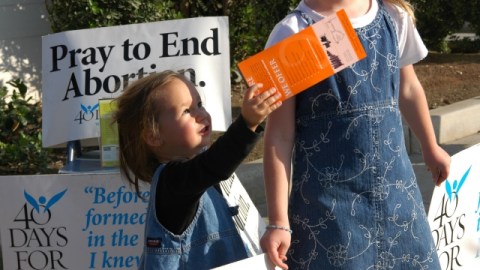
One might argue that this is an inevitable consequence of pro-life campaigners turning abortion clinics into flashpoints of conflict, but it should also be noted that so far there have been absolutely no arrests of anyone involved in the peaceful 40 days for life campaign which has been running since 2010.

The only legal action which has taken place, was against Andrew Stephenson from Abort 67, the group who display graphic imagery outside clinics. The case against him collapsed due to lack of evidence.

Without re-hashing the pros and cons of different types of abortion clinic protest (my strong preference is for a silent prayer vigil, accompanied by appropriate information about foetal development and pregnancy along with resources on where to get help), the lack of arrests do not mean that the police do not have sufficient powers or that more legislation is needed.

The public order act amply covers for protection from harassment. My experience of participating in 40 Days for Life vigils, is that no harassment occurs, no filming takes place and women are neither followed nor approached. The former BPAS clinic in Bedford Square had a camera permanently trained on those participating in the vigil, which took part across the road. Any illegal or inappropriate behaviour would have been filmed, passed to the police and no doubt circulated all over the internet.

My experience of participating in silent prayer vigils is that the only aggression comes from  random passers-by and strangers on the internet who have no idea of precisely what happens. (You turn up and pray the rosary either silently, or quietly). For some people the very act of turning up and praying is interpreted as passive aggression. The very presence of people who disagree with abortion is deemed to be harassment, because women, understandably cannot bear to see a physical manifestation that there are some people who disagree with them and they find the concept that they are terminating a life very painful and difficult to bear. The night that I had hyped-up women and men, screaming obscenities and deliberate blasphemy within inches of my face and that of the 6 week old baby strapped to my chest, blaring loud klaxon horns and hurling abuse as a response to silently standing outside a clinic and praying, (when it was closed) is an occasion which is  seared into my memory.

Never before have I been confronted with such raw, visceral, violent hatred and anger, simply for standing across the road from a clinic and praying. There was nothing whatsoever about my behaviour that merited such a response, it was simply the fact that I had the temerity to publicly witness against abortion. A similar response is garnered by the Oxford pro-life group who gather outside a hospital where abortions are performed on a Saturday, when no actual proceudres are taking place. They cannot be accused of harassing women, however under these proposed new buffer zones, their protest would be illegal. The behaviour which is being objected to is of public disagreement with abortion, nothing more. If pro-lifers were accusing pro-choicers of intimidation, accusations of lying would be flying about and substantive proof demanded. Why is in then that these general accusations are being believed as Gospel truth and why are the clinics not asking the women who claim to have been harassed to point out those individuals responsible, state precisely what it was they are supposed to have done and calling the police? This could easily be done without compromising anonymity. In the case of Northern Ireland, Precious Life have been praised by senior police officers for the peaceful nature of their protests.

Comparisons with America, are moot – other than to note that there has been no history of violence of intimidation towards abortion clinic operators or staff in the UK. Ann Furedi is more than happy to debate abortion on university campuses and has never expressed any well-founded fear or threats to her personal safety. The same cannot be said for me however, before I even began writing this blog, one woman spammed me with several personal abusive emails threatening to report me to my husband’s former Anglican bishop for ‘endangering vulnerable pregnant women’ due to my pro-life views and has made several attempts to interfere with any professional or media work. I receive a number of threats, specifically wishing for my death in childbirth, and the removal of my children or for them to have an abortion, on a depressingly frequent basis. The only people ever to throw mud  and cause guilt and shame about my past abortion are themselves pro-choicers, who purport not to judge!

When it comes to the filming of women, I drive past Wistons clinic in Brighton, the home of Abort 67 on a daily basis and often walk my dog past, to take a discrete shufty. I’ve never witnessed any intimidating behaviour, unless one counts the offering of leaflets and certainly never any filming of women, which is strictly prohibited by 40 days for Life. My understanding is that one campaigner from Abort 67 has a camera permanently switched on strapped about their person, not trained on any specific individuals but rather to provide evidence of behaviour in case harassment is alleged and indeed in case they themselves are subject to attack.

Whether or not prayer vigils are prudent is one issue, but that is not the same as whether or not they ought to be illegal. In the case of Abort 67 or God’s Helpers of Precious Infants who offer passers-by literature, again this is not illegal and is no different to the very many chuggers who stand on the streets handing out material that many people would consider desperately offensive.

There is little to choose between the offensive literature of the anti-vivisectionists and political campaigners who litter the streets of Brighton displaying graphic photographs of dismembered and suffering animals, or of young children shot and tortured in the Middle East, and the material that Abort 67 hands out. When it comes to the religious nuns and older ladies who stand tirelessly outside some abortion clinics – they only offer rosaries and leaflets on alternative pregnancy resources and nothing graphic or offensive. It’s nowhere near as distressing as some of the images that my children are subjected to if I take them into Brighton on a busy Saturday. Neither is the atmosphere as intimidating as that created by the protestors who until recently stood outside the Soda Stream shop next to Waitrose, hassling and heckling passers-by and effectively preventing people from going into a shop. Same with the anti-fur folk from PETA who hound anyone who dares either to wear fur or frequent retailers who stock it.

For those who object to the comparison, if you are claiming that a baby is not in fact a human being, or a life, or anything other than a blob of non-sentient parasitic tissue which has no rights, then why is protesting against its ill-treatment and untimely death so unconscionable? Why is it okay to harangue shoppers and make them feel guilty for consumer choices or force them to look at dying animals in appalling conditions overseas or tortured in laboratories and yet not acceptable to make other people aware of what an unborn baby actually looks like, or consider whether or not abortion is killing? If we are accepting that the plight of humanity is more important than that of animals, then why are we excluding a discussion of human life at the very place that it is terminated?

One of the most unbearable aspects of this pro-choice campaign, is attempts such as these from Emma Barnett, the Jewish editor of Telegraph women, to define and impose  her version of what should constitute Christian behaviour onto others. As Laura Keynes points out, Christ did not shy away from hard truths and while He would have undoubtedly had compassion for women feeling that they had little other choice than to abort, he would not have minced his words about clinics which seek to make money from the killing of desperate women’s unborn children. There is no doubt that organisations such as the Good Counsel network perform corporal works of mercy, feeding, clothing and housing women who would otherwise be on the streets and who are already living hand-to-mouth. They are allowing the children of the poor and marginalised and very often immigrants, to be born and allowing those who would otherwise receive no benefits or medical care, to not only survive, but to thrive.

Whatever you think of the tactics of Abort 67, Andy Stephenson displays the radical  unapologetic and unashamed honesty of Christ himself and indeed causes similar outrage and scandal. We may be called to be wise as serpents and gentle as doves, but we should equally remember that Christians are not called to appease public opinion, rather than to do what is pleasing to God. Secular society wishes to define Christians as fuzzy well-meaning do-gooders, a bit like tank-cleaning fish. We are supposed to quietly and unobtrusively go about our business, sucking up and cleaning the scum or dirt, but never making ourselves visible or detracting from the other more attractive and colourful species. We can hold our funny views about abortion or whatever, but we should not be allowed to promote these to others and if possible, we ought to change them if we want the important people to like us and be nice to us.

Make no mistake, the sentiment behind those looking to create buffer zones is the same illiberality that wishes to close down abortion debate which seems to be pervading in our universities. This is not about making abortion clinics ‘safer’ places for women but about suppressing any point of view which states that abortion is wrong and takes the life of an unborn child, especially in a place which could cause women to rethink her decision. Laura is not the only one who wishes that someone had offered her a viable alternative the morning she walked into an abortion clinic, had someone been there the morning I walked in, I would not have wiped out my baby’s future either. Many of the volunteers with Good Counsel Network are those very women who were themselves helped a few years previously and who are able to tell people, exactly what is on offer. No wonder Marie Stopes wants them gone.

Some people think that abortion is wrong. The function of the law is not to protect people from hearing points of view which they find objectionable, no matter how attractive this prospect may seem at times.

Official comment on Oxford Students for Life debate

I have been asked by several outlets to given an official comment about the Tim Stanley/Brendan O’Neill debate from my perspective of having participated in a previous debate there and being a post-abortive woman. I suspect that the main reason I was not shut down is because I am not a major name. The only slightly sour note from my experience was that Kate Smurthwaite felt unable to accept any hospitality from the ‘anti-choicers’ or even shake hands because to do so would, in her opinion, signify acceptance of those who want to ‘deny women their basic rights.’ I understand the visceral anger, I experience the same thing whenever men attempt to tell me, a pregnant woman and mother of four girls that a mother’s care is irrelevant to the wellbeing of a baby, in order to justify commercial surrogacy and their understandable craving for a family of their own. A dream which once seemed impossible. Just as abortion rights advocates feel that their right to access abortion should not be under discussion, I feel similarly strongly about a mother and baby’s rights to stay together. No-one ought to be debating whether or not it’s acceptable to take a baby away from their mother for the sake of cash or fulfilling a deeply-held desire.

Like abortion advocates I feel this debate threatens female flourishing and indeed my own identity. The difference is however, is that I understand that this is a debate which must take place and have nothing to fear having science, truth and righteousness on my side.

Anyway, here’s the official comment.

“To my knowledge, this is the first time that Oxford Students for Life have hosted a debate surrounding the abortion issue which featured men. Previous debates have featured two high profile adovcates for abortion namely Ann Furedi head of BPAS and comedian and activist Kate Smuthwaite, therefore it is something of a nonsense to claim that a woman’s point of view is not being represented, especially when on both occasions the pro-life side was represented by women.

Moreover this debate had nothing to do with whether or not women ought to be banned from accessing abortion but was focussed on the wider ramifications and affects upon society of abortion on demand; an issue that affects men as well as women. A culture of abortion on demand enables the destruction of children on the grounds of gender and disability and to exclude men is to deny them any opinion as to the potential fate of their own unborn offspring. Furthermore by claiming abortion as being solely about the right of women to choose what to do with their bodies, not only denies the existence of an independent life but it also allows men to abrogate all responsibility for any children they may inadvertently have fathered.

My own experience of debating for OSFL against a vociferous opponent was a pleasant and safe one where both sides were adequately able to expound their points of view and field challenging questions from the floor. There was no antagonism or threat posed from supporters of either side and I felt relieved that this debate was able to be held without the usual culture wars which often follow this issue around. Indeed OSFL are extremely generous in terms of how they extend hospitality to all participants and cordially invite all of the audience to continue discussions in the pub. This is a society who are acting within the democratic traditions that one might expect from the University of Oxford and are not seeking to threaten, intimidate or close down the opposition. It is is sad the same could not be said of those objecting to the debate.

Speaking from the perspective of a woman who has experienced the personal tragedy of abortion, while I have some sympathy with the idea that a man should not tell a woman how she ought to feel about this deeply sensitive issue, I find the idea that my safety may have been compromised, both absurd and patronising. The Student Union’s women campaign seem to be unaware of the irony that they are behaving in an extremely paternalistic fashion. I had been eagerly anticipating attending the debate and am extremely concerned as well as horrified by such authoritarian censorship. Universities need to take urgent steps to nip this serious threat to freedom of speech, in the bud.”

NFA – the perfect example of Gradualism

I’ve been meaning to revisit the topic of NFP or, as I would prefer to call it, NFA and Joseph Shaw has provided me with the perfect opportunity, with a blogpost critiquing this rather natty little video, promoting the benefits of NFP, as opposed to conventional contraception.

First off, I think Catholics need to stop referring to NFP (Natural Family Planning) and instead refer to NFA – Natural Fertility Awareness. The semantics here are important: the former term implies a contraceptive mindset, validating the secular mindset that every family needs to be meticulously planned in terms of timing and number of children, whereas Natural Fertility Awareness is more accurate in terms of the (more often than not) Catholic mindset of those who adopt this attitude towards their sex lives.

Unlike the secular rigidity of the term Family Planning, favoured by our state health agencies, the phrase Natural Fertility Awareness conveys something of the fluidity and indeed flexibility, of the process. Moreover one does not need to be sexually active in order to monitor one’s own fertility and I’m a great advocate of young women (and indeed young men) being versed in the basic principles, before they may actually need to practice it.

There is nothing inherently immoral about teaching young women how to be aware of and chart their individual fertility – the process takes a few months to get to grips with and do so accurately. The engagement period tends to be a busy and frenetic time. observations can be missed or mistaken. It isn’t unreasonable for a married couple to wish for a short honeymoon period where they aren’t plunged straight into the trials and tribulations of pregnancy at a time when they may be attempting to consolidate financially, especially if they have not previously been cohabiting or sexually intimate.

Indeed if more young women were to monitor their fertility then arguably potential problems could be identified and treated more swiftly. Even, Sir Robert Winston, the IVF pioneer has argued that too many women are being automatically referred for IVF treatment after a failure to conceive, when cheaper and more effective treatments may be available. (Such as for example, the NaPro Centre in Ireland).

Natural Fertility Awareness is scorned by the vast majority of the medical profession, who do not understand it and believe it to be some sort of outdated rhythm method from 50 years ago as opposed to a rigorously scientific method, based on a woman’s own individual fertility, rather than the standardised version assumed by manufacturers of hormonal contraception. This leads to a passive attitude adopted by woman, who are taught to believe that their natural fertility is an out of control monster which needs to be medically  suppressed in order for them to stay healthy.

Last week my youngest daughter came up with an alarming looking rash, (it turned out to be some sort of pityriasis) which needed swift checking out by a medic. Unable to get a GP appointment within a few days, I took her instead to the walk-in centre in central Brighton so she could be seen swiftly. This particular centre also happened to be an anonymous walk-in sexual health and GUM clinic. I was particularly struck by the larger -than-life size posters advertising their sexual health and contraceptive services. Basically there was nowhere you could look without seeing adverts for sexual health prominently displayed. (Which is understandable when you consider Brighton’s considerable LGBT population and the location of the clinic, next to the railway station. You can pop in for an anonymous HIV test).

I was sat in front of an enormous six foot banner stand, which displayed a photograph of a clean-cut, wholesome-looking, causal but modestly dressed, pretty young blond woman, advertising “reproductive health services.’ The image has stayed with me precisely because as I thought at the time, the model was obviously chosen for her ordinary look. The message was crystal clear, all young women will be having sex and therefore they need to ensure that they do not have an unwanted pregnancy or contract any sexually transmitted diseases.

It was precisely the sort of image that I identified with as a teenager or in my twenties, just a normal-looking young woman, probably a professional of some sort, living a normal adult life, in sexual relationships and needing to make sure that she was healthy. Sexual health being just one more adult responsibility that she had to deal with. Take the pill, use condoms with new partners, get checked from time to time to make sure you haven’t inadvertently picked up anything nasty – no big deal, all part of being an empowered grown up.

I had bought into that entire mindset which is why the poster really struck a chord with me.  I too was that ‘empowered’ young woman who believed that all romantic relationships ought to involve sex and that consensual one-night stands were no problem. Sex was  a fun and exciting thing to do and most people who had an unplanned pregnancy had been a bit stupid. (Until it happened to me). Everywhere young women go, they are subtly indoctrinated into a certain way of thinking about sex and their sex lives. The poster was deliberately designed to feature a bland image of an everyday, normal attractive woman, with whom most woman would identify. No doubt in other areas, the models used would vary according to demographics.

Which is why it is so important that women are introduced into another way of thinking about their fertility, namely monitoring their own individual cycles instead of being duped into a passive acceptance of long-term hormonal suppression as being the norm.

This is why I don’t have so much of a problem as Joseph Shaw does, in terms of the secular nature of the video, which is perhaps designed to reach beyond the Catholic faithful.

I’ve personally found NFA to be so enriching for my marriage, despite not always managing to avoid pregnancy, that I want to share it with others because it’s a great thing in and of itself, and as Dr Shaw notes, the fewer people pumping estrogen into atmosphere or suffering from potential side effects, the better. Sceptic readers could do worse than read Sweetening the Pill. In January 2014, Vanity Fair published a 10,000 word expose of the Nuvaring, which has been responsible for thousands of avoidable blood clots and hundreds of deaths, all suppressed by the manufacturers who are now facing lawsuits. Wanting to get women off this stuff is an act of charity and mercy.

Advocating NFA to non-Catholics is the perfect example of graduality – get women onto a more natural and healthier way of avoiding pregnancy and it may well prove a useful first stepping stone in terms of evangelisation. It also might do something to engender better attitudes to sex and the rejection of female instrumentalisation, which has to be in the interests of the common good. I cannot emphasise how much of an uphill battle it is to overturn the entrenched attitudes hammered into children by well-meaning but ultimately ideologically blind professionals, since pre-adolescence.

T1593_300
Every secular priest ought to read this too. Ideally have a copy on hand to lend to couples.

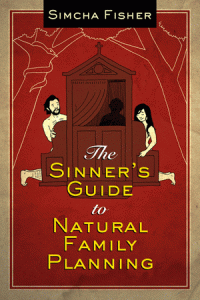
For Catholics struggling with NFA, I strongly recommend Simcha Fisher’s Sinner’s Guide to Natural Family Planning, which is unashamedly written from a Catholic perspective. The book does not tell you how to chart, it does not give the pros and cons of NFA, it does not moralise, or tell you how many children you ought to have, but rather it acts as a spiritual accompaniement purely in terms of the sex and relationship issues related to NFP. If only it had been written two years ago when I was struggling with an unplanned pregnancy, in extremely challenging circumstances. Not only should married couples read it, but anyone involved in any sort of ministry involving engaged and married couples and yes priests, I mean you – it’s not a heavy theological tome, it’ll take a couple of days at most, but most definitely a decent use of your time.

Like Joseph, Simcha identifies the notion of being ‘baby-phobic’ but nonetheless she expclicity rejects the idea of the ‘contraceptive mentality’ that many Catholics using NFA have supposedly adopted. Certainly every Catholic I know who uses NFP, does so with a prayerful mentality and to accept NFA is also to accept that sex could always result in a baby, something that our experience has taught us.

In the aftermath of the Synod, there is a troubling narrative doing the rounds, namely that Catholics who avoid children must have a critical reason for doing so. As I said last year, this is explicitly, not the case, and to get hung up on the ‘grave and serious’ reasons for avoiding conceptions, ignores the actual teaching of Humanae Vitae.

What I said in August 2013, still seems pertinent.

Ultimately if a faithful Catholic couple is using NFP then they are still accepting and participating in God’s plan for creation. NFP/NFA accepts that no method of pregnancy avoidance, bar total abstinence is 100%. It is hugely unlikely that such a couple would then opt for abortion or reject an unplanned pregnancy. Practicing NFP constantly reminds one that this is always a possibility which is why NFP encourages spouses to care for and take responsibility for each other.

We should not berate those who use it in good conscience, procreation is one of the missions of marriage but not the sole mission, there are other ways of building the kingdom, the church does not treat children as a moral good to be pursued at the expense of all other moral goods. Gaudium et Spes 50 suggests that having a large family would be the generous thing to do, but also states that it is up to couples to decide.

But berating those for using NFP to avoid in good conscience, or discouraging discussion of using NFP to plan a family responsibly, is not the way to go, particularly for those encountering these concepts for the first time, which sadly seems to be a not insignificant proportion of the faithful.

To be clear, Joe Shaw did not advocate that everyone should have 10 children, nor did he insist that the reasons for avoiding children ought to be life-threatening, but he was stating that the vocation of marriage must include openness to children. The challenge is how to communicate this beyond the Catholic faithful.

Postscript for the sake of transparency

I am extremely happy to go on record as saying that following the birth of our fifth (God willing, living) child in March, I am no longer open to pregnancy.

I should not need to justify this to the Catholic faithful and it speaks volumes that I immediately feel defensive about this decision. Couples ought to be trusted to prayerfully discern what is right for them in their particular circumstances without having to defend themselves to random shouty online strangers.

For those wishing to ‘judge’ my Catholicity, the reasons are as follows:

  1. As I age, pregnancy is exacting an increasing toll on my body physically. This is in turn having an impact on the rest of the family as I am constantly exhausted and unable to function at full capacity. Due to the transient nature of our living circumstances over the past few years, there are no family or friends close by to help pick up the slack. While pregnancy is only a temporary stage, this recent piece from First Things notes that Catholics should not shy away from accepting and validating its difficulties. I am one of those women for whom pregnancy is a form of the Passion.
  2. I am facing my fourth cesarian section. While I know of women who have had as many as seven, 4 is considered the upper limit for this to be performed safely by most surgeons. During the birth of our youngest daughter there were some difficulties in terms of scar tissue and a large amount of adhesions; this next procedure is expected to be complicated and may well result in some damage to surrounding organs or emergency hysterectomy. A recent ante-natal appointment resulted not in discussion of the wellbeing of my unborn baby, but my being exhorted to accept sterilisation while I was on the table. An option which I have declined.

So no doubt in being very clear that we wish to avoid pregnancy – we fall into the scandalous contraceptive mindset. Perhaps the difference is that it’s not that we reject the idea of further children, but of further pregnancies?

However if the Catholic Church really wishes to throw off her image of misogynistic judgementalism, perhaps advocates of the vocation of marriage, ought to embrace the positive instead of loudly critiquing what they believe to be the motivations of the imaginary minority. I don’t need some shouty man imagining that he can persuade the world to tell me how I need to put my health and family at risk if I wish to save my soul or trying to engage me in online discussion about how married couples need to be open to life 100% of the time. Actually this is one issue where the feminists have a point, there is something particularly grating about a man who does not ever experience the physical tribulations of pregnancy and childbirth telling women how they ought to feel about the subject, no matter how logical, rational or theologically correct he may be.

Using NFA requires trust and a whole new way of thinking. Let’s encourage people to do that without telling them exactly what their decisions should be or implying that they ought to have fifty children until their uterus drops out.

Stop Gendercide in the UK

Stop-Gendercide-banner

In 2012, an investigation by the Telegraph uncovered several abortion clinics where doctors were prepared to carry out abortions for women who had discovered that they were carrying a baby girl.

Opinion appears to be divided on whether or not this practice is actually illegal in the UK, back in February the health minister Lord Howe, said guidance would be sent to all abortion clinics warning them that the practice of sex-selective abortion is illegal, however both the BMA and BPAS (the UK’s leading abortion provider) dispute this interpretation of the law, the BMA claiming that there could be mental health grounds and BPAS believing that the law is silent on the matter. This is a view backed up by Neil Addison, Catholic barrister and director of the Thomas More Legal Centre.

In order to clarify the situation, a cross-party group of MPs, led by Fiona Bruce, are putting forward a Ten Minute Rule Bill on 4 November. The Abortion (Sex-Selective Bill) would not only remove all doubt about the legality of gender-selective abortion, but would also allow the Government to find a way to offer help to women who are seeking gender-selective abortions.

ITV-Gender-selective-abortion-UK

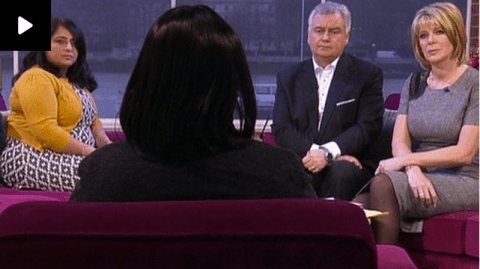
As the interview above demonstrates (click on the picture for the link) gender-selective abortion is an issue faced by many women in the UK, which is often under-reported. It is by no means a callous decision, women feel that they have little other choice when faced by cultural pressure and often domestic violence. Criminalising the practice would send a firm signal that discrimination and violence against women and girls is not to be tolerated. The anonymous interviewee, “Asher” still shows signs of trauma; she clearly isn’t reconciled with her allegedly free choice, 18 years later. This is not the empowered decision sold by the feminists, but a woman accepting and validating patriarchal attitudes, having witnessed first-hand how much worse life is for girls in some communities. Women, especially feminists ought to be rolling up their sleeves and fighting the injustice that demands baby girls are treated as lesser human beings. Not only that, but most women who undergo sex-selective abortion are forced to endure an additional horror of a late-stage abortion entailing giving birth to a deceased baby, as scan techniques identifying the gender are not effective until around 16 weeks at the earliest.

When defending late-stage abortions feminists claim that the nature of them means that it is only the very desperate who seek them. Expecting a child of a particular sex should not put one in a desperate situation in any progressive society.

A recent investigation commissioned by the Independent in January 2014, estimated that as many as 4,700 girls could be missing from the 2011 Census data, but according to Rani Bilkhu, spokeswoman for the Stop Gendercide campaign and founder of women’s rights organisation Jeena International, this figure is conservative.

I’d love to see white feminists and outspoken proponents of abortion right up til birth, Kate Smurthwaite and Sarah Ditum attempt to defend this situation, telling Asian women that it’s quite alright for them to abort their baby girls to satisfy cultural and familial male expectations.

Every woman should be allowed to have a daughter. While this is predominantly a problem which affects a minority culture in this country (hence the silence) gender selective abortion is not confined to Asian communities. Anecdotally I’ve come across a few white women who have aborted children in order to achieve family ‘balance’.

I am currently 19 weeks and 6 days pregnant with our fifth child, being mother to 4 beautiful girls. Over the last week the baby has begun to really make their presence felt, I regularly feel the baby moving about inside, kicking or reacting strongly to certain stimuli.

On Tuesday I have the 20 week scan in which we definitely intend to discover the sex of the baby. Many many people have asked or assumed that we have deliberately conceived this baby in order to ‘try for a boy’. This must be our last child, for a whole host of reasons. Many people have throughout the course of my pregnancies expressed disappointment on behalf of my husband that I am yet to produce a male. I even had a parishioner once reduce me to tears when I hobbled into the Easter vigil a few hours post hospital discharge with a newborn 4 day old girl who said “oh no, how disappointing, not another girl, you’ll have to try again and give him his boy”!

If I were to discover this baby is a girl, legally I’d have another 4 weeks in which to abort the baby with no questions asked. Is this what it means to be an unborn child in 21st Century Britain? In order to survive and be awarded basic human rights, you must be, amongst other things, of the correct gender?

To support the bill please lobby your MP, via stop gendercide and spread the word on FaceBook and social media.

Why Stephen Fry is wrong about sexual consent

Stephen-Fry_1759789b

The celebrity witch-hunt following the revelations about Jimmy Savile has cause something of a problematic backlash.

Establishment liberal luvvie Stephen Fry, who couldn’t resist leaking some outrageous tidbits from yet another set of memoirs he’s flogging, said on BBC’s Newsnight, that 14-year-old children who had sex with rock stars were not victims, because even with the benefit of adult hindsight now they are in their ‘50s, they would not categorise themselves as such.

The thing is with sexual abuse is that by its very nature it involves an element of coercion, and therefore even the 14 year olds who thought that they wanted sex with the gorgeous rock star whose poster had adorned their bedroom wall, in all probability probably didn’t.

14 year olds tend to have rather vague fantasies towards their objects of affection, or at least they did back in the day when 24 hour internet porn was not available and they were not programmed into believing that self-worth was tied up with sexual attractiveness and ability to perform the sophisticated tricks of a Parisian courtesan.

That’s not wishful thinking. it wasn’t so long since I was 14 and certainly at that stage I had not been party to hardcore porn, the most we did was a bit of teenage giggling over illicit copies of Jilly Cooper. Some of us did get coerced by older boys into doing things which we later regretted (perils of sex being a complete taboo topic at home and school and no-one ever attempting to have any sort of sensible conversation about you with boys and sex) but it’s interesting to note that it was the Lower and Upper Sixth who were conducting relationships with the Fourth Year. In today’s money that’s Year 12 and 13 eyeing up the Year 10’s. In some ways that’s not a new thing, most 14 year olds will believe themselves more grown-up and cool with the attention and flattery of an older boyfriend, especially when one considers that boys tend to physically develop later than girls.

But even when I was a teen in the late ‘80s and early ‘90s, there simply wasn’t the expectation that going out with someone meant that you were having sex with them or having sexual contact, which is perhaps why nobody talked about it. Funnily enough I was having a conversation with someone in their ‘70s the other day who told me that when she was in her teens and twenties she had loads of boyfriends. ‘I couldn’t say that now’  she told me, ‘because everyone will think that I slept with them all because that’s what having a boyfriend means these days. When I was young having a boyfriend meant that you went out with them a few times, let them buy you a drink or go to a dance with them and then when you got bored you’d move on! There was always someone who might try to get fresh with you, but you’d tell them to get lost and warn all your friends about them!’ There may have been stigma about previous sexual partners, but not boyfriends or dating.

Of course teenagers have always been having sex as well as being seen as rife for sexual abuse, but surely in a progressive society, one that recognises that an adult psyche is not fully formed in adolescence we ought to be preventing this? A 14 year old girl or boy is one who is still in the process of maturing both physically and emotionally, and the presence of sexual characteristics does not indicate a psyche to match. An 11 year old who has begun her periods is technically ready to bear children, but no-one in their right minds would suggest she is capable of consenting to a sexual relationship.

An adult is always in a position of power over a teenager and never more so when they are the subject of teenage crush. Even if a 14 year old believes that she wants to sleep with a rock star, in the vast majority of cases she is unable to match him in terms of emotional maturity – there is a world of difference between a 20 year old and 15 year old, let alone a 30 or 40 year old. The older party will have learnt various techniques of emotional manipulation and flattery, the younger party being putty in their hands and very suggestible. The damage which can be inflicted by premature sexual contact ought not to be underestimated.

Bill Wyman aside (whose ex-wife admits that she had sex with him at 14 and bitterly regrets it, accepting that she was still a child), most older men are not interested in a long term relationship with teenage girls, or not a healthy one at any rate. It is a predatory adult psyche that wishes to conduct a sexual relationship with a child or teen who is unable to form a sexual relationships on adult terms. Adults are attracted to teens thanks to a combination of their physical appearance and psychological malleability.

This inequality is why boundaries exist between pupils and teachers or any adults with a level of pastoral responsibility towards children. Abuse is defined as ‘the improper usage or treatment of an entity, often to unfairly gain benefit’. While people are not entities, teenage girls and boys will have their sexuality and psyche harmed by those who violate their boundaries and refuse to respect  and accept their vulnerability.

It’s tempting to give Stephen Fry a free pass because he patently has no interest in teenage girls in the rock star/groupie scenario he would appear to be describing, but the same applies to 14 year old teenage boys such as those tempted into seedy rent boy type scenarios such as those which allegedly occurred at the now notorious Elm Guest House, and who are equally capable of being used as sexual objects by those with specific proclivities. Arguably a boy is even less capable of giving his consent than a girl if he is still coming to terms with his developing sexuality, but both sexes have not really got to grips with sexual maturity at the age of 14 and sex involves the projection and imposition of an adult fantasy on to them.

It’s also rather unseemly and crass to be attempting to grade levels of sexual assault. Regardless of what is done to the child or teen, inappropriate sexual behaviour is being forced upon them, which needs to be treated with the utmost gravity. How this is dealt with in terms of sentencing, is in the hands of the judge taking into account all the circumstances of a particular case that comes before them.

Fry is obviously correct to warn against the presumption of guilt in celebrity abuse accusations before the case has even gone to trial, and blogger Anna Raccoon is worth reading in order to give a balanced account of how some of these cases have been overblown. One suspects that in some cases, money is a motivating factor for people to come forward. Justice demands that all the evidence is properly examined rather than an accusation being enough to secure prosecution and subsequent conviction.

There’s also a delicate balance between ensuring that on the one hand historic sex abuse does not go unpunished and on the other, not punishing people who did not believe that they were doing anything illegal or immoral and were acting according to the sexual mores of their day.

There is something ironic that in these days of unfettered sexual liberalism, social boundaries seem to reverting (and rightly so) to those of a previous era, whereby sexual touching of someone you are not in a relationship with, is a taboo. The ‘60s, ‘70s, and ‘80s seem to have been a time when people were still getting to grips with the sexual revolution, all boundaries were swept aside and literally anything went – everyone was seen as a target or potential sexual partner. Far from being liberated, women were turned into sex objects in a way that had never been so previously overt.

The pendulum is swinging back the other way – society is undergoing a correction. The problem with this is however that we appear to wanting to regulate every single element of a sexual relationship to conform with societal norms, namely frequent partners, but clinicalised, sterilised, devoid of life-giving potential and potential infection.

Fry’s almer mater has already introduced compulsory sexual consent workshops for students. Which begs the question – if 18 year olds are considered unable to fully understand what sexual consent is all about, then why are 14 year olds, regardless of whether their sexual partner is a famous rock star or someone their own age?

Annulments in the Catholic Church – it’s not who you know!

Nope, never had to do this guy a favour.

A few years ago this piece from Cristina Odone in the Telegraph would have had me reaching straight for the laptop to bash out a corrective response, but fortunately Joseph Shaw has beaten me to it.

Efficiently deconstructing her doublethink, Dr Shaw critiques her dismissal of the Church’s annulment process as being ‘dependent on money and contacts to unpick the marital knot’ as follows:

“This is extremely insulting to those many people who have been through the process of annulment in good faith, after marrying a person whose marriage vows were an empty sham.”

I am one of those people whom Cristina presumably believes used their money and contacts to unpick the marital knot. Except the whole process took six weeks and required an admin processing fee of under £20. Technically speaking for any canon lawyers who may be reading and wanting to nitpick, I did not receive an annulment, but was declared free to marry. No thorough examination needed to be conducted, the bare facts spoke for themselves.*

Nonetheless, an annulment is categorically NOT a Catholic divorce, It is a statement of fact that a marriage never existed in the first place. The judges involved in a tribunal case do not seek to apportion blame or guilt to a single party, they are there simply to examine the facts before them.

A tribunal panel does not in any way resemble a civil court process. Meetings are held in complete confidentiality and on a one-to-one basis. Where possible both spouses are asked to testify along with relevant witnesses. One does not need to spend money on hiring specialist Church, or canon lawyers. In terms of fees, all that is asked that a contribution is to made towards covering the admin fees and costs, but those who are unable to afford to do this, are not required to pay anything at all and neither will cases be prioritised according to wealth. Typically they are dealt with in date order and the reason that the process may sometimes take a few years is because it can often take that amount of time to get all of the relevant documentation and witnesses assembled. Pope Francis has already announced a commission to review whether or not the process may be simplified or streamlined, in advance of the forthcoming Synod on the Family.

Another thing Cristina omitted to mention is that this process is not only open to Catholics but to anyone who wishes the Church to investigate the circumstances of their marriage, say for example an Anglican divorcee who now wishes to marry a Catholic. The Church will examine the circumstances surrounding their marriage and determine whether or not it was valid.

Any decision does not have any bearing on the civil law, nor does it decree that a civil marriage never existed. Hence any children born from that union, are not deemed to be illegitimate, in case any bigots still care about that these days.

Cristina’s attitude is symptomatic of that I have experienced from non-Catholics. One woman even came onto this blog to decry my selfishness. I was so desperate to get married in a Catholic Church that I deliberately made my daughter illegitimate.  A gay man, who is so invested in the issue of gay marriage, deliberately briefs people that I have a child from another man, as proof of my alleged inconsistency and hypocrisy. A Twitter account was set up in the name of @realfarrow which stole my photo and accused me of adultery. And they say that Catholics are judgmental? Fact is I once made some errors of judgement and committed some sins, (several actually) long since confessed, along with every other Catholic on this planet. It doesn’t invalidate the truth of the matter at hand, nor does the fact that I failed to live up to Catholic teaching, mean that it is therefore wrong. I didn’t know what it was!

It’s also worth noting that prior to getting sacaramentally married, even though the wedding took place in a Catholic Church, the permission of the former Bishop of Chichester needed to be sought. He agreed that my former marriage was not valid, purely on the grounds of my ex not being open to children, and gave his consent for my marriage to Robin to go ahead, but noted that he did not value my Catholic annulment. Like Cristina he believed it to be a process for the rich and well-connected which was both infuriating and distressing. By contrast the Anglican church does not have any formal process for investigating validity of former marriages, instead operating a postcode lottery depending on the personal opinion of the minister involved. There’s something very reassuring about having one’s case independently and formally assessed.

How does one obtain an annulment? Simple. Approach your parish priest and ask for his help and advice. Every single diocese in England and Wales has their own marriage tribunal department who will investigate these matters for you. The priest will help you to fill out the paperwork and will then send it to the local office. Only in the extremely rare cases of Pauline and Petrine privilege, does anything need to be approved by Vatican bureaucracy. No palm-greasing, rolling up of trouser legs or funny handshakes involved.

Anyone who has gone through a divorce will testify that not only is it an extremely painful experience but that it requires a great deal of soul-searching and brutal honesty. The Church walked with me throughout this process, never once judging or telling me what I ought to do, but instead offering compassion, practical help and prayer.

I had to face up to the fact that I had made mistakes through a combination of my own emotional immaturity and ignorance. Had I not fallen away from the faith or been woefully unprepared for marriage, not least in terms of my understanding, then a lot of heartache could have been avoided.

With that in mind, it was the experience of an unplanned child combined with a difficult relationship which facilitated my return back to the Church. Once I fully understood Church teaching and the vision of marriage on offer, it was obvious that I had been living in a pale imitation without any of the graces conferred by the sacrament.

There isn’t a day that goes by when I am not grateful for being given the opportunity to live out the true vocation and vision of marriage in contrast to my previous experience. My life is now lived in the fullness of truth, instead of self-deceit, in glorious high-resolution technicolor, not fuzzy black and white.

I threw myself on the mercy of the Church, hoping and praying that she would indeed recognise that I was free to marry, but that involved having to accept that she may rule otherwise.

For internet trolls to throw ignorant uniformed insults about is one thing. When seasoned Catholic journalists and leading Anglican clerics intimate that you have done some dodgy deal to buy yourself out of a spot of bother and valid union it is quite another. But hurt feelings aren’t the main issue here. By propagating incorrect myths, not only about divorcees not being able to receive communion, but by misrepresenting the annulment process, Cristina Odone puts people’s spiritual welfare at risk, both by deterring people from presenting themselves for communion and also by preventing them from accessing the natural justice to which they are entitled.

*(As a baptised Catholic I married outside of the Church without a dispensation, or to use the lay term, permission, meaning that it was illegal according to Church law. With that in mind, had matters gone to tribunal, given that I was married to a divorcee who had explicitly and repeatedly stated to myself, friends and family that he did not ever want children, and who still confirms that to be the case, then it’s fairly obvious which way things would have gone.

Couples who are in an illegal marriage are able to get the Church to formalise them later on, however in my case this would have been impossible. )

Screening for ‘choice’

A few weeks ago I wrote an article published by Mercatornet comparing how abortion, which was brought onto UK statute books, supposedly for emergency and desperate case circumstances only, with the so-called safeguard of requiring the signature of two  independent doctors, has been automatically built into the health care system, meaning that in all stages in pregnancy women are presented with the virtue of our age – choice.

It’s inevitable that if assisted suicide is eventually enacted into legislation, euthanasia will drift exactly the same way. Any decent or civilised society should not be putting the option of whether or not to kill another person on the table, let alone committing the act for you.

I mentioned before how this incorporation of abortion into part of the package of ‘health care’ options offered to pregnant women, not only violates the Abortion Act itself, under the terms of which one might expect the request to be led by the woman herself, rather than suggested by the clinicians. My experience of the past few weeks, which to be fair is no different or more outrageous than in previous pregnancies, more than illustrates this.

This time I have been fortunate, there has been no doctor or midwife attempting to hector or pressure me into considering abortion on the grounds of not having adequate spacing between the children. Two years ago, I remember sitting in tears in the midwife’s office as she loudly tutted and suggested that I really ought to think about what I was doing and consider counselling for abortion and sterilisation while I attempted to pacify two bored and noisy toddlers as I hadn’t been able to arrange childcare for that particular appointment and had been told that there wouldn’t be another slot available for another 5 weeks. In the pregancy prior to that a self-identifying Catholic GP had proceeded to lecture me about how the Church was wrong about contraception and abortion and again suggested abortion, this time as a cure for acute morning sickness.

So actually this time has been a picnic, but nonetheless abortion has been subtly suggested as an easily accessible and acceptable pathway. Many readers will note this approvingly, however when so many women find this such a difficult and heart-wrenching decision and suffer agonising physical and emotional consequences, it is worth asking on those grounds alone, along with the  irrefutable fact that abortion ends a life, whether it ought to be treated so lightly on the NHS. It’s always there, always looming over you as an option, and for most women has the effect of adding pressure and really having to justify continuing with a pregnancy.

So let’s consider what happened to date. Firstly, I couldn’t manage to get the obligatory GP appointment wherein I turn up and say “OK doc I’m pregnant, I’ve done a positive test” and they say “right okay and you are fine with that?”, I confirm, it gets typed in on the computer screen along with dates, and from there I am allowed to proceed to book in with the midwife. The GP appointment does nothing useful for the pregnant woman, there are no blood tests, no care plan suggested, it’s nothing other than a gatekeeper appointment for those who have perhaps experienced an unplanned pregnancy or are undecided. If you are pregnant, happy about it and want to proceed straight to midwife, in my surgery, it is not allowed. With 4 children and a lot on my plate, it’s an unnecessary hassle.

Due to holidays and an early threatened miscarriage I managed to circumvent that particular rigmarole, helped by the fact that I had presented at the Early Pregnancy Unit who had directly booked me in for a 12 week scan, rather than having to go via midwife. It meant that a swift appointment needed to be found with a midwife to ensure that I had a set of notes with me and so they managed to slot me into a cancellation without first seeing a GP.

But even at the Early Pregnancy Unit, before I had even been scanned to find out what was actually happening with my uterus, the very first question I was asked, was whether or not the pregnancy was planned, which seems something of an insensitive irrelevance when a woman wants to know exactly what the status of the embryo or foetus (from 8 weeks) is.

I wanted to know whether or not the baby was miscarrying. Did it really matter at that point whether or not it was planned, or would it have affected my treatment? The only possible reason for that question was to discuss abortion options if necessary or work out whether or not it was worth attempting any preventative action which could save the baby.

The next question was “do you accept the pregnancy?”, which was fatuous. Either a woman is pregnant or she is not, regardless of whether or not she accepts the fact. It’s a clear euphemism and again presents an option on the table for a woman to think about. Why should the first thing that a woman anxious that she might be miscarrying a baby be asked, is whether or not she planned her pregnancy and whether or not she ‘accepts’ the baby.

I’ve said before, this question always reminds me of the questions asked of parents in Baptism and is for me a public confirmation and affirmation of the life inside, but nonetheless it was a disconcerting irrelevance. Would this happen in the diagnosis of a terminal disease. “Do you accept the prognosis and traditional plan of palliative care?”. Putting a big fat elephant in the room as to whether or not you are truly making a ‘moral’ choice by selfishly continuing with your life until its natural end.

From there on everything proceeded smoothly and as I said earlier in the week on Conservative Woman, I declined the option for Downs Syndrome screening.

One of the comments in which a woman claimed that I had no idea what I was talking about, did give me pause for thought as she outlined how a diagnosis could be helpful even if you were not planning on abortion, as Downs carries lots of risks for the child in utero. Technically a care plan should be tailored to ensure the safety of both mother and child, but when you are faced with the screening options, this is never specifically outlined in terms of your decision making and many women report being given very little in the way of positive support or information when told that their child has a genetic abnormality.

 Indeed the leaflet warns that once you have had the screening, you cannot turn the clock back and that unless you are prepared to cope with the stress of knowing that you have an increased likelihood of a child with Downs, or are prepared to consider a further diagnostic test (with a 1-2% chance of miscarriage) then you might be better off not having the screening at all.

Screenshot 2014-08-29 10.08.10

I declined because I didn’t want to be worrying about it. If the baby has Downs then while it will be far from easy, especially  as I already have a number of children. I’d rather meet the challenges and difficulties as and when they come, rather than spend sleepless nights worrying about hypothetical scenarios. Furthermore the leaflet states that the primary purpose of all the risky invasive tests is to detect Downs Syndrome, although other conditions may be discovered.

Screenshot 2014-08-29 11.13.01

So the scan went ahead yesterday. As predicted, I was asked to confirm whether or not I wished for the nuchal translucency test for Downs, which combines a screen result with a further blood test. When I said no, I was pretty candid about it, stating that the only thing that I was hoping to see on the monitor was a live baby after what happened last year.

The sonographer was very sympathetic, but nonetheless they said that she would still measure the nuchal translucency, i.e. the amount of fluid behind the baby’s neck to see whether it was within normal parameters. An increased amount of fluid is a strong indicator of Downs Syndrome. If the measurement was high, she would inform me in order to give me the option to change my mind about having the full screening!

It turned out that the measurement was well within normal limits. That doesn’t mean that the baby definitely does not have Downs Syndrome, but in all probability there is a lower risk.

I’ve been left feeling disconcerted as though I somehow went back on my word. When they told me that they would measure the fluid anyway, I should have firmly stated “look I’m not interested either way” but at that point, when you are lying on the table, there is a sense of having ceded control and powerlessness. I just wanted them to hurry up and switch on the equipment so I could see whether or not there was still a heartbeat.

I also have to confess to a slight sense of relief which goes to show that even the most pro-life amongst us are not immune from the insidious pressure and notion that a Downs Syndrome diagnosis is a catastrophic thing. All of which adds to the stigma, both for sufferers themselves and their parents, which Dawkins did his best to stoke, adding unrepentantly that he’d only upset a small minority, in any event. If the NHS didn’t make such an issue of flagging up Downs Screen for pregnant women, going so far as to suggest that it can be such a problem that women ought to consider risking their baby’s life, most probably wouldn’t give it much of a thought.

It’s not that I reject the idea of pre-natal screening or wish to demonise those who opt for it, but surely it ought to be offered purely for theraputic reasons, to alleviate and treat conditions, either in utero if possible, or to prepare future healthcare strategies and plans for mother and child, rather than continually  present the issue of whether or not the child ought to live. Screening the unborn for disabilities does nothing to help advance research into therapies to help sufferers.

It doesn’t feel as though the NHS has got the balance right, when they are being so proactive in terms of continually presenting abortion as a consideration.