Grow up?

Rowan-Williams_2553898b

A few days ago a lovely young non-Christian girlfriend of mine messaged me on Facebook. “Would you ever consider getting a nine to five job?” she asked. “Sure”, was my response, “I’ll need to get a job at some point, but probably not until all of the children are at school”.

“Aren’t you worried” she said, “that your views on gay marriage will hurt you?”. Very telling from someone who has been, if not an advocate of “gay marriage”,  has certainly openly supported it, seeing no problem with gay marriage in a civil context, but vehemently disagreeing with those who would wish to have it imposed on religious institutions.

She has a good point. The two professions which I have oscillated over entering over the past few years, namely midwifery and teaching, I have to accept are no longer avenues that would likely be open to me on account of my views.

Recently there has been a ridiculous furore amongst Catholics (who should frankly have better things to do with their time) on Twitter over the use of pseudonymous tweeting and blogging. One tweeter, whom I shall decline to name, has been leading something of a one-man crusade against “sock-puppets”,  demanding that every new pseudonymous account provides him with their name and address and some form of credentials in order to prove that they are not in fact, a ‘fake’. Anyone who declines to do so, is instantly decried and publicly denigrated as a fraud,  pseudonymous tweeters should, in his humble opinion, be banned, either one should tweet in one’s own name or not at all. If you have something to hide, then you should not be on Twitter,  Catholics should be out and proud, happy to be derided and martyred for their views along with the likes of St Thomas More.

Which is all very well, but what when those views could seriously interfere with one’s job prospects, or result in your being sacked? I can well imagine that if I was still in some of my former jobs, this blog would result in my dismissal on the grounds of gross misconduct. Not that I have said or done anything scandalous, but simply being ‘out there’ as an opponent of things like abortion, surrogacy, IVF and gay marriage, would cause colleagues to feel uncomfortable, as though they were being ‘judged’ and an employer may consider that their reputation could well be damaged as a result of having an employee who held such scandalous and counter-cultural views.

It cannot be much of a surprise that the majority of non-clerical Catholic tweeters and bloggers employ pseudonyms which they zealously guard; being considered up there with St Thomas More is wonderful, the consequences of which may not be martyrdom, they could certainly impact on others such as vulnerable young family members. While losing your job may do wonders for one’s Catholic credentials, it doesn’t exactly put bread on the table for your children and certainly will affect one’s future job prospects. I wonder whether even a company like Tescos, former sponsors of Gay Pride, would give you a job stacking shelves in these days where one’s name and entire history can be easily googled?

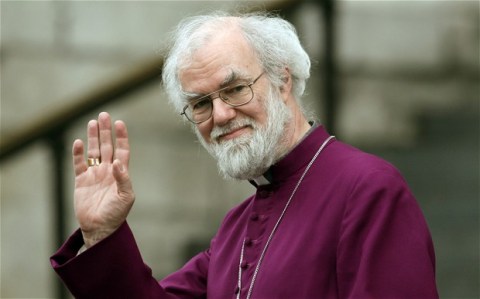
Clearly, unless one has a ‘Catholic’ or even ‘Christian’ job, it’s inadvisable to be open about one’s faith on the internet. It’s not the same as being shot at in Eygpt or beheaded in Syria, but free-speech is limited for serious Christians, like it or not, which is in itself a form of persecution. Should Adrian Smith, the housing officer who was demoted over comments made about gay marriage on his personal Facebook page, have simply shrugged his shoulders and “grown up” as the former Archbishop of Canterbury would appear to suggest?

What about the pro-life GP hounded off Twitter by the Irish pro-abort crowd who reported him to the GMC and NHS because using his real name, he expressed pro-life views? Should he too just accept that his beliefs are incompatible with his profession (to save lives not take them) and therefore his freedom of expression is limited and he should just ‘man-up’?

Freedom of expression, is clearly not as serious as threats to livelihood, but it is very much tied up with freedom of association and the right to earn a decent wage in the profession of one’s choice.

Being a Christian is not just a ‘hobby’, it’s not like being a Stars Wars fan, or doing the odd bit of voluntary work, we are compelled to live our faith, which is more than simply going to Church on a Sunday or holy days of obligation and keeping our mouths firmly shut the rest of the time. Faith is not simply that funny habit which mummy and daddy have that we take out of a box and parade as necessary before putting back, but something that needs to be lived, daily, in our thoughts, in our words and in our actions. Faith is not something we leave in the pews on a Sunday. We are commanded to evangelise, and part of that has to be, at some stage, expressing our views, grounded as they are in compassion, hope and charity, not keeping our mouths shut out of fear. Obviously there is a time and a place to do that, no-one wants to be pounced on by fierce evangelisation, a colleague quoting Revelation and fire and brimstone at 9am round the water-cooler on a Monday morning, but neither should we be afraid to put forward or propose our views in the public square, as appropriate.

But increasingly, that is what we are having to accept and what the likes of the National Secular Society are wanting to impose upon us as well as removing our rights to educate our children in accordance with our faith.

I have to accept that even if I were to delete this entire blog tomorrow, due to my Catholic Voices work and my writing for the Catholic press, any future employment prospects outside of the Catholic or pro-life sphere, are limited.

Rowan Williams misses the point when he tells Christians to grow up if they are made to feel uncomfortable or made fun of.  When you look at my most persistent trolls and aggressive interlocutors, the verbal violence has stemmed from the fact that they are made uncomfortable by my writing. By rejecting their views and offering an alternative, I am, by their logic, rejecting them, rejecting their lifestyle decisions and by not unconditionally agreeing that abortion, gay marriage, promiscuity or whatever else is perfectly acceptable, I cause enormous amounts of anger and hate to be directed at me.

Surely it is those who cannot accept that everyone will approve of their choices, who should grow up, instead of seeking to silence opponents?

Whatever the answer the fact that Christians are increasingly afraid to speak out under their real names on the internet (my mother is terribly anxious as a result of my writing), the fact that some feel silenced at work and that faith can prove a barrier to gainful employment in a chosen profession, is in itself a form of persecution. Whilst it’s helpful to keep this in perspective and remember that the situation is not as dire as in other parts of the world, we should not succumb to victim top-trumps, but neither should we deny that this is happening, turn a blind eye, shrug our shoulders and giggle whilst people are losing their livelihoods or are too scared to speak their minds.

Injustice is injustice, regardless of the semantics that one wishes to employ to describe the situation, but to try to pretend it is not happening, in a vain attempt to shore up our existing position and win popularity, is to co-operate in our own persecution. Losing your job for refusing to teach secular sex ed or gay ‘marriage’ might not be up there with getting one’s head cut off for apostasy. But that’s scant comfort to those who are in the firing line. Being disbarred from a job is more than feeling ‘mildly uncomfortable’.

Next time someone tries to smear my mental health or imply that my children are at risk and should be removed as a result of my ‘homophobic’ and pro-life views, as has happened frequently in the past, I’ll just giggle. I’ll accept that we could never be considered as suitable foster parents and give some temporary stability to needy children later on in life, due to our faith. Next time I see a job advertised that I could do with my hands tied behind my back in a local authority or a non-Catholic institution in Brighton, I’ll accept that it’s pointless to put in an application. It’s all my own fault for expounding my Catholic views in public, in today’s tolerant society.

If being grown up is about accepting, condoning, ignoring and laughing at inequality of opportunity as a result of faith, I’d rather be an idealistic child. Of course, when one’s entire ministry has consisted of serving God, when one’s religious views have led to positions within the highest echelons of academia at one of the country’s most prestigious universities and indeed when one as risen to the highest possible rank within one’s church, it is naturally very difficult to conceive of what persecution might look like for your rank and file Christian countryman.
Internet trolling – lessons learned the hard way

Taken from the Catholic Universe – 11 August 2013

The subject of internet trolls is once again back in the news, following the vile and horrific abuse including threats of sexual violence, received by Caroline Criado-Perez, the feminist campaigner who successfully lobbied the Bank of England for the re-inclusion of a female figure on the back of a banknote. Any high profile female MPs or journalists who supported Ms Criado-Perez or her campaign, such as the MP Stella Creasy or the historian Mary Beard, also found themselves at the receiving end of seemingly sexually motivated threats of violence and death.

In other, related news, Melissa Porter, a BBC TV presenter told of how internet trolls had maliciously misinterpreted a perfectly innocent advertisement she had appeared in with her son, leading to a social services investigation which could potentially have seen him removed from her care. She was wholly exonerated, what the social workers were unable to tell her was that they were almost certain that this was a vexatious report, but needed to check out given the gravity of the allegations.

The most tragic case was that of 14 year-old schoolgirl Hannah Smith who was found having hanged herself, by her 16 year-old sister, after months of taunts and abuse on the popular website ask.fm. There are now calls for the website to be shut down, Hannah’s death being the latest in a string of teenage suicides linked to online bullying from this source.

As a parent, these tragedies increase my desire never to let my children anywhere near social media until they are well over the age of 18 and have the emotional maturity to deal with online interaction. While perhaps the abuse that I have received in my capacity as a Catholic blogger and tweeter, hasn’t quite reached the stage of alleged bomb threats, I have encountered more than my fair share and even at my ripe old age, I still have difficulty coping with it and summoning up the correct response, so I cannot begin to imagine what this would be like for a vulnerable teen.

When pregnant with my third daughter, a particularly vicious pro-choice advocate expressed a wish that I might be struck down by God and hopefully at the hands of an abortionist with rusty scissors and in my fourth pregnancy, I was subject to a violent sexual threat at the hands of a gay ‘marriage’ campaigner, who justified his call for me to hunted down and sexually violated, on the grounds that it was clearly a ‘joke’. In addition, another woman claimed that I secretly wished my unborn baby to die in order that I might profit from the attention and gleefully told shocked onlookers that I ought to stop snivelling. Backed up by a motley group of pro-choice activists and gay rights sympathisers, along with some disaffected members of the faith, they proceeded to make my online life a total misery with a very nasty personalised and directed campaign, in which every single element of my life including my appearance, my children, my husband and my mental health was publicly derided and mocked.

I dealt with it no better than the average teenager, tearfully imploring the attackers to stop, appealing to their better nature and hoping that whatever their grievances, could they not see that I was pregnant and vulnerable. Our daughter was delivered early at a significantly lower birthweight than the others, due to pre-eclampsia, the stress of online abuse thought to be a contributory factor.

The extremely painful lesson I learnt was the old adage – do not feed the trolls, which is so much easier said than done and feels counter-intuitive. The other option was of course, to ditch social media, which can prove to be something of a time-sink, it certainly wasn’t proving a constructive or pleasant experience at times, but given my online activity tends to predominantly promote Catholicism and the pro-life cause, I was reluctant to let myself be silenced by the bullies.

Being the target of a prolonged campaign of cyber-bullying (which continues to this day) has given me a certain insight into the potentially destructive nature of the internet which also has tremendous capacity for good. Perhaps this is why it has its darker side – evil wants to distort and destroy all that is beautiful and true. We can see what a potent tool the internet can be in the cause of the New Evangelisation, it cannot be a surprise that human sin has the potential to undo the good work that can be done.

Social media makes ‘stalkers’ and ‘obsessives’ of us all, if we are not careful. Whereas in real life we know that people may be talking about us and remain blissfully ignorant of that fact, social media enables us to check up on what others may be saying. It takes an enormous amount of self-restraint not to look, when one knows one is being referred to and even more not to hit back. It is dreadful to see lies, abuse and calumny writ large against you, your heart starts beating faster, you can feel your blood pumping, your stomach feels as though you have been punched as the nausea and bile rises into your throat.

But to fight back, or even acknowledge the bullies, gives them a power that they do not deserve and validates their behaviour. Ultimately one has to accept that one is totally powerless, we have not yet got a grip on the internet, the police are often not inclined to help unless one is a high-profile celebrity victim and the bullies have developed very crafty mechanisms of hiding IP addresses and couching various threats in such a way that they skirt the line but don’t cross it.

We can fight for a politer more civilised discourse, we can encourage platforms like Twitter to clamp down on abuse and take swifter action against miscreants, but we have to accept that it is unlikely that we will be able to rid the internet of abusers. It is not the platforms  that are to blame, but the users themselves. We are all still getting used to the internet and thus codes of conduct and practice are still in their infancy but the best way of targeting abusers is to deny them of their power and platform.

The internet is an additional weapon in our enemies’ armory with which they can use to attack us. We cannot control the behaviour of others, but we all have the power to control our reactions. This is where true liberation from all calumny lies, whether it be online or in real-life. An invocatory psalm or two also helps. But better law enforcement in cases of serious and prolonged online harassment would certainly not go amiss either. And never forget Matthew 5: 11-16.

* Since the article was published, additional information has come to light about the case of Hannah Smith.

Francis is a pope for our times as he kick starts global Catholic revival

This week’s Catholic Universe Column – 4 August 2013

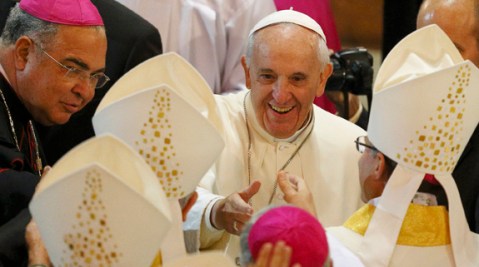
Pope greets bishops as he arrives to celebrate Mass at Rio's Cathedral of St. Sebastian

There has been much talk in the Catholic media this week of how Pope Francis’ visit to Rio for World Youth Day has de-toxified Catholicism; the witness of three million young people gathered together on Copacabana Beach will bust open the popular myth of an organisation that is out of touch with the young people, the world at large and consists of a bunch of evil hypocritical zealots who conspire to cover up child abuse.

It’s a testimony to the shallowness of today’s culture that Pope Francis is being heralded as a breath of fresh air, someone who will reinvigorate the Church, his papacy is being reported as a radical departure and yet he has said or done nothing that demonstrates any deviation from the Church doctrine that was so lucidly articulated by the Pope Emeritus. Francis is going down a storm, simply by virtue of the natural charisma that he possess in bucket-loads.

This is by no means a bad thing, although we Catholics are rather nonplussed at the rapturous reception our Holy Father is receiving in the press; the idea that the media might actually be willing to present Catholicism in a positive light is a novelty to say the least, however before we get too acclimatised to this new state of affairs, it’s worth remembering how human nature loves to build people up, before pulling the pedestal from beneath their feet. One of the joys of Pope Francis however, is that although he can see the wisdom of engaging with the press and does so in an impromptu and unscripted fashion, no doubt giving poor Fr Lombardi the Vatican’s press officer palpitations, he is also down to earth enough to not give two hoots for the fickleness of the world’s media. What we see with this Pope is what we get and Francis’ pronouncements are in great contrast to those of Pope Benedict, whose towering intellect meant that every public statement was carefully considered and full of theological nuance and depth.

That’s not to dismiss our former Pope whom, I hope history will remember with great affection, his was a gentle, thoughtful and cerebral papacy, it would take a lifetime to read and disseminate his great works of theology, the suggestions that he will one day be proclaimed a Doctor of the Church are well-founded, but Francis seems to have refreshed the parts that others failed to reach.

This week I found myself explaining the concept of indulgences on BBC radio in Northern Ireland and was incredulous to find myself defending the Church from accusations of cheapening itself by encouraging people to use social media in order to follow World Youth Day as part of the conditions of gaining a plenary indulgence. The presenter seemed to wish the Church to remain fusty and remote, as opposed to being actively involved in the activities of the world, which in this day and age, has to include the internet. “Tweet your way out of purgatory ?” spluttered the presenter indignantly. “If only” I thought, wistfully, my Twitter habit being one I wish I’d never acquired!

It is wholly appropriate that Pope Francis should encourage young people to use the internet to join their prayers with those of others around the world. This is, after all, what the Church actually is, not merely the Vatican City State, but actually the body of Christ, the family of believers from around the world. The granting of a plenary indulgence to those who joined in with World Youth Day on a spiritual level (subject to the usual conditions) was an ingenious and innovative notion. It was affirming the concept that the Church is one large global family of believers all praying for each other, the indulgence merely being the formal process in which the Church is showing that she is adding her powers to bind and loose, to invoke Christ and the Saints in order to speed her members passage to heaven.

The internet can be used to spiritually unite believers as never before and is used predominantly by the younger generations, it makes perfect sense to use it as a tool for the New Evangelisation. Speaking in his homily at the final Mass, Pope Francis reminded pilgrims of Christ’s commandment to make disciples of all nations. He urged the young, not to remain locked up in their lives or in small self-affirming communities, but instead to share their faith widely and passionately.

At a previous Mass he called upon the faithful to be bold, to be audacious. He has certainly proven that he possess those qualities in abundance, manifested right from the very beginning of his Papacy with his choice of name, a marked departure from previous tradition, but nonetheless entirely apt, a fusion of two great evangelisers, of the East and West, St Francis of Assisi and St Francis Xavier.

The visit has been overshadowed by the extraordinary extemporaneous press conference given on the flight back from Rio, in which Pope Francis reiterated Church teaching on homosexuality, reminding journalists that no-one should be marginalised on account of their sexuality and that the Church seeks an integrated society, one which fosters love for our brothers and sisters, rejecting the notions of ugly identity politics and factions competing for power.

While not a departure from doctrine, let alone the radical one being lauded by the press, it says a great deal that this has received such overwhelmingly positive coverage. If the church has been contaminated by the appalling clerical abuse scandal, the doctrine regarding sexual relationships is further grist to the mill. If Pope Francis has managed to find a way of reconnecting a cynical secular society to the intention of caritas that lies behind church teaching, then he has already in a few short months, rendered the soil fertile for future growth, opening minds to listen and hearts to receive.

In a world where the distinction between public and private is becoming increasingly blurred, thanks in part to the proliferation of social media, Pope Francis’ has managed to embrace the spirit of the age without succumbing to it. He is, in short, a permanent good news story. We had better get ready, the Catholic revival has begun!

Catholic family size – a response from Edmund Adamus

I always appreciate receiving feedback and so I was most grateful to receive an email from Edmund Adamus, the Director for Marriage and Family Life in Westminster Diocese.

I have with his permission, published his email in its entirety below. In a stroke of providence, the 2008 Theology of the Body Lecture in Westminster which was delivered by Janet Smith for the 40th Anniversary of Humanae Vitae, was one which I attended with Robin and was one of those key moments in his journey towards Catholicism. Janet’s talk should, I think, be delivered in every school and parish up and down the land. Also Mark Lambert has written an interesting response, here.

Dear Caroline,

Thank you for your post on August 1st

A most articulate piece. Janet Smith and I have been in continuous correspondence since she delivered the 2008 Annual Theology of the Body lecture in Westminster to commemorate the 40th anniversary of HV. She and I both agree that the phrase ‘responsible parenthood’ doesn’t adequately reflect a faithful translation of the original Latin in the Encyclical. “Conscious parenthood” would render something closer and with one stroke it would extricate the Church from ‘buying in to’ [albeit in an unintended manner] to the culture that treats conception and birth like a pathology.  You may find the quote below useful at some stage in your work. It is certainly one I intend to use again when I address the annual national ‘NFP’ conference on October 12th. *

“It is said that when seeking ways of regulating births, only 5% of you consult God. In the face of this unfortunate fact, we your pastors have been remiss: how few are there among you whom we have reached. There have been some couples eager to share their expertise and values on birth regulation with others. They did not receive adequate support from their priests. We did not give them due attention, believing then this ministry consisted merely of imparting a technique best left to married couples. Only recently have we discovered how deep your yearning is for God to be present in your married lives. But we did not know then how to help you discover God’s presence and activity in your mission of Christian parenting. Afflicted with doubts about alternatives to contraception technology, we abandoned you to your confused and lonely consciences with a lame excuse: ‘follow what your conscience tells you.’ How little we realized that it was our consciences that needed to be formed first. A greater concern would have led us to discover that religious hunger in you”

(Professor Janet Smith, Contraception – Why Not? Westminster Cathedral Hall, March 5th 2008).

One other less known fact of history is that ;


‘The term ‘Natural Family Planning’ or ‘NFP’ was coined in 1971 at a joint meeting of federal public health officials [in USA] and international leaders of the nascent NFP Movement, and made its first appearance in print in 1973. The implications of this verbal merger were not lost on the population control establishment, which was quick to publicize the idea that the Church had adopted the concept of ‘family planning’ and that the only remaining area of disagreement was over methodology. . . .’ The Final Plague: Sex Education by Randy Engel . Pan Books 1993, footnote 400.


Hence my own personal and professional preference to refer to fertility awareness or as you say NFA….   But for now nfp will do when we are starting slowly to reverse a culture …

 Edmund

* The title of Edmund’s talk is “Fertility Awareness; Naturally Serving the Communion of Persons.”

Catholics and Family Size

Francis Philips made some excellent points in her Catholic Herald blogpost this week, asking whether the Church has succumbed to an anti-family culture and reminding Catholics that they should not feel the need to limit their family size.

She quotes one Christopher Gawley who posits that while the Church abhors the small-family contraceptive mentality, it does not present the true message of Humane Vitae, namely the obligation of married couples to have children and not to limit their family size. According to Gawley, this is because the Church does not teach NFP properly, citing it as the natural alternative to artificial contraception and thus couples fall into the contraceptive mindset, using NFP as a form of contraception in order to avoid pregnancy.

That’s certainly a criticism that has cropped up a lot in my combox over the years, with non-Catholics claiming that NFP is merely semantics or a form of sophistry, NFP it is claimed, is just another form of contraception. To be fair, one cannot blame the non-catechised for taking this view, it can be confusing, especially considering that NFP is even described as a form of contraception by the NHS. We Catholics can also play into this perspective, when trying to persuade others of the efficacy and morality of NFP compared to other forms of contraception. There can be little doubt, that religious principles aside, there are compelling reasons for a couple to use NFP, which is entirely natural, leaves no ecological footprint and does much to enhance the relationship between husband and wife on both a physical, psychological and for Catholics, spiritual level.

Which is why we should probably attempt a Catholic boycott of the phrase and instead plump for something along the lines of NFA, Natural Fertility Awareness which is the essence behind NFP for Catholics. It’s not simply about planning one’s family in a utilitarian fashion, but a couple together monitoring a woman’s fertility and every month making prayerful decisions as to the best course of action.

I do not agree that the Church is implicitly buying into the contraceptive mentality by the way it teaches and presents NFP, because let’s be honest here, sadly many practicing Catholics are using contraception and actually see no problem with this, such as for example, the former editor of the Catholic Herald, Cristina Odone. The problem is not, in my experience, that the Church is not teaching NFP or Humanae Vitae correctly, the problem is that it isn’t really being taught at all. Perhaps I’m being unfair, but I think I’ve heard it alluded to once during a homily over the past five years. I once spoke at a neighbouring parish on the theology of NFP, together with a practitioner who did the mechanics and once I’d got over the embarrassment of telling a group of engaged and co-habiting couples that they ought to consider chastity, what was clear was that none of them had ever really considered the doctrine on contraception, let alone the reasons behind it or even putting it into practice.

We are really fooling ourselves if we believe that the reason that Catholics are having small families is because they are misusing NFP. those Catholics who do use it, are the ones who fully understand it and tend to have larger families anyway. In the absence of stats, it’s impossible to make generalisations, but the priority should not be Catholics with say two or three children, who may be using NFP with a contraceptive mentality.

The expert moral theologian in this area, Janet Smith, says that often, the graveness of the valid reasons for avoiding pregnancy can be overstated. I would tend to agree, because what constitutes ‘grave and serious’ reasons is entirely subjective and depends upon the individual couple. While childbearing shouldn’t be postponed for trivial social reasons such as planning a holiday for example, it is totally valid for a woman who has given birth in the last year, for example, to use NFP/NFA to space out her children and give her body adequate time to recover before the next pregnancy. That may not come under the life-threatening implications of ‘grave’ but so long as she doesn’t postpone indefinitely and the decision is taken carefully and prayerfully, it isn’t one that should attract censure. Janet Smith suggests that ‘just’ reasons would be a more suitable phrase.

Humane Vitae admittedly uses the terms ‘serious’ and ‘grave’, as follows:

“If we look further to physical, economic, psychological and social conditions, responsible parenthood is exercised by those who, guided by prudent consideration and generosity, elect to accept many children. Those are also to be considered responsible, who, for serious reasons [seriis causis] and with due respect for moral precepts, decide not to have another child either for a definite or an indefinite amount of time.” (HV10)

Certainly, there may be just reasons [justae causae] for spacing offspring; these may be based on the physical or psychological condition of the spouses, or may be based on external factors.” Further on it states the spouses may have worthy and weighty justifications (argumenta . . . honesta et gravia); defensible reasons (probabiles rationes); and just reasons (iustae rationes) for limiting their family size.” (HV16)

So in planning family size, a couple needs to think about ALL their commitments, to each other, to their existing children, to other family members who may be dependents, such as an elderly parent, basically, the decision has to be defensible, and not selfish, but directed towards a good beyond their own comfort. There are a multitude of good reasons why a couple may decide to use NFP and their decision to do so should be between themselves, taking into account Church teaching on the matter, based on prayerful discernment. The external factors referred to in HV16, obviously refers to compelling financial and social reasons, and can in themselves be a defensible reason, i.e it does not need to be a matter of life and death.

Gaudium et Spes 50 has a passage which is also helpful in discerning what constitutes a just decision.

“takes into consideration their own good and the good of their children already born or yet to come, an ability to read the signs of the times and of their own situation on the material and spiritual level, and finally, an estimation of the good of the family, of society, and of the Church.”

On the matter of how many children one should have, John Paul II had something interesting to say:

“The family is an institution created by procreation within the framework of marriage. It is a natural community, directly dependent on the parents for its existence and functioning. The parents create the family as a complement to and extension of their love. To create a family means to create a community, since the family is a social unit or else it is not a family. To be a community it must have a certain size. This is most obvious in the context of education. For the family is an educational institution within the framework of which the personality of a new human being is formed. If it is to be correctly formed it is very important that this human being should not be alone, but surrounded by a natural community. We are sometimes told that it is easier to bring up several children together than an only child, and also that two children are not a community – they are two only children. It is the role of the parents to direct their children’s upbringing, but under their direction the children educate themselves because they develop within the framework of a community of children, a collective of siblings.”

So ideally, a family should constitute more than two children.

It seems to me that getting too hung up on the grave and serious nature of reasons for avoiding childbirth, ignores the actual teaching of Humane Vitae. I also think that to do so, encourages us to fall into the trap of judging others on the basis of their family size. There’s many a time that I look at some of these marvellous Catholic families with 6 or more children wistfully and wish I’d met my husband when in my twenties so we could have got going a lot earlier and had plenty more, but such is life. We’ve not been doing too badly in the reproductive stakes, to put it mildly.

But we shouldn’t be too keen to judge a family’s Catholicity on the basis of family size. A family may only have one or two children for reasons that are unknown to the outsider and could well be a source of pain for them. A small Catholic family is not a scandalous situation and neither should we hector those who prayerfully chose to employ NFP to achieve or avoid pregnancy, the two being different sides of the same coin.

Ultimately if a faithful Catholic couple is using NFP then they are still accepting and participating in God’s plan for creation. NFP/NFA accepts that no method of pregnancy avoidance, bar total abstinence is 100%. It is hugely unlikely that such a couple would then opt for abortion or reject an unplanned pregnancy. Practicing NFP constantly reminds one that this is always a possibility which is why NFP encourages spouses to care for and take responsibility for each other.

We should not berate those who use it in good conscience, procreation is one of the missions of marriage but not the sole mission, there are other ways of building the kingdom, the church does not treat children as a moral good to be pursued at the expense of all other moral goods. Gaudium et Spes 50 suggests that having a large family would be the generous thing to do, but also states that it is up to couples to decide.

The subject of children and family size is a fraught one to which we must be sensitive. I’ve been hurt by thoughtless comments from well-meaning Catholics, concerning the sex of my children, or suggestions that I ought to be trying for more to set a good example, when in fact we had very sound reasons to be thinking about avoiding. Tip, the last thing one should say to a woman with a newborn baby girl staggering into Church following her third cesarian is “oh what a pity, when are you going to try again”?!

Using NFP takes courage in this day and age, where most have us have been conditioned into wanting to and believing that we can control every aspect of our lives, including childbearing. NFP is liberating and empowering it paradoxically puts a woman in charge of her own fertility (far more so than artificial methods of contraception) but with that liberation comes a submission to God’s will. One innately understands that ‘accidents’ can happen and when they do, you are in a far better position to be able to make the heroic sacrifice required.

There is still so much work to be done in terms of catechesis and educating the faithful on this matter, far better to evangelise on the spiritual goods and moral imperatives of NFP as opposed to be hammering home the message that Catholics should expect to have as many children as humanly possible, continuing to reproduce like rabbits until their uterus falls out.

Yes, generosity is expected and required and this is something that we should be passing onto our children by word and example. But having a large family is not the only way in which one can exercise generosity and perhaps it’s a case of carrot and stick. Once the faithful have been convinced of the good of NFP, constant reminders of the grave and serious reasons to avoid may well become superfluous. Once you’ve understood the teaching in its entirety, not simply the logistics or mechanics, then the rest follows on holistically.

But berating those for using NFP to avoid in good conscience, or discouraging discussion of using NFP to plan a family responsibly, is not the way to go, particularly for those encountering these concepts for the first time, which sadly seems to be a not insignificant proportion of the faithful.

Postscript

Upon reflection it occurred to me that Christopher Gawley, the writer referred to is American, where it is normal pastoral practice for couples to receive NFP instruction as part of their marriage preparation. Perhaps Gawley is justified in critiquing the way this is taught if it only focuses upon the method itself as opposed to the underlying theology. This isn’t the problem in the UK where qualified NFP practitioners are in short supply and NFP is barely mentioned in many parishes or schools.

I still feel that faithful couples practicing NFP should be treated in good faith. It is highly likely that an orthodox couple who are using NFP to avoid pregnancy or space their children will be sufficiently motivated and well informed to understand their obligations in the light of Church teaching.

A beautiful royal baby – now we need equality for every unborn child

Taken from the Catholic Universe – 28 July 2013

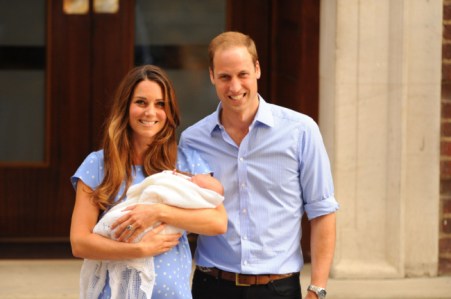
Prince George

The nation is this week celebrating the birth of a healthy baby son to the Duke and Duchess of Cambridge – congratulations to this lovely young couple who are undoubtedly going to make wonderful parents.

My heart went out to Kate Middleton, having suffered identical ailments in pregnancy, from severe morning to sickness, to enduring sweltering summer temperatures in the final weeks before delivery. Kate may have many advantages, but chances are she isn’t going to enjoy the opportunity that most of us get to slob around the house in our dressing gowns in the post-natal blissful haze known as the babymoon! Watching the media furore over the past few days was a compelling reason for her to consider having any future births at home.

What was however both telling and heartening was that not once, even in the very early stages of the Duchess’s pregnancy was her son referred to as anything other than what he is, namely a baby. The absence of the word ‘foetus’ which we hear so often in relation to pregnant women, especially in the time before the baby becomes viable, was noticeable. Not once did any reporter or journalist refer to the Royal Baby as ‘the products of conception’, ‘a bunch of cells’, a ‘future potential person’ but for the entire duration of the pregnancy, his humanity and future destiny was explicit. The pregnancy even prompted a rushed change to the succession laws to ensure that the baby would automatically succeed to the throne regardless of their gender.

How many other unborn children have the privilege of being deemed so important that they necessitate a change to the country’s legislation? That’s not in any way to begrudge the status of the newborn, but instead of fighting for an unattainable equality of birth, (far better to concentrate our minds on the equality of death) surely we should all be fighting for the equality for every unborn child to be deemed a baby and thus accorded the opportunity of life?

Whilst we were all quite rightly desperately excited for the royal couple, I wish that some of the excitement and magic of pregnancy could be transferred elsewhere, to the frightened pregnant teen, to the single mother living in a run-down tower block, to the homeless drug addict whose baby will most probably be born with an addiction. Whilst the world was watching and waiting in breathless anticipation, I wondered how many other mothers would be labouring, perhaps alone, without the huge amount of support and well-wishers or loving family unit that the Duchess is fortunate to possess and was reminded of the gross inequality regarding how their pregnancies are viewed by society. Whereas the world would have reacted with horror had the Duchess suddenly decided to abort, proving that the whole notion of choice is a misnomer, had the teen mum or drug addict had an abortion, it would have been seen as the morally correct course of action, that these children would have been better off not born, due to their status and potential health problems.

Every child is born of equal dignity and worth in the eyes of the creator and so in one sense every birth is that of a Royal baby! Kate and William’s baby was never just a cluster of cells, but always a human being in the eyes of everyone, even the most avowed pro-choice commentators, by virtue of the fact that he was wanted. Compare the worldwide interest and concern for this baby’s welfare with that shown for the tragic victims of Kermit Gosnell, the American late-term abortionist who killed newborn babies at full term by snipping their necks. The media was on the whole disinterested and only began to report the distressing details following a widespread campaign on social media.

It’s certainly worth not only noting the dual standards applied by the mainstream media towards the Cambridge baby but also applying it to all children, refusing to allow the frame of clinical euphemism that only serves to dehumanise the unborn. Abortion providers rely upon the power of language to couch the unpalatable truth in terms of medical terminology. We never congratulate pregnant women on their embryos, foetuses, pluripotent cells or products of conception and this is why pro-life counselling groups cause such consternation in that they too are always keen to refer to the baby in purely factual terms. Political language is deliberately used, as in the words of George Orwell it is ‘designed to make lies sound more truthful, murder respectable and give the appearance of solidity to pure wind’.

All babies are deserving of a welcome fit for a prince and every single pregnancy an occasion of great joy as well as an opportunity of service, whether that be from the expectant mother carefully sustaining and providing for her child’s needs, or from those around her who should seek to provide her with every means of support in gratitude for her physical sacrifice. We should be daring to work for a society in which the bunting is hung out for every single baby.

 In the meantime we should keep the Duke and Duchess and their new prince in our prayers and hope that they continue to model a strong vision of marriage and family life for the nation. It would be wonderful if they could be generous enough to break the mold and produce a large family of Catholic-sized proportions.

Even better that the baby was born on the feast day of St Mary Magdalene, the icon of a repentant sinner turning back to Christ. Perhaps there’s a portent for the UK in there somewhere? Let’s hope so.

Abortion statistics 2013 – the underlying narratives

My column from the Catholic Universe – 21 July 2013

The abortion statistics for women living in England and Wales were released this week, with the picture looking decidedly mixed. A total of 185, 122 lives were lost to abortion in 2012, a drop of 2.5% from 2011, with a marked drop in the number of abortions performed upon the under-18 age group, in line with the reduced teenage pregnancy figures in this age cohort.

There is little to celebrate however, though more lives were spared than in previous years, the number of overall annual abortions equates to 185,000 women who felt that they lacked the ability, resources or desire to have a child and instead chose to terminate their baby’s life. That so many women felt that they had no option other than abortion indicates that something is seriously wrong in our society where so little value is placed both on the life of the unborn and motherhood itself. Moreover the raw data shows little improvement, around 16.4 per thousand women had an abortion in 2012, the same number of women as in 1997. As an aside, it’s interesting to note that the number of abortions jumped and then rose steadily since the Labour government came to power in 1997, but has begun to decline since the Coalition took power in 2010. Austerity does not seem to be causing any spikes in the abortion rate which feels counter-intuitive; the UK fertility rate is now one of the highest in Europe, thanks to an increase in immigration and changes in the timing of childbearing, maternity units across the country are bursting at the seams.

Another upsetting narrative to emerge was the sharp increase in the number of pregnancies aborted due to fetal abnormality, which had risen by 17% last year. Our pro-life attitude only extends so far as being able to cheer on our paralympians in a fit of self-indulgent patriotic and patronising bonhomie. We’ll happily wave flags and give a pat on the head to those who manage to overcome the odds and perform almost superhuman feats of courage and endurance, but not actually get our hands dirty and be prepared to do the dirty work of looking after a child with physically demanding special needs. Perhaps I’m being unfair, I know of many such generous families and I also accept that for many the decision to abort a disabled child is a tortuous and heartbreaking process, but it’s a tragic irony that the year which did so much to raise the profile and potential and prospects of those with disabilities, also saw such a marked increase in disabled babies being denied the opportunity to live.

But what the abortion statistics do highlight, as does Ann Furedi, Head of the British Pregnancy Advisory Service (BPAS), is that contraception is not the failsafe panacea promoted by the various industries and agencies with vested interests. By far the largest group of women who presented for an abortion last year, were those in the 20-24 age bracket, of whom it cannot be argued do not know the birds and the bees! Either they are engaging in irresponsible sexual behaviour, or their contraception is failing and perhaps both.

If Ann Furedi is admitting that ‘abortion is a fact of life…women from all ages and all walks of life experience unplanned pregnancy’ then this should cause us to question whether women really do have the much vaunted sexual freedom and whether or not abortion, the taking the life of a child, should be seen as an inevitable and acceptable consequence of a sexually permissive society? Does sexual libertinism come at too high a price? Lord Steele, one of the original architects and proponents of the 1967 Abortion Act dramatically intervened prior to the publication of these figures, saying that ‘it was never the purpose’ that women would use abortion as a form of contraception.’ For all Ann Furedi’s denial that abortion is used for this purpose, her insistence that there is ‘no right number of abortions’ belies her stance. The rise in repeat abortion would also undermine that claim – 37% of all abortions carried our last year were repeat procedures. More than 4,500 women had had at least four.

No wonder Ireland’s pro-life movement which has just seen a bill passed allowing for termination of pregnancy right up until birth for women deemed to be suicidal, are looking at the UK with such dismay and horror. The bitter irony is that this will reverse the abortion traffic back across the Irish Sea as a UK woman unable to procure a late stage abortion here need only to jump on a ferry or plane and claim she is suicidal in order to access the procedure over there.

Meanwhile our cousins over the pond in Texas have had considerable success in passing a bill which bans abortion from 20 weeks onwards as well as having the effect of closing many state clinics who are unwilling and/or unable to meet tight medical and sanitary regulations to ensure the protection of women.

Reading the heated debates on the matter, my attention was drawn to a polemic written by an ernest young man, enjoining his brothers to fight for the abortion rights of his sisters and setting out the reasons why. Amongst them were these:

“This bill will force men into unplanned fatherhood…Your sex life is at stake…Don’t be surprised if casual sex outside relationships becomes far more difficult to come by.”

A great own goal for the pro-choice movement demonstrating that abortion encourages men to shirk responsibility, leaving women with little other choice.


I faked a Student Pregnancy

Pregnant student

Actually I didn’t, I experienced an unplanned pregnancy twice when embarking upon my degree. This girl did however and was horrified by the response.

The piece highlights precisely what I was talking about the other day, in terms of the stigma and prejudice that young and unmarried mothers have to face and why we should never exercise anything but charity, coupled with joy whenever we encounter a young mother who has chosen life against considerable odds. While the writer does not venture any opinion with regards to the morals of abortion, it’s excellent to see an acknowledgement in the mainstream media that the concept of consequence-free sex is nothing more than a myth.

Society, ably aided and abetted by the abortion industry is promulgating a chocolate-box, picture-perfect version of pregnancy, one that is all about designer maternity wear, high-maintenance grooming, top-of the range nursery goods and must be planned to occur at that perfect moment, whenever a woman feels emotionally and financially ready. Something I always say to teens who might be foolish enough to discuss their boyfriends or refer obliquely to their sex lives with me, is ‘do you feel ready to have a baby with this boy/man’. At which point they usually blush, start twisting their ankles awkwardly, look at the floor and hope it will swallow them up. The point being that unless you believe abortion to be an acceptable form of contraception, (and few women will actually admit to this), then you ought to be prepared to have a baby with your sexual partner.

The most amusing response is always ‘well we haven’t talked about babies yet, or what I’d do if I got pregnant, it’s far too early for that kind of thing’. Which strikes me as an illogical and emotionally incoherent response. So you are prepared to take your clothes off, get naked and intimate with this man, swap bodily fluids, but you are far too embarrassed to bring up the topic of what happens, if nature takes its course, what the backup plan might be. It demonstrates the falsehood of sexual freedom and empowerment. There is a an automatic expectation that any romantic relationship will swiftly progress to sexual intimacy but that on the whole women are too embarrassed to talk about what might happen if she gets pregnant, in case she deters her new partner from making any sort of long-term commitment to her and comes across as over-keen.

Ellie House (the writer) no doubt experienced negativity because men were frightened of what she represented and women saw her as a traitor, not only to her education, aspirations and the cause of womanhood but also because she might well put men off from having sex with them. It’s a strangely dissonant response.

The account resonated with me, because while not experiencing quite the same hostility, I was a married mature student in my thirties and thus others’ expectations were wholly different, but I did however have to sit through the stomach churning talk during Freshers’ Week where abortion was referred to in couched terms of how the University would help deal with ‘personal difficulties’ and students signposted to abortion services and counsellors and sexual health services in the numerous literature. It was emphasised that the University would be understanding to those with problems and allowances made and help given.

It was however a different story when I actually presented as pregnant. Extensions were grudgingly granted on provision of a doctor’s note certifying morning sickness, but very little in the way of actual support was given. One of the problems that I encountered was that the baby was due in the holidays shortly before the start of the new academic year. There was an on-site nursery, however they understandably would not admit children below the age of 5 months. If I were to be able to continue with my degree I would need to be able to bring the baby into lectures/seminars for the period of a few months. I did not see this as being much of a problem, it was after all my fourth baby, I was a confident breast-feeder, the plan was to have the baby quietly in a sling or car seat and of course I would have taken her out had she begun to cry or disrupt the class. I was informed that this was an unacceptable request, it would prove too distracting for other students, even if I sat at the back of the lecture theatre or was discreet in my feeding. A newborn baby simply wasn’t welcome.

The other issue was the on-site nursery which had been under threat of closure for quite some time, the university claiming that despite the rise in fees, it was not cost efficient. Fortunately there was a huge furore, the nursery was the reason that had attracted quite a few staff to the campus in some cases bringing with them millions of pounds worth of research grants. A solution was eventually found whereby the nursery was sold off to an outside provider in a tortuous process which involved lots of potential providers dropping out at the last minute and the nursery was saved, but it was clear that childcare provision was not a priority for the University of Sussex. Had the nursery closed then there would have been no facilities for either the students and staff of Sussex or of the neighbouring University of Brighton. While the student activists got terribly hot under the collar over the contracting out of all support services to outside providers, there was not a peep from them when the nursery was under threat and neither did they strike in support of the nursery workers, who had their contracts terminated and then renewed on far less favourable terms to a private provider.

Speaking from the perspective of a student who had two young children in the nursery and creche in order to study, the costs were extremely prohibitive, a child would need to be booked in for an entire session, ie. one couldn’t just drop the baby off for an hour’s lecture and on those few occasions where the nursery would ring mid-seminar to inform you that child had been sick or whatever and you needed to come and collect her, there was very little understanding from professors. The whole impression given by the academic staff was that student parents were a burden, I was being extremely foolish trying to juggle babies whilst studying and ought to reconsider. I came to the conclusion that it was simply unfeasible in my situation, obviously it was unusual in that I was juggling 3 children, a degree and pregnancy, but I can well imagine the barriers that a first-time pregnant young student might face. Abortion was implicitly mooted as the only sensible option. On one occasion I took one baby into the ‘child friendly’ cafe to feed and felt too self-conscious of all the bemused stares to continue. You stick out like a sore thumb with a baby on campus.

It was one of the reasons why I was so heartened to listen to Eve Farren, Director of the Alliance of Pro-Life Students (APS), at their London launch earlier in the year. She perfectly summarised my experience, i.e. of new students being given a leaflet with contacts details of abortion services but no information on the help available to students who choose life, and confirmed, as the article mentioned, that the secular pro-life group LIFE who are well placed to provide practical help support and advice are, in common with many pro-life groups, banned from campuses, in direct violation of principles of democracy and education.

One of the things that APS has sought to do is forge firm alliances with otherwise unlikely allies such as feminist groups, recognising that pregnant students are put in the position where the notion of ‘choice’ is but a pipe-dream given the lack of provision and support for student mothers and have together campaigned and fought for real improvements for pregnant women on campus. One way in which they can be supported is by signing up to donate £5 a month as part of their 500 give £5 giving scheme, £5 being the equivalent of one visit to a coffee shop, or a bottle of wine, to put it into perspective.

Without the Alliance of pro-life Students, life for women students who have been encouraged to lead lives full of emotionally unfulfilling short-term sexual relationships and find themselves caught out, shows no sign of improvement.

Every cloud has a silver lining, I now have 4 beautiful children and have taken the decision to pursue a more appropriate topic and method of study at Maryvale. Romans 8:28 and all that. But life is messy, best-laid plans go awry, there is never a perfect time to have a baby. That’s the message we should be passing on to the next generation and enabling them to continue with their education. Being a mother and being in receipt of a Higher Education – the two are not mutually exclusive.

Disability dilemmas – what should the Catholic Church/pro-life movement ‘do’?

Abortion of unborn children diagnosed with abnormalities is back on the agenda with the publication of the abortion statistics for 2012, which showed a sharp rise in the number of children aborted due to disabilities, up 17% on 2011 figures. As I explain in this week’s Universe, this demonstrates a gulf between the national attitudes on display during the Paralympics and those on an individual basis. We are all delighted to cheer on our athletes in the spirit of patriotism, but fewer of us are prepared to actually get our hands dirty when it comes to the more difficult task of caring for a disabled child. A parliamentary commission has pointed out that the way the abortion laws are being applied amounts to little more than eugenics, and is ‘unfit for a civilised society’. If the rules surrounding abortion for babies diagnosed with disabilities are to be reformed or tightened up, the Catholic Church and pro-life movement can expect scrutiny in terms of what they actually do to help the disabled in society.

One of the regular tropes trotted out by pro-choicers is that Catholics only really care about the unborn baby; once the baby is born or saved from abortion we then wash our hands and absolve ourselves of all responsibility. Nothing could be further from the truth. In the case of the Good Counsel Network for example, they offer support for as long the mother requires it. Over the past few weeks, a few Catholics have been agitating on social media that the Catholic Church and/or pro-life organisations should do more for the disabled, such as paying for respite care for the mothers or carers of disabled children and adults, if they are going to campaign for an end to abortion on the grounds of foetal abnormality.

This concept needs a little unpacking before uncritical acceptance.

In the case of the Catholic Church, it does do an awful lot for disabled children and adults, but on a local level according to the Catholic tenet of subsidiarity. Whether one is referring to either the Catholic Church or the pro-life movement, we should steer away from the socialist notion that everything should be centrally controlled, whether that be by the state, the ‘Church’ or a pro-life organisation. The Catholic Church has several voluntary societies such as the St Vincent de Paul Society, to name just one, which does exactly the work of supporting and providing practical help to the vulnerable in society, such as struggling families, the elderly and disabled of all ages. Catholic parishes have rostas for visiting the sick and pull together in an informal way to help those in their community who are vulnerable or in need of support in times of crisis. I can give numerous examples of acts of generosity and I don’t mean in purely financial terms, actually far more difficult is to give of one’s time and yet I’ve seen members of a parish help a struggling mother with ad hoc free childcare or picking up children from school, cooking meals for an elderly infirm neighbour, volunteering to look after a disabled child for a few hours on a regular basis or help out an elderly couple where one has Altzheimers and so on. The fact that this is not centrally organised or formally recognised, does not mean that it doesn’t happen. Of course there does need to be some formal organisation, but usually it’s done at a local level.

Outside of parish level, Catholic schools, both in the independent and state sector strongly encourage their pupils to participate in voluntary work and there are schemes which see pupils run and participate in activities such as Riding for the Disabled, Swimming and sports clubs, residential weeks for disabled and underprivileged children, in order to foster mutually enriching relationships and a sense of responsibility and community. Catholic Children’s societies do much work in terms of providing respite care and helping families as well as advocating for the rights of the disabled in society. Individual dioceses have pastoral teams exactly for this purpose, including helping people to receive the most out of the sacraments and general specialised support groups.

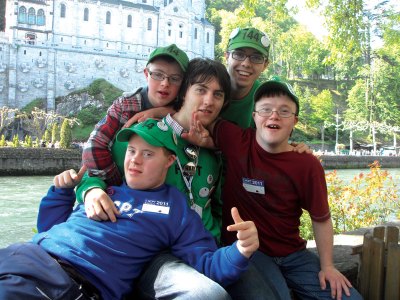
So it’s rather unfair to claim that the Catholic Church doesn’t actually do anything for those with disabilities, anyone who has ever been on any sort of organised diocesan pilgrimage to a place such as Lourdes, will see exactly the sort of attitude that the Catholic Church adopts towards the disabled, the Catholic Church not simply consisting of ‘The Vatican’ but the members of all the faithful around the globe. Incidentally it’s inside a Catholic church that one is most likely to frequently encounter a large gathering of those with various physical or learning disabilities. Here’s the little boy who took his First Holy Communion with my daughter.

HCPT
The HCPT Lourdes Pilgrimage

As a rule I’m generally reluctant to validate by engaging with the notion that the Catholic Church doesn’t care about the disabled once they are born, because this accusation is usually thrown about by those who have little knowledge or experience of what does go on and even if they did, would still find something to criticise. It is the kind of thinking that dictates that the Church should spend all its time engaged in voluntary and practical work (for certain approved politically correct causes) mopping up social problems such as poverty but should have absolutely no voice in terms of formulating the policies whose side-effects they are expected to resolve.

In any event should the Church pay for respite care for disabled children and adults, outside of what it does already, if it is serious about ending abortion on the grounds of disability?

The first question we have to ask is whether or not the Church or any pro-life organisation would actually have sufficient funds to provide for this? I suspect the answer would be no. The annual income of all the UK major pro-life organisations combined would not begin to cover respite care for every single disabled child or adult. We also know that contrary to Dawkins’ assertions that the Church is not actually awash with cash and does not have that much liquidity, especially at parish level. But perhaps both pro-life organisations and churches ought to campaign for more donations on this basis?

Perhaps, but the fundamental question here, is whether or not the Church or pro-life organisations ought to be doing this work for the government? It’s true that in medieval times the Church was fundamental in terms of setting up schools, hospitals, communities to care for the sick, the needy, the poor and so on, but this was in the days before taxes. We live in an entirely different, allegedly more civilised society under which we are obliged to give a significant proportion of our income to the government to order our society and therefore surely it is entirely encumbant upon the government to make such provision for respite care and look after the most vulnerable unless it wants to lift all taxation.

Would it really help if various Catholic institutions were to replicate what happens already? Besides which levels of respite care and assistance are entirely dependent on the nature of the disability which is why best practice enables families to be given a certain budget and determine their care plan themselves according to their own specific circumstances and needs.

Would the promise of paid respite care actually tempt women into keeping their unborn babies? Most women who decide to abort a baby with a foetal abnormality do not so lightly or because their baby is less than perfect, but out of fear. What the recent parliamentary commission on abortions on the grounds of disability heard, was countless tales of how women felt that medical professionals bounced them into a decision; that they really felt that they had little other choice, and no other options were put to them. So part of the solution has to be a more empathetic and open to real choice medical profession, especially in the areas of foetal medicine and gynaecology. When diagnosing foetal abnormalities, the baby is measured against a standard of perfection, when in reality none of us are physically perfect. We often hear terrible cases of young men and women dropping down dead because of an undiagnosed heart defect that they have had since birth. Tragic whilst those cases are (and more preventative measures should be taken), the parents of those individuals never lament the birth of their child or wish they had never been born, instead they celebrate lifetimes of joy and achievement. Would they have taken a different decision had they been informed that their baby could drop down dead at any minute during the 20 week scan?

The problem with many of these diagnoses is that they are invariably worst case scenarios, when the reality is that no-one really knows with much certainty until the baby is born. Many readers will be able to give anecdotes of diagnoses of severe physical abnormality and dire prognoses only to go on to deliver a perfectly healthy baby. Only yesterday I heard yet another such tale myself. Here’s a little girl who was diagnosed with a condition incompatible with life . Even when the diagnoses are correct, they only tell a one-sided story that involves only heartbreak and suffering with never any mention of love, joy, fulfilment, laughter or contentment. This is behind the screening for Downs Syndrome – the condition is deemed to be so unutterably dreadful and makes life so miserable and difficult, that parents need to be give the choice to abort. The pro-choicers have gone beserk over the case of Father Vander Woude, who was inundated with responses to an appeal for prospective adoptive parents of an unborn baby with Downs Syndrome, claiming that abortion is the better or only option for those babies with Down Syndrome. A sentiment which Francis Philips, whose daughter has Downs, would vociferously refute.

In many many cases, it’s not necessarily money, but fear, especially of the unknown. Perhaps if there is something the church or pro-life organisations could do is organise support groups for those diagnosed with these conditions (some already exist) or help in assisting local groups for mothers and fathers of babies and young toddlers with various conditions. Parents faced with this situation are currently forced to rely for remote internet help and support, as due to abortion, babies diagnosed with difficulties are few and far between.

Even if organisations were able to offer a limitless supply of cash for respite, it would still make no difference to some mothers. The barrier is not purely financial, it’s about having the confidence in one’s ability to parent a child with disabilities, especially if you already have children. Parenting a child is hard and time consuming as well as immeasurably rewarding, it requires graft and self-sacrifice. Unfortunately words and concepts such as those tend to be alien and almost taboo in today’s society, self sacrifice, duty and responsibility have a negative rather than heroic and aspirational quality. Which is one of the reasons why mothers abort healthy children too. They fear they don’t have the capacity or ability to mother and the ideal of self-sacrifice is seen as the enemy of the dominant narrative or zeitgeist of self autonomy. It might be judgemental but sadly true in some cases. Some women neither believe in, nor want to be self-sacrificial, a child should fulfil them and on their terms, not understanding the fulfilment that can be found in sacrifice. Some women simply don’t want the work, effort or responsibility that comes with having a child, no matter what any pro-life organisation does, they cannot and should not seek to entirely remove the responsibility from the woman’s shoulders, but rather help her to bear it.

Which feeds into the final point about handing out cash willy-nilly to mothers or provision of free childcare or respite care to pregnant women. Help that is offered should never ever be in the form of a bribe, but instead to help a woman overcome the barriers to saving her child’s life. These barriers will differ from person to person, money is not always the overriding issue. A Catholic solution is holistic, it’s joined up, it’s helping the mother to reach her potential as a mother, rather than treating the child as a barrier to personal fulfilment or individual success. Part of this should involve a spiritual element. By saying to a woman, ‘okay we’ll pay for all your respite care and/or all your childcare’ it treats the child as an object or problem. No single mothers of young children (or indeed any mothers of young children) should be forced, coerced or encouraged to work. Children should not be placed full-time in nurseries, which often lead to poorer outcomes for children, if they are to flourish.

Throwing money at people to put their children in childcare or to provide respite care, buys into the narrative that children, whether able-bodied or not, are a burden to be overcome. Encouraging women of young children to go out to work consolidates the feminist Marxist agenda that is profoundly anti-women and seeks to force women and mothers in the workplace against their wishes and is an attack on the family. (Studies show that an overwhelming majority of mothers wish to stay at home with their children). Pro-life is about so much more than cash or consolidating a culture of dependency or entitlement. No amount of cash will mitigate the personal responsibility or additional work involved in child-raising unless one pays for a full time carer, 24/7.

A blanket offer of respite care consolidates the idea that disabled children are just so unbearably difficult and demanding that parents will need to be able to escape at every possible opportunity. Propagating this physically unattainable ideal also implicitly validates abortion of disabled children, stating that because insufficient respite care is available, the decision to abort is justifiable because the woman has no other option. The decision may be understandable, but never morally valid, no matter how hard that may be for many to read. We also need to be extremely careful not to feed the abortionist’s mantra that pro-life is about quality of life as opposed to sanctity, whilst at the same time assisting parents and children to maximise the former.

The Catholic Church or pro-life organisations should not let the government off the hook in terms of its responsibilities to the disabled. We should not seek to replicate existing provision but to complement. If there are gaps in provision we should look to identify and see what we can do to rectify and be inspired by the documents of the Second Vatican Council which implored the laity to take on more responsibility in terms of lay apostolates of this nature. I mentioned the Good Counsel Network earlier, they are an excellent example of this, in that having identified a need, they have set up a wholly Catholic apostolate. Surely this is what we are called to do as Catholics, to tailor a solution that is holistic, not simply financial or practical but one that addresses spiritual needs and has a strongly Catholic flavour. Otherwise we become little more than social workers.

Ultimately we shouldn’t sit in our armchairs, with a ‘somebody should do something’ attitude, pontificating what the Catholic Church or pro-life organisations should do, but actually be pro-active in setting up whichever initiatives we feel are necessary.

Much is done already by many in terms of caring for the vulnerable in society, no doubt more can be done. But the first job has to be doing whatever we can, which includes political action and highlighting the unjust and appalling attitudes towards those with disabilities simply because they are in utero. There’s no point campaigning for better respite care, better facilities, fairer legislation or railing against unfair benefit cuts for the disabled, if we turn a blind eye to the despicable prejudice that seeks to deny people the opportunity to life, the most basic human right of all.

God willing, abortion on the basis of disability may soon be a thing of the past. When all are accorded the equal right to life, it will then be the opportune moment to review what can be done better in terms of supporting those with disabilities, which will naturally include relationships with other agencies and charities. If we allow everyone to be born, the government will be forced to up its game and provision. But at the rate we are going we will soon have a raft of legislative measures, buildings with wheelchair ramps and so forth and yet no-one to use them.

Teen mothers are pro-life heroines

Taken from this week’s Catholic Universe – 14 July 2013

t1larg.teen.mom

Michael Gove, the Secretary of State for Education, is currently under pressure from MPs such as Diane Abbot and Caroline Lucas to introduce compulsory Sex and Relationship education into the curriculum reforms that are currently being formulated. One of the factors behind such calls is the claim that compulsory sex education would have an impact upon Britain’s level of teenage pregnancy which is amongst the highest in Western Europe.

There is no evidence to suggest that policy interventions, including compulsory sex education are having any effect whatsoever upon the rate of teenage pregnancy. In 1999, Tony Blair pumped £280 million into the creation of the Teenage Pregnancy Unit which aimed to reduce the number of teen pregnancies by an eventual 50%, five years later, instead of the hoped-for reduction, there was instead a rise of 0.6%, leading the then Chancellor, Ed Balls, to pledge an additional £20 million to the project.

Professor David Paton, chair of Industrial Economics at Nottingham University pointed out in August 2012 that researchers have been unable to find a correlation between Local Authorities judged to have best Sex and Relationships Education (SRE) policies and those with the biggest decreases in the teen pregnancy rate, which has remained static, give or take the odd blip, over the past forty years, which has only decreased by a small amount over the past few years. Whilst the decrease is welcome, it should be noted that there has been an explosion in the teen STD rate over the same period, indicating that while fewer teens may be falling pregnant, many more of them are contracting diseases which could lead to future infertility. This is due to the large uptake of long-acting-reversible contraceptives such as the hormonal implant which will protect against pregnancy but not against diseases. It is therefore reasonable to conclude that despite being armed with the knowledge on how to protect themselves against pregnancy, teenagers are still indulging in as much if not more risky sex, as ever before.

What is required is behaviour change, which conventional wisdom tries to advocate is neither achievable nor necessarily desirable, but countries which boast the lowest rates of teen pregnancies are those whose teenagers become sexually active at a much later age and have fewer partners.

Teenage pregnancy is for the most part undesirable because in the majority of cases it is unplanned, leads to abortion and presents significant barriers to human flourishing, in a society that is neither mentally, socially or economically equipped to deal with young unmarried mothers. Nonetheless we have to ask ourselves tough questions as Catholics as to whether or not we need to re-think some of our attitudes and stop demonising young pregnant teenagers as a measure of all that’s wrong with the world, if we want to re-build a culture of life.

What the teenage pregnancy statistics demonstrate is that young people are being duped into believing that there is such a concept of safe sex devoid of all consequences. According to statistics the contraceptive pill is the method of choice for teenage girls, which has a typical use failure rate of around 9%, a rate that is often higher in inexperienced or unreliable users who are not aware of the contraindications or the importance of taking it at precisely the same time every day. There is a staggering 18-21% failure rate per year when condoms are used as the main method to avoid pregnancy according to the  CDC – the American public health agency.

We therefore have to accept that a certain proportion of teenage girls will always fall pregnant in a society that promotes teenage sex as inevitable and morally neutral and whilst not encouraging teen pregnancy as being a status to which one should aspire, we should do whatever is in our power to nurture, support and protect those young girls who find themselves unexpectedly pregnant, while at the same time, working to change behavioural assumptions and expectations.

Obsessing over teen pregnancy statistics or the stigma of teen pregnancy does nothing to stem the tide of young girls knocking on the doors of the abortion clinic. To decide to continue with an unplanned pregnancy without a partner or spouse, without a reliable stable income and before one has finished one’s education is not reckless or irresponsible, but a brave act of heroism, of putting another’s life before yours in a culture that advocates abortion as being the only moral and acceptable solution for young girls. Being pregnant can be a terrifying and scary experience even when it is planned and is even more so for the fifteen or sixteen year old as she watches her life and her body spiral out of control.

Campaigns that aim to shame or stereotype young mothers such as the revolting ‘No Teen Pregnancy’ fronted by assorted teen American celebrities should have no place in any Christian institution or organisation. A child born to a young teenage mother is nothing more than a visible proof of a past sexual sin – something of which many of us are guilty of, only perhaps we have not been caught. I have been privileged to get to know many teen mums in the course of my life, all of whom have been an inspiration, not only in terms of how they have parented their child, the strong bond of mutual love has been a joy to witness, but who also went on to later success in terms of career and family lives. We should be supporting, thanking and asking what we can do to help these young women fulfill their potential as mothers, instead of pursing lips and writing them off.

Lest we forget, the mother of the greatest King of us all, was herself according to tradition, a young teenaged unmarried woman.