Singing of the hidden God: Blessed John Paul II and the mystical power of words

As today is the Optional Memorial of Blessed John Paul II, I have reproduced my feature from the Easter supplement of the Catholic Herald in 2011, celebrating the literary output of one of the greatest popes in modern times.
bl-pope-john-paull-ii

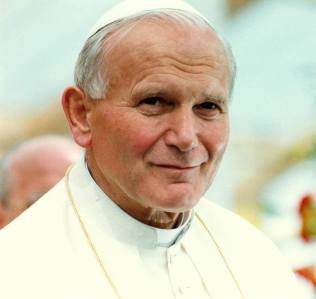
Pope John Paul II is lauded for his contributions to theology, human rights, religious freedoms and the renewal of Catholic spirituality. What is often forgotten, is that he was first of all a poet and playwright, his theatrical roots stretching back to his boyhood. He acted in his first play at the age of eight, and this literary and thespian bent gave his papacy its unique flavour. It was his grounding in and love for theatre that no doubt contributed to his reputation of being something of a showman.

Although he was not the first pope to have written poems and plays, John Paul II was unique in that, unlike with his predecessors, his ordination to the priesthood did not put an end to his literary output. He remained a poet and playwright throughout his entire ministry. His final poem, the Roman Triptych, was written in the 23rd year of his papacy and is considered by many to be his spiritual last testament, contemplating the beginning and end of his reign as pope.

Meditating upon the Michelangelo fresco of the Judgement in the Sistine Chapel, John Paul II notes:

so it was in August, and then in October,

of the memorable year of the two Conclaves,

and so it will be again, when the need arises after my death.

Michelangelos vision must then speak to them.

Poetry accompanied John Paul II his entire life. Poetry became his means of expressing his personal feelings and experiences, his relationship to God, to his fellow man and to the world as a whole. It documents his spiritual journey from school pupil to pope, revealing the process of his maturing spirituality and attempts at self-definition. His poetry deals with a whole range of issues from friendships to problems related to his pastoral duties and obligations as bishop – in short, everything that became part of his experience.

John Paul II’s poetic sentiments were formed under the looming shadow of war and invasion. He was influenced by the revival of Polish Romanticism, which held that history had a spiritual core and that the political collapse of Poland over the 18th and 19th centuries had been caused by the deterioration of traditional national virtues.

Echoing a familiar Christian theme, redemptive suffering as a personal spiritual discipline, the great Polish romantics believed that redemptive suffering was also the national destiny. Poland was a Messiah among nations, whose political misfortunes signified a time on Calvary that would redeem the world and give rise to spiritual renewal. It was under the influence of this tradition and following the Nazi occupation in 1939 that John Paul II began writing his first poems and plays. By the end of 1940, he had written a trilogy, David, Job and Jeremiah, which all re-told a biblical story in the context of a key moment in Polish history. These plays were both examinations of the human soul and acts of resistance towards the occupiers, all three having political undertones.

John Paul drew parallels between the fate of Poland, being punished for losing its Christian roots and the punishments of Israelites for breakingtheir covenant with God. In 1939, he wrote in a letter to a friend: “The nation has fallen like Israel because it did not recognise he messianic ideal, its own ideal. Our liberation lies at the gate of Christ”.

In his poetry of the same era, we see the emerging figure of a man of great prayer and devotion. Over This, Your White Grave is arguably one of his most touching poems, written at the age of 19 and dealing with the premature death of his mother, in which his monologue displaying his feelings of longing, sorrow and melancholy is transformed into a simple prayer for his mother which expresses his gratitude for love. “O Mother, extinguished love… give her eternal peace.”The poem evokes the image of the young poet kneeling in prayer at his mother’s grave, giving thanks for her life and reconciled with the prospect of death. The remainder of his poetry written in the war years is similarly contemplative, displaying a mysticism and a turning inwards to God.

John Paul II responded to the horror surrounding him with a sense of detachment, but that is not to say that he was unaffected by it. In one of the poems from his later period he draws upon the time that he was forced to work as a manual labourer in a quarry. But his early poetry shows that at a time when it must have seemed like the apocalypse was nigh – his beloved father died, his friends were taken to concentration camps and he was risking his life by remaining a member of an underground theatre company –his only refuge in the Lord.

His later poetry, becomes increasingly ambitious in terms of language, further blurring the boundaries between thought and prayer.

Perhaps one of John Paul II’s greatest achievements as a playwright was having one of his plays, The Jeweller’s Shop, written in 1960, under the pseudonym of Andrzej Jawien, turned into a Hollywood movie, starring Burt Lancaster and Olivia Hussey. The story focuses upon the contrast of human relationships, love, marriage and family, encapsulating John Paul’s favourite theme, namely that love is difficult but one must continue to hope as our futures depend upon it. The play explores the concepts that would be later worked out more fully in his famous cycle of teachings that would become the Theology of the Body.

Above all, in his poetry and plays John Paul II showed an awareness of the mystical power of words. The idea of the “living word” both on stage and in poetry could transform reality by summoning the audience to moral action. He saw a correlation between the poetic and theatrical word and the Divine Word by which God created the universe and by which bread and wine are transformed into the Body and Blood of Christ in the Eucharist. Time and time again his work returned to the theme of the Eucharist, in the transformation of the bread and wine he saw the paradox of God continually both hiding and revealing himself.

“The Shores of Silence”, the first part of the poem, The Song of the Hidden God, loses none of its lyrical qualities in translation:

Learn from me, my dear ones, how to hide,

for where I am hidden I abide…

there is a Beauty more real

concealed in the living blood.

To use John Paul II’s own words, in a country wracked by occupation and war, his poetry really did sing of the hidden God, in a regime that recognised that the Catholic Church was the historic custodian of Polish national culture and identity and thus sought to destroy it.

In the New Evangelisation of the world called for by John Paul II, poets and playwrights, along with other artists had an important role to play. “Humanity in every age – and even today – looks to works of art to shed light upon its path and its destiny,” he once wrote. Artists were invited to follow his example and use their God-given gifts for the purposes of spiritual renewal, using their artistic quest for beauty, good and truth to transcend the physical and lead them back to their divine origins.

In his final poem, the Pope re-iterated his concept of the living word: that everything around us should proclaim God’s love, a love that was made as a promise before the dawn of time:

the sign of the Covenant

which the Eternal Word made with you

even before the world was created.

It is no surprise that his life ended with the most passionate and inspirational performance of all. He was no longer able to use the power of language but his death conveyed the drama of suffering and the mystery of love, beyond the power of the word to the Word itself.

Catholics and sex – business as usual

An unpleasant type of snobbery seems to be pervading certain parts of the internet at the moment, with bloggers such as Protect the Pope coming under fire for their continued and persistent promotion of life issues.

“Why can’t you widen your focus to include matters of social justice?” goes the refrain. Pope Francis’ recent interview having been interpreted by some quarters that Catholics need to stop focussing on issues arising from matters of human sexuality and instead concentrate their efforts on the poor.

Much ink has already been spilled over this, including my own in the Catholic Universe (apologies, recent events mean that I haven’t been up to date with posting my columns on the blog) but Francis has not said that we must abandon these issues, but that they must not be our only Gospel. Evangelisation does not begin with bashing another over the head for their shortcomings, or lecturing people solely on one area of doctrine while forgetting that the aim is to engender a love of Christ and a desire to focus on His message. Issues such as sexuality, abortion, poverty and hunger all flow holistically from the two main commandments of Christ, to love your God with all your heart and soul and then to love your neighbour as yourself.

This loving one’s neighbour as oneself means speaking the truth with charity. A love of one’s neighbour means attempting to stop them from falling into error, therefore we cannot ignore it when someone imperils their soul, we cannot validate sin by ignoring it, but rather act with love and compassion.

Figures such as Deacon Nick Donnelly and myself who have quite a strong pro-life bent to our output are not being urged to stop, or widen focus, but to remember what it is precisely that we are attempting to achieve. I can’t speak for Deacon Nick, but it’s something that I consider every single day and why at times, my writing can sometimes have a tortuous quality, in that I am trying to consider all angles and not alienate the very many non-Catholic onlookers who pop into the blog from time to time.

To those interlocutors who would urge me to concentrate on other matters of social justice, my riposte would be to “stick with what you are good at”. My particular vocation and charism when it comes to writing, blogging and speaking is that of issues surrounding the family, the unborn, human sexuality and the feminine vocation. In the spirit of Vatican II, if you perceive there to be a gap, then why not fill it yourself? If the wholesale killing of the unborn, the destruction of the family and the exploitation of the sick and elderly are not matters of social justice, then I don’t know what is?

I was someone who was brought up without any sort of understanding of what the Church taught regarding contraception. All I knew was that the Church said you couldn’t use the pill or condoms and not being the most intellectually curious of children, it didn’t occur to me to ask why. My mother used to tell me that the Church’s stance on condoms was wicked and it was a line I swallowed hook, line and sinker, even being so daring as to put it into an RE essay on one occasion, to which Mr Glynn smiled indulgently and said he thought that was a bit strong.

We had the mandatory SRE talk on contraception in what is now called Year 9 (third year in old money) and my thoughts were ‘oh wow, okay this is how it works, the pill seems like a jolly sensible thing, I might go and ask for it’ without any sort of guidance or comment, or even balancing biological information as to the downsides or risks. Of course in my day, the morning-after pill or long acting reversible contraceptives such as the implant were yet to be invented, but I’m sure that had they been, I would have thought them advisable and the Catholic church was just being silly and out of date. We were not even informed of the potential side-effects, contraception was ‘impartially’ presented as being an effective way to avoid pregnancy. There was no discussion about relationships whatsoever, aside from an unspoken sense that if you did have sex, be sure not to get caught.

Despite completing a GCSE in Religion with an ostensibly Catholic syllabus, the subject of contraception was never covered. Sister P once came out with the unforgettable statement that if you were having sex to round off the end of an enjoyable evening then you had no self-respect, a statement that never made any sense as an adolescent and needs further explanation. I would never insult any non-Catholics or leading feminist figures by claiming that a love of sex, or treating it as a recreational activity denotes a lack of self-respect. While I suspect that there are many women whose sexual behaviour does stem from a basic lack of self-respect, it cannot be said of everyone.

Culture encourages us to treat sex as a meaningless recreational activity at the same time as promoting the god of personal autonomy and self-respect. To have multiple sexual partners, to engage in outrageous sexual practices, does not automatically denote a lack of self-respect, rather the opposite. Indulging one’s own sexual proclivities, no matter how deviant or potentially physically and psychologically unhealthy is seen as a good.

So it makes no sense to be telling adolescents or adults that to succumb to their sexual appetites and cravings denotes a lack of self-respect and is not an affective or appealing argument without further exploration. It certainly didn’t chime with me.

But by not being taught about what we should aspire to, because no-one held chastity up to me as a goal or a good, because abortion was never explained in anything more than abstract philosophical terms, and never explored in any detail, I was profoundly hurt and damaged in my teens and twenties and subject to a lot of unnecessary heartbreak and mistakes.

Funnily enough once I embraced the church things turned good and fell into place, but not without forays into co-habitation and an attempt at marriage in which I lacked all understanding of what marriage actually was and what it meant, never having received any guidance or preparation.

A combination of parents’ embarassed silence on these issues and a school whose attitude was ambivalence, indifference and turning a blind eye to the obvious sexual escapades of their pupils, (unless they were caught when sanctions had to be seen to be applied) meant that I was extremely susceptible to the influence of women’s lifestyle magazines like Cosmopolitan, whose dissonant message has not changed over the past 30 years. Have as much sex as you want, with whomsoever you want, here are some tips to make it spicy, if you’re not swinging from the chandeliers or not wanting to swing from the chandeliers, you are doing something wrong and in all likelihood sexually repressed, besides which you need to make sure you are good at it if you want him to call you again.

These two articles demonstrate the dissonance nicely – a Telegraph columnist deliberates on how soon one can call a relationship a relationship without scaring off a man, but unashamedly admitting that a long-term relationship is the goal, and this piece in the Daily Mail gives women tricks to please men the first time that they have sex, in order to please him and keep him interested. This is really the tip of the cultural iceberg, basically women are expected to sexually objectify themselves, there is an admission that sex makes us vulnerable, we put ourselves on the line, not to mention risking pregnancy and STDs and IF we do things right, look great, are not too emotionally clingy and are sexually pleasing and financially independent, then eventually we might find a man who might want to commit to us. Although be careful not to bore him, if he has an affair, it might well be your fault. Women are being sold a paradox of sexual self-objectification in the name of sexual empowerment with an admitted price tag of physical and emotional vulnerability. Getting naked and swapping intimate bodily fluids with someone does not give us license to claim any sort of romantic relationship or emotional attachment to them, until they deem it appropriate. Having sex no longer entails any sort of responsibility towards the other, an attitude underlined by contraception and the wholesale availability of abortion. Wanting a long term relationship as a result of having repeated sexual encounters with one person is perceived as a sign of weakness or dysfunction, unless the other person desires it too. Women who want to get married are an embarrassing anachronism.

At time of writing, I am engaged in a twitter exchange with the political editor of the Daily Mail and the social media editor of the Wall Street Journal, the latter of whom thinks that sexting amongst teens should not be considered shocking as ‘it’s no longer 1998’. Sexting encourages already vulnerable teens to open themselves up to abuse, harassment and coercion. We should not be normalising it as a harmless adult practice. But by speaking out, one risks being written off as a joyless puritan.

We are marinading in a toxic cultural sewer and unless we have an alternative vision to aspire to, a healthy culture of sex and sexuality, a better vision of equality, based on sound moral principles, then it can hardly be a surprise that so many people sink into the squelchy immoral morass that masquerades as healthy adult behaviour and suffer as a result. I should know, I was one of them. if we stop talking about these things then there is nothing to counter the very powerful lobbies that seek to entrench and profit from a culture of sexual libertinism.

Through the grace of God I managed to turn my life around and I can testify to the joy and fulfilment of living out a female Catholic vocation. Those of us who have been hurt and let down as a direct consequence of not having been passed on the beauty of the church’s teaching in all her fullness and glory, feel a duty to continue to speak out in order that no-one else should have to learn the hard way and it’s precisely love for one’s neighbour as propounded by the Gospel, which motivates us to do so.

Formed and fully human

I based a previous post about Sarah Ewart based on a misconception of the severity of her baby’s condition which had been misreported in the press, with even Melanie McDonagh stating that the baby ‘had no head’. While I did not quite believe this to be true, my visualisation of the condition was something infinitely more graphic and gruesome than the reality.

Peter Saunders has sensitively and scientifically outlined the reality here, in a must-read piece for anyone wanting to know the reality of the condition. Had the case been as I believed, I still don’t believe that would have been a good enough reason to abort the baby, but I would not have been rushing to demand prosecution of someone who assisted her and would have wanted some compromise found, which did not implicitly endorse abortion, but also would offer some relief for the mother if necessary, such as early delivery at point of viability.

I still believe that pro-lifers need to exercise due care and compassion nonetheless in these situations, rushing to quote the Catechism, which is couched in philosophical and theological language at a frightened mother, who may or may not be a Catholic, is not the most pastoral, compassionate or necessarily convincing approach.

If we are to change society’s consciousness on this, then we need to reach out beyond our own religious circle. One isn’t going to convince a pagan or committed atheist as to the compelling philosophy, logic and science that supports a pro-life mindset by referencing the Bible, the Didache or Magisterium, although my experience is that very often the pro-life cause is what attracts people to re-examine, revert or convert to Catholicism as they begin to explore why it is that we are so uncompromising on this.

LIFE charity are currently running an extremely effective ‘not blinkered’ campaign, which de-bunks the whole ‘religious nut jobs on the right’ stereotype very nicely. While we cannot divert from Catholic principles, a recourse to theism is not a necessary when it comes to explaining why the most vulnerable, from the unborn, to the disabled, terminally ill and elderly should be protected from abortion, assisted dying and euthanasia.

When I discovered that our unborn baby had died, I chose to undergo a procedure similar to a medical abortion in order to deliver our baby after waiting to see whether or not matters would resolve naturally. It was one of the most difficult decisions we’ve had to face and even though we knew that the baby had died, there was still some guilt in taking action that would literally force the baby out of the womb. Despite having had the diagnosis confirmed by 3 separate doctors I still needed confirmation that no heartbeat was present, before I allowed intervention to proceed.

Ending a pregnancy is a traumatic and violent affair, regardless of the method one chooses even armed with the knowledge that there is little other choice,  as there was in our situation. For a while I was too physically battered by what had taken place to begin the process of grieving and it was only yesterday, following the burial of Rafael’s remains that the loss really ‘hit’ the pair of us.

I cannot imagine the trauma  experienced by grieving parents who have felt compelled by a baby’s disability to take steps to end their life. Several priests have recounted heartbreaking tales of parents bringing their aborted children for funeral services, their grief compounded and complicated by the dissonant knowledge that they terminated their babies lives, often due to medical coercion, themselves.

It has not been definitively confirmed, but upon talking to the doctors and sonographers involved, the cause of death was likely to have been Downs Syndrome as many markers were present. People come out with the most ridiculous platitudes, implying that your baby’s death was ‘for the best’, ‘a blessing in disguise’ and it was probably ‘just as well’.

Downs Syndrome has an increased risk of miscarriage, stillbirth or neo-natal death, though not as great as anencephaly, but as we laid our baby to rest yesterday (fully formed with limbs, fingers and toes) had we experienced stillbirth or a neo-natal death, both of us would have given anything to be able to have held our baby, even just for a short while. Which is what convinces me that Peter Saunders is right.

But at least we have the knowledge that despite being denied the privilege of holding our child, we did whatever we could to look after them, both in life and death. We accorded our baby the dignity and respect that every unborn child deserves. It was not only the right thing to do, but is already a source of enormous comfort.  Being pro-life sometimes means needing to bear witness in death. Treating a baby as a human being from the moment of conception until moment of death is the compassionate, decent and humane response, for mother and baby alike.

Bishop hopes Synod will renew appreciation for marriage

The following is a press release from the Diocese of Portsmouth 

The Rt Rev Philip Egan, the Bishop of Portsmouth, has issued a message about the Extraordinary Synod called by Pope Francis, due to take place in October 2014. The Synod will examine “The Pastoral Challenges of the Family in the Context of Evangelisation.”

Bishop Egan hopes that, among the fruits of the Synod, there will be new impetus to create comprehensive programmes for marriage preparation, that could lead towards a manual or directory on Marriage and Family Life, giving guidance for the family as “domestic Church”.

He would also hope that the Synod would “give renewed attention to the situation of those Catholics who find themselves in ‘irregular unions’, or are divorced and remarried. Is there some way of affording them mercy, help and reconciliation?”

In expressing his hopes for the Synod, Bishop Egan cited the decline in the numbers of Catholic marriages within his own diocese. While in 1962 there were 1319 marriages, in 2012, there were only 566, despite a 25% rise in the Catholic population.

He said that the Synod would “be a wonderful opportunity for us in the Diocese of Portsmouth to articulate once again the teaching of Jesus and his Church on marriage and family life, and to explore new ways of showing mercy to those in difficulty.”

Here is a full copy of the Bishop’s letter.

BoP Message about Extraordinary Synod (October 2013)

It would be great to see other dioceses follow suit. Well done to the Diocese of Portsmouth and Bishop Egan for being so pro-active and leading the way in the cause of the New Evangelisation

A tale of two tragedies

Two terrible pieces of news have emerged on the BBC News website today.

At London Zoo, a Sumatran tiger cub has been discovered dead at the edge of the pool in the tiger enclosure. It is thought that the cub accidentally ventured into the pool and drowned.

In a separate tragedy Edinburgh Zoo has announced that Tian Tian, their giant panda is no longer pregnant, she appears to have miscarried her cub in late pregnancy.

Animal-lovers such as myself will be saddened to hear of these events, especially as the animals concerned are both endangered species.

Perhaps that’s why this is considered headline news and of far more importance than the approximately 500 women in the UK who will today end the lives of their unborn children via abortion, because they feel that they have little other ‘choice’.

500 unborn babies or the plight of 500 women doesn’t quite have the same ‘aw factor’ or sense of urgency and importance as a dead baby tiger and panda cub.

And we wonder why the human race seems in trouble?

Screen Shot 2013-10-15 at 13.43.07
The most popular stories on the BBC News website on 15 October

Hard cases and political footballs

This excellent piece by Melanie McDonagh in the Spectator about the perceived BBC bias with regards to Northern Ireland’s abortion law, alerted me to the tragic case of Sarah Ewart, who discovered at her 20-week scan that her unborn baby had the severest form of spina bifida and was anencephalic as a result, namely the baby did not have any skull bones. This meant that her baby would die following a traumatic birth in which labour would need to be induced, the lack of skull would mean that there would be no pressure to cause natural labour.

Sincere sympathies to Ms Ewart. Any pro-lifer who rushes in to condemn her as a result of her decision to travel to England for an abortion should hang their head in shame and reconsider whether or not they ought to be a part of the pro-life movement.

This is one of those cases that stretches all of us to our limits where the pro-life lobby needs to be exceptionally cautious before throwing around cold, hard, legalistic definitions of moral theology, which can seem lacking in empathy, in order to justify the best course of action in such a terrible situation.

While Melanie McDonagh is right to identify the underlying agenda of Jim Naughtie, her point that “most people would accept that a baby without a head is, to all intents and purposes, not a baby” requires further analysis.

Firstly the definition of personhood is not dependent on the presence of any one part of the body. A person who is missing a limb is no less of a person than an able-bodied person. In this distressing case, it is not that there is no head whatsoever, but that no bones have formed in the head. Without wishing to dwell upon the gruesome detail, there will be a brain and presumably a face, but no bone to support the mass. So it isn’t accurate to say that the baby was not a person, or not alive or even lacked a head, but that he or she would not have been able to live outside of the womb.

Personhood is not defined by location, or the eight inches of the birth canal. A person does not suddenly become more human or more alive, by virtue of their passage down the birth canal, or through the walls of the abdomen, in the case of a cesarian.  Location does not determine a human’s worth or value. The process of birth does not render a baby any more human or alive. Neither does mental capacity. A six week old baby is not less of a person because they lack mental reasoning skills,  in the same way that someone suffering from Alzheimer’s is no less of a person, nor someone in a temporary coma for example.

The law in Northern Ireland  rightly does not allow foetal abnormality as grounds for abortion, which should not be controversial. A civilised society should not approve the principle that people should be terminated on the grounds that they are not able-bodied and therefore their lives of lesser value.

Awful situations such as these are precisely where we must carefully apply principles of moral theology . We cannot commit an intrinsically  evil action in order to bring about a good.

The problem is that the abstract often seems cold, hard, unfeeling and dogmatic when applied to real people and real situations. We cannot forget that there is a real person involved at the centre of such suffering. It’s a difficult balance between not allowing sentiment or empathy to determine what is the correct course of action and yet abandoning all empathy in the process of applying a general principle. Hard cases do make bad law, the heartbreaking situation faced by Sarah Ewart does not justify killing humans in utero en masse as a result of their disability.  Cases such as those of Sarah Ewart are thankfully exceptionally rare, which is another reason, why the law should not be changed, especially not when one considers that a similar law in the UK allows for babies with completely correctable and reversible conditions such as cleft palate, to be aborted up until birth.

I would like to think that were in Sarah Ewart’s position, I would carry the baby to term, the key part of that sentence being “I would like to think that”. It’s a huge ask, even as someone who counts themselves an absolutist in pro-life terms, one of those hardcore extremist nutters, I would be lying if I tried to claim that continuing a pregnancy in such circumstances would be easy. No doubt there would be times that I would scream, rage and rail about the injustice and cruelty of it all and hand on heart I cannot state in any certainty that if I were in Sarah Ewart’s position and carrying the baby til term, I would not have a physical and nervous collapse. And that’s speaking from the position of a pro-lifer who knows that to take the life of an unborn baby is innately wrong and unjustifiable.

I would have the comfort of my faith and unlike many people, the support of a religious community to sustain me, alongside the innate knowledge that morally, I was doing the right thing. But it would not be, by any means easy. When my  unborn baby passed away in utero, I only had to live with that knowledge for ten days, which felt like an interminable and unbearable period of time. I cannot begin to image what it must be like for someone in Sarah Ewart’s position, I have previously posted the joyful and courageous  witness of the parents of an anencephalic baby, but even Colin did not suffer from the condition with such severity. We cannot forget the nature of the condition of the baby, would mean that the birth would be infinitely more traumatic than in other circumstances of stillbirth or neo-natal death due to disability.

Even for a pro-lifer there is a dichotomy between not taking direct action to kill one’s own unborn child and taking action to save one’s own health and sanity, which would in my case have an impact on my existing children.

Knowing that I would struggle, is it therefore fair to impose my moral values upon Sarah Ewart and dictate what her course of action should be?

No-one could or should blame Sarah Ewart for her decision to travel to England for an abortion and neither should the law be so lacking in compassion that any doctors who assisted her in abortion in this terribly rare and upsetting case be prosecuted, for wanting to spare her a horrific ordeal. We should not be ordering or compelling her to be brave, insisting that there is no way that the termination of her pregnancy should be tolerated.  This is a far cry from the situation we have in the UK whereby doctors pre-sign batches of forms authorising the abortion of babies on the grounds that they are female.

This is one of those genuinely hard cases and limited circumstances in which doctors should be able to use their discretion in terms of treating a mother without fear of consequences. Was there  really no way that the process of double effect, whereby action could be taken to treat the mother which would indirectly result in the death of the child, could be applied?  I suspect an easier solution may have been to have performed a cesarian at the point of viability, say 24 weeks, so that the baby could pass away naturally and swiftly and to spare her the ordeal of late-stage abortion and a traumatic birth experience, a decision which could well in time, have rendered the process of grieving easier.

That’s only my personal opinion however in the absence of more detailed medical evidence about this  particular case. It seems to me that what was at fault here was not the abortion law in Northern Ireland, but rather its application. One has to wonder why the medics involved in this case, could not bring themselves to be a little more creative and more compassionate in their interpretation of the law? Why could no-one be brave enough to put their neck on the line for a woman in terrible and desperate circumstances, caring more for a rigid interpretation of the law, that could then be exploited for political purposes,  than the overall welfare of Mrs Ewart. Or was it that abortion was not the only option in this case?

In any event, surely she deserved better than to be used as a political football and unfortunate poster-girl for a law that could potentially cause the deaths of those with wholly treatable conditions? Or are pro-choicers guilty of projection when they accuse the pro-life lobby of putting dogmatic belief before the best interests of the individual?

Whatever the answer, our thoughts, prayers and sympathies should be with Sarah Ewart and her child.

UPDATE

Dr Peter Saunders, of the Christian Medical Fellowship has written a compelling, sensitive and scientific piece on the realities of an anencephalic baby. It puts an entirely new spin on events, detailing what an anencephalic baby would look like. Though I thought I had understood the condition, the way Mrs Ewart’s case was reported was incredibly misleading.

Had I been in possession of this information, then the post would have been written along similar lines to that of Dr Saunders. I guess there’s a lesson for us all in there somewhere.

Getting Downton and dirty

More of this
More of this

And lo it came to pass that (not for the first time), I indirectly made the dizzy heights of the Daily Mail, having tweeted in typically less than eloquent fashion about the distressing scenes of sexual violence present in the plot of last night’s Downton Abbey. At this point I should probably insert a spoiler alert, particularly as I am aware that I have a regular American readership who have not had the current series screened over there yet, but it seems unnecessary because Downton Abbey has already been spoiled, by the addition of a sensationalist and unwholesome plot line involving a brutal rape.

Admittedly since the last series, Downton Abbey has been in serious danger of becoming a pastiche of itself, which is half of the pleasure of watching. We know that it’s hopelessly unrealistic, the plot is hackneyed, the script is riotously dire, redeemed only by the Dowager Countess’s screamingly acerbic one-liners and yet despite the achingly self-conscious critique from certain quarters of the self-appointed cognoscenti, the British and American public are lapping it up, precisely because of its over-the-top self-indulgence. Sunday night TV has not been so much fun, nor so eagerly anticipated since the the heyday of the sadly demised Spitting Image.

The problem for the scriptwriters is that four series into the show, with almost ten years having elapsed in the lives of the Crawley family, the plot has reset back to zero and there are only so many dramas one particular character can endure without the whole thing becoming ridiculously far-fetched, which is why Downton Abbey has now moved beyond its original description of serious period drama, to 1920s soap-opera. By last week it was clear that Downtown was the equivalent of Neighbours only with finer sets and a more imaginative and opulent wardrobe, the narrative was light-hearted, predictable and yet still wholly engaging.

The appeal is obvious, Downton is the Upstairs Downstairs of our era, a vehicle of pure escapism, depicting a whole other world, where people still bothered to get dressed for dinner, where manners, respect and social etiquette still existed and the class system was not brushed under the carpet, nor was being working class deemed anything to be ashamed of. Whether or not it bore a strict resemblance to the era was irrelevant to most of us. We enjoyed it for what it was. A soap opera mainly revolving around posh people and their wholesome domestic staff. That was the entire point.

Until last night. Perhaps what was so shocking was not the sexual violence itself, which was not graphically shown, demonstrating once again that the portrayal of sex on TV does not need to be explicit, the imagination is always far more powerful than the reality, but the physical and emotional darkness. In a disturbing and clever piece of cinematography, the rape scenes consisting of a savage punch to the face, Anna being dragged down a dark silent corridor and her screams going unheard, were juxtaposed with those of Nellie Melba played by Dame Kiri Te Kanawa singing exquisitely to a rapt audience, the brutality of the sexual assault thrown into sharp relief by the refinery of the drawing room.

We didn’t need to see precisely what had taken place, we knew and how many of us were sat white-knuckled literally gripping the arms of our sofas, willing or (and in the case of my husband) physically shouting at Bates, or just anyone to get up, go to the kitchen and disturb the assault taking place before it could get any worse. It was reminiscent of the terrible scene in Schindler’s list where the Nazi commander Amon Goeth, played so chillingly by Ralph Fiennes, begins to sexually force himself upon his Jewish housemaid and on that occasion drew back. If only the same thing could have happened, if only Anna and we the audience, could have been spared.

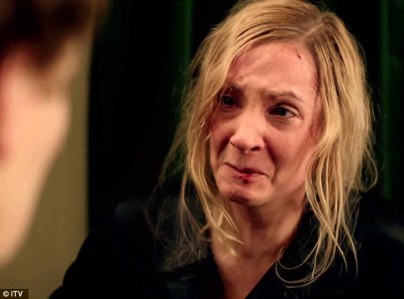
The devil was in the detail, the bruised face, the dishevelled hair, ripped uniform, tears, snot and convincing performance by Joanne Frogatt were incredibly disturbing and there’s no doubt that the scene will have proved traumatic to victims of rape. This was more akin to the gritty and iconic rape of Kathy Beale by the equally dastardly and charming Rupert Wilmott-Brown in Eastenders, than a fluffy Sunday night period drama.

Less of this
Less of this

Sadly we missed the generic warning of violence which apparently came before the show, tuning in time for the credits, but after a gruelling week, both physically and emotionally, I was looking forward to my Sunday night visual equivalent of a comfort blanket, not a show that would depict rape violence. Maybe the uncharacteristic warning at the beginning of the show could have alerted us that something was up, after all Downton’s normal fisticuffs doesn’t usuallymerit such treatment, perhaps with hindsight it was obvious where the story was leading and perhaps that serves as a useful device to help us identify with Anna, a usual reaction by victims of rape is to think “how could I not see that coming” but the fault always lies with the rapist.

But one has to ask, what was the entire point of the plot? To get viewers to realise how awful rape is? It’s difficult to see where the storyline can go from here, there are hints that Anna is pregnant, she was seen taking a headache remedy prior to the attack, is she going to attempt to procure a backstreet abortion, will there be rows about paternity, or will Bates and the rest of the staff find out and the inevitable victim-blaming occur? In a situation such as this in 1920, victim-blaming would certainly have been the norm and more likely than not her attacker wouldn’t have been a visiting valet but a member of the aristocracy who would have felt that a quick grope or more was well within his rights.

I just can’t see it ending well at all, what resolution can there be, particularly as we know that Lord Gillingham is going to make subsequent appearances presumably with his valet in the series due to his burgeoning affair with Lady Mary. The rape did nothing more than to further the plot, to sour one of the most heart lifting and genuinely loving relationships in the show. One wonders whether Fellowes has a particular dislike of young married couples, no sooner do we have a young stable pair, then something comes along to chuck a spanner in the works.

Rape is a subject which requires delicate and sensitive handling and should not be used as a plot device in order to cynically maintain ratings. There is very little that we have to learn from Anna’s response to her attack and subsequent decision not to report the crime, aside from despondently noting that perhaps attitudes have not changed much, or on the other hand, noting how much they have – would work colleagues in 2013 really be complicit in the cover-up of a seriously violent assault and rape of a female? I guess one could argue it either way, depending on one’s view of today’s supposed underlying patriarchy, but whatever the answer, grappling with the dynamics of violent sexual assault is not everyone’s idea of entertainment, and not I suspect, what given the demographic of the average viewer of Downton Abbey, would wish to see.

Molesley may have protested that wearing the pristine mandatory white starched gloves of a footman was beneath his dignity, but they provided a welcome contrast from the bare and grubby hands of the rapist.

Downton just turned dirty, dank, dismal and depressing and disloyal to its core audience. Series 4 is a little late to go all Forsyte Saga on us. I do hope it gets better, trouble is rape is not the kind of storyline one can just brush-off or ignore. The sepia tones are beginning to look just that little bit sickly.

Raphael (and Tobit)

Robin and I would like to thank everyone for their prayers and Mass intentions over the course of the past few weeks. Our baby (Raphael) was delivered on Wednesday evening and a small private funeral will take place this week or next.

Raphael was chosen as Wednesday was the feast of the Holy Guardian Angels and as we did not know the sex of our baby, it seemed appropriate to give the name of an angel who being pure spirit, is neither male nor female. But it is important to give the baby a name by which they may be remembered and individually prayed for nonetheless.

Furthermore as Catholics will be aware, the archangel Raphael is associated with God’s healing ministry, appearing in the book of Tobit, an extract of which we had as a reading at our wedding. Raphael is sent from God to heal and protect Tobit and his son and daughter-in-law, Tobias and Sarah. All three were beset by trials and difficulties  but remained steadfast in their faith and eventually enjoyed God’s blessings and mercy.*

One of my favourite lines of Scripture is Romans 8:28  “And we know that to them that love God all things work together unto good: to such as, according to his purpose, are called to be saints”.

Even though terrible things may happen, while he has not willed them, God will still work to bring about good consequences for his people, from even the greatest of suffering.

I can already see several graces occurring from the experience of discovering your unborn child has died in utero, but that doesn’t make the grief any the less raw. Life seems a little less rich, a little more bleak, from the moment you discover a positive line on a pregnancy test, it becomes impossible to detach from the fact that there is a little life growing inside you and so for the last few months we have been adjusting to the fact that a new baby is on the way as well as looking forward to their arrival. An event that will not now happen. Our precious baby has died and can never be replaced.

But we named the baby Raphael in the expectation of divine healing and my hope is that in time, our experience may be of benefit and consolation to others.

*The Apocrypha is sadly all too often overlooked by RE syllabi, while I’d encountered the term in other literature as a schoolchild, it was never mentioned, not even in passing, as being an important part of Catholic cultural heritage. The book of Tobit is particularly rich and pertinent to Catholic spirituality as it emphasises the sanctity of marriage, Angelic intercession and the importance of prayer in daily life, as well as fasting and almsgiving as atonement for sin.

Women’s safety a priority?

The 40 Days of Choice group, set up to counter 40 days for Life, have gone into propaganda overdrive, tweeting a link to a report that women diagnosed with foetal abnormality are ‘denied surgical abortions’. Yet again, the Guardian proves its reputation as being the the soft advertiser on behalf of the abortion industry, the conference referred to was one organised and funded by BPAS and the pro-choice group ARC (ante-natal results and choices).

A woman who has never actually had to give birth to her deceased child vocalised her horror at the prospect and described how she had needed to borrow £1,000 in order to have a surgical abortion performed swiftly, instead of having to wait two weeks to see a consultant and being told that she would need to give birth naturally.

With lots of accompanying rhetoric about the politicisation of abortion and how foetal abnormality ‘forces’ women to abort, the usual frame of choice shifts from the concept of abortion, to the actual method itself. Nobody seems to be asking the question as to why these women are somehow forced, why does foetal abnormality or disability take away a woman’s agency?

The stat that less than 1% of all pregnancies are ended due to foetal abnormality is also presented, in order to convey sympathy, this is such a rare occasion, (which should tell us something about the obscene amount of abortions that are performed in the UK) surely women in this unusual situation ought to be allowed to choose, as well as take their time?

Jane Fisher of Antenatal Results and Choices points to the research that this is such a distressing time for women that they need to be able to take their time and space to chose on the abortion method that is right for them. Not that they need time and space to choose whether or not to abort, rather to choose the method.

Sadly I understand this all too well. We had an appointment at the hospital today in order to discuss the options in terms of delivering our own deceased child. The nurse could not have been more sympathetic, she checked that I understood why we were there and took her time explaining the different options to us. She also stressed that there was absolutely no hurry to make any sort of decision, we could go home, we could choose whatever option we wanted, we could change our mind at the last minute, no-one was going to pressure us at all.

I can more than understand why some women in my situation would choose surgery, it’s over very quickly, you are unconscious, you do not have to see any foetal remains and neither do you have the interminable wait to see if nature might take it course, something that could take weeks. I would not admonish any woman who chose the surgical option, however, I don’t think it’s for me, for a number of reasons, one being that there are often no remains left to bury.

But the difference for women in my situation is that tragically, our babies are already dead. I more than empathise with women having to give birth to a dead child, it’s what I am going to face over the next few weeks, but there is some comfort in knowing that there is nothing I could have done. All I can do now is see to it that he or she is given a decent burial.

For those women who are faced with the terrible situation of feeling forced into aborting a profoundly disabled child, there is for many, some form of closure in being able to hold a funeral, or bury the remains and say goodbye to their child, even if there is also a sense of dissonance.

But the most important thing is that by giving women time to make their decision, something that I would always advocate, the surgical option becomes less and less safe. So today, when we were discussing my options, it was very clear that while not being forced, I was being strongly steered towards a medical management, i.e. when pills are administered to force contractions. Surgery would not have been denied, but it was clear the consultant preferred to recommend a medical management because it was safer for me with a relatively late, missed miscarriage, which is larger than usual.

I was explicitly informed, both verbally and in writing, that surgery carries an increased risk of infection, scarring and perforation of the uterus. If I opted for a medical management, I would be given a private room with ensuite bathroom, a cannula inserted in case fluids or a blood transfusion is needed and given as much pain relief as possible. They would also issue me with the paperwork to bury or cremate the remains. A far cry from the medical abortion procedure that takes place in abortion clinics, who have been campaigning for women to be able to miscarry at home. The NHS pulled no punches, this will be emotionally and physically difficult, but they would support me through it, rather than leave me to suffer at home alone. Unlike at the clinics, Robin will be allowed accompany me the whole way through the procedure. It isn’t the narrative of period pains or slight cramping that the abortion clinics try to soft-soap women with. Former clinic worker Abby Johnson who had a medical abortion tells it like it is.

I get it, I truly understand what an ordeal it is to have to deliver a dead child, at any stage of gestation, but if surgery is the riskier option for me with a child at 10 + 5 gestation, 12 weeks into pregnancy, the risk will increase for women at a later stage – typically, abnormalities are not picked up until around 12 weeks and in many cases, not until 20, when one doesn’t have a choice in terms of abortion, you have to deliver.

It’s terrible when your 12 week scan delivers devastating news, we have been totally blindsided by what’s happened, though we’ll get through it, life seems that bit more grey, bleak, colourless. Our future does not seem quite so rosy, our precious little baby has been taken away. My body has not yet caught onto the situation as is common in this situation, and so I’m still experiencing full-blown pregnancy symptoms in a cruel twist of nature. The mind and body are at odds with each other, while I know the baby has passed away, my body is trying to fool me into thinking otherwise. I’m sick, have the erratic familiar food aversions, am growing bigger as the hormones increase the size of the sac and yet know there will be no baby at the end of the process.

I have no doubt that a diagnosis of foetal anomaly has a similar effect and my heart goes out to anyone faced with this. But where there is life there is always hope, why aren’t we asking why women in this situation are feeling forced, but instead blindly accepting the inevitability of abortion for disabled children?

As for the choice of method of termination, surely that should be wholly down to clinical factors, and what is in the best interests of a woman’s overall health, not politicised in order to do homage to the false notion that we have bodily agency?

If one were inclined to shout empty slogans, the following seems applicable:

Pro-“choice”? That’s a lie, you don’t care if women die.

As the Good Counsel Network have just pointed out the reason why 40 Days for Choice find women having to give birth to their dead child ‘disgusting’ is because that word sums up the tragic reality of abortion.

One of life’s ‘lemons’

Those who keep up with my Facebook and Twitter account will have read the news of the loss of our baby.

As I’ve frequently stated on this blog, a life of pro-life witness means walking the walk as well as talking the talk. So a few weeks ago, I confidently shared the news about my pregnancy in the pages of the Catholic press, genuinely believing that it was in women’s best interests if the taboo of early pregnancy was broken. The aim was not to compel women to share their news before they feel ready, rather to empower women who may be suffering in the early stages of pregnancy to ask for the help that they may need, especially if they are experiencing a crisis pregnancy.

The flipside of that means that women who suffer an early loss also then have to make that public, which is the hard part. Because frankly I don’t feel like sharing my grief or raw emotions with the world and every single message of condolence, hammers home the hurt and loss. We have the consolation of Christian hope, we know that the baby is without sin, we trust in the mercy of God and yet still there is terrible pain and a lot of tears.

I also feel like a prize wally for naively thinking that just because I was pregnant, I would definitely be carrying a baby to term. Not to mention terrified of the usual trolls. Shortly after announcing my pregnancy, one woman tweeted some dreadful stuff in response, namely that I was making things up, that the most ‘natural thing in the world would be for me to announce a miscarriage’, followed up by a stream of (later deleted) musings about an obviously mentally ill woman in America who had simulated pregnancy for 7 months,  with links to the story as well as a site where one could buy a prosthetic stomach.

I have no need to prove anything, I’m not tweeting the scan photograph which will probably be all that we have to remind us of our baby, it’s too private, too personal, I don’t want to share him or her with the world.

The day began so auspiciously. We’ve had a friend staying with us for a few nights so they could attend the Labour conference events, after a few nights up late drinking red wine and chewing the Catholic fat, I woke up this morning and managed to finish an extra long Universe column dealing with last week’s papal interview. Feeing particularly smug at having submitted a piece early, I then nipped next door to pick up a parcel containing my copy of the new Father Robert Barron series on DVD, together with associated study material. Part of my excitement was that due to wholly chance encounter last year, it appears from the trailer that I make an appearance in the film, when they followed me across London to film a radio segment at the now defunct Bush House.

After a lovely lunch at a restaurant in the late summer sunshine overlooking the sea with Robin, the children and our friend, I skipped off excitedly for the scan at the Royal Sussex at 4pm. This was the first one of our baby’s ultrasounds that I had been to on my own, the time of the appointment meant that it would be impossible to do the school run and besides which, Robin needed to look after the children, as the unit is keen to discourage young babies and toddlers from attending.

As I bustled my way through throngs of frighteningly young-looking delegates at the Labour conference, clutching my plastic Bounty wallet containing pregnancy notes and with the hint of a protruding belly, I smiled benignly at various familiar faces.  Suddenly a bumptious young man asked me whether or not I fancied catching Ed’s speech with him followed by a bite to eat. ‘Sorry, I’ve got a pregnancy scan appointment”, I sniggered. Bounding up the steep hill towards the hospital, I giggled at his presumption and mused that despite having greasy hair, not a scrap of make-up, manky toe-nails caught unaware of the unexpected turn of weather and wearing a scruffy Mothercare top that was probably about 10 years old, and not far off the dreaded 4-0, obviously I still ‘had it’. Either that or more likely he’d had too much at lunchtime and was clearly blind! I mused as to whether or not certain feminists would quote this as an example of Labour misogynist sexism and that the conference was obviously a hotbed of dastardly sexual predators!

But all in all, life was good, though still sick, the worst part of the pregnancy was behind me, I’d just entered into the blissful second trimester, was feeling like I was beginning to glow, things were coming together for us as a family and soon there would be a snuggly new baby whom we were looking forward to. Just before arriving at the hospital I realised that I didn’t have any cash with which to pay for the scan pictures, something that I’ve always considered a cynical piece of exploitation and stopped at a cash machine, which proceeded to fail, meaning that I then had to waste precious minutes queuing at the next one, whilst muttering under my breath and worrying that I would be late.

Running into ultrasound reception, at 4.05 pm, the velociraptor on the desk snapped at me that I had just made it and ushered me through. Just as I was fiddling with the change machine, I was called into the sonography room, whereupon I panicked that I didn’t have the right amount of change for the photograph and they assured me that they could give me some. Lying down on the couch, I settled into the familiar routine, unbuttoning jeans, feeling the cold jelly on my stomach and enjoying the cool air-conditioning blasting onto me, by contrast with the scorching heat outside. ‘There’s your little one’ said the sonographer, putting the scanner on my belly. I was too busy marvelling at the little hands and feet, noticing that the baby seemed to be lying in the perfect transverse position for a photo and wondering whether or not I could spy a willy, or was it the umbilical cord, to realise the uncharacteristic silence.

“Sorry, there’s no heartbeat” came a voice, completely out of the blue. It was a bolt from the blue, it had never occurred to me to be concerned that the baby might have died. I’m still sick, growing larger and have had no indications that anything might be wrong. The primary purpose of the scan as far as I was concerned was to check on the size of the baby and due date. I am the fertile baby-maker,  I am Mrs Fecund, the person who falls pregnant at the drop of a hat, who goes on to produce healthy  babies, nothing else was on my radar. Besides at 12 weeks plus 2, I was out of the danger-zone surely?

The staff were exceptionally kind.  They volunteered to remove my pregnancy notes, provided tissues, left the room while I called Robin and made sure that I could get home safely. They also didn’t charge me for the photo, and didn’t think I was macabre for asking for one. They called for someone else to come and confirm the diagnosis, there was a brief flicker of hope when she thought she might have seen something, but no it was bone, the baby died approximately a week and a half ago at 10 weeks and 5 days. Apparently there is a lot of fluid, an indication that there could be chromosomal problems, and according to the sonographer the baby ‘didn’t look right’. They didn’t elaborate and neither did I want to know. The sac has continued to grow, but not the baby.

I don’t really know what happens next and it’s better that I don’t speculate, although I’ve read through the leaflet. The priority now is attempting to ensure that the baby is not treated like another piece of hospital waste, but if possible given some sort of funeral. I’ve a job interview tomorrow to take my mind off things and a further appointment on Thursday to discuss possible options. I don’t want to contemplate what lies ahead.

I said at the beginning being pro-life means walking the walk. Being open to life entails the heartbreak that can accompany that, a few weeks ago someone was telling me about how they suddenly understood the sorrows of Mary and that’s something that I can now sharply identify with.

Looking at my twitter feed earlier, I saw the pro-choice protestors out in force at the start of 40 days for life outside the Stratford clinic and felt a jolt of sharp anger that these women were campaigning for their right to kill their babies whilst mine is dead. Certain pro-lifers don’t get off  lightly either. Quite frankly if I saw a photo of a dead or dismembered foetus in my sightline right now, knowing what could be in store for my baby, I’d struggle to restrain my anger.

I look at my four beautiful girls and am grateful that they are safe and well, but that doesn’t somehow magically alleviate the sadness that one of our babies has died. We are just so immeasurably sad that this little one didn’t get the same chance.

On the print-out I’ve been given to take with me on Thursday it says “missed miscarriage”, but somehow that noun seems inadequate. It wasn’t the passive of a verb, but a human being whose life has come to an end and who was and is and will always be loved and whose loss we miss keenly.

RIP little baby. Thank you so much everyone for the prayers, intentions and Masses offered, which are sustaining us.

In the words of the children’s favourite American pachyderm:

A person’s a person no matter how small.