Allison Pearson’s column in yesterday’s Telegraph gives pause for thought if one has children who are attending a mixed-sex school. In the absence of many single-sex state schools, not many people are able to afford private single-sex schools or to be able to give up an income to home school. As Pearson says, if this happens in an upper-class boarding school, it’s going to be happening in schools up and down the country.
It is scandalous that one the one hand parents are being asked to take responsibility for their children’s internet, politicians seem to be finally waking up to the fact that we live in an over-sexualised society and yet on the other parents are actively excluded from information pertaining to their children’s sexual health decisions.
Is it really such a consistent idea to be encouraging teenagers to be experimenting with sex so long as it is with each other and ‘consensual’ whilst at the same time acknowledging that children are exposed to unprecedented amounts of sexual pressure, regardless of their gender. How is encouraging children that it’s perfectly acceptable to sexually experiment with each other without their parents’ knowledge or consent going to do anything to address sexual exploitation? We are already seeing plenty of cases whereby young teens are abusing even younger children – telling children that perhaps they should try oral sex or mutual masturbation instead of full penetration is hardly conducive to a society that wants to protect its youngsters.
And before anyone moots yet more education is needed, take a look at this:
The figures are from the Health Protection Agency and are an amalgamation of the under 15 and 15-19 age brackets. Diagnoses of gonorrhoea have decreased which is a good thing, seeing as there is a worrying outbreak of an antibiotic resistant strain, which seems to be on the increase in the US, but the rest of the figures don’t look so great. I haven’t included cases of syphilis in teens because the numbers are too small to register on the scale, but it should be noted that between the years 2002 and 2011, diagnoses of this disease in teenagers increased by 96%. That our young people should be battling this potentially fatal and wholly avoidable chronic condition is absolutely horrifying.
When it comes to teenage pregnancy rates, the numbers state that the under-18 conception rate is at its lowest since 1969. This is obviously very good news, but it is not indicative that the teenage pregnancy strategy was in any way successful, in terms of teenagers’ sexual health, indicated by the chart above. When talking about the teenage pregnancy figures, we need to remember that the under 18 conception rate is for the age ranges 15-17. As Professor David Paton points out, the under 16 teenage pregnancy stats have seen little change between 1969 and 2012, fluctuating between 7 and 10 girls per 1,000 every year. In any event, even with the drop, the UK teen pregnancy figures are still amongst the highest in Western Europe, before we all start congratulating ourselves.
What is evidently happening is that more or at least the same amount of teenagers as previously are having sex, most of them are using long-acting reversible contraceptives or hormonal contraceptives like the pill and thus leaving themselves open to disease. The Health and Social care Information centre reports that the 16-19 year old age group had the highest number of attendances at contraceptive clinics of the entire female population and that oral contraception was the primary method of contraception for 45% of women who attended.
Clearly something is going awry with sex education in this country and it doesn’t take much to figure out what. More on this anon.
Today’s political discourse could have been lifted straight out of the pages of Animal Farm: progressive good, reactionary/conservative bad. Generally speaking whether one’s political sympathies lie to the left or right, all mainstream politicians are jostling to claim the ‘progressive’ mantle, whether it be David Cameron with his push for gay marriage or Ed Miliband’s ‘One Nation’ Labour party.
Like most political tribalism, this label is a simplistic one and it certainly looks as though the scales are finally beginning to fall from the eyes of former metro-libs, with even the very pro-abortion Diane Abbot MP decrying the hyper-sexualisation of today’s society. Not all social change or progress furthers the interests of the common good, whether that be the excesses wrought by the sexual revolution (of which the pedophile scandals of the sixties and seventies is a fruit), or the closing down of the industrial areas of the north with no replacement, by Margaret Thatcher. Progress for its own sake does not constitute a good. The majority of the UK population could be placed in the ‘reactionary’ category in at least one area of our views.
Watching some of the media coverage of today’s tragic fortieth anniversary of the Roe v Wade decision in which the US Supreme Court legalised abortion , it struck me that far from flying the vaunted ‘progressive’ flag, it is actually the pro-choicers who are the reactionaries here. They aren’t fighting for any social change, other than to retain the same old status quo that has been in place for the last forty years, one that has resulted in approximately 54 million US abortions, or missing children since 1973.
Perhaps that’s why, as Time magazine pointed out in its January edition, pro-choicers are losing the battle and pro-lifers are hopeful. Faced with an army of young grassroots pro-life activists, Nancy Keenan head of Pro-Choice America has resigned, stating that in order to successfully defend America’a abortion rules the movement needs to emulate the pro-life youth. The tactics of the pro-choice movement in the UK are certainly looking in need of a re-vamp, reverting to the same tired modus operandi of turning up to scream abuse, chant the same old stale slogans and wave the same placards every time they get an inkling that a group of pro-lifers might be getting together. As opposed to any sort of positive action that might actually help women and give them that Holy Grail of ‘choice’, all they can do is turn up like a bunch of rabid old reactionaries, resistant to any positive action that might actually help women chose to be mothers.
The treatment of @londonistar, who has recently set up the Marie Copes blog for victims of abortion to anonymously tell their tale in a safe, non-judgemental space, best exemplifies the attitude. Having discovered that her unborn child had Downs Syndrome and having been given an extremely negative outlook by the doctors, her and her husband took what was an extremely painful decision to abort a much wanted child. Her experience was utterly horrific from start to finish – she was let down by the medical profession who gave her a very limited and one-sided view of the condition and prediction of the quality of life of her child, leaving her with what she felt at the time, no other option. The procedure itself was botched, the nursing ‘care’ was brutal, leaving her in agony, needing reparative surgery, facing infertility and an unacknowledged need to grieve. The pro-choicers and feminists reacted in anger when she told them her story; instead of being outraged at her presented lack of choice and campaigning for better information for pregnant women with difficult diagnoses or even a better standard of care from the abortion clinics, they simply raged at her for having related her experience and daring to feel any grief. It was the pro-lifers, those whom one would expect to be judgemental and angry who reached out to her in a spirit of compassion and love, not only for her in her grief, but also so that they could better understand and learn from the needs and emotions of a woman faced with an agonising dilemma, whereas to use her words, the pro-choice feminists treated her like a ‘political pawn’.
Far from being solely concerned about the cute little baby, pro-lifers are intuitively concerned with the woman, the mother and her needs and rights, which is why at the Vigil for Life which took place in Dublin’s Merrion Square on Sunday and attended by 25,000 people, the crowd was awash with banners stating “Love them both. Abortion kills one, hurts another” together with a picture of a mother and her baby. It isn’t pro-lifers propagating the culture wars, pro-lifers are successfully engaging with women, with appeals to those attending America’s March for Life taking place this weekend, to avoid using graphic images in order not to distress vulnerable and post-abortive women. Equally at the 40 days for life prayer vigils, it isn’t the volunteers quietly and peacefully praying for those inside the clinic and offering help, who are upping the emotional ante, rather the vociferous, angry pro-choice opposition.
But this isn’t simply about the words. Pro-lifers are also attempting to progress women’s rights in a way that leaves the traditional militant feminists way behind. Feminism tends to treat children as an encumbrance or a burden to equality and seeks to circumvent them, in order that women may be seen to compete on an equal footing with men. A pro-life feminism embraces motherhood and child-rearing as being an authentic part of a woman’s femininity and actively campaigns for solutions which means that a child is no longer an obstacle to an education or to a woman being able to be financially self-supportive. That’s not to say that an authentic feminism rejects men as unimportant or irrelevant in the process of child-rearing, but accepts that in today’s increasingly feckless society, women are often faced with no other choice than to raise a child alone.Feminists for Life is a good example of how pro-lifers in America are reaching out to college students.
In the UK, the Alliance of Pro-life students has, in a short period of time, made enormous progress. Speaking last week at the launch, Eve Farron, their 22 year old leader, talked of how they have made common cause with feminist groups on campus, forcing them to address the lamentable lack of provision for pregnant students and working together to ensure that college students really do have a choice if faced with an unplanned pregnancy.
She described how young freshers are handed a welcome pack consisting of a free pizza voucher on one side with an advert for Marie Stopes at the back. That was certainly the case for me when I started at the University of Sussex recently. We were given a compulsory talk by the ironically named Student Life Centre who made it clear that there was an abundance of sexual health-care services, including abortion on offer. When I went to them to ask for help in terms of essay deadline extensions, being 9 weeks pregnant with three existing children and incredibly sick, they were not exactly forthcoming, neither were the faculty staff. The baby was due in the summer holidays and when I asked whether or not I would be able to bring her to lectures and seminars, as the creche would not take babies under 6 months, and breastfeed, obviously taking her out if she caused a disturbance, the answer was a resounding no. I could not quite believe how a university, that prides itself on its diversity, that strives to teach everything through a prism of feminism, gender and queer theory, could be quite so obstructive. Furthermore, the creche was scheduled to close, due to cuts and not being cost-effective, before finally being out-sourced to a private provider after a huge outcry. When I approached the student body for help, I was told it probably wouldn’t be worth pursuing the matter, it would get me a bad name, the best thing to do was defer, and of course, be liable for the new higher tuition fees. Had I not been of a strong Catholic and pro-life persuasion, I could well see how having an abortion would have seemed the only feasible choice in that situation and where were the feminists then? Any advocacy was totally non-existent.
I digress, but it goes to show that by contrast to shouting catchy slogans, the pro-lifers are actively working for social change, not only by convincing people with the overwhelming scientific evidence and intellectually rigorous arguments but also by their deeds and actions, whether that be the peaceful, non-confrontational outreach on the streets to women in need, advocacy for students and young people, or working for political solutions and social change. Pro-lifers also seek to advance the rights and cause of the disabled, recognising that every life is of equal dignity and worth and that the two causes are immutably entwined.
Pro-lifers don’t want to turn back the clock to a time when abortion was illegal, they want to strive for a society where abortion is unthinkable and unnecessary. Pro-lifers want a society where women can have children at an early age and yet still be educated and professionally successful, we want a society where fathers are held accountable for their children and not let off the hook by abortion. We want women to contribute to society, through child bearing and also through professional employment, if that is their choice. We want an authentic feminism that allows women to fulfil their natural vocation as mothers, not one that makes work and child rearing mutually exclusive, which is what current strands of feminism and pro-choice rhetoric seek to reinforce. The most exciting thing about this – it is being led by women themselves!
Pro-lifers are the real progressives, working for true social change, one that supports and upholds the dignity of women whilst protecting the right to life of all our unborn children. We recognise that for a society to be welcoming of life, a myriad of complex social problems need to be solved, not least that abortion disproportionately affects the poorest and are working for a better society for all, instead of banging a single issue drum. Whereas the pro-choicers are clinging to their outdated mantras of the seventies, fretting over fripperies such as gender appropriate lego and squabbling over internal victim hierarchies, pro-lifers are solidly working for a radical solution so that no unborn child ever need to be killed in utero again.
This is why the pro-life movement should wave its progressive credentials with pride.
Clare Perry, the rising star in the Conservative Party and David Cameron’s new advisor on childhood has said some eminently sensible and refreshing things today which will no doubt cause Louise Mensch to turn a shade of green.
Mrs Perry, a mother of three, points out that it should not be assumed that children have an automatic right to privacy and that society as a whole has been complicit in a culture which allows children to make unsupervised and inappropriate contact with strangers any time of the day or night.
She argues, in the same way that I did post publication of the Bailey Report, that parents need to take ownership and responsibility for their children’s internet access on their laptops and mobile phones. If you don’t want your children to have unsupervised access to the net, either don’t buy them a device, or if you must, install various filtering software and blocks. If your child is up on the internet until the early hours of the morning, then the solution is simple – switch the darn router off. He who pays the piper, calls the tune!
I grew up in the eighties and nineties where having access to one’s own private telephone line was an unimaginable luxury, although admittedly in my day, mobile phones were simply beyond the means of most individuals, not only in terms of money, but also in terms of sheer size, with the look, feel and weight of a house brick. Like most households of that time, our telephone was situated in a very public place, on the hall table and consisted of an unwieldy non portable handset, with a dial – push buttons were the last word in decadence. As a result all incoming telephone calls were received in a public place, every word could be overheard and any talk about one’s love-life either with friends or heaven forbid the young man himself had to be couched in code, making the whole thing far more exciting that I’m sure it would otherwise have been.
Ever mindful of the bill and the fact that my father ran a business from home, calls had to be kept quite short and it would not have occurred to me to pick up the phone and make a call without first asking permission. As teenagers, if we did answer the phone and the call was indeed for us, we would have to inform our parents as to the identity of the caller. My father is something of an eccentric and used to delight in causing maximum mortification by deliberately winding up callers for myself and my sister. My best friend Anna, was regularly treated to a medley of hits from the King and I, female friends would be sung to and any male callers could be guaranteed either to have my father’s version of Stanley Unwin’s language, or worse still, not be allowed to speak to us until they had made the request or spoken an entire sentence in Latin!
It’s difficult to know whether or not the internet could have got us into trouble as children, my parents were sensible types but equally I can see how difficult it is for parents these days, many of whom might not be as conversant in the new technology as their kids, but Mrs Perry is right to state that parents have a responsibility to regulate their children’s internet access. Given that it is practically impossible to escape the internet in one form or another and that it will be an integral part of children’s lives, it does seem fitting that the IT curriculum should incorporate lessons on basic safety and service providers and the industry as a whole should agree a new code of conduct, along similar lines to the rules of broadcasting.
It goes without saying that children and adolescents do need to be afforded some level of trust and privacy and we need to be realistic that at some point they probably will use the internet to get up to some naughtiness or other (just as children used to look up all the rude words in the dictionary), but limiting the scope for mischief, whilst helping them learn responsible behaviour, can be no bad thing and neither should it be left entirely in the hands of schools or regulators. Parents do have the primary responsibility.
But has anyone spotted the huge inconsistency yet? Clare Perry has correctly pointed out how internet technology can be used to degrade , objectify and sexualise young girls who are often at the receiving end of sexual bullying, citing the terrible case of Chevonea Kendall-Bryan, the 13 year old girl who fell to her death from the top of a tower block whilst begging her boyfriend to delete a sex tape he’d made on her phone.
‘We’ve given our children all these opportunities to communicate in private, but we’ve lost the confidence to actually get involved in that.
You have to ask yourself whether or not confidential sex advice, access to contraception and abortions provided to teens without the parents’ knowledge or consent has enabled and encouraged that attitude. Whether the deliberate exclusion of parents from knowledge pertaining to their children’s development and welfare and usurping of parental role in the provision of sex education has produced a generation of impotent parents who lack the skills and confidence to intervene?
‘We have to feel more empowered to ask. Make sure your kids allow you to be friends with them on Facebook, ask them whether what they are doing is appropriate.
But whatever you do, don’t ask them whether or not they are taking large doses of synthetic hormones designed to subdue their developing fertility, don’t ask them whether or not they are having sex and whatever you do don’t try to prevent them from doing so. What your child is being taught about sex , whether or not they are engaging in sex or risky sexual behaviour, whether or not they might be aborting their unborn baby is none of your concern as a parent.
Whilst schools continue to provide under 16s with contraceptive advice, products and abortions without the knowledge or consent of their parents, frankly fussing about whether or not they have unfettered access to Facebook or the internet is like re-arranging the deckchairs on the Titanic. How can parents be expected to protect their children when they are excluded from the most crucial and key decisions involving their personal health?
Make no mistake, the internet and mass media can have a deleterious effect on children’s development and expose them to sexual predators and unrealistic visions of sex, sexuality and body image. But just as harmful can be the physical effects of early sexual activity which stems from premature exposure to the internet and sexualisation. Isn’t it time for a double-stranded approach?
A follower on Twitter linked me to some graphic material, produced by the Terence Higgins Trust, which SPUC are claiming is indicative of the type of the material that will be taught in schools if gay marriage is enacted into law.
The booklet is entitled ‘The Bottom Line’ and is a comprehensive guide to ‘safe’ or ‘safer’ homosexual sex. Another friend on Facebook has expressed some legitimate concerns – the booklet, he says, is designed for distribution in GUM clinics and doctors surgeries and is deliberately couched in gay urban parlance, the Terence Higgins Trust are attempting to reach the gay community in order to educate and reduce the prevalence of sexually transmitted diseases.
Whilst as Catholics we would advocate a more holistic solution involving both body and soul, though I’m uncomfortable with the contents of the brochure simply due to the ick factor (yes I’ve read my Freud, spare me the inevitable comments about repression or heaven forbid ‘homophobia’, I just find graphic depictions of sex as about erotic as a tub of blue play-dough), the Terence Higgins Trust should not be condemned for attempting to improve the health of the gay community.
I’m also not about to, for want of a better phrase, explore the concept of sodomy, other than to note that it’s entirely contrary to Catholic teaching, regardless of the mix of genders who may be engaging in it and it isn’t inciting homophobia to state that it carries greater health risks than heterosexual or ‘vanilla’ sex. According to the latest report from the Health Protection Agency (HPA) released in November 2012, the highest rates of HIV were reported amongst men who have sex with men (MSM), where the diagnosis is 47 per 1,000, with new diagnoses amongst this community being at an all time high. That sodomy is inherently a risky business is evidenced by the need for educational material such as that produced by the Terence Higgins Trust. Like most things in life, sodomy, particularly between males, is a calculated risk – despite various precautions one can take in order to mitigate the risk.
As an aside, it’s fascinating to note how the government is attempting to interfere and regulate in other matters of personal health such as putting swingeing great increases on the cost of tobacco, introducing a minimum price for alcohol and mooting a fat tax, but in terms of sexual behaviour, which one could argue has enormous consequences for public health, prefers a laissez faire attitude. Perhaps David Cameron’s push for gay marriage is a disguised attempt at encouraging homosexual monogamy?
SPUC’s point about this booklet, is to be fair, a valid one, but I think some caution is required before using it as an example of the type of material that may be used in schools. They may not be too far off the mark, a quick look at the Bish Training website will give an indication as to the type of material that is thought appropriate and the horrors of the Living and Growing video, which was shown to children as young as 8, will still be fresh in parents’ minds. The problem is that those who are ideologically wedded to the idea of sexual enculturation as at early an age as possible, will seize on any attempt to portray their opponents as liars. As it isn’t entirely clear whether or not this booklet would be aimed at teens, it not being specifically produced for use in schools, then accusations of deliberate and false scaremongering will fly, along with the usual flim-flam about inciting hatred.
But SPUC are correct to point out that the teaching of gay sex in schools will be a logical and necessary consequence of gay marriage, simply teaching about hetrosexual practices will be deemed discriminatory. And I’d be willing to bet my bottom (ha excuse the pun) dollar, that most parents, aside from the achingly hip metro-liberal chatterers desperate to wave their progressive rainbow crendentials, would be terribly uncomfortable with that.
Do we really want our primary school children and young vulnerable adolescents given explicit instructions into the mechanics of anal sex, or the sexual practices of anyone, beyond basic reproductive biology? Anyone with same-sex attraction surely figures it out for themselves an at appropriate age without being given the pointers in school, as does anyone with any sexual urges.
I hate writing posts like these with my ‘disgusted of Tunbridge Wells’ sucking a lemon face on, because actually sex is a glorious and joyful thing, which is earth-shatteringly powerful. We shouldn’t underestimate its power, nor seek to neutralise or clinicalise it in soggy grotty latex filled self-satisfying encounters or feats of performance, which are about as stimulating as watching Midsommer Murders with a cup of hot cocoa in a cardi.
Which is one of the tragedies of the ideology of sex education in schools. A fulfilling and joyful sex life should not have to include a mandatory regular health check, nor intricate discussions of the workings of the back passage that would make Kenneth Williams blush. And the sooner people cotton on that the way sex is taught in schools, that anything goes, nothing matters so long as it’s consensual, is an ideology and a damaging one at that, the better.
A pro-life colleague in Ireland sent me the following link, which was posted on the website for the Association of Catholic Priests. She said that she would be interested in my comments from my perspective as a mother of four.
I couldn’t quite believe my eyes when I saw the logo on the sidebar, here is a website purporting to be representative of Catholic priests publishing a post which advocates abortion, in contravention of clear Catholic teaching on the matter. Further enquiries tell me that this group are the equivalent of Ireland’s Call to Action. They’ve gained a bit of credence for successfully defending Fr Kevin Reynolds against false and malicious accusations, but other than that their orthodoxy or formal representation of the Catholic Church can not be taken as read. That they choose to host a piece of pro-abortion propaganda (albeit couched in a thoughtful, hand-wringing and compassionate tone) is beyond contempt. The sooner this group is kicked into touch, the better.
Originally I intended to fisk the post, which covers familiar Irish pro-choice ground – misrepresenting the case of Savita Halappanavar,about which everyone should really keep quiet until the enquiry has reported its findings and stating that the life of the mother should take precedence over that of her unborn child, when in fact Irish law currently treats the two lives as of equal value. The law in Ireland is clear that no woman should be denied treatment that will save her life, even if the consequences of that treatment will result in the death of her unborn child. Since 1992, not one single Irish woman has come to the UK for an abortion under ground F (to save the life of the mother) of the 1967 Abortion Act.
The post includes a reflection on behalf of the writer as to how her two children were wanted and loved, how she cherished them in the womb, but what about those women for whom pregnancy is more difficult? Of course she side-steps the whole issue of personhood, but it was this passage that struck me and to which I want to offer a general response. I’m wary of giving too much of myself away, for obvious reasons, I hope this isn’t too difficult a read, I’ve prayed over whether to disclose this and my hope is that it will be an effective, if gritty, pro-life witness.
So, basically, I loved the nine months that my babies spent in my womb. But this isn’t The Waltons! Pregnancy was a long and difficult time in ways – the nausea at the start, the feelings of being like a beached whale as time went on, the utter discomfort and aches and pains that even the most straight-forward of pregnancies brings along with it and ultimately the utter agony of childbirth itself, were all part of the package.
Oh yeah. I hear you sister. It does pregnant women no favours at all to pretend that pregnancy is all about the blossoming and glowing. For some women it can be like that, but it certainly isn’t for me. I’ve been pregnant and/or breastfeeding continually since February 2009.That’s 3 continuous years of fluctuating hormones and sleepless nights. I don’t fare at all well either physically or mentally in pregnancy. Fortunately, this last pregnancy was the only one in which I didn’t get hyperemesis, but not needing medication to stop the nausea, is not that much of a consolation, when you’re only being sick a few times a day and are absolutely exhausted, not only from the physical effects but also from the demands of three existing children, two of whom were two and under. The whole nine months was beset with crippling deja vu – I’d conceived child 3, when child 2 was 8 months, child 4, when child was 3 was 7 months, every symptom was met with familiar resignation – “oh, this. Again…”
Not again…
There is an assumption that pro-life Catholic women are full of the joys of spring, happy, expectant creatures, nurturing another precious child, doing the Lord’s work and offering up any suffering in silence for the souls in purgatory or whoever. If only. I was a misery. Sick, exhausted, scared, miserable and guilty that I wasn’t bearing it as a good holy pious Catholic woman should, and guilty that I wasn’t like the pregnant celebrities gushing forth their gorgeousness onto the pages of the Daily Mail. Guilty that my body seemed to be so rubbish at what should be a natural process and I couldn’t give birth naturally. Resentful too. I really did not want to be having another baby so soon after the last two, I had already had to defer my university place once, now I’d have to do it again. I had no idea as to how I was going to cope. Which leads on to:
But what of those who are not so blessed in the circumstances in which they become pregnant? What about the woman who is raped; the stressed out mother who’s already at her wit’s end looking after young children, who’s partner has left and who has no support system to fall back on? What about the victim of incest? What about the teenager who’s terrified about what’s happening to her body? And there are so many more “What abouts”!
Is it truly right and morally justified to demand that such women carry a burden (literally!) that they find unbearable? If every moment of every day is spent in horror and anguish that the ‘growth’ inside them is something they cannot bear and that will have consequences for the rest of their lives, have I the right to say “You must do so”? And who knows what effect the feelings of such a woman might have on her unborn? If feelings transmit themselves into the womb (and I felt MY feelings of love did transmit themselves to my as yet unborn babies), then what kind of a start is it to come into the world unwanted, unloved and a cause of anguish?
OK, I’m not comparing myself to a victim of rape of incest, but I think it’s fair to say that I fall into the stressed out mother already at her wit’s end looking after young children. The pregnancy was a source of anguish. My husband hadn’t left, but he was working really long hours, including weekends on call and I had no support system at all, both sets of parents living at least two and half hours away. We were in a tiny 2-bed bungalow, with no garden suitable for the children and when recently two bloggers came down for Theodora’s Baptism, they really appreciated first-hand what I’d been on about, in terms of not only the size of the house, but its location. I was completely isolated, living at the top of a steep hill, with the nearest bus stop fifteen minutes walk away, which was a real problem, when trying to negotiate a double buggy with baby and toddler whilst pregnant. It sounds trivial, but I was very isolated, trapped in a tiny house, no bigger than a flat and no friends or support network nearby. Added to which, there was the whole ghastly business of the onslaught of a relentless bullying campaign, by a few very noisy detractors, hurling wild unfounded allegations, and, I later learnt, ringing up and emailing other people with demands that I was isolated, shut down, forced to withdraw from the internet and “flushed out of the pro-life movement”.
I don’t want to re-hash in great detail but I came dangerously close to a nervous breakdown. I always suffer from a touch of ante-natal depression in pregnancies, but this was really severe. Getting through the day became a major achievement. I couldn’t actually bear to think about the baby, or what life would be like with 3 under 3, it was all just too frightening. Added to which was the terror that constitutes a cesarian section looming large on the horizon.
In short this last pregnancy was a perfect storm of fear, anxiety, dread and illness. Which is why, I think, I innately ‘get it’ about crisis pregnancies and why I feel so strongly about the outreach work that is performed outside the clinics. On those occasions where I have participated in vigils, I’ve recognised the pallor, the drawn expression, the dark rings under the eyes and I’ve wanted to have the courage to go up to women and say ‘look, I’ve been there, I know it feels like there is no hope, but trust me, there really is, there will be a solution and there will be a way forward.’ Recognising that pregnancy is far from easy, that a situation seems hopeless, is the first step to finding a solution. Pretending that pregnancy is a carpet of roses sets up unrealistic expectations.
For those who think this is mere hyperbole, or exaggeration, or that my circumstances or situation could not in any way be compared to someone in a crisis pregnancy, I will be even more explicit, if a little guarded. I’ve mentioned I had ante-natal depression. Because of the bullying, I was too scared to seek help. I’d received an email from another blogger, stating that because he felt that my pro-life writing was of such good quality, (I wish) he was concerned that there were people out to get me, who would use any excuse and who could not only use my mental health to discredit me, but, more seriously, have the children or baby removed, and implored me not to talk about it. After all, we’ve seen various cases in the press of late, where membership of UKIP has entailed foster children being removed and we all know that as a faithful Catholic I am a ‘homophobe’ who will undoubtedly instil hate into her children whilst simultaneously religiously indoctrinating them.
I was mentally really struggling to stay on an even keel and thank God for my husband, who also had a hard time of it, helping me to stay centred, keep up my prayer life and keep receiving the sacraments. Part of the bullying had included several really unpleasant slurs calling my ability as a mother into doubt – cleverly crafted insults, designed to hit my pressure points and they succeeded. I began to wonder whether these complete strangers who had never even met my children, might be right. If, after all enough people start to call you despicable names and use the same repeated insults, then you begin to wonder whether its true and certainly that was the case for me. I fell into the sin of despair. Was I good enough for my children, didn’t they deserve better than a permanently pregnant, miserable and tired mother?
At one very low point, I seriously considered and made tentative enquiries into having the baby adopted, or placed with Catholic foster parents, because I genuinely believed that I was in no situation to be able to look after her, physically, logistically or practically and I thought that she would be better off with a good Catholic couple, perhaps one who’d never had children of their own? Fortunately those with whom I discussed it, including a pro-life organisation told me not to be so ridiculous, although they were kind enough to offer me a short-term au-pair, saying that their mission was to help anyone who was suffering through the sacrifice of bringing a child into the world.
Far too much personal information, probably more than I should have shared, but I wanted to convey that yes, I know exactly what it is like to be pregnant and to think that you don’t want the baby. I heard the phrase that an unplanned baby is not the same thing as an unwanted child and despaired, because, and yes, I know this is a terrible thing to say, I did not want the baby. I was too caught up in my own feelings, too caught up in looking after two very young children, and an older one, too caught up in trying to support my husband, too caught up in the chaos and maelstrom of hormones, illness, despair and anxiety to actually bond with the baby and that bothered me. I was scared that I wouldn’t love her, we wouldn’t bond, that I’d get post-natal depression and that life would be too difficult. I also blamed myself for contracting pre-eclampsia.
Intellectually, I knew that I probably would love the baby and bond with her as I had all the others, any depression I’d had in previous pregnancies had lifted, but there was still that nagging doubt.
Had I gone to Marie Stopes or BPAS, they would have undoubtedly confirmed all my negativity and I could well have been persuaded that aborting my unborn child was justified. When you are in the depths of despair, it’s difficult to see a ray of hope and all I could see and feel was darkness and negativity and you talk yourself into a worse and worse place. Without the consolation of faith, I would have been finished.
Things are so much better now. As predicted, as soon as Theodora was taken from me and placed into my arms, immediately the veiled lifted, which had begun with a pilgrimage to Lourdes a few weeks previously and then with the breast-feeding and taking care of her, the bond deepened and developed and now when I look at her, I am horrified that I was self-indulgent enough to think about giving her away. I’m also not too concerned about her knowing that she was unplanned because she was always loved, even if at the time I felt rather numb and she knows, as do all my children, without a shadow of a doubt that they are adored and loved. We also moved house and things which had been so far up in the air, all moved into place. It really was Providence.
So, why the long and painful testimony? Because I know, that no matter how bad things may seem, even to a rational outsider my situation wasn’t great, that sometimes, sticking to those first principles, that to kill an unborn child is wrong, is sometimes all you need to see you through.
I guess you could say that I’m a strong and resourceful person. I really am not, but effectively I had little other choice than to endure a demanding unwanted pregnancy and give birth to a child, whom I thought due to depression and all sorts of other factors, that I did not want. I had no other option, my deep-seated and unshifting faith told me that to kill my child would be an act of unspeakable evil. That didn’t make life any easier, but it saw me through. The baby was unwanted and a source of anguish, but she was never unloved. It is not abnormal not to feel overcome by feelings of love and tenderness when pregnant and women should not take the absence of the rush of maternal love in pregnancy as being proof of anything. It certainly doesn’t follow that the child will be unloved or will suffer. The mothers who genuinely wish they’d never had their children are exceptionally few and far between – I’ve never encountered one. This idea that the baby picks up love or lack thereof from within the womb, is specious. The baby knows its mother intimately before it is born, the baby loves their mother, but the only sense it will have that its mother doesn’t want it, is when it starts to flinch away from the cold hard steel of the abortionist’s instruments heading straight towards it.
When you see the women who appear to be in terrible situations, the ethical principle, the fact of the existence of their unborn child, can be all they need and acts as the small glimmer of light or ray of hope. And this is why, all women should worry about cases such as this one, where a decision as to whether or not a woman with a mental disability was allowed to have her baby, or whether she would be forcibly sedated as it was aborted.
Different day, different judge, different decision. When I was in the throes of depression and when I had “high risk” scrawled all over my notes, could that have been me, not deemed fit to have made a decision about the life of my own baby?
Which is why sometimes, all the compassion, all the empathy in the world, such as that expressed by the pro-choicer above must not trump the basic morality, that an unborn baby has as much right to life as its mother. And that no matter how hard the circumstances may appear, a new baby will always be a blessing. To those genuine pro-choicers for whom this is not about ‘reproductive rights’ but about caring for the mother, I would urge that compassion to be put to more productive use in terms of helping pregnant women.
St Maximilian Kolbe said “only love is creative”. Abortion is destructive and not love.
Sticking to first principles, that the deliberate taking of innocent life is wrong, is a decision of love. And love is never easy. Which is why we are commanded to do it.
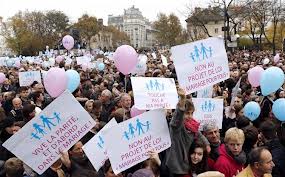
More than 100,00 people on the streets at the demonstration in Paris on 17th November
There is an excellent blogpost on the new Catholic Voices media blog, which states we have much to learn from the example of the French in our defence of marriage. The French bishops have successfully managed to keep the frame away from homosexuality (how many people realise that the Church favours the decriminalisation of homosexual acts) and have instead kept the focus upon the conjugal meaning of marriage and the welfare of children.
The French Church has managed to build a broad civil alliance against same-sex marriage, including various gay and atheist activists. The movement is called Manif pour Tous, which according to Le Figaro, includes “La Socialo, La Catho et l’homo.”
There is a rally taking place in Paris on Sunday, which has a predicted turn-out of at least half a million people – a rally ‘for marriage’ and ‘against homophobia’.
Against this backdrop, in a decision which could have implications for religious freedom across Europe, France’s education minister, Vincent Peillon, has written a controversial letter warning Catholic schools not to engage in any discussion about this issue with their students, after Eric de Labarre, secretary general of France’s Catholic schools had sent a letter to France’s 8,300 schools, urging just the opposite! The socialist President, Francois Hollande has weighed in on the side of his education minister and thus French Catholic schools (which are private) are barred from discussing the issue at all, unlike state institutions.
In the meantime, rumour has it that the ‘Equal Marriage’ Bill is coming before Parliament for its first vote (second reading) on 28 January.
La Manif pour Tous, has invited supporters of traditional marriage to join with them in solidarity and make their feelings known in London, this Sunday at the same time as the Paris rally. Meet in front of the French embassy, 58 Knightsbridge, from midday.
Catholics could make a day of it and go on from there to Southwark Cathedral where the relics of St Don Bosco can be venerated between 3.30pm and 5.30pm with the Mass at 6pm.
The Church of England has joined forces with Prince Charles in expressing their concern over plans to remove barriers that currently prevent members of the royal family from marrying a Catholic.
I would venture that most Catholics really don’t care, no matter how worthy the proposal may appear. In theory either we or our offspring will not be prevented from marrying a member of the Royal family due to our faith. Is this really important in the grand scheme of things? It’s designed as a sop and cosmetic gesture to appease David Cameron’s uneasy conscience with regards to how he is continuing the relentless process of undermining freedoms of religion, began by the Labour government under the guise of equality.
As opposed to being concerned as to whether or not their offspring may now be able to snaffle Harry, the Princesses Beatrice and Eugenie, Catholics are made far more anxious by the threats to the family posed by this government, not least with the forthcoming imposition of the new definition of marriage – a process which has to be amongst the most undemocratic in history, with the state seizing control of something that is not theirs to define. I’d also wager that Catholics are far more concerned that a judge possessing all the religious literacy of Thomas the Tank Engine has arbitrarily decided that the fourth commandment is not considered part of the Christian faith, thereby compelling Christians to work on a Sunday. A measure that is as detrimental to family life, as it is illiberal.
Let’s face it, the average Catholic is hardly in a position to be able to be afford to send their offspring to the same schools as any royal personnages and how likely is it really that if, as in the case of Prince William and the former Kate Middleton, our offspring will mix in the same social circle as those who form part of the royal entourage even if they do attend the same university. Though the Duchess of Cambridge was technically a commoner, even in our supposedly classless society, are we really going to see members of the royal family admit those who attended a large Catholic state comprehensive (no matter how excellent) and emanate from a socially deprived area, into their social set? Catholic congregations are typically far more eclectic than the ‘Tory party at prayer’ – are the young Polish, Nigerian or Mexican couple really bothered by whether or not their child can marry into Royalty, or are they more concerned as to whether or not they will be forced to work weekend shifts or if in healthcare, whether or not they will be forced to go against their conscience. Far more pressing is how work, particularly in the public sector is becoming more and more impossible and fraught with difficulty if you have any sort of religious faith.
In any event, discussions upon the potential constitutional repercussions would appear to be fairly academic and I’ll explain why. As a Catholic who married a vicar, i.e. a serious Anglican, it’s fair to say that the faith of any of our children could be something of a potential flash point. At NO point did my husband ever have to promise that his children would be brought up in the Catholic faith, despite the fact that the Bishop was gracious enough to grant us a dispensation in order that we could have a full Nuptial Mass and to allow Robin to receive communion. The priest who married us was explicitly clear about this. As the Catholic party in the marriage, I had to sign to say that I would make all reasonable undertakings to ensure that any children were brought up in the Catholic faith. That is a subtle, but important difference from compelling one’s children to be brought up Catholic.
Furthermore it was made clear to me that potentially it could be the source of scandal and/or difficulty in our marriage, if our children were raised Catholic against my husband’s will and that the sacrament and covenant of marriage was every bit as important as the faith of our children. Therefore if my husband was unwilling (which he wasn’t in principle) to raise the children Catholic, it would not be an issue that one should compromise the marriage for. Understanding that Catholics recognise one sacrament of Baptism, provided a child is baptised in a Trinitarian church the sacrament is valid, Robin had the privilege of being able to baptise his own child, in his own church with the support of my Catholic priest. My plan was that she would be fully received into the Catholic Church and supplied with the additional rites at the time she was presented for First Holy Communion, (although Robin was still mulling over her religious upbringing) but obviously things moved more swiftly and she was received at the same time as our third daughter was baptised.
My point is really that there are ways around these things and it is likely that in the case of a serious Catholic (one who wanted to raise their child in the faith) marrying a case of a serious Anglican (i.e. the heir to the throne) then these matters would be discussed and smoothed out in advance. It would not be the Catholic faith itself that would prevent a union, more the intransigence of either party with regards to their children. Would a practicing Catholic with the expectation of wanting to raise children in the faith, really want to marry into a family where this would cause serious rupture and vice versa?
It’s not impossible of course, love conquers all but it seems that no-one has really advised the Bishops as to the practical realities as to what happens in the case of children in inter-demoniational marriages – the idea of the element of compulsion is a myth.
Perhaps more interesting is the underlying convergence of strands which are all coming together to push the idea of disestablishment to the top of the agenda. A constitutional crisis potentially looms in terms of gay marriage, women bishops in the C of E and now the plans to allow Catholics to become heirs to the throne, all of which requires Parliament to interfere with laws of the English Church.
Maybe that’s why as Catholics, we ought to give these plans a lukewarm reception – particularly when the Queen in her capacity as head of church and state, is compelled to give her assent to laws which undermine the Christian fabric of her nation.
Last year, I wrote extensively, both on this blog and in two pieces for the Catholic Herald, that the tide was turning for the pro-life movement.
This very point has been proven by the latest cover of Time magazine, which admits that since the phyrric victory of what was Roe v Wade, the pro-choice side has been fighting a losing battle, with Emily Buchanan writing what I have been saying time and time again – pro-life and feminism are not mutually exclusive.
Of course what happens over there, happens over here, which is why pro-choice advocates have been speaking about the parallels with the American pro-life movement in cowed tones – of course they do not want the success of the pro-life movement being replicated in the UK.
I think one of the refreshing things is the breed of new activists that we are seeing in the UK. Whereas as recently as five years ago, pro-life advocates were seen as retired men and women in their late 60s and early 70s (not that age or gender should preclude anyone from standing up for the rights of the vulnerable), more often than not, the person that you will see praying outside the clinic will be in their early twenties or thirties, in line with a younger, fresher breed of advocates that we are seeing in the UK.
As I said, age or gender should not be an important factor but in terms of the personal outreach, women, particularly those who have experienced an unplanned pregnancy of their own, life as a single mother and especially those who have experienced the loss of abortion, are often better placed to counsel those in difficult circumstances. Empathy is often sneered at, but you need to have a heart for pro-life work, it is not simply an intellectual or ideological exercise.
But in an age where image seems to be everything, the fact that we have young, fresh faces campaigning for the unborn should fill us all with renewed hope. We have a new generation with the blessings and energy of youth, able to use imaginatively the new technology and all the tools at their disposal to spread the pro-life message and also to pass it on to future generations. That these people look great is even better. It’s why they manage to inspire such anger – whilst the general public tend to dismiss those who are clearly of another generation or culture, such as the retired stalwarts or those in clerical or monastic attire who attend vigils, it’s much harder to dismiss those who seem like ‘normal’ people on the outside.
It’s very hard to call someone out as a ‘weirdo’ when their appearance contains reflections of your own normality or aspirations and that’s why it inspires such anger. Young pro-lifers threaten and challenges existing preconceptions whilst foreshadowing the future. There is a definite trend or sea-change in the air, which is why the feminist lobby will cling on to their tired and anatomically and idiomatically incorrect old slogans involving wombs, rosaries and religious paraphernalia.
That’s not a clarion-call for young good-looking bods in the movement which should have room for all, but simply an observation. Even more challenging is the attractive young pro-lifer using the rosary for its intended purpose. Whoah, what’s that all about?!! Which is one of the many fruits of the 40 Days for Life campaign, uniting all those with common purpose in prayer.
The Alliance of Prolife Students is launched next week. Let’s equip people to be proud advocates of the unborn, let’s get this topic out in the open, it’s time to re-gain some ground from those who would wish to make the subject of abortion a taboo, closed issue, all about personal choice and not up for discussion. Whilst experience is invaluable in terms of outreach, youth should not be an impediment for bearing witness to the truth – abortion is the wilful destruction of life and the greatest injustice in today’s society, with 200,000 lives lost a year. And where better to start spreading the word, than in places of academia, where a free and frank exchange of ideas and discussion should be welcomed and encouraged. Let’s get people talking about this in bars, coffee shops, libraries, student halls of residence and later on around water coolers and in places of work. Let’s dispel the fear and stigma of being thought ‘judgemental’ for expressing the basic right to life of all human beings.
The future is young, bright and it’s orthodox. No wonder pro-choicers are on the run. Let’s give them a real run for their money in 2013.
Last night’s post was the blog equivalent of thinking aloud.
A quick summary then.
If we want a pro-life society we have to value motherhood as a vocation in and of itself.
Valuing motherhood should be an integral part of an authentic feminism, which promotes the fact that all other factors being equal, mothers are by far the best placed to be the primary carers for their children, even if they do need guidance at times.
We need employment legislation that compels employers to be creative with hours offered to mothers, a benefit system that does not penalise mothers who choose to stay home with their young children, as well as accessible child-care.
At the moment most women do not effectively have any economic choice as to whether or not to work if they have children. The expectation is that women will work, bring in an income and continue to do so whilst juggling the demands of a young family, which is a fair amount of pressure. Whilst fathers are getting better at being hands-on and relieving the pressure, the burden of birth and breast-feeding does not fall on their shoulders.
At present, a mother has to accept that unless she works, she and her children have to accept a substantially lower standard of living, not just doing without luxuries but in reality, struggling to afford the basics, regardless of whether or not she has a partner or husband. If a couple have children, the compromise is often a choice between living in a house/flat to accommodate children or whether the mother/father can stay home. Often there is no choice. The rising house prices have shafted everyone under 50 who doesn’t have a substantial inheritance or private income.
The answer is not to make men do more and make two people juggle the demands of work and children, but to re-gear society in order to give women some real choices, understanding that motherhood is not of secondary import, something to be relegated behind one’s duty to earn one’s keep and pay taxes.
The early feminists were right; women should not be forced to stay at home against their will, they are entitled to equal standards of education and equal opportunities in the workplace. But those pioneers who were passionate about women’s choices and freedoms and would be horrified to learn that the unintended consequences of their movement resulted in women being compelled to choose between their economic freedom and their ability to have children.
An authentic feminism should not compel a woman to work. An authentic feminism does not force a woman to abort her babies or limit the size of her family. An authentic feminism does not treat children as a barrier to equality, but rather encompasses and accepts them. An authentic feminism is pro-life; it values motherhood and does not treat babies as an encumbrance.
If we can get women to stop thinking of fertility as a problem and society to value and respect motherhood, if we can give women a real choice in terms of how they raise their children, then abortion will be a thing of the past and feminism can claim a real victory.
Fr Ray Blake said something that gave me pause for thought the other day.
We should recognise most women have abortions because of economic reasons, that controlling the size of families through contraception for most people is an economic decision. We need to promote an authentic feminism (and masculinism) that is based on relationships, we need to promote the real rights of women to be parents, simply to be able to have children without the constant anxiety to find childcare and to be able to afford it.
I wouldn’t disagree with any of the above, but I think it’s worth unpacking and exploring a little further. Most women do have abortions for economic reasons, the increasing numbers of abortions performed on women who already have at least one child, as capitalised upon by BPAS in their recent advertisements for abortion claiming that 50% of women who abort are already mothers, indicates that for many this is an economic decision. Most women who have already given birth are well aware of the various stages of foetal development and the reality that this is an unborn child whose life they are choosing to terminate, but feel that they have little other choice.
Few women who abort their pregnancies take the attitude of Caitlin Moran who claims (and I would posit that she’s in serious denial) that she gave the matter less thought than choosing her kitchen worktops. Most women would not choose to abort if they genuinely believed that they were killing a living human being, which is why so much sophistry is employed by the pro-choice advocates as well as attempting to involve irrelevant scientific arguments about sentience. Either life begins at conception or it does not. If the latter, at what particular point in its development is a foetus deemed ‘alive’, at which point science is invoked to justify philosophy. The biology is simple. A new independent human being is formed at conception, with separate DNA and capability to develop itself to the mature stage of a human organism given the right environment.
It is precisely because the human conscience is pricked on the issue of abortion that women become quite so aggressive and defensive on the matter. If abortion is not the destructive of unborn life, then why do women get quite so angry about it and why are they bothered by the peaceful prayer vigils? If abortion is a difficult choice that isn’t undertaken without much soul-searching, why is that and why are they so bothered by the presence of people praying for them or trying to offer an alternative? Even the most well-meaning of pro-choicers will claim that abortion is an economic decision, women genuinely don’t have a choice and so abortion must be available for the most pragmatic and compassionate of reasons. The old “I wouldn’t have one myself but I wouldn’t deny it to those who need it” adage.
But undoubtedly there are a few women who abort, not solely for economic reasons but simply because a baby will not fit into their current plans. That’s not to condemn or cast judgement, society has to bear as much responsibility in that it implicitly encourages and coerces women into abortion, with babies being little more than a lifestyle choice, who aren’t fully alive until such moment as becomes convenient in the mind of the individual.
But regardless of whether babies are aborted because of lifestyle choice, economic necessity or even thoughtless recklessness in those rare cases where we see young women having undergone as many as 8 abortions, (I really don’t believe that many women have abortions because they can or because they are inherently cold-hearted or even evil) there is one factor in common and that is that a baby is seen as a burden or difficulty and never a blessing.
Whilst pro-lifers have to be careful not to overdo the sentimental saccharin schmaltz when it comes to the indisputable beauty of a newborn child, we have to ensure that we don’t fall into the opposite trap of over-emphasisng the gritty reality of child-rearing in an attempt to make our society equipped for unplanned pregnancies. The truth of babies is that they encompass both extremes. Having a baby does entail a lot of hard graft and often economic difficulty but it also brings with it an outpouring of joy, blessings and love to which no language can do adequate justice and which compensates for the difficulties. There isn’t a mother I know, not even mothers of severely disabled or terminally ill children, who wishes that her child had never been born, or that she hadn’t experienced the love of her child. Even mothers in the most challenging of circumstances wouldn’t wish away their children, but instead wish that their lives could be easier.
What pro-lifers need to do, is work for ways to make life tenable for women with unplanned pregnancies, whether that is the mother of 3, expecting her fourth child, the pregnant teenage mother, or the young woman with a career that seems to be going places.
Pro-lifers often focus upon the idea of free or cheap state childcare in order to incentivise a woman not to abort her baby and to help her back into the workplace. I’m not so sure that this is the right answer, admirable though it may seem. The problem is that for the overwhelming majority of women, having a baby will have an enormous financial impact upon them if they are already in full-time work. Although women can now, quite rightly, enjoy up to a year’s paid maternity leave, most do not look forward to the idea of returning full-time. And who can blame them? You give birth to a beautiful child, you spend at least six months giving them your full attention, nurturing them, feeding them, helping them roll, sit, manage solid food, you know them, you can recognise the signs when they are tired, hungry, you know how they like to be settled or held, which is their favourite cuddly, they haven’t been out of your care for more than a few hours at a time, maybe 24 hours at granny’s at a push, then all of a sudden you have to hand them over to a stranger for at least 8 hours a day, 5 days a week. It’s no wonder that most women do not want to return to full-time work, but feel that they have little other choice. In addition it tends to be just as your baby is getting interesting, beginning to walk, talk and most mothers are devastated that they will miss their baby’s first steps or key milestones.
Perhaps because the state is becoming ever more intrusive or presumptive, but there is additionally, something a little sinister about having to hand one’s child over to state-approved childcare for the majority of the working day. For me the approach is summed up in our attitude towards single mothers who are expected to go out to work, as soon as is feasible after having a baby. The attitude of the former government was equally disturbing with Tessa Jowell trying to formulate policies to encourage mothers to go out to work and Patricia Hewitt describing mothers who stay at home with children under two, as being a ‘real problem.‘
Again we see how modern feminism has failed women, who are expected to be on equal terms with men in the workplace, to be able to work full-time, or work at all, as well as bring up children. I’ve been a working single mother and it was horrific. I had little other economic choice at the time, but on average I saw my daughter less than an hour and half a day, Monday to Friday, having to drop her off early in the morning before work and then having precious little time to spend with her in the evening, to ensure that she got a good night’s sleep. Quality time consisted of bathtime, stories and bed and I put myself through agonies of guilt. It meant that I had the worst of all worlds in that work saw me as not fully committed and I felt that I was selling everybody short. It is only now that society is realising that unless you are a wealthy fund-manager with a bevvy of nannies and housekeepers, that the idea of ‘having it all’ is nothing more than a myth.
So, what’s the answer, especially from a pro-life perspective? The problem with childcare, is that not only is it expensive and puts pressure on a woman to go out an earn her keep, but it also treats women as if they are only valuable if they contributing to society in a purely economic sense. I think if we are going to promote an authentic version of feminism, then we have to promote the innate value and worth of motherhood on its own. That’s not to denigrate women who do go out to work, but actually women need to be supported by economic policy to stay at home with their children, until such time that their children are of school-age, particularly if they are single mothers. Whilst this may seem counter-intuitive and contrary to normal feminist principles an authentic feminism recognises the value women have as mothers and how the opportunity to spend as much time as one can with one’s children, is actually of benefit to society.
It’s a difficult balance to strike, because clearly the state is not a bottomless pit and clearly one can’t have policies in place, be they encouraging mothers to stay at home, or work, which will encourage state dependence, but I think to a certain extent society has to bite the bullet and accept that a single mother is facing more difficult odds than a two parent family and so enable a mother with children under school-age (say 5) to stay at home, regardless of her marital situation whilst implementing policies such as, for example, forcing employers to be more flexible and creative in terms of the working hours that they can offer to mothers and phasing women back into employment when their children are of school age. It is a difficult balance and most of us know of families who do not work, simply because with the cost of childcare it is not in their interests to do so and who are as a result, reliant on the state.
This is not to attack mothers who do want to work, often women say that they need the stimulation of a work environment, that they lack the patience to stay home and several women are trapped in the situation where they need to work for economic survival, but I wonder, if we began to value motherhood more, if we began to give examples of how intelligent, educated women can be stay-at-home mothers, or work part-time and still be happy and fulfilled would it transform society? I think so. I often think that women who state that they don’t have the patience or wherewithal to full-time parent their offspring, under-estimate themselves and with the right examples and in the right environment, would surprise themselves. I can think of at least ten of my friends who have Oxbridge degrees but who have eschewed the work environment to be full-time mothers and who have never been happier.
One of the reasons that families are financially struggling is not only due to rise of consumerism and the idea that it is only through material goods that we can find fulfilment, but more importantly because the expectation that women will automatically work, regardless of whether or not they have children, means that two income families entailed bigger mortgages which fuelled the rise in property prices. Every family should be able to afford or live in a decent home with access to a small garden. Affordable housing alongside the removal of the expectation that a woman should and must earn her keep would be another small part of the strategy. If we have more mothers at home, then our communities which have been so fractured will begin to heal. It was traditionally women who were at home with the children, who provided a mutual support network, who passed on valuable skills and knowledge in terms of child rearing and helped each other in times of trouble, with babysitting etc instead of having to pay a stranger. It was also the same women who helped to look after the elderly, who had them either living at home, or who would drop in and help their neighbours, enabling them to be supported at home, instead of reliant on a government for care and assistance. I’m not saying that women should be expected to do this kind of work, but it is a natural by-product of what happens when we have communities and besides there is nothing demeaning about caring for other people.
True feminism should allow women to have the choice as to whether or not to enter the workplace (something I’m hugely in favour of, if women want to work then they should and on equal terms) but equally, a real authentic feminism values motherhood as a vocation in and of itself.
We need to stop looking at motherhood as being demeaning, inadequate or beneath a woman’s dignity and celebrate it as a worthy vocation, one that benefits her, her children and society as a whole. We need to re-gear society to remove the current expectation upon women to work, unless and until men have the ability to bear children in their wombs! There is nothing innately sexist in stating that as women give birth to and nuture their infants, then they are best placed to provide the primary care. By all means allow women to work on equal terms, introduce legislation that gives women watertight protections to allow flexible working, allow women to reach the top of their profession, but by no means force a woman to work or define success in purely professional terms. Staying at home to help one’s children reach their potential, is not demeaning by any means.
A pro-life society does not buy into the notion that a child is a burden or economic problem that needs to be overcome, but celebrates motherhood and enables women to have real choice as to how best to raise their children, instead of expecting them to be handed over to someone else from an early age. And if this puts more responsibility on men to work and provide for their offspring – sorry but them’s the breaks. No wonder so many men identify themselves as “feminists”. Authentic feminism recognises motherhood as an innate good and children as a gift, flowing from the consequences and blessings of being part of the feminine sex. It recognises our ability and responsibilities as bearers of life, given to us from the Creator himself.

 The figures are from the Health Protection Agency and are an amalgamation of the under 15 and 15-19 age brackets. Diagnoses of gonorrhoea have decreased which is a good thing, seeing as there is a worrying outbreak of an antibiotic resistant strain, which seems to be on the increase in the US, but the rest of the figures don’t look so great. I haven’t included cases of syphilis in teens because the numbers are too small to register on the scale, but it should be noted that between the years 2002 and 2011, diagnoses of this disease in teenagers increased by 96%. That our young people should be battling this potentially fatal and wholly avoidable chronic condition is absolutely horrifying.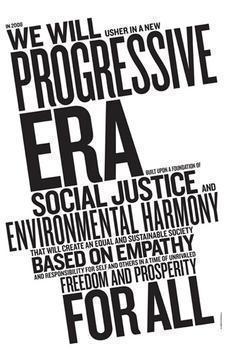




 The Catechesis of Caroline