Thinking about this whole vigil issue, I’ve just had a bit of crucial insight, courtesy of a friend who was also thinking out loud. Being so close, I just couldn’t see how a peaceful pro-life prayer vigil, especially one that helps women in desperate situations, could be perceived in a bad light by other pro-life groups, or how they undermine education.
The answer is all to do how with how they’ve been framed by a frantic pro-choice movement desperate to discredit and how this narrative has been picked up by a sensationalist media.
40 Days for Life are being portrayed as a weird fringe activity, dangerous Americans have been conflated with prayer vigils and then education has been chucked in, to make the whole pro-life movement appear as one threatening mess. Prayer vigils are the hinge that allow the pro-choice movement to discuss the importation of American methods and we all know that Americans kill people, American culture is innately evil and all traces of it must be stamped out lest it corrupts and ruins our society.
Groups such as Education for Choice, (who are owned by the Brook sexual health charity) are campaigning for pro-life groups such as SPUC, LIFE and the Right-to-Life trust to be kicked out of schools, claiming that children deserve to be taught about ‘individual choice in a safe environment’ and who promote ‘enabling easy non judgemental access to abortion’, have openly called for parents’ rights to remove children from sex-education lessons to be removed as they are ‘neo-Victorian’. Abortion eduction in schools needs to be vastly improved, in their considered and wholly unbiased position as consultants to abortion providers, opinion. It’s worth reading how they single out SPUC’s campaign against same-sex marriage here.
This passage from their toolkit for best practice, makes disturbing reading for anyone who may be concerned about women or young girls being coerced into abortion and should surely make anyone who would claim that abortion is a woman’s right to choose, bristle:
If a young man has or goes on to have experience of unplanned pregnancy with a partner, it is important that he knows who he can talk to and where he can go for help and support, as well as being able to signpost his partner to appropriate agencies. This is especially important when a couple are not agreed about what the outcome of a pregnancy should be, which can be a very difficult situation for a young man to face. Signposting to young men’s services is an important part of abortion education.
It’s worth looking at that toolkit in full – here’s another passage that stood out, warning schools about inviting in pro-life speakers and telling them to check the organisation’s website as an outside speaker can be lent weight and credibility by their invitation to speak:
For example, some websites promote abstinence as the only effective way of preventing pregnancy and sexually transmitted infections; understate the efficacy of condoms and hormonal contraceptives; cite emergency contraception as a form of abortion; stigmatise homosexuality; and overstate the risks of abortion, in relation to physical and mental health and wellbeing.
Without stating the blindingly obvious here, we can see what pro-life groups are up against and how they could do without the bad press of prayer vigils.
I’ve unpicked the inherent racism and ill-conceived myths about America and the pro-life movement previously. In a country which has a wholly different political demographic, not to mention very liberal gun laws, atrocities will sadly occur, as they will all over the world. It is not the vigils themselves that incur and incite violence – it is a handful of unhinged individuals who take the law into their own hands. 8 individuals in the US abortion industry have been killed since Roe v Wade in 1972. That’s 8 too many, pro-lifers abhor violence of any sort and believe all life to be sacred, (the clue is in the name), but this isn’t a case of big scary gun-toting fundamentalists regularly shooting at folk. It’s actually those who are on the vigil who regularly put themselves in the line of fire, being shot at and fire-bombed in some cases, by those from within the abortion clinic. Just as the LGBT lobby distanced themselves from and condemned the individual who shot at a worker at the Family Research Centre last year, pro-lifers equally condemn any who defile their cause by the use of senseless violence.
That prayers and vigils are an important part of pro-life work goes without saying. They matter profoundly and we should not have a situation where one part of a cause undermines another – this should not be an either/or and one of the strengths of 40 days for life is that it has managed to unite many of the different sections within the pro-life movement and bring together Christians of all denominations.
I can well understand the antipathy, but we have to bear in mind, this is not purely a political or educational effort, there is a spiritual dimension and this highlights one of the downsides of a purely secular pro-life group, who wish to distance themselves from the publicly praying weirdos.
I think what those of us on vigils have to do and keep on doing, is what we’ve always done, just quietly and continually pray and know that our witness will eventually shine through. The lies and the conflations of the abortion industry can easily be disproved, BPAS or Marie Stopes have admitted that there is no need to provide clinic escorts, they know full well no harassment, let alone violence takes place, they have cameras constantly trained upon those on the vigils and there have been no arrests or requests to move on and neither do volunteers engage with or respond to any insults or abuse. Neither do they hold up any judgemental or inflammatory slogans or material – there is simply a verse from scripture and a sign which states ‘we are here to help’. If women entering clinics feel bad, it is because their own conscience has been pricked or because they cannot cope with a physical manifestation that not everyone is prepared to validate abortion, as opposed to anything that the volunteers may say or do.
If 40 days for Life are being portrayed as a bizarre fringe movement, the absence of Catholics only serves to reinforce the image and allows the pro-choice movement to dictate the frame. If however, they prove by their witness, actions and lives that they save, that the only threat vigils pose is to the abortion clinics’ balance sheet, the general public will begin to see behind the lies.
I understand the concern, the vigils are being used as a hook on which pro-choice groups are seeking to get pro-lifers out of education, as theirs is the only voice to be tolerated, but this attack upon freedom of religion and attempt at one-sided indoctrination in which abortion is presented as a preferable option in some situations and at worst as morally neutral, must be resisted on the strongest possible terms and shown up for its inherent and ironic illiberality. Prayer vigils should have nothing to do with whether or not children ought to be given a wholly one-sided and relativistic view of sexual morality and neither should they be banished from our streets due to a misconceived fear of US style ‘culture wars’. The UK is not the US and culture wars feed upon an atmosphere of intolerance. The UK is thankfully a largely tolerant country without the same divisions as exist in the US. The issue of abortion is not split so evenly along political lines and 40 Days for Life is not a political protest or one that seeks to denounce women or those with a pro-choice mentality.
The only ‘war’ here is the cultures of life versus death and we should not allow fear to drive prayer out of the public square. The battle for education goes way beyond the activities of those praying for an end to abortion outside a clinic.
I went to see David Bereit, one of the founders of the 40 Days for Life movement, when he came to give encouragement and support to those involved in the vigils outside the Wistons clinic in Brighton, at a talk last night.
There were many positive and encouraging stories of what the movement has achieved, how a simple one-hour prayer vigil by a group of 3 friends outside a clinic in Texas in 2004 has rapidly expanded to become a worldwide and global movement, and the importance of the UK in this effort. Colette, one of the volunteers I met in London during the last campaign had travelled here in order to be a part of it, having been so impressed by what she’d read and has now taken the campaign back to her home country of South Africa. Another volunteer has also taken the campaign to Russia; the UK is seen as an international hub or a global gateway, what happens here influences other countries, so seen in this context its not surprising that the opposition has been quite so vociferous.
David talked about a seminal moment in his pro-life journey which sent shivers down my spine – whatever the explanation for events, there could be no doubting his sincerity and it certainly played well with the mainly Evangelical attendees. David sees the mass slaughter of the unborn as the great spiritual battle of our age and attempts to rouse people out of their apathy and reluctance. Abortion is, he says, the defining crisis of our generation, it is literally a battle between life and death, a battle between heaven and hell and what we will be accountable to God for. What we did and what we did not do.
In terms of the eschatological terminology I think he definitely has a point. Though many of the topics of this blog are unpalatable to many, it is without a doubt, the posts regarding abortion and the 40 days for life movement in particular, that arouse the most anger, vitriol and abuse, especially anything where I might write about pro-life witness. Someone once said to me ‘Caroline, you’re really rattling the cages of hell here’ and whilst I would eschew any description that would attempt to paint me in any sort of saintly, righteous or pious light, knowing that I am very very far from being pure in heart, it does sometimes feel like there are dark forces at work, not least in terms of anger and various attempts to prevent or put stumbling blocks in the way of 40 Days for Life, which has three elements at its heart – prayer and fasting, clinic vigils and community outreach.
Had the local feminist collective known about last night’s visit, they would no doubt have been protesting outside, with banners about ‘slut-shaming’ and removing their rights, we would have been seen as a group of moralisers seeking to oppress them and violently force them into gruesome births or seedy filthy backstreet abortions involving coat-hangers, whereas actually the discussion revolved around women’s welfare, what more could be done to help, how to make outreach compassionate and effective. There was no judgement about the women themselves let alone their sexual morality. This was a group of Christians wanting to bear witness and demonstrate caritas in action.
40 Days for Life was chosen as a result of its many biblical references – Noah was in the ark for 40 days and nights whilst God punished the world with a flood, Moses spent 40 days and nights on a mountain with God on two occasions, Goliath taunted the Israelite army for 4o days, God was planning to destroy the city of Ninevah in 40 days, before he saw the acts of repentance of the Ninevites and had compassion on them and in the New Testament, Jesus was fasted and was tempted by the devil when he was at his weakest after 40 days and 40 nights and of course following the Resurrection, he appeared to his followers and disciples for a period of 40 days before He ascended into heaven. Forty days is then a time of testing and a time of transformation.
Forty days for life is living God’s vision as if we were being salt and light. The clinic vigils take place because we know that whenever two or more are gathered in the name of Jesus, he is there among them. It is to bring Christ’s presence where it is most needed – outside the abortion clinics and to awaken the conscience of the Christian community. The frequent turnarounds (there have been at least 10 already in the past 8 days in London) show that sometimes God can reach the heart of the mother.
Which brings me on to the hard part. There is something troubling my conscience about which I have agonised over, in terms of whether or not to remain silent. I mentioned that last night the meeting was mainly attended by the Evangelical stalwarts of the campaign. Only 4 Catholics attended, including myself and the head of the Worthing branch of SPUC, despite the fact that Brighton and Hove is a thriving deanery. The Wistons clinics conducts 4,000 abortions every year, equivalent to two and half classes of schoolchildren every week, in the heart of our city.
One of the attendees. Michael Petek (who comments here on Protect the Pope) discussed his disappointment having read on a local parish newsletter, that the local deanery clergy were in consensus that Catholics should not attend the 40 Days for Life vigils because of the negative press coverage and because it undermined the educational work of other pro-life charities such as LIFE.
This has been weighing really heavily on me since I saw the announcement myself on a pewsheet on Sunday and it’s caused me many tears and anguish for a number of reasons. Firstly I know the clergy of the deanery, they are good wise and holy men and I have no doubt as to their integrity or that this is a considered decision. Secondly, I don’t want to be seen as an agitator or denouncer and someone who doesn’t know her place. The thing is that I’m very much of the WSIWYG school – what you see is very much what you get with me, I wear my heart on my sleeve much more than is probably wise and it’s why I would never consider a career in politics or the diplomatic service. I am worried that I am the wrong person to speak out on this one, for a variety of reasons, but what I would say is that my concerns and hurt are not personal grievances with individuals.
Like many Catholics, I respect, trust and look up to our clergy. If they advise me as to a course of action, I will follow their guidance. Therefore if they are advising people not to join the 40 Days for Life vigils, it feels like something of act of disobedience to participate. Whilst I know that clergy are not infallible and we have to be aware of clericalism, to participate in a prayer vigil, now feels like an open act of defiance. It will certainly deter many of the faithful from getting involved, knowing that the diocesan clergy seem to have reached a consensus (according to the notice) that the vigils are not a good thing for Catholics.
Personally I can’t help but feel very hurt and almost betrayed, given that I do volunteer a lot of my precious spare time and energy to this cause trying to shake people out of their apathy, which is obviously seen as being unhelpful and counterproductive. One of the other Catholics who attended last night’s meeting, kept repeating in disbelief,’ is this really what was being said’, such was her incredulity. Catholics, innate defenders of the unborn, are being urged not to publicly pray outside abortion clinics, because of what other people might think and because it might obscure the pro-life message in schools.
Think about that for a minute. Priests are telling Catholics not to pray in public, for fear of public opinion. It just feels so innately wrong and if nothing else, hands a huge victory to the pro-choicers. I am not clear as to how 40 days for Life might damage the work of LIFE in schools either.
I don’t wish to sow discord or more factionalism. I am more sad and hurt than anything else, but to me this seems symptomatic of the spiritual battle we are facing, one which I think we will win and one that I am proud to play my part in, despite the smears of those who would wish to portray us as fundamentalist nutters looking to harass and threaten, when we, along with others, know the truth. Compare and contrast what the Good Counsel Network are offering with what the pro-choicers are offering.
Unborn children are saved, they may be small in number, but they are every bit as precious and valuable. Hearts and minds are changed by peaceful prayerful witness and surely as Christians we believe that God answers prayer and in the power of vigils? I cannot get my head around Catholics being asked to stay away from public prayer vigils for the unborn in this Year of Faith, by those who have care of souls. I am deeply deeply troubled and scandalised, whilst not wishing to cause scandal or escalate matters. I am writing this with a very heavy heart indeed.
As I said, I am no saint, but I have been praying here to Bernadette Soubirous, someone else whose public prayer was discouraged by the clergy. To me, this is simply yet another manifestation of David’s words, this is spiritual warfare, this is the battle between heaven and hell and I pray to God that I’m on the right side. One day my children and grandchildren will ask me ‘what did you do in the fight against abortion’ and I hope to be able to tell them how I tried my best, I wasn’t afraid to be painted as a nutter and face public vitriol and abuse for praying for the unborn, that I tried to reach out and help women and change hearts and minds. I hope to be able to say the same to my Creator as well.
And before complaints come flooding in about the diocese or particular individuals (which won’t be published) I will state that this is an initiative that seems to be being supported by our diocese.
Please join me in prayers that it isn’t too late to change hearts and minds in Brighton. And let me know your thoughts from a Catholic perspective.
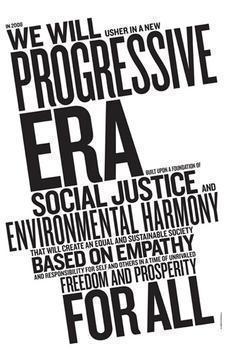
Today’s political discourse could have been lifted straight out of the pages of Animal Farm: progressive good, reactionary/conservative bad. Generally speaking whether one’s political sympathies lie to the left or right, all mainstream politicians are jostling to claim the ‘progressive’ mantle, whether it be David Cameron with his push for gay marriage or Ed Miliband’s ‘One Nation’ Labour party.
Like most political tribalism, this label is a simplistic one and it certainly looks as though the scales are finally beginning to fall from the eyes of former metro-libs, with even the very pro-abortion Diane Abbot MP decrying the hyper-sexualisation of today’s society. Not all social change or progress furthers the interests of the common good, whether that be the excesses wrought by the sexual revolution (of which the pedophile scandals of the sixties and seventies is a fruit), or the closing down of the industrial areas of the north with no replacement, by Margaret Thatcher. Progress for its own sake does not constitute a good. The majority of the UK population could be placed in the ‘reactionary’ category in at least one area of our views.
Watching some of the media coverage of today’s tragic fortieth anniversary of the Roe v Wade decision in which the US Supreme Court legalised abortion , it struck me that far from flying the vaunted ‘progressive’ flag, it is actually the pro-choicers who are the reactionaries here. They aren’t fighting for any social change, other than to retain the same old status quo that has been in place for the last forty years, one that has resulted in approximately 54 million US abortions, or missing children since 1973.
Perhaps that’s why, as Time magazine pointed out in its January edition, pro-choicers are losing the battle and pro-lifers are hopeful. Faced with an army of young grassroots pro-life activists, Nancy Keenan head of Pro-Choice America has resigned, stating that in order to successfully defend America’a abortion rules the movement needs to emulate the pro-life youth. The tactics of the pro-choice movement in the UK are certainly looking in need of a re-vamp, reverting to the same tired modus operandi of turning up to scream abuse, chant the same old stale slogans and wave the same placards every time they get an inkling that a group of pro-lifers might be getting together. As opposed to any sort of positive action that might actually help women and give them that Holy Grail of ‘choice’, all they can do is turn up like a bunch of rabid old reactionaries, resistant to any positive action that might actually help women chose to be mothers.
The treatment of @londonistar, who has recently set up the Marie Copes blog for victims of abortion to anonymously tell their tale in a safe, non-judgemental space, best exemplifies the attitude. Having discovered that her unborn child had Downs Syndrome and having been given an extremely negative outlook by the doctors, her and her husband took what was an extremely painful decision to abort a much wanted child. Her experience was utterly horrific from start to finish – she was let down by the medical profession who gave her a very limited and one-sided view of the condition and prediction of the quality of life of her child, leaving her with what she felt at the time, no other option. The procedure itself was botched, the nursing ‘care’ was brutal, leaving her in agony, needing reparative surgery, facing infertility and an unacknowledged need to grieve. The pro-choicers and feminists reacted in anger when she told them her story; instead of being outraged at her presented lack of choice and campaigning for better information for pregnant women with difficult diagnoses or even a better standard of care from the abortion clinics, they simply raged at her for having related her experience and daring to feel any grief. It was the pro-lifers, those whom one would expect to be judgemental and angry who reached out to her in a spirit of compassion and love, not only for her in her grief, but also so that they could better understand and learn from the needs and emotions of a woman faced with an agonising dilemma, whereas to use her words, the pro-choice feminists treated her like a ‘political pawn’.
Far from being solely concerned about the cute little baby, pro-lifers are intuitively concerned with the woman, the mother and her needs and rights, which is why at the Vigil for Life which took place in Dublin’s Merrion Square on Sunday and attended by 25,000 people, the crowd was awash with banners stating “Love them both. Abortion kills one, hurts another” together with a picture of a mother and her baby. It isn’t pro-lifers propagating the culture wars, pro-lifers are successfully engaging with women, with appeals to those attending America’s March for Life taking place this weekend, to avoid using graphic images in order not to distress vulnerable and post-abortive women. Equally at the 40 days for life prayer vigils, it isn’t the volunteers quietly and peacefully praying for those inside the clinic and offering help, who are upping the emotional ante, rather the vociferous, angry pro-choice opposition.
But this isn’t simply about the words. Pro-lifers are also attempting to progress women’s rights in a way that leaves the traditional militant feminists way behind. Feminism tends to treat children as an encumbrance or a burden to equality and seeks to circumvent them, in order that women may be seen to compete on an equal footing with men. A pro-life feminism embraces motherhood and child-rearing as being an authentic part of a woman’s femininity and actively campaigns for solutions which means that a child is no longer an obstacle to an education or to a woman being able to be financially self-supportive. That’s not to say that an authentic feminism rejects men as unimportant or irrelevant in the process of child-rearing, but accepts that in today’s increasingly feckless society, women are often faced with no other choice than to raise a child alone.Feminists for Life is a good example of how pro-lifers in America are reaching out to college students.
In the UK, the Alliance of Pro-life students has, in a short period of time, made enormous progress. Speaking last week at the launch, Eve Farron, their 22 year old leader, talked of how they have made common cause with feminist groups on campus, forcing them to address the lamentable lack of provision for pregnant students and working together to ensure that college students really do have a choice if faced with an unplanned pregnancy.
She described how young freshers are handed a welcome pack consisting of a free pizza voucher on one side with an advert for Marie Stopes at the back. That was certainly the case for me when I started at the University of Sussex recently. We were given a compulsory talk by the ironically named Student Life Centre who made it clear that there was an abundance of sexual health-care services, including abortion on offer. When I went to them to ask for help in terms of essay deadline extensions, being 9 weeks pregnant with three existing children and incredibly sick, they were not exactly forthcoming, neither were the faculty staff. The baby was due in the summer holidays and when I asked whether or not I would be able to bring her to lectures and seminars, as the creche would not take babies under 6 months, and breastfeed, obviously taking her out if she caused a disturbance, the answer was a resounding no. I could not quite believe how a university, that prides itself on its diversity, that strives to teach everything through a prism of feminism, gender and queer theory, could be quite so obstructive. Furthermore, the creche was scheduled to close, due to cuts and not being cost-effective, before finally being out-sourced to a private provider after a huge outcry. When I approached the student body for help, I was told it probably wouldn’t be worth pursuing the matter, it would get me a bad name, the best thing to do was defer, and of course, be liable for the new higher tuition fees. Had I not been of a strong Catholic and pro-life persuasion, I could well see how having an abortion would have seemed the only feasible choice in that situation and where were the feminists then? Any advocacy was totally non-existent.
I digress, but it goes to show that by contrast to shouting catchy slogans, the pro-lifers are actively working for social change, not only by convincing people with the overwhelming scientific evidence and intellectually rigorous arguments but also by their deeds and actions, whether that be the peaceful, non-confrontational outreach on the streets to women in need, advocacy for students and young people, or working for political solutions and social change. Pro-lifers also seek to advance the rights and cause of the disabled, recognising that every life is of equal dignity and worth and that the two causes are immutably entwined.
Pro-lifers don’t want to turn back the clock to a time when abortion was illegal, they want to strive for a society where abortion is unthinkable and unnecessary. Pro-lifers want a society where women can have children at an early age and yet still be educated and professionally successful, we want a society where fathers are held accountable for their children and not let off the hook by abortion. We want women to contribute to society, through child bearing and also through professional employment, if that is their choice. We want an authentic feminism that allows women to fulfil their natural vocation as mothers, not one that makes work and child rearing mutually exclusive, which is what current strands of feminism and pro-choice rhetoric seek to reinforce. The most exciting thing about this – it is being led by women themselves!
Pro-lifers are the real progressives, working for true social change, one that supports and upholds the dignity of women whilst protecting the right to life of all our unborn children. We recognise that for a society to be welcoming of life, a myriad of complex social problems need to be solved, not least that abortion disproportionately affects the poorest and are working for a better society for all, instead of banging a single issue drum. Whereas the pro-choicers are clinging to their outdated mantras of the seventies, fretting over fripperies such as gender appropriate lego and squabbling over internal victim hierarchies, pro-lifers are solidly working for a radical solution so that no unborn child ever need to be killed in utero again.
This is why the pro-life movement should wave its progressive credentials with pride.
A pro-life colleague in Ireland sent me the following link, which was posted on the website for the Association of Catholic Priests. She said that she would be interested in my comments from my perspective as a mother of four.
I couldn’t quite believe my eyes when I saw the logo on the sidebar, here is a website purporting to be representative of Catholic priests publishing a post which advocates abortion, in contravention of clear Catholic teaching on the matter. Further enquiries tell me that this group are the equivalent of Ireland’s Call to Action. They’ve gained a bit of credence for successfully defending Fr Kevin Reynolds against false and malicious accusations, but other than that their orthodoxy or formal representation of the Catholic Church can not be taken as read. That they choose to host a piece of pro-abortion propaganda (albeit couched in a thoughtful, hand-wringing and compassionate tone) is beyond contempt. The sooner this group is kicked into touch, the better.
Originally I intended to fisk the post, which covers familiar Irish pro-choice ground – misrepresenting the case of Savita Halappanavar,about which everyone should really keep quiet until the enquiry has reported its findings and stating that the life of the mother should take precedence over that of her unborn child, when in fact Irish law currently treats the two lives as of equal value. The law in Ireland is clear that no woman should be denied treatment that will save her life, even if the consequences of that treatment will result in the death of her unborn child. Since 1992, not one single Irish woman has come to the UK for an abortion under ground F (to save the life of the mother) of the 1967 Abortion Act.
The post includes a reflection on behalf of the writer as to how her two children were wanted and loved, how she cherished them in the womb, but what about those women for whom pregnancy is more difficult? Of course she side-steps the whole issue of personhood, but it was this passage that struck me and to which I want to offer a general response. I’m wary of giving too much of myself away, for obvious reasons, I hope this isn’t too difficult a read, I’ve prayed over whether to disclose this and my hope is that it will be an effective, if gritty, pro-life witness.
So, basically, I loved the nine months that my babies spent in my womb. But this isn’t The Waltons! Pregnancy was a long and difficult time in ways – the nausea at the start, the feelings of being like a beached whale as time went on, the utter discomfort and aches and pains that even the most straight-forward of pregnancies brings along with it and ultimately the utter agony of childbirth itself, were all part of the package.
Oh yeah. I hear you sister. It does pregnant women no favours at all to pretend that pregnancy is all about the blossoming and glowing. For some women it can be like that, but it certainly isn’t for me. I’ve been pregnant and/or breastfeeding continually since February 2009.That’s 3 continuous years of fluctuating hormones and sleepless nights. I don’t fare at all well either physically or mentally in pregnancy. Fortunately, this last pregnancy was the only one in which I didn’t get hyperemesis, but not needing medication to stop the nausea, is not that much of a consolation, when you’re only being sick a few times a day and are absolutely exhausted, not only from the physical effects but also from the demands of three existing children, two of whom were two and under. The whole nine months was beset with crippling deja vu – I’d conceived child 3, when child 2 was 8 months, child 4, when child was 3 was 7 months, every symptom was met with familiar resignation – “oh, this. Again…”
Not again…
There is an assumption that pro-life Catholic women are full of the joys of spring, happy, expectant creatures, nurturing another precious child, doing the Lord’s work and offering up any suffering in silence for the souls in purgatory or whoever. If only. I was a misery. Sick, exhausted, scared, miserable and guilty that I wasn’t bearing it as a good holy pious Catholic woman should, and guilty that I wasn’t like the pregnant celebrities gushing forth their gorgeousness onto the pages of the Daily Mail. Guilty that my body seemed to be so rubbish at what should be a natural process and I couldn’t give birth naturally. Resentful too. I really did not want to be having another baby so soon after the last two, I had already had to defer my university place once, now I’d have to do it again. I had no idea as to how I was going to cope. Which leads on to:
But what of those who are not so blessed in the circumstances in which they become pregnant? What about the woman who is raped; the stressed out mother who’s already at her wit’s end looking after young children, who’s partner has left and who has no support system to fall back on? What about the victim of incest? What about the teenager who’s terrified about what’s happening to her body? And there are so many more “What abouts”!
Is it truly right and morally justified to demand that such women carry a burden (literally!) that they find unbearable? If every moment of every day is spent in horror and anguish that the ‘growth’ inside them is something they cannot bear and that will have consequences for the rest of their lives, have I the right to say “You must do so”? And who knows what effect the feelings of such a woman might have on her unborn? If feelings transmit themselves into the womb (and I felt MY feelings of love did transmit themselves to my as yet unborn babies), then what kind of a start is it to come into the world unwanted, unloved and a cause of anguish?
OK, I’m not comparing myself to a victim of rape of incest, but I think it’s fair to say that I fall into the stressed out mother already at her wit’s end looking after young children. The pregnancy was a source of anguish. My husband hadn’t left, but he was working really long hours, including weekends on call and I had no support system at all, both sets of parents living at least two and half hours away. We were in a tiny 2-bed bungalow, with no garden suitable for the children and when recently two bloggers came down for Theodora’s Baptism, they really appreciated first-hand what I’d been on about, in terms of not only the size of the house, but its location. I was completely isolated, living at the top of a steep hill, with the nearest bus stop fifteen minutes walk away, which was a real problem, when trying to negotiate a double buggy with baby and toddler whilst pregnant. It sounds trivial, but I was very isolated, trapped in a tiny house, no bigger than a flat and no friends or support network nearby. Added to which, there was the whole ghastly business of the onslaught of a relentless bullying campaign, by a few very noisy detractors, hurling wild unfounded allegations, and, I later learnt, ringing up and emailing other people with demands that I was isolated, shut down, forced to withdraw from the internet and “flushed out of the pro-life movement”.
I don’t want to re-hash in great detail but I came dangerously close to a nervous breakdown. I always suffer from a touch of ante-natal depression in pregnancies, but this was really severe. Getting through the day became a major achievement. I couldn’t actually bear to think about the baby, or what life would be like with 3 under 3, it was all just too frightening. Added to which was the terror that constitutes a cesarian section looming large on the horizon.
In short this last pregnancy was a perfect storm of fear, anxiety, dread and illness. Which is why, I think, I innately ‘get it’ about crisis pregnancies and why I feel so strongly about the outreach work that is performed outside the clinics. On those occasions where I have participated in vigils, I’ve recognised the pallor, the drawn expression, the dark rings under the eyes and I’ve wanted to have the courage to go up to women and say ‘look, I’ve been there, I know it feels like there is no hope, but trust me, there really is, there will be a solution and there will be a way forward.’ Recognising that pregnancy is far from easy, that a situation seems hopeless, is the first step to finding a solution. Pretending that pregnancy is a carpet of roses sets up unrealistic expectations.
For those who think this is mere hyperbole, or exaggeration, or that my circumstances or situation could not in any way be compared to someone in a crisis pregnancy, I will be even more explicit, if a little guarded. I’ve mentioned I had ante-natal depression. Because of the bullying, I was too scared to seek help. I’d received an email from another blogger, stating that because he felt that my pro-life writing was of such good quality, (I wish) he was concerned that there were people out to get me, who would use any excuse and who could not only use my mental health to discredit me, but, more seriously, have the children or baby removed, and implored me not to talk about it. After all, we’ve seen various cases in the press of late, where membership of UKIP has entailed foster children being removed and we all know that as a faithful Catholic I am a ‘homophobe’ who will undoubtedly instil hate into her children whilst simultaneously religiously indoctrinating them.
I was mentally really struggling to stay on an even keel and thank God for my husband, who also had a hard time of it, helping me to stay centred, keep up my prayer life and keep receiving the sacraments. Part of the bullying had included several really unpleasant slurs calling my ability as a mother into doubt – cleverly crafted insults, designed to hit my pressure points and they succeeded. I began to wonder whether these complete strangers who had never even met my children, might be right. If, after all enough people start to call you despicable names and use the same repeated insults, then you begin to wonder whether its true and certainly that was the case for me. I fell into the sin of despair. Was I good enough for my children, didn’t they deserve better than a permanently pregnant, miserable and tired mother?
At one very low point, I seriously considered and made tentative enquiries into having the baby adopted, or placed with Catholic foster parents, because I genuinely believed that I was in no situation to be able to look after her, physically, logistically or practically and I thought that she would be better off with a good Catholic couple, perhaps one who’d never had children of their own? Fortunately those with whom I discussed it, including a pro-life organisation told me not to be so ridiculous, although they were kind enough to offer me a short-term au-pair, saying that their mission was to help anyone who was suffering through the sacrifice of bringing a child into the world.
Far too much personal information, probably more than I should have shared, but I wanted to convey that yes, I know exactly what it is like to be pregnant and to think that you don’t want the baby. I heard the phrase that an unplanned baby is not the same thing as an unwanted child and despaired, because, and yes, I know this is a terrible thing to say, I did not want the baby. I was too caught up in my own feelings, too caught up in looking after two very young children, and an older one, too caught up in trying to support my husband, too caught up in the chaos and maelstrom of hormones, illness, despair and anxiety to actually bond with the baby and that bothered me. I was scared that I wouldn’t love her, we wouldn’t bond, that I’d get post-natal depression and that life would be too difficult. I also blamed myself for contracting pre-eclampsia.
Intellectually, I knew that I probably would love the baby and bond with her as I had all the others, any depression I’d had in previous pregnancies had lifted, but there was still that nagging doubt.
Had I gone to Marie Stopes or BPAS, they would have undoubtedly confirmed all my negativity and I could well have been persuaded that aborting my unborn child was justified. When you are in the depths of despair, it’s difficult to see a ray of hope and all I could see and feel was darkness and negativity and you talk yourself into a worse and worse place. Without the consolation of faith, I would have been finished.
Things are so much better now. As predicted, as soon as Theodora was taken from me and placed into my arms, immediately the veiled lifted, which had begun with a pilgrimage to Lourdes a few weeks previously and then with the breast-feeding and taking care of her, the bond deepened and developed and now when I look at her, I am horrified that I was self-indulgent enough to think about giving her away. I’m also not too concerned about her knowing that she was unplanned because she was always loved, even if at the time I felt rather numb and she knows, as do all my children, without a shadow of a doubt that they are adored and loved. We also moved house and things which had been so far up in the air, all moved into place. It really was Providence.
So, why the long and painful testimony? Because I know, that no matter how bad things may seem, even to a rational outsider my situation wasn’t great, that sometimes, sticking to those first principles, that to kill an unborn child is wrong, is sometimes all you need to see you through.
I guess you could say that I’m a strong and resourceful person. I really am not, but effectively I had little other choice than to endure a demanding unwanted pregnancy and give birth to a child, whom I thought due to depression and all sorts of other factors, that I did not want. I had no other option, my deep-seated and unshifting faith told me that to kill my child would be an act of unspeakable evil. That didn’t make life any easier, but it saw me through. The baby was unwanted and a source of anguish, but she was never unloved. It is not abnormal not to feel overcome by feelings of love and tenderness when pregnant and women should not take the absence of the rush of maternal love in pregnancy as being proof of anything. It certainly doesn’t follow that the child will be unloved or will suffer. The mothers who genuinely wish they’d never had their children are exceptionally few and far between – I’ve never encountered one. This idea that the baby picks up love or lack thereof from within the womb, is specious. The baby knows its mother intimately before it is born, the baby loves their mother, but the only sense it will have that its mother doesn’t want it, is when it starts to flinch away from the cold hard steel of the abortionist’s instruments heading straight towards it.
When you see the women who appear to be in terrible situations, the ethical principle, the fact of the existence of their unborn child, can be all they need and acts as the small glimmer of light or ray of hope. And this is why, all women should worry about cases such as this one, where a decision as to whether or not a woman with a mental disability was allowed to have her baby, or whether she would be forcibly sedated as it was aborted.
Different day, different judge, different decision. When I was in the throes of depression and when I had “high risk” scrawled all over my notes, could that have been me, not deemed fit to have made a decision about the life of my own baby?
Which is why sometimes, all the compassion, all the empathy in the world, such as that expressed by the pro-choicer above must not trump the basic morality, that an unborn baby has as much right to life as its mother. And that no matter how hard the circumstances may appear, a new baby will always be a blessing. To those genuine pro-choicers for whom this is not about ‘reproductive rights’ but about caring for the mother, I would urge that compassion to be put to more productive use in terms of helping pregnant women.
St Maximilian Kolbe said “only love is creative”. Abortion is destructive and not love.
Sticking to first principles, that the deliberate taking of innocent life is wrong, is a decision of love. And love is never easy. Which is why we are commanded to do it.
Last year, I wrote extensively, both on this blog and in two pieces for the Catholic Herald, that the tide was turning for the pro-life movement.
This very point has been proven by the latest cover of Time magazine, which admits that since the phyrric victory of what was Roe v Wade, the pro-choice side has been fighting a losing battle, with Emily Buchanan writing what I have been saying time and time again – pro-life and feminism are not mutually exclusive.
Of course what happens over there, happens over here, which is why pro-choice advocates have been speaking about the parallels with the American pro-life movement in cowed tones – of course they do not want the success of the pro-life movement being replicated in the UK.
I think one of the refreshing things is the breed of new activists that we are seeing in the UK. Whereas as recently as five years ago, pro-life advocates were seen as retired men and women in their late 60s and early 70s (not that age or gender should preclude anyone from standing up for the rights of the vulnerable), more often than not, the person that you will see praying outside the clinic will be in their early twenties or thirties, in line with a younger, fresher breed of advocates that we are seeing in the UK.
As I said, age or gender should not be an important factor but in terms of the personal outreach, women, particularly those who have experienced an unplanned pregnancy of their own, life as a single mother and especially those who have experienced the loss of abortion, are often better placed to counsel those in difficult circumstances. Empathy is often sneered at, but you need to have a heart for pro-life work, it is not simply an intellectual or ideological exercise.
But in an age where image seems to be everything, the fact that we have young, fresh faces campaigning for the unborn should fill us all with renewed hope. We have a new generation with the blessings and energy of youth, able to use imaginatively the new technology and all the tools at their disposal to spread the pro-life message and also to pass it on to future generations. That these people look great is even better. It’s why they manage to inspire such anger – whilst the general public tend to dismiss those who are clearly of another generation or culture, such as the retired stalwarts or those in clerical or monastic attire who attend vigils, it’s much harder to dismiss those who seem like ‘normal’ people on the outside.
It’s very hard to call someone out as a ‘weirdo’ when their appearance contains reflections of your own normality or aspirations and that’s why it inspires such anger. Young pro-lifers threaten and challenges existing preconceptions whilst foreshadowing the future. There is a definite trend or sea-change in the air, which is why the feminist lobby will cling on to their tired and anatomically and idiomatically incorrect old slogans involving wombs, rosaries and religious paraphernalia.
That’s not a clarion-call for young good-looking bods in the movement which should have room for all, but simply an observation. Even more challenging is the attractive young pro-lifer using the rosary for its intended purpose. Whoah, what’s that all about?!! Which is one of the many fruits of the 40 Days for Life campaign, uniting all those with common purpose in prayer.
The Alliance of Prolife Students is launched next week. Let’s equip people to be proud advocates of the unborn, let’s get this topic out in the open, it’s time to re-gain some ground from those who would wish to make the subject of abortion a taboo, closed issue, all about personal choice and not up for discussion. Whilst experience is invaluable in terms of outreach, youth should not be an impediment for bearing witness to the truth – abortion is the wilful destruction of life and the greatest injustice in today’s society, with 200,000 lives lost a year. And where better to start spreading the word, than in places of academia, where a free and frank exchange of ideas and discussion should be welcomed and encouraged. Let’s get people talking about this in bars, coffee shops, libraries, student halls of residence and later on around water coolers and in places of work. Let’s dispel the fear and stigma of being thought ‘judgemental’ for expressing the basic right to life of all human beings.
The future is young, bright and it’s orthodox. No wonder pro-choicers are on the run. Let’s give them a real run for their money in 2013.
Last night’s post was the blog equivalent of thinking aloud.
A quick summary then.
If we want a pro-life society we have to value motherhood as a vocation in and of itself.
Valuing motherhood should be an integral part of an authentic feminism, which promotes the fact that all other factors being equal, mothers are by far the best placed to be the primary carers for their children, even if they do need guidance at times.
We need employment legislation that compels employers to be creative with hours offered to mothers, a benefit system that does not penalise mothers who choose to stay home with their young children, as well as accessible child-care.
At the moment most women do not effectively have any economic choice as to whether or not to work if they have children. The expectation is that women will work, bring in an income and continue to do so whilst juggling the demands of a young family, which is a fair amount of pressure. Whilst fathers are getting better at being hands-on and relieving the pressure, the burden of birth and breast-feeding does not fall on their shoulders.
At present, a mother has to accept that unless she works, she and her children have to accept a substantially lower standard of living, not just doing without luxuries but in reality, struggling to afford the basics, regardless of whether or not she has a partner or husband. If a couple have children, the compromise is often a choice between living in a house/flat to accommodate children or whether the mother/father can stay home. Often there is no choice. The rising house prices have shafted everyone under 50 who doesn’t have a substantial inheritance or private income.
The answer is not to make men do more and make two people juggle the demands of work and children, but to re-gear society in order to give women some real choices, understanding that motherhood is not of secondary import, something to be relegated behind one’s duty to earn one’s keep and pay taxes.
The early feminists were right; women should not be forced to stay at home against their will, they are entitled to equal standards of education and equal opportunities in the workplace. But those pioneers who were passionate about women’s choices and freedoms and would be horrified to learn that the unintended consequences of their movement resulted in women being compelled to choose between their economic freedom and their ability to have children.
An authentic feminism should not compel a woman to work. An authentic feminism does not force a woman to abort her babies or limit the size of her family. An authentic feminism does not treat children as a barrier to equality, but rather encompasses and accepts them. An authentic feminism is pro-life; it values motherhood and does not treat babies as an encumbrance.
If we can get women to stop thinking of fertility as a problem and society to value and respect motherhood, if we can give women a real choice in terms of how they raise their children, then abortion will be a thing of the past and feminism can claim a real victory.
Fr Ray Blake said something that gave me pause for thought the other day.
We should recognise most women have abortions because of economic reasons, that controlling the size of families through contraception for most people is an economic decision. We need to promote an authentic feminism (and masculinism) that is based on relationships, we need to promote the real rights of women to be parents, simply to be able to have children without the constant anxiety to find childcare and to be able to afford it.
I wouldn’t disagree with any of the above, but I think it’s worth unpacking and exploring a little further. Most women do have abortions for economic reasons, the increasing numbers of abortions performed on women who already have at least one child, as capitalised upon by BPAS in their recent advertisements for abortion claiming that 50% of women who abort are already mothers, indicates that for many this is an economic decision. Most women who have already given birth are well aware of the various stages of foetal development and the reality that this is an unborn child whose life they are choosing to terminate, but feel that they have little other choice.
Few women who abort their pregnancies take the attitude of Caitlin Moran who claims (and I would posit that she’s in serious denial) that she gave the matter less thought than choosing her kitchen worktops. Most women would not choose to abort if they genuinely believed that they were killing a living human being, which is why so much sophistry is employed by the pro-choice advocates as well as attempting to involve irrelevant scientific arguments about sentience. Either life begins at conception or it does not. If the latter, at what particular point in its development is a foetus deemed ‘alive’, at which point science is invoked to justify philosophy. The biology is simple. A new independent human being is formed at conception, with separate DNA and capability to develop itself to the mature stage of a human organism given the right environment.
It is precisely because the human conscience is pricked on the issue of abortion that women become quite so aggressive and defensive on the matter. If abortion is not the destructive of unborn life, then why do women get quite so angry about it and why are they bothered by the peaceful prayer vigils? If abortion is a difficult choice that isn’t undertaken without much soul-searching, why is that and why are they so bothered by the presence of people praying for them or trying to offer an alternative? Even the most well-meaning of pro-choicers will claim that abortion is an economic decision, women genuinely don’t have a choice and so abortion must be available for the most pragmatic and compassionate of reasons. The old “I wouldn’t have one myself but I wouldn’t deny it to those who need it” adage.
But undoubtedly there are a few women who abort, not solely for economic reasons but simply because a baby will not fit into their current plans. That’s not to condemn or cast judgement, society has to bear as much responsibility in that it implicitly encourages and coerces women into abortion, with babies being little more than a lifestyle choice, who aren’t fully alive until such moment as becomes convenient in the mind of the individual.
But regardless of whether babies are aborted because of lifestyle choice, economic necessity or even thoughtless recklessness in those rare cases where we see young women having undergone as many as 8 abortions, (I really don’t believe that many women have abortions because they can or because they are inherently cold-hearted or even evil) there is one factor in common and that is that a baby is seen as a burden or difficulty and never a blessing.
Whilst pro-lifers have to be careful not to overdo the sentimental saccharin schmaltz when it comes to the indisputable beauty of a newborn child, we have to ensure that we don’t fall into the opposite trap of over-emphasisng the gritty reality of child-rearing in an attempt to make our society equipped for unplanned pregnancies. The truth of babies is that they encompass both extremes. Having a baby does entail a lot of hard graft and often economic difficulty but it also brings with it an outpouring of joy, blessings and love to which no language can do adequate justice and which compensates for the difficulties. There isn’t a mother I know, not even mothers of severely disabled or terminally ill children, who wishes that her child had never been born, or that she hadn’t experienced the love of her child. Even mothers in the most challenging of circumstances wouldn’t wish away their children, but instead wish that their lives could be easier.
What pro-lifers need to do, is work for ways to make life tenable for women with unplanned pregnancies, whether that is the mother of 3, expecting her fourth child, the pregnant teenage mother, or the young woman with a career that seems to be going places.
Pro-lifers often focus upon the idea of free or cheap state childcare in order to incentivise a woman not to abort her baby and to help her back into the workplace. I’m not so sure that this is the right answer, admirable though it may seem. The problem is that for the overwhelming majority of women, having a baby will have an enormous financial impact upon them if they are already in full-time work. Although women can now, quite rightly, enjoy up to a year’s paid maternity leave, most do not look forward to the idea of returning full-time. And who can blame them? You give birth to a beautiful child, you spend at least six months giving them your full attention, nurturing them, feeding them, helping them roll, sit, manage solid food, you know them, you can recognise the signs when they are tired, hungry, you know how they like to be settled or held, which is their favourite cuddly, they haven’t been out of your care for more than a few hours at a time, maybe 24 hours at granny’s at a push, then all of a sudden you have to hand them over to a stranger for at least 8 hours a day, 5 days a week. It’s no wonder that most women do not want to return to full-time work, but feel that they have little other choice. In addition it tends to be just as your baby is getting interesting, beginning to walk, talk and most mothers are devastated that they will miss their baby’s first steps or key milestones.
Perhaps because the state is becoming ever more intrusive or presumptive, but there is additionally, something a little sinister about having to hand one’s child over to state-approved childcare for the majority of the working day. For me the approach is summed up in our attitude towards single mothers who are expected to go out to work, as soon as is feasible after having a baby. The attitude of the former government was equally disturbing with Tessa Jowell trying to formulate policies to encourage mothers to go out to work and Patricia Hewitt describing mothers who stay at home with children under two, as being a ‘real problem.‘
Again we see how modern feminism has failed women, who are expected to be on equal terms with men in the workplace, to be able to work full-time, or work at all, as well as bring up children. I’ve been a working single mother and it was horrific. I had little other economic choice at the time, but on average I saw my daughter less than an hour and half a day, Monday to Friday, having to drop her off early in the morning before work and then having precious little time to spend with her in the evening, to ensure that she got a good night’s sleep. Quality time consisted of bathtime, stories and bed and I put myself through agonies of guilt. It meant that I had the worst of all worlds in that work saw me as not fully committed and I felt that I was selling everybody short. It is only now that society is realising that unless you are a wealthy fund-manager with a bevvy of nannies and housekeepers, that the idea of ‘having it all’ is nothing more than a myth.
So, what’s the answer, especially from a pro-life perspective? The problem with childcare, is that not only is it expensive and puts pressure on a woman to go out an earn her keep, but it also treats women as if they are only valuable if they contributing to society in a purely economic sense. I think if we are going to promote an authentic version of feminism, then we have to promote the innate value and worth of motherhood on its own. That’s not to denigrate women who do go out to work, but actually women need to be supported by economic policy to stay at home with their children, until such time that their children are of school-age, particularly if they are single mothers. Whilst this may seem counter-intuitive and contrary to normal feminist principles an authentic feminism recognises the value women have as mothers and how the opportunity to spend as much time as one can with one’s children, is actually of benefit to society.
It’s a difficult balance to strike, because clearly the state is not a bottomless pit and clearly one can’t have policies in place, be they encouraging mothers to stay at home, or work, which will encourage state dependence, but I think to a certain extent society has to bite the bullet and accept that a single mother is facing more difficult odds than a two parent family and so enable a mother with children under school-age (say 5) to stay at home, regardless of her marital situation whilst implementing policies such as, for example, forcing employers to be more flexible and creative in terms of the working hours that they can offer to mothers and phasing women back into employment when their children are of school age. It is a difficult balance and most of us know of families who do not work, simply because with the cost of childcare it is not in their interests to do so and who are as a result, reliant on the state.
This is not to attack mothers who do want to work, often women say that they need the stimulation of a work environment, that they lack the patience to stay home and several women are trapped in the situation where they need to work for economic survival, but I wonder, if we began to value motherhood more, if we began to give examples of how intelligent, educated women can be stay-at-home mothers, or work part-time and still be happy and fulfilled would it transform society? I think so. I often think that women who state that they don’t have the patience or wherewithal to full-time parent their offspring, under-estimate themselves and with the right examples and in the right environment, would surprise themselves. I can think of at least ten of my friends who have Oxbridge degrees but who have eschewed the work environment to be full-time mothers and who have never been happier.
One of the reasons that families are financially struggling is not only due to rise of consumerism and the idea that it is only through material goods that we can find fulfilment, but more importantly because the expectation that women will automatically work, regardless of whether or not they have children, means that two income families entailed bigger mortgages which fuelled the rise in property prices. Every family should be able to afford or live in a decent home with access to a small garden. Affordable housing alongside the removal of the expectation that a woman should and must earn her keep would be another small part of the strategy. If we have more mothers at home, then our communities which have been so fractured will begin to heal. It was traditionally women who were at home with the children, who provided a mutual support network, who passed on valuable skills and knowledge in terms of child rearing and helped each other in times of trouble, with babysitting etc instead of having to pay a stranger. It was also the same women who helped to look after the elderly, who had them either living at home, or who would drop in and help their neighbours, enabling them to be supported at home, instead of reliant on a government for care and assistance. I’m not saying that women should be expected to do this kind of work, but it is a natural by-product of what happens when we have communities and besides there is nothing demeaning about caring for other people.
True feminism should allow women to have the choice as to whether or not to enter the workplace (something I’m hugely in favour of, if women want to work then they should and on equal terms) but equally, a real authentic feminism values motherhood as a vocation in and of itself.
We need to stop looking at motherhood as being demeaning, inadequate or beneath a woman’s dignity and celebrate it as a worthy vocation, one that benefits her, her children and society as a whole. We need to re-gear society to remove the current expectation upon women to work, unless and until men have the ability to bear children in their wombs! There is nothing innately sexist in stating that as women give birth to and nuture their infants, then they are best placed to provide the primary care. By all means allow women to work on equal terms, introduce legislation that gives women watertight protections to allow flexible working, allow women to reach the top of their profession, but by no means force a woman to work or define success in purely professional terms. Staying at home to help one’s children reach their potential, is not demeaning by any means.
A pro-life society does not buy into the notion that a child is a burden or economic problem that needs to be overcome, but celebrates motherhood and enables women to have real choice as to how best to raise their children, instead of expecting them to be handed over to someone else from an early age. And if this puts more responsibility on men to work and provide for their offspring – sorry but them’s the breaks. No wonder so many men identify themselves as “feminists”. Authentic feminism recognises motherhood as an innate good and children as a gift, flowing from the consequences and blessings of being part of the feminine sex. It recognises our ability and responsibilities as bearers of life, given to us from the Creator himself.
One of the valuable lessons I learnt last year is that sometimes it’s better not to air one’s grievances publicly. The internet is still a new tool and all of us are learning as we go in terms of how to most effectively utilise it. This time last year I made some criticisms about SPUC which resulted in a very unpleasant fall-out. Whilst I don’t regret what I said, and stand by many of my concerns, I also accept that I was blogging in a state of anger (never a good idea) fuelled by what I felt was unfair criticism and aided by a huge dose of pregnancy hormones. Hopefully SPUC of all people, should be able to understand that a woman experiencing her third pregnancy in as many years, coming 8 months after the birth of her previously unplanned child, was perhaps not in the best place emotionally and took the criticism rather too personally.
Therefore I ought to apologise for the intemperate nature of those posts, feelings were running high and admittedly I was being cleverly manipulated by a behind-the-scenes agitator, suggesting that I should blog. Mea culpa.
I still have reservations about the wisdom of whether or not it was a wise idea for SPUC to use its resources in defence of marriage, but in the interests of balance, I ought to admit to an interesting conversation regarding with my father-in-law, who is still technically an Anglo-Catholic and long term member of SPUC. He informed me that he was having a meeting with his MP in the middle of January in order to discuss same-sex marriage. He doesn’t expect to get anywhere, given the MP is a Liberal Democrat, but felt the issue was important enough to make his views known.
I asked him what prompted this, to which the response was “I had an URGENT letter from SPUC, which said that something had to be done, so I straight away phoned up the young girl in their office, had quite a long in depth conversation and then made the appointment to see the MP”. So fair dos really. SPUC do seem to be rallying some grass-roots activism, which is no bad thing.
To be honest, I still believe their campaigning and strategy needs some updating and revisions. The fact that they were successful with my father-in-law is because he is pretty typical of the average SPUC member, i.e. over 65, a staunch Christian, not net literate (he doesn’t use the internet at all) and he tends to get very worked up by the angrily typed letters and edited handwritten slips of paper which look like they have been produced on an old-fashioned duplicating machine, that drop through the letterbox, containing their latest foreshadowings of imminent danger or deadly peril and urging strongly-worded letters and street petitions. I think SPUC’s appeal lies mainly with the retired reactionary Tory voters as well as the young traddie Catholic movement and at some point they will need to broaden their focus, but you know what, fair-play.
How many Catholics reading this have lobbied their MP yet? And if not, why not? I’ve just moved to Hove, so I’m wondering whether or not to have a bash at Mike Weatherly, the Tory Hove MP who narrowly won the key marginal from Celia Barlow, the former Labour incumbent and within a year of his election, lobbied David Cameron to shut down churches in his constituency who won’t conduct same-sex marriages. Modernise or close down was his rallying cry. Is two bites at the cherry (given I met with Caroline Lucas back in October) a little greedy, or is there no point? Incidentally I’m more than a little peeved – a Tory vote was recommended in the key marginals, if I recall correctly and it turns out that Celia Barlow had a much better pro-life record than I should imagine Mike Weatherly will have.
But I do endeavour to be fair-minded, so err yeah, credit where credit’s due. Although quite what L’Osservatore Romano’s reviews of Skyfall, have to do with a secular pro-life lobby group is beyond me. I’m not sure I agree with the sentiments therein, a group of seminarians and priests I know went to see the film and thoroughly enjoyed it. Didn’t someone say something about being in the world and yet not of it? If we want to warn youngsters of the dangers and pitfalls of life as a secret agent, or the false glamour espoused by James Bond, then doesn’t it help if we’ve actually seen the material in order to be able to engage effectively with it and view it critically?
As many pro-life campaigners have noted, the wonderful news that their Royal Highnesses the Duke and Duchess of Cambridge are expecting a baby, has proven yet another significant marker in the consciousness of the general public, of the humanity of the unborn child.
Nowhere in the press coverage is the baby referred to as foetus (derived from the Latin word fetus, meaning offspring, bearing forth or hatching of young) or as a bunch of pluripotent cells, instead there is much speculation as to the physical characteristics of the baby and his or her future. Despite being an estimated 8 weeks old, there is no doubt in the minds of the media and public, that this is a ‘royal baby’.
What is intriguing is that the couple have decided to bring the announcement forward, prompted by the Duchess’s unfortunate severe morning sickness for which she has my sympathies, it is an extremely debilitating condition. Given the climate surrounding the press following publication of the Leveson Report last week, actually there was no need for the couple to make this announcement quite so early. Though there would have been much speculation had the news leaked that Kate was in hospital and of course it was a matter of public interest, there was no necessity for a pregnancy announcement. The Royal couple enjoy much public support, a fact underlined by the universal sympathy for the Duchess after she was snapped topless in the privacy of an enclosed holiday home, by an unscrupulous paparazzi member.
If news of her hospitalisation leaked, a vaguely worded statement could have been released, reassuring the public that the Duchess was fine and that this was a private matter. Though this would not have stopped the inevitable speculation, the press could well have been briefed to afford the Duchess some privacy and breathing space during this difficult and delicate time, with promises of a formal press call later. No editor worth their salt would want to run the risk of incurring public censure by being intrusive and had the royal couple wanted to keep this quiet for a few weeks longer, my bet is the press would, in the current post-Levenson climate, have laid off.
So why didn’t William and Catherine stay quiet? Most couples do tend to keep the news to themselves up until the period which carries the highest risk of miscarriage has passed and the scan has confirmed that the baby is free of any congenital or chromasomal abnormalities. That they have gone public so soon, is indicative of their pro-life attitude. Whatever happens and God Willing everything is fine, the announcement signals a commitment to the baby, whatever the future may hold.
The only reason for announcing before the 12 week mark is to signal your commitment and joy. It’s one of the reasons that I have no qualms in informing people I’m pregnant as soon as I know, not only so they can be considerate, but because I know that scan results are irrelevant as to the question of whether or not I am having a baby. My hope is that this will set a trend; to announce a pregnancy early goes against society’s current tendency to ignore or deny that one is carrying a live human being until such time as it is decided that it is wanted – usually after confirmation that it is healthy.
There is one elephant in the room nonetheless. The royal baby is being referred to as such, because he or she is wanted. Those who would defend the use of nondescript clinical euphemisms such as “products of conception” would state that what makes the royal baby worthy of being described in human terms is that s/he is wanted and planned for. Whilst no republican, this inequality is at the root of both Christian and pro-life concern. It is very clear that William and Catherine will be wonderful parents and both William and Harry have their mother’s attributes in terms of an affinity with the sick, disabled and outcast. The royal couple have both the disposition and resources to cope, should the baby experience any health difficulties. A measure of how pro-life the country is as a whole, is how we would react to the news that the couple had aborted their baby if he or she were revealed to have Downs Syndrome. More than 90% of babies with the condition are aborted, so why would it be so abhorrent if the royals were to follow suit? What if the Duchess changed her mind about the pregnancy for any other reason. Would she be admonished or decimated by the media? If so, why? Isn’t it supposed to be all about choice?
The answer is, as always, money and resources. These are the key factors that make the difference between a baby being wanted or unwanted and thus human or sub-human, worthy or unworthy. This is the heart of pro-life sentiment, that all human life is of equal worth and dignity, regardless of where it is in its journey; whether it has one day to go before it emerges from the womb, or whether it only has a few hours left. Everyone deserves the same respect and right to life, regardless of disabilities or family circumstances. Cristina Odone said yesterday that Catherine’s pregnancy will be a great equaliser. Let’s hope that this is prescient, that the public come to realise that all unborn babies are human and worthy of life regardless of whether one’s blood is blue.
Is an acknowledgement that the royal couple’s 8 week old baby is human only by virtue of his or her birth circumstances really the position of an enlightened twenty-first society? Nothing could be more illustrative of how abortion really is a the scourge of the poor or dispossessed.
Congratulations to Catherine and William nonetheless. I hope she recovers and enjoys good health and is afforded a degree of privacy and respect during the rest of her pregnancy. How marvellous if they could take this opportunity to help and highlight the causes of all the women and babies who are not as human as theirs.
In May 2011 the late great pro-life campaigner Phyllis Bowman wrote about the BBC bias in favour of assisted suicide. She noted that in the past three years, at least five programmes promoting euthanasia had been broadcast which is unacceptable coming from a broadcaster who is supposed to remain neutral on ethical and political matters given that they are funded by public money.
According to this report, the BBC is now producing a six-part ‘black comedy’ called Way to Go, about three friends who set up an assisted suicide business to pay off gambling debts.
Zai Bennett, controller of BBC Three, said that Bob Kushell’s, the screenwriter’s scripts, “are in turn dark, poignant, absurd, moving and brilliant. But mostly they are very, very funny. I’m thrilled that Way to Go is coming to BBC Three.”
I wonder whether those suffering from terminal illnesses, or their relatives will find this quite so amusing? I wonder how the sick, disabled, elderly and vulnerable will react to this normalisation of euthanasia? Still at least the programme-makers are reflecting that there is indeed money to be made from the promotion and selling of suicide.
What next? Larks and japes from inside an abortion clinic? John Paul II’s ‘culture of death’ is evermore prophetic.
Here’s a link to the BBC’s complaints site. Isn’t Chris Patten supposed to be a Catholic?





 The Catechesis of Caroline