Catholic women rising

542401b~Woman-Praying-W-Rosary-Beads-Posters

Okay, so this is a bit of an experiment, but I’d really like it to catch on and would also like the support of the entire Catholic blogosphere, certainly in the UK and what an amazing thing if this could go global.

Inspired by Deacon Nick Donnelly, who has such an inspirational apostolate with his Protect the Pope blog, my blood pressure rose when I saw that a certain ‘Catholic’ theologian is once again hinting at doctrinal changes, seemingly misunderstanding that these are simply not possible. This isn’t meant to be a personal attack on Tina Beattie herself, I can understand that it must be unnerving to feel constantly besieged by a group of bloggers on the internet, but in a recent interview in the Guardian she states:

The new pope must show that he is willing to engage seriously with women’s theological voices and moral perspectives in a way which is broadly representative of the diverse experiences and aspirations of women, and not just with a few carefully selected theological handmaids.

The Church is not a democracy. Furthermore doctrines cannot change, Catholicism is based upon the truth that was revealed to us by Jesus Christ and handed down by the apostles to their successors. Revealed truth cannot change, the deposit of faith is comprised of this revealed truth expressed in Scripture and sacred tradition and thus cannot change. The church does not have the power to change or remove anything that has been given to us by Christ and His Apostles.

It is beyond annoying being told what the Church should do in relation to women, by people who are either not Catholic, or want the Church to change her doctrine in order to accommodate their own personal agendas, whether that be to allow self-destructive behaviour, to validate their own insecurity or to give them more ‘power’, which is never a healthy thing. None of us should crave positions of power or leadership.

Many faithful Catholic women are fed up of being told that they are not representative of the Catholic faith, that they are somehow brainwashed or marginalised, that their Church hates them and that most Catholic women are against the Church’s teachings, especially with regards to contraception, abortion and the male priesthood, most of which is based on dodgy poll data.

Here’s what I’d like to do. I’m not sure if this blog is the best forum for it, but then again it is run by a married mother of 4 young girls, who is passionate about female equality and empowerment, it’s just my definition of what that looks like, is very different to that of militant feminists or unrepresentative politicians and journalists, who think working women is all about a high-powered job in a nice city office somewhere on mega-bucks, or perhaps a well-paid newspaper column working from home, whereas the reality for most working mothers and children is entirely different.

I’d like to get as many Catholic women as possible, to sign up in the comments box below, to say that they agree with the following statement.

I am a faithful practicing Roman Catholic woman, who attends Mass at least once a week and who believes in and practices the Church’s teachings, specifically pertaining to matters on sexuality, contraception, abortion, marriage and the ordination of women. I believe that the Roman Catholic Church is sympathetic to and representative of the needs and concerns of women and their children, wherever they may be in the world. I would like to offer our new Pope Francis, my prayers and support and thank him for his continued protection and support of mothers and their unborn children. I fully endorse Church doctrine in relation to women’s issues. 

This could be an amazing gift for the Year of Faith. Imagine if every single faithful Catholic woman were to pledge their solidarity to our new Pope and Church doctrine in one place. What a gift, blessing and comfort, not only for Pope Francis, but also for ALL the Catholic clergy, Cardinals, Archbishops, Bishops, Monsignors, Priests, Deacons, as well as those members of the laity, who are engaged in catechesis. How heartening for them to see the fruits of their work and how loved, supported and appreciated they are by Catholic women everywhere.

Also, what an opportunity for catechesis this could be, in terms of promoting the New Feminism. If you do see this and you are a Catholic women who feels in good conscience that she cannot sign up, don’t leave a comment on this post, I’ll open up another sticky and we can get debate going there, or better still, discuss it with your priest, or someone you know who can sign in good faith.

What a message to the Pope, to the Church and to the world and media at large. We, the undersigned Catholic women, have a love for Christ and his Church burning in our hearts and we do not wish to alter or change doctrine one little bit. We are empowered by a beautiful teaching that recognises us as having an equal dignity and sets us free to live in love.

A fantastic infrastructure

Sir-Elton-John-and-David-Furnish-with-their-sons-Zach-and-Elijah

Alright – forgive the obligatory disgusted of Tunbridge Wells tone, but remember how everyone scoffed at the idea that following ‘same-sex marriage’, the next step would be to follow in the footsteps of Spain and replace the terms of ‘mother’ and ‘father’ with Progenitor A and Progenitor B?

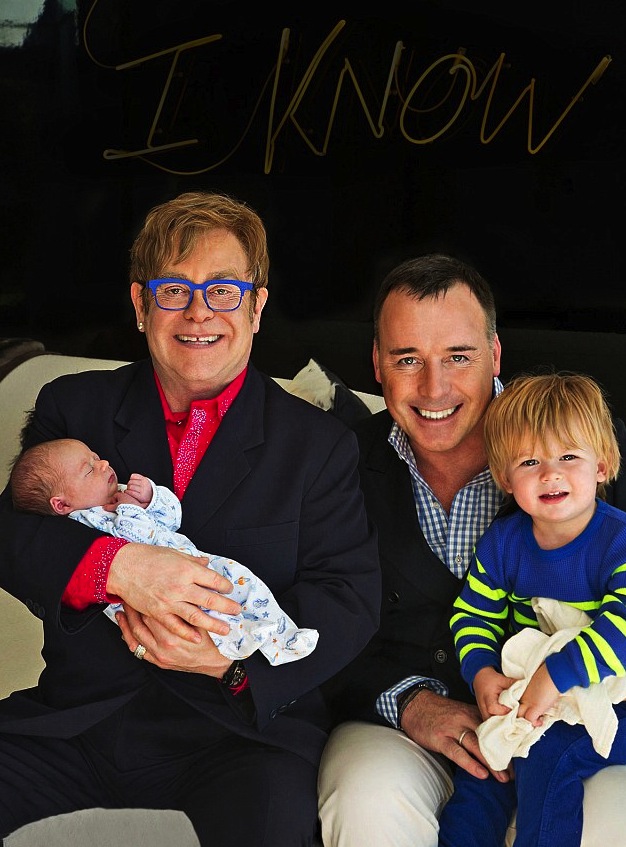
It would appear that, Elton John and David Furnish have decided to lead the way by declaring that David Furnish is the ‘mother’ on the birth certificate of their new baby son, Elijah as well as their elder son Zachary.

That’s right – David Furnish is officially recognised as a mother, despite the fact that he isn’t, he never can be given that he possesses entirely the wrong set of equipment. So not content with redefining marriage, we now need to redefine motherhood and fatherhood into one homogenous mass known as parenthood. Or is it that David Furnish recognises the importance of a mother, just as the LGBT lobby recognise the importance of marriage and has decided to reclaim it for himself? After all, why should motherhood be restricted to women on account of their sexual organs and reproductive ability? Isn’t that rather sexist? This is why we see the overlap between queer theory and feminism, because by declaring that gender is a separate entity to sex and performative in nature, it paves the way for boys to be girls, men to be mothers, girls to be fathers and vice-versa and everybody gets an excuse to indulge their own notions of self-identity.

And whilst I recognise that gender dysphoria can be a serious and debilitating condition requiring treatment of some sort or another, transsexualism or its younger sister transvestitism, is all very well and good, so long as it does not impact on other people, although on a very local level it will mean that when visiting my friends or taking the children to the beach at nearby Rottingdean, I’d better be sure not to drink too much tea as personally I am extremely uncomfortable using gender neutral lavatories in common with, I suspect, most women.

Causing a minor personal inconvenience or embarrassment is in a wholly different league however, to a sacred doctrine whose effects impact on vulnerable children. Men cannot be mothers, women cannot be fathers and to declare otherwise, no matter how legally binding one wishes to make this by declaring it on official documents, does children a massive disservice by seeking to deny them the links to their biological parents.

I am not ashamed to admit that the reason for my distaste and opposition to this, is like many forms of alleged ‘phobia’ , due to feeling threatened. It is threatening when on account of their sexual preferences other people seek to deny that my biology, the fact that I carried my 4 children in my womb myself, that I birthed them, that I breastfed them, that I held them, soothed them, sang to them and tended to them in a way that only a mother can, that they responded to me, from the moment they were born as being comfort and love- I only needed to pick up the newborns when they were crying for them to be instantaneously soothed; all of these things are irrelevant and none of these make me a mother. That, if necessary the state could determine that two men would be every bit as good for them as their mother and their father. It worries me on behalf of every single woman everywhere, that the unique and innate qualities that make women mothers, are now deemed irrelevant, motherhood is just now another form of childcare. Mothers are simply biological vessels and nothing more – something that’s bought into by a frightening amount of women, and was highlighted by Hilary Mantel’s critique of the Duchess of Cambridge. The image she projected was not one that Kate’s extended family have imposed onto her, but one that she has imposed upon Kate, and one can’t help but note that Hilary Mantel has herself suffered from unfortunate infertility problems, which might perhaps explain her disdain towards child-bearing women.

Biology must not be written off in order to satisfy the whims of sexual identity for a minority. To do so is the first step in a dangerous process of dehumanisation. By degrading motherhood, feminism has managed to wipe thousands of years of evolutionary history off the map, a woman’s unique ability to give birth does not render her in any way special, deserving of extra protection or elevate her in any way, it rather weakens her and her womb is something of an encumbrance that makes her not as good as men.

And, if any more proof were required as to how this new child of Elton John and David Furnish has been commodified, their comments are extremely telling, due to a ‘wonderful nanny, fantastic paediatrician, all the great support’, they had found Elijah far more easy to cope with.’

‘Now we have that wonderful infrastructure in place so we can just sit back more and enjoy the little person themselves without the worry – or as much worry.’

Most of us don’t have the luxury of nannies and paediatricians or even great support, particularly if we are not living near our families. Our children are not little pets to be cooed over, admired and enjoyed, no matter how enjoyable or rewarding raising them can be, children are little human beings requiring infinite love, patience, time, energy and self-sacrifice and in those early baby days, enjoyment is not top of the list. You do what you can to get through the back-to-back breast feeding, nappy changing, endless walking up and down stairs to get them to sleep, waving toys and rattles at them, blowing bubbles to cheer them out of their grumpiness, whilst trying to fit everything else in around that. Eventually you’ll be rewarded with a smile of recognition or a soft purring that would indicate they are sleeping contentedly, you’ll feel your baby’s soft cheek against your flesh, gripping on for dear life and comfort whilst they sleep, and that is a reward in and of itself. A baby is not something to sit back and enjoy whilst everyone else gets on and does the hard graft.

Most people don’t need to buy a fantastic infrastructure and that’s because they already have it – a loving mother and father.

Joining the dots

I did a couple of media appearances yesterday (as my friend said, I’m getting to be like David Jason, always on the telly) regarding the revised NICE guidelines which propose that the NHS should now offer one free cycle of IVF to couples between the ages of 40-42. I didn’t get to expand upon my points about more effective techniques, ideally I would have liked to have discussed the success rates of NaPro technology and neither was it the forum to launch into apologetics surrounding assisted reproductive techniques.

Without going into a lengthy discourse as to the ethics and wisdom of IVF as a whole, one thing struck me as being missing from the entire debate. We, in the Western World have some very confused, peculiar and disjointed notions of female fertility, which are tied into the shortcomings of a society based on moral relativism, whereby personal autonomy is king and every choice is equally valid, regardless of consequences.

One of the recurrent themes of yesterday, was not that women were choosing to have their children late, simply that life didn’t pan out the way that they wanted – Mr Right didn’t turn up until their late ’30s and early ’40s by which point, female fertility is rapidly diminishing. Whilst on the one hand I totally sympathise, having made more than my fair share of romantic mistakes, I also think this must cause us to question the prevailing mentality with regards to female choice and autonomy, without wishing to remove any of those options from women.

Suzanne Moore makes some salient points here, not least emphasising the low success rates of IVF and echoing some of my themes around society’s attitudes towards the right age for motherhood. The Holy Grail of female choice, has paradoxically led to a situation whereby women feel that they have very little choice and control when it comes to the timing and amount of children. The everyday expectation for women is that following education they should go straight into the world of work, spend some time establishing financial independence and their career and only once secure should they then begin to think about potential offspring. The problem is that building up a successful career requires a substantial amount of time and effort which leaves precious little emotional and physical resources for the business of finding a life partner, which these days is treated as an optional extra to the all-consuming world of work and career. Add in the whole business of setting up and maintaining an independent home, it’s no surprise that most women aren’t really paying much attention to any sort of long-term game plan in terms of marriage and children. It’s all about surviving on a short-term basis, particularly in these days of austerity and hoping that the future will sort of magically fall into place, once everything else is established.

One of my suggestions was that women need to take into account the fact that fertility begins to decline frighteningly early at the age of 27, and begins to drop rapidly from the age of 35. Women (and men) need to be giving some thought as to starting their families earlier and we as a society need to be implementing solutions to make life more feasible for working women with children, seeing as we are in an economic situation which necessitates dual-income households. I also think that we need to readjust attitudes towards younger mothers, whilst no-one should be encouraging young teenage mothers, there is a palpable snobbery and distain towards mothers under 25. Whilst no-one should be making value judgements in terms of the age of parents, both the old and the young cohorts have their advantages and disadvantages, my experience has been that younger mothers tend to be much more flexible and adaptable in terms of their attitude to their children, and far less prone to stress as a result. Young mothers are less likely to have become perfectionist control freaks, stuck in their ways and tend to be able to take various setbacks or the less palatable aspects of childrearing in their stride, with patience and good humour – children being just the next exciting adventure. Having had a child in my twenties and then a progression of three in my mid thirties, each pregnancy becoming progressively more tiring, difficult and risky with age, I certainly think that youth has something of an advantage here.

Vanessa Feltz on BBC Radio London, felt that I was being overly prescriptive in terms of suggesting that women need to think about marriage earlier and it certainly could appear like a reactionary solution, but given not only the low success rates of IVF, but also the physical and emotional pain involved as well as the financial cost, society has little other choice and neither do women who need to accept that one day, it is likely that they are going to want to give serious consideration as to trying for a family.

Whilst Moore is indeed correct that society needs to be welcoming and accepting to mothers of all age, whether that be the teenage mother or the grandparent unexpectedly cast into a parental role as a result of unforeseen circumstances, she, in line with society as a whole, has got the whole issue back to front in terms of framing this issue of being solely about women, understandable when it is indeed women who bear the brunt of the responsibility for pregnancy and childbirth. The whole situation in terms of the growing problem of infertility, the costs of IVF and the rise in the age of the average first-time mother highlights the limitations of a society that is based solely around individualism and doing only what is right for oneself, in that our decisions always have some impact on others, especially if, as in the case of delaying motherhood, they result in others being asked to bear the cost.

Instead of thinking purely about women’s individual needs or even rights to have children, we need to start giving more consideration to children’s rights and needs in conjuction with our own.That children ideally need a loving mother and father in a stable relationship and with a permanent home is indisputable. We need to be putting that as our starting point, whilst factoring in that women have a limited window of opportunity in which they are able to conceive a child. That is not to usher people into hasty or unsuitable relationships, but that both sexes need to be giving the whole notion of finding a life partner, more thought much earlier than is currently the case. After all, who on their death bed, gives thanks for the hours spent in the confines of the office and which is a better legacy – a career as an HR manager or procurement officer for a paperclip company in Worthing, or a legacy of love and laughter in having brought and nurtured the next generation into being?

One of the whole perplexing aspects of this entire debate is that on the one hand women are being given a (worthy) ideal of being able to be in control of their reproductive destiny and then on the other, they are presented as victims who were passively and patiently waiting for Mr Right to come along. Actually I think there are several Mr Rights – Plato got this one wrong. Most women and men who marry older admit to having had several partners in their past with whom they could have had a happy and successful marriage and children, but that they had other priorities and lacked the maturity and desire for long-term commitment.

We have a situation whereby women are being enculturated into suppressing their natural fertility with long-acting hormones, (which take the body a long time to get back into sync and recover its natural rhythms of fertility), we have the NHS funding almost 200,000 abortions a year on the basis that it is not the ‘right time’ for a woman to have a baby and then on the other, they are shelling out copious amounts of cash for those who have unwittingly sleepwalked into infertility.

Female fulfilment is not solely to be found in the act of giving birth as feminists are always trying to tell us, some inelegant commentator tried to suggest that childbirth was no different to the act of defecation, but reproduction is clearly a sensitive issue that is innately and inexorably linked to our gender, which is why the feminists tie themselves in knots about it. Someone suggested that be it abortion or IVF, the whole issue is shrouded in blame in terms of women who have made the so-called ‘wrong’ decisions. Women are, according to this mentality, victims of their own Fertility with a capital F, either a rampant beast that needs to be tamed or an elusive will-o-the-wisp – but either way it should be ours to capture, pin down and use to our own ends.

Whichever way, we need to learn that we can’t have our cake and eat it too. The promotion of an ideal is not the same as shaming those who fail to achieve that, neither is it a judgement upon others’ morality, other than to note that scarce resources should not be spent on elusive and unlikely solutions that have come about as a result of a lifestyle choice, particularly when the condition does not cause an immediate and pressing threat to a person’s life, or impair their ability to go about their day to day life. The myriad of issues surrounding IVF is symptomatic of what results when sex and procreation are separated. IVF is simply a modern society’s attempt to find a solution for a self-inflicted problem. When are we going to join the dots?

Pro-lifers are the real progressives

5036213686_progressive_era_poster_xlarge_xlarge

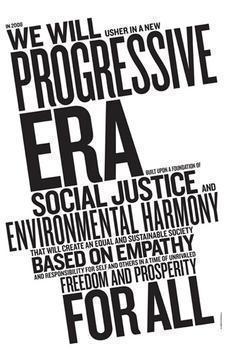
Today’s political discourse could have been lifted straight out of the pages of Animal Farm: progressive good, reactionary/conservative bad. Generally speaking whether one’s political sympathies lie to the left or right, all mainstream politicians are jostling to claim the ‘progressive’ mantle, whether it be David Cameron with his push for gay marriage or Ed Miliband’s ‘One Nation’ Labour party.

Like most political tribalism, this label is a simplistic one and it certainly looks as though the scales are finally beginning to fall from the eyes of former metro-libs, with even the very pro-abortion Diane Abbot MP decrying the hyper-sexualisation of today’s society. Not all social change or progress furthers the interests of the common good, whether that be the excesses wrought by the sexual revolution (of which the pedophile scandals of the sixties and seventies is a fruit), or the closing down of the industrial areas of the north with no replacement, by Margaret Thatcher. Progress for its own sake does not constitute a good. The majority of the UK population could be placed in the ‘reactionary’ category in at least one area of our views.

Watching some of the media coverage of today’s tragic fortieth anniversary of the Roe v Wade decision in which the US Supreme Court legalised abortion , it struck me that far from flying the vaunted ‘progressive’ flag, it is actually the pro-choicers who are the reactionaries here. They aren’t fighting for any social change, other than to retain the same old status quo that has been in place for the last forty years, one that has resulted in approximately 54 million US abortions, or missing children since 1973.

Perhaps that’s why, as Time magazine pointed out in its January edition, pro-choicers are losing the battle and pro-lifers are hopeful. Faced with an army of young grassroots pro-life activists, Nancy Keenan head of Pro-Choice America has resigned, stating that in order to successfully defend America’a abortion rules the movement needs to emulate the pro-life youth. The tactics of the pro-choice movement in the UK are certainly looking in need of a re-vamp, reverting to the same tired modus operandi of turning up to scream abuse, chant the same old stale slogans and wave the same placards every time they get an inkling that a group of pro-lifers might be getting together. As opposed to any sort of positive action that might actually help women and give them that Holy Grail of ‘choice’, all they can do is turn up like a bunch of rabid old reactionaries, resistant to any positive action that might actually help women chose to be mothers.

The treatment of @londonistar, who has recently set up the Marie Copes blog for victims of abortion to anonymously tell their tale in a safe, non-judgemental space, best exemplifies the attitude. Having discovered that her unborn child had Downs Syndrome and having been given an extremely negative outlook by the doctors, her and her husband took what was an extremely painful decision to abort a much wanted child. Her experience was utterly horrific from start to finish – she was let down by the medical profession who gave her a very limited and one-sided view of the condition and prediction of the quality of life of her child, leaving her with what she felt at the time, no other option. The procedure itself was botched, the nursing ‘care’ was brutal, leaving her in agony, needing reparative surgery, facing infertility and an unacknowledged need to grieve. The pro-choicers and feminists reacted in anger when she told them her story; instead of being outraged at her presented lack of choice and campaigning for better information for pregnant women with difficult diagnoses or even a better standard of care from the abortion clinics, they simply raged at her for having related her experience and daring to feel any grief. It was the pro-lifers, those whom one would expect to be judgemental and angry who reached out to her in a spirit of compassion and love, not only for her in her grief, but also so that they could better understand and learn from the needs and emotions of a woman faced with an agonising dilemma, whereas to use her words, the pro-choice feminists treated her like a ‘political pawn’.

Far from being solely concerned about the cute little baby, pro-lifers are intuitively concerned with the woman, the mother and her needs and rights, which is why at the Vigil for Life which took place in Dublin’s Merrion Square on Sunday and attended by 25,000 people, the crowd was awash with banners stating “Love them both. Abortion kills one, hurts another” together with a picture of a mother and her baby. It isn’t pro-lifers propagating the culture wars, pro-lifers are successfully engaging with women, with appeals to those attending America’s March for Life taking place this weekend, to avoid using graphic images in order not to distress vulnerable and post-abortive women. Equally at the 40 days for life prayer vigils, it isn’t the volunteers quietly and peacefully praying for those inside the clinic and offering help, who are upping the emotional ante, rather the vociferous, angry pro-choice opposition.

But this isn’t simply about the words. Pro-lifers are also attempting to progress women’s rights in a way that leaves the traditional militant feminists way behind. Feminism tends to treat children as an encumbrance or a burden to equality and seeks to circumvent them, in order that women may be seen to compete on an equal footing with men. A pro-life feminism embraces motherhood and child-rearing as being an authentic part of a woman’s femininity and actively campaigns for solutions which means that a child is no longer an obstacle to an education or to a woman being able to be financially self-supportive. That’s not to say that an authentic feminism rejects men as unimportant or irrelevant in the process of child-rearing, but accepts that in today’s increasingly feckless society, women are often faced with no other choice than to raise a child alone.Feminists for Life is a good example of how pro-lifers in America are reaching out to college students.

In the UK, the Alliance of Pro-life students has, in a short period of time, made enormous progress. Speaking last week at the launch, Eve Farron, their 22 year old leader, talked of how they have made common cause with feminist groups on campus, forcing them to address the lamentable lack of provision for pregnant students and working together to ensure that college students really do have a choice if faced with an unplanned pregnancy.

She described how young freshers are handed a welcome pack consisting of a free pizza voucher on one side with an advert for Marie Stopes at the back. That was certainly the case for me when I started at the University of Sussex recently. We were given a compulsory talk by the ironically named Student Life Centre who made it clear that there was an abundance of sexual health-care services, including abortion on offer. When I went to them to ask for help in terms of essay deadline extensions, being 9 weeks pregnant with three existing children and incredibly sick, they were not exactly forthcoming, neither were the faculty staff. The baby was due in the summer holidays and when I asked whether or not I would be able to bring her to lectures and seminars, as the creche would not take babies under 6 months, and breastfeed, obviously taking her out if she caused a disturbance, the answer was a resounding no. I could not quite believe how a university, that prides itself on its diversity, that strives to teach everything through a prism of feminism, gender and queer theory, could be quite so obstructive. Furthermore, the creche was scheduled to close, due to cuts and not being cost-effective, before finally being out-sourced to a private provider after a huge outcry. When I approached the student body for help, I was told it probably wouldn’t be worth pursuing the matter, it would get me a bad name, the best thing to do was defer, and of course, be liable for the new higher tuition fees. Had I not been of a strong Catholic and pro-life persuasion, I could well see how having an abortion would have seemed the only feasible choice in that situation and where were the feminists then? Any advocacy was totally non-existent.

I digress, but it goes to show that by contrast to shouting catchy slogans, the pro-lifers are actively working for social change, not only by convincing people with the overwhelming scientific evidence and intellectually rigorous arguments but also by their deeds and actions, whether that be the peaceful, non-confrontational outreach on the streets to women in need, advocacy for students and young people, or working for political solutions and social change. Pro-lifers also seek to advance the rights and cause of the disabled, recognising that every life is of equal dignity and worth and that the two causes are immutably entwined.

Pro-lifers don’t want to turn back the clock to a time when abortion was illegal, they want to strive for a society where abortion is unthinkable and unnecessary. Pro-lifers want a society where women can have children at an early age and yet still be educated and professionally successful, we want a society where fathers are held accountable for their children and not let off the hook by abortion. We want women to contribute to society, through child bearing and also through professional employment, if that is their choice. We want an authentic feminism that allows women to fulfil their natural vocation as mothers, not one that makes work and child rearing mutually exclusive, which is what current strands of feminism and pro-choice rhetoric seek to reinforce. The most exciting thing about this – it is being led by women themselves!

Pro-lifers are the real progressives, working for true social change, one that supports and upholds the dignity of women whilst protecting the right to life of all our unborn children. We recognise that for a society to be welcoming of life, a myriad of complex social problems need to be solved, not least that abortion disproportionately affects the poorest and are working for a better society for all, instead of banging a single issue drum. Whereas the pro-choicers are clinging to their outdated mantras of the seventies, fretting over fripperies such as gender appropriate lego and squabbling over internal victim hierarchies, pro-lifers are solidly working for a radical solution so that no unborn child ever need to be killed in utero again.

This is why the pro-life movement should wave its progressive credentials with pride.

Culture of Confidentiality

multi-tasking

Clare Perry, the rising star in the Conservative Party and David Cameron’s new advisor on childhood has said some eminently sensible and refreshing things today which will no doubt cause Louise Mensch to turn a shade of green.

Mrs Perry, a mother of three, points out that it should not be assumed that children have an automatic right to privacy and that society as a whole has been complicit in a culture which allows children to make unsupervised and inappropriate contact with strangers any time of the day or night.

She argues, in the same way that I did post publication of the Bailey Report, that parents need to take ownership and responsibility for their children’s internet access on their laptops and mobile phones. If you don’t want your children to have unsupervised access to the net, either don’t buy them a device, or if you must, install various filtering software and blocks. If your child is up on the internet until the early hours of the morning, then the solution is simple – switch the darn router off. He who pays the piper, calls the tune!

I grew up in the eighties and nineties where having access to one’s own private telephone line was an unimaginable luxury, although admittedly in my day, mobile phones were simply beyond the means of most individuals, not only in terms of money, but also in terms of sheer size, with the look, feel and weight of a house brick. Like most households of that time, our telephone was situated in a very public place, on the hall table and consisted of an unwieldy non portable handset, with a dial – push buttons were the last word in decadence. As a result all incoming telephone calls were received in a public place, every word could be overheard and any talk about one’s love-life either with friends or heaven forbid the young man himself had to be couched in code, making the whole thing far more exciting that I’m sure it would otherwise have been.

Ever mindful of the bill and the fact that my father ran a business from home, calls had to be kept quite short and it would not have occurred to me to pick up the phone and make a call without first asking permission. As teenagers, if we did answer the phone and the call was indeed for us, we would have to inform our parents as to the identity of the caller. My father is something of an eccentric and used to delight in causing maximum mortification by deliberately winding up callers for myself and my sister. My best friend Anna, was regularly treated to a medley of hits from the King and I, female friends would be sung to and any male callers could be guaranteed either to have my father’s version of Stanley Unwin’s language, or worse still, not be allowed to speak to us until they had made the request or spoken an entire sentence in Latin!

It’s difficult to know whether or not the internet could have got us into trouble as children, my parents were sensible types but equally I can see how difficult it is for parents these days, many of whom might not be as conversant in the new technology as their kids, but Mrs Perry is right to state that parents have a responsibility to regulate their children’s internet access. Given that it is practically impossible to escape the internet in one form or another and that it will be an integral part of children’s lives, it does seem fitting that the IT curriculum should incorporate lessons on basic safety and service providers and the industry as a whole should agree a new code of conduct, along similar lines to the rules of broadcasting.

It goes without saying that children and adolescents do need to be afforded some level of trust and privacy and we need to be realistic that at some point they probably will use the internet to get up to some naughtiness or other (just as children used to look up all the rude words in the dictionary), but limiting the scope for mischief, whilst helping them learn responsible behaviour, can be no bad thing and neither should it be left entirely in the hands of schools or regulators. Parents do have the primary responsibility.

But has anyone spotted the huge inconsistency yet? Clare Perry has correctly pointed out how internet technology can be used to degrade , objectify and sexualise young girls who are often at the receiving end of sexual bullying, citing the terrible case of Chevonea Kendall-Bryan, the 13 year old girl who fell to her death from the top of a tower block whilst begging her boyfriend to delete a sex tape he’d made on her phone.

‘We’ve given our children all these opportunities to communicate in private, but we’ve lost the confidence to actually get involved in that.

You have to ask yourself whether or not confidential sex advice, access to contraception and abortions provided to teens without the parents’ knowledge or consent has enabled and encouraged that attitude. Whether the deliberate exclusion of parents from knowledge pertaining to their children’s development and welfare and usurping of parental role in the provision of sex education has produced a generation of impotent parents who lack the skills and confidence to intervene?

‘We have to feel more empowered to ask. Make sure your kids allow you to be friends with them on Facebook, ask them whether what they are doing is appropriate.

But whatever you do, don’t ask them whether or not they are taking large doses of synthetic hormones designed to subdue their developing fertility, don’t ask them whether or not they are having sex and whatever you do don’t try to prevent them from doing so. What your child is being taught about sex , whether or not they are engaging in sex or risky sexual behaviour, whether or not they might be aborting their unborn baby is none of your concern as a parent.

Whilst schools continue to provide under 16s with contraceptive advice, products and abortions without the knowledge or consent of their parents, frankly fussing about whether or not they have unfettered access to Facebook or the internet is like re-arranging the deckchairs on the Titanic. How can parents be expected to protect their children when they are excluded from the most crucial and key decisions involving their personal health?

Make no mistake, the internet and mass media can have a deleterious effect on children’s development and expose them to sexual predators and unrealistic visions of sex, sexuality and body image. But just as harmful can be the physical effects of early sexual activity which stems from premature exposure to the internet and sexualisation. Isn’t it time for a double-stranded approach?

Pro-life, the times they are a-changing.

g9510.20_abortion.indd

Last year, I wrote extensively, both on this blog and in two pieces for the Catholic Herald, that the tide was turning for the pro-life movement.

This very point has been proven by the latest cover of Time magazine, which admits that since the phyrric victory of what was Roe v Wade, the pro-choice side has been fighting a losing battle, with Emily Buchanan writing what I have been saying time and time again – pro-life and feminism are not mutually exclusive.

Of course what happens over there, happens over here, which is why pro-choice advocates have been speaking about the parallels with the American pro-life movement in cowed tones – of course they do not want the success of the pro-life movement being replicated in the UK.

I think one of the refreshing things is the breed of new activists that we are seeing in the UK. Whereas as recently as five years ago, pro-life advocates were seen as retired men and women in their late 60s and early 70s (not that age or gender should preclude anyone from standing up for the rights of the vulnerable), more often than not, the person that you will see praying outside the clinic will be in their early twenties or thirties, in line with a younger, fresher breed of advocates that we are seeing in the UK.

As I said, age or gender should not be an important factor but in terms of the personal outreach, women, particularly those who have experienced an unplanned pregnancy of their own, life as a single mother and especially those who have experienced the loss of abortion, are often better placed to counsel those in difficult circumstances. Empathy is often sneered at, but you need to have a heart for pro-life work, it is not simply an intellectual or ideological exercise.

But in an age where image seems to be everything, the fact that we have young, fresh faces campaigning for the unborn should fill us all with renewed hope. We have a new generation with the blessings and energy of youth, able to use imaginatively the new technology and all the tools at their disposal to spread the pro-life message and also to pass it on to future generations. That these people look great is even better. It’s why they manage to inspire such anger – whilst the general public tend to dismiss those who are clearly of another generation or culture, such as the retired stalwarts or those in clerical or monastic attire who attend vigils, it’s much harder to dismiss those who seem like ‘normal’ people on the outside.

It’s very hard to call someone out as a ‘weirdo’ when their appearance contains reflections of your own normality or aspirations and that’s why it inspires such anger. Young pro-lifers threaten and challenges existing preconceptions whilst foreshadowing the future. There is a definite trend or sea-change in the air, which is why the feminist lobby will cling on to their tired and anatomically and idiomatically incorrect old slogans involving wombs, rosaries and religious paraphernalia.

That’s not a clarion-call for young good-looking bods in the movement which should have room for all, but simply an observation. Even more challenging is the attractive young pro-lifer using the rosary for its intended purpose. Whoah, what’s that all about?!! Which is one of the many fruits of the 40 Days for Life campaign, uniting all those with common purpose in prayer.

 The Alliance of Prolife Students is launched next week. Let’s equip people to be proud advocates of the unborn, let’s get this topic out in the open, it’s time to re-gain some ground from those who would wish to make the subject of abortion a taboo, closed issue, all about personal choice and not up for discussion. Whilst experience is invaluable in terms of outreach, youth should not be an impediment for bearing witness to the truth – abortion is the wilful destruction of life and the greatest injustice in today’s society, with 200,000 lives lost a year. And where better to start spreading the word, than in places of academia, where a free and frank exchange of ideas and discussion should be welcomed and encouraged. Let’s get people talking about this in bars, coffee shops, libraries, student halls of residence and later on around water coolers and in places of work. Let’s dispel the fear and stigma of being thought ‘judgemental’ for expressing the basic right to life of all human beings.

The future is young, bright and it’s orthodox. No wonder pro-choicers are on the run. Let’s give them a real run for their money in 2013.

In short

Last night’s post was the blog equivalent of thinking aloud.

A quick summary then.

If we want a pro-life society we have to value motherhood as a vocation in and of itself.

Valuing motherhood should be an integral part of an authentic feminism, which promotes the fact that all other factors being equal, mothers are by far the best placed to be the primary carers for their children, even if they do need guidance at times.

We need employment legislation that compels employers to be creative with hours offered to mothers, a benefit system that does not penalise mothers who choose to stay home with their young children, as well as accessible child-care.

At the moment most women do not effectively have any economic choice as to whether or not to work if they have children. The expectation is that women will work, bring in an income and continue to do so whilst juggling the demands of a young family, which is a fair amount of pressure. Whilst fathers are getting better at being hands-on and relieving the pressure, the burden of birth and breast-feeding does not fall on their shoulders.

At present, a mother has to accept that unless she works, she and her children have to accept a substantially lower standard of living, not just doing without luxuries but in reality, struggling to afford the basics, regardless of whether or not she has a partner or husband. If a couple have children, the compromise is often a choice between living in a house/flat to accommodate children or whether the mother/father can stay home. Often there is no choice. The rising house prices have shafted everyone under 50 who doesn’t have a substantial inheritance or private income.

The answer is not to make men do more and make two people juggle the demands of work and children, but to re-gear society in order to give women some real choices, understanding that motherhood is not of secondary import, something to be relegated behind one’s duty to earn one’s keep and pay taxes.

The early feminists were right; women should not be forced to stay at home against their will, they are entitled to equal standards of education and equal opportunities in the workplace. But those pioneers who were passionate about women’s choices and freedoms and would be horrified to learn that the unintended consequences of their movement resulted in women being compelled to choose between their economic freedom and their ability to have children.

An authentic feminism should not compel a woman to work. An authentic feminism does not force a woman to abort her babies or limit the size of her family. An authentic feminism does not treat children as a barrier to equality, but rather encompasses and accepts them. An authentic feminism is pro-life; it values motherhood and does not treat babies as an encumbrance.

If we can get women to stop thinking of fertility as a problem and society to value and respect motherhood, if we can give women a real choice in terms of how they raise their children, then abortion will be a thing of the past and feminism can claim a real victory.

A different choice

Fr Ray Blake said something that gave me pause for thought the other day.

We should recognise most women have abortions because of economic reasons, that controlling the size of families through contraception for most people is an economic decision.
We need to promote an authentic feminism (and masculinism) that is based on relationships, we need to promote the real rights of women to be parents, simply to be able to have children without the constant anxiety to find childcare and to be able to afford it.

I wouldn’t disagree with any of the above, but I think it’s worth unpacking and exploring a little further. Most women do have abortions for economic reasons, the increasing numbers of abortions performed on women who already have at least one child, as capitalised upon by BPAS in their recent advertisements for abortion claiming that 50% of women who abort are already mothers, indicates that for many this is an economic decision. Most women who have already given birth are well aware of the various stages of foetal development and the reality that this is an unborn child whose life they are choosing to terminate, but feel that they have little other choice.

Few women who abort their pregnancies take the attitude of Caitlin Moran who claims (and I would posit that she’s in serious denial) that she gave the matter less thought than choosing her kitchen worktops. Most women would not choose to abort if they genuinely believed that they were killing a living human being, which is why so much sophistry is employed by the pro-choice advocates as well as attempting to involve irrelevant scientific arguments about sentience. Either life begins at conception or it does not. If the latter, at what particular point in its development is a foetus deemed ‘alive’, at which point science is invoked to justify philosophy. The biology is simple. A new independent human being is formed at conception, with separate DNA and capability to develop itself to the mature stage of a human organism given the right environment.

It is precisely because the human conscience is pricked on the issue of abortion that women become quite so aggressive and defensive on the matter. If abortion is not the destructive of unborn life, then why do women get quite so angry about it and why are they bothered by the peaceful prayer vigils? If abortion is a difficult choice that isn’t undertaken without much soul-searching, why is that and why are they so bothered by the presence of people praying for them or trying to offer an alternative? Even the most well-meaning of pro-choicers will claim that abortion is an economic decision, women genuinely don’t have a choice and so abortion must be available for the most pragmatic and compassionate of reasons. The old “I wouldn’t have one myself but I wouldn’t deny it to those who need it” adage.

But undoubtedly there are a few women who abort, not solely for economic reasons but simply because a baby will not fit into their current plans. That’s not to condemn or cast judgement, society has to bear as much responsibility in that it implicitly encourages and coerces women into abortion, with babies being little more than a lifestyle choice, who aren’t fully alive until such moment as becomes convenient in the mind of the individual.

But regardless of whether babies are aborted because of lifestyle choice, economic necessity or even thoughtless recklessness in those rare cases where we see young women having undergone as many as 8 abortions, (I really don’t believe that many women have abortions because they can or because they are inherently cold-hearted or even evil) there is one factor in common and that is that a baby is seen as a burden or difficulty and never a blessing.

Whilst pro-lifers have to be careful not to overdo the sentimental saccharin schmaltz when it comes to the indisputable beauty of a newborn child, we have to ensure that we don’t fall into the opposite trap of over-emphasisng the gritty reality of child-rearing in an attempt to make our society equipped for unplanned pregnancies. The truth of babies is that they encompass both extremes. Having a baby does entail a lot of hard graft and often economic difficulty but it also brings with it an outpouring of joy, blessings and love to which no language can do adequate justice and which compensates for the difficulties. There isn’t a mother I know, not even mothers of severely disabled or terminally ill children, who wishes that her child had never been born, or that she hadn’t experienced the love of her child. Even mothers in the most challenging of circumstances wouldn’t wish away their children, but instead wish that their lives could be easier.

What pro-lifers need to do, is work for ways to make life tenable for women with unplanned pregnancies, whether that is the mother of 3, expecting her fourth child, the pregnant teenage mother, or the young woman with a career that seems to be going places.

Pro-lifers often focus upon the idea of free or cheap state childcare in order to incentivise a woman not to abort her baby and to help her back into the workplace. I’m not so sure that this is the right answer, admirable though it may seem. The problem is that for the overwhelming majority of women, having a baby will have an enormous financial impact upon them if they are already in full-time work. Although women can now, quite rightly, enjoy up to a year’s paid maternity leave, most do not look forward to the idea of returning full-time. And who can blame them? You give birth to a beautiful child, you spend at least six months giving them your full attention, nurturing them, feeding them, helping them roll, sit, manage solid food, you know them, you can recognise the signs when they are tired, hungry, you know how they like to be settled or held, which is their favourite cuddly, they haven’t been out of your care for more than a few hours at a time, maybe 24 hours at granny’s at a push, then all of a sudden you have to hand them over to a stranger for at least 8 hours a day, 5 days a week. It’s no wonder that most women do not want to return to full-time work, but feel that they have little other choice. In addition it tends to be just as your baby is getting interesting, beginning to walk, talk and most mothers are devastated that they will miss their baby’s first steps or key milestones.

Perhaps because the state is becoming ever more intrusive or presumptive, but there is additionally, something a little sinister about having to hand one’s child over to state-approved childcare for the majority of the working day. For me the approach is summed up in our attitude towards single mothers who are expected to go out to work, as soon as is feasible after having a baby. The attitude of the former government was equally disturbing with Tessa Jowell trying to formulate policies to encourage mothers to go out to work and Patricia Hewitt describing mothers who stay at home with children under two, as being a ‘real problem.

Again we see how modern feminism has failed women, who are expected to be on equal terms with men in the workplace, to be able to work full-time, or work at all, as well as bring up children. I’ve been a working single mother and it was horrific. I had little other economic choice at the time, but on average I saw my daughter less than an hour and half a day, Monday to Friday, having to drop her off early in the morning before work and then having precious little time to spend with her in the evening, to ensure that she got a good night’s sleep. Quality time consisted of bathtime, stories and bed and I put myself through agonies of guilt. It meant that I had the worst of all worlds in that work saw me as not fully committed and I felt that I was selling everybody short. It is only now that society is realising that unless you are a wealthy fund-manager with a bevvy of nannies and housekeepers, that the idea of ‘having it all’ is nothing more than a myth.

So, what’s the answer, especially from a pro-life perspective? The problem with childcare, is that not only is it expensive and puts pressure on a woman to go out an earn her keep, but it also treats women as if they are only valuable if they contributing to society in a purely economic sense. I think if we are going to promote an authentic version of feminism, then we have to promote the innate value and worth of motherhood on its own. That’s not to denigrate women who do go out to work, but actually women need to be supported by economic policy to stay at home with their children, until such time that their children are of school-age, particularly if they are single mothers. Whilst this may seem counter-intuitive and contrary to normal feminist principles an authentic feminism recognises the value women have as mothers and how the opportunity to spend as much time as one can with one’s children, is actually of benefit to society.

It’s a difficult balance to strike, because clearly the state is not a bottomless pit and clearly one can’t have policies in place, be they encouraging mothers to stay at home, or work, which will encourage state dependence, but I think to a certain extent society has to bite the bullet and accept that a single mother is facing more difficult odds than a two parent family and so enable a mother with children under school-age (say 5) to stay at home, regardless of her marital situation whilst implementing policies such as, for example, forcing employers to be more flexible and creative in terms of the working hours that they can offer to mothers and phasing women back into employment when their children are of school age. It is a difficult balance and most of us know of families who do not work, simply because with the cost of childcare it is not in their interests to do so and who are as a result, reliant on the state.

This is not to attack mothers who do want to work, often women say that they need the stimulation of a work environment, that they lack the patience to stay home and several women are trapped in the situation where they need to work for economic survival, but I wonder, if we began to value motherhood more, if we began to give examples of how intelligent, educated women can be stay-at-home mothers, or work part-time and still be happy and fulfilled would it transform society? I think so. I often think that women who state that they don’t have the patience or wherewithal to full-time parent their offspring, under-estimate themselves and with the right examples and in the right environment, would surprise themselves. I can think of at least ten of my friends who have Oxbridge degrees but who have eschewed the work environment to be full-time mothers and who have never been happier.

One of the reasons that families are financially struggling is not only due to rise of consumerism and the idea that it is only through material goods that we can find fulfilment, but more importantly because the expectation that women will automatically work, regardless of whether or not they have children, means that two income families entailed bigger mortgages which fuelled the rise in property prices. Every family should be able to afford or live in a decent home with access to a small garden. Affordable housing alongside the removal of the expectation that a woman should and must earn her keep would be another small part of the strategy. If we have more mothers at home, then our communities which have been so fractured will begin to heal. It was traditionally women who were at home with the children, who provided a mutual support network, who passed on valuable skills and knowledge in terms of child rearing and helped each other in times of trouble, with babysitting etc instead of having to pay a stranger. It was also the same women who helped to look after the elderly, who had them either living at home, or who would drop in and help their neighbours, enabling them to be supported at home, instead of reliant on a government for care and assistance. I’m not saying that women should be expected to do this kind of work, but it is a natural by-product of what happens when we have communities and besides there is nothing demeaning about caring for other people.

True feminism should allow women to have the choice as to whether or not to enter the workplace (something I’m hugely in favour of, if women want to work then they should and on equal terms) but equally, a real authentic feminism values motherhood as a vocation in and of itself.

We need to stop looking at motherhood as being demeaning, inadequate or beneath a woman’s dignity and celebrate it as a worthy vocation, one that benefits her, her children and society as a whole. We need to re-gear society to remove the current expectation upon women to work, unless and until men have the ability to bear children in their wombs! There is nothing innately sexist in stating that as women give birth to and nuture their infants, then they are best placed to provide the primary care. By all means allow women to work on equal terms, introduce legislation that gives women watertight protections to allow flexible working, allow women to reach the top of their profession, but by no means force a woman to work or define success in purely professional terms. Staying at home to help one’s children reach their potential, is not demeaning by any means.

A pro-life society does not buy into the notion that a child is a burden or economic problem that needs to be overcome, but celebrates motherhood and enables women to have real choice as to how best to raise their children, instead of expecting them to be handed over to someone else from an early age. And if this puts more responsibility on men to work and provide for their offspring – sorry but them’s the breaks. No wonder so many men identify themselves as “feminists”. Authentic feminism recognises motherhood as an innate good and children as a gift, flowing from the consequences and blessings of being part of the feminine sex. It recognises our ability and responsibilities as bearers of life, given to us from the Creator himself.

Mothers – the missing dimension

There has been a welter of criticism following Archbishop Vincent Nicols’ Christmas homily in which he denounced the forthcoming Government plans to introduce so-called ‘gay marriage’, thereby permanently redefining marriage without the democratic consent of the country. Those of us who are married are about to have their status altered to that of civil partnership without our permission. The state has now decided that it is the supreme arbiter of what constitutes a marriage – namely romantic love and a presumption of commitment only.

Catholic Voices deftly dealt with the Archbishop’s vociferous critics here, both Megan Hodder and Ben Trovato offer sound defences of marriage and Fr Ray Blake in fine barnstorming form offers some ideas as to how Catholics can supplement their support of marriage, aside from fulfilling our moral obligation by lobbying our local MPs.

I won’t revisit the arguments previously made on this blog, but there is a missing dimension to the debate, one that is close to my heart and should concern feminists or those who claim to care about the plight of women and children, and that is motherhood.

I am a mother. I nurtured my children in my womb, they were comforted by my unique heartbeat, the unique intonations of my voice, my unique smell; in short I was, and am, their world. I birthed my children, I fed them from my breasts, I sang to them, when they are tired, unhappy, hurt or in need of comforting, it is uniquely me they want – no-one else, no matter how loved, will do.

That is not to detract from or denigrate their father, whom they are lucky to have, who bathes them, who reads to them, who plays with them, who also soothes them, but when the chips are down, instinctively and intuitively it is mummy they want. Despite the fact that Robin is an extremely involved and hands-on father, there is something visceral, something priomordial about a biological mother’s care, that simply cannot be replicated. I can hear my babies cry and just ‘know’ what is wrong and how to sort their problem, soothe their pain, whilst my husband looks on in bewildered awe. It is with good reason that medics pay close attention to the mother and trust maternal instincts when treating a sick child. If one could only bottle the essences that constitute motherhood, those hardwired responses to one’s own offspring and the emotions that flow naturally between mother and child, one would be rich as Croesus. Mothers rarely need to be shown how to love, even if they do sometimes need some external guidance.

A few years ago, when the 3 year old was a baby, Robin used to tease me for “that weird thing you do pulling faces at her”, thinking that it was one of my many idiosyncrasies. Not long afterwards, he went on pilgrimage to the Holy Land and on his return, recounted how he had seen a Muslim woman in the airport lounge in a niqab behaving in an identical way and pulling the same exaggerated faces. “It was peculiar’, he said, “there was this woman, she looked nothing like you, she had a different colour hair, a different colour skin, she was a different cultural background, was wearing different dress, spoke a different language and yet when I saw her playing with her baby all I could see was you. The mannerisms, the way you hold our baby, the way you pull those faces, exaggerate your speech and intone when you sing, it could have been your carbon copy. I realised that it was obviously something that women instinctively do, this is how they play with their babies. It’s inbuilt and intuitive”. A practical demonstration, if any were needed that the basic skills of mothering are so primordial, so instinctive that they transcend all boundaries and though men can undoubtedly learn and develop such skills, the way women instinctively mother their children is not an ingrained response that naturally occurs in men. This morning, our twenty month old climbed into bed in the early hours and cuddled Robin, as I was feeding the baby. Upon placing the baby back in her bedside cot, the toddler spied her opportunity, climbed over, muttered “mummy” and hugged me tight before falling into blissful slumber. There are no words adequate to describe the contented and satisfied grin on her face as she snuggled in. It was mummy she needed.

So what has this to do with ‘gay marriage’? Put simply, I am not a “Progenitor A”. I am a mother and I will fight to the death to defend not only my children and their best interests, but my right to be identified as a mother. My husband is not simply “progenitor B”, but their father, to which he brings an entirely separate set of attributes.

What “gay marriage” does is undermine and rip away all notions of natural parenthood and paves the way for children to be cared for and brought up by anyone who is deemed to be in a loving romantic relationship.

By stating that romantic love or attachment is the only requirement for marriage, children are then treated as the optional extra. Whilst that may work for some couples, in a world where a misunderstood notion of equality overrides all other considerations, a gay couple is seen as equally worthy and deserving of a child, regardless of that’s child’s rights to be brought up and loved by both of its biological parents. The act of childrearing becomes rooted in selfishness and the desires of the couple in question.

It is an act of supreme selfishness, cruelty and exploitation for a couple to pay a woman to bear a child, to nuture that child in her womb, even if it is not her biological child, to then rip that child away from her, for a sum of money. There can be no excuse for treating women’s bodies and babies as human commodities. Commercial surrogacy consists of trading upon desperation, human misery and is dependent on the commodification of women. Feminists who align themselves with gay-rights activists need to search their conscience.

Once you make all relationships the same, once you strip away the complementarity of male and female, once you define solely romantic love as being the determining factor in a marriage, then you pave the way for babies to be taken away from their mothers and give implicit approval to trading upon human misery. As a woman who has known the highs and lows of pregnancy, who has experienced the agony and ecstasy of childbirth four times, who knows that biological love has the capacity to conquer all, even the most inauspicious of beginnings, the thought of children being deprived of their mothers, sickens me and chills my blood. I guess one could describe it as a type of homophobia because the act of producing children in laboratories and removing them from the women who birthed them, depriving them of a mother to pass them into the care of two men, no matter how rich or well-meaning, does induce fear and concern for women and their children. It is an unnatural thing to financially coerce a woman to produce a child to order, for the benefit of someone else. As a mother, I cannot think of a worse thing to do to another woman than to deprive her of her baby. It is beyond one’s worst imaginings.

Nobody does it better

We are already seeing the dreadful consequences of children bred to order, and the impact this is having upon women. Two men artificially producing a biological child that belongs to one of them is seen as socially acceptable and desirable, and in order to accommodate their whims, not only are women being commodified and exploited and children deprived of their inherent rights, but also the law is needing to be constantly revised and updated. Which is why countries like Spain, are dispensing with the traditional titles of mother and father, to be replaced by Progenitors A and B. I am not a progenitor, I am not simply a faceless biological producer of a factory-produced child to order, but I am a mother and a woman whose children were produced in love. And what happens if or when Progenitor A and Progenitor B split up? Child then has to divide its time between two same sex households and potentially acquires two more same-sex step-parents and that is deemed to be in its best interests? Or what is there to stop the State from allocating extra Progenitors such C or D to a child, deciding what actually constitutes a Progenitor, or stripping a biological parent of Progenitor status? If all a child needs is a loving parent of any gender, why are we seeing fatherless children ask for a dad in heartbreaking letters to Santa?

Children do not simply need a parent, but the complementarity of a mother and father. To state that the sexes are interchangeable, strips and deprives women of a key part of their gender, treats them as little more than mechanical breeding machines and denies the unique and wonderful ability of a woman to mother her own child. Study after study demonstrates how babies feed from the stimuli of their mother, right from the moment that they are conceived and study after study demonstrates that though other types of family can and often do an excellent job in terms of raising healthy and well-balanced children, the traditional mother/father in a committed relationship is the ideal.

We change marriage to being solely about a notion of romantic love between two people of any gender, then we further weaken an institution already damaged by divorce laws that constitute an adulterer’s charter. When we say that a marriage is about reaffirming a romantic love or attachment, then there is little incentive to keep the relationship afloat during the rocky times. When marriages or relationships with children break down, it is almost always invariably, though not always, the women who remain the primary carers and who suffer the most.

And this is, though not the only reason by any means, is certainly one of the driving forces behind the fact that I intent to fight this forced change to the definition of my marriage, tooth and nail. Fundamentally same-sex marriage is anti-children, anti-women and anti-mothers.

I will not allow the Government to strip women such as my four girls, of their biological rights to be mothers, without the fight of my life. I am a mother and by definition the best thing that there is for my children. I will not let my motherhood be taken away from me, or from any woman.

Feminist dissonance

A new and positive discourse seems to be emerging in Catholic circles, not just in the UK, but also amongst young Catholics in all continents, including the developing world, as to how Catholicism can counter the poisonous and popular narratives of misogyny propagated by the media and white chattering classes, and demonstrate that Catholicism offers an authentic and compelling vision of womanhood, one that offers total freedom, empowerment and is the only way that a woman may fulfil her true potential as a human being, created equal with men in the image of God.

Of concern is the way that a very narrow-minded definition of feminism, one synonymous with the misnomer of bodily autonomy, is now being globally evangelised with all the zeal of a nineteenth century missionary with the same patronising and even misogynistic attitudes, that accompanied the colonisers. If only these women in the developing world knew what was good for them, they would stop having so many children! Leaving the population agenda aside, these attitudes have been disturbingly crystallised by the Melinda Gates foundation, despite the fact that contraception is neither wanted nor needed by women in the developing world, as this open letter by a Nigerian women pleadingly testifies. Those wanting to help the plight of women in developing countries would do much better to actually listen to the voices of women in impoverished countries, rather than condescendingly deciding what is in their best interests – reinforcing and entrenching the disempowerment brought about by poverty.

The illogical, harmful and dissonant values of western feminism and sexual liberation were perfectly encapsulated in this characteristically vulgar pro-choice defence written by the 40 days for choice apologists. I’m going to disseminate it, not only to highlight the incoherence but also to ask, are these really the values that we want to be promoting to our children and exporting across the globe?

I’ve had sex with many different guys – in relationships, as one-night stands, in threesomes and foursomes and twosomes, in beds, on beaches, on trains. I’ve never had an unwanted pregnancy. – sounds like you’ve been very fortunate by all accounts, because the sexual behaviour and lifestyle would fall into the at high risk of pregnancy and/or STDs category. That’s not, to use society’s favourite verboten concept ‘judgemental’ or attacking your morals, it’s a statement of fact.
Thanks to the sterling work of teachers and parents, I’ve been taught about sexual health – great news! So you are well informed that you are participating in risky behaviour, you’ll know the risks of non-exclusive, non romantic and early sexual activity. You’ll know for example that you are at increased risk of cervical cancer, STD-related infertility, antibiotic resistant gonorrhoea and so on, before you’ve even thought about an unplanned child.

Thanks to the men I’ve slept with, I’ve never had to fight to get them to use condoms. – do most men in the Western world refuse to use condoms? Is it a struggle to get men to don prophylactics? Anecdote is not the plural of data, do we have any stats on that? Are we implying that most men are ignorant selfish misogynistic apes who don’t care whether or not they transmit disease or impregnate a woman? If we reverse the genders in that statement and say thanks to the women I’ve slept with I’ve never had to fight to get them to allow me to use condoms, does that not imply that a woman has to take sole responsibility for the consequences of sexual encounters? As does the original statement. It accepts that whatever may or may not result from sexual intercourse, it is always a woman’s responsibility. Doesn’t sound very empowered on in a woman’s favour to me. The men get off scott free!

Or, if it is a struggle to get men to use condoms, whether in the Western world (which I doubt) or more plausibly in the developing world, where there are cultural barriers to condom use, that implies that they are rather ineffective as a method of contraception. There seems little point in flooding developing countries with condoms. If one has to fight to get men to use them, sexual education is clearly not working, especially for men. So Nadine Dorries may actually have a point with her extra SRE targeted at girls then?

Thanks to sheer good luck, I’ve never been raped. – Let’s be charitable and attribute this to clumsy phrasing, but it is nonetheless offensive. Rape victims are undoubtedly victims of circumstance, be that the woman who is raped on the street, the woman who had something slipped in her drink, the wife whose husband has had one too many and refuses to take no for an answer and so on, but this just perpetuating the rape culture myth. Gender violence does undoubtedly exist and is a problem, but it is not the binary concept implied by this term. To state that it is lucky that one has never been raped, following on from a description of high risk sexual behaviour, like it or not implicitly victim blames. Is it due to her behaviour that she’s lucky never to have been raped? Or is it that all men are somehow pre-disposed to rape and she’s just fortunate never to have been a victim? In this context it is at best glib, ill-considered, and typical of the feminist genre.

It’s important to recognise the myriad things that could result in an unplanned pregnancy – the different bases that we have to cover, the balls we have to juggle, (ha unfortunate pun or turn of phrase considering the subject matter)to make sure that sex remains just sex. But most important is the base we just can’t cover – luck.

Best bit of unwitting Catholic sexual apologetics I’ve seen in ages. A tacit admission that sex is not designed to be a mere leisure activity. It is designed to be unitive, to reinforce pair bonding and procreative. Having sex could well result in pregnancy whatever you do. Stripping the emotional intimacy and potential for pregnancy from sex requires mental gymnastics and sophistry, it requires one to attempt to re-programme one’s innate inbuilt emotional responses, to condition oneself not to care about the other or get emotionally involve and it requires at least two methods of contraception or sterilisation to ensure that one doesn’t get pregnant or a disease, and even then it’s not guaranteed.

Wouldn’t a much better solution be a society in which monogamy, chastity and fidelity were valued and desirable concepts to reduce the risks of disease and in which women could be aware of their natural peak times of fertility and together make an informed choice with their partners as to whether or not to take the risk of pregnancy? If its all such a juggling act to keep sex as just sex, shouldn’t that tell us something? Sexual empowerment seems to be much harder work for women than it does men. All those threesomes, foursomes and one night stands are worth pumping one’s body full of huge doses of synthetic hormones, risking one’s long-term health and the killing of an unborn child?

Pregnancies are not solely caused by your own decisions. – yes they are. A woman who doesn’t have sex is not going to get pregnant.

As women who are desperately trying to get pregnant can tell you, one of the key deciding factors is luck. – yes, there is undoubtedly an element of circumstance when one is trying to achieve pregnancy, there are a myriad of measures one can take to attempt to maximise one’s chances of pregnancy, but there is nothing that one can do to guarantee that one becomes pregnant. There is however, something that one can do to mitigate the chances of not becoming pregnant. If you have sex and you are fertile then engaging in sex is something of a gamble, admittedly with measured risks. As the writer goes on to say: Can we beat the odds?

And so, what can we do when something as essential as sex is risky enough to make or break people’s lives? – so sex is essential now is it? We live in a culture whereby sex is essential? What happens if people don’t have sex? Do they turn into this?

No-one has ever died from not having sex. Sex is essential on a macro level for the promulgation of humankind, but not a micro level. Sex is pleasurable, feels good and is certainly important in terms of increasing intimacy in a committed relationship, but it’s not essential in terms of life or death or even overall well being, unless the writer is claiming that the significant proportion of the population who are not having sex are somehow deficient either emotionally or physically.

As for make or break, if sex really does have the ability to ruin one’s life, then abstinence sounds like the most advisable option. The idea that sex can totally transform one’s life for the better is delusional. The best sex is not merely physical but requires a level of mutual intimacy, love and trust. A relationship where sex does not constitute a stressful plate spinning act but a mutual and consensual outpouring of love.

For as long as we walk the planet we’ll be having sex. And as long as we’re having sex there will be unwanted pregnancies. As long as humankind exists, it will continue to have sex and there will always be unplanned or even unwanted pregnancies, no-one is disputing that, least of all me.

The lucky ones will avoid them, the unlucky ones won’t, but right now we’re lucky enough to have a safety net. Let’s keep it that way. – a new euphemism. Abortion is a ‘safety net’ – destroying an unborn child is a safety net when all other attempts to avoid pregnancy have failed. If the safety net is required, one needs to ask oneself why. Ultimately we need to have a safety net so that we can indulge our own selfish pleasures. A safety net implies that it is a method of last resort, there is no other option available. That means that women who are in poverty, who have been raped, who are in all kinds of reduced, straightened or desperate circumstances need a safety net as they have no other choice other than to abort their children. That’s not a status quo worth keeping and we should fight for change, otherwise we accept and promote injustice. And in all of this, where is the humanity of the unborn child? Its cloaked in euphemisms of safety nets and choices. Being killed before you have a chance to live does not sound like much of a safety net or choice to me.

According to this typical feminist perspective, being a woman is all about being a fatalist, a victim, the weaker sex. That isn’t something that chimes with my experience nor is a central principle of the pioneers of feminism, who recognised that women were equally strong, resourceful and powerful as men, but in different ways.

The early feminists fought for equality of opportunity – for women to have access to the same level of education, the same rights in the workplace, the rights to access the same choices as men. It was only through education could women begin to be on an equal playing field and enjoy equal status in society to men. That is why every woman is at heart a feminist, we don’t see ourselves as lesser beings or worthy of less opportunities.

But not every woman wants to identify as a feminist, in that some of us, I would argue most of us, do not see man as the enemy, the potential rapist of the typical feminist tropes. Our fathers, brothers, husbands and sons deserve better than being pathologised as potential rapists and aggressors. They also deserve better, as do we as women, than the sexual objectification of both genders that takes place in today’s society as a result of the libertine attitudes that prevail and dominate the sexual discourse. Sex can never be free of responsibility, this is an unobtainable Utopian ideal.

If sex cannot come without consequences, then the responsibility should always be mutual. To frame the issue as women’s bodily autonomy, (aside from the fact that bodily autonomy does not exist, a doctor won’t just cut one’s arm off because one asks him to) absolves the men from any responsibility for sex and leaves women co-opting with their own oppression. Lack of fidelity and monogamy exposes primarily women and children to poverty and exploitation and turns both genders into sex objects – simply means to require objective ends.

Francis Philips recently wondered whether or not the term feminism carried too much baggage amidst efforts to reclaim it. I think she’s right. I am leaning towards womanism, coined by the author Alice Walker, which has none of the negative connotations of white middle class feminism. Ultimately we have to recognise that women will always have different bodily functions and responsibilities to men. Men cannot bear children, nor can they breastfeed newborn babies. If we want a woman and child-friendly society, one that does not treat women as inferior, one that does not abandon them or their children to a live of poverty and deprivation, a society that acknowledges the dignity and contribution of all women to society, not just in our role of mothers, then we need the active support, co-operation and collaboration of men.

As a Catholic woman I want the same for my four daughters as for myself; access to equal education and the confidence that they can achieve whatever goals they set their minds to. I want them to take responsibility for their own fertility and bodies and I expect them to enjoy equal civil rights under the law. I want them to face every single challenge and setback that life may throw at them with confidence and grace; that they keep going in faith, hope and trust, no matter how difficult the odds.

What I don’t want is to raise weak women, who blame men for everything and who place themselves at the mercy of some fatalistic victim culture, or to expect special treatment or favours as a result of their gender thereby perpetuating a different form of inequality.

Whilst feminism continues in this vein of self-pitying victimhood and encouraging hatred of men, our companions in humanity, then strong women, who want to fight for a better future for all those struggling from oppression, should have nothing to do with it.