Question for Cardinal Burke

OK, I will shortly update re the baby and a general post-natal update, but firstly huge thanks to Anna Arco and the team from the Catholic Herald for their wonderful live blog and streaming from the vigil Mass and today’s beatification of John Paul II in Rome. Due to a hospital appointment I couldn’t watch most of the service, we’re going to catch it later on EWTN, however it was great to be able to catch up with what was happening via the wonders of the smartphone.

One thing that has perturbed me and perhaps many others was the presence of Robert Mugabe at the ceremony. It’s a bit of a tricky one this. According to the Vatican spokesman, Fr Lombardi, no personal invitation was issued to Mr Mugabe, representatives from all heads of states were invited as is the normal custom. America chose to send an ambassador, however there was nothing to stop Barak Obama from attending if he wished.

Whilst I am not going to defend the presence of Mr Mugabe at the ceremony, his presence there was rather sickening and does not send out the right message, I understand that this perhaps was not as clear cut as it might seem. The Vatican, as an independent state maintains diplomatic relations with all countries and prefers to keep lines of communication open. The problem, as far as I can see it, with refusing to invite anyone from Zimbabwe is that this could result in a backlash from Mugabe’s men, resulting in attacks and persecution of the Catholic community. Furthermore it could also have meant that the Catholic Church were hampered in their various aid activities inside the country.

However it is more than a little puzzling that a welcome is extended to a man, who whilst speaking to a group of Christian evangelicals on Thursday, denounced the Catholic bishops as “puppets and liars”. Addressing members of the Zion Christian Church in Mbungo, he said:  “I am confused by my own Catholic bishops, they must learn from you (ZCC leaders). Often Catholic bishops expose that they are not their own men; they are mere puppets of Western Countries. I grew up in a Catholic Church but now I am totally frustrated by how these so called men of God who lie. All Catholic bishops are liars, they demonise my party every day.” 

At least the Bishops cannot be accused of implicitly supporting Mugabe or his murderous regime if they provoke such outbursts. Less puzzling is Mugabe’s hypocrisy in attending the ceremony and using it as an excuse to travel out of the country. Whilst I totally understand the Vatican’s dilemma, Mr Mugabe’s presence casts an unnecessary shadow over today’s wonderful events and has to go down as yet another PR fail from the Vatican’s communications department who once again are demonstrating that they are reactive rather than proactive. Surely the situation could have been anticipated and prevented in advance? Unsurprisingly the world’s press has picked up on this story and mistakenly spun Mugabe’s presence as being due to a personal invitation. I trust that PR issues such as these will be tactfully and respectfully raised in tomorrow’s Vatican blognic.

What confuses me, is why given the nature of the crimes that Robert Mugabe has been implicated in, no-one has clarifed his excommunication? Though no canon lawyer, surely Mugabe’s statement re the Bishops  on Thursday would qualify him for automatic excommunication constituting an offence under cannon 1364, which stipulates “An apostate from the faith, a heretic, or a schismatic” as being a cause for automatic excommunication.

I’d be interested to see whether or not any  cannon lawyers might agree with me on this? Mugabe has blood on his hands;  though we can judge whether or not he appears to show any sign of remorse or repentance for the wicked acts carried out under his regime, he certainly seems to have incited and supported acts of unimaginable cruelty and violence, we cannot sit in judgement upon his soul or know whether or not, as the good Catholic he professes to be, he has taken these to confession. As a Catholic, catechised by the Jesuit order, we can however guess that unless his instruction was particularly poor, he knows full well that he violates the precepts of the Catechism and that his actions are lacking in Christian charity.

If the Vatican were to clarify his excommunication, this would not disbar him from attending the ceremony, but it would however send a strong message that unless and until he repents, he is unable to receive any of the sacraments of the Church and thus they cannot be accused of according him a welcome, other than respecting the office which he represents. If Mugabe were publicly refused communion it would send a very strong message and one can but hope that it might also act as the medicinal remedy for which excommunication is intended. Not merely to punish, but that the pain of being separated from Christ in the Eucharist may bring the lost sheep back into the fold.

I shall put it on my list…

Spare a thought for my husband. He’s not yet 100% comfortable in terms of making his confession in the Catholic Church (mind you are any of us ever entirely ‘comfortable’) and tonight went to his first ever service of reconciliation, prior to Easter.

I have been granted permission to blog about this, given that it was not at our local parish church or within our local cluster due to work commitments.

Mac addict that he is, he had dutifully downloaded the new confession app and was using it as a prompt whereupon the priest spied it and told him to put it away, “you don’t need a list, if you can’t remember it then it doesn’t matter, Jesus forgives all”. Whilst the priest was undoubtedly trying to be pastoral, being in his late 60s, early 70s and of the liberal school, it left my poor husband rather flummoxed, particularly when it came to saying the Act of Contrition which he has not yet memorised and needs an aide memoire, (there were no helpful cards), hence he stumbled through it rather awkwardly whilst receiving absolution.

He came away feeling that it wasn’t the most personally satisfying experience and disempowered and hindered by the priest in making his confession. He didn’t feel at an emotional level that he’d made his confession properly. On an intellectual level he knows full well that he made a confession, that he has received the sacrament and one needs to be careful not to apply a sentiment that sacraments are all about what you get out of them, but certainly the feeling of liberation following confession is an important aspect for the penitent, particularly if one has spent some time preparing.

On the plus side, at least it has prompted him that he needs to sort out a regular confessor/spiritual director at the earliest possible opportunity.

I’m wondering whether or not I’ll be allowed to use my app tomorrow; with my pregnancy hormones I can’t remember where I’ve put things five minutes previously, perhaps this ban on lists or aide memoires is a cunning ploy to get us going more often?

An ecumenical matter


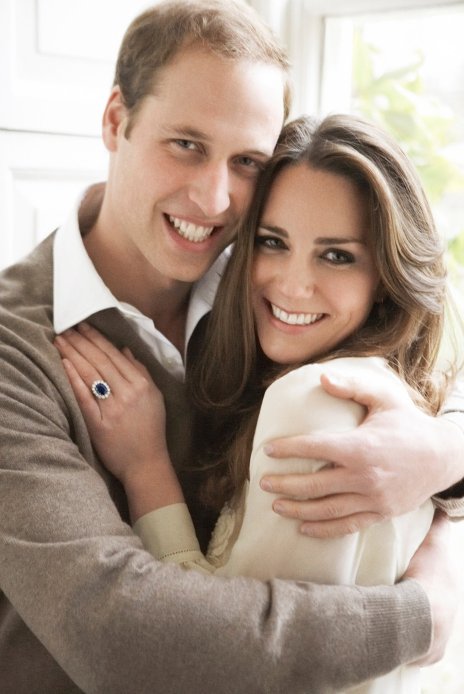
As Royal Wedding fever begins to mount, there seems to be a surprising amount of apathy towards the couple from various Catholics on the blogosphere.

Whilst I admit that I was somewhat under-whelmed by the both wording and the timing of the prayer for the couple that was released last week by the Catholic Church in England and Wales, I struggle to see why many Catholic commentators are expressing indifference towards William and Kate’s nuptials.

Whether one likes or loathes the Royal Family, whether one is a fervent monarchist or committed republican, the monarchy is here to stay for the foreseeable future and thus as Christians we should celebrate that they are choosing to endorse the institution of marriage, which forms an important part of Catholic social teaching.

Though scoffed at by the liberal intelligentsia there are many who do still look to the royals to set an example, and I for one, was both dismayed and concerned that the royal couple seemed to be endorsing the practice of cohabitation, not least because it put Kate Middleton in a seemingly impossible position, unable to lead any sort of normal life, unable to carve out a career for herself and stuck in limbo until such time that William felt able to commit one way or the other. Of course it was desirable that he should not act hastily, but eight years seemed to be more than ample to decide whether or not this was the woman with whom he wished to spend the rest of his life.

William and Kate reflected today’s society in which cohabitation is a fact of life, a try-before-you-buy policy and certainly in their case the balance of power seemed to be one way, with Kate potentially having a lot more to lose had things not worked out. I am able to speak from the fairly unusual position of having cohabited before a marriage, as in the case of my annulled marriage, and also of having remained chaste before marriage and I can testify to the effectiveness of the latter in optimising one’s chances of a successful union. Though the blame for the breakdown of my first marriage cannot be solely attributed to cohabitation, it doubtless did not help us to make the transition from simply living together and sharing a house, to the permanency of marriage. Marriage entailed a lavish and expensive day, but the day after, neither of us felt any different, nothing had really changed, and as we both languished on the sofa the day after the wedding, nursing our hangovers, we even debated whether or not it would be worthwhile to cancel the honeymoon, given neither of us had any energy. Once the excitement of the wedding was over, there was nothing different, nothing new to look forward to.

When I properly entered into the sacrament of marriage, things could not have been more different. Everything was a novelty to the pair of us and highlighted the new status of our relationship. Even doing things like sharing the washing-up together, and sorting out various household tasks, reinforced the new intimacy between us. It was no longer his vicarage, but our family home, and even now, a few years later, having spent a few years dating before marriage, just the act of sharing the same bed to sleep in, still hasn’t quite lost that sparkle. There was a definite demarcation between simply going out and actually being married, there was a positive decision on behalf of the pair of both of us, a saying “yes”, a leap of faith, “this isn’t going to be easy, we won’t always feel as we do now, but I love you, I trust you and I am going to do my best to be the husband/wife that God is calling me to be”. It’s decidedly different from “well I’ve lived with you for x years, we share everything, why not, I think I can risk it and if it doesn’t work out there’s always a get-out clause”. The problem with cohabitation is, as far as I can discern it, is that there is always that get-out clause and its easy to carry that forward into a marriage as well as slide almost unthinkingly into matrimony. This sentiment is borne out by a recent study. Whereas in our case we had to make a positive decision with regards to whether or not to take our relationship to the next stage. It wasn’t without difficulty, chastity did not come without struggle for either of us, logistically had we lived together then we would not have encountered the difficulty with regards to my daughter’s school, she missed out on places at both the excellent C of E school that my husband was the governor of in his capacity of vicar, and indeed the equally good Catholic school, but it was certainly the right thing to do in terms of setting her a living example. Shortly after we got married, she exhibited signs of jealousy given that all of a sudden mummy was sharing a bedroom with dad and she felt excluded from the sleeping arrangements, although this was made up for by letting her choose the décor of her brand new bedroom, the painting of pink walls and the addition of lots of fairies, cupcakes and butterflies!

As Catholics we should not just shrug our shoulders at the forthcoming nuptials but actively wish the couple well, as we would with any other couple, regardless of status or privilege. Though it is tempting to be disdainful of the costs involved and the necessary pomp and pageantry, befitting the representatives of our country and solemnity of the occasion, given the prevailing economic gloom, it seems more than a little churlish to deny Kate Middleton her moment of glory. Though one doesn’t need to buy into the Royal Wedding fever currently being whipped up by the press, the idea of a street party being something of an anachronism from a by-gone age, if the Royal Wedding engenders a sense of community and enables friends and family to spend time reinforcing their bonds whilst celebrating the forging of a new one, then perhaps this isn’t such a bad idea after all. It might well be bread and circuses, but I’m sure most of us are, if nothing else, appreciating the extra day off and extension of the May bank holiday.

To note that as Catholics we should not be concerned by the behaviour of the Anglican monarchy from which we are disallowed, excluded, and which has no spiritual jurisdiction over us is misguided; actually the royal wedding is, in the words of Fr Ted Crilly, an ecumenical matter. In his book The Realm, Fr Aiden Nichols argues that Catholics need to reclaim Englishness and the institutions that stem from Catholic heritage, in order to build for the future. Though we may have doctrinal differences with Anglicanism, we need to recognise that the throne and the Church of England, are to quote Newman “breakwaters against infidelity”. They guard important elements of our Christian past and will slow down the process of secularisation, until such time, that the Catholic Church may genuinely renew its spiritual force.

Instead of defining ourselves by our political leanings, and  our  feelings towards the monarchy as a whole, we need to remember that we are first and foremost Christians, disciples of Christ and not forget the symbolism of marriage and the vital role it has to play within our faith and the building of a stable society.

Christians of all denominations should therefore unite in prayer and thanksgiving that the future King and Head of the Church of England is, albeit belatedly, embracing and endorsing the institution of marriage, before writing off the nuptials as irrelevant.


A convenient solution?

Nadine Dorries and Frank Field have launched the Right to Know campaign this week, in a bid to ensure that women facing unplanned or crisis pregnancies are “guaranteed access to independent information and advice from someone who had no vested financial interest in the outcome of their decision.”

On the face of it things, this would seem to be a very worthy goal, I for one would certainly support legislation which entailed that women facing an unplanned pregnancy would be able to discuss all her options in anon-judgmental manner. I agree that women often feel rushed and pressurised into taking the decision to abort without access to adequate medical information and have relevant experience of being in this situation myself. Often women go into the procedure without a knowledge of what this will entail and the potential physical and emotional repercussions. If one subscribes to the notion of choice, then the information as to precisely what that choice entails needs to be presented in order for the choice to be truly free and informed.

Even the passionate campaigner for women’s rights, Laurie Penny, advocates that abortion is not talked about enough, is still taboo, and indicates that women are not given the correct information about what the procedure entails. In an article written last year for Comment is Free in support of the Marie Stopes TV advert, she states:

“women still have little notion of how to arrange a termination or what to expect until they find themselves with an unwanted pregnancy. Caitlin, 24, called the Marie Stopes helpline when she had a medical termination last year. “I was in incredible pain after taking the abortion pill at home, and I had no idea whether that pain was normal or if I was in danger,” she said. “I didn’t know what was going on – but the person on the helpline talked me through everything.”

Surely if Caitlin had been given the correct information in the first instance, she wouldn’t have been left alone in that situation and would have had a better idea of what to expect? I suspect that Laurie Penny only wishes for abortion to be discussed upon her terms, namely those of pro-choice, however if we are going to make the subject less of a taboo, then we need to be honest and clear about what it is and what it involves.

I do not subscribe to the coercive and manipulative techniques employed by a few pro-life organisations, mainly those run by evangelical Christians. There is a time and a place for evangelization, whilst not criticising those are motivated by their faith to end the slaughter of innocent children, I would number myself among those, an appeal which makes recourse to the Bible  is meaningless, unhelpful and perhaps counter-productive. For those wishing to hammer home the point that this is indeed an unborn child’s life which is at stake, again to subject a pregnant woman to gruesome images of aborted fetuses is an unpleasant and wholly unnecessary tactic, designed to cause maximum stress and induce feelings of guilt in a vulnerable pregnant woman. This is not counselling, but emotional blackmail.

A choice to continue with a pregnancy needs to be a positive choice, one taken out of faith and love, not simply because one feels too guilty to contemplate the alternative. Early on in this unplanned pregnancy, I was asked by a medic whether or not I “accepted” it, which upon reflection I found to be helpful language. Do I accept my unborn child? Couched in those terms, there could only be one answer. Accepting and acknowledging the presence of an unborn child undoubtedly helped me to come to terms with those difficult few months at the very beginning and again now, when the prospect of birth and the shadow of major blood loss is looming.

The problem with the Dorries and Field campaign is that it is, at its core, fundamentally dishonest in its stated aims. Nadine Dorries has tried and failed on more than one occasion to get the legal abortion limit, currently at 24 weeks reduced. To many on the side of the pro-life lobby, this seems a worthy goal, surely the fewer abortions, the better? Whilst it may seem a pragmatic approach to attempt to work with what we have, to attempt to reduce the amount of abortions that are performed, surely it’s better to perform 50 abortions as opposed to 100, the ends do not justify the means. If you are truly committed to the pro-life cause, then you accept that all abortions are abhorrent, all deaths of unborn children are repugnant, not that some are alright and inevitable.

Dorries and Field are being disingenuous in that they are seeking to reduce the amount of abortions performed via the back-door, claiming it is about the welfare of the women, which indeed it is, whilst their real target is to pragmatically reduce the number of abortions that are performed. If we are going to attempt to do this, we need to be straightforward and honest about it, not hoodwink the general public under the guise of women’s welfare, leaving us open to accusations of dishonesty and a scant regard for women’s best interests.

I agree that independent counselling should be mandatory, however we need to accept, that in a society that condones and encourages abortion, this independent counselling will not change the minds of many women, and will be seen by many to be a pointless obstacle, although to my mind, if it does change the heart and mind of just one woman, if it saves the life of one baby, it will be worth it. If one is determined to go ahead with a particular course of action, counselling should affirm that belief. If however you are unsure, or need clarification, or simply to discuss the barriers to your having a child, then a good counsellor should explore those barriers with you in an impartial way, to help you see whether or not they may be overcome. What a counsellor should not do, is attempt to sway you either way, but explore the decision, what it would entail and what the possible results might be. A counsellor’s role is to help you to reach the decision that is right for you. If we are being honest then we have to accept that for many women, counselling will not change their decision to abort and could be perceived as a punitive measure. I would assert that truly independent counselling is no bad thing, but it changes nothing in terms of the availability of abortion; it may provide validation and affirmation to many, it may perhaps avert the possibility of future abortion-related trauma, no sane, rational or truly compassionate person could actually desire that someone suffers as a result of their decision to abort a baby, but counselling has to be seen purely in terms of helping women understand their options and absorbing the information available, not as a surreptitious way of getting the numbers down. There are really only two ways of reducing the amount of abortions that are performed in this country, one being sensible sex education, by which I mean an abstinence plus based approach and including a physical and ethical discussion as to the realities of abortion and secondly legislation which bans the practice, or severely restricts it.

The criteria of independent counselling by someone with no vested financial interest in the abortion procedure, could be used by any organisation with a vested financial interest in ensuring the child lives, without taking into consideration the needs of the mother and further undermine the pro-life cause. All organisations who carry out such counselling, must be BACP accredited or registered, such as LIFE, for example, who have absolutely no financial interest in the continuation of the pregnancy. A BACP accreditation will not be granted to those organisations who cannot guarantee absolute impartiality. Tactics should not include emotional blackmail or manipulation, which is far more likely to inflict lasting psychological damage in a vulnerable woman, which is what Dorries and Field state they want to avoid. If they are genuine about wishing to help women, then the amendment to the health bill needs to state that counselling should be carried only by an BACP accredited organisation.

The other difficulty with Norries campaign is that whilst rightly identifying the “abortion conveyer belt”, which many woman movingly describe, from the moment the first tentative phone call is made, they feel they have sparked a chain of events which they are powerless to stop, the enquiry about the abortion itself, being taken as implicit rejection of the pregnancy, she then goes on to mention adoption as being a potential solution, stating that last year “only 400 babies were put up for adoption” as most women chose abortion as an alternative. Firstly, we as a society should be rejoicing and celebrating that fewer and fewer women are deemed unable either by themselves or others to cope with a newborn baby. Of course it is preferable that babies are adopted as opposed to aborted, however, there is some nuance missing in this message. There is absolutely no way that a civilised society should be encouraging women with unwanted pregnancies to act in a so-called responsible fashion and give up their babies for adoption. On one level this solves the many difficulties involved with IVF, the discarded fetuses, the cost and the pain of the procedure, but it still treats babies like commodities, it denies their basic rights to a relationship with their birth parents whilst solving another problem in our society, that of  infertility. I’m not knocking adoption per se, it is a wonderful and generous gift on behalf of the adoptive parents and often the birth parents alike, but it is not without its difficulties as many families involved in adoption would testify. To tout it as a solution in the fashion of Nadine Dorries is nothing short of crass.

You don’t want your baby? Well you can’t kill it, so what you should do is give it to someone who really does want it. Simple. Does she have any idea of what it must be like to give away your birth child? Would she ever have contemplated it? I doubt she has been in the position of even needing to consider giving away her children. There is a huge shortage of surrogates in the UK for a reason. Most people do not want to go through 9 months of pregnancy, bond with the unborn child in their womb and then give it away. Most who do, act either out of financial imperative or have some underlying psychological issue as opposed to pure altruism. Women do not need to be told that it is their moral duty to carry a child for 9 months, give birth to it and then instantly give it away. This happened countless times in the 50s and 60s with some tales of absolute horror and heart-break, mothers were forced and coerced  into giving away their children. Yes, adoption is better than abortion, but it should not be the very first solution that comes to mind. When the vast majority of women get to the stage of giving birth they have accepted and acknowledged the existence and presence of a child within them, they have bonded with it, nurtured it, endured physical trials and tribulations for it and most are enthusiastic about meeting their newborn. Even those women suffering from depression are given support and assistance in bonding and coping with their newborn, children are not taken away unless it is in the direst of circumstances. It is a generally accepted truth that mothers are best for their children. I cannot imagine anything worse than being separated from my baby shortly after birth. Any woman who has given birth will testify to the huge rush and surge of hormones which make you instantly bond with your baby, the love often comes later believe it or not following the shell-shock of birth, but there is an innate desire to want to hold, look at, cherish and protect the little being that you have produced. A woman should never feel compelled to give up her newborn baby and even if she feels that this is the route she is going to take, a get-out clause should always be available and open to her.

Dorries’ suggestion that more babies need to be adopted is crass, inhumane and cruel. I am tempted to note that it is indicative of a total lack of compassion and understanding of the issues involved, utilitarian, not Christian in principle. The number of adoptions in the UK should have no bearing on whether or not independent counselling is a good idea and reveals the true motives beneath this campaign. Admittedly there are problems with the adoptions process in the UK meaning that many children languish in state care homes as opposed to go to loving families, but adoption should not be the only alternative to abortion and should not be touted as the solution to the 200,000 abortions that are performed in the UK every year. Besides many infertile couples are choosing firstly to go down the route of IVF, adoption being the last resort, not least because they would prefer the experience of pregnancy and a child who is biologically theirs. Adoption seems to be a red herring if the issue of women’s welfare when considering abortion is at stake.

Actually what mothers need is time to accept and adjust to the reality of pregnancy, I always think that there is reason why pregnancy lasts what seems to be an unending age. Not only so that the baby may be adequately prepared but also so that you may adjust as well. In these last few weeks it is difficult to think of anything other than the, in my case, not-so-little baby inside you, and wonder what it’s going to look like, whilst wishing profusely that it wouldn’t kick you so hard and would hurry up and be born.

Being pro-life does not have to stem from an inherent Catholic or Christian belief. It is a perfectly natural, logical, philosophical belief, but with that in mind, Catholics need to remember that at all times, the Catholic approach to matters of health is always holistic, it is always body and soul. It is not the utilitarian approach of too many abortions, well lets see if we can kill two birds with one stone, get the abortion rate down, whilst increasing the number of adoptions. Guilt tripping women into  adoption is not the holistic solution in a society that accepts, endorses and encourages abortion and will cause an individual untold mental anguish and distress.

Pro-lifers need to ask themselves what they need to do help mothers facing crises pregnancies. This needs to go beyond acts of mere charity, it’s all very well giving money for a pram, new equipment, a temporary place to stay etc, the moses basket is going to be of negligible use in six months time. Two years after giving birth following an unplanned pregnancy, the cot is redundant, as are the baby bottles, trousseau and the buggy is on its way out. Its at that point that the interest in the baby wanes and that the woman requires the most support in terms of job options, childcare, housing, and so on. She needs to be able to have her life in some sort of order, not be resigned to a life on hand-outs or charity. She needs to be empowered and enabled to help herself, not given piecemeal bits of money and equipment.

Women with crises pregnancies are above all human as are their unborn children and both need to be treated as such, not as pity cases who need to give up their babies for the good of society and not as pariahs either. What can we do to help mothers in these situations? Some organisations do go a long way to providing training and life skills to those in need of them, admittedly, but they do not go far enough.

Trying to reduce the number of abortions performed circumvents the issue. If we want a society that rejects abortion, that recognises it for what it is, the vast majority of the Irish population do not want abortion on demand and they have the lowest maternal death rates in the EU, then we do at least need to be honest about that, rather than attempting to manipulate the numbers down. We also need to be clear, concise and truthful about the science and our sources as opposed to making spurious claims, which any decent statistician will expose. There IS compelling evidence that abortion is linked to psychological trauma, but the truth is more nuanced than sane woman has an abortion, 6 months later she is admitted to a psychiatric unit. Very often women who find themselves in the situation of facing an unplanned pregnancy, have other issues going on, which may have contributed to the unplanned pregnancy and compound the trauma experienced. If we are going to use stats we need to make sure we understand them or they have been independently verified, that they hold up to scrutiny and substantiate the story, not undermine it.

I am an idealist, I want to protect the most innocent and vulnerable in our society, including the unborn disabled child. However I want to be upfront, honest and truthful about that. I support anything that might save the life of an unborn child, but I do wish this campaign had been better thought out in the first place. That said, if I were a pro-life MP then I would support it, something is better than nothing, and credit needs to be given to Nadine Dorries in that she does feel passionately about this issue and at least she has actually made an attempt to change things, but she does need to be more transparent in her use of data and cut back on the spin, which does not help the cause.

We should all take an honest look at the factors in society which might constitute  barriers to pregnancy, then work to overcome them. Speaking from experience, a woman with an unplanned pregnancy does not want to be told what to do, pity or charity. What she wants is hope for the future with her child, a light at the end of the tunnel, the prospect that she will be able to manage and build a life for her and her baby. No contraceptive is 100% effective, nor is it possible to stop people from having sex and accidents occurring.

What we need to think about is not risk management, not the killing of humanity, or working towards a set quota of abortions or the re-distribution of babies from poor single women, to rich married ones, but how to build a society whereby a woman is not driven to feel that there is no other option other than to kill her child and that this is an acceptable choice.

Life’s purpose

Thanks to 40daysforlifeUK for forwarding this testimony on to me from an inspirational Catholic blogger, who has attended many vigils with her young family.

Amongst the stream of comments today, came this little nugget.

“If going to your anti-choice rally with your toddler and your babybump gives you purpose then I’m glad, because I think you need it.”

Firstly, it’s a prayer-vigil, not an anti-choice rally. Secondly choice is not automatically a good thing. If the choice is to kill your child rather than treat it like the human being that it undeniably is, then in those terms, yes I am undoubtedly am anti-choice and proud.

Does my life lack purpose? The purpose of my life is to build a deep and lasting relationship with God. To love my God with all my heart and soul. That sentiment will inevitably give rise to bafflement, disgust and outrage amongst many who would question whether or not that may entail putting God before one’s family, no doubt giving rise to the whole extremist issue and the idea that I have this whole God thing entirely out of proportion.

The answer is deceptively simple. Our primary purpose is to love God, but also to discern how best we may serve him. This does not preclude loving one’s friends and family. The two are not mutually exclusive. What this means in essence is to love God and put his will and desires above our own.  All of us are seeking happiness as our ultimate goal. We have to give ourselves over to God, to do his will over that which might bring us momentary happiness. This love is not an emotional feeling, to love God as he wishes us to love him means a denial of self, it means to put his will above our own, regardless of how we might think, how we might feel or what we desire.

That seems beyond the bounds of comprehension for most people and a sign that things are surely out of perspective. Actually no, it is only by loving God and doing his will that he might help us to shape our desires and love appropriately.  St Augstine famously said “Love God and do what you will”. This is often misinterpreted along the lines of “have some affection, regard for God and then do as you please. The emphasis needs to be on the first two words. Love God and then he will form the shape and pattern of the rest of your live and in him will you find happiness.

To love God means to die to yourself. To lose your sense of self. Not to become a mindless robot, but to set aside all our own thoughts, desires, emotions and desires that are contrary to God’s. Motherhood/Parenthood is an excellent example of this. Being a mother of a young baby or child entails that you have no other choice than to put yourself second the majority of the time. Your child’s needs intuitively and instinctively come first. You die to yourself. How many mothers find themselves playing endless games of tea-parties and pretend cooking and generally doing things that they would really rather not, in order that their child might benefit. At times motherhood can be a thankless task, changing the nappy of a screaming infant, or reading “that’s not my bear, it’s nose is too fluffy…look…bear…his coat is very brown isn’t it…can you feel his fluffy nose, look his ears…shall we count his paws…look white mouse…oh you’re bored, shall we sing a song now”…Face it, it’s not the epitome of glamour, not what we spent years studying for, but the rewards for our selflessness when they come, are immeasurable and more than worth the sacrifice. For me, it’s when my child opens her eyes, spies her mother and instantaneously beams the most beatific smile ever know. Or when she tries to copy  and join in the actions of Heads, Shoulders, Knees & Toes or when she points at the dog and says his name.

This is a reflection of the way we must love God and our love for our children indicative of how he loves us, unconditionally,  no matter what we do. All of us are searching for meaning and purpose in our lives. It was said of me “she uses religion as her crutch, she cannot exist without it, it’s so terribly sad, she really needs help”. I suspect that is why I am accused of lacking purpose, in that my life, my purpose, is orientated towards the love and service of God, in order that unlike the transitory things in life, he might bring me a deep and lasting happiness.

It amuses me to have my life described as “desperate”, to be implored to “seek some help” and told that my life is lacking purpose, because it doesn’t conform to others’ ideas and expectations.

I have my Lord and stemming from that has come my husband, my children, an interesting job which enables me to work from home, the opportunity to do some formal study and not least my writing, which  is beginning to bear fruit. Only today an unexpected opportunity came my way and I am absorbed in some fascinating reading and research.

Taking the train to London with my young family is undoubtedly a bit of a faff, given that I will need to lug buggy, bag of supplies and folding chair. I don’t need to do it to make myself feel any better, I’m sure everyone would understand if I decided to stay home and pray instead. But the thing is I feel so passionate about this and so sad, both for the women who are killing their babies and for the babies themselves I cannot simply stand back and do nothing. There is an opportunity to bear witness and to pray, which I cannot pass by. It doesn’t give me any purpose, I am sad that this situation is indeed necessary, but I need to do something and to support those who have gone to so much time and effort to co-ordinate and organise this vigil. If it changes the mind of just one woman then it’s a job well done.

Thank you to Clare for your inspiring example of witness.

40 Days for life. Day 1 Devotion

Day of Preparation – March 8

Intention:

Pray that our nation repents from the sin of abortion and turns back to God.

Scripture:

If My people who are called by My name will humble themselves, and pray and seek My face, and turn from their wicked ways, then I will hear from heaven, and forgive their sin and heal their land.

– 2 Chronicles 7:14

Reflection:

Not unlike God’s chosen people of Israel, we must humble ourselves, pray, seek His face, and turn from our wicked ways, if we expect God to hear from heaven, forgive our sin, and heal our land. The need for repentance has not been greater since the Supreme Court decision of Roe vs. Wade in 1973. The number one cause of death in America is the needless sacrifice of our children at the altar of convenience called abortion. Conservative estimates put the number of deaths at nearly 48 million.

And lest we think this is an issue outside the church walls, 43 percent of women obtaining abortions identify themselves as Protestant, and 27 percent identify themselves as Catholic. One in four women has at least one abortion by the age of 45 — both non-Christian and Christian alike. Where was the voice of Truth — the church?

Mary Comm of In Our Midst Ministries, Inc. sums up the issue best as she writes, “We (the church) have been an unintentional accomplice to the millions of lives lost and to the multiplied millions of lives devastated by abortion. We didn’t want them to abort. We didn’t mean for them to abort. But, because of our lack of knowledge, because of our fear, we have continued to stand by and do nothing. We, God’s hands and feet in this dark and hurting world, have been unintentional, unknowledgeable accomplice, but an accomplice nonetheless.”

May today mark the beginning of change within the church, as God’s people, in unity, seek His forgiveness.

Prayer:

Heavenly Father, we have turned our backs on you and your principles in your Word. We have allowed man to usurp Your role as God over life and the number of our days. But we come to you in brokenness and repentance over our sin. We cry out for Your mercy and ask you to remove the scourge of abortion from our land. Use us as your vessels, Lord, to bring the light of Your Truth to our nation once again. Because of Christ we pray, amen.


You’re breeding RAPTORS?!

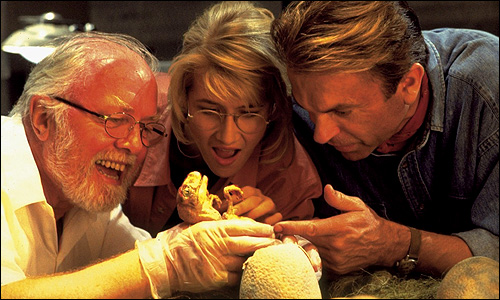
Jurassic Park ranks as one of my all-time favourite films. Not simply for its ground-breaking special effects (I remember driving home from the cinema nervously checking my rear view mirror for glimpses of the spitting one with the collar sitting on the backseat), its evocative score by John Williams, its universal appeal with classic cinematic moments of suspense, scenes of comedy, horror, pathos and schmultz in equal measure, the anthropomorphism of the dinosaurs (remember the raptor impatiently tapping her claws in the denouement kitchen scene), but just as importantly because it has always struck me as being something of an allegory of our times.

I’ll elaborate shortly, but the analogy of Jurassic Park seems particularly fitting in relation to this topic, because no doubt, to some, my musings will provoke outrage and I will indeed be compared to something out of the Jurassic or Cretaceous era, a fossil or a dinosaur with no relevance in today’s modern and enlightened society. I am already anticipating the inevitable outrage this post will undoubtedly attract.

I’ll never forget the part in the laboratory or hatchery, when having overcome his initial scepticism, and overcome by wonderment and awe at this incredible and fantastic world that has been created, Dr Grant watches a baby dinosaur hatch. His reaction is one of fascination at the miracle he sees unfolding before him through the genius of science, and as he tenderly holds the newborn creature in the palm of his hand, he enquires as to the species of the hatchling.  His response to the information: “You’re breeding RAPTORS?!”. The look of terror on his face tells a story all of its own, the potential for uncontrollable devastation has been unleashed.

Sometimes I feel like I’ve been catapulted through the cinema screen onto Isla Nublar, into a world where chaos and destruction brought about by mankind’s hubris reign. Like Dr Grant I watch the scientific developments unfolding all around me with both admiration and trepidation and an increasing sense of innate unease, wanting to cry out, to call a halt;  yet my voice is impotent, it is too late, the clock may not be turned back, and mine is anyway a solitary voice, my discomfort drowned out by cries of derision because I cannot accept, condone and embrace how man has been able to overcome the laws of nature and taken on the role of creator.

This week we have seen yet another celebrity surrogacy, with Nicole Kidman and Keith Urban having paid a surrogate to carry a child for them, with most of the mainstream media cooing over the new arrival and documenting Nicole’s ongoing battle to conceive and miscarriages in some detail. The general consensus of opinion seems to be how wonderful, there is much less condemnation than there was of Elton John, by virtue of the age of the couple, their less prolific celebrity status and the fact they are a heterosexual couple. None of these factors have any impact on my overriding impression that this is still a fundamentally flawed and potentially terrifying arrangement. I have no doubt that the couple will make great parents, it was the use of the phrase “gestational carrier”  used by the couple to thank the parent that caused me to shudder, the phrase being carefully chosen to refute any suggestion of motherhood, in order that Ms Kidman may stake her biological claim upon the child.

It cannot be right to pay women for the use of their womb, to put them through a procedure which entails considerable physical stress and risk, one which will have a life-long impact upon them. All this does is reduce a woman down to her reproductive capacity, treating her as some kind of object, in the same way that most women are objectivised in the sex industry. There is no legal transplant market in the UK, for the very same reasons. It does not matter that a potential recipient may be extremely deserving of an organ, the practice of paying someone to provide or donate an organ is rightly outlawed in order to prevent exploitation. Some people may see no harm in paying a donor huge sums of money to provide a body part, but the fact is, that the donor would only do this in a free market for a considerable fee, given that the donation would severely physically compromise them. A surrogate will undoubtedly physically compromise herself in the process of surrogacy. She may well be motivated by altruism and certainly the UK laws on surrogacy exist to prevent exploitation, but nonetheless, whether intended or not, exploitation is what surrogacy amounts to, never more so when it involves a mother carrying a child that is not genetically hers. The problem is already particularly rife in countries like India whereby women are coerced into surrogacy and paid an absolute pittance to carry and painfully deliver a child which they must then relinquish, due to economic necessity and the demands of the free market. Even in the UK where we have laws to prevent this, heart-breaking cases such as this one arise, when a woman cannot bring herself to part with her baby.

To me, nothing is more heartbreaking than a woman being legally required to give up a child that she has cherished and nurtured in her womb and brought into the world. Some women do this voluntarily, however the vast majority are enticed by the financial gain. The fact that this is not an act that most women are prepared to undergo is borne out by the fact that there is a much greater demand for surrogacy in the UK, than there are surrogates. It is argued that updating the laws will redress the balance, but in reality all this will do is encourage more women to use their bodies for the benefit of others, particularly in these times of economic hardship. Many commentators such as the Fawcett Society are keen to point out how women seem to be disproportionately affected by the cuts, agreeing to be a surrogate could be a financial lifeline for many.

Many people have argued, where is the harm, how is this hurting anyone? Well, apart from exploitation, for every live baby born via IVF,  7-10 embryos are destroyed. This is clearly problematic for anyone who believes that life begins at conception. A zygote or an embryo is no less alive than any living person. That’s an incredible amount of destruction of human life. The desire for genetic offspring of one’s own, does an inordinate amount of harm to those children languishing in care homes in desperate need of loving families. The demand for babies is making it increasingly difficult to find loving families for children barely out of toddlerhood. The introduction of a third party into the process of reproduction also overrides the rights of a child to be carried in the womb by its biological mother.

So what does this matter to me, why am I concerned with the lives of celebrities, why can’t I “live and let live”? The reason being is that what celebrities do undoubtedly sets a trend and paves the road for us normal folk. Does that sound far-fetched? Well apparently Eastenders, renowned for tackling hard-hitting social issues and dramas that affect real-life people is planning a controversial surrogacy story-line, which yes, shock horror, involves its two gay characters. More importantly Tony and Barrie Drewitt-Barlow, the first gay couple to use surrogacy in the UK, are to open the UK’s first centre to advise and guide same-sex couples through the surrogacy process. They want to match couples from Europe with surrogates and egg donors in the US, and have a centre in California (where Elton adopted) to help with this stated aim. Referring to the Elton John adoption Barrie Drewitt-Barlow said: ‘It’s positive news for gay parenting. The more high-profile the people using surrogacy to start their families, the more mainstream it becomes’. Proof that what celebrities do, has a direct impact on everyday society.

See there I go again, can’t resist bringing gay people into it, I hear them cry. Nothing to do with homophobia or hatred, simply to deny a child its biological mother is deeply immoral and denies the rights of that child to its biological mother and father. It’s strange, as I write this, I can almost sense the sharp intakes of breath, the palpable outrage, this is homophobia at its height, see look, she’s at it again, somebody do something, call the police, lets out this evil woman and her hateful rantings of course two gay men have as much right to a child as anybody else, but here’s the thing, NOBODY has a right to a child, no-one. A child, is a blessing, a gift, a privilege, not a commodity to be bought and sold to satisfy what is essentially a selfish desire to experience parenthood, without so much of a hint to the rights of a child to an identity, knowledge of its mother and father or its biological family tree. All of us have an innate desire to identify ourselves within the world around us, a longing to put ourselves into historical and biological context, an innate yearning to know who our birth parents are. A child might well feel that it was loved and wanted so much that two people paid a lot of money and went to a lot of trouble to ensure that it was created, but equally that might put a lot of pressure on the child in terms of living up to expectations and there is a more than a slight possibly that the child will grow up longing for the presence of the absent father or mother. To complicate a child’s identity by separating genetic parenthood from the gestation and raising of the child raises serious ethical concerns.

And for those who counter the idea that surrogacy whether heterosexual or homosexual has anything to do with commercialism, here are the words of Barrie Drewitt-Barlow:  

It’s aim is to bring together intended parents with egg donors and surrogates, along with donors, and offer legal advice from qualified legal professionals. I will be responsible for the assessment of intended patients and the assessments of potential egg donors and surrogates, and for helping with all legal documentation to allow each couple to bring home their baby to the UK’.

All of this comes gratis does it? No exchange of money whatsoever? All donors motivated purely by altruism? Where does it stop, will a woman who is phobic of pregnancy and childbirth have a right to pay someone else to go through the entire business for her? We have opened a Pandora’s Box of ethical dilemmas. Nightmare horrific sci-fi scenarios have become the reality, with surrogates ordered to undergo abortions and one case in Los Angeles which had an unbelievable 5 would-be parents vying for custody of a child. It seems that we are living in a world turned entirely on its head, which on the one hand sanctions the mass murder of an entire generation of unborn, with over 200,000 lives lost to abortion in the UK every year alone, and yet on the other hand, is spending huge amounts of money on technology to create babies in a laboratory which has a high rate of failure (70-80%).

Of course, given that I “fall pregnant at the merest hint of sperm” and “live in a fertile ivory” tower, absolutely invalidates any right I have to comment, according to my detractors. Because I have not directly experienced the pain, anguish and longing of infertility I am unable to comment and to describe surrogacy as a commercial arrangement is deeply offensive and hurtful to those who might wish to enter into these arrangements. As indeed it is allegedly “hurtful to question the morality of a medical procedure”!!

Just because the technology is available, it does not mean that we need to avail ourselves of it. We have the technology to annihilate entire continents thanks to the technology of nuclear weapons. Do we have a right to avail ourselves of it, simply because it exists? In previous ages, women had no other option other than to accept the cruel lot that nature had dealt them, and often managed to fulfil their motherly vocation in other ways. I can’t begin to image how it must feel to be infertile and I cannot tell women how they should manage their pain, nor can I condemn people for wanting to go to extraordinary lengths to fulfil their dreams, however I can question whether or not this is good for society as a whole.

To go back to Jurassic Park, no-one doubted that the intentions of  John Hammond, the park owner portrayed so brilliantly by Richard Attenborough were anything but benign. Admittedly, like mankind he displayed a staggering amount of hubris, but he wanted to share the wonders of modern science with the world, to encourage discovery, exploration and learning, not cause chaos and devastation. Though his intentions were laudable there were plenty of others willing to exploit the technology for their own personal gain. What he learnt was that you tamper with nature at your peril. He was guilty of nothing but naivety.

In the words of Jeff Goldblum “Too busy thinking about whether or not they could, to think about whether or not they should“…

Homophobic persecution

This post is written much later than I would have wished, due to my baby having been unwell with swine flu. I have debated whether or not to write this, given the furore has died down, and inevitably some conflict will be reignited but I would like the following to be said and out in the open.

I am a regular contributor to a debate forum on a parenting website. Predictably enough someone raised the issue of whether or not Elton John was too old to adopt. There was a lot of consensus agreeing that this was not an ideal arrangement due to his age and other issues, many of which have been picked up on by the media. I contributed my view, namely that 63 was too old to be fathering a young baby. I will elucidate further in a later post, why this whole arrangement disturbs me, but in terms of the original question, “were they too old”, my answer was an unequivocal “yes”.

Unlike other posters however, my concerns were seized on as being that old bugbear, namely homophobic. When I queried as to why I was perceived as homophobic, as opposed to everyone else who had expressed the same view, this was because I have previously expressed reservations about same-sex couples adopting. In addition, as a Catholic, I am a de-facto homophobe.

This is more than a little disturbing and not only for Catholics. There are plenty of valid reasons as to why one may feel that a differently gendered household is a better environment for children to grow up in, than a single-sex one, and none of them are based upon homophobia, which just to recap, is defined as an “irrational fear or hatred” towards gay people. I was asked to prove why I held these beliefs, studies were bandied about attempting to prove that outcomes for children raised by same-sex parents were no more negative than for children raised in other situations, however, none of the studies compared children from sex-same parents with children from different gender parents in stable relationships. Furthermore, the absence of “harm” does not render something “good” and therefore to be embraced.

My reservations about same-sex adoptions and surrogacy are rooted in something a lot more substantial than an irrational or illogical aversion to homosexual acts, but because I have publicly gone on record that I subscribe to the Catholic Church’s view that homosexual acts are sinful, this means that I wish to discriminate against gay people and deny them their “rights to procreate”. Furthermore “If you think gay sex is sinful, then presumably you categorise all practising gays as sinners. And that’s not homophobic?” Leaving aside the issues of whether or not procreation is a basic right and discussing Christian attitudes to homosexuality, which I will explore in later posts, it is of vital importance to debunk this whole homophobic labelling myth of those who do not wish to endorse same-sex adoption/surrogacy.

Why does this matter? Well firstly the label “homophobic” is used pejoratively, as way of insulting and smearing those whose views are not in accordance with one’s own. In many ways it has lost much of its potency due to the way it is bandied around as a generic label. To accuse someone of homophobia is on a par with accusing them of racism, anti-Semitism or any other form of intolerance. It infers that their opinions are purely visceral, not based on logic or reason and they stem from an inherent hatred, dislike or fear. An assertion that an act is sinful, i.e. that it separates you from God, is not indicative of any aversion to a group of individuals. As the word has so many negative connotations, it can be used as a weapon to confuse and befuddle any debate and denigrate any valid objections. You may simply be written off as an idiot, someone whose opinions are rooted in hate and fear. The word bullies and attempts to close down debate as well as humiliate and insult. Anyone remember “bigot-gate” which sealed public opinion of Gordon Brown?

I am not prepared to be associated with the likes of the BNP and nor, I suspect are the majority of Catholics. I am not prepared to stay silent because I am frightened of the usual incorrect accusations of homophobia. If we stay silent, because of the chorus of  intolerance and vilification employed against us by virtue of the fact of our Catholic views, then how on earth can we expect to be heard and to have a voice in society? If we accept this incorrect labelling, then we accept that our views are irrelevant, illogical and based on a distorted interpretation of the Creed. As Catholics and Christians, a belief that homosexual acts may imperil a soul (along with many other sins, both sexual and non-sexual) is not based on hatred, but based on love. Let me be clear, I have absolutely no interest in making homosexuality or homosexual acts illegal. I am quite libertarian in that respect. I do not believe that the state should legislate to enforce personal morality. What people chose to do with their genitalia is no concern of mine, so long as it is in private and involves other consenting adults. I do not seek to criminalize those with same-sex inclinations or those who act upon them, which would be a wholly counter-productive approach and not one rooted in compassion or understanding. In the same way, I do not wish to criminalize those who engage in sex outside of marriage, another sexual sin. Sexual sin, is simply another type of sin, something that alienates us from God and ultimately something that hurts ourselves. People need to form their own morality on these issues, hopefully based on Catholic/Christian ethics and an informed understanding of the teachings of Christ. No government or individual can enforce purity of heart. That has to come from within, we have to act out of caritas, not out of enforced legal compulsion, which does nothing to increase our desire for God.

To employ a cliche, I have plenty of gay friends, both practicing and celibate. How can I reconcile this with my views of sinfulness? Well, I also have friends who are not in what the Church would describe as regular marital relationships. I don’t say to people “Oh, you sexual sinner, I’m not going to engage with you, I’m not going to offer you any hospitality because you are clearly manifesting your sins”. I am not in a position to judge the state of people’s souls nor compare them to mine. They may well be guilty of sexual sin, but I am guilty of sin as much as they and thus I cannot be Pharisaical about this. All I can ever do, is discuss the issue if it comes up, gently point out that how this is against Christian teaching and leave it at that. It’s not about judgement or condemnation but about love. It’s about saying, “look, I don’t think this is how Christ wishes you to live”, but if someone is not a Christian, then its a moot argument. Gentle apologetics is the way to go, not preaching bile and hatred; I have no time for the evangelicals who wish to march about with banners of condemnation, whipping up confrontation and reinforcing public opinion of Christians as bigots. I am not a priest, I have no responsibility for the cure of souls, but that doesn’t mean that I should stay silent out of fear of condemnation, whilst at the same time, it is not for me to tell people what they should do. All I can ever do is voice my feelings on the matter.

So, why bother being so defensive about this issue, why bother attempting to prove that I, and Catholics and Christians like me, are not homophobic, why not simply accept that this is what other people will invariably think if we speak up? Because to accept the label is to accept the accusation, to accept that our views are rooted in hatred, fear and aversion and not out of love or concern. To accept the label, is to let other people’s bigotry dominate the debate about what kind of society we wish to live in and to accept that children are some sort of commodity or right, out of fear of being called a name. To accept it, accepts our own marginalisation. To ignore it, feeds the claims of those who would claim that Christians are being increasingly persecuted in the UK. We cannot simply accept that we are going to be a persecuted minority and if we look at this sensibly, Christians, are not persecuted in this country by any sensible definition of the word. We are not martyrs, our government does not ask us to choose between our faith and our lives, although we may feel our freedom of speech is restricted. We buy into this persecution mentality and we fuel further accusations of misguided delusion.

Of course, another choice is to refuse to engage with mainstream debate, to stick with communities of other Catholics and Christians. In many ways this is advisable, we are all the body of Christ, and certainly I tend to stick to Catholic forums and blogs if I am looking for sensible informed commentary instead of misinformed rantings. But actually, I also want to participate in and engage with discussions with non-Christians. Partly so that my voice can be heard and partly to dispel some myths, engage in apologetics and partly because I want don’t want to limit my sphere to the purely theological. I want to be able to talk about parenting and current affairs as well as the magisterium. If hearts and minds can be swayed, if we are to be able to spread the word, then we need to enter into discourse with non-Christians, although there does come a point whereby one has to accept that people do not want to listen with open hearts or minds.

There are plenty of people who have written to me and said “look I don’t agree with your Christian views, but you know what I do agree with your views on Elton John, I really admire you for sticking to your guns and speaking your mind.”

I am not going to be marginalised, hectored or shouted down, nor accept my views as being a product of brainwashing, vitriol or hatred. It’s a tired technique used by those who wish to close down an argument and claim a moral superiority and relegate opposition to being unreasonable, extreme and dangerous.

This labelling of our opposition proves Mark Shea’s comment “tolerance is not enough. You must approve”.

To invoke the over-used Godwin’s law, I also see parallels in this insistence upon a label and dangers in a passive acceptance. “You are a homophobe, accept it wear the label, we don’t want to cause you any harm, you are entitled to your views, you just have to accept our definition of what they are and what they mean”. Wear the star, accept the label, you are a perfidious Jew, but don’t worry, we don’t want to hurt you. This is why these misconceptions must be addressed and challenged by use of reason and apologetics, wheresoever they are encountered, instead of a sigh and a shake of the head. And that applies to anyone who baulks at the notion that they are homophobe, because they do not consent to two old men effectively buying a baby.

A polite request

To quote the lovely Rosamundi, who when I get around to updating my blogroll, I will definitely add, I am not a Catholic blogger, but a Catholic who blogs. As one of these  pesky people, I have quite fixed views on things. That doesn’t mean that I don’t empathise with people, nothing could be further from the truth, but at the end of the day, my morality means that I do hold certain viewpoints which, along with everyone else, I have the right to articulate.

Yesterday I made a comment about Elton John’s adoption of a baby, which I believe to be morally very questionable for a variety of factors, mainly his age, his lifestyle, meaning in this case his extravagencies and penchant for faddish collections, his well-documented battles with drink and drug addiction and the fact that the child will be brought up excluded from any sort of normal upbringing and probably with minimal privacy or chance to develop his own identity. More on this in a later post.

Many people took my comments of what constitutes an ideal family situation as a direct slur upon their own situation. That was not the intention, but in common with stating any preference it stirs up strong emotions because if someone else’s choice is not the same as yours that implies indirect criticism. To use a trite example, even a statement such as “eating fish and chips out of newspaper is the only way to eat them” has potential to offend. “I only eat them on a plate, newspaper is unhygenic, are you questioning my palate, how dare you?!”

Questioning whether or not and indeed stating that I didn’t feel at all comfortable with the media and celebrity cooing over Elton’s new arrival, whether or not it was a good idea for an old man to effectively buy a baby, that ideally children should have the opportunity to develop loving relationships with both biological parents, was taken as an insult or slur upon those who are in difficult circumstances. Having previously publicly expressed disquiet about same-sex couple adoption as well as the forced closure of the Catholic adoption agencies, meant that my misgivings in Elton’s case were automatically fuelled by that favoured and overused insult of so-called liberals, “homophobia”. I’ve previously posted on this topic, however I was subject to a barrage of tweets stating “I don’t agree with Elton John’s adoption. Oh wait I do. My brain hasn’t been taken over by Catholic homophobia”, which degenerated into insults calling me “thick” and stating that resorting to a dictionary definition of homophobia (see former post) was “weak”. Ultimately I am a homophobe, a hypocrite and a bigot, because I don’t agree that a 63 year old man should be able to buy his own child and circumvent UK adoption law. Incidentally I don’t believe that Elton would have been approved for adoption in the UK, for a variety of factors amongst which gender and sexuality wouldn’t figure. But again stating that recreational drug use isn’t an ideal attribute for a parent, is an unacceptable thing to say. So is questioning whether or not two people have the right to procure a baby, take it away from its birth mother, in order to satisfy their belated longing for a child. More on that in another post.

What has saddened me hugely, is that one of my oldest and most beloved friends has taken the decision to block me from Facebook, although she did the courtesy of emailing me first, because she finds my views too difficult to take. I completely understand the decision and think its a sensible one, after all, I deliberately don’t read things that I am going to find distressing or that will rile me. Whilst I remain open-minded and read material from both the Marxist end of the spectrum to very pro-Capitalism polemics, at times I try to avoid those such as Peter Tatchell, Keith Porteous-Wood, Polly Toynbee, Dawkins and their ilk, who have as much theological literacy as my dog and simply end up infuriating me. So though I am extremely upset and saddened, I respect the decision and think it is probably the right one, and I hope I will not lose an important friendship over it.

It should be fairly obvious that I have defined views on topics such as abortion. This is my blog, it’s my rules and I dictate the topics that I wish to discuss. I would suggest to anyone who finds my views so “disgusting, vile and abhorrent” to use words flung at me yesterday, who thinks that I am “full of bile and vitriol” to go and read blogs more suited to their tastes. However when I am implored to ” back off and STOP”, and told “you are embarrassing and humiliating yourself” either when blogging or on twitter, this is something of a counterproductive approach and gives the impression of bullying. I am neither embarrassed or humiliated, but I am certainly intimidated by the insults and sheer hatred.

I have thought long and hard whether or not to shut down this blog or move away from social media, it is horrible to lose friendships and worse to face an inbox chock full of hate mail. At present I have 364 emails containing nothing but hate, expressing sentiments such as “I hope you die a horrible death at the hands of a backstreet abortionists rusty scissors”. My husband is certainly concerned to see his wife visibly upset, distressed and shaken. By highlighting this, no doubt I will invariably be accused of playing the victim status or that perhaps my views warrant such abuse, it serves me right for publicly stating such strong views, it is par for the course.

I am currently experiencing a spot of the old cognitive dissonance. When I was a child my father used to say “if you want to be liked, you’ve got to be likable”, whilst at the same time stating “it doesn’t matter what other people think, you shouldn’t care what other people have to say”. It seems to me, that in order to be acceptable, to engage in effective evangelism and apologetics, one has to win hearts and minds. The only way this seems possible is by watering down beliefs to make them more palatable. The problem is, that on certain issues, this is something of an impossibility. I cannot say “well abortion is alright, I don’t agree with it as a choice for myself but it’s fine for others”. That is totally illogical. Nor can I say “well it’s acceptable in this circumstance and that circumstance but not in this one”.  It’s an issue of moral absolutes for me.

There is a whole welter of issues that I do take an absolutist approach over. That is not to be confused with a “judgemental” approach. Stating that I grieve for the lives of the lost unborn, is not the same as condemnation of women who have taken those decisions. Wishing that we lived in a society that generally placed a higher value upon a life is not a personal slur. Believing that acts of homosexual sex constitute a sin, an act that separates us from God, is not the same as hatred, fear or contempt of a personal with homosexual inclination. In terms of “judgement” I am in no position to sit on judgement upon anyone’s soul at all and nor can I or should I speculate as to the contents of people’s hearts. I can however comment upon questionable moral actions, particularly the ones carried out by people in the public domain and which reflect upon our society. I have a right, along with everyone else, to enter into a discourse about the type of society that I would like to live in.

There is currently a debate as to whether or not Christians are subject to a degree of persecution in the UK. Though I am no Christian martyr, when expressing a commonly held Christian view, one not exclusive to Catholics, I am implored to “stop”. When I receive emails calling for my horrific and painful death or stating that I should be subject to acts of deplorable sexual violence, because of an imagined hatred of gay people and women, enough to make me want to cease blogging and cease any public Christian witness, this does nothing for the causes of tolerance and diversity. To be honest I am writing this with a huge degree of trepidation, terrified of inciting yet more scorn, hatred and contempt.

I may well take a break, for a while but the stubborn side of me is rebelling. Why should I be cowed into silence and submission by bullies whose logic and rhetoric has totally failed? Besides I want to talk about Elton John!

For those who do want to see me die at the hands of a backstreet abortionist, I am sorry that my words have incited such hatred and violence in you. I am sure that this is simply rhetoric and not a genuine emotion. All I can suggest is that you cease to read and I will endeavour to hold you in prayer.


Remaining open to life

Given that I am experiencing such a rough time during this pregnancy, it has given me cause to reflect on the meaning of openness to life, which I, as a Catholic Christian, am compelled to practice in my marriage.

I have to confess that recently I have been anything but open to life in my mental attitude. Right now, the idea of ever having to experience such debilitating sickness and crippling fatigue is enough to send me mentally spiralling over the edge. I am just about continuing to function, even managing to attend some of the introductory events during Fresher’s Week at University (mainly all departmental welcomes and introductions), but I am to be found vomiting in the Ladies’ lavatories immediately afterwards, followed by slipping back home for a few hours of much-needed rest.

Imogen, our ten month old, still smells absolutely abhorrent, I associate her with a terrible smell to the extent that I can’t even look at a photo of her on my mobile phone without wanting to retch and thus the thought of another baby, combined with the rigours of a then 16 month old, a 7-year-old and the demands of the start of the Summer Term at University absolutely fills me with dread.

Now I know that all this is temporary, that eventually the sickness will ease, that I will undoubtedly love my newborn and be grateful for the blessing, at the moment all this seems very far from my mind. It is incredibly difficult to look at the big picture, when you are caught up in the daily drama of continuous vomiting, crippling tiredness accompanied with a side order of depression.

This would all appear to make family life particularly difficult at the moment, particularly given the uncertainties that Robin is currently facing in terms of discerning what his future might be within the Catholic Church and the loss of his previous identity. As he said, he has had to lay down the gift of his ministry, something that he has had for the past fourteen years, in the hope that he may one day take it up again. Since he was a little boy Robin has aspired towards priesthood and recounts how he used to “play at serving Mass” much to the bemusement of his siblings. His mother tells how as a baby  toddler and young child she had an irrational fear that he might die, her intuitive feeling was that he was somehow so holy that she feared that God might want him back! Indeed he did, but not in the way that she foresaw. So this loss of identity and of ministry is proving challenging to him and what he is most in need of is a someone who can be of support, not a useless wretch who can only manage to spend the majority of her days either vomiting or sleeping.

With that in mind though, our marriage has never been stronger and indeed we feel closer and more spiritually linked than perhaps at any time previously. In the light of this I have been reflecting on the issue of priestly celibacy; perhaps somewhat hypocritically I cannot help but believe that the Catholic doctrine is actually the correct line here (more in a later post) and it has seemed to me that perhaps if Robin didn’t have the encumbrance of a wife and family to worry about things would now be so much more straightforward for him, however he feels that were it not for my presence he may not have come to the decision that he did; simply the act of being married to a Catholic, exploring the issue of NFP and the Catholic teaching on sexuality as well as attending Mass with me for the past two and half years played a significant part in his journey.

With all of this, I’ve been feeling more than a tad uneasy about my current stance which consists of “no more babies ever, ever again, my body can’t endure another pregnancy, please no, I’m never letting you come downwind of me ever again, unless you are enclosed in a hermetically sealed bubble”! Obviously not what a Catholic (or any) husband wants to hear. So, I have been doing a spot of re-reading of Christopher West in order to remind myself exactly what it means to be “open to life” and why this is so important.

Something that I want to point out is that unlike common perceptions, NFP is NOT playing Russian Roulette or fast and loose with one’s fertility. It’s not the same as simply crossing fingers and hoping that one doesn’t conceive. It’s not the equivalent of putting one’s hand in the fire and then wondering/complaining when one receives severe burns. Perfect use records a success rate of 99.5% for couples wishing to avoid pregnancy with a typical use rate of around 97%. One only needs to compare this with methods of contraception to note that this is pretty efficacious way of avoiding pregnancy. Of course, there is only one way to totally avoid pregnancy, which is total abstinence. All couples know that there is a risk of pregnancy whenever sexual relations take place and indeed anecdotally, many of our friends will testify to having an unplanned child due to failures of conventional contraception. Therefore I do get somewhat exasperated by the fact that certain people seem to think that I only have myself to “blame” for this pregnancy, because I failed to act “sensibly”.

Actually, what we did do, which is perfectly acceptable and indeed encouraged within the Catholic faith, was to think very long and very hard about whether or not it would be appropriate to have another child at this current moment in time. Humanae Vitae discusses the idea that couples may have reasons or motives that are just and sufficiently serious, i.e. not  frivolous or materialistic, for avoiding conception. (iustae rationes and iustae causea, Humanae Vitae, 10, 16). The Church wisely doesn’t set out explicit rules, Paul VI alludes to reasons “based on the physical or psychological condition of the spouse or external factors”. What the Church does not say, contrary to popular misconception, is that it is inherently wrong to avoid children. Indeed in our circumstances, it seemed a wise decision, given the current pressures we are under.

This does on face value seem like splitting hairs. A commentator on a previous entry expressed the sentiment, surely if the end result is the same, no baby, then what is the difference? Surely you had the same mentality as someone using contraception? Indeed it seemed she had a good point, NFP or contraception is a means to an end. However, what this omits is the question that dogs almost all of us, namely does the end justify the means? The ends (no matter how good) neither justify the means or homogenize them. Using a trite example, think of the person who wants to buy a new house or car, so they work hard and save until they can achieve this. Someone else wants exactly the same thing, but instead they steal or sell drugs to achieve this. Same end, different means.

It is admittedly possible for a couple to misuse NFP by refusing to view fertility as a gift and adopt an outlook similar to the contraceptive mentality. An example might be an affluent couple with a house, 2 cars, several family holidays a year, able to eat out at least weekly, who have no known fertility problems and yet chose to postpone children with no reason other than they wish to prolong their lifestyle. This might be stingy or fearful or fertility but it is different from using contraception.

What contraception does is to separate the two meanings of conjugal love which should be both unitive and procreative. It renders the sexual act sterile. Every time a couple using NFP have sex bodily renewing their marriage covenant, they are open to life even if they know that the chances are slim that they will conceive in an infertile period. Patrick Coffin puts it very aptly when he says “using a comparison, such couples treat God as a poker partner with whom they’re willing to share high value cards, whereas contracepting couples treat God as a partner they want to defeat”. Marital spirituality involves spouses opening their bodies and the “one body” they become in the sexual act, to the Holy Spirit. Contraception entails shutting oneself off to the Holy Spirit, as the Nicene Creed expresses “the Lord, the Giver of Life” and so every time a couple uses contraception, they are excluding God from the act.

What separates NFP from contraception is that sex on a day known to be infertile is that God Himself designed the female with a natural rhythm of fertility and infertility, and this knowledge merely determines the timing of an act of intercourse. It doesn’t involve the desecration of such acts. Though most people don’t look on it this way, actually given that ovulation (even double ovulation) occurs one day a month, abstention usually lasts 5-10 days a month, the divine design actually favours the enjoyment of unity and sexual satisfaction over the procreative meaning by a hefty margin.

It’s difficult to prove the subtle effect of contraception on the unitive meaning of sex, but it doesn’t make it any the less real. If you pick up a lump of exposed radium with your bare hands, a la Homer Simpson, you’d still be affected by the radiation even though you may feel no sensible reaction. An invisible effect is not the same as a non-existent one. I think a good way of thinking about it is that contraception effectively turns love to lust. This might not seem so, after all sex is a way of expressing love, but when you think about it contraception was invented in order that we might not have to grapple with the choice of abstinence. It was invented to overcome man’s lack of self-control and indulgence of lust. As West points out, God gave us freedom as the capacity to love. Contraception negates this freedom, it says “I can’t abstain”. Hence, contracepted sex not only attacks the procreative meaning of sex, it also as John Paull II says “ceases to be an act of love”. If you can’t say no to sex, what does your “yes” mean?

By using NFP what we were saying is “Father, we have prayerfully discerned our life situation and we believe we ought not to conceive at this time. But we want to honour you as the true Lord of Life. In partnership with you, we enter into this embrace trusting that, if it be your will to bless it with a child, we will joyfully accept him or her”. On fertile days we did other things. We watched NCIS and Dr Who   😉

I have dallied with the thought that this Catholic attitude towards contraception is misogynistic, after all, it’s very easy for a man to wish his wife to have as many children as circumstances allow, particularly when he doesn’t have to physically endure the rigours of pregnancy and the terrors of childbirth (which to date have entailed abnormal amounts of blood loss and post-birth infections, nothing worse than lying incapacitated on an operating table, baby screaming implacably, surgeons wearing what appear to be plastic tree felling visors spattered with blood, stating “I can’t seem to stop this bleed, I think we nicked a vein”).  The reality is different though. Given that men are called to chastity in the same way as women, abstinence requires a real act of self-mastery which becomes increasingly difficult when your wife is physically incapacitated and incapable of intimacy for a long period of time, both during and after pregnancy. In addition to which, our personal situation is requiring that Robin is doing the majority of childcare and housework, as well as attempting to sort out some sort of employment and finalise any outstanding parish work. This pregnancy is not proving to be easy on either of us, we are both suffering yet in different ways. Though it might be easy to put a postmodern feminist gloss on everything, actually this is too glib an interpretation and simply one that is born out of frustration. As I said, it’s often hard to see beyond the immediate physical reality, and I know that Robin has often wished that he could suffer in my place.

Someone sagely pointed out that “I don’t eat meat, Caroline doesn’t use condoms. I would never ever eat meat, even if I was anaemic because I feel that strongly about it, eating meat is immoral and Caroline will never ever use contraception because she believes that it is immoral”. That pretty much sums it up. Though I am admittedly struggling with the effects of this pregnancy, with catastrophically low iron levels, though I’ve needed hospital treatment, and though it’s difficult at times to feel joyful about a baby which might well mean that I have to defer my long-awaited for degree, that is causing havoc physically, I have to accept that I am about to lose my newly regained figure (again) a source of vanity, I think really the fault is with me and not with the Church. This is a case of me coming to terms with “thy will be done” and not my will be done. It’s really easy to be pro-life, open to life if you want to be like Anna Duggar and have 19 children. This is where, for me, the rubber hits the road, where I have to put my money where my mouth is and accept the reality of an unplanned pregnancy and what it entails. Though I am no pro-life witness, I wish I was, this is, for me, melodramatic as it sounds, an act of heroic sacrifice. I am struggling every day with the physical reality of pregnancy and the concept that in a matter of months, life is not going to be how I envisaged or planned it. It’s going to be a whole lot richer.

If I were wiser or a better Catholic, I’d simply be accepting this difficult phase as a blessing or gift, uniting my suffering to that of Christ. I can’t do that, not only because it’s not in the same league, but also because I’m dreadful with illness and petulant when things don’t go the way I want them. I feel terribly guilty for not yet being able to be joyful about this baby, particularly when I know the lengths that some people go in their quest for children and it does seem terribly unfair. One of my most cherished passages in Scripture is Romans 8, 28:  “We know that all things work together for good for those who love God, who are called according to his purpose.”

Also, the example of Mary, is as ever salient here. “Let it be done unto me according to thy word”. Here was a woman who had to tell her fiance that an angel had told her she had conceived God’s child. She potentially faced death by stoning, yet she rejoiced in the news that she had been chosen by God, never once complaining, but accepting the news joyfully.

So ultimately, my troubles are yet small beer.