No Laughing Matter

20121127-170457.jpg

In May 2011 the late great pro-life campaigner Phyllis Bowman wrote about the BBC bias in favour of assisted suicide. She noted that in the past three years, at least five programmes promoting euthanasia had been broadcast which is unacceptable coming from a broadcaster who is supposed to remain neutral on ethical and political matters given that they are funded by public money.

According to this report, the BBC is now producing a six-part ‘black comedy’ called Way to Go, about three friends who set up an assisted suicide business to pay off gambling debts.

Zai Bennett, controller of BBC Three, said that Bob Kushell’s, the screenwriter’s scripts, “are in turn dark, poignant, absurd, moving and brilliant. But mostly they are very, very funny. I’m thrilled that Way to Go is coming to BBC Three.”

I wonder whether those suffering from terminal illnesses, or their relatives will find this quite so amusing? I wonder how the sick, disabled, elderly and vulnerable will react to this normalisation of euthanasia? Still at least the programme-makers are reflecting that there is indeed money to be made from the promotion and selling of suicide.

What next? Larks and japes from inside an abortion clinic? John Paul II’s ‘culture of death’ is evermore prophetic.

Here’s a link to the BBC’s complaints site. Isn’t Chris Patten supposed to be a Catholic?

The scandal of the Navity

20121123-001421.jpg

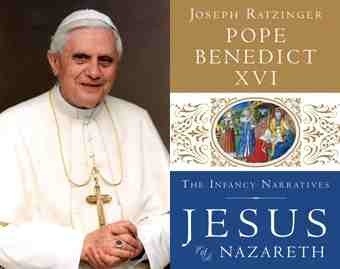
I was trying to work out why the media seem to have focussed on the Pope’s thoughts about the appropriateness of the ox and the ass in the nativity scene. It really is something of a non-story, although when I was interviewed about this earlier today, the presenter seemed to believe that the Holy Father had broken controversial new ground, by ‘re-dating’ the birth of Christ and claiming that by highlighting the lack of cattle in the manger, the Holy Father is trying to remind us that the nativity story is simply a myth, not to be taken literally.

I’m not sure how well I managed to get my points across (unfortunately one of the children had a meltdown towards the end of the phone interview) but one of the things that I did point out was that though Joseph Ratzinger is an acclaimed theologian and biblical scholar, whilst his book does not undermine anything in the Magisterium, neither is it infallible doctrine, it’s a book written under his own name and Catholics are free to disagree. There’s no need to consign the donkey figurines to the knackers yard just yet. The Pope may think that they have no place but as he said, he can’t see that changing any time soon. There were no accounts of cats or peacocks in the Gospels, but they often feature in nativity scenes, the peacock symbolising immortality and there is a legend about a cat giving birth to a litter of kittens in the stable. In some parts of the world you might also find a St Francis figure anachronistically kneeling at the crib, Mary’s midwife or representations of local townspeople and tradesmen, although I think the lobster in the film Love Actually, might be stretching things too far.

We know that there are no mentions of cattle in either Luke or Matthew’s account of the Nativity stories. This won’t come as news to anyone who is au fait with their Bible and neither will the Pope’s clarification that the dating of Christ’s birth is out by a few years, I remember being taught the controversy over twenty years ago in school.

It is thought that the tradition of Nativity scenes were introduced by St Francis of Assisi. The basic elements comprise Mary (on Christ’s right), St Joseph (on Christ’s left), at least one shepherd, at least one angel, the three magi (who make their way to the crib in time for Epiphany), a lamb to symbolise not only the shepherd’s gift but also the sacrifice of Christ on the cross and the ubiquitous ox and ass. The reason for the presence of the cattle is in fulfilment of the Old Testament prophecy,Isaias 1:3

The ox knoweth his owner, and the ass his master’s crib: but Israel hath not known me, and my people hath not understood.

The donkey also prefigures the arrival of Jesus into Jerusalem on Palm Sunday. There is a rather endearing tradition that a cross was marked on the donkey’s back as a reward for using its breath to warm the infant Christ in order to mark out its offspring precisely so Jesus would recognise it for his entry into Jerusalem. I remember searching for this mark every time I encountered a donkey as a child, just in case!

What stands out for me, from the limited extracts that I have read, is what Pope Benedict is emphasising with his interpretation of the infancy narratives. Rather than suggesting that the nativity is a fable, he is grounding Christianity firmly in historical fact by going back to the primary written sources. That there may have been no donkey in the inn is something of a minor detail, our Pope is an incredibly thoughtful and precise man, his reflections are typically very careful. I would suggest he was focusing on the way in which the Gospels were written and what they can tell us. Benedict argues that the Evangelists set out to write real history, that had actually happened and he seeks to contextualise this.

The media have focused in upon the donkey detail for a number of reasons; firstly it makes a sensational story and is an easy way to get in a dig at the Pope and casts him in the role of Ebeneezer Scrooge. Secondly, in a post-Christian era that subverts the message of Christmas in a grotesque orgy of consumerism and self-indulgence, casting doubt upon the nativity justifies the distortion. The Nativity isn’t real anyway, look even the Pope says so. Thirdly and probably the most overriding reason is that journalists are not theologically literate enough to pick out the compelling points from the Vatican’s press release, so go for the easy story.

More compelling than the lack of cattle, or that the angels may have spoken rather than singing, is what the Holy Father confirms for us, such as the Star of Bethleham was an actual celestial event. One of the things that struck me was the comparison of Pax Christi to Pax Augusti and the discussion of the political realm. These words seem especially prescient in the light of the vociferous opposition and vilification of those who defend life and marriage.

The political realm has “its own sphere of competence and responsibility;” it oversteps those bounds when it “claims divine status and divine attributes” and makes promises it cannot deliver.

The other extreme comes with forms of religious persecution when rulers “tolerate no other kingdom but their own,”

Any sign God announces “is given not for a specific political situation, but concerns the whole history of humanity.

It would be marvellous if the negative publicity whetted appetites and aroused public curiosity to make the book hit the best seller lists, so that people could experience precisely what the Pope has to say for themselves. Perhaps the headlines should have emphasised that it’s an uncharacteristically short tome, only numbering 132 pages.

There should be controversy around the book, it reaffirms the cornerstones of Christianity, namely the Virgin Birth and the Resurrection. As Pope Benedict says, Jesus’ life was full of contradiction, paradox and mystery and remains a contradiction today.

Benedict describes Christ’s life as a scandal against the spirit of the modern age; God does not restrict himself to the ethereal or spiritual but demonstrates his power in the material world. The true scandal is not the omission of the Ox and the Ass, but that God humbled himself in order to redeem mankind. That’s what the headlines should have been screaming.

Proceeding with caution

Some pro-lifers are uncomfortable with my previous post and I can understand why. The facts are not yet known and yet the abortion lobby have turned Savita Halapannavar into a pro-choice martyr, stating conjecture as certainties.

I am well aware that pro-life needs to keep its powder dry and not engage in more rumour mongering. however I think Ruari’s post raises some questions. I disagree with his statement that those who fail to find evidence of a conspiracy aren’t looking hard enough. Most often there is no evidence of a conspiracy because no such conspiracy exists. I doubt there is a conspiracy in this case, but I do believe there is much opportunism and a great deal more confusion and misreporting.

The issues of note are the concerning rise in reported cases of ESBL and as has been widely reported, the fact that pro-choice groups were privvy to the case before it hit the media and seemed to be gearing up to take swift co-ordinated action to dovetail with the widespread coverage. I also agree that the timing is interesting, coming shortly after Ireland’s first abortion clinic opened and obscured the revelations emerging from an investigation that revealed that the Irish FPA was giving dangerous advice to women seeking abortion.

That medics are frightened for their jobs is unsurprising given the media frenzy. I think it’s proper to ensure that any investigations are wholly impartial. It is unfortunate that Savita’s husband Praveen refuses to meet with the HSE, he obviously feels very strongly that her life could have been saved by premature delivery; this case looks set to run and run.

We do need to wait for answers and not jump to conclusions, but at the same time questions need to be asked and predominant narratives challenged whilst remembering there is a widower grieving the loss of his wife and baby.

None of this should however, let India off the hook re its appalling gendercide or dictate the terms of the inquiry.

The real scandal

A few days ago, the freelance writer Ruari McCallion posted some thought-provoking comments in response to my thoughts on the case of Savita Halappanavar reminding me not to be too hasty in terms of my assumptions. He has written an incendiary guest blogpost on Mark Lambert’s blog. I’ve reposted it in full below.

The point of my post the other day was to note that just because poor Savita asked for an abortion to end her distress, this does not mean that this would have been the best clinical treatment for her or that her request should have overridden medical judgement. As Clare says, sometimes doctors have to refuse our requests, years of training and experience qualify them to be able to make these judgement calls, based not on ideology but in the best long term interests of the patient. Clare begged for a sterilisation and was quite correctly refused, not being able to freely consent, in the same vein, I had a meltdown at my pre-op the day before Theodora’s birth and refused to sign the consent form for a cesarian. I wanted to deliver a baby naturally two weeks later, despite the fact that it would have been unsafe, the placenta was beginning to fail, the baby’s growth had tailed off and I’d had two previous sections. Sometimes the fear, pain and distress involved in any critical medical emergencies can blind us to other considerations. In my case, I was so terrified and phobic of going back into the dreaded operating theatre, that I put the mantra of patient choice, of “you must do what I tell you, my wishes are paramount” before the safety of my baby and myself.

So it’s quite iniquitous of Michael Nugent to say pernicious things like this:

Some ghouls from the anti-choice campaign seem to delight in the idea that Savita might possibly have died from something unrelated to the doctors refusing to give her the abortion she requested.

That’s the whole point. It seems increasingly possible that Savita died from something unrelated to the premature induction of the baby. She was not asking for abortion but for a specific course of treatment knowing her baby was not going to survive; we can make our wishes known, but we cannot impose our will upon those treating us. Being able to dictate which procedures, surgeries and drugs should be administered to us, is not a basic human right.

This story is truly scandalous. India has no right to dictate Ireland’s abortion policy whilst they refuse to address their horrific issues of gendercide or do anything to address the dowry system, which is illegal in name only. Dowry violence which does so much to engender the devaluation and debasement of women and encourages a thriving illicit sex selective abortion industry, rarely incurs any penalties or prosecution in India. Added to the fact that the Indian subcontinent has played a major role in spreading the ESBL organisms behind Savita’s infection, their hypocrisy is astounding.

Pro-choicers must not be allowed to subvert this case to allow wholesale abortion in Ireland, a country which is a global leader in maternity care and death rates.

Anyway, here’s Ruari’s view:

Who Stands to Gain from Tragedy?

If you can’t find evidence of a conspiracy then you aren’t looking hard enough…

There is a need to stop this side of David Icke (WELL this side of David Icke) but, sometimes, conspiracy theories turn out to hold water.

The death of Savita Halappanavar is a tragedy that became a catastrophe for her family – that much is crystal clear and pretty much everyone can agree on it. But then things get murkier and murkier. There are agendas at work and the hint of something rather nasty at large.

Mrs Halappanavar died of an antibiotic-resistant infection, specifically e.coli ESBL. She did not die from an abortion, from being denied an abortion, from Catholic teaching or from a confused legal system in Ireland.

WHAT IS IT?

ESBL stands for Extended Spectrum Beta-Lactamase positive gram negative bacteria. It is resistant to most strains of antibiotics. One of my informants told me: “… the antibiotics given were to no avail…two things can happen if it doesn’t respond to treatment. Either the body’s immune system deals with it in the normal way and wins or the bug defeats the immune system and the patient develops an overwhelming septicaemia, leading to septic shock. The kidneys start to fail and the blood pressure starts to fall.” They then go on and die – the mortality rate is massive.

The great concern – or what should be the concern – is that e.Coli ESBL and other antibiotic-resistant infections are now at large in the community. Previously, such things were limited to identifiably higher-risk areas: hospitals themselves; food processing (slaughterhouses in particular); and farms, where slurry is often used as a fertilizer. But Mrs Halappanavar was a dentist.

AGENDA-DRIVEN FIRESTORM

Instead of being concerned that untreatable infections are in the community as a whole and spreading, the debate has been hijacked by special-interest groups. But it is worse than that.

It is proving to be very difficult to get the truth of the fatal infection into the mainstream news media; they are only interested in the abortion angle – if they remain interested at all. As for the medics I have spoken to – they are all concerned for their careers. Getting information has been like pulling teeth. I cannot mention names or attribute their comments even to ‘a doctor/nurse/paramedic at x/y/z hospital/surgery/healthcare trust’. I can’t even mention the area they live and practice; they are frightened of being traced and found out. That could have been put down to the fear that they were passing on hearsay and gossip – but the same story has come from multiple sources. It passes the usual tests of corroboration.

FEAR MAKES FOOLS OF US ALL

I am getting a message pretty loud and clear that speaking out about this, that going public with the ‘wrong’ message may very well impact upon an individual’s career. “Most people are afraid to comment…” one of my informants has said. Some of my informants are coming towards the end of their careers and are slightly more inclined to speak out but even then there is a great deal of caution. There appears to be real, tangible fear.

Is it a conspiracy? Well, in my experience, you don’t often find doctors and nurses so frightened for their jobs. Patient confidentiality is always respected, of course, but there is so much out in the open now that confidentiality is not an issue. It is odd – very odd – that the ‘pro-choice’ group whose press release triggered off this furore seems to have known about the incident for some days, had access to medical information that was not at the time in the public domain and was, therefore, supposedly confidential. It had the chance to tee up its members and supporters that a major story was about to break.

FOLLOW THE MONEY….

It happened shortly after a Marie Stopes facility opened in Northern Ireland, and soon after an RTE broadcast of an undercover investigation that revealed pregnancy advisory services are behaving in an illegal and dangerous manner. One of my informants has pointed out that the consultant in charge of the deceased lady is actually English and mentioned casually that it was unusual to see people coming in from the UK – that the traffic is usually the other way. “…it may be because she has an agenda”, they said. They may be appallingly right. As someone said, there is a lot of money to be made from abortions, as the UK and US experience demonstrates.

The tragedy of Mrs Halappanavar and the ensuing fuss has arrived very conveniently to overwhelm the negative programme – who now remembers it at all – in a tide of prejudice, misinformation and lynch-mob hysteria.

I had to ask some rather distasteful questions to get to the truth and got some fleas in my ear for suggesting the possibility of racism or gender-selective illegally-procured abortion! And then the gates began to crack open, the information started to flow but the fear of my informants has become almost tangible. The enquiry looked like the sort of stitch-up from the old days; it was almost laughable. Now the widowed husband has got a lawyer and is involved in setting the terms of reference of the enquiry – which hasn’t even started yet. If his wishes are not abided by, then he will not allow his deceased wife’s records to be released. I hesitate before making this observation but, of course, if no-one is responsible, if it was a tragic death that was unpreventable, then some interests will be frustrated. There are interests in finding someone or something to blame. Which means that there will be horsetrading going on to make sure it lands in the ‘right’ place. As I said, if you can’t find evidence of a conspiracy then you aren’t looking hard enough.

GET THE MESSAGE OUT

A Doctor Clair, from Cork, has had the courage to speak out publicly, in the form of a letter to the Irish examiner that was published on Tuesday 20 November. He is almost alone at the moment but one hopes his letter will get wider publicity. Readers of this blog should disseminate it as widely as they can.

On coming home

Damian Thompson writes today that the era of Anglo-Catholicism in the Anglican Church is drawing to a close due to the forthcoming vote on women bishops in the Synod this week. According to Damian, Anglo-Catholics who are serious about their faith,will have already decamped leaving only what he describes as the ‘gold chasuble brigade’ i.e. those who like the liturgy of the Roman rite but not the meat of the Catechism. He also describes how the Ordinariate has not attracted most of the Anglo-Catholic laity and attributes this in part to the failure of the Catholic Church to provide the Ordinariate with a London church.

I’m not so sure he’s right on either score. I don’t think it’s fair to use the amusing biretta and lace trope (which does have an element of truth) when discussing matters of spiritual integrity. There are undoubtedly those who like the liturgy and outward trappings of pre Vatican II Catholicism but are very liberal in terms of Catholic teaching on sexuality and other matters; on the other hand there are those who genuinely yearn for reunification, who are well-formed, highly educated, theologically and morally literate who just cannot in good conscience sign the Catechism. I would hazard a decent guess that the former Bishop of Chichester, John Hind, is just such a man. Those who do not ‘Pope’ are not hypocritical or ignorant, all style over substance, simply that leaving home is not easy and takes much soul-searching.

There have been a few times online when I have seen decent men barracked and hectored that if they have any integrity they should convert. Such attitudes make me sad and angry in equal measure. Bullying and berating people is not the way to ensure conversions of heart.

I can only speak of my second-hand experience as the wife of someone who converted, though I was party and privy to Robin’s journey, being already a Catholic, I could not experience the turmoil in the same way. For me, it was blatantly clear that he should convert, but that was something he had to discern for himself in much prayer and thoughtful reflection, it was a decision between him and God, one in which I could have very little input. If I’m being entirely candid, on one level it would have suited me absolutely fine had Robin remained an Anglican clergyman. We had a lovely Rectory, a great parish, he was Freehold, a wonderful circle of friends and support, a pension scheme and lifetime security. We went to vigil Mass on a Saturday together so I could fulfil my obligation and then I would support him in the parish on a Sunday. I was being spiritually nourished, we had a good life, Robin was on Synod, conducted lay reader training, was part of diocesan vocations, school governor, trustee of a local charity, all in all was doing well, surely to throw all that away for an uncertain future was folly? I know both sets of parents were very uneasy about it all.

But all the while there was a nagging and niggling sense for me, that this was somehow dishonest. It became clearer and clearer that he needed to convert, that he wasn’t being honest with himself, with his parishioners and most importantly with God, but the impetus, the examination of heart and conscience can only come from deep within, no-one else can or should make those spiritual choices for you, plus we have to trust in God’s grace and the Holy Spirit. I wanted nothing more than the person who I love most in all the world to be in communion with me in faith, there is nothing more painful than being spiritually divided; of course I wanted him to receive all the richness and beauty of the faith, the graces and blessings of being a member of the one true Apostolic Church. Love is not selfish, it wants to share its joys with others, it will put the other person first regardless of the cost. But ultimately I could not substitute my will for his.

And yes, there was a cost, an enormous cost for us as a family and no doubt if I were a better, holier and more pious woman, I would have borne it a lot more unflinchingly, but when the eventual decision came, it was full of joy, our parish made Robin so welcome, but it was very bittersweet. We laid down our previous lives to take up a new one, which entailed much pain and sorrow. I know Robin felt like he was letting people down, deserting a group of people who he had cared for and ministered to over the past ten years and I felt like I was betraying those who had made me so welcome and loved when we got married.

We then, as detailed on this blog, had an incredibly testing two years whilst he discerned vocation and worked in the funeral industry, during which we doubled our number of children from two to four, I found a writing voice and struggled to come to terms with the swash and buckle of internet discourse and was subject to a series of vicious personal attacks, which was at times my only social contact with the outside world.

That’s not to deter potential converts, our story is not unique, every single Anglican convert’s wife has a similar tale to tell in terms of the impact upon their family life. One of the things that almost all mothers crave is stability and the opportunity to build a future for their children. One of the downsides of being any clergy wife, is that you have to accept that your husband’s vocation does not entail a guarantee of permanence. Moving house multiple times can be incredibly destabilising and losing one’s circle of real-life local friends and acquaintances, to move to an area in which you know no-one and can’t easily get out and about, isolating.

I was as supportive as I could be, I knew it was the right thing, but it was by no means easy and I was by no means a paragon of saintly virtue in serenely accepting the family turmoil or years of flux and uncertainty.

I’ve digressed, but the point is, that I was always 100% supportive of Robin. What about Anglo-Catholic clergy whose wives are reluctant to convert and/or support them? It’s an enormous ask and therefore denigrating the decision to put family stability first cannot be the correct way to go. Furthermore leaving one’s spiritual home can be an enormous wrench. I’ve never done it, but when C of E clergy are ordained, like their Roman counterparts they believe this to be a lifelong commitment and calling, in the same way as marriage vows. One cannot deny the affection for the spiritual tradition in which one was formed and it takes a lot of courage to admit there is no realistic prospect of reunification, to abandon your home and watch helplessly as it tears itself to pieces and moves further and further away from universal truths.

Crossing the Tiber is not the straightforward intellectual exercise that it might seem on paper, these are real people with real lives and a multitude of responsibilities to juggle. For the clergy there is the additional question of vocation. One has to accept that one’s former ministry was probably not wholly valid. What if one still feels called to priesthood? There is no guarantee that the Catholic Church will accept one as a candidate. What do you do if your life hereto has consisted of ministry, you have a hatful of theology degrees, huge amount of transferable skills yet are competing with people not only younger but with more relevant experience? All of a sudden you have to rebuild your life, whilst attempting to provide for yourself and any family. Was your former life a waste of time and meaningless?

All of which means than the decision to convert has to be made out of love in a spirit of joyful acceptance and not because one feels that the Church of England has left one with little other choice. There is a difference between choosing to ‘Pope’ and being pushed. Neither of us regret for one moment the decision to convert, there is no question that it was where The Lord was leading, our lives are spiritually richer, our marriage has been transformed and strengthened and if ordination does not take place, though crushing, we would still not look back. This is where converts need to be, it has to be a total laying down of a life in order to resume it and an acceptance that The Lord may not lead one back to the altar in the same way. It’s a total death to self and an acceptance than one may no longer be in ministry. The older one is, the more difficult that becomes, and if one is a young unmarried vicar, then one has to abandon any previous notions of marriage and family.

And this, I suspect is one of the reasons why perhaps not as many laity as some expected have joined the Ordinariate, because again, for many, leaving a former parish church and affiliated social groups is just too physically painful, not because of any shortcomings on behalf of the Ordinariate. I’m willing to bet as well that there are plenty of families where one party is far more enthusiastic than the others, Anglicanism famously encompasses a broad spectrum of views. An unsatisfactory status quo is psychologically more comforting than a leap of faith into the great unknown.

Is Anglo-Catholicism dead? I am no longer au fait with the latest developments, but it seems to be thriving as ever in its little pockets around the country, such as here in Chichester diocese. I guess it depends on one’s definition, perhaps life is untenable for Anglo-Papalists, but groups such as Affirming Catholics would claim otherwise.

I cannot stress strongly enough that the joy and happiness of conversion far outweighs any difficulties and every convert clergy family I know says the same. There is no looking back, no regrets and this is, I believe, because it was an independent decision to embrace Catholicism and not a convenient bolthole. There is a distinct difference. This is why Damian Thompson is wrong to want the legislation on women bishops to pass in its current format, with no provision worked out for conscientious objectors. We should not laugh or pass judgement on the consciences of those who remain behind to be alienated and vilified by their peers and brethren in Christ. It must be a horrific time for all. It could well have been my husband, I take no credit for his journey but undoubtedly one of the factors that led to his conversion was the actual experience of worshipping in a Catholic Church with his wife every week for two years. The unknown did not seem so scary, Christ called from the Eucharist, he pushed at doors and found them opening. Not everyone is so fortunate. I know many who are still grappling with their consciences.

For those Anglo-Catholics who do read this (I had the honour of being listed as a blog of note by New Directions) please know that you are all in our thoughts and prayers. If clergy or families want to contact us to sound out ideas or go through any practical realities, put your details in the combox (I won’t publish) and I’ll get in touch. There is help and support available, not least the St Barnabas society without whom this would not have been possible.

If Anglo-Catholicism is dead, it is a tragic time. The only reason for rejoicing is if this alleged death provides an impetus that leads people home. This is far more likely if we extend a lifeline out of caritas, condescending pre-judging and barracking is counter-productive. The body of Christ is wounded but never beyond repair. If history teaches us anything it is that any movement that feels suppressed eventually re-emerges stronger. We have to trust the Holy Spirit and pray for resolution and comfort for those whose futures currently lie in the balance.

Savita’s request for ‘abortion’ is irrelevant – it’s medical judgement that carries weight

Much has been written about the tragic case of Savita Halapannavar. I don’t have a lot to add to the excellent analyses of Thirsty Gargoyle, David Quinn, Tim Stanley and William Oddie

Those calling for the liberalisation of Ireland’s abortion laws are making much capital of the fact that Savita was allegedly denied an abortion. According to the rhetoric, Ireland’s law should have allowed her to have an abortion, the moment she asked for one. Savita was miscarrying a wanted child. She was in agony and experiencing considerable distress, therefore she asked for the treatment for her miscarriage that she believed was most likely to swiftly deliver her from torment, which is more than understandable. Faced with an identical situation, most of us would do the same, I had a suspected ectopic in one of my pregnancies, the pain was excruciating and I would have done almost anything to make it stop.

Though Savita had unquestionable medical knowledge, like most of us, she was not a qualified obstetrician. She was not requesting an abortion, but what she believed was the most appropriate course of treatment for her miscarriage; one that would get the ordeal over for her quickly. Though medics must consider the feelings of their patients when it comes to treatment, they are not obliged to follow patients’ demands, no-one can force a surgeon to operate against their will, particularly not if the surgeon does not believe it to be in the patient’s best interests. Though a patient is able to withhold medical consent, they are not able to determine the precise and exact nature of their treatment. A pregnant woman cannot force a doctor to induce her baby at 36 or 37 weeks or carry out a planned cesarian simply because it is her will. She may think she has a valid medical reason, but ultimately the decision is in the hands of the doctors, as is the case with any medical treatment. Being a pregnant woman does not privilege one when it comes to determining medical treatment.This case is not about the refusal of abortion, but the mismanagement of a miscarriage and medical malpractice. James Reilly, Ireland’s health minister, himself a doctor, noted that allowing a miscarriage to occur naturally can often be the safest option.

For those blaming Ireland’s Catholic culture, this is not the view of Archbishop Diarmuid Martin who believes that Ireland “is now a highly secularised society, and many look to the Church through a secularised lens to the point that, in a sense, one could speak of what I call ‘a climate of undeclared heresy’ that pervades many dimensions of understanding of Faith among Catholics.” We do not know whether the medic who reportedly uttered the phrase ‘this is a Catholic country” said this in support of the law or against it; either way they were theologically, medically and legally uninformed.

All of us who identify as pro-life would like to express our sincere condolences to Savita’s family on the loss of this beautiful young woman and her baby. No-one believes that a woman should be compelled by law to sacrifice her life for that of her unborn child and as everyone has pointed out, treating Savita would neither have contravened Catholic bio-ethics nor Irish law.

None of that is any consolation however, an enquiry needs to take place and if necessary dismissals and re-training need to occur to ensure Ireland manages to maintain its place as one of the safest places in the world to give birth, a country safer for pregnant women than the UK.

A modern gibbeting

It seems that the removal of Jimmy Savile’s gaudy headstone is not sufficient for those intent on wreaking their revenge for his alleged crimes. Savile’s mortal remains are to face our society’s more civilised version of the gibbet – there are calls for him to be disinterred and cremated, or even ignominiously dumped at sea so that no earthly trace of him remains. In a move reminiscent of the Ministry of Truth or the Soviet Union, his appearances are being wiped from any re-runs of Top of The Pops 2.

The latter move is perhaps understandable; to continue to feature him would be an insensitive move on behalf of the BBC, but I am uncomfortable with the proposition of disinterring him. As a vessel of the Holy Spirit, human remains must be accorded the respect and dignity due to all human beings, regardless of their crimes here on earth. The deceased’s last wishes must be taken into account and Savile was explicit with regards to what he wished to happen, even detailing the site and angle of his burial. Even those facing execution on death row for multiple murders are allowed to make requests as to the treatment and burial of their corpse.

Savile’s Catholic faith cannot simply be disregarded because his deeds went unpunished. Though we can all make guesses as to his psychological condition, we cannot presume to know what was in his heart. It is perfectly possible that he may well have made a good confession before he died. We cannot know whether or not he repented for his terrible deeds or whether he was truly sorry. That is between him and The Lord.

Preferred Catholic practice is for burial of remains because of the truth of the resurrection of the body and reunification with the soul when Jesus returns at the Last Judgement. The early church retained the Jewish tradition of burial rejecting the Roman pagan ritual of cremation, because God has created each person in His image and Likeness and therefore the body is good and must be returned to earth after death. Christ himself died and was buried in a tomb and rose at Easter, therefore the early Christians buried their dead out of respect and in anticipation of the Last Judgement. The Church’s stance against cremation and belief in the bodily resurrection was mocked by their persecutors who often burnt Christian martyrs and scattered their ashes as a sign of contempt. If Catholics are cremated, their remains must not be scattered or kept on the mantelpiece but must instead be interred in their entirety in a cemetery. That’s not to say that those loved ones who have had their ashes scattered will not experience the resurrection, we trust in the Lord’s power, mercy and love, but canon law states the following:

“The Church earnestly recommends that the pious custom of burying the bodies of the dead be observed; it does not, however, forbid cremation unless it has been chosen for reasons which are contrary to Christian teaching” (No. 1176, 3).

To dig him up and cremate him is profoundly un-Christian and indicative of the post-Christian age in which we now live. Frustrated that he escaped punishment in his lifetime, we now seek to exact revenge upon his body, not trusting that he will already have faced judgement and possibly punishment.

If Savile is to be removed from his high profile resting place out of respect for the bereaved relatives of those who share the cemetery and his victims, then he needs to be reinterred intact and anonymously, preferably in a Catholic cemetery where his grave can be visited by his relatives and regularly blessed and prayed at, in accordance with Catholic custom for all our dead, regardless of earthly sins.

It would be truly horrifying if the authorities felt that they could redefine or override religious practice in terms of how we should treat our dead. To exhume and cremate Savile would be allowing the state to make a judgement on his faith, what constitutes a real Catholic and moreover, his soul. I do hope that he has a decent Catholic advocate.

20121107-220807.jpg

Unnecessary battles

Catholic Care has predictably lost its battle to change its constitution to explicitly allow only heterosexual couples to adopt. It is a blow to religious freedom and difficult to see how the ruling fits in with Article 9 of the European Convention on Human Rights, which states that religious conscience rights should not be trumped, unless it is ‘necessary’.

What is concerning about the ruling is that in focusing purely on the perceived discrimination aspect, it seeks to put the rights of prospective adoptive parents above the needs of the child. The Catholic adoption agencies had particular specialist expertise in terms of placing the most difficult children, taking scores out of the care system and putting them in loving families. The legislation underpinning the decision was drafted in order to avoid discrimination in the provision of goods and services. Since when did the adoption of children become a service? It’s rather alarming if children are now consolidated as goods via the law and this decision paves the way for the inevitable gay marriage in Church test case which will occur if or when gay marriage is enacted into law.

The barrister for the Charity Commission also displayed a woeful lack of understanding of Catholic doctrine, by stating that ‘the Church’s belief that homosexuality is sinful’ must not be protected. The Church does not believe or teach that homosexual inclination is sinful, but that all sexual acts outside marriage constitute a sin. The Church understands that people may not be able to control their innate sexuality, however she asks all of her members to exercise appropriate restraint and chastity.

The irritating thing about this case, is that it could have so easily been won. Neil Addison blogged about it on three separate occasions. It’s worth revisiting his posts here, here, and here. Neil maintains that Catholic Care were pursuing entirely the wrong legal remedy and could never have hoped to succeed.

The change that Catholic Care wished to enact was automatically discriminatory and therefore destined to failure as Neil advised back in 2009. Had they amended their constitution as follows:

“The Charity shall not have power to engage in any activity which it knows, or reasonably believes, is contrary to the teaching of the Catholic Church; the formal opinion of the Bishop of [ ] shall be final in any question as to what is the teaching of the Catholic Church”

then this would have been indirectly discriminatory, rather than directly discriminatory and thus the Catholic agencies would have been able to continue their good work, as has happened in Scotland, who followed this route as did the Evangelical Protestant Alliance.

Of course one still cannot ignore the disturbing ramifications that the judgement has for religious freedom, the Catholic agencies should not have been put in the position where they were forced to chose between the exemplary work that they did or staying true to their ethos, questions need to be asked about why parental rights are put above the needs of vulnerable children and why could there not be scope for several different kinds of agencies. The type of work that the Catholic agencies carried out was as a supplement to local authority agencies, who are free to follow their own secular agendas. Why did there need to be a one-size fits all policy?

But most importantly, questions need to be asked as to why the advice of the Thomas More Legal Centre was not followed in order to allow the Catholic adoption agencies to continue their work unhindered. Rather than asking why we should not fight battles that we cannot win, the question should be why enter into legal battles that were wholly unnecessary in the first place?

The power of Catholic bloggers

The Catholic theologian Professor Tina Beattie is this morning complaining about the ‘Sovietisation’ of the Catholic Church, following the cancellation of a series of public lectures at a Catholic University in San Diego. This comes hot on the heels of a cancellation of a lecture she was due to give at Clifton Cathedral in August.

The reason for these cancellations is that Professor Beattie openly dissents from Catholic teaching; she was one of the signatories to a letter to the Times stating that Catholics could in good conscience support gay marriage, she has supported abortion and suggested that Catholics ought to baptise their menstrual period every month, called Catholic teaching on contraception perverted and compared the sacrifice of the Holy Mass to homosexual sex. Deacon Nick Donnelly has catalogued the details.

It goes without saying that all of these statements are not only deeply offensive to faithful Catholics, not to mention those who may have suffered the tragedy of miscarriage, but also heretical. Though Professor Beattie has every right to describe herself as a theologian, although when I saw her debate gay marriage she demonstrated a wilful misunderstanding of Scripture even to my untrained theological eyes, what stretches credulity is that she identifies herself as a Catholic, given her wide-ranging dissent from Catholic teaching.

This is not a question of her academic freedom as she claims, but simply a question of whether she should be given a platform by Catholic institutions to promote her views. It does not matter that the content of her forthcoming tour was according to Professor Beattie, orthodox, being based upon Mary and Lumen Gentium, the problem is, that if Professor Beattie is invited to speak by Catholic institutions, it lends her authority, an authority which she then uses to launch dissenting views. If Professor Beattie wishes to discuss and expound her theology, she is free to do so at any public venue or institution, however the Catholic church should not give her credence or do anything which may endorse her kooky views.

As someone who is faithful to magisterium, which for many of us is not always easy, to hear Professor Beattie as an alleged fellow Catholic describe our way of life as ‘peverted’ is distressing and offensive. I should imagine that celibate Catholic homosexuals feel similar. What she has said about abortion and the baptising of menstrual periods is not only sacramentally and biologically incorrect, but also terribly upsetting. To equate the Holy Sacrifice of the Mass, the moment when Christ becomes present in the Eucharist with sodomy is sacrilegious and offensive to all the faithful.

No-one is claiming that because certain views are offensive that they should be suppressed, no-one has the right not to be offended, Tina Beattie has every right to broadcast or publish her thoughts if she can find a willing platform, however the Catholic Church has every right to refuse that platform and withdraw its endorsement from someone who does not represent them and could seriously mislead people and endanger souls. The magisterium is non-negotiable, it is derived from Scripture and tradition, it is the body of teaching passed down to us from Christ himself and cannot simply be changed at a whim. Though theological matters can and should be discussed, as the Pope said to the English Bishops in 2010:

It is important to recognize dissent for what it is, and not to mistake it for a mature contribution to a balanced and wide-ranging debate.

It is vital that the Catholic Church is seen to distance itself from views such as these, because as I discovered to my peril in the run-up to the papal visit, critics of Catholicism along with lapsed or struggling lay Catholics, seize on her words and use them as justification for wide-ranging dissent and condemnation of the Church, such as we have seen with this morning’s Guardian article. Those who are faithful to the magisterium are accused of being “ultra orthodox” or “fundamental’ and as a ‘Catholic theologian’ Tina Beattie’s words are used as proof that not only is one in error, but also the Church itself and that Tina Beattie is actually far more representative of the majority of the faithful. I had both Tina Beattie and Catherine Pepinster quoted at me by the self-righteous liberal mummy forum in the run up to the papal visit, in an attempt to prove that I had no idea what I was talking about. One contributor claimed to have been speaking with a “well-known Catholic female journalist on the inside” and came out with ludicrous claims, which were all eagerly seized upon.

With that in mind, I do have some sympathy for Professor Beattie, in that the cancellation of her speaking engagements will affect her reputation and her finances. It cannot be easy to bear public humiliation and for that she should be in our prayers, along with an intention that she may come to see the error of her current position. With regards to whether or not the Catholic blogosphere is to blame for a campaign against her, I think this is a little unfair. Some Catholic bloggers have highlighted their disappointment that she should continue to be feted as a Catholic theologian and thinker and called for a withdrawal of official support, but no-one has engaged in ad hominem or said anything that is untrue. Tina has been hoisted by her own petard and condemned by her own words.

I would however urge Catholic bloggers, not to get carried away with a heady sense of power and influence. As Tina acknowledges, the blogs who have inflicted the damage, the blogs with real influence tend to be those written by the Catholic clergy who have exercised charity and restraint, whilst expressing their disappointment which is perhaps why they have been so effective. Most of us receive hits from the Vatican and I would wager most of us get traffic from those who are ideologically opposed, or our ‘enemies’. I’ve recently discovered that my blog is read on a regular basis by BPAS amongst others. I’ve not always been as temperate as I should have been, particularly during episodes of terrifying cyber-bullying, but actually as part of the New Evangelisation, we need to exercise charity, remember that we are representatives of Christ’s Church here on earth and keep in mind whether or not our writing is doing anything to promote Gospel values. We cannot complain about Stonewall’s smearing, labelling and cheapening of discourse in an attempt to close down debate, if we are prepared to do that to each other and our clergy.

If we are going to criticise and expect to be taken seriously, we need to ensure that any criticism is appropriate, measured, evidenced, charitable and remember that even if we are criticising clergy or bishops, that these are still men of God and we should neither impugn their motives or holiness. Our role should be that of critical friend and where possible we should attempt to avoid public scandal. Otherwise there is a real risk that we come across as embittered individuals prone to public rantings and internecine feuds and cause damage to the body of Christ. One of the most powerful blogs on the block at the moment is Eccles and Bosco, which is not only extremely amusing to read, but manages to incisively get to the heart of Catholic politics and current affairs with devastating satire. The power of comedy should not be underestimated, it underscores the issues, but manages to add light and some much needed laughter.

I don’t feel any sense of satisfaction over Tina Beattie’s current predicament, more relief that she is increasingly seen as a maverick. Bloggers shouldn’t do anything to justify her sense of martyrdom or claim ‘moral victory’. We have to make sure that criticisms made are out of love and based in truth. Actually what has happened should not be seen in any way as punitive, but in the same way as excommunication, a medicinal measure designed to bring someone back into the folds of the church. If this withdrawal of mainstream Catholic support serves to make Professor Beattie do some serious re-thinking and embrace the magisterium in its fullness and then resume her work whilst recanting her previous views and promoting the beauty of Catholic sexual teaching, then I think Catholic bloggers could claim a victory for the Church. Professor Tina Beattie promoting and advancing traditional Catholic teaching. She’s a highly intelligent passionate woman with a wide-ranging media platform. That would be a truly powerful witness to the positive effects of the Catholic blogosphere.

Marie Stopes’ ‘professionalism’

It’s worth reading yesterday’s Parliamentary debate on late term abortions here, * if you have not already done so. Nadine Dorries will undoubtedly and some would say deservedly, get it in the neck from all sides with regards to her point of view.

What is very clear is that Nadine is not what we would traditionally describe as pro-life as she supports quick and easy early abortion. Furthermore she professes to have no issue with Marie Stopes, praising them in fulsome terms for caring about the health of the woman, for being ‘professional’ and ‘non-advocacy driven’, when questioned about their presence in Northern Ireland.

That’s something that I would take issue with, my personal experience of Marie Stopes is not a positive one. I don’t think a friend of mine would agree with that assessment either. She aborted a much-wanted child on the grounds of foetal abnormality. Marie Stopes gave her a very bleak one-sided analysis of the baby’s prognosis which affected her decision. Had she known then, what she knows now about the condition and the huge amount of support available then she would have made an entirely different choice. Furthermore they botched the procedure itself, when she rang them up shortly afterwards bleeding and in agony they told her that what she was experiencing was normal. It was only when she collapsed in agony some months later and was admitted to A&E that she discovered that she had significant cervical scarring that required corrective surgery which could leave her infertile. Fortunately she has gone on to have another beautiful child, but no thanks to Marie Stopes. Significantly, because these complications occurred after leaving their premises, they do not count towards the official statistics that abortion providers compile regarding complications resulting from surgery. Another of her criticisms is that the staff at Marie Stopes were rude, cold, clinical and perfunctory and lacking in all compassion.

In terms of  Marie Stopes’ operation in Belfast, what is clear is that they are operating on the very boundaries of the law – the Northern Ireland Committee for Justice are currently investigating and require assurances that the clinic will work within the existing legal framework, which actually prohibits abortion in the vast majority of circumstances.

Professional and non-advocacy driven? Here they are admitting to performing illegal abortions around the world.

Of equal concern is Marie Stopes’ involvement in India, delivering ‘Population Health Services’, where forced abortion and illegal abortion on the grounds of gender is rife. According to the film-makers of itsagirlmovie, the film I saw hosted by Lord Alton in Parliament earlier this week, doctors are never prosecuted for providing illegal ultrasounds to ascertain the gender of a baby, nor for providing the illegal gender-selective abortions. Men are not prosecuted for crimes of violence against their wives, such as beating them because they have failed to provide a son, or for violently coercing them into an abortion. Dr Mutu Khurana is still fighting for justice, 7 years after her husband pushed her down the stairs when she was 7 months pregnant with her twin girls after refusing to abort them. The doctor who surreptiously performed the illegal ultrasound has yet to be prosecuted and Dr Khurana has faced death threats for pursuing her case. She reported how one medic threatened to rape her if she would not agree to keep her silence. This is not a problem restricted to the poorer strata of society either. Reggie LittleJohn, founder of Women without Frontiers, described how even educated and rich families still resort to female foeticide. The reason being that the more money a family has, the more that has to be given away via the dowry system, laws against which are not enforced. One has to wonder, what Marie Stopes is doing, funded by the UK government in terms of the UN development fund and the UK Department for International development, operating in a country where respect for women and their rights is non-existent. Far from being non-agenda driven, they are complicit in furthering gendercide, even if, as they would claim, it is unwitting.

Serious questions also have to be asked as to what on earth Marie Stopes thinks it is doing operating in China, again funded by the UK Department for International Development, partnering Chinese population and family planning commissions. China is one of the countries where the greatest abuse of womens’ rights occurs. We heard from women who had been rounded up by the family planning police and given forced abortions. One woman told of how she hid behind the door, heart thumping as the police, who act upon tip-offs given by paid informants, raided her home. The police did not find her, however due to having committed the crime of having three children, her and her husband were forced to leave their village, splitting up their children amongst relatives and now work in one of China’s notorious factories to send enough money for their keep. They now see their children once a year. Reggie Littlejohn also told of how workers in Chinese factories are routinely forced to have a monthly strip-search by their supervisors in order to prove they are not pregnant. If they refuse they are taken to hospital for a check and if they refuse such a check they are fired. Any women found to be pregnant are forced to abort.

Regardless of one’s views of Nadine Dorries’ campaign to reduce the limit, one has to admire her passion and unyielding determination to end the cruelty of late-term abortion. The problem is, that if we are going to correctly  frame abortion in term’s of womens’ rights then we cannot praise an organisation that does so much to blight the lives of women and their babies around the globe. Marie Stopes, like BPAS, are ideological,  advocacy-driven, operate on the margins of the law and are complicit in the devaluation and destruction of women worldwide. If they truly cared, they would not operate in these areas where gendercide is such a problem, let alone collude with governments who are driving the agenda.

The only qualification for calling Marie Stopes professional is the way they abort unborn babies with such ruthless efficiency. Their presence in any country is an enormous blow for women’s rights. I’d like to see the next debate discuss why taxpayers should fund such atrocities.

* NB It’s also worth looking at the remarks of Diane Abbot who claims that it is “not right to talk about coerced abortion”, obviously a head in sand approach is best. Fiona Bruce, vice-chair of the all-party Parliamentary pro-life committee has called for an enquiry into foetal pain as well as an examination as to the effects of late-term abortion upon women. That seems to me to be an entirely sensible approach to this issue.